Getting the transcript
Reading the captions from YouTube. A video nobody has opened here before takes 10 to 30 seconds; this page fills in on its own.
Getting the transcript
Reading the captions from YouTube. A video nobody has opened here before takes 10 to 30 seconds; this page fills in on its own.
History Helms · @HistoryHelms
Where viewers went back to watch this video again, from YouTube's public Most replayed graph, lined up with what was said at that moment.
Most replayed moment #1
6:489.6x the video's typical replay level
not some monolith. See, the Seminole Tribe of Florida is different from the Seminole Nation of Oklahoma. And if you've seen some of my previous videos on Native Peoples, you know this [music] has not been the only intertribal conflict. Far from it, actually. Now, because of the Indian Removal Act
Said at 6:40
Most replayed moment #2
3:274.4x the video's typical replay level
formal permission and support was not universal. And it's here that we remind ourselves that there are hundreds of distinctly different tribes in North America with different preferences and worldviews. So, some tribes outright opposed the use of their names and imagery, like the University of North
Said at 3:19
Most replayed moment #3
0:403.6x the video's typical replay level
tournaments. 18 schools were put on notice, many of which you'd recognize, like the Illinois Fighting Illini, the Utah Utes. And yes, the Florida State Seminoles. The Utah Utes situation is really interesting, actually. I'll explain all
Said at 0:34
The graph counts replays. It does not show where viewers stopped watching.
Words
1,761
Runtime
9:33
Speaking pace
184wpm
Reading time
7min
184 words per minute, just over the 181 median of 349 measured videos. That distribution comes from the 349-video hook study.
Opening (first 30 seconds)
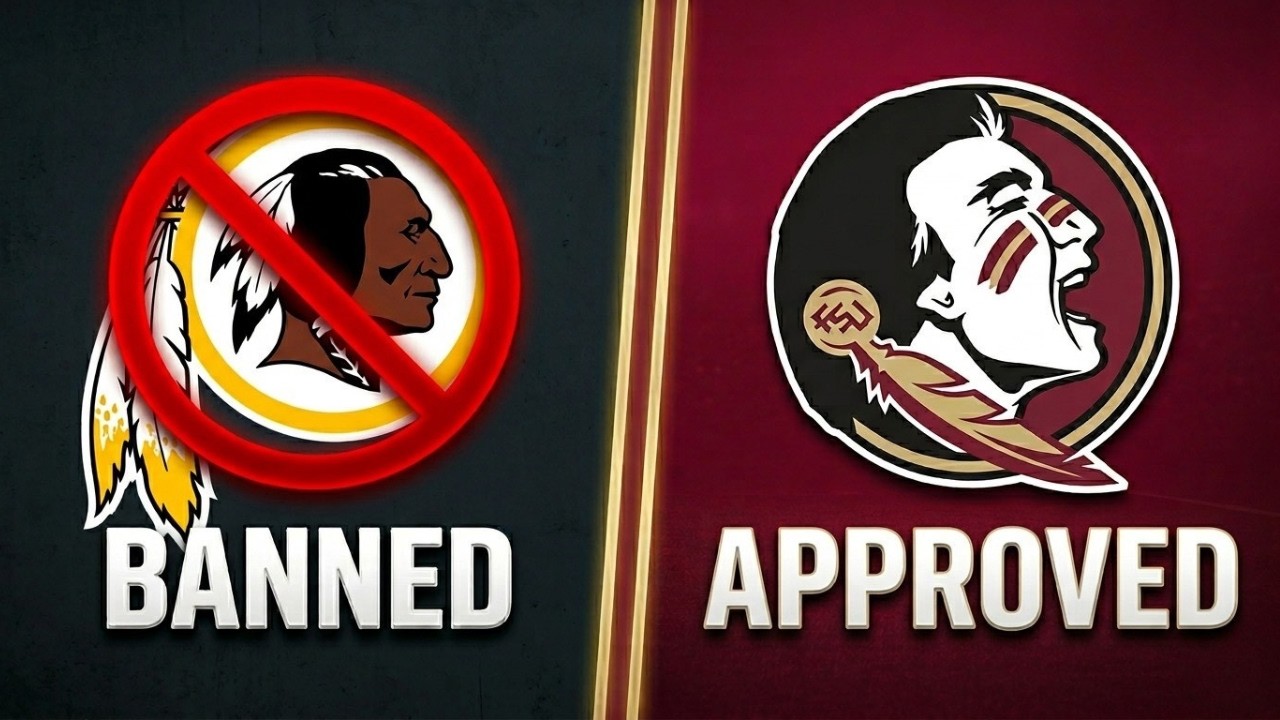
If Chief Wahoo and the Redskins were basically banned, why are the Florida State Seminoles allowed to do what they want with no problem? The fans literally do a war chant and a tomahawk chop, and there's even this huge pregame display. Well, there's a clear discrepancy between the offensive caricature versus the specific agreement idea. Yes, but trust me, this is a much wider issue than just respect or permission. The split really began in 2005. The NCAA released a bombshell policy. Any school with hostile or abusive nicknames or imagery
92 words, the words spoken in the first 30 seconds at 184 words per minute.
Free, no signup. See how the first 30 seconds hold attention, with rewrites.
Sentence shape
| Measure | This transcript |
|---|---|
| Sentences | 125 |
| Average words per sentence | 14.1 |
| Longest sentence | 45 words |
| Questions asked | 14 |
| Sentences containing a number | 7 |
Most used terms
Filler phrases
26 in total: like 13 · actually 4 · you know 4 · basically 3 · literally 1 · sort of 1.
A literal whole-word count of the same phrase list the Prepublish browser extension uses, so a phrase inside another word is not counted and a phrase used in its ordinary sense still is. It is a count and not a judgement.
What this transcript is
Every word below is the caption track YouTube publishes for this video, pulled from the video itself and reproduced unchanged. It is not Prepublish's writing, not a summary, and not a re-transcription: it is the video's own published captions. English captions, generated automatically by YouTube, in the video’s original language. Source: the video on YouTube. A channel that would rather this page did not exist can ask for its removal through the contact page, and it is removed.
If Chief Wahoo and the Redskins were basically banned, why are the Florida State Seminoles allowed to do what they want with no problem? The fans literally do a war chant and a tomahawk chop, and there's even this huge pregame display. Well, there's a clear discrepancy between the offensive caricature versus the specific agreement idea. Yes, but trust me, this is a much wider issue than just respect or permission. The split really began in 2005.
The NCAA released a bombshell policy. Any school with hostile or abusive nicknames or imagery would be banned from hosting postseason tournaments. 18 schools were put on notice, many of which you'd recognize, like the Illinois Fighting Illini, the Utah Utes. And yes, the Florida State Seminoles. The Utah Utes situation is really interesting, actually. I'll explain all that in a minute. And some of us are just now realizing how many mascots are just Indian warriors.
That That's okay, no shame. The NCAA's logic in this policy was simple. Native American people are not mascots. They argued that using these images created the hostile environment. And for most schools, the fight ended pretty quickly. They didn't have the money or legal standing to fight the NCAA. But then there was the Washington NFL team. And here's where it gets really interesting. Now, the NFL obviously isn't governed by the NCAA, but they were fighting a parallel battle in the court of public opinion.
Their name, Redskins, was fundamentally different from Seminoles. And to put it in direct language, is a descriptive historically derogatory term derived from an era of colonial bounties. Unlike Seminole, referring to a person of the Seminole tribe, wasn't a name that any tribe called itself. It was an exonym given to Native Americans by outsiders as a generic label, no different than Eskimo, a term we broke down just a few weeks ago over here.
What makes Florida State seem like the special exception to the rule is that it has a secret weapon that the Cleveland Indians and the Washington Redskins never had, a sovereign ally. When the NCAA put FSU on the hostile list, the university responded not with lawyers alone, but also the highest possible authority here, the actual Seminole Tribe of Florida. This is where the consent factor comes in, yeah? The NCAA's policy had one major unspoken caveat. >> [music] >> If a namesake tribe officially sanctioned the use of the name, it was no longer hostile. >> [music] >> In June of 2005, the Tribal Council of the Seminole Tribe of Florida unanimously passed a resolution.
They didn't just say, you know, yeah, you know, it's fine, just no slurs or caricatures or anything like that. They actually said, and I quote, "The Seminole Tribe of Florida has an enthusiastic and supportive relationship with Florida State University." >> [music] >> And this was a month before the NCAA ban on hostile and abusive imagery. It's a bit of a flex, yeah? The NCAA, a body made up mostly of white academic administrators, was trying to tell the Seminole Tribe what was offensive to the Seminoles. >> [music] >> The tribe was just like, oh no, we like it.
That's tough, as the kids say. >> [music] >> And they claimed the brand as a form of tribal sovereignty. Remember the Utah Utes? They did the same thing, with the Ute Indian Tribe [music] issuing a formal resolution of support for the University of Utah. And other tribes doing the same for several schools. However, to be clear, this trend of formal permission and support was not universal. And it's here that we remind ourselves that there are hundreds of distinctly different tribes in North America with different preferences and worldviews.
So, some tribes outright opposed the use of their names and imagery, like the University of North Dakota Fighting Sioux, who are now the Fighting Hawks, and the University of Illinois, who are still the Fighting Illini, but dropped Chief Illiniwek in '07. Consent was critical here. Schools that had it got to continue carrying out some of the coolest traditions in American culture, while those that lacked it had to adjust accordingly.
By giving their consent, tribes are able to convert a mascot or unauthorized depiction into a partnership beneficial for both sides in many cases. This is why the Washington Redskins, Chief Wahoo, the Southeastern Oklahoma State Savages, and most of the countless schools who are the generic Indians failed. And trust me, there's [music] a lot of them. There is no sovereign tribe for a or Savage, nor are Native Americans a monolith.
Look, I know it sounds like I'm just farming up morality points when I say all this, but trust me, there's a good reason I'm emphasizing this monolith piece. Remember this conversation we had just now, you and me? But, consent isn't a one-time signature, but instead a living contract. And this is probably my favorite part of the video. This is really cool. Drop me a like if you learned something new. I think you'll like what I'm about to show you.
So, the Seminole Tribe of Florida keeps FSU on a very short leash to ensure the honor parts of honoring isn't just lip service or, you know, checking a box. Look at Chief Osceola and Renegade. Most people call this a mascot. [music] But FSU calls them a symbol, and this is for a few reasons. Firstly, the clothes. >> [music] >> This clothing worn by a student portraying Osceola isn't a costume or purely for imagery. >> [music] >> It is designed and approved by the Seminole Tribe to be a 19th century authentic representation.
The makeup as well, [music] even the face paint has to be vetted. No war paint tropes. It has to be historically accurate [music] and respectful. And lastly, the person. The student who actually plays Osceola must maintain a high GPA, [music] have advanced horse riding skills, know the history of Osceola, and even takes on a two-year apprenticeship. It's understandably vital to the tribe that the young man for the job carries on the role with solemnity.
Man, you have no idea how long it took us This is my sixth take saying solemnity. [music] Hard word. Anyway, talk with me in the comments. I respond to everybody. Is all of this going too [music] far for just a brief pre-game appearance? Or is the Seminole Tribe well within its rights to specifically tailor how it [music] will be shown off to millions of people, regardless of what non-members may think? And then there's the financial and educational side of all this.
FSU offers in-state tuition to any member of the Seminole Tribe, regardless of where they live. Needless to say, they've also built an entire curriculum around Seminole history. Basically, the tribe uses FSU as a multi-billion dollar marketing firm for their history and watches closely to maintain its image and tradition. And in exchange, FSU gets to keep one of the most iconic brands [music] in college sports. Well, good.
So, we've answered our question. FSU doesn't have to change anything [music] since the Florida Seminoles gave permission. Okay. Ah, but you see how much time is left in the video. [music] There's more. Let's adopt some nuance here. Like any group of people, the Seminole people are not some monolith. See, the Seminole Tribe of Florida is different from the Seminole Nation of Oklahoma. And if you've seen some of my previous videos on Native Peoples, you know this [music] has not been the only intertribal conflict.
Far from it, actually. Now, because of the Indian Removal Act of 1830, the Seminoles were split up. Remember that chunk from high school? Andrew Jackson, Seminole Wars, Trail of Tears. >> [music] >> Most Seminoles, along with several other tribes, were forced west to Indian Territory, [music] what would later become Oklahoma, while a small, unconquered group stayed in the Florida Everglades. We really can't discuss this Florida State University symbolism [music] if we ignore the Seminole Nation of Oklahoma, which has historically been much more critical of FSU.
They've pointed out that things like the Tomahawk Chop and the spear [music] plant are still Hollywood-style inventions that harm the Seminole image. And shockingly, despite the potential benefits to tuition, the role of Osceola has never been carried out by a real member of either Seminole Nation. What do you think about that? Isn't that strange? Many Oklahoma members feel that when FSU does what it does with what's effectively their name, image, and likeness, >> [music] >> their living culture is reduced to something of a sideshow oddity.
This creates a fascinating legal and ethical gray area. If one branch of a people says, "Yes." [music] and another says, "No." who wins? The answer was, in this case, the local, so-called, [music] tribe. Since the school is in Florida and the Florida tribe is an independent nation, >> [music] >> to the NCAA, their consent is the only one that legally mattered. And keep in mind here, the Florida tribe has around 3 to 4,000 members, while the Oklahoma tribe has around 18,000 members, nearly six times as many people.
Now, I [music] turn the question to you. Is it okay to basically turn a blind eye to this huge vocal majority since the minority gave the answer the NCAA and FSU [music] wanted to hear? Please keep in mind, none of these people asked to be [music] removed from their homeland. So, why did the Redskins and various Indian-led brands have to change while FSU got to stay the same? In a nutshell, the Washington Redskins were a made-up brand recognized by an unfair and offensive exonym and image, while the Florida State Seminole brand was co-signed by the people it showed off and compensated those people in various ways, like a diplomatic treaty almost.
Though, as we've seen, this was selected permission. Ask and dad because mama will say no. Maybe we should try to make FSU-Oklahoma some sort of college [music] football rivalry. No, I'm just kidding. Or am I? The Oklahoma-Florida split is only one of many times Native Americans were divided. Slavery, for example, was another divisive issue. Click here to see why so many Indians fought for the South [music] during the Civil War.
Channel memberships are turned on if you want to support me. Drop me a like if you learned something new, and I'll see you there.
The words are the caption track's own and nothing is reworded or re-transcribed. Paragraph breaks are placed between sentences so the text reads as prose.
Free tools for your own script. No signup, no login.
Paste your draft and see where viewers are likely to drop off, with a rewrite for each weak line.
Paste the first 30 seconds of your own draft for a hook score and rewrites.
Check your draft against YouTube's advertiser-friendly guidelines before you record it.
Read this channel's public videos and transcripts, and download a writing brief for it.