Getting the transcript
Reading the captions from YouTube. A video nobody has opened here before takes 10 to 30 seconds; this page fills in on its own.
Reading the captions from YouTube. A video nobody has opened here before takes 10 to 30 seconds; this page fills in on its own.
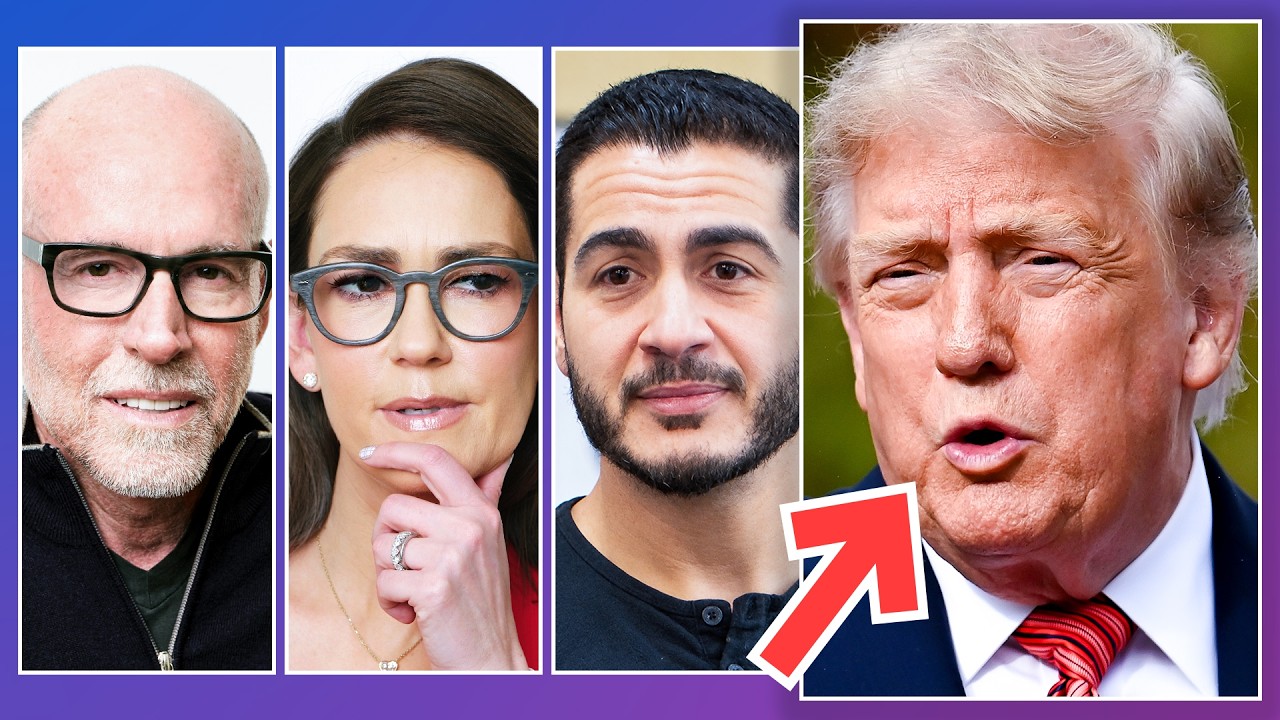
Raging Moderates · @RagingModerates
Words
10,606
Runtime
55:54
Speaking pace
190wpm
Reading time
44min
190 words per minute, between the 181 median and the 201 75th percentile of 349 measured videos. That distribution comes from the 349-video hook study.
Opening (first 30 seconds)
Welcome to Raging Moderates. I'm Sky Galloway >> and I'm Jessica Tarlov. >> Later in the episode, we'll be joined by Abdul Elsed to talk about his pivotal Senate race in Michigan, one Democrats will need if they want to take back the Senate. But before we get into it, please make sure to subscribe to Raging Moderates. It's the best way to support the show and help us reach new audiences. All right, let's bust into it. Let's check in on Trump's trade war with Canada because it could have real consequences for Republicans
95 words, the words spoken in the first 30 seconds at 190 words per minute.
Free, no signup. See how the first 30 seconds hold attention, with rewrites.
Sentence shape
| Measure | This transcript |
|---|---|
| Sentences | 641 |
| Average words per sentence | 16.5 |
| Longest sentence | 115 words |
| Questions asked | 60 |
What this transcript is
Every word below is the caption track YouTube publishes for this video, pulled from the video itself and reproduced unchanged. It is not Prepublish's writing, not a summary, and not a re-transcription: it is the video's own published captions. English captions, generated automatically by YouTube, in the video’s original language. Source: the video on YouTube. A channel that would rather this page did not exist can ask for its removal through the contact page, and it is removed.
No Script X-ray for this video: YouTube shows a Most replayed graph only once a video has enough views.
Welcome to Raging Moderates. I'm Sky Galloway >> and I'm Jessica Tarlov. >> Later in the episode, we'll be joined by Abdul Elsed to talk about his pivotal Senate race in Michigan, one Democrats will need if they want to take back the Senate. But before we get into it, please make sure to subscribe to Raging Moderates. It's the best way to support the show and help us reach new audiences. All right, let's bust into it.
Let's check in on Trump's trade war with Canada because it could have real consequences for Republicans in some Senate races that will decide control of the chamber. The fight is hitting industries including agriculture, auto, steel, and manufacturing. And Republican states including Michigan and Maine are already facing pressure from voters over the economic impact. And in all of this turmoil, Calry Markets currently has uh the Democratic chance of sweeping the House and the Senate in November at 61%.
I can't get over this, Jess. Just wow. Has the the momentum here. I wish the election were tomorrow. What are your thoughts? >> I too wish the election were tomorrow. Um a lot can happen in what do we have 42 days? Uh, but it does feel like the tide has turned against the Republicans on mass. There was a while where it was just more of a Donald Trump problem and it wasn't trickling down as far down ballot and it it does feel like there's been some pretty significant movement in the last couple of weeks.
Uh, the trade war with Canada is certainly part of that, but I really think that it's the war in Iran uh that is weighing on people's minds. Uh CNN had a new poll out this morning uh over uh twothirds disapproval. Uh Caitlyn Collins tried to ask President Trump about it this morning and he was pissed off that CNN still had access to the UN. He was like, "I thought I banned you guys, but they're still allowed to cover because of the UN, which is a good thing.
More transparency is always a bonus." But two big moves in the last day or so, Mike Rogers and Ashley Henson. so pivotal races Michigan and Iowa uh on the Republican side posting that Donald Trump has got to end the war in Iran and uh this had you know been especially Ashley Henson very much behind the president and what he wants to do or what he's going to accomplish there in Iran. Uh Mike Rogers last couple of weeks have been slightly more tepid.
Um, but this is a real line in the sand. Like we got to get out of there if you think that we're going to be able to win any of these elections. And you know, Michigan is a pickup opportunity for the Republicans. And I think that they were to not necessarily a large degree, but were licking their lips at having Abdul Aliad on the ballot versus a more moderate candidate like a Haley Stevens or even Mallalerie Mcmaro when she was still in the race. and um he's been pulling much stronger uh than certainly the first few weeks after he won the nomination. >> I just I I never want to feel sympathetic to the White House, but you have calls from both the left, Senator Murphy, lot lot of people on the left, just get out.
Just leave. We should have never been there. Leave. This was a mistake of epic proportions. Leave. And you have Republican consultants telling the president for the sake of the midterms, you have to get out. The issue, the question I would have is the IRGC isn't going to let America out. So, in other words, does Senator Murphy and the president's consultants, are they fine with just seeding the straight of Hormos to to the IRGC that or the IRGC can back the Houthis to to cut supply lines in Saudi Arabia?
Basically, are they saying, "Okay, you won. You now have control of the region." I mean, there's no This truly is a definition of a quagmire because, okay, just get out. Well, I'm not sure. Can he just get out at this point? And wouldn't it be worse for him if all of it if he says, "Okay, we're out, right? I I've I've I've cut bait." And then the IRGC is now charging, you know, is now control of the straight and every day is charging tolls to any Western ship that goes through or blocking it or not blocking it.
In my view, that would be worse for the midterms. So I don't I mean granted you you break it, you bought it, but to think that it's just a a really easy option just to get out right now feels to me a bit naive. >> Well, I think what they're doing is just signaling to the voters that they're opposed to it. And I don't know if the White House tacitly agreed to this plan, you know, the Nancy Pelosi model of politics, which is I'll come and campaign with you if you want me to, or run against me and call me the devil if that's what you need.
But all we got to do is win. Uh Donald Trump does not seem like somebody who would authorize people uh to call him the devil or oppose any of his uh central policies. But obviously someone is advising these candidates in these big time marquee races that if they don't create some distance between themselves and the policies of this administration, they are going to get completely obliterated. And when you look at the way the numbers are moving in Iowa where there are a number of congressional seats up for grabs that we are running fantastic candidates in and that Rob Sand is consistently pulling 8 10 points ahead of the Republican you're talking about Iowa and that he may give an important lift to Josh Turk there uh who is a very good candidate and I would say Ashley Henson is as well on the Republican side. um you know that there is a five five alarm fire going on right now with them.
So I think it's more like you're Trump's not going to do anything. They're going to continue to tread water, but if we don't signal that we've got a pulse to these voters, it's going to be tsunami territory. >> I hate to give uh minority leader Schumer any credit here, but whoever I don't know who's in charge of candidate quality. It feels like just full stop. The Democrats have done a better job with candidate quality than the Republicans.
Would you agree with that? >> Totally. You know, there was a question obviously about Graham Platner, who was not Chuck Schumer's choice. He's out. Uh Troy Jackson is not as exciting to people, but it seems like he is getting the job done. And there's a a big uh ProPublica investigation out today with some uh sorted behavior uh from Susan Collins. Not in a sexy way, not a Lauren Boowbert story. >> Oh, the FBI anti-corruption squad circling Susan Collins. >> Yeah.
So, um, ProPublica is out with the story where she helped steer millions in federal defense contracts to Navac whose CEO illegally funneled thousands of dollars to her campaign. The FBI was going to launch a probe and was eyeing Collins and other lawmakers. And then Trump gutted the unit. Surprise, surprise. So that is going to become a featured story obviously in the main race. But candidate quality otherwise Chuck Schumer has had enormous wins.
I mean Mary Pollah in Alaska, she's up six in the latest uh bipartisan poll with Tony Fbritzio on it. So the president's pollster is putting that out into the ether. Uh Roy Cooper is just next level great. Uh Michael Watley is a terrible candidate on the Republican side, but Cooper is enormously good. Josh, >> talk about Paxton. Is that good candidate quality? I'm trying to think he's got to win for worse. It's It's like it I can't imagine.
It is so hard as a Republican to lose in Texas. And I think Paxton's going to pull it off. >> Well, did you see that John Cornin and George W. Bush are having a fundraiser for every other Republican candidate but Ken Paxton? And they're doing it in Dallas. >> Yeah, that's >> They're like, "Come and give me money and I will send it everywhere else but here." I don't want to get too optimistic about it. It's still Texas, but that feels like as big of a shot across Ken Paxton's bow as you could possibly imagine that there are plenty of Republicans who are not going to fall in line for him.
So, yes, Chuck Schumer, I give you maybe not so many flowers, but I give you one beautiful big rose. >> Credit where's credits due, right? >> Like the Bachelor. Yeah, >> there we go. I like it. Uh, I have absolutely no inability to understand references to The Bachelor. I've never seen it and I will I'm a rose to the people you like. >> All right, let's move on. Paramount's $111 billion acquisition of Warner Brothers Discovery has cleared its last major hurdle as the company and coalition of state attorneys general led by California's Rob Bont reached a settlement on Monday in the antitrust lawsuit that had held the deal up.
CEO David Ellison backed by his father Larry now plan to close the deal within about two weeks. Jess, is is this a surprise? What do you think the state attorney's general accomplished here? >> Not a surprise. It was a matter of time. Um, you know, the Ellison's are saying that they have addressed the state's attorney general's uh concerns and the WGA. The big concession or the big new shiny part of this deal is that there's going to be this board to oversee uh independence with uh CNN and CBS.
You know, everyone was concerned about the Ellison's who are quite right-leaning and affiliated uh with Trump and the administration very closely. The thing is that the journalists who will be on this overseeing board are going to be appointed by Paramount. So, as far as I understand it, the only uh criteria that they have to meet is that they've been a journalist for over 10 years. So, you know, how how does it get enforced?
What does it actually look like? Um, I imagine since this was going to happen that this is better than not having a board like that, but those who are opposed to this merger and Jane Fonda had a statement about how she's glad that Ted Turner isn't alive to see this, frankly. Um, but those in opposition, you know, say that it's still going to do the bad stuff that it was before and you're going to have an enormous amount of uh job cuts and that Hollywood is still very much at risk even if uh they Paramount or the Ellison's via this merger are still promising to make enormous investments and that they just want it to be a reinvigorated industry and and another golden age.
I think this was Rob Bont's taxing the American or California public and American public as he made an extended expensive pirick clicksotic announcement that he's running for governor. I think this is total populist There is absolutely no antitrust law that would prevent or economic reasoning that would present this or prohibit this merger. These are two companies that are medium-sized trying to bulk up against much larger Meta, Alphabet, Amazon.
And had these companies not been allowed to merge, Paramount would have died or CVS would have turned into a distressed asset uh sale, sold off for parts, and Warner Brothers probably would have been fine because they have so much great IP. But this just made sense. In addition, job loss is not illegal. That's called capitalism. companies merge all I was on the board of a yellow pages company and we used to go buy another yellow pages company lay off everyone but the salespeople and live to fight another day and that may sound upsetting but that folk if you can't fire people then you can't hire them this editorial board is just so ridiculous you want to talk about the weakest sauce in history it reminds me when the WGA said negotiated as part of their agreement after they put riders out of business for seven months with absolutely no upside whatsoever.
They got an agreement that the studios would have to discuss AI with them before using it. Okay, we're going to use AI. Discussion over. When I was on the board of the New York Times, and by the way, I'll bring that up a lot because I think it sounds makes me sound more impressive. >> Very fancy. >> 175 years, Jess. They've been around 175 years. >> Yeah. >> Anyways, they have this 15 person board >> and just as I'm praising the Times, let me let me be critical. uh the Ssburgers have sold their shares.
They own less than 1% and they control it and they get they get 10 board seats and the common the people who own the other 99% get five. So basically the board is just an advisory board and then over Thanksgiving dinner the Ssburgers decide every major decision and the rest of us are just like barking at them hoping they'll listen to us. We had way more power than this editorial board is going to have. This is this is literally going to be, "Oh, that's interesting.
We'll buy you lunch. Michael Smirkish will come in and talk." And these meetings are going to be so ridiculous, symbolic, and meaningless. And also, the notion they agreed not to sell their two lots, that's pure socialism. Companies can buy and sell assets as they see fit. And then an agreement to produce more films. That's like if if JP Morgan and Goldman saying, "Okay, you've got to build more ATMs or, you know, Bontto tried to position the acquisition as this Godzillaike figure, but okay, we have to make more films around Godzilla." This was a waste of resources.
This was pure regulatory theater, and I think it reflects poorly on the AG in the state of politics right now. I understand the left's desire to say, "Well, if you're going to play politics with media, we'll play politics." But be clear, other than delay and obfuscation, which probably was not good for Warner Brothers or Paramount or the employees there who have been like a bird in midair flapping its wings with no direction.
This was a waste of time, a waste of energy, makes both firms weaker such that Rob Bont could announce he's running it for governor. Uh this was total regulatory This was a hostage negotiation when there was no threat to the hostage there. These guys Bonta did not have a legal leg to stand on. Any closing thoughts before we move on? >> What do you make of the Gavin Newsome of it all? Because I feel like this is going to affect his future. it's going to be a a big part of the conversation around 2028 and if he you know I guess he's waiting for to hear what's up with Kla but let's assume that he's running for president.
This feels like the kind of thing that the left will go after him about in the primary. >> I I don't know what his stance on the merger was. What did he say? Did he stay out of it or did he have a viewpoint on it? >> It varied. um he was seen as being like tacitly pro and a lot of that was about saving the industry and there were big heavyweight liberals that were pro in this like Brian Lord and Ari Emanuel you know and there was that anxiety and I understand why when Paramount said okay we'll just go to Georgia right like this is e that's actually happening in a lot of ways having been in LA for the last few days I was struck by how many people that I met were talking about jobs that they had in Georgia or how much better the work situation is in Nashville was a big one and also in Atlanta.
So, you have to preserve jobs for your state, right? That's close to your number one, if not your number one uh most important job. But I feel like this is going to be a haunting thing, especially if there are a bunch of progressives up there on the stage. >> Yeah. So, I mean, if I were advising the governor's campaign, if he decides to run for president, one, I would go on offense and say one of the reasons we've progressed from being the fifth largest economy in the world past Japan to the fourth largest economy in the world is we, unlike the Trump administration, have embraced and believe in capitalism.
And capitalism is full body contact violence that includes mergers. It sometimes it includes layoffs and sometimes it includes growth. And we expect according to the economists and the courts themselves that this was not going to create a monopoly. And this is a standard part of the economic process. And our entertainment industry is hugely valuable. It's still an enormously important part of the economy. I, Governor Nuomo, supersized our tax credits to be more competitive with economies that were buying business.
People would rather film here. But we have to let these companies cook. They're good at what they do. Best media companies in the world. And these guys needed to bulk up against other great companies who've decided to be in California, including Meta and YouTube. So, I'm a capitalist. I've embraced capitalism. That's why my economy is the fourth biggest in the world. Let him cook. Uh, you know, this there was no evidence that this was going to be an monopoly.
If I were him, I'd go a touch freerman and a touch capitalist because all the people bitching at him about saying, "Oh, it's going to hurt jobs and the Ellison's are evil." All those people are going to vote for the Democrat anyways. So, I think he needs to go a little bit sister soldier on this and be a full-blown blue-blooded capitalist. Who knows your thoughts? >> No, I think that that's going to be his only option, frankly, and he's going to be doing most of his work trying to muscle out folks more in the center and a lot of governors that are going to be running on things like creating jobs and balancing budgets like, you know, Pennsylvania and Kentucky.
So, you know, I think it works well there. I just, you know, it always gets ugly when it's the uh intraent fighting. So, whatever an AOC or a Roana, for instance, you know, I'm sure they'll be fighting about the billionaire tax and things like that. So, I imagine this would be part of it. Um, but netnet, it was also just a train that you couldn't stop. And at a certain point, I think you try to get whatever concessions or at least virtue signal towards the things that you want people to know that you actually care about.
And this board, editorial board is a bit of a joke. But they didn't they didn't have much choice. And it'll be interesting to see how the Ellison's behave under a new administration. Um, you know, what that looks like or even in the lame duck part of the presidency. I don't think the ele I don't think it's going to be journalists in my view are really precious and I understand the importance but they're I think the Ellison's like money more than they like Republican politics.
It's one thing for them to with 60 Minutes which economically is meaningless and in my view has just been slowly but surely losing relevance for a long time. CNN is still a cash gusher and Ellison dad is personally on the hook for $50 billion. I don't think he's going to with CNN for political reasons at this point. I I think these guys like money more than they like politics. I think they're capitalists at the end of the day.
Do they lean right? Absolutely. I think the kid is actually I've heard leans left. I don't see the threat to democracy and progressive politics. My co-host and my my other sister wife is basically said she can't work for the Ellison's. And I've said to her, I don't think it's going to be that bad. Maybe I'm naive, but I think that CNN is too important for them to do anything. CNN has a positioning as center left. It works for them to make good money despite having a lower a smaller audience.
I think they make more money than Fox because nobody with any money watches Fox. I'm sure you're gonna disagree with that. >> Yeah, I am. And we make a lot more money, I believe. >> Oh, wait. Hold on. Okay. So, I just want to say uh so so as always, Jess is absolutely right. Fox News 3.3 billion, CNN at 1.8 billion. So, 80% larger. Uh CNN has been shrinking from 2.2 two billion in 2021 to around 1.8 and Fox is up 5%.
So CNN is shrinking. Fox is up. Um I'm trying to save grace here and show that per viewer CNN makes more money, but at the end of the day, you're absolutely right. Fox makes 80% more money. Um >> what's 80% amongst friends? >> What's 80%? Same. Same. You're splitting hairs, Jess. >> Yeah. >> All right. Should we move on to our interview? Yeah, I'm so excited. Support for the show comes from Skylight. Family schedules can get complicated fast.
Between work, school, sports, appointments, and social plans, keeping everyone on the same page isn't easy. That's why Skylight brings it all together in one shared calendar so the whole family can see what's happening and stay in sync. Skylight is an all-in-one digital smart calendar that seamlessly syncs with Google Calendar, Apple Calendar, Outlook, and more. You can customize your view by day, week, or month, and keep track of events, chores, and even grocery lists all in one place.
I am personally obsessed with my skylight frame. I have two little kids. They're going in different directions. I have a husband who's going in his own direction, not like in the bad way. He just lives his life. I'm being pulled in a million different directions. Everything goes on the Skylight frame. Highly recommend. Like legit, I use this. Families are better when they're working together. Right now, Skylight is offering our listeners $30 off their 15-inch calendars by going to mys skylight.com/moderates.
Go to myskylight.com/moderates for $30 off your 15-in calendar. That's my ysky lt.com/modderates. >> All right, joining us today is Democratic Senate nominee from Michigan, Abdul Elsiad. Abdul, so good to have you here. Thanks for taking uh taking the time to be with us. It's an honor to to be with you. I feel like Scott, the last time you and I had a conversation was probably co era and um and Jessica, I think we we haven't had a conversation except for I feel like we've had many conversations through our apparently our mutual buddy uh Jesse Waters now.
So, there's that. >> Yes, I we have the strangest of parasocial relationships that run through him directly. >> We're Jesse's two liberal friends. Isn't that great? >> We can sit on either side of him and destroy his life. There you go. >> He calls us left and leter. >> Left. Yeah, >> you're left though. Yeah, >> that's that's probably true. >> Let's get to it. We only have you for a few minutes here. You're running one of the most closely watched Senate races in the country and a state where the economy, the auto industry, immigration, Gaza, and the relationship with Canada are all deeply personal issues for voters.
And you're coming into this general election after a pretty bruising primary and after a campaign that's already put questions about the future of the Democratic party out there. So, a new poll has you leading at 47% against Mike Rogers and Cali has the odds of you winning at 69%. We're we're going to start here is an issue hitting Michigander, specifically Canada. Now, affordability is central to your campaign. And let's jump to letter M or N here and assume that a lot of people in Michigan and a lot of the people on this podcast are listening probably believe that tariffs are a bad thing and bad for America, bad for shrinks our market, increases our prices, especially bad for Michigan.
If elected to the Senate, what would you do to try and address the tariffs problem and more broadly affordability? >> Well, you know, step it all the way back. This is a president right now who has tried to take extraordinary power. He thinks of himself as both the executive branch of government and also the legislative branch. And part of that is because Republicans have had control of the legislative branch and they've willingly given it over to him.
And so we need to take that power back and the power to levy tariffs is a power that sits with Congress. And so I think retaking that power is number one. I'll also say this, I'm actually really quite skeptical of full free trade. I just understand that tariffs are like chemotherapy. You know, if you take the idea that NAFTA and TPP were cancers on the American economy, they hemorrhaged key great jobs that Michiganers had been able to rely on for years.
You don't just give the patient all the chemo all at the same time because you have a vanity war against the tumor. That's what Donald Trump is doing. Instead, what you do is you're very very thoughtful and directed about how you uh you use that that tool. So, I think there's a smart use of tariffs and it's to protect uh fast growing high manufacturing capacity jobs. Like I threw down the gauntlet and said I'd like to see Detroit make a $25,000 300 mile EV.
We're going to continue to be the world's leaders in internal combustion engines. Great. That's what my dad came to this country to design. But also, we should be the world's leader in EV, too. And so, what does that look like? What is the the kind of industrial policy that includes the right mix of subsidies and investments and tariffs to be able to allow us to continue to be the world's leader? So, that's the next step, right?
It's yes, tearing back these ridiculous uh aimless tariffs, but it's also saying, "All right, what's the smart use of these to actually start doing the things that tariffs are supposed to do?" Scott, you're a a business professor. You you've forgotten more about the stuff than than I know, but you and I both agree that there is a way to use these kinds of tools if you're smart about it. It's like taking a hammer and trying to nail in a screw.
This doesn't work. Um, so what does it look like to use a screwdriver or to use a hammer against a nail? So assuming that we have the success we're hoping for in the House and the Senate and we're able to roll back what have already been deemed illegal, these tariffs which make no economic sense, more structurally long term, how do you think as a senator you'd want to approach and what what structural changes would you champion to make things more affordable?
Is it antitrust? Is it opening up global trade? How do we how do we bring inflation down and create structural solutions to an affordability crisis in America? >> Yeah. So, let's break the problem down into a couple parts. Our inflation crisis, inflation, as you well know, is when there's too much money chasing too few goods. Our economy has gotten less productive than it needs to be in large part because uh it's oified around a few very large corporations who we expect to drive all of our economic growth.
So, if we're serious about taking this problem on, we need the combination of a a really smart small businessoriented economic development uh approach, b really smart industrial policy like the kind I laid out where uh we make some really smart investments in high job growth opportunities, and then we back them up with u subsidies uh to to help grow those industries and create jobs and tariffs that protect those industries as they grow.
And then it's unions to make sure that the gains aren't just realized by big corporations, but instead are realized by everyday working people. I I believe in in in in capitalism, but I understand that right now we don't live in capitalism, we live in corporatism. And that corporatism has allowed really really big corporations to dominate the economic space, crowding out a lot of would-be competitors that bring prices down uh and also offer more uh choice in different markets. and those corporations have been able to jump the the shark uh so to speak by buying off politicians to make sure that they can use that power to cement their place in our markets.
I just want to get back to normal capitalism and normal capitalism is you make some smart investments. You make sure that those investments uh are are not blocking out uh any wouldbe competitors because that's what makes uh our economy so dynamic. And you make sure that the gains aren't just hoarded at the very top uh but they're split apart evenly. Well, I want to talk to you about your uh campaign partner for later in the day, but before we get to that, I wanted to touch on what's going on with Mike Rogers visav the trade war with Canada and the war in Iran more broadly.
Um he has been backpedaling very very quickly now out, you know, with statements saying that we've got to end the war in Iran. Um he also did a a turnaround on data centers uh when he saw that the uh Michigan voters just weren't having it. Um, I'm curious as to if you think that something did shift in the last week or two that prompted him to do this and how you're going to be able to continue to tie these positions to him as we go into the last 40 days of this campaign. >> Well, his poll numbers shifted.
Uh, he's realizing that he's deeply underwater because he's tied himself to the most disastrously corrupt politician in American history, Donald Trump. and he's realizing that he's kind of stuck between a rock and a hard place. Donald Trump says jump and he says how high. Donald Trump says tariffs against Canada. He says how high. Donald Trump says we're going to continue to do this war in Iran. He said okay for how long?
And he's realizing now that we're paying $5 in gas, $6.80 in in uh in diesel, which we all pay for at the grocery store cuz diesel is what gets it trucked to the grocery store. He's realizing that this has become a disaster for him. Now, look, my point about him has always been that he's corrupt and he's craven and he's cowardly. And this is exactly what you're seeing. He took $5 million from corporations to run his previous campaigns for Congress, a million alone from prescription drug uh companies.
And now that the poll numbers are shifted, he's just about facing, which shows you that he's craven, right? This is a guy who does not actually care about basic principle, is not considering what his uh his principles are. instead he's going to follow Donald Trump because he understands that his only path to power is because Trump said okay. And now that he's uh looking at 42 days left without the ability to course correct, he's flip-flopping on everything.
Data centers flip-flops. The war in Iran flip-flops. Watch the tariffs is going to come tomorrow. He's going to flip-flop. And so what people are starting to see from him is, yeah, this is a guy whose only interest is his own power. He will say and do anything that it takes to get there. And let's just step back. We all watched this Mike Rogers when Donald Trump was rising to power in 2015, 2016. Talk about how Donald Trump does not represent his values and then now he tells us he's running for office cuz Donald Trump called him and told him to do it.
There is no principle there. And I think Michiganers are sick and tired of seeing that kind of politics cuz guess what? if he wins, he's going to turn around and do exactly what every Republican senator has done, which is cowttow to Trump, hand over uh his power to him and let Trump continue uh to to lead us down these disastrous paths that we pay thousands of dollars for uh simply because of Trump's vanity. >> So, excellent tying of Mike Rogers to Donald Trump and that evidence is very clear.
Um, but you are tying yourself to somebody from our side of the aisle who had a big position, the former vice president Kla Harris. You're going out on the campaign trail with her at a time when lots of other people running in high-profile races have said no thank you and gone as far as Rob saying that we need new leadership. Um, how did you make the decision to campaign with her? Uh, what are you hoping to get out of this?
And is this about shoring up more of the black support in Michigan for your campaign? >> So Jessica, I'll just tell you this. My job is to to build a winning coalition. And that coalition is broad uh as has been famously hashed and rehashed. Um I've engaged a whole lot of different perspectives on our party uh to come and build that broad coalition. Just because you campaign with somebody doesn't mean that you agree with them on everything uh that they say.
And uh I you know you guys famously host a host a pod called Raging Moderates. Um you know I I mo most folks would say well Abdul has different takes on a lot of the issues than you do. Great but I'm having a conversation with you to have a conversation with the people who pay attention to you. In the same point right I agree with Vice President Harris on a lot of things. The issue that we're going to be talking about today maternal and infant mortality disparities.
Black babies shouldn't die at two times the rate of of white babies. black moms shouldn't die at three to four times the rate of of white moms. We all agree on that and we want great ideas that we can enact in Congress to take that on. When it comes to uh Gaza, I have been very very clear about my position. I believe in equal rights to peace, dignity, and self-determination for Palestinians and Jewish Israelis alike.
I do not think we should continue to subsidize uh unconditionally foreign governments. That includes Israel, but also includes my family's native Egypt. I don't think we should be selling uh weapons uh to folks who use them uh to do the worst things including genocide or apartheid. And I've just been very very clear about that. That doesn't mean that I have to agree with the vice president on everything or she has to agree with me on everything to come together around the many many many things we agree on.
Donald Trump is an existential threat to democracy. You should have clean air, clean water. Babies shouldn't die in infancy. Uh we can and must protect the right to vote. Um people shouldn't have to pay so much for gas and groceries. The war in Iran is ridiculous. So, I just think that, you know, sometimes we make a lot in our party about the differences between us. And I think to build a broad coalition, you have to be able to really focus on the things we agree.
And look, we hashed out our differences in this primary. I took $32 million on the chin from Apac, $70 million total from corporate packs, uh, and even the Democratic party. But our job now is to come together and recognize that this race is about winning the US Senate to take back power to hold Donald Trump accountable and get to the business of getting money out of politics, putting money in your pocket, and passing Medicare for all. >> I hope our tent can be as as big and full as you think so.
Um, this look, >> Dr. Martin Luther King said this thing and I think about it a lot. He said, "If your coalition is not uncomfortable, it's not big enough." And I just think we have to be in the business of bu building sometimes uncomfortable coalitions. And look, I think we got to also get really good at having conversations about the things we disagree about agreeably. And I'm hoping that we can we can demonstrate that uh moving forward.
We don't have to fight World War II over all of our differences, even if they're big, broad, sometimes painful, deeply painful differences. But I do think that democracy is the technology, age-old technology about how we figure out how to disagree peacefully. And we've as a Democratic party have to demonstrate how how democracy can work to bring us together around the things we all understand we agree on. >> No argument for me. >> So Abdul I was going to talk about healthcare and I'll come back to it but under the opice of comfortable.
Do you think the war in Gaza qualifies as a genocide? Do you think the government of Israel is committing a genocide? >> I do and I've been clear about why. Genocide is both outcome and intent. And when you have foreign ministers declaring intent and then the outcome is tens of thousands of children who have been killed, I would call that a genocide. Now, let me be clear about this. I understand that my use of that word can uh can peak a lot of really uncomfortable traumas for folks.
But I also have studied my history. When you look at the world's greatest worst genocide right in history, the greatest crime committed uh on people that is in memorable history, the the the the murder of 6 million uh uh Jews in the Holocaust coming out of that horrific crime. Um the word genocide was created to explain what that was. But the whole point of creating that word isn't that you have to wait until the crime is that big again to be able to use it.
Otherwise, it loses its power. Its power is in naming a thing before it gets that big so we could do something about it. And I think it's just really important for us to be able to name what has happened so we could do something about it. And I think you and I probably both agree on the end outcome that we'd all like to see. I pray for a world where a Jewish child and a Palestinian child growing up in the Holy Land can look forward at their future and know that their future is not going to be curtailed by violence.
That that's an outcome I think we all ought to be committed to. But the question we have to ask ourselves is how do we get there? And the challenge right now is too often our debate is about a quoteunquote two-state solution in a time where every president has said therefore a two-state solution, but our government is aiding, arming, and abetting the very people who are trying to foreclose on the possibility of the second state.
It's incoherent on its own terms. So, what does it look like for us to face down the current incoherence, the the the the current unwillingness to actually ask whether or not what we're doing is getting us to the outcome we really want and start thinking outside the box because we get so caught up in the past that we forget that there's still a future we have to play for. And if you look at your kids and I and you ask what is what matters most, I think it's being able to make sense out of the past to actually address the future.
And that's what I'm hoping we can do. That's going to have some uncomfortable conversations. It's going to mean building uncomfortable coalitions, but no conversation about getting to peace happens without getting to justice. And no justice happens until people are willing to come together, talk about what happens in in frank terms, agree where we can agree, but also decide that we're going to work together to get where we want to go.
And I'd love to see a world where Jewish Israelis and Palestinians come together on equal terms to build out a future where all of their kids no longer have to worry about uh about about being killed uh at the hands of one another. >> I agree with you. It's important we have thoughtful civil discussions. You and I have had really productive conversations around healthcare before. As a Jew, I find it entirely unfair and not accurate to describe what's happening in Israel as a genocide.
My understanding of the definition of a genocide is the purposeful extermination of a people based on their religion, their ethn ethnicity, or their nationality. Going from 15 million to 9 million in Europe of Jews was a genocide. 40% wiping out 70% of the tot population, that was a genocide. A third of the Cambodian population, that was a genocide. 3% of the Gazen population has been killed. And typically a genocide doesn't involve shipping in polio vaccines or 2500 calories a day or dropping leaflets or leaving voicemails telling civilians to vacate an area where they have been purposely embedded in military targets.
Do you understand why Jews such as myself find your description of what's happening in Israel and in Gaza as a genocide as disqualifying? >> So I understand why that you you would make the argument, but let me just also push back When people use dehumanizing language against the people, when they bomb their hospitals and their schools, when they attempt attempt to displace them from where they are with the argument that well, you know, they're all Arabs, these other people speak the same language, they are might as well just be shipped over there.
That seems to me to be deliberate targeting. So, you know, I would ask you, do you understand why somebody who's been thinking about this question, looking at it, connecting the dots between the language that is used and the outcomes that were created would then label it that way? You know, I I just I I think the big question for me is in some respects, people don't want to use the word because of the moral implication of what ought to be done following it.
But the question to me is, could we put the same effort into preventing it from having happened in the first place? And I think the whole world, when you look at the images of I'm just thinking about an image that I saw of these two girls, one of them, they're baking in the heat. Clearly, their parents are gone. It's an older girl who's about the age of my older daughter and a younger girl who's about the age of my younger daughter.
And the older girl is fanning the younger girl. And I don't know how we as humans allow ourselves to do that systematically over the course of years to another people and then we want to quibble about the words that we use to call it that thing. like the moral imperative for action was in seeing the images that we saw and I think for a lot of folks we look at that and say well you know there's this what is the purpose of a Palestinian child in the way that the world has organized itself except for it to go through that and if we think that every Palestinian child deserves the right to live in dignity and deserves a good future then what does it require us to do and I think that word has meaning and should be used because it speaks to the moral imperative of action to prevent that. >> The word does have meaning and when you use the term genocide, I think it conotes the notion that whoever is committing this genocide is guilty of something so horrific that it justifies potentially a genocide against them.
And that it might be horrific. It might be horrific. It might be a war crime. It might be wrong. But when you use the word genocide, one, I think there's absolutely no factual support for that term that qualifies for that term. And two, it creates a level of hostility towards Jews in this city where the diaspora feels vulnerable because I am part and supportive of an organization that is committing genocide. >> And Scott, I'm going to I'm going to I'm going to point to a couple of things.
You know, you and I have had um a number of really great conversations. I think you and I probably think very similarly on a number of issues. Obviously, this one is one on which we disagree, but >> Yep. A do we have to wait until more people get killed? Like how many people do we say is enough to then call it a genocide? Because the whole point of calling it that is to stop it from happening in the first place. So it's somewhat self-defeating in its own logic.
Second, the calling something a genocide does not justify a genocide. Like you can't say that because one group committed a genocide that a genocide ought to be justified against them. That is, you know, that is not uh the argument anyone's making. I think everybody would agree that nobody should be in the business of killing Jewish people because they're Jewish. That is a a terrible thing. In fact, we built our whole system of international law because of the systematic murder of Jewish people.
I just want us to follow that system of of international law and do the things we need to do. And then finally, on the factual justification, neither you nor I are scholars on genocide. I leave it to scholars on genocide uh in Israel itself who've called this a genocide. So it's not just my use of the term. It is the use of the term for people who have made their life's work about technically allocating that word in the circumstances in which it's used with great care in Israel.
And so I'm just saying that you know it it I think there is this leap to saying well if you call it a genocide then you must be justifying reprisal. I'm not I'm not justifying reprisal. I am trying to say that we need to intervene to stop the these terrible things from happening. I'm not calling on systematic annihilation of anyone. If anything, I'm calling on the systematic upkeep of people's lives everywhere for everyone.
And that's the point that I keep trying to make the money, you know, and look, I'm not running uh to be a leader in that region. I'm running to be senator from Michigan. And in Michigan, we've got a lot of people who don't have the things we need, which adds an almost insult to the injury because that's money that could have been used to be spent to do good things here at home. And so, I'm not calling for anyone to be hurt.
I'm calling for everyone to be safe. And I think it's important for us when we see the systematic annihilation of a people to call that out and do the things that we need to do to prevent that. But you are seeing Democrats including traditionally pro-Israel Democrats voting against aid to go over there like Alyssa Slackin who will hopefully be your co-senator and John Oaf. You know it a big reversal in that vote. Mark Kelly's of the world.
So that memo has been gotten. You will get no argument from anyone on this podcast or really anyone that we come across, certainly in left or centerleft leaning circles that BB Netanyahu is a pernicious threat uh to his own people, to the region, that he's got to go. Hopefully the elections bear that out and that what's going on in the West Bank is absolutely unacceptable. But when you talk about the genocide in Gaza and your comments do not discuss October 7th and they do not involve calling out Hamas who plays an integral role in keeping the people of Gaza oppressed use uh kids and innocents as human shields for instance you know set up camp below some of those schools and hospitals that you rightly rightfully pointed out that innocents died there, but that there were terrorists hanging out there as well.
It makes people who might even be able to get over the idea of using a word that they don't agree with because there are a lot of Jews in Michigan and we speak to them all the time who desperately want to vote for you because you believe in 99% of the same things that they do. You believe in getting everyone affordable, decent healthcare and a woman's right to choose and policies that uplift the most vulnerable amongst us.
That's what being a Democrat means. And when you see this non-negotiable pledge, which was created by groups of rabbis and Jewish leaders basically just asking, I think for the bare minimum, Jewish safety, Jewish sovereignty in Israel, that it will stay a Jewish state and that you will talk about it as such and you won't sign on to that. It says to people who can get there for you, who who again, no one wants Mike Rogers, certainly no one on this podcast and no one that we're talking to, but they want to hear a more nuanced perspective that acknowledges what happened in Israel and what Hamas is doing and that you will fight for their protections as well and certainly as hard as you would fight for any Palestinian child because that's what we all want.
But Jessica is here's here's the challenge, right, that I that I often have. Look, I when it comes to the question of Jewish safety, that to me, like you said, is non-negotiable. That's not what's on the table right now. You know, in some respects, I took very seriously some of the feedback I got after the the the attack on Temple Israel that I was trying to offer context for something there. the context was not helpful.
That there were kids who were attacked on that day and that needs to be condemned on its own terms. I said hurt people hurt people and people took great offense to that. Now we're talking about the the systematic annihilation of tens of thousands of kids and you're telling me in effect well hurt people hurt people. We can condemn what Hamas did on October 7th and we can condemn a genocide that took place thereafter and we can do those in two different terms.
But to tell me that I cannot condemn a genocide unless I also condemn the actions of October 7th, somebody else would pick that up and say, "Yeah, but then what about the systematic uh occupation and aparth died perpetrated?" And we could play that game forever. I don't want to do that. I want us to be honest about what needs to happen. And let's be clear, for too long, the question of interest is not actually what's happening over there.
It's what's happening with our policy in the United States. We run cover for the state of Israel. We don't fund Hamas. We run cover for them at the ICC. We run cover for them at the ICJ. We run cover for them at the United Nations. We pay into their military. We sell them weaponry that they use to do these worst things, $2.8 billion in in 2,000 lb bombs just just now. Why? Like to what end? and and explain to me why that makes sense as an American policy maker.
So yes, I I just think that it's it's we need to have this conversation on the terms in which it needs to be had. Tens of thousands of kids were killed and there is no ever justification for killing children. No, not ever. And that's exactly the point and that's why I apologize. >> Not ever. >> Okay. >> I and I appreciate that you made that apology. I am not saying that this is about a what aboutism or that we've got to go to this and you can just play this game of dominoes.
What I'm telling you is that there are people who are not going to be able to pull the lever, check the box, however they're voting for you, unless you demonstrate to them that you understand their concerns. This is about morals and values and ethics. And it is also about winning elections. And there is a group of people that are asking you, I think, for very bare minimum acknowledgement of their concerns. They're not even saying stop saying genocide.
And Jessica, I'll tell you like when it comes to that, I've been having a number of really great conversations behind closed doors and in public when it comes to the safety of the Jewish community here in Michigan. When it comes to the safety of Jews anywhere, I am I am focused on protecting Jewish safety. But I also believe that the safety of Palestinians is equally important. And too often when we have this conversation, there's this um Basam Ysef who's a who is a comedian, right?
I can't sign off on all the things he said, but I heard him say this thing one time and it really struck me. He said, you know, what's the purpose of a Palestinian child except for to die because that's all you ever hear them doing. And I think we should reflect on that because often times when this conversation is had, it's had under the premise that any attempt to advocate for the right of that child to live their life peacefully must automatically come at the cost of a Jewish child.
I don't believe that to be the case. I don't think you do either. And so I just think it's important for us to get to a level of public policy where we ask what would we do if we treated every child like they were our child. And I think we would be treating this situation fantastically differently. It's not hard for me to say that the kidnapping and murder of innocent people was wrong. Of course it was. But why are we unwilling to call what happened to tens of thousands of kids by money that should be spent on our kids?
Why are we unwilling to use the term that would we be using a lot e more easily in a different circumstance? And look, I I I believe in principle and I want people to know exactly where I think and how I think. And you'll know, right? I'm deeply consistent. If nothing else, I'm going to have the conversation in audiences that agree with me or don't agree with me. I'm going to say the thing I believe. And when I've had conversations with my Jewish sisters and brothers here in Michigan, I've told them where we agree, I'm going to be honest, direct, and specific.
And where we disagree, I'm going to be honest, direct, and specific. And you might disagree with me, and that might mean you might not vote for me. That's okay. But I'm unwilling to bend my principle around what I believe. And I think we believe in the same principles. The question is ultimately how we apply them, and if we apply them evenly. Got it. Uh, well, appreciate your cander. I just want to distill it down to, and you talked about the need to for Democrats to agree to disagree.
I think that what you believe is genocidal action on the part of the IDF resulting in horrific death of children. I won't speak for the Jewish community. I laid the death the horrific death of those children at the feet of a terrorist organization that performed what I feel is a real um brutal act of terror. And I would describe those horrific deaths as collateral damage along the lines of every other historical war. maybe even less less so than what uh you know we 2,300 Americans die, excuse me, 2,800 Americans die 911.
We go on to kill 400,000 people. 2,200 service people in Pearl Harbor. We go on to kill a million and a half Japanese. It it really does come down to the word. For me, I just don't think that's an accurate representation of the word and justifies unnecessary an unnecessary downward spiral of more hate and ultimately more violence. I'll give you the last word, Bill. >> Well, I I I appreciate um your perspective and hearing your perspective.
Obviously, this is an issue on which we disagree. Just those two examples that you pointed out, I think most of us would point to those examples and say that shouldn't have had to happen. We shouldn't have done that. And same story, right? We shouldn't have done that. What I want folks to hear me in saying is I come at this issue from a position of a principle. I want every child to live the life that is unencumbered by the violence that came before them.
That's what we're trying to build. And the question is if we started with that premise and we took it as certain that each of these lives, a Palestinian child's life, a Jewish Israeli child's lives, that that life was worth the same. What would we do and how would we behave? And I just I think we should start from that premise. What does it take to get there? All that is to say, you know, we are going to have disagreements in our party.
We are. But on 80% of those questions that animate what it is we believe about the world, that democracy is the best way to solve our differences, that we deserve clean air, clean water, good schools, good healthare, child care, an economy that works for people. We agree on those things. There are going to be points of disagreement. But I also just say this. I think that that point that we go back to about the uncomfortable coalition, sometimes those coalitions are real uncomfortable, but again, I think there's a a space here where we start to ask where do we move forward?
Because the thing about a vote, and this is what I I want us to really think about, a vote is not about the past. A vote is about the future. And where do we want to go in the future? And that's what I'm really um hoping to build together. It's been a really really uh engaging conversation. I really really appreciate you having me. Um, and I hope that folks understand with me is like I say the same thing to everybody and I'm willing to hash out differences.
It's the reason I was willing to go on with Jesse, you know, like I'm going to stand my ground. Um, but with people with whom I share so much more. Um, I hope that you can come to see it my way and I'm sure you hope that I can come to see it yours. But if we don't have the conversation, that's when things fall apart, especially when there's 80% of things we could talk about that we agree on. Well, I'm definitely an enormous advocate for talking to people that you disagree with. >> You do it very well. >> Thank you.
Um, you do too. I just I the stance that I was coming to this conversation with is I not I mean, you're doing a good job. You know, you're you're running a great campaign. Um, but just to express the concerns that I'm hearing from folks who really want to be part of your campaign and excited um for what it'll be like when you are hopefully a US senator. >> I hope I can earn their support and I hope that on the things we disagree on, we can continue to have the conversation and you know, my job is is to serve everyone whether they voted for me, they didn't vote for me, they hate me, they love me, they're indifferent about me, don't even know I exist.
Like that's the job. And I hope folks understand, look, I' i've been trying to do that work my whole life. I'm a doctor who rebuilt health departments. All of my work, it's funny because I've been pulled into this international um advocacy because of principle, but all my work has been about trying to get healthcare here in America. You know, I rebuilt a health department, led another one, wrote a book on healthcare.
Like that's what I do. >> We're going to have to have you back on to talk about healthcare. um Abdullah and I it's it's a shame because I do find um your views on healthcare illuminating and and really productive. Abdul Elsad is the Democratic Senate nominee from Michigan. Stay safe on the trail, Abdul. Very much appreciate the open and honest dialogue. >> Good to have you. >> Thank you. I appreciate you guys having me.
I'm grateful for your time. Grateful for your advocacy and um looking forward to the next conversation about Medicare for all. Heat. Hey, Heat.
The words are the caption track's own and nothing is reworded or re-transcribed. Paragraph breaks are placed between sentences so the text reads as prose.
Free tools for your own script. No signup, no login.
Paste your draft and see where viewers are likely to drop off, with a rewrite for each weak line.
Paste the first 30 seconds of your own draft for a hook score and rewrites.
Check your draft against YouTube's advertiser-friendly guidelines before you record it.
Read this channel's public videos and transcripts, and download a writing brief for it.
| Sentences containing a number |
| 43 |
Most used terms
Filler phrases
271 in total: uh 95 · like 60 · you know 43 · um 40 · actually 10 · right? 9 · I mean 5 · basically 4 · kind of 4 · literally 1.
A literal whole-word count of the same phrase list the Prepublish browser extension uses, so a phrase inside another word is not counted and a phrase used in its ordinary sense still is. It is a count and not a judgement.