Getting the transcript
Reading the captions from YouTube. A video nobody has opened here before takes 10 to 30 seconds; this page fills in on its own.
Getting the transcript
Reading the captions from YouTube. A video nobody has opened here before takes 10 to 30 seconds; this page fills in on its own.
Tourist Tragedies · @TouristTragedies
Where viewers went back to watch this video again, from YouTube's public Most replayed graph, lined up with what was said at that moment.
Most replayed moment #1
11:2613.4x the video's typical replay level
separate parties are struck. Dai Hong Chen is killed at the scene. The Pierce County Medical Examiner will later record multiple blunt force injuries. One climber is seriously hurt. Two more take minor injuries.
Said at 11:18
Most replayed moment #2
5:188.3x the video's typical replay level
whatsoever. Climbers describe it as the most boring hard thing they have ever done. You put your head down, you follow the boot pack, and you try not to think about the fact that you are only halfway. Camp Muir sits at 10,080 ft, and it is a
Said at 5:11
Most replayed moment #3
9:463.9x the video's typical replay level
flow the way a knife splits food as it comes down. >> [music] >> Disappointment cleaver divides the Ingram glacier from the Emmons and it is the reason the standard route exists at all because it offers a rib of rock to climb instead of a maze of crevasses.
Said at 9:40
The graph counts replays. It does not show where viewers stopped watching.
Words
2,757
Runtime
16:34
Speaking pace
166wpm
Reading time
11min
166 words per minute, between the 160 25th percentile and the 181 median of 349 measured videos. That distribution comes from the 349-video hook study.
Opening (first 30 seconds)
July 19th, 2026. 11,600 ft on Disappointment Cleaver. Six climbers moving in the dark and a warning that had been sitting on the park's own website for 6 days. [music] What almost nobody realized is that the mountain did nothing unusual that morning. This was not one bad decision. It was a chain reaction that started weeks earlier. This is the most brutal disaster of the 2026 Mount Rainier season. Welcome to Tourist Tragedies. Because Disappointment Cleaver is not an obscure line, it
83 words, the words spoken in the first 30 seconds at 166 words per minute.
Free, no signup. See how the first 30 seconds hold attention, with rewrites.
Sentence shape
| Measure | This transcript |
|---|---|
| Sentences | 211 |
| Average words per sentence | 13.1 |
| Longest sentence | 47 words |
| Questions asked | 3 |
| Sentences containing a number | 42 |
Most used terms
Filler phrases
13 in total: like 7 · actually 5 · kind of 1.
A literal whole-word count of the same phrase list the Prepublish browser extension uses, so a phrase inside another word is not counted and a phrase used in its ordinary sense still is. It is a count and not a judgement.
What this transcript is
Every word below is the caption track YouTube publishes for this video, pulled from the video itself and reproduced unchanged. It is not Prepublish's writing, not a summary, and not a re-transcription: it is the video's own published captions. English captions, generated automatically by YouTube, in the video’s original language. Source: the video on YouTube. A channel that would rather this page did not exist can ask for its removal through the contact page, and it is removed.
July 19th, 2026. 11,600 ft on Disappointment Cleaver. Six climbers moving in the dark and a warning that had been sitting on the park's own website for 6 days. [music] What almost nobody realized is that the mountain did nothing unusual that morning. This was not one bad decision. It was a chain reaction that started weeks earlier. This is the most brutal disaster of the 2026 Mount Rainier season. Welcome to Tourist Tragedies.
Because Disappointment Cleaver is not an obscure line, it is not a technical test piece. It is not the kind of road where a death makes national news. It is the single most traveled path to the summit of Mount Rainier. By the estimate of Peter Whittaker, who has guided this mountain for more than 50 years and stood on top of it 256 times, the Cleaver carries roughly 2/3 of every summit attempt on the peak. Climbing Ranger Stefan Lofgren puts the annual traffic at close to 6,000 people. 6,000 on one glaciated route [music] in a window of about 10 weeks.
That is the population of a small town funneled almost single file up 9 mi of ice and volcanic rock gaining 9,000 vertical feet, most of it in the dark. The part that I find most striking about the 2026 season is how completely ordinary it looked right up until it wasn't. This was a fat snow year. In the middle of June, rangers were still describing early season conditions on the Cleaver with guide services fixing hand lines and pickets on the steep sections just to keep the line usable.
On the 14th of June, an RMI team turned around at the top of the Cleaver because the route simply was not ready yet. In the second week of July, telemetry at the Ranger Hut logged a gust of 92 miles an hour at 2:00 in the morning. Deep snow, big wind, late conditions. [music] Everything about the season said the danger this year would be weather and crevasses. >> [music] >> And then late July did what late July does in the Cascades.
High pressure moved in. The mountain got hot. And the snow that had been holding the Cleaver together all season started to disappear at speed. Everybody was watching the forecast. Everybody was watching the glaciers. Almost nobody was talking about the rock. So, who was actually up there that night? Six climbers in two completely separate parties. >> [music] >> Not one of them was with a guide service. On Rainier, that is a deliberate choice and it is not a reckless one.
Independent climbing is legal, permitted, and enormously popular. You register, you pay, you carry every single thing yourself, and you accept that nobody else is going to make the turnaround call for you. One of those climbers was Die Hong Chen, >> [music] >> 44 years old from Bellevue, Washington. She learned to climb after joining the Mountaineers back in 2014. And in the decade that followed, she had summited more than 100 peaks.
She had already stood on the summit of Rainier several times. Her husband, Brian Daigle, later told the Seattle Times exactly what the record shows. She was an experienced mountaineer who knew this mountain. I want to sit with that for a moment because it changes how you have to read everything that follows. This was not somebody who wandered onto a glacier in trainers. This was a woman with a decade of Alpine experience on a route she had climbed before doing it the way it is supposed to be done.
For you and me, a summit day on Rainier probably sounds like a very long, very cold hike. For the people who actually do it, it is the final hour of a process that can run for years. Fitness work through a wet Washington winter. Crevasse rescue practice in a snow pit. Permits pulled months in advance. Gear laid out and rechecked on a living room floor. Whole weekends given up to the Muir snowfield just to teach your legs what 10,000 ft feels like.
And the payoff for all of it is a single window. One night, one forecast, one alpine start. If it goes, you get the top of Washington state at sunrise. If it doesn't, you go home, you say very little, and you start saving your holiday days for next season. On the 18th of July, 2026, it looked like it was going to go. Here is what a Rainier summit attempt actually looks like from the inside. It starts at Paradise, 5,400 ft, in a car park that on a July weekend looks like a music festival.
Families in flip-flops photographing wildflowers, and threading through them, people carrying 40-lb packs with ice axes strapped to the outside. From there, it is roughly 4 and 1/2 mi and nearly 5,000 ft up to Camp Muir. Most of it on the Muir snowfield, a vast white ramp with no shade, no shelter, and no interesting [music] features whatsoever. Climbers describe it as the most boring hard thing they have ever done. You put your head down, you follow the boot pack, and you try not to think about the fact that you are only halfway.
Camp Muir sits at 10,080 ft, and it is a genuinely strange place, a cluster of stone huts and tents on a saddle between two glaciers with a public shelter, a ranger station, and a permanent smell of sunscreen and stove fuel. On a busy summer night, there are dozens [music] of people up there all doing the same thing, eating something they do not really want, melting snow for water, rehearsing the plan, and then at about 7:00 in the evening in broad daylight, everybody goes to bed.
Because on Rainier, you do not climb in the day. You climb in the middle of the night. The alarm goes at 11:00 or midnight [music] or 1:00 in the morning depending on the team. And that timing is not for sunrise photographs. It is a safety decision. Cold is what holds this mountain together. Frozen snow bridges hold weight. >> [music] >> Frozen rock stays where it is. Every hour you spend above Camp Muir after the sun hits is an hour the mountain spends coming apart.
So, you get up in the dark, you rope up, you clip in, and you walk out of camp in a line of headlamps that stretches up the Cowlitz Glacier like a runway. The route crosses the Cowlitz, then scrambles up through Cathedral Gap >> [music] >> onto the Ingram Glacier. Above that is Ingram Flats, around 11,400 ft, a shelf of relatively level glacier where some teams put a high camp. This season there was even a ladder placed on the route a little above the flats, bridging a crevasse that had opened up in the warm spell.
And then comes the part that every single person on this route has to deal with. The traverse across to the base of Disappointment Cleaver. It is not [music] steep. It is not technical. On a map, it is nothing, a few hundred meters of glacier. But it runs directly underneath the flank of the cleaver, and there is no alternative line and no way to shorten it. Everyone crosses it, guided teams, independent teams, first-timers, guides with 200 summits, everyone.
By the middle of July, everything was aligned. The weather window was open. The route was in. Teams were summiting. On the night of the 18th, the forecast was good. The snow was firm, and up at Camp Muir, two independent parties, six people in total, set their alarms for the small hours and lay down to try and sleep. July 19th, 2026, somewhere between 2:30 and 3:30 in the morning. >> [music] >> And that gap in the timing is the first strange thing about this story.
The park told reporters the incident happened at around 3:30. Sources speaking to the Tacoma News Tribune placed it just after 2:30, an hour unaccounted for in the official record of the worst thing that happened on this mountain all season. What is not in dispute is the location. 11,600 ft low on the cleaver. Both parties are moving, roped up, headlamps on. The temperature is below freezing, which is exactly what you want.
They are on schedule, in the right place, at the right time of night, doing the thing that is meant to keep you safe. Above them, in the dark, is the flank of the cleaver. Nobody sees it start. At that hour, with a headlamp on, your world is a cone of light about 6 ft across. You can hear the crunch of your own crampons and the rope shifting behind you. Anything outside that cone does not exist. >> [music] >> The first warning a climber gets in that situation is sound.
And on a rockfall of any real size, sound gives you seconds, not minutes. Six climbers were in the path. Now hold on to one detail because we are going to come back to it. Six days earlier, on the 15th of July, the climbing rangers had published a route update describing this exact stretch of ground. [music] They used a specific phrase about it, and they gave climbers a specific instruction that most people reading it would have assumed was just standard mountain boilerplate.
To understand what happened next, you need to understand what a cleaver actually is. Mount Rainier is a volcano wearing about 26 glaciers. Those glaciers flow downhill. A cleaver is a ridge of exposed rock that splits that flow the way a knife splits food as it comes down. >> [music] >> Disappointment cleaver divides the Ingram glacier from the Emmons and it is the reason the standard route exists at all because it offers a rib of rock to climb instead of a maze of crevasses.
But here is the thing about that rock. Rainier is not granite. It is volcanic. Much of it chemically weakened over thousands of years by hot acidic water moving through the mountain from below. In places it has roughly the structural integrity of a badly stacked pile of roof tiles. So, what actually keeps it up there? Ice. Think of the snow and ice packed into that face as mortar in a brick wall. All winter and most of the spring the mortar is solid and the wall stands. >> [music] >> Then summer arrives and starts pulling the mortar out handful by handful day after day.
Here is the second comparison and it is the one that matters. Think about defrosting a freezer. For hours nothing happens. Then one sheet of ice lets go and it takes everything that was resting on it down with it. That is a cleaver in late July. It is not decaying at a steady rate. It holds and holds and holds. And then a specific piece of it at a specific moment simply stops holding. Nobody can predict which piece. Nobody can predict which moment.
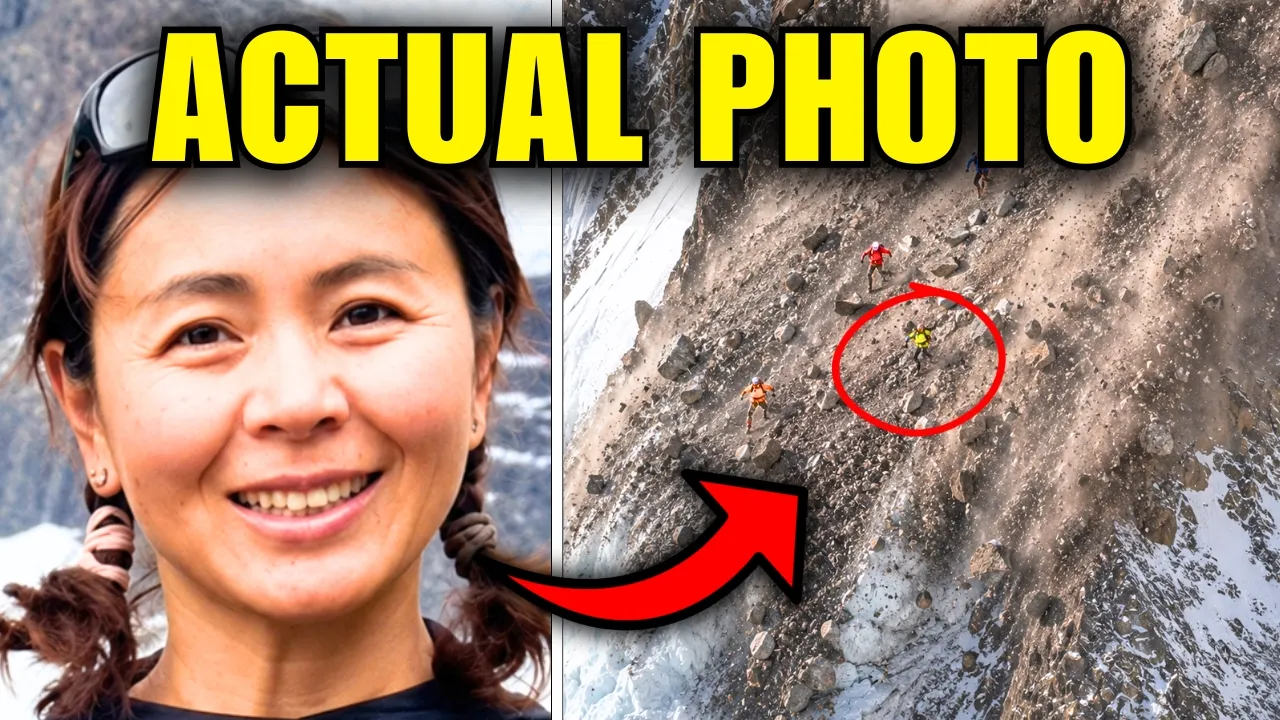
[music] That is the entire problem. And then in the dark the mountain lets go. Rock comes down the flank of the cleaver. There is no time to move, no time to shelter. Six climbers from two separate parties are struck. Dai Hong Chen is killed at the scene. The Pierce County Medical Examiner will later record multiple blunt force injuries. One climber is seriously hurt. Two more take minor injuries. Radios go out. Rangers start moving up from Camp Muir.
Two climbers are flown by helicopter to medical facilities. The others are helped back down to Camp Muir, then flown with their equipment to the park heli base, treated, and driven back to their own vehicles. >> [music] >> The sun comes up on a route that is still open because there is nothing to close. Quick heads up. Every week I drop a new update you won't find anywhere else. [music] Please subscribe. Jason Houck, 48 of Issaquah, was on the mountain when it happened.
One of the many climbers moving through that terrain in those hours. The park issued a short statement on the Monday. Six climbers, two independent parties, two helicopter evacuations, four climbers flown safely off. Die Hong Chen's husband spoke to the Seattle Times. >> [music] >> And what he described was not a tragedy of inexperience. It was a woman who had built a decade of her life around mountains. One peak at a time after walking into a climbing club in 2014.
Inside the climbing community, the reaction was quieter and more complicated than you might expect. Reports of loose rock on the Disappointment Cleaver are not new. They are notorious. Trip reports and climbing blogs going back years describe the same stretch of ground in the same uneasy language. Nobody was surprised that the cleaver dropped rock. What shook people was who was underneath it when it did. And then rangers investigated for 10 days.
The route stayed open the entire time. Teams kept climbing. Guide services kept running. Because on Rainier, the thing that killed her was not a malfunction. It was the mountain doing what the mountain does. When you lay the sequence of events out in order, a clear picture begins to form. And it is not the picture you would expect. Factor one, the snow. 2026 delivered a genuinely heavy year, and that snow sat on the cleaver deep into the season.
Through June, the route was still in early conditions. That is not luck, that is insulation, and it kept the rock locked in place well past the point it usually loosens. Factor two, the heat. Late July brought high pressure and warm air, and the cleaver went from mostly snow to roughly half snow and half exposed rock in a matter of weeks. Call this the melt clock. Every season it runs from the moment the first warm day arrives, and it does not run evenly.
It runs slow, slow, slow, then all at once. Factor three, the geometry. There is exactly one line through this section of the mountain, and it passes directly beneath that face. 6,000 people a year go under it. There is no variation you can choose, and no skill level that exempts you. Factor four, the clock on the wall. Every team on the route is moving through that same choke point in the same pre-dawn hours, because that is when it is safest, which means the exposure is not just constant, it is concentrated.
And this is where the loop closes. Six days earlier, on the 15th of July, Rainier's climbing rangers published a route update covering the traverse from the ladder above Ingram Flats out to the base of the cleaver. They described that ground as having significant overhead hazards. They told teams to move fast and limit their exposure. They told climbers not to stop between Cathedral Gap and Ingram Flats at all, and to look up before choosing any rest spot.
That is the warning that had been sitting on the park's own website for six days. >> [music] >> It was not ignored. It was not buried. It was published, accurate, specific, and correct. And it still would not have saved anyone because the instruction it gives is not avoid this place. The instruction is cross it quickly because you cannot avoid it. Roughly 10 days after the accident, Mount Rainier National Park closed the investigation.
[music] Public Affairs Specialist Kristen Tool confirmed the finding in a single line, >> [music] >> naturally occurring rockfall. No further findings were released. Fewer than two people die on this route in an average season out of thousands who climb it. That statistic is genuinely reassuring, and it is completely useless to anybody standing underneath the cleaver at 3:00 in the morning. The most brutal disaster of the 2026 Mount Rainier season did not happen because anybody made a mistake.
It happened because a heavy snow year, a fast melt, a fixed line of terrain, and a known hazard all lined up perfectly above six people who were doing everything right. Do you think the park was right to close this one as naturally occurring rockfall and leave it there, or should a route that funnels 6,000 people a year under a face like that get a harder look? Let me know in the comments. I read every single one.
The words are the caption track's own and nothing is reworded or re-transcribed. Paragraph breaks are placed between sentences so the text reads as prose.
Free tools for your own script. No signup, no login.
Paste your draft and see where viewers are likely to drop off, with a rewrite for each weak line.
Paste the first 30 seconds of your own draft for a hook score and rewrites.
Check your draft against YouTube's advertiser-friendly guidelines before you record it.
Read this channel's public videos and transcripts, and download a writing brief for it.