Getting the transcript
Reading the captions from YouTube. A video nobody has opened here before takes 10 to 30 seconds; this page fills in on its own.
Getting the transcript
Reading the captions from YouTube. A video nobody has opened here before takes 10 to 30 seconds; this page fills in on its own.
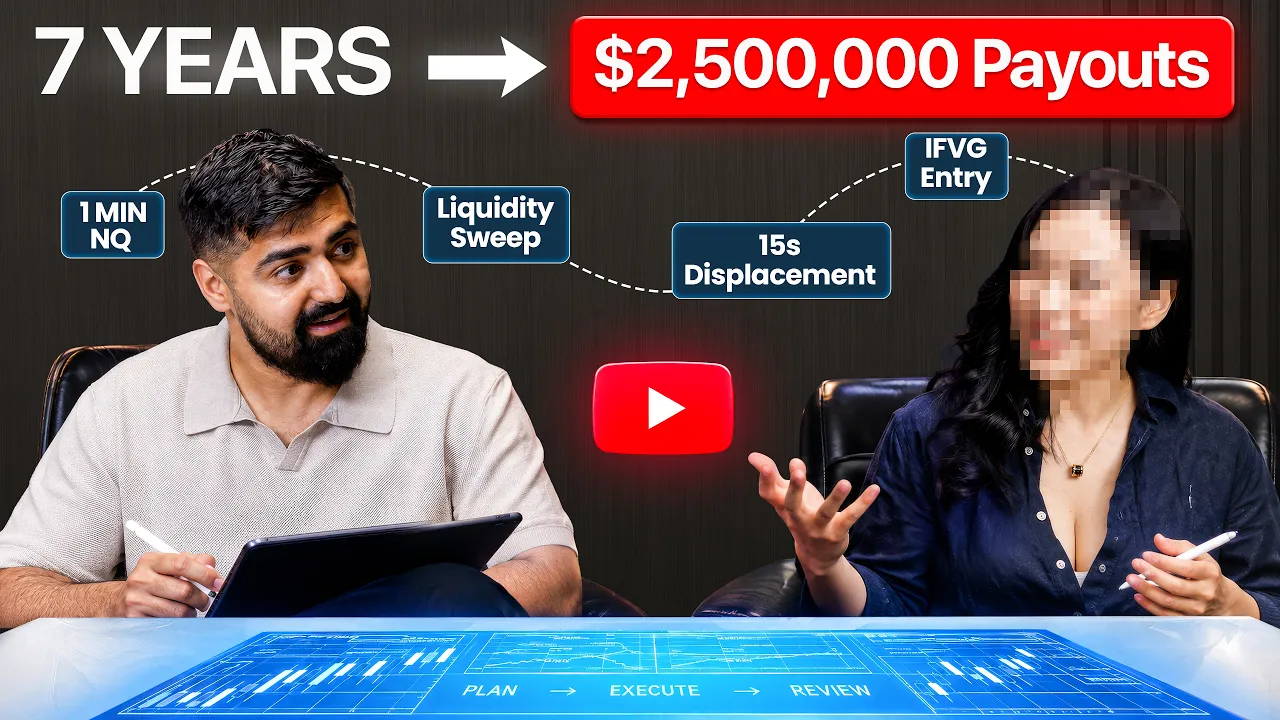
Chart Fanatics · @chart-fanatics
Words
21,231
Runtime
2:03:59
Speaking pace
171wpm
Reading time
88min
171 words per minute, between the 160 25th percentile and the 181 median of 349 measured videos. That distribution comes from the 349-video hook study.
Opening (first 30 seconds)
You know, we want to talk about A+ setup. This is about what 10 minutes and we're talking close to $20,000. I usually trade one minute time frame. Yes. But I will also monitor the 15 seconds and the first seconds chart. Yeah. It's not noise. It's not noise. I know a lot of people will [music] say even 1 minute is a noise. But actually, it's giving a lot of information. For example, the displacement and the speed. You can only see it on 15
86 words, the words spoken in the first 30 seconds at 171 words per minute.
Free, no signup. See how the first 30 seconds hold attention, with rewrites.
Sentence shape
| Measure | This transcript |
|---|---|
| Sentences | 1,501 |
| Average words per sentence | 14.1 |
| Longest sentence | 239 words |
| Questions asked | 147 |
| Sentences containing a number | 178 |
Most used terms
Filler phrases
884 in total: like 297 · um 161 · you know 134 · uh 101 · actually 64 · right? 61 · sort of 30 · kind of 21 · I mean 8 · literally 7.
A literal whole-word count of the same phrase list the Prepublish browser extension uses, so a phrase inside another word is not counted and a phrase used in its ordinary sense still is. It is a count and not a judgement.
What this transcript is
Every word below is the caption track YouTube publishes for this video, pulled from the video itself and reproduced unchanged. It is not Prepublish's writing, not a summary, and not a re-transcription: it is the video's own published captions. English captions, published by the channel, in the video’s original language. Source: the video on YouTube. A channel that would rather this page did not exist can ask for its removal through the contact page, and it is removed.
No Script X-ray for this video: YouTube shows a Most replayed graph only once a video has enough views.
You know, we want to talk about A+ setup. This is about what 10 minutes and we're talking close to $20,000. I usually trade one minute time frame. Yes. But I will also monitor the 15 seconds and the first seconds chart. Yeah. It's not noise. It's not noise. I know a lot of people will [music] say even 1 minute is a noise. But actually, it's giving a lot of information. For example, the displacement and the speed. You can only see it on 15 [music] seconds chart.
Just literally telling you even if you're blind, you will see it. This trader did 1.1 million in a single payout using this exact ICT scalping strategy. One of the best prop firm traders in the world. Introducing Candice BL session the move moving so fast. If you miss this information, you will just miss the entry. I got to say all the beginners you have to [music] master timing first. If I had to use a larger stop block to enter, that means that is not the entry point.
[music] This is not the correct entry point for my Okay. No, I like that mindset. Candace trades live every single day using this exact ICT scalping strategy. And in this episode, she breaks down that strategy step by step. You will see trades where she makes tens of thousands of dollars in mere minutes. This is just one account making 4,000 with copy trading like Apex. If you do 20 account, 4,000 can be a lot. $4,000 in 9 minutes on this trade.
And would you class this as an A+? This is A+. And you can see I enter with a larger position size. And also I hope for longer but this one I am just so confident of it. I can have a tight stop loss. So I just enter five contracts at the same time. And not only [music] that, Candice trades lie. The exact same concepts in this very episode on chart fanatics. When we see something like this happen, you will already know your setup is going to happen.
Even AP setups can turn into losing trade. I'm not only taking Ap setup [music] but also BS and C setup. Got you. And the reason is that where should we begin today? Well, first thanks for having me. I mean like I know you asked me since last year and I was like, "Oh, it's I'm too overwhelmed for being on camera." But right now I'm kind of getting used to on camera and on the screen. So it's my pleasure to be on here.
Well, yeah. We should let everyone know that you live stream is what you live trade on YouTube. Um, so obviously, as you said, come a long way when it comes to the camera, but I'm sure when I asked you, it was near when you got that payout. I'm sure everyone was everyone was probably DMing you and messaging you. Uh, so I know I really appreciate you being here and again, it's incredible that you not only have done what you've done and achieved, but also trade live.
You know, live trading can't be beat because it's just the ultimate transparency. But, you know, today in terms of the strategy, where should we start here on the whiteboard? Okay. So first um probably most of the traders already know that um I'm a ICD trader. So I mainly trade IC concept. I did learn other concept before but right now exclusive trade ICT concept only and I watch other episode like ch king and tina trace jcap.
So um our concept is probably very similar because like it's ultimately the same concept. So I will show you I think so some of the people that don't know IC concept what is that? So for ICD taught us the market is run by an algorithm which that algorithm will targeting some liquidities and also creating liquidities and those liquidities that are actually the stop orders. Yes. So this is like what traders always put their stop stop loss or stop limit on maybe the swing high or the swing low.
So these are what we are targeting on the whole trading plan. So um because I trade both London session and session and I mean the trading model is the same but we have to have different trading plan because obviously the volatility is different and you know the market condition is different too. If some of you already know AMD which is the accumulation, manipulation and distribution. So when we trading London session, what we want to see for Asia session will be something like this Asia range.
Okay. Yeah. Yeah. But like this is like just an example because price don't really act like this. I wish it did right. Yeah. Yeah. So and the manipulation will be something like this and then here. So this will be the London session we Yeah. Yeah. And then the distribution will be this one the new session. So um if we are trading London session here like for example this is the Asia high and this is the Asia low then what we have to wait will be a manipulation sweeping this high.
Then this high may not be like this right. It can be just a relative eco high or uh daily high, previous daily high or even session high maybe New York PM session high something like that. So because um in IC concept we have a concept called Kong. So that's London Kilzone and New York Kong. For London Kong is start at 2 am eastern time to 5:00 a.m. Eastern time. So I don't I have a woo for myself. I don't trade before 2 a.m.
Eastern time. Okay. Yeah. But like if the move happened like this one, this um the cruise sweep happened before 2 a.m. I would not do anything. You won't? Yeah. Yeah. I won't I won't enter it because I used to do that and obviously my experience tell me this is not the good thing to do because you will just get rid Yeah. So, you think it's because yes, sometimes it might happen before 2 a.m., but that is on a lower occurrence.
Like, it happens less of the time. But then, let's say you get used to taking trades before before 2:00 a.m. Eastern. So, then when you've done it one time and it worked, you end up doing it a bunch more times and it doesn't work. And then therefore, you're in this spot where yes, you might be profitable. So a lot of people they understand the concept for example but then they struggle with their discipline or struggle having the right rules.
So your rule here being strict I won't trade before 2 a.m. even if it's setting up right even if it's if it is correct because what it can do is then force you to then take more trades before 2 a.m. and then those times it doesn't work out and you end up taking losses and then there's and it might be a case when you're profitable but those losses add up to a point where you break even or lose it. Does that make sense?
Um yeah because like uh I'm from Asia. I was living in Asia at the time. So obviously during the Asia recession I already wake up. Okay. Exactly. Yeah. So I got nothing to do. Of course I'm going to turn on the charts and want to see how price sessions doing and if I keep on staring the chart I will want to take a trade which I did at my very beginning of my trading career. And but like this is like a trap. Like price is like tempting you to get in a trade.
Yeah. But the real manipulation didn't happen yet. You may can you probably can take some scalping. Yes. But like if you want to capture a larger move, you probably need to wait for 2 a.m. session to start. Yeah. And since we um I trade Lon session for so many years. So I know that like for 2 a.m. Yeah. 2:30 and 3:00 a.m. 3:30. That's going to be a move. So, this is like very important. I have to wait until that time to happen.
Perfect. So, it was uh 2:00 a.m. to is it 5:00 a.m. you said? Yes. EST for London Zone. Perfect. So, within that time, you even have specific windows within there that will be more favorable that you would be looking for as well. So, for example, like um I start the live streaming on YouTube at 2 am. So, obviously I can't get in at 2 a.m. because I just start the stream. So, I probably will just talk about my top down analysis first and then we will see if our setup happened at 2:30.
Gotcha. If not, then we need to wait until the 3:00 a.m. Yeah. Yeah. And so when you see the sort of Asia high get run really the foundation of your trading and this whole strategy as you mentioned is looking at that liquidity aspect. So from liquidity you go down to AMD which is essentially almost uh a full playbook of liquidity right. So that accumulation which is then accumulating those orders. The manipulation is then taking a sweep sort of doing two things at once, right?
It's taking stop- losses or inducing some form of uh liquidity here. In doing so, it's probably buy, you know, adding in buyers because a lot of people are then being manipulated in two ways. One, the shorts and those stop orders, and two, those buyers then trying to think, okay, we're breaking out. So they start adding orders which then adds more liquidity to the downside which then you get that manipulation and then of course from there your distribution or your next move right the real move if you will.
So is that where you say like liquidity is such a foundation of your strategy. Yes I would say that but this is just the framework. So when we really looking for a trade well first of course we need to do the top down analysis of course which including weekly candles and daily time frame because sometimes there probably won't have Asia high because Asia session doesn't look like this all the time right sometimes it's probably like this yeah because uh in recent weeks or months Asian session sometimes got 300 points move or more or 600 points.
I saw it before. Futures traders, it's time to hear about Apex Trader Funding, the largest futures firm in the industry. They have completely changed the game with their new evaluation. So far, they've already paid out over $600 million to traders around the world just like me and you. Now, not only that, Apex actually holds the record for the largest payout to traders, which is of course with Jadecap, no stranger to chart fanatics, with $2.5 million in a single payout.
And the person before that was Trader Kane with $2 million in payouts. Now, what sets Apex apart? Apex, you can get up to 20 accounts, which no other firm offers. Now, not only that, they have extremely clear rules with their revamp. There's no MAE rule, no 5 to1 risk-to-reward rule, no hidden rules, no gray areas, clearly defined draw down models. So, you have two options now. End of day draw down and intraday trailing draw down, which means no payout denials, no payout reviews, no discretionary decisions, and no surprises.
What sets them apart as well? traders receive 100% of approved payout requests up to 20 accounts as I mentioned and one day to pass. Now, the other thing that I love about Apex is not only can you get 20 accounts, but there's different account sizes. So, they have 20K accounts all the way to 150K accounts. So, you can get 20 of any of the account sizes that you choose. Not only that, you have various trading platforms from Wealth Charts to Trade of Rhythmic.
The choice is yours. So, make sure you use the code CF to get up to 90% off on evaluations right now using the link in the description below. Trader Apex today. Let's get back to the episode. So, at that time we can use this method because like there's obviously no consolidation for Asia. Yeah. Yeah, then we will have to focus on the daily liquidity for example daily FOG or previous daily high or even um last week daily high so these external equity um in lower timing it's external decree but like in high timing those are internal liquity so I would focus those and so when you have a session like that where it's not as clear not as you know textbook if you will in terms of a really tight range then you would look at those higher time frame uh liquidity points as is your reference.
And so let's say for example, you know, it's a case where you don't have the tight range and you don't really have anything in terms of like a higher time frame liquidity point. Is that when you just have to sit on your hands, take a step back? I used to be like that, but since I'm live streaming, I can't just tell the audience, okay, today we got nothing. Just okay, I close the stream now. It's not possible, right? So um at that time I will target um something called midnight opening price which is um you have to draw a line from the 12 um o from EST.
So that line will be used as a reference because it's acting like a magnet. So price price will always want to come back to the M O. Gotcha. Yeah. So I would target the M sometimes and also N new week opening gap N opening gap. These are all um very important for us to trade on the session. So these like the the magnets for price, right? And do you find that because especially when it comes to London as you say in comparison to say New York is that you those points are where you price will keep accumulating.
It's almost like the average price will keep accumulating and then you'll see the real move take place later in the day. Um because like I'm a sculper so I don't really need to wait for don't need really need to trade a whole daily range. M. So this is like um what a daily candle will form as AMD the whole thing. Yeah. Yes. Something like this. So price going up or maybe going down with value swing. So we keep on creating here we call it the LL which is low resistant warm.
Mhm. Because like this actually happen all the time. you if you look at the lower timing, it didn't have to be like um a certain session or certain macro. So when we see something like this happen, you will already know that your setup is going to happen. So all you have to do is just wait for it. But you have to be very patient because you don't know like when price like this you may thought okay the manipulation happen.
So right now the liquid one will be happen to probably not because sometime it's just one more trap you need to wait. Yes. So yeah this is the the tricky point. So you have to very patience for waiting the uh pt to exist. Yeah understood. In terms of ICT concepts, one of the things that people can struggle with is the amount of different concepts, right? In terms of uh we talked about AMD, we talked about liquidity, uh we talked about uh low resistance liquidity runs, uh PD arrays, kill zones, um there's so many different concepts.
So what was it like for you in terms of you know one obviously learning and sort of beginning to build more confidence and and discipline around those concepts but equally I'm sure there's concepts that you don't use right [clears throat] because there are that many how did you go about sort of identifying okay these are the concepts for me that that worked best and and what what did that look like in terms of like testing or or over time sort of building your confidence?
Well that's a really good question actually. Yeah, because like I would say you have to find something that's suitable for your both your lifestyle and your personality. For example, for me, I was living in Asia. So, I'm not going to spend too much time on trading or even tape reading the new session because I will be exhausted. Like I probably can do it once or twice, but if I do it every day, every month, every year, I'll die, right?
So that's why I, you know, developed my own concept, my own model with trading the London session and the market open, New York market open. Okay. So because New York market open, uh, if I still live in Hong Kong, New York market open at 10:30 p.m. Okay. Just just about. So yeah, so it's already like end of my day. So I don't want to keep on working. So that's why I will like adjust my model. And also, um, you have to look at your personality.
Are you a person that okay for leaving a lot of profit on the table or are you someone that you love to trail stop loss or if the price go back to your break even you will be like really frustrated. So for me I am um the one that's frustrated about break even. Oh really? Yes. Um most of the time I don't like to like spend too much time on the trade. I mean I know loan session is kind of slow price session so you will probably have to spend more time on it but for newer session I usually end the trade within 15 minutes.
Yeah. Yeah. So and I don't aim for like 100 points 200 points if like if price just work like that it's fine but like this is not my main target. So I just want to the price to get into my target and I can get out. So um sometimes my community will ask me why don't you hold for longer like why don't you become diamond hand yeah but this one is actually making me feel better because if I hurt my mental capital once or twice do it every time it's not helping me at all I don't feel good about keep on trading the same model so you definitely need to adjust it for this and when it comes to that the one question that comes to mind as you say and even though it might be unique to you in terms of being in Asia and then New York open being around 10:30 p.m.
But even for people out there like learning how to be focused within their trading session so that they're really only focused on what's going on in that session so they can execute properly and and to their plan. You know, for someone who's had their whole day and then is trading you literally when your day is meant to be finishing. What was that like for you, you know, to be alert and to try and be focused you at the end of your day?
Were there any things that you would have to do or any sort of routines you would have when when trading in Asia and and sort of trading that New York open? Most of the time I was trading two to 4 am only. But because of the live streaming, um I sometimes have to continue the whole thing. So until 5:00 a.m., but it's already 3 hours. That's a lot, right? Yeah. So, and then after the learning session, I would take a break like the PNY session.
I won't even look at the charts. Like whatever happened is just none of my business really. Okay. Yeah. And I will come back to the chart at 9:00 a.m. Eastern time. Yeah. So I will see if this kind of thing is creating the crity. Most of time is actually there. Yeah. Yes. Most of the time it's actually there. So all I have to do is just wait for that manipulation and then target the low resistant liquity. So it will end very soon.
Yeah. So would you say actually by spending less time on the charts and allowing yourself to sort of rest and recoup so that when you come back to the chart you're not you have because I think chart time is an interesting thing especially when you're a beginner trader a lot of people always tell you a chart time chart time chart time which is kind of true in one sense like okay you can learn especially as a very brand new trader cool you can learn the concepts you can get a better idea of the charts and their movements but once you have your models I think more chart time can be harmful because especially if you're on the lower time frames, right?
Um, you know, it's so easy to get sucked into trades, so easy to start having analysis paralysis because you're seeing up moves, you think are bullish, you're seeing down moves, you're saying bearish, and start to overanalyze charts versus if you take that step away, you you allow yourself when you come back to just dissect what has happened and then have a plan, right? Um, so would you say that's a big thing for you is taking that step back so not watching the charts so that when you do come back for New York it's it's fresh because like I used to spend at least 10 hours a day on charts like when I was still learning you know we got a lot of I see videos to watch and also I mean always taught us to like tape reading so I wasn't trading I just tape reading but let's take a break for a minute there guys because a quick word from our official platform sponsor Ninja Trader if If you've been following along on this channel, you know how much time we spend breaking down charts and market structure.
And Ninja Trader is an awardwinning futures trading platform built for exactly that. You get advanced charting, depth of market tools, and market replay so you can work through historical sessions and practice in a fully simulated environment, all without risking real money. Here's how to get started. If you're new to the platform, use the link in the description below to download Ninja Trader [music] and explore it in the simulator.
You get two full weeks for free to test everything out. And if you're already trading prop, choose Ninja Trader as your platform at checkout. It's the best platform for the job. So, go check it out and let's get back to the episode. The tape reading help me to understand how price session works. What does it mean when this candlestick happen? like um when there's a hammer, when there's a shooting style, what does that mean?
So these things are I mainly learn by chart time. So so this is necessary for beginners I got to say. But after a few years you get impoverable then maintain your mental capital will be more important more focused. Yeah. I I love that. I love that. In terms of uh where we've gone so far so we've talked about in terms of the setup and the sort of thesis of the trade. Um but in terms of like the entry or going into those lower time frames, what does that look like?
Do you have like a specific entry model or is there multiple that you can look at entering if they present? Um I would say two me okay so I would I can talk about the flow first like how the thing actually works. Perfect. Yeah. First one will be the higher time frame analysis right. Yes definitely. The second will be you have to look for the premium for premium discount. Yeah, premium discount. And the third one will be the thing I just talked about the liquid pool.
Yes. Mhm. So I think this one is very important because with our office liquid pool there's no setup at all. So you have to wait until this thing happen. There's no liquidity pool. Was it each one? You need each one. Sometimes there will be no liquidity pool. Okay. things like that. Yeah. I mean a small minor cre but not as obvious as those like ll. Mhm. And the fourth one is the liquid. Yes. How important is it to have criteria?
Yeah. You know like before be being profitable what did your trading look like? Did you have like fixed rules like this and and things to focus on? Yes. For example, we talk about this is the manipulation, right? And after the manipulation we have to look for the setup, right? So that setup I use will be mainly IFG and FG. Gotcha. Yeah. So, so I can show it here. So for example, price go down. Yeah. And there will be some bearish candlestick and bearish FG2.
So all we have to do when the bearish FG happen, we already have to expect assume this will turn into IFG because we know that this is the manipulation. Yeah. And all we have to do is just wait for a valid FFG. But the valid IFG means um when price go back. So FVG uh meaning fair value gap. Yes, fair value gap. So when price when we got another bullish candlestick, if we enter here like inside the bearish FG, it's not a valid IFG.
Okay. Like it's not valid yet. It's still a bearish FPG. Mhm. We call it CB sometimes. Yep. That Yeah. But like if you been very familiar to this model and you want to get an aggressive entry, you can enter here. Like sometimes I enter here. uh for beginner they they don't know how to operate with that model first you cannot enter here so you need to wait until a valid IFG happen which mean these bullish candlesticks already pass the bearish FG got you let me just highlight this out so the value gap would be obviously the point between uh the candlesticks just for the audience I'm sure again I'm sure you know a lot of the audience have already watched ICT videos but just in Okay.
So, and I'm not an ICT trader, so you can teach me if I if I'm wrong, but I've seen fit value gaps for a very long time. Um, so let's say something like this. And then let's say something like that, right? Yeah. So then in this instance, if there's wicks on either side, the fair value gap would be these points here. Exactly. Right. And then what you're saying is is that aggressive entry for people who aren't as new might be a case where if price comes in and closes like this, that's still bearish in this case in this example.
But an aggressive entry could look here, right? But as a safer option and especially for beginners, you're saying a valid uh inverted fair value gap would be if price then closed all the way, right? Yes. uh which would then make that an inverted fair value where you would continue that over I imagine and what you're looking for I guess in terms of entry I'll give it back to you now sorry um and this was in relation to this sort of price move right exactly perfect so yeah we will want the candlestick probably a little bit higher okay yeah because like if it just one pawn higher or one tick higher than the um original bearish it's probably not that valid Yeah.
Mhm. But if we a really aggressive move because um what we are looking for is actually the six point which is displacements plus speed. Got you. That's why we need a like huge candlestick close above it the bearish FG. Mhm. Yeah. But after it um we still have the average entry, right? Price will retrace back to here. So you can still enter with the same entry point. In terms of entries, do you look at uh using manual execution or would you look in this case would you have like a limit order?
Uh no I enter with market order. Okay. Yeah. Because like when I'm trading I usually trade one minute time frame. Yes. But I will also monitor the 15 seconds and the first seconds chart. Okay. Yeah. It's not noise. It's not noise. I know a lot of people will say even one minute is a large but actually it's giving a lot of information for example the displacement and the speed um you can only see it on 15 seconds chart but it didn't mean I have to enter with a 15 seconds PD I just use it to see the displacements and the speed.
Got you. Yeah. And in terms of that then a good good uh point to make. So like entries for example um you're looking at 1 minute and 30 and 15 seconds right. Yeah. But so when people hear that as you said is like you know noise or or people can sometimes be like ah that's too aggressive. However what I like to point out here which you've already done which is point number one on your plan which is higher time frame. What what does higher time frame really uh come down to for you would you say in terms of which time frames for this example you know are you specifically looking at you've already mentioned weekly daily before but are there like the 4 hour 1 hour which specific time frames would you class as your higher time frames and why before you get here why is important to have your higher time frames I will like besides the daily time frame I would use the 1 hour apogee 1 hour okay like I've been using it so many years it's I know a lot of traders use 4 hour But for me forest isn't that important.
It's actually not affecting the model or my outcome too. So I will only focus on one hour ag. And sometime even it's very small the gap probably I don't know two points I will still I still use it. It just because it works every time. That's why I keep on using it. So the one hour agree pool which is um high timing internal liquidity but I will also use this as the lower time external liquidity. So if I enter here and I see a one hour FG here, I will at least close it with take parasle or yeah close the whole position.
Understood. Understood. And by having that higher time frame, does that allow you when navigating these one minute and the seconds charts, does it allow you to just have more confidence, right, in terms of what you're looking for? Yeah. Versus, you know, a lot of people, they say they do top down analysis, but they don't really, right? They allow themselves to kind of that's why they class it as noise. They allow themselves to get distracted by those lower time frames and then get thrown off plan, get thrown off the original direction.
So essentially they end up getting manipulated, right? So even though they might have the plan of AMD if they have that plan in the first place, but let's say they do, even if they have that plan, they allow that lower time frame to sort of get to them and and sort of get their emotions riled up and get off plan, right? So, do you do you find that having that higher time frame focus and foundation allows you when navigating the lower time frames for your entries not to get thrown off?
Yeah, sure. So, because like uh as I said before, I'm not those who trading the whole daily range. Yes. So switching to lower timing is actually helping the whole outcome because for example like there does shisies aim for 20 to 30 points or even 50 points and it can happen in just a short period of time. You don't have to hold it until you get to 100 points or 200 points. So uh if you switch to lower time frame you can see all the minor liquidity pool and at that time you can just close the shade.
Got you. Okay perfect. So this is the example of a inverted fair value gap. Uh I will like add one more thing is yeah when price go back here it's probably have another Fuji. Ah yes. Okay. So for that that displacement move. Yeah. So it's a bullish FG at that time. So you can uh you can enter here after price retrace. Perfect. And then target wise as you mentioned already you'll be targeting sort of a higher time frame.
Is that where you'll be targeting a higher time frame? liquidity. So maybe that one hour. Yes. Okay. And I also use one thing is outage gap. Mhm. Which is the regular trading hours gap. Okay. So um after New York market close which is like 4:00 p.m. Eastern time and then open again. So that gap I will uh need to mark it on the chart every day. We have a lot of indicators doing this too. So that gap will be one of the very important reference when we trade the new market open.
Yes. Okay. And then is there any differences between when you're trading London versus when you're trading the New York open? Yeah, exactly. So that is the outage gap is actually make it easier for you to trade the New York market open. Okay. Uh it doesn't mean that when there's a outage gap price will always go back to it. It doesn't mean that we still need the manipulation. We still need to see the liquidities but um when we have this as a reference we understand how price going to do like what is it going to do.
Understood. Okay. And [snorts] uh where where should we go from here? Um so actually this is the right. Mhm. So and when we see the displayments for speed which is here. Yeah. Then we enter it. So we will I would step my stop loss here at the low. Yeah. Yeah. At the low. But sometimes if the like you know new session is just so volatile probably if you set it on swing low it can be 50 or 60 point. Okay. So, I have uh like a rule for my stop loss, okay?
Which I know like some traders probably don't agree with it because they will say you shouldn't use standardized points for stop loss. You should just use PD. But for me, if I traded in Luna session, um 20 to 25 points is my maximum. Okay. Yeah. And for LE session, because of the fertility, I can use like 30 to 40 points. Okay. So, you would rather go with sort of an average that you use every time. Yeah. Okay. Okay.
Well, where where did you sort of pick that up from? Is that just from your experience of trading over time? Yes. Actually, when we learn from ICT, you can see like his entry sometime is five points or 10 points. So, it's possible. It's possible. It doesn't mean we have to do this, but uh we're not going crazy to have such a tight stop loss. So, when I used to trade London session, which is like last year, because like Ank wasn't 30,000 at that time.
So I actually use 15 point at that time but right now because like the range is different so I make it larger a little bit. So you make these adjustments based on the market conditions like the volatility is higher you know okay I I need to increase accordingly or if the volatility is low you're able to then decrease accordingly in terms of the amount of the stock sometimes like for example after 600 points in the Asia session the learn session will be very volatile and also you can see the spread sometimes it's 2.5 point spread so at that time if you use 20 points it's just um not very practical yeah I will lower my position size probably switch to MNQ.
Okay. Yeah, because it I can but that's nothing smaller than one NQ. So I will have to switch to MNQ at that time. But uh the main point is if I had to use a larger stop lo to enter that means that is not the entry point. This is not the correct entry point for my interesting. Okay. No, I like that mindset. And an interesting question is also is do you because similar as you mentioned like some people use swing low that's the rule they have.
Uh some people, you know, as you mentioned, having sort of more of an average stop that you will focus on and uh what about the target? A lot of people have a risk-to-reward model that they go for. Some people go for, of course, price targets. Which one do you do you opt for? Do you go for more of a risk-to-reward or do you go for, you know, price itself? Let's be honest, most traders don't fail because of bad sells.
They fail because they have no one in their corner telling them the truth. Tradezella gives you just that, and it never stops working. This isn't just a trading journal. It's the all-in-one platform built to make you profitable. Powered by an AI co-pilot that is literally by your side every single session, watching every trade, learning every pattern, [music] and guiding you toward consistency in real time. The second you close a trade, your AI has already captured it fully.
Fully automated, sync directly from your broker, nothing missed and nothing manual. It lets you replay any trade tick by tick, pit by pip, [music] so you can see exactly where your mind went wrong or right. And it runs your strategies through years of real market data, so you know your edge before you risk a single dot. And through all of it, your AI co-pilot is connecting the dots, flagging what's costing you, protecting your account, and doing the analytical work so you can focus on trading better.
And that is what it feels like to have an AI working for you. Now, if you want that AI co-pilot and see your trading excel, the link for Tradzella is in the description below. Use the code CF20 for 20% off your yearly subscription or CF10 for 10% off your monthly subscription. If you're a trader, you have to know about Chart Academy. Chart Academy is the first all-in-one free trading education platform. That's right, absolutely free.
No catch, no upsells, no links to sell you something. All free. Proven worldclass traders providing an A to Z masterass on their strategies, their concepts, and their processes that make them the best. From futures, options, crypto, stocks, and forex, everything is covered on chartacademy.com. Whether you want to fix your trading psychology or learn from a market wizard directly, you can do it all on Chart Academy. Not only that, by just spending time on Chart Academy and bettering yourself as a trader, you can get points that unlock exclusive discounts, free trials, and free accounts with your favorite prop firms and trading softwares.
Don't take my word for it. Chart Academy is live. The link is in the description below. Now, let's get back to the episode. Well, I would definitely need to use at least one to two with ratio. Minimum one to two, I guess. Yes. So, um I use bracket order to enter. So, the that bracket order is one to two with ratio and then I will adjust it to the closest the query pool which was like the model that targeting. Yeah. So, you want a minimum one to two but let's say if the liquidity pool is one to three or four whatever it may be then you happily extend it to that area.
Okay. And then you mentioned already that you'd rather sort of be in and out than rather than capturing the whole daily mood. Yeah. You know, are there times or certain conditions where if you see it, you will adjust your your profit or take profit, sorry. Or are you someone who scales out and then can maybe just move your stop loss higher and higher because I'm sure there I've seen actually uh from when you've live streamed and and posted results as well, sometimes you do get those bigger bigger moves.
Uh so what's the difference in those days when when those happen? So it just have to come back to your personality. Okay. Because like sometimes for the whole bullish move or bearish move I can I only capture like 5% or 10%. So but to me to be honest I feel nothing. I don't feel hurt or like painful or frustrated. I feel nothing because my target got hit. This is my trading plan. everything a lie and I get my money. It's a WJ.
So I feel nothing for that. But if you're not that kind of person, then you will need to adjust the model to be like keep on trailing a stop loss. Got and you need to have a rules for your like how many bearish candle will you close the trade like um if the price go like 100 points, you will move your child to 30 points. Like these kind of rules for yourself. Okay. But for me, I I don't need it. Have you always been that way in terms of being able to accept yeah I've got my my win for the day?
Of course no. Of course not. Like I hurt myself so many times. That's why like I can I know that this is the thing I want. So you have to like experience a lot of trial and error before you get your customized model. So what what helped you would you say to get to that point where you where you you're okay with time and experience for real? Mhm. Definitely. Yeah. You know, it's so interesting because I think a lot of people are always looking for like a secret answer or like some sort of secret out there.
But in reality, I think is it do you think it comes to a point where rather than looking for an answer, you realize as you've said many times, understanding your personality and the more you start to understand that and realize how you react or how you feel and start making rules around that instead, the more you'll start to see progress and start to maybe even trust yourself to make the better decisions. Yeah. So I would say the aftert thing you have to do the bat testing and when you do the bat testing you have to separate it into many templates.
Yeah. Like for example the first one is you just close the trade when the move is just 5% or 10%. And then second is like you trail your stop loss and how do you trail your stop loss like over 100 points or like will you close manually when the price retrace back to three bearish candles things like that. You have to have different templates and see how's your trading data tell you. They will the result is telling you.
Mh. And I know of course people say back testing is not is different than the real trading. Of course because we just like practicing the strategy the your mental capital and your psychology you need to p practice it with demo trading. Yeah. Yeah. And then in terms of uh when it comes to prop firms for example, is there anything you do not differently necessarily but is there anything specific when it comes to you managing prop firm accounts and trading prop firm accounts uh when it comes to your targets or anything uh that you will implement when you're trading props?
So uh for example like my apex account I was trading 50k. Yes. And at that time there's a 30% consistency rule and also a um negative 30% draw down. So you can go down than 30% draw down. So because of those rule you definitely need to adjust your like trading strategy. So at that time um but I'm a little bit aggressive I got to say because on 50k account I will trade two. Okay. Yes. which is uh I saw a lot of traders said you are crazy if you tra on 50k which I actually trade two [laughter] and that's why I trade them on London session because of the volatility is lower understood okay that's why I can get a tighter stop loss and even if I like my trade ID is wrong I got stopped out it just like I just lose probably 500 bucks on that 50k account so I can have at least four chance at the very beginning understood understood and in terms of uh one random question uh it's still on topic but you know you've referred a few times to you know being able to one obviously IT ICT's concepts that's the strategy but equally you know in terms of like you've seen and sort of observed ICT you know have sort of smaller stops and so on and some people consider me like a hater of ICT which I'm which I'm not which I'm not um like I'm not a big fan of you know some of the uh stories um around the strategy and stuff but that's just my personal opinion But at the end of the day, as you've seen, as you mentioned, I've had Kane on, I've had Jadecap on, I've had Tanya on, I've had a lot of ICT, some very successful ICT traders on who, you know, performed extremely well.
So, there's no doubt in terms [clears throat] of the strategy and what's possible, including yourself, right? You you've absolutely annihilated these prop firms and done incredible returns using ICT concepts. What my question is is is in regards to okay, you know, you hear all this noise around ICT and ICT himself doesn't necessarily prove profitability, right? But to you it doesn't matter, right? You you've created a profitable strategy yourself from it.
Like how have you gone about one ignoring that noise and two, you know, being able to develop this strategy from these concepts? um that again maybe you know there isn't a direct education in terms of like you're watching YouTube videos and and sort of uh you know observing tweets and so on um it's not like you have an actual ICT mentorship or course that you've joined right so what I'm getting as there's probably a lot of people in the audience right now in that same position where they see the noise they people trying to create doubts but then they have the proof as well from traders like yourself and they're in maybe in that bit in the middle where they're kind of confused of what to do like what helped helped you to just focus uh to have that confidence behind what ICT is teaching.
Um what allowed you to do that? Great question and uh because I said like before IC concept I did learn other concept too for example like brick astrology I was training stock at the time. So yeah, I try a lot of like recipe and when I first hear about like ICT, I was like just another guru, right? Just another coeller probably. I don't know. But like I changed their mind um until I listened to one of his Twitter space.
So I don't know if you ever listen to his Twitter space. I've been in one or two. Oh, really? So he not only talk about trading strategy it's actually not even talking about trading model or ani it's mainly about trading psychology. Gotcha. Yeah. So he's actually telling us how his experience to become a trader in life. So how's your personal life will affect your like training performance because um as traders we're actually a performancebased career.
It's like the professional athlete. So your conditions, your mindset will all affect your like trading performance. So if you're not happy with what you are, like for example, you want to prove yourself for some your families, your friends doesn't think trading is a career, it's a gambling or you get some payout, but people say you're a scammer. So you want to prove yourself, right? But if you drill in that situation, your mindset is just not the correct mindset.
You're actually doing it wrong. So um because when I learn other concepts though gurus didn't tell me this like I was thinking just learn a proper strategy then I will become profitable but no because if we want to see this as a lifetime career so we have to understand as a trader is not just work your personal life alo also part of the traders yeah so this is why after listening his like space which is a lot very like probably over 100.
But those are the gems I would say. So I always recommend my community don't just watch the IC videos on YouTube. You have to listen to his to space because if you want to improve your trading psychology, those are the place that you should look for. It's interesting you mentioned that because uh I heard that feedback many times the reference to Twitter spaces, right? Um and again when I I remember I was in one and I I was the same thing.
It was very similar in terms of like the depth of his explanation around trading psychology was something I hadn't heard in other from others or or even from psychologists, you know, actual trading psychologists. Um, and it took me by surprise as well. I I can see why a lot of people resonate because it seems like he's able to sort of step inside the the mind of the average trader where they're at, you know, and be able to actually kind of talk through at a quite a deep level in terms of, you know, why traders might react in a certain way, what how you might feel on a certain day and how you need to be able to overcome that.
Um, as you said, as performance, you know, career that we're we're looking at in terms of trading. Um, so I love that. No, definitely. Uh before we move on to say the actual chart examples, is there anything else that we should cover here? Um I know we've talked about the entry, we've talked about the target, talked about the model as a whole. Is there any specific rules you have when it comes to trade management? I know we've talked about um you know the sort of risk to reward side as a minimum that we need and then the target, but is there any specific rules that you have?
I know we've mentioned already that if a day is you know more volatile there'll be different rules but are there fixed rules you have around risk management? Um I think I will add one more is like um I would trail my stop loss. Okay. When the minor minor liquidity gets ri okay so it can be buy side liquidity or sell side but um the minor liquidity can be 15 seconds sharp on 15 seconds shots. So sometimes there's a equal high on 15 seconds but you you can see it on one minute or five minutes.
So um if those thing happen we have to try my stop loss. So it don't have to it doesn't have to be break even but you should at least try it to a tighter stop loss. Okay. So this is what I do is the mindset around that that once that look sweep has happened price shouldn't be returning there anyway. So it allows you to manage your risk a bit better in the sense of as you said it might be on the 152nd but now you taken your let's say a stop that is worth $500 as an example because in your mind that liquidity sweep's taken place it means that price shouldn't be going back there again so let me adjust my stops and now I've got $400 risk or $300.
It's kind of a reversal strategy right now I'm using. So we are trying to catch the reversal but sometimes actually price is just too bearish. So it this sweep the liquidity but not your target your ultimate target it's just the minor buy. Got you and then we'll keep on going bearish and at that time if you don't take parole or shos you will hurt yourself. Understood. So would you say that actually those rules are so important for you to be able to be in the position because like you said that might not be the actual move.
So maybe that gets stopped out or or the break even or the or the smaller stop gets taken, but the real move might happen next and you still might take that trade. Yeah. And if you don't manage your risk in that way, some people when I say aggressive, it's not in a negative way. It's more like proactive, you know, being quite proactive with managing your trade. And I know Kane's very similar. Um so when that when you do that that allows you to make sure that when the trade does take place next or the next entry criteria is met you're able to execute that trade still have capital to do so hopefully still have mental capital as well because you know you managed your trade proactively.
Yeah. Exactly. So would you say it's a huge part of your edge? Yes. Yeah. Because do you feel like not that people struggle with that but that is something that people do have to train for and get used to is proactively managing trades. Um because a lot of people might just leave their stop right where it is, take the full stop, the next trade comes, then they they might it might happen again, for example, and we'll go into the the rule around that, but let's say it happens again, now they're on tilt.
Versus if they proactively manage, maybe they might have got a break even because the price allowed them to do so. So they haven't lost anything. The next trade comes along, maybe they do take a loss, but it's only half. And then let's say the third trade, just for example, that's the one that works out. and you were still able to have that mental capital preserved to execute effectively. Is that the mindset around proactively?
Yes. Managing your trades. It's actually happened to me many times because as I trying to catch the reversal sometimes I'm being too aggressive because I enter with an aggressive ane. So there's no valid I have yet but I enter anyways. I just want a better resol. That's why I enter then I hurt myself but because of like I tr my stops to break even. that hurt is actually not is only hurting my mental capital but not like my profit.
So I can just wait for another manipulation to get done or maybe just skip the day. Maybe it's just too bearish. There's just no reversal. Yeah. Got you. And this is going to be my qu final question on this point is do you have a rule of how many trades you can take? you know, as long as it's valid. Is there a rule of like, okay, once I've gotten to, I don't know, two or three, if it hasn't worked out by then, I'm finished for the day, or will you keep taking the trade as long as it's still valid, as long as it's still setting up?
I would say it depends on if I'm trading my personal account or fun account. Okay. Yeah. Because for fun account, you know, you will blow up your account because like and 50k account and 150k account are different too. So for me, if it's a account that already build some buffer. Yeah. So probably 150k I account but now I got 160 for the whole total account balance. I would set 3,000 for my personal daily loss limit. So uh it doesn't matter how many trades because sometimes I may trail the stop loss where I maybe I just take parel and price go back to my entry.
Got you. But if it's 3,000 they lost the mean I will just stop. Okay. Yeah. So you have a limit but rather than trades dollar amount. Yes. Interesting. Very interesting. And then you'll just have the similar rules depending on the account size. Yeah. It will adjust the amount. And then personal wise, do you have a similar rule? Uh I have similar rules, but like obviously it's going to be percentage of the capital. Got so understood.
I love that. Okay, cool. Um but so now we should go on the charts and look at actual trade examples from this, right? Perfect. So um because I talk about for session, you have to look at how's the aser sessions working first. So is there Asia range? Is there accumulation? Can we find the Asia high, Asia low? And also if there is any LL low resistance the Kore one. So um this is one of the example for the London session trade.
Um I actually took it on live stream too. So before the London session start, we need to take a look on the Asia session and find the liquid pool that we're targeting. So the first thing higher time frame analysis I I've already did it on live stream but when we switch to the lower time frame we'll see we got the [ __ ] here. Yeah. Mhm. And also we got the crease whip here. Yeah. This is very smooth. If you like take a closer look here we got eco high.
So it's literally telling you that I am the cre pool. It's just literally telling you. So it's impossible if you can see it. I was I always told my chat my live chat um even if you're blind you will see it because it's just that obvious. So after the licris rep here so you can see the time is 156 right. So with this tracilla trade replay function. Mhm. We will just get into trade here. So now we're past 2 a.m. Yes. We pass with your rules.
Yeah. And after this the c we keep on creating low resistant crew here. So I can just zoom a little bit here. Right. So smooth. Yeah. So smooth. It just you can't ignore it. And the reason I enter here, you can see after we um sweep the Asia high, we got a bearish FG here which a huge gap, right? And also we got a wick here. Mhm. Which is a little bit small. This gap is hit by this wick. Yeah. So this is a Fuji ANI but the reason I did an ANI here but I enter here is because we actually got a bullish average here.
So this is the bullish a bullish FG turned into a fa and also one more conference is we got a wick retrace from this FOG. So it's literally two conference two PD is like adding more possibility for the trade to success. That's why we enter here and then if we keep on kick so I get out here you can see. Yeah. So um we still get a lot of lower liquidity sell here but the reason I added here you can see actually for 5 91 590 to 530 it's already um 40 50 points more and more for London session that's a lot actually and all our minor sales equity and major sales equity got sweep so of course you can still keep your trade holding but as I talk about like I just like to end my trade with even 5% of the move.
Yeah. I don't need to like hold longer for diamond hand because pie can retrace back to your entry point someday. So for London session because we trading the manipulation for the whole daily time frame. So we can't like expect it to add like a session. We can't be too greedy. Of course. Yeah. So it's just understanding the session you're trading. And to your point, you know, the main point that's been throughout the podcast so far is your personality.
Like your that's the trades that you like to take, right? So when you combine both the session you're trading and the realistic expectation with your personality, that makes it much easier for you to just follow your plan and be okay with it because yes, you could look at okay, this extra move here, but then it's come back to where your take profit was for now. And I'm sure if we keep going, it could even go back to entry.
Um but again there's also thinking about the other question I was going to say is we have this move in the space of maybe and this is a minute chart right space of at maximum well we can actually check to be fair which was uh 224 EST. So we're talking 9 minutes versus you could hold a bit longer and yes it goes lower but then let's say by the time it gets to here we're talking what is that? That's an hour. Yeah almost right 224.
Yeah. It's it's literally an hour. So now imagine being on the one minute chart for an hour. Yeah. That mental capital, that fatigue, the P&L changing, you know, going from what what was this? How much was this trade in in total profits? It's 4K. 4K, right? So like imagine Yeah. Okay. It was 4K, but then it went to it might have gone to, I don't know, maybe 8K, but then seeing that P&L for an hour going up and down, up and down, uh, versus 4K in 9 minutes, right?
And that sounds really sexy, guys. I know the clip, the $4,000 in 9 minutes on this trade. Cool. But the reality being exactly what Candace has gone over this this whole, you know, episode so far is the process, right? She gets paid that for this nine-minute trade on this particular trade. Not all trades are like that of course um because of the process, because of the rules, because of the discipline, right? Rather than you know, potentially you could have hold it longer and people could say you could make more, right?
There's more targets to be met and so on. But then again, they don't think about the hour long of seeing P&L fluctuating, every candle coming in, our natural mind starting to second guess, did I make the right choice? Did I not? Should I get in? Should I not? on top of which even worse is like should I add should I should I get in more because this is going to drop and I could make and what happens we go ah 20k 30k and make the losses I lost last week right or I could pass these funded accounts right it's just so natural for our minds to start getting ahead of ourselves right and you can see the trades I actually like close the trade as just 15% of the move so for some of the traders I know they will probably just trail their stop loss to break even and then leave a warner so They take puzzle here deliver runner.
So you will just go back to your personality. If this is what you want, you can always just customize your trade execution. So yeah, I will show you another London session ch. So this one um I got a screenshot I post in my discord. Oh, amazing. Yeah. So for the London session like as I always talk about we did ll resistant the career run. So once again is here. So if we take a look on the this is a buy example, right?
Yes. Exactly. Nice. Mhm. So it's actually very similar to our last chart. Yeah. It's very So would you say there's some liquidity swept here at these equal lows? Yeah. Exactly. So after the crisis whip um actually when these kind of bearish candlestick happen, you have to assume that entry will just exist anytime soon. You have to ready get ready for that. Yeah, because like these kind of displacement is actually telling you something that this is the manipulation and this manipulation neck is ripping the main liquidity here and also on the upside we're creating low resistant liqu.
So all we have to do is just um wait for a valid IFG if you be more conservative or just getting an aggressive entry within the IFG. So here in a CH so you can see it's like 4:15 a.m. Eastern time here. Mhm. So this is a little bit further into the open like you're towards the end of the kill zone. Yeah. Okay. So here we got a FG. You can see this is a relatively aggressive because the whole gap is large, right? And we enter here.
Mhm. Yeah. But if you switch to a 15 seconds time frame or 30 seconds time frame, actually we got a bullish auge here. That's so but like um this is because I'm very familiar with this trading model and you know I have a lot of experience for trading the 15 seconds time frame. So for beginners I would highly suggest you just wait for the candle body close above this. So make sure it turn into a validg. Okay. Yeah. One question, uh, in terms of the time frames, like would you say it's correct when it comes to mastering the lower time frames and especially if you're going to venture into the seconds, make sure you've mastered the one minute, make sure you've mastered each of the higher ones first.
Yes. As you move down. Yes. Because do you think a lot of people like they haven't really spent time on the one and then they're trying to do the seconds for example? Yes. I actually before trading the one minute time frame, I actually trade five minutes. There you go. Yes. So I know if some of the traders they can't just um sit in front of the shop all day. They probably just working at the same time. So you probably need to trade 15 or even higher.
Gotcha. Yeah. Mhm. Gotcha. So as everything just align with the train model that I tal about, you know, we got the liquid pool up here. We got a liquid sweep. We got the IG. We enter all the way here. So you can see I didn't hold it till the end. I just I just co my trade for the second swing high. Yep. So if you are like more conservative, you can just close your trade on the first one or you can leave a Warner on the upside.
That's totally fine. It just depends on what's your like tolerance is. And um how much profit do you want? What's your target? Like Well, this was again another $4,000 trade. Do you find that a lot of your trades sort of follow a similar dollar amount if it's a similar type of account and so on? I'm just going to check as well. Also, actually depends on your like contract size, of course. Yeah. And then with this one, this one is actually, you know, $4,000 in roughly 422 similar 12 minutes in this case.
Um, I was just checking to the left. So when around the 2 a.m. mark, you know, you you sweep this this liquidity here, for example. Yes. Right. Um would this move here be something that you would look at? Uh so for example, this this impulsive move here swep this liquidity to the left. Is this anything here that would be valid for you or this is the valid move for you over here? If we sweep this liquidity like for example, if we sweep this low and we instantly get a reversal here.
Yeah, that's can be my angry because we did have some um bicycle here. But the thing we miss is the displacement per speed. Okay, which is if we zoom in, you can see the drop with these two candles and this a little bit different. Okay, and when we monitoring the chart, we need to um see it on probably trader way or ninja trader some of the trading platforms because on trading wheel the candlestick move differently. Okay, got the speed you have to check on your trading platform charts to see if this is the real speed because right now we are just high inside right because um there's a huge bearish candlestick but at real time like how is this candlestick move is it chopping and then finally become this or just one job and then formed a huge bearish candle.
Understood. Yeah, understood. Okay, perfect. Dylan, should we see where this uh in the end let's go a bit further forward? Look at that. It's a prime example of, you know, how some might say, "Oh, you're you're getting out too early." Well, look at that. Yeah. Right. Because that would have been a loss. And not only that, you would have held for an extra 30 minutes almost. Yes. Seeing your P&L go away. And then that's a prime example right there where again, it sounds amazing. $4,000 in 12 minutes.
But that doesn't matter. What matters is the process. And you followed your process. Your process allowed you to make $4,000 in that time. Whether it's 12 minutes or 12 hours, it doesn't matter, right? Your process is what matter. And if you didn't follow your process and you said, "Okay, look at all this liquidity. I could target up here and I could have a 20 20k trade or even, you know, could keep going higher, right?" Well, look what happened.
Yes. And I was trading the account with copy trading. So this is just one account making 4,000. But with copy trading like Apex, if you do 20 accounts, 4,000 can be a lot. So you don't really have to target, you know, the end like the swing high. If you make like a few thousands on one account with copying, you can make a fortune. It's incredible. Exactly. And I love the lesson here though really because you know I think that's where a lot of traders go wrong is that they every time they get into a trade they're trying to get a home run right.
Yes. And not every you know home runs happen very few in a year. Uh but when they happen they're great but it's by having this is what would you class like like a base hit trade like the same as the last one. Like this is the trade that will happen on a more regular basis as long as you follow your process. Yes. And these trades are actually what pays for the moment and gets you to that home run whenever that happens.
Um, but expecting every trade to be a home run. And I think there's multiple reasons why, you know, of why traders do that. And uh, I'm sure we've all been there, you know, to be fair, which is uh, we're whether it's the props, it's not the prop firms fault, but yeah, certain rules around prop firms or trying to pass a prop firm or trying to get close to a payout could be one, the pressures of that. Two is not understanding your personality.
Yeah, for sure. free I think is not um understanding the session you're in. So, you know, a big point of what you made is this is London session. London session doesn't have as much volatility for the most part. Um so, understanding to get in and out, you know, makes sense for London session for this move. Uh and this is a prime example of why because that's enough points. Yes. To expect the whole daily profile to play out in London session is unrealistic.
And you will then be, you know, you you'll learn why that's unrealistic as you if you were to hold, right, and not follow that rule and understand the the nature of that pair and that volatility. So, you know, the rules that you've set out today so far is, you know, really shown and even in this trade examples here, you know, I'd really tell everyone, you know, make sure that after this episode, one, obviously, go study, of course, but two, go watch your live streams because you're doing this in real time.
Like, we're going through trade replay here. Maybe we'll have a live trading segment. I'll have to ask you afterwards. But um what I'm getting at though is you trade live. So go check those out, those live streams because it's one thing doing this afterwards and showing trades that have happened on live stream which is great as well. Uh so you can see the date there. So you can go check it from when it was live as well.
Um but nothing beats that, right? Seeing this live as well. And you you trade London session most days if not every day. Um so yeah, but I know we have more trades. I know it sounded like we were ending there. We have more trades we're going to go over, but it's just such a great lesson, you know, to really see why, you know, while some might be like, "Oh, you're just closing the trade." But this is why. Look, you know, you would have held for an extra half an hour, triple the time of the actual trade just to see your P&L go and then probably take either a break even or a loss, which what happens next to most traders, you know, they'll probably be jumping in and it might even go down again and you then then you're on till then you lose your funded account, then you lose your payout, then you lose your you know, and then what happens after that?
You know, grow up. Exactly. And uh you know we've all been there so there's no judging but it's a prime example of what you've shown today of rules process understanding yourself is a big one. Yeah I love that. All right I will show you some neuro session chase because like I don't live stream session so a lot of my community members always ask me like can you please at least live stream one session for us but like I would be too exhausted.
So sometime I just post some of my traclions on Twitter or in my discord. Do you find another reason for that? One obviously is late in the day. Two, you already streamed London. Yes. Um, but something you mentioned earlier is that New York is fast. Yes. So, you know, yes, you could stream and Yeah. Okay. The community might want it, but for you to execute, do you find you need to be focused? Exactly. And, you know, I trade I love to trade the pre-market open and the March open, it will be like around 9:30.
So, the trade end very soon. So, if I live stream, the live stream will end very soon today. I don't have time to chat with the live chat because I was focusing on the chat. Well, that's the thing at the end of the day, you know, the the real traders and the people who are focused on trading, you know, they can't always just focus on content. London is great and I haven't shown again throughout this episode, hey, you know, yeah, you could maybe make more money or make more people happy or make more content if you did New York session, but at the end of the day, your trading would suffer potentially, right?
So, why do that? Yes. Because like after all, we are traders, so trading should be the first priority. Exactly. And you trade both. You trade props. Cool. But you trade person. Yeah. As well, because I know a lot of prop traders don't. they only trade props, right? Um so maybe it's a bit easier for them to say, okay, even if it might impact my trading, I'm trading props, right? The personal capitals, but you know, there's no reset.
[laughter] There's no chance to be able to it's not worth risking, right? Okay. So, um this is one of my newer session trade and you can look at the time. It's actually not even 9:30 open yet, but uh because I turn on my charts at night because I need to like do some analysis before the whole trading first started. And here we can just focus on what we need. Um the first thing is the [ __ ] Second is the liquid whip.
So yeah. Um here we take a look on the chart and we got a wick out hereing the buy side equity and we are keep on creating sellside equity on the down side. It's actually very similar to those trades that we just revealed but the difference is this is new session. So um everything will happen a lot faster than new session than non session and also you have to be careful for your stop loss. you will need a larger one because a small retracement can hit your stop loss if you got a two tight stop loss like 20 points.
So here we can just so you can see here I didn't enter here here but I enter here so the reason why is we actually before this bearish candlestick happened we actually got a multiple times like the same bearish candlestick. M. So for me, the first one happened, it looks like a trap. It looks like another trap. Just like this, just like this and this. So I did wait a little bit and it was like 9:00 a.m. at that time. I just turn on the chat, man.
I need some time to get ready. So I did wait a little bit and then we got another displacement. So this is the thing that I'm looking for. So I always want to see displacements and speed. The first one is here. I was assuming maybe it's a chap and turns out it's not a chap. We got a second bearish candlestick. So I enter here. So and if you take a closer look you can see actually this week we got a retracement back to this whole FOG and when there is a FOG and a volume imbalance we call it VI we need to combine it two.
So this will become one FOG. Okay. So even when the wreck or the candlestick just go back with the volume imbalance, it will still count as a retracement to your FOG. Okay. So you can enter there and you can target on the lower Oh. Oh, it's going too fast. So you can target the lower cells which is I take puzzle here. One is here and the other is here. So you can see with this um trade repay after the price hit my target it just got the quick retracement with a long wick and that was at the open as well.
Yes. So the manipulation is curing my sell side equity. This is exactly and this is a well another good example of exactly what we were talking about before we got into this New York trade is like that level of speed cuz this is on the mini chart and I imagine you'd probably have the seconds up. um you know when you're when you were trading live and when you were trading you know to be able to and again this is quite a fast trade in terms of the amount of minutes maybe 10 and if you were live streaming you're trying to explain what's going on and you know the market's about to open everyone's hyp chat's hyped as well it'd be so easy to miss a few seconds or miss a couple minutes even and that trade's reversed right and gone back and uh so it just highlights really why you know you put that focus on and the speed necessary for your style and the way that you're trading as well around that New York open.
Um, but it's a great trade. The interesting one here with the lesson you gave there is like you noticed the displacement already happened outside your trading time, but you've seen yes, we're seeing the displacement one, two, maybe three times, you could say, but it's not resulted in anything. It's built liquidity for you, which then could mean that again, as you mentioned, then this time, yes, it's just 9:00 a.m., so you wouldn't want to trade anyway because you've just started.
Two, you've seen it doing this three times now already. So, it could just be a trap. It could be just another, you know, of the same move. But then once it confirmed and this is now 10 minutes later you know getting past that you know into your time you've already uh broke down price and set your liquidity points and what's been swept up here um and then it displaced again breaking I don't know if what did the breaker structure of these lows sort of give you that extra confirmation as well because now not only time wise is on your side liquidity sweep on your side a second displacement which then broke those lows does that then double confirm it for you where you say okay this could this could be the move here and then you have your liquidity points to target and as simple as that then manage your trade accordingly yes definitely and you can like um realize one thing is I take parole here which uh for all the trades I ch I saw here I didn't take puzzle I just hold it to the end yeah so the reason I take puzzle for this trades I I know I enter late okay yeah I because most of the time I enter with the external crease rip of course which is like the first distribution neck and this one is the second.
Mhm. So I enter late. So price may just sweep this low and just scroll back. This is so totally possible because I I didn't get a nice uh risk ratio. Yeah. For entering here. That's why I like adjust my model for taking partial here for the low. So if I enter here, I probably won't because like even price retrace, I may still can just go back to break even. Of course. Yeah. So what would you say in terms of this trade?
Is this a trade that you would uh you wouldn't class it I imagine as an A+ sale? Yeah, definitely not A+ way. Is this something you would take again though? You know, let's say if it was to set up in a very similar way, all the other sort of criterias we talked about in a very similar way, you'd still take it. Oh yes. I always tell my community that um I'm not only taking A+ help but also B+ and C setup. Got the reason is that like I try to take only a pass setup.
So I wait for all the conference high timing analysis um borrowing all my w so oh there's a setup I can finally enter it but turns out there's a losing trade because after all trading is about possibilities so even aper setups can turn into losing trade and you wait for so long and you got so much confidence everything align to enter a setup turns into losing trade it hurts your manual capital so much it's interesting yeah that's an interesting point yeah that's why I find that actually entering with Ber and Cers with less position size is helping me make more money.
Understood. That's very interesting. You know, that's going to be no doubt a talking point for our words of wisdom podcast as well. And I'm sure people will be wondering if you don't mind. I'll just skip forward a little bit to see here just out of interest of what happened. I know again prime example of why you know taking profit the way you have managing your trade the way you have is so important you know it's so easy I think as traders to just try and hold for the biggest target and I think again knowing your personality and your strategy how many traders do you know where they say they're scalpers but every trade turns into a swing trade for some reason you know and I'm g I'm guilty of it you know I I had the struggle because I used to scalp and I became a swing trader uh I had the struggle of the opposite where I was treating every swing trade like a scalp and then and then when I would hold they would it's similar to what you said in terms of uh you know going for the A+ setup is the trades that I would close as a scalp would be the ones that go for your swing and the ones that I would try and hold as a swing would be the losers.
So I realized as a swing trader the job is to hold every trade, right? And there will be the trades that go to back to break even or loss, but then the trades that do go make up for it, right? But as a scalper is kind of the opposite, right? The scalper, you need to scalp. Make sure you stay a scalper. Don't become a swing trader all of a sudden because a candlestick look big enough or you know you assume that it's going to become a massive trade.
Both these trade examples, the last one and this one just proves you know why you have to manage your trade accordingly. And uh you know amazing trade once again. Yes. So I will show you another trade. All right. So um this is the trade I took on the new session. So here you can see um I have more annotation for the chart. So for the green area is the one hour auge that I um talk about. I need the higher time frame analysis for it.
And also the yellow one is the end dot new day opening gap. And also there's a yellow line here on the upside. I market daily average auge. So in high time frame this is um one of the internal liquidity but here is the external liquidity. Gotcha. Yeah. So when we look back on trade so I usually want to take a trade at 9:30 because I want the um manipulation to get to my target or before 9:30. But here you see I didn't take a trade on 930 because um at first I was targeting these liquidity the sell side the LL that I always wanted but obviously we didn't go we didn't go lower at the market open is that we go upper so we have to wait until de here we got a um relatively goal high as the buy security until this cruise sweep happen this will be no another trade And if we take a look on this um screenshot after the relative eco highs, we we also tape into a one hour FG end and at the end we sweep the daily FG the low of the daily FG.
So this is why I'm so confident of entering this chain because we don't only sweep one um eco high but we got FG and dot and daily FG. So there's so many conference here at a time. So I will still in that opening you know that that hill zone. Exactly. So and you can see lower we can have the outage gap. So here the outage gap this is the quarter 25% of the gap. So even though like the outage gap don't always close on every day but we can use this as reference for the direction.
So for example here I'm looking for short for the lower list and also for the 25% of the outage gap and you can see another gray area here. This is another one hour ag. So that's just so many confidence on the upside and the downside. So I will know where is the exact liquidity pool and exact liquidity sweep here. And would you class this is an A+? This is A+ and you can see I enter with a larger position size than I uso.
Yeah. And also I hold for longer. I didn't just um close my trade here because we got a eco low here. Yeah. Which is most of the time actually this is the ideal um closing pos position area but I hold it till the end. Incredible. Yes. Absolutely incredible trade. It really just shows you the difference between the last trades that we've looked at and this one right base hit trades. Uh maybe even what something you would class as a B or C trade versus now you look at this just very clear.
It all is one screenshot, but you can see just when you broke it down in terms of what everything means on the chart, how it just became an A+, right? Because of the layers of confluences, the time, the timing um and then the target as well, the target also has layers to it. Rather than just being say an equal low or on a lower time frame, you now have that higher time frame target which is sat right there and there's even more liquidity, you know, lower than that.
So having that as your first target makes complete sense. And this in particular as a trade, you know, we want to talk about A+ setup. This is about what 10 minutes and we're talking close to $20,000. So, so 10 minutes, $17,000. Again, it sounds amazing, but one, this is an A+ setup and two is following the process, right? What I'm interested with this one in terms of a question is the entry side, you know, so what did the entry look like for you of entering where you did?
Okay, we can see the entry here on Triscilla. Mhm. Yeah. So you can see like I enter here here we got a if we zoom in you can see we got a small BC which is the bullish ag. So right now after this candle body close it turn into a valid ag and with all the confluence I just enter here. Usually I would um scale in probably like two contracts, two contracts, but this one I'm just so confident of it and I can have a tight stop loss.
The swing high is just here. It's not like far away. Yeah. So I just enter five coin chairs at the same time. And do you feel like um because of the daily sweep, you know, because we got into that daily fair value gap alongside uh the the 1 hour fair value gap being filled as well, but mainly that daily. Do you think that added an extra layer of confluence for you? So based on the reaction as well. Sure. Those are higher time frame conference.
So it's definitely making it more apis. Understood. No, it's great because especially because uh I know we can't see I think on tradesella but in terms of the seconds you know looking at this wick here uh to to your rule earlier in terms of a validg on the seconds the close and the price displacement would seem much bigger. Right. Yes. down to the low of this wick which then allowed you to get the retest entry. It looks more aggressive on the one minute I imagine uh because you can't see that as much but on a second chart that would have obviously been more candles close to here a retest and then continuation and to your point one obviously the dy's taking place uh but two the stop-loss placement allows you to take the bigger size enter here and have that confidence in doing so uh and then price yeah price has melted the beauty I guess with being a scalper is that you don't necessarily you don't need price to get down here and be a day trader or a swing trade to make really great money.
What you do need, however, is exactly what you've talked about is one, know your personality, two, have your process, right? And then manage your trade uh more aggressively than you would if you were say a day trader, especially if you were a swing trader. Um, and by understanding that, it results in the trade. Like this is a Yeah, look at that. Yeah. And I guess this is one of those where people might have said again, and this is a great example again, you know, people might have said, "Oh, you closed too early, etc., etc." But then look, yes, it ended up going all the way down here, which might have been a maybe, let's say, 100K day just or an 80K day.
But that's assuming that you seeing your trade in the space of roughly 15 minutes making 20,000, but then watching it for about 4 hours. four watching it for 4 hours um ticking up and down going close to not break even but almost um assuming you didn't move your stop to here assuming you're able to for 4 hours watch that P&L change and change and change and not make any mistake not try and execute not try and get out maybe become bullish right because a lot of people I imagine probably would after seeing this for example come down and then break up higher seeing some of this some of these green candles right they probably would have got out and got bullish Yes.
And then take the losses and then again spiral. And I think what we've really highlighted today through the you know your rules and your processes and again trade after trade following it. It's why that's so important you know and it doesn't if you think about it those rules and processes some of it leans on the fact that you have ICT concepts as your strategy. But really a large part of it is knowing who you are and knowing what strategy you're trading.
So whether you're a Fibonacci trader or an orderflow trader or whatever it may be, those rules and pro processes and and your personality are still the foundation. So as long as you know you're an orderflow scalper, for example, and you know, you know, how you u sort of are better at in terms of your patience or not and and so on, you then should set your rules accordingly. Yeah. Right. And it's it's been incredible, you know, really to see it and what an incredible trade as well.
Well, if you like a swing trader, you can still hold a chair. You put your stop loss on the swing low and then hold probably overnight. You can still get a lot. Yeah. But like it knowing the account you're trading, right? So like you know with obviously a lot of the props you wouldn't be able to hold this trade. Yeah. Yeah. All right. So I'll show you the last chall to it. And this is the new session chain. So as we used to and we're looking for the lll the crease ri displacement and also using RTH gap as reference for your new session shade.
So here we got everything. So before the 940 and we keep on shopping with high timing bearish but also on the way we keep on getting more fellows ring on the upside for buy security. So here you can see compared to this job we got a huge shop here which is the 930 open as the manipulation we hold the sell equity and also we almost touched the low of this one hour averaged the whole gap which is the high time frame conference we need.
So after it if we zoom in you can see we got a huge bullish candles and although we are high inside right now but you can imagine that's definitely a high speed and displacement for this candlestick. And if you switch to a lower timing like 15 seconds and 30 seconds you will find a smaller IG for yourself. But here this is the one minute IG. Mhm. So it was a bearish FG but turned into a valid one. But if you have to like wait until the candle close, you may have to enter here.
So for an aggressive trade, you can enter here, which is just like this uh screenshot that I took. 15. Yeah. Yeah. So you see it close above again. Yeah. Exactly. So um of course I need to use 15 second shot because like new session the move moving so fast. If you miss this information, you will just miss the ani. But I have to understand that like I got to say all the beginners, you have to master warming timing first.
Don't because like I'm using 50 seconds. So you use it too. So um see people skip it. Yeah. Even though you said it, they'll still do it. Yeah. Right. I know. Don't do it. But even though we said it, whatever it is, and we've all been there. Yeah. But the sooner you get over that and actually listen to the people who have achieved what you're trying to achieve and uh listen to okay master the five master the one then if you want to you don't have to but if you want to then master the seconds master the 30 then master the 15 like it's a top down thing you have to do you cannot skip the process um every time you skip the process whether it's your trading process or whether it's the learning process you just go backwards right and you will not see progress um it's just the nature of trading, right?
This is the nature of trading. You cannot skip the process. And this proved like today's episode is really, you know, proven why that process is so important. I always think there's a holy grail. I know. Yeah. And they would ask if I learn from you like learn with you for three months, am I going to be consistently profitable? Like I don't even know how to answer of these kind of questions. Yeah. You know, I understand it.
I understand that people want to be able to, you know, have certainty within trading or their learning experience, whether it's a mentor or strategy or whatever it may be. But one thing in trading you can't have is certainty because if you try to find that, you do yourself more harm than good. I think the soon I think, don't get me wrong, we all obviously start there because we don't understand the markets as well and you know, we have to learn the hard way more than likely.
Um, but I think the sooner you accept that there is uncertainty, the sooner you'll see progress. uh as a trader. So uh we take a look of the RTH gap first. So we talk about the regular trading hours gap. So this one is huge and we got 25% here, 50% and 75%. So for me I target here which is around the 75%. I didn't just um put it at the end because like I think that's enough. Well, first when we enter price already sweep one bicyc.
Yeah, the third, fourth and five. That's a lot. Yeah. So, I'm actually not conservative with this chair. I'm being very aggressive. Yeah. With both the target and the position size. So, one bit of context for last week, thankfully, because it is only last week, uh, of obviously recording this, it might have been a couple months ago, but last week we had a lot of volatility in the market, right? Just generally, we saw really big swings down and up.
Uh, by this point, it was the end of the week, and it was we were seeing those swings back up. The start of the week, we're seeing them down. Was that a part of the reason why you were more aggressive and held longer because you knew the volatility was much more expanded last week? Yes, exactly. And with the daily timing, we can see a lot more like huge candlestick compared to like the previous week. Yeah. So I would say like with a tight stop lo you can just go for more for your target.
Yeah. And actually even for like uh over 100 porns but for the time frame like it's just few minutes. It's not holding it for one hour. So even though the range is not like scalping but for the time it's actually still scalping for me. No, of course. Exactly. A lot of people do say scalping is the is the time how long a trade is versus how big it is. But it just goes to show though how those adjustments knowing obviously volatility if we if we can we could even go to the the daily here.
But yeah, you can see look, you can see how the week prior, you know, we were there still, it's been quite a volatile period, but you can see though for a good number of weeks, we were just ranging, right? For a good number of weeks, still some volatility in the range, but in the same price uh area, we then broke the range. Essentially, this could be a higher time frame a AMD taking place, right? Um but putting that to one side, you know, we saw a big move down to start the week and then we start to see that real strong aggression.
Um which again making those adjustments and I think that comes with experience, right? That's the experience. Um you know once you've had your process and you followed it for a long period of time and you you learn about your personality along the way and you create your rules, those adjustments in real time is where experience comes in, right? Right? And you have to allow yourself to build those experience before you start to try and make those adjustments in real time.
Right? Uh because otherwise again you just find yourself in that loop where you go okay the experienced traders do this but you you know the question I guess is are you the experienced trader you know not yet not yet doesn't mean you can't be. It means you need to build your experience um and do exactly what they did, which is learn uh develop, build your processes, build your rules. Um but it's incredible. Such an incredible trade.
This trade in particular was a 30 what was it? 34 $37,000 trade. Uh how how long did it last if we if we play it out here? Yeah. So we saw the entry on the chart there. Yes. In the middle. So I call it here. Yeah. Yeah. The high. Incredible. Honestly, so that this trade was close to $40,000 in 34 to 45 11 minutes, right? Absolutely insane. Again, it sounds crazy, right? $34,000. I think it was 37, but 34 over $30,000 in 11 minutes sounds amazing.
It's the goal for every trader. But understand exactly what we went through. You know, Candace has really shown in today's episode the importance of rules, the importance of knowing your personality. It's huge. The importance of risk management and trade management uh that suits your personality and your trading style and the importance of your process and your rules. Um you know, time every single trade highlighted that the strategy itself highlighted that and we've said it multiple times.
So, make sure make sure you really take it on board. But what an incredible strategy, an incredible episode. I'm super I know it's going to resonate with a lot of people out there. Hopefully, people will know that I'm not a high ICTA, [laughter] but um you know there there's some questions I have, but we'll save them for words of wisdom because, you know, handling this sort of size, handling these sort of numbers, uh seeing the fluctuations as well, like this trade went straight into like 20k profit, you know, and uh I'm sure there's going to be questions around it, but like handling that that's a big thing.
Yeah. Right. And I'm sure there were times where, you know, that those sort of numbers were nowhere near what you were trading, right? And it was probably the other side where it was losses. So, you know, I'm excited for our words of wisdom tomorrow. Um, which will probably be coming out after the chaff as well. So, look out for that where we're going to go through process. We're going to go through the journey itself.
I'm sure it's been a really interesting one. I'm excited for it. I'm sure you all are as well. Uh, Candace, thank you again for for doing this for us. And, uh, maybe we we'll get lucky and ask you for some live trading that we'll put into the episode. So if it is there, yeah, we're lucky. Hi, Chaff Fanatics. I'm Candice. So today we will trade a New York AM session together. Today is August 26 and let's take a look on the chart.
We can take a look on Anko first. So on the daily time frame for previous day daily candle and also the Monday daily candle we tap into this large daily apogee also the daily volume imbalance. When we switch to a lower time frame which is one hour time frame, we can see that we're actually building a lot of buy side liquality here. So we can switch to a even lower time frame. So this is today Asia session. We got a deep V shape and London session here.
And I live streamed today's London session on YouTube. You can take a look on the replay. I took one losses and one win for the whole session. And you know the ultimate result is positive. I made over $8,000 US dollar on the whole London session. So by clicking this execution marks and execution label you can see the ch I took during the learning session and also on the right hand corner you can see this is Ninja Trader also the left corner.
So I log into my personal account on the trader and when I took chase on my training platform you will see it here on the trading wheel on the screen. So today we got a large range Asia session and a consolidation for London session. So we take a closer look for this one minute bearish FG which we call CB. How this FG this PDA is successfully holding all the price here and also for this orange line this is the midnight opening price.
So before this A30 candlestick happened, we actually in a perfect range with we got um relative equal high on the buy side equity and also relative equal low here this week and this week for sellside equity. And now because of the job the huge bearish candle that's starting from 8:30 we sweep the sell side. So the best case scenario will be we consolidate here for a while and got a setup. So we can trade up to this very typical high and also take a look here with the yellow line.
This is the RTH gap open. So the RTH gap if you watch our whole video you already know what is that the RT gap we can use it as one of the conference and reference. But it doesn't mean that when there's outage gap, we definitely have to close the whole gap. It's not like that. But it's part of the reference. And also the new day opening gap is also here. So we need to see if the how the one hour candlestick which is the new one um what is it going to do with this one hour FG because if the camo candle body course goes outside of this PD that means we are actually turning this into a valid IFG then we will be going to here but right now because we just start this candle we have no idea what's going to happen.
So, we have to switch to a lower time frame and see if there's any setup. Also, we can take a look on ES because um when we ch we can always use ES for reference to monitor if there's SMT. So the difference between ENQ and ES here, ES sweep the buy side equity and also sell side but ENQ only sweep the sell side. So we form a bearish assembity here on this high. So if we keep dropping before the 9:30 market open and sweep this Asia low, even if I can spot a setup to take a long position, I'll probably won't aim for the outish open like as final TB because it's like a such a large range.
Even price eventually go to here, it won't be like a strict bullish candle, right? there will be a lot of retracement or consolidation within and as a scalper I I don't really want to hold that position for such a long time and hold through all those retracements. So if we really sweep the H alone, I think my target will be this one. This very typical high instead of the whole outage gap. I mean I I'm still using the outage open as reference but like I understand myself um for my mental capital and the whole market condition.
It's probably not a good idea to become a diamond hand or now it's 9:13 a.m. Eastern time. So, we didn't sweep the Asia low, but once again, we created a relative low, which will turn this potential IFG into a C setup instead of APA setup because we still have obvious sellside critical on the downside. So even though price may going to sweep some internal or external liquidity, it doesn't mean we won't go back to this sell side.
So maybe we just you know sweep some of the minor buy side and then come back to sweep this sell side again and then go up again. Then you know that will be worst case scenario if we take a long position here. That's why I will consider it as a super setup. But it doesn't mean you can't enter. I mean you can still enter super set up but it just low lower probability. So right now I'm waiting for the candle body close and see if we got any retracement.
Okay, I just enter stop loss will be under the order block and then I will put the TP here. So if I close the whole position here it will be one to 1.3 but if I close the position here it will be 1 to 2.6. So you can see that this is a 35 35 point stop loss which is relatively small in trading new session. So since this is a C per setup, so um I'm not going to add more contrast size because we did we chase to a bullish FVG which is a very good entry point if we want to scale in more contrast but since we got relatively low here and making it become a C setup so I would say it's not worth it to scale in more contrast for me like within my risk tolerance.
And the reason I put my puzzle here is because this is the internal liquidity, a large one minute bearish FG and this will be the swing high that very close to the mid- opening price. So if we assume if the case isn't like that, if we got a licris whip here with this candlestick, so it won't be a steer setup anymore. This will be my um another second entry point in order to scale in two more contracts for this bullish FG.
And the reason that I didn't put my stop loss under the swing low but um but only under the order block is like it's actually so close to each other. If the order broke can hold a price I will assume it will eventually go to this swing low. So um just preserve my capital. I will put it under the order broke. So one minute left until the 9 market open. So you can see we've been consorted here within the one minute BC and we will see our final result in less than one minute.
So you can see the trading wheel chart is a little bit lagging because like compared to the trading platform chart which move a lot faster. That's why I have a second screen that is monitoring the 30 seconds and also the 15 seconds chart. Okay. 9:30 market open outage gap here 10 5% 50% 75. So we just sweep a minor by security very close to the tick ple also tap into the first internal liquidity. Okay, we just hit the tech parole.
I trail my stop lo to under this swing low. We just hit the 50% of the outage gap going to 75% and also my second TP. So right now we're struggling with this huge PD. All right, I will try it to break even. So this is a risk-free chain for me right now. This is for sure a W ch. So we'll see if we tap into our final TP. Right now it's 9:31. Just one minute. The first market open candles already make us take part. Okay.
So we hit our fire TP here. You can see all the execution here. So I enter here with this IFBG valid IFG take puzzle here for the first for the second internal liquidity pool. And uh my final T is here. where now we want to see if price eventually close that whole RTH gap because I actually take parel like take parcel here on the 50% also uh my final PPP is 75% also under the midn price we actually didn't hit this this high swing high Yeah, we I think we got one tick.
Yeah, it's one tick left. So, we didn't hit it yet, but we form another relative high. And right now, this green shaded area is a one hour ag. So, yes, has a huge um five minute bearish Fuji here. You can take it take a look here. So that is what I mean. I don't want to be diamond hand like yeah price probably will hit this um cause a whole outage gap at the end and also sweep all those relative high. Yeah, but holding food or retracement isn't easy.
And you can do it once, twice, or multiple times, but if you do it every day, um I just find it hurting my mental capital. That's why I don't like it. And even if we didn't hold until the whole outage gap close, we're still making a lot of money here with just two contract. Just two contract. So let me take a look like how much we made for this ch. So for the take parcel here we made 955 and this one for the final TP we made 1,800.
So in total I made $2,700 US for this ch. And now you can see that we we retraased a lot. All right, we are very close to the helage open here and we are very close to our second swing high here. But we didn't sweep it yet. I think we will eventually go back to here. But like if you are still in that open position and price retrace over 50% of the range, it doesn't feel good, right? It definitely doesn't feel good. I I don't like holding such a position like that.
So that's why taking puzzle is important and content with enough is also important and also for this gap. Okay, let me take it away. This one is the first presented for New York session. So right now we're very close very close to the 100% of the gap. So um I would say as a sculper the trade that I took is like the best case scenario I can get. For the first candle I close with the tick puzzle. The second candle I close my fire TP.
So within two minutes after market open I finish my ch. Um so and also I'm not those kind of people that will be frustrated for leaving some puffer on the table. So I'm actually feeling pretty good. But of course, I can understand for example some people trading MNQ that they didn't make as much as trading. They may need to hold for a larger range. But as we cho even though like a smaller range which is actually not that small it's almost 100 points 90 point 90 points we already made like almost $3,000 US for just trading two contracts.
So right now I'm just waiting to see like when will price go to this outage open and we can use it as a comparison and you would know like which kind of person do you want to be which kind of trader do you want to be and also remember even though it's like only 2,700 bucks for this tray but you're doing copy be trading with multiple accounts probably more than 20 accounts. So this kind of profiter multiply by 20 that will be a really decent profit for just one trading day and just like we enter here right it's 9:15 so only take us 16 minutes only 16 minutes you may imagine if you're in this open position like what What are you thinking right now seeing all those choppy price session that we keep creating buy side equity here also sell side here you have no idea which part will the price go first but you're still holding the price oh finally so the whole outish gap closed officially here tapping the new day opening gap.
So, right now it's 9:43. So, if I didn't close my trade here with this swing high, um I need to hold the whole position through all this retracement, this choppy price session. also is like around 13 minutes after market open compared to me this 2 minutes after market open. So which one will be like your favorite trading strategy? It depends on you. It depends on you. Like it's still the same trading model but like how do you manage the chain?
Like what kind of profit target are you making for yourself? Can you hold this ch this kind of like choppy price session or are you frustrated of leaving some profit on the table? So you have to know yourself then you will know what you should do when you see something like that. So I think that's all for today. Thank you. Right now I'm getting ready to enter CH. We just see the cris also displacement and when our price is inside the new week opening gap and walk also a one hour ape.
We got midnight opening price below, but we also got the outage gap open on the upper side. If we switch to a 30 seconds time frame, you will see a more clear picture. All right, just enter stop loss putting at swing low. So now it's 20 point stop loss. TP putting at swing high. So it's almost 50 points for that chain. So you can see this is a one to 2.3 with ratio chain. Of course, you can take parcel here on the way because we did have another internal liquidity here which is a one minute CB and also you can leave a one on the upper side.
If we leave a one here on the swing high also below the outage gap open it will be a one to 4.5 ratio. So I think we can try it. I will take a parcel here also putting the final TP on the high. Okay, I will switch it back to one minute time frame. Right now, I'm just expecting some consolidation before the official market open at 9:30. And I would say it's possible for price to sweep the low and hit M O because we also get Eco low here on ES.
If that's the case, this is definitely a losing trade. But we can wait for another setup because if the condition didn't change we just having one more recre but all the internal liquidity external liquidity target still on the upper side. So um the setup will be the same. All right. Right now I will move my stop loss a little bit. under the order block. So, right now is 16 point stop loss. Um, I didn't move it to break even because like we actually didn't have a large ring.
We still just move like not even 20 points. So I would say it's kind of too early to move stop loss to break even. But I understand we just tap into a large internal liquidity which may lead to a retracement. But this is the risk that I'm willing to risk. It's just like 16 17 points. I I can risk it. I can totally risk it. So I want to give some room for the trade to breathe. So, it's 9:28 a.m. Eastern time. Now, it's about to be market open.
So, you can see we got more volatility for these two candlestick compared to, you know, the speed that we've been moving for this um 9:00 a.m. to 9:30. So we will see what happened at night. We did have some concern here because we are building um L while we going up but this puzzle I would say is pretty safe. Um just not so sure if we can get to the final TP just at right at 9:30 open. So after we sweep this um take ple I will move my stop loss and also I will change it to one style stop orders.
So right now it's very close. I think it's only one pawn only, right? Only one pawn left to hit our tastle. And it's also creating a relative equal high. You can see this is the outage gap here. So this will be the 25 50 and 75 and 100% of the gap. Okay, we just take parcel. Right now I'll change my order to one contract. Okay, it's keep on going up. It just hit 25%. I'll move my stop loss to break even now. So this is a risk-free ch for sure.
We just hit another one minute CB here. Very close to 50%. Hit 50% about to hit a 1 hour FG. tap into that one hour apost. Now I'll keep on tracking my stop loss to the swing low. Okay, here we come the 931 candlestick. Okay, clear. So you can see the whole process like how we get into the chain because of the liquid sweep also the conference of one hour ag bullish SMT with ES and we also got a a here right you can see that it's one two and then we just go all the way to SW sweep our first target TP1 here, TP2 here, just right below the LTH gap open.
So that's how we trade the strategy that I've been mentioning on chart fanatics. I hope you find it valuable and I hope to see you soon on my YouTube live stream. But everyone at home, drop a comment with your biggest takeaway from this episode. just so so much. Any questions you might have, throw it in the in the comment section there. Make sure you hit like. You know, support Candace. We got her on the show. Maybe she'll come back if you support the episode.
Uh but links for Candace are in the description below. So, make sure you check them out as well. Go show some love. Uh hit subscribe. Other episodes are on screen. This has been Chanag. Until next time, take
The words are the caption track's own and nothing is reworded or re-transcribed. Paragraph breaks are placed between sentences so the text reads as prose.
Free tools for your own script. No signup, no login.
Paste your draft and see where viewers are likely to drop off, with a rewrite for each weak line.
Paste the first 30 seconds of your own draft for a hook score and rewrites.
Check your draft against YouTube's advertiser-friendly guidelines before you record it.
Read this channel's public videos and transcripts, and download a writing brief for it.