Getting the transcript
Reading the captions from YouTube. A video nobody has opened here before takes 10 to 30 seconds; this page fills in on its own.
Getting the transcript
Reading the captions from YouTube. A video nobody has opened here before takes 10 to 30 seconds; this page fills in on its own.
PetaPixel · @PetaPixel
Words
3,226
Runtime
18:04
Speaking pace
179wpm
Reading time
13min
179 words per minute, just under the 181 median of 349 measured videos. That distribution comes from the 349-video hook study.
Opening (first 30 seconds)
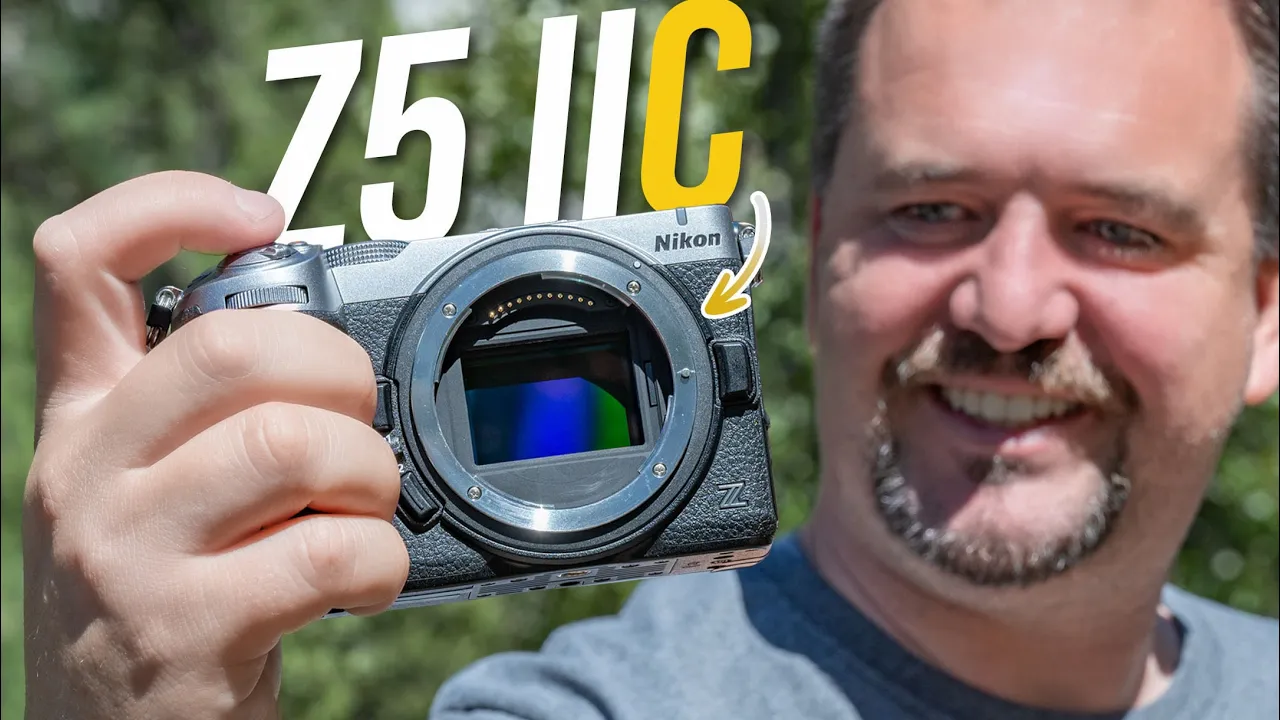
The Nikon Z5 II is one of our favorite cameras of 2025 and whenever people are looking for an entry-level full-frame camera, it's one of the ones that Chris Nichols and I recommend the most. But now we've got the Z5 II C, which is kind of like a Z5 II without a viewfinder. Is that all there is to it? Yeah, kind of, but we're going to go a lot deeper today because I'm going to use the Z5 II C to absolutely shoot the hell out of Yosemite
90 words, the words spoken in the first 30 seconds at 179 words per minute.
Free, no signup. See how the first 30 seconds hold attention, with rewrites.
Sentence shape
| Measure | This transcript |
|---|---|
| Sentences | 184 |
| Average words per sentence | 17.5 |
| Longest sentence | 77 words |
| Questions asked | 12 |
| Sentences containing a number | 36 |
What this transcript is
Every word below is the caption track YouTube publishes for this video, pulled from the video itself and reproduced unchanged. It is not Prepublish's writing, not a summary, and not a re-transcription: it is the video's own published captions. English captions, generated automatically by YouTube, in the video’s original language. Source: the video on YouTube. A channel that would rather this page did not exist can ask for its removal through the contact page, and it is removed.
No Script X-ray for this video: YouTube shows a Most replayed graph only once a video has enough views.
The Nikon Z5 II is one of our favorite cameras of 2025 and whenever people are looking for an entry-level full-frame camera, it's one of the ones that Chris Nichols and I recommend the most. But now we've got the Z5 II C, which is kind of like a Z5 II without a viewfinder. Is that all there is to it? Yeah, kind of, but we're going to go a lot deeper today because I'm going to use the Z5 II C to absolutely shoot the hell out of Yosemite and I'm going to be joined in this video by PetaPixel editor-in-chief Taran Schneider and YouTuber and friend of the show Jason Vong. >> HELL, YEAH. >> SO, I'm Jordan Drake.
This is PetaPixel. And yeah, it's kind of like a Z5 II without an EVF. >> [music] >> Okay, if you're making a video in a gorgeous location like Yosemite and you cut to some of the stunning landscapes, you don't want to play like some garbage YouTube creator music like this. >> [music] >> No, you want good music and thankfully our friends [music] at Audio have the best selection of music created by real human beings making real music.
[music] The people who know Audio love Audio, RIGHT, JASON? >> HELL, YEAH. [screaming] >> That's right. And you know what? If you want lifetime access to their excellent library, the general price is [music] $500, which is totally fair for lifetime access to all this great music, but I can do way better for you. If you use coupon code PetaPixel 199, you only pay $199 for lifetime access to this incredible library. That's a smoking deal you should definitely take advantage of.
So, thank you so much for this sweet deal, Audio, and thank you for sponsoring this episode. Let's go take some pictures. So, the first thing you're wondering is why is my face in this video? Where is Chris Nichols? Well, there were some unavoidable circumstances, so he wasn't able to join us for this full review, but fortunately, we reached out and living legend Jason Vong was able to join us, and he's actually going to be filming this entire video on this Nikon Z 5 II, so you can get a real look at how the footage looks on that.
I'm going to be taking pictures today, and I should also mention Nikon is providing accommodations and all of our food, but they did not fly us out here. Thank you, PetaPixel members. And they have no editorial input on this video whatsoever. When Nikon replaced the Z 5 with the Z 5 II, we were really impressed with all of the professional features that they were still able to pack into their starter full-frame camera.
But, coming along with that, we saw a considerable price increase. So, that meant that there was still room left in the line for a camera priced where the Z 5 original was launched at, and I think that's why we're seeing this here. Despite this being a more affordable body, they've actually maintained a lot of what we liked about the Z 5 II in terms of the handling, and we have an extremely comfortable grip. We've got twin control dials on this.
And if you look at the silver version here, I actually really like the metal top plate that they've put on this. I wouldn't have been surprised if they used a smaller body, but we're still using the EN-EL15c that you see on the majority of Nikon's professional bodies. And in terms of ports, we're still getting microphone jack, headphone jack for video recording, USB-C, and a micro HDMI port. I mean, it is really full-featured, except for the displays.
Jason says this is a totally normal frame that no one will make fun of, so that's my cue to talk about the displays on this, and I know I haven't teed it up as all, but this camera does not have an electronic viewfinder on it, unlike the Z 5 II. We do get, however, a fully articulating LCD panel on this, but surprisingly, considering that it's the only way you can view your photos, this is a lower-resolution display.
So, it's not the sharpest display. I do find I'm punching in quite a bit when I'm manually focusing, but it is pretty bright. We don't have an actual knit rating on it, but I found even in really bright sunlight like this, I'm still able to make out my composition pretty easily. Another big differentiator compared to the Z 5 II is we do lose the AF-ON button and the autofocus joystick. Now, the autofocus on button isn't a big deal.
There's an auto exposure and focus lock button that's right in a great place. Reprogram that to AF-ON and you're good to go. But, I do find myself constantly reaching for an autofocus joystick that's not there and I'm sure it's driving Jared absolutely crazy. >> You would think that, Jordan, but actually on this camera it doesn't really bother me and I'll explain why. I have touchscreen control to decide where I want to put the focus point and I could also use the D-pad back here.
But, the thing that really bothers me about not having a thumb stick is the cameras that don't do that usually also don't give you a way to quickly perfectly re-center the focus point. Well, Nikon actually does because they don't put the menu button on the middle of the D-pad it says okay instead. Okay immediately re-centers me. I don't actually miss the thumb stick that much on this camera. >> That That was unexpected.
Okay, well, the nice thing is I did get some time to go shoot some street photography in San Francisco and get accustomed to it. So, yeah, for the first hour there constantly reaching for the AF joystick that doesn't exist and I'm doing the camera bonk where I keep putting the camera up to my eye expecting an EVF that isn't there. But, over the course of the day I got really used to it and I'm really enjoying the handling now that I played with the camera a bit. >> [music] [music] >> Start shooting landscapes with this camera and obviously I'm thinking a lot about the image quality that we're going to see from it.
So, you're probably wondering about the sensor. Well, just like the Z 5 2, this is using the sensor I'm now going to call that sensor because it is the 24 megapixel full frame sensor that we've been seeing in cameras for almost a decade now, but honestly for good reason. It's excellent in high ISO and you can see in these landscape examples when we really want to push the shadows at base ISO, they really recover nicely and there's not a lot of noise in them at all.
So, it's not terribly exciting sensor, but what is also really going to help your image quality and is quite rare at this price point is we still have IBIS. You're getting 7 and 1/2 stops of stability in the center of the image and that means a lot of the time you can use slower shutter speeds, keep your ISO down and get better image quality overall. It's really nice to see it on this camera. So, one thing I do like about having quick access to all of the different profiles on this uh the custom ones and the ones that are already built in is it's just right there and when I see a frame I'm not sure about, I'm actually just hitting that button and scrolling through a bunch of them just to see if any of them kind of inspire me in the way I might process the image.
I mean, I'm going to play with pretty much all of these as a raw file, but I find it really good for visualizing what that photo could actually become. Like this cinematic blue tree. Oh ho! This thing's popping. I might not even play with that. When the other cameras in the Z 5 series were launched, I was really impressed that they had redundant media. There were dual SD card slots on both of those, and usually only see that at higher priced cameras.
But, this is a little bit scaled back from those. One thing I do love is that we've got an SD card door on the side of the camera. That means you don't have to take off the quick release plate if you've got one on in order to access the SD card slot. But, within this compartment, we do find but a lowly single SD card slot. But, this is a nice fast UHS II card. So, if you're shooting fast bursts or using more demanding video modes, this can keep up.
But, if you happen to get an absolute banger sunset shot in Yosemite and your card corrupts, you are boned. One thing that's carried over largely from the Z 5 II, and I actually think it's a really good thing, is the autofocus and burst rates on this. So, talking about the autofocus, it's a huge advancement over the original Z 5. We've got the 3D tracking system that I like to use. Just put your focus point on a subject, it'll track it.
If it has eyes, it'll jump right to it. It's very intelligent. That carries over onto this. But, there is an exciting new feature, and that is fish detect. And I tried to find fish in the river here. I'm not Chris Nichols. I don't see a damn fish. So, we went to the Irish Bank, which is an Irish pub in San Francisco. It's awesome. Really good sausages. And, there's a giant fish there, and you can see it'll track the fish, but it'll also attempt to hit the eyeball.
So, if you want to go shoot in like aquariums and things like that, this could be a really useful mode. As well, in terms of burst rates, I'm pretty impressed with this. The mechanical shutter is able to get up to 14 frames per second shooting JPEG, though it does drop a little bit if you're shooting raw raw plus JPEG down to 11 frames per second. Which is very fast for this class of camera. But, if you do want faster burst rates, and you're willing to risk the chance of rolling shutter, this will push up to 30 frames per second with it.
But, I also love that this mechanical shutter will go up to an 8,000th of a second. Again, not very common in this class of camera. So, in terms of just fast shooting and tracking moving subjects, this is a very sophisticated camera. So, getting out here and shooting a little bit more landscape and waterfall, I mean, this is where I'm using the fully articulating LCD all the time anyways. That kind of brings me to the main point with this camera.
Like, yes, I really love having an EVF and I keep bringing it up over and over because it's so important to me. But, if you look at some of the other cameras out there, the Fujifilm XM5, the Panasonic S9, these are really popular cameras that don't have electronic viewfinders. So, if you are someone who's going to primarily shoot using the LCD, well, here saving $450 compared to a Z5 II with a few other small omissions does make a ton of sense.
I mean, I consider using a viewfinder kind of an essential aspect of photography, but if that doesn't apply to you, then that does definitely make this camera really compelling. >> [music] >> Jason, does the font they're using here make it look like Yosemite just builds mid-level duplexes? I have proof [music] this camera can do wildlife. >> [music] >> Just outrageously phallic. Ooh. Exceptionally [music] phallic. I mean, if you [music] can't find a composition that works for you, I guess just shoot sun stars.
Sun stars. [music] Everyone loves sun stars. They're not contentious in the comments at all. >> [music] [music] >> You know, it's kind of amazing how much of my job has become editing in an air-conditioned car. And if I'm trying to keep cool, I don't want some SSD burning up. That's why I've been using this Glyph EX40 right here. Keeps nice and cool. And this thing is smoking fast. I mean, we've tested it. We're getting over 3,000 MB per second sustained speeds on it.
So, I'm going to use that right now and take a look at some of Jason Vong's footage. Looks like he's done a pretty good job here. Uh and then we can talk about video. Oh, hey. It's Jordan here to talk about the video features on this camera. And typically when manufacturers release a new low-cost alternative model, video features are one of the first things that they will strip out. But oddly, this has basically all the video functionality that we already saw in the Z 5 II.
And it even has one more trick up its sleeve. It's got a tally lamp, which lets you know when you're recording. So, the presenter can say, "Oh yeah, the camera's rolling right now." And we love it. Right, Jason? >> Hell yeah. >> Video quality on this camera is excellent. If you shoot 4K up to 30 frames per second, you're getting over sampled 4K recording with plenty of detail. If you do jump it up to 4K 60, it does bring you to an APS-C crop, but that is the case with all the other full frame video cameras in this price range with the exception of Canon's R8 series.
In terms of profiles, you can use all of the other photographic profiles, but also you get access to N-Log for more expansive dynamic range, and we love N-Log, don't we, JASON? >> HELL, YEAH. >> That's right. Really surprisingly for this price range, this camera can also record raw video in the form of N-Raw, and it can do it right to an SD card. But this might be one of those situations where Nikon was too busy wondering if they could whether than if they should, because the sampling method that it uses on this is significantly softer than just the internal 10-bit recording that's compressed, and you can see right here it is a big image quality hit.
The only benefit to doing this is it gives you a lot more flexibility for adjusting white balance and tint and post, and I'm not willing to give up the sharpness in order to get access to that in most situations. >> HELL, NO. >> LET'S REMEMBER, a lot of the best-selling video cameras out there don't have an EVF. It doesn't seem to be as important to a lot of videographers who aren't Jordan Drake if you're planning to record video.
And the video capabilities on this balance really well when you look at some of the other options. Sure, the Canon R8 series are a little bit more capable for slow motion recording, and I'd say Panasonic's S9 has a more effective stabilization, but this is probably one of the most well-rounded packages, especially at a lower price than either of those options. So, I've had an amazing time shooting here in Yosemite and in San Francisco to really come to grips with this camera.
And at the end of it all, I think you kind of have to approach it from two angles. First of all, are you a Nikon shooter already? Do you have Z mount lenses, or are you looking to adapt F mount glass? And in that case, it puts you in kind of an interesting situation. Just below this, you have the Z52, which does have an electronic viewfinder on it, and it's a very capable camera. But undoubtedly, this is giving you better image quality, not just because of the full-frame sensor, but also the addition of IBIS.
However, it's really hard to ignore the fact that for $450 more, the Nikon Z 5 II is out there, and it is a very compelling camera. But, if you don't require an EVF for the way you shoot, if you really don't miss the auto-focusing joystick, then this is giving you most of the actual features that'll really benefit you in terms of image quality and functionality, and the auto-focus was just incredibly consistent while I was out shooting.
So, if you don't need an EVF, this is a great way to save some money and maybe put it towards a higher-end lens. But, if you're not an existing Nikon shooter, then you do have some interesting options out there. The first one that comes to mind is the Panasonic S9. It's very similar in that it doesn't have an electronic viewfinder on it. It's a very popular camera, but it doesn't have a mechanical shutter, and that really restricts the kind of photography that you can do.
Where this has an excellent mechanical shutter and a solid mechanical burst rate to boot. Looking over at Canon, you've got the older R8 in a similar price to this, but this is definitely a better handling body, and the battery life is significantly better, even though it doesn't have the full-width 4K 60p recording that the Canon offers. And Sony puts you in a really difficult situation, because basically you're looking at older outdated models like A7 IIIs, but the A7C II, which I consider kind of a competitor this, is significantly more expensive.
You're really looking at APS-C if you want a current Sony in this kind of price range. But, for me, Jordan, renowned YouTube photographer, I have to say, I did, once I got accustomed to the limitations of this camera, find it to be an outstanding travel companion. Nikon has a lot of really compact lenses that were a lot of fun to shoot on this trip, and the image quality out of it is absolutely outstanding. So, if you don't need an EVF, you should definitely take a look at this.
You know what else you you take a look at? Is our podcast, which is in video format. You can watch it right here on the same YouTube channel, or if you just want audio, you can listen to it on all of your favorite podcasting apps. And you know how we're able to travel on trips like this? I teased it at the start. It's because of our Petapixel members. And you're not just doing it to let us do wicked shoots like this.
No, there are endless, boundless perks. Look at this. It fills up an entire screen. You don't even have time to read all of them before look, now it's gone. You didn't have time. Too many [music] perks. Thank you so much for watching this episode, and I promise you next time we're out on a beautiful photo adventure like this, it's going to be with Chris Nichols, not Jordan Drake, the video guy. See you later.
The words are the caption track's own and nothing is reworded or re-transcribed. Paragraph breaks are placed between sentences so the text reads as prose.
Free tools for your own script. No signup, no login.
Paste your draft and see where viewers are likely to drop off, with a rewrite for each weak line.
Paste the first 30 seconds of your own draft for a hook score and rewrites.
Check your draft against YouTube's advertiser-friendly guidelines before you record it.
Read this channel's public videos and transcripts, and download a writing brief for it.
Most used terms
Filler phrases
56 in total: like 20 · kind of 12 · actually 9 · I mean 6 · you know 5 · basically 2 · uh 2.
A literal whole-word count of the same phrase list the Prepublish browser extension uses, so a phrase inside another word is not counted and a phrase used in its ordinary sense still is. It is a count and not a judgement.