Getting the transcript
Reading the captions from YouTube. A video nobody has opened here before takes 10 to 30 seconds; this page fills in on its own.
Getting the transcript
Reading the captions from YouTube. A video nobody has opened here before takes 10 to 30 seconds; this page fills in on its own.
Smarthistory · @smarthistory-art-history
Where viewers went back to watch this video again, from YouTube's public Most replayed graph, lined up with what was said at that moment.
Most replayed moment #1
3:191.9x the video's typical replay level
which reminds us that Venus was born from the sea. - [Steven] What's important here is that Augustus has chosen this cupid because he linked his lineage back to the ancient hero Aeneas. Aeneas who had come from Greece, and therefore he traces his lineage back to Venus.
Said at 3:12
Most replayed moment #2
0:271.7x the video's typical replay level
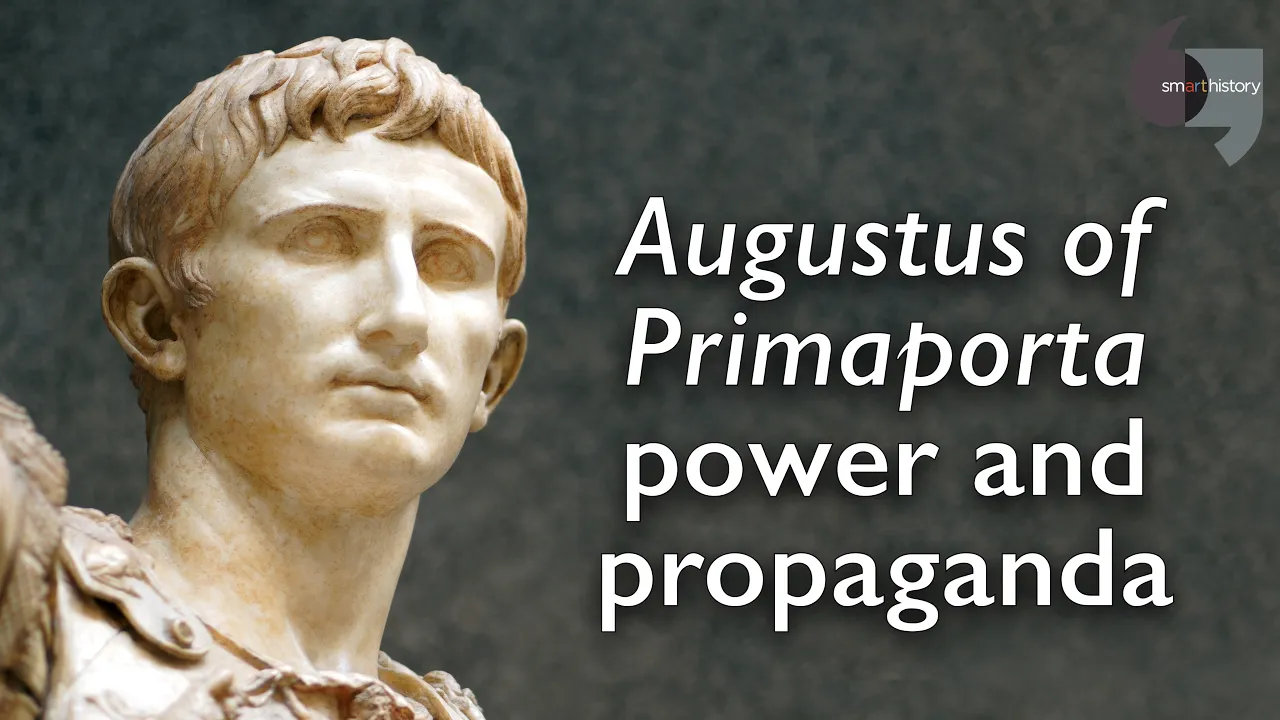
There was a period of civil war that followed that and Augustus emerges as the first emperor of Rome. - [Steven] And the word Primaporta in the title refers to a gate north of the city of Rome. This sculpture was found on the estate of Livia, who was Augustus' wife.
Said at 0:19
Most replayed moment #3
0:571.5x the video's typical replay level
around the year 19 or 20 BCE, that is, during the lifetime of Augustus after his military victory over one of the great armies in the East, the Parthians. - [Beth] The Parthians were victorious over Rome several times in what the Romans considered
Said at 0:50
The graph counts replays. It does not show where viewers stopped watching.
Words
1,094
Runtime
6:23
Speaking pace
171wpm
Reading time
5min
171 words per minute, between the 160 25th percentile and the 181 median of 349 measured videos. That distribution comes from the 349-video hook study.
Opening (first 30 seconds)
(jazzy piano music) - [Steven] We're in the museums of the Vatican in Rome and we're looking at an ancient over life sized sculpture in marble called Augustus Primaporta. - [Beth] This is the great Augustus, the first emperor of Rome. Rome had a period of being a republic. There was a period of civil war that followed that and Augustus emerges as the first emperor of Rome. - [Steven] And the word Primaporta in the title refers to a gate north of the city of
86 words, the words spoken in the first 30 seconds at 171 words per minute.
Free, no signup. See how the first 30 seconds hold attention, with rewrites.
Sentence shape
| Measure | This transcript |
|---|---|
| Sentences | 73 |
| Average words per sentence | 15.0 |
| Longest sentence | 36 words |
| Questions asked | 0 |
| Sentences containing a number | 1 |
Most used terms
Filler phrases
3 in total: like 2 · actually 1.
A literal whole-word count of the same phrase list the Prepublish browser extension uses, so a phrase inside another word is not counted and a phrase used in its ordinary sense still is. It is a count and not a judgement.
What this transcript is
Every word below is the caption track YouTube publishes for this video, pulled from the video itself and reproduced unchanged. It is not Prepublish's writing, not a summary, and not a re-transcription: it is the video's own published captions. English captions, published by the channel, in the video’s original language. Source: the video on YouTube. A channel that would rather this page did not exist can ask for its removal through the contact page, and it is removed.
(jazzy piano music) - [Steven] We're in the museums of the Vatican in Rome and we're looking at an ancient over life sized sculpture in marble called Augustus Primaporta. - [Beth] This is the great Augustus, the first emperor of Rome. Rome had a period of being a republic. There was a period of civil war that followed that and Augustus emerges as the first emperor of Rome. - [Steven] And the word Primaporta in the title refers to a gate north of the city of Rome.
This sculpture was found on the estate of Livia, who was Augustus' wife. - [Beth] Who lived near the gate. Now we think that this is actually a copy of an original bronze sculpture that was probably set up in public, but this marble version was a private version that was discovered in her home. - [Steven] The bronze was probably made around the year 19 or 20 BCE, that is, during the lifetime of Augustus after his military victory over one of the great armies in the East, the Parthians. - [Beth] The Parthians were victorious over Rome several times in what the Romans considered humiliating defeats. - [Steven] But these were also important symbolic victories.
The Parthians captured the Roman standards. These were symbolic staffs that functioned like flags. - [Beth] They were carried by the Roman legions into battle. When you captured them, it was a symbol of the defeat of Rome. - [Steven] And so we think that this sculpture, originally in bronze, was meant to celebrate Augustus' great victory over the Parthians. - [Beth] Finally, they had defeated this formidable enemy and that happened under Augustus.
Now every part of this sculpture speaks of Augustus and his reign. This is all about the political ideology of this new Augustan era. - [Steven] We see an incredibly naturalistic handling of the human body, of its musculature, of its bone structure. The figure seems as if he might be moving forward easily. There's nothing static about him. Look at the fringe. Look at the way that the drapes fall down. - [Beth] Really showing off what the artist could do with marble.
It's important to remember too, that this sculpture was once painted. His eyes, his pupils, his hair, his uniform, these things were brightly painted. And he raises his right hand as if in the midst of addressing his troops. He's got his weight on his right leg. His left leg is bent. This is contrapposto, directly borrowed from ancient Greek art. This is a natural position for the body, a relaxed position, but also one that gives it a sense of being alive. - [Steven] But here, the sculptor is borrowing more than just the position of the body.
This seems to be an almost direct copy of a sculpture by a very famous ancient Greek artist, whose name is Polykleitos, specifically a sculpture called the Doryphoros. - [Beth] To recall the golden age of Greece, implying that Augustus was bringing a golden age to Rome. - [Steven] And that Rome is the inheritor of the great Greek tradition. It's also reflected in a subtle symbol at the feet of the emperor. Now at first glance, this may look like a little angel.
In fact, it's a cupid, and Cupid was the son of the goddess Venus. - [Beth] And Cupid is riding a dolphin, which reminds us that Venus was born from the sea. - [Steven] What's important here is that Augustus has chosen this cupid because he linked his lineage back to the ancient hero Aeneas. Aeneas who had come from Greece, and therefore he traces his lineage back to Venus. In other words, he was descended from the gods. - [Beth] His face is youthful; it's beautiful.
He has these lovely, high cheekbones. He raises his eyebrows just slightly to create some lines in his forehead to indicate a seriousness and nobility. But we know that he was older when these sculptures were made, and so the artist is intentionally idealizing Augustus, making him more youthful, more athletic than he was in reality. And this too looks back to the ancient Greek tradition from the classical period of creating beautiful, idealized figures. - [Steven] And it's simultaneously in contrast to the old Republican tradition of portraits that represented age and experience through the lines of the face, through the imperfections of the face. - [Beth] So Augustus is inventing a new tradition for the portraiture of Roman emperors, one that idealizes instead of emphasizing that dignity that comes with age. - [Steven] Let's turn to the cuirass, to that armored breast plate, which is probably representing something made out of a hardened leather.
It is absolutely full of imagery. - [Beth] And it tells us so much about Augustus and his great achievements, focusing in the center on a figure which may be the personification of Rome itself, the goddess Roma. - [Steven] We don't really know that the figure on the left is Roma. It's a good guess, but scholars are arguing about this. What we do know is that whoever it is that figure represents Rome. - [Beth] And on the right, we see a Parthian who's handing over a standard that may symbolically represent the hundred or so standards that were returned to Rome after this decisive victory.
And at the top, we see an Eagle, which is typical of these standards. Augustus is getting back those important military symbols. And the Parthian himself wears baggy trousers. He has a beard. He could easily be read as a barbarian, as a foreigner, as a Parthian. - [Steven] Just below this pair, we see Tellus the goddess of earth. She lounges back and holds two infants. And above, a personification of the sky. - [Beth] Holding up the clouds. - [Steven] We see the ancient Greek god, Apollo, holding a lyre and on the opposite side we see the goddess Diana and her stag. - [Beth] And above those two divine figures, we see representations of captives. - [Steven] Referring to important earlier victories by Augustus.
And just above the captives, on either side, we see on the left a personification of the sun, and on the right a personification either of the dawn or perhaps the moon. - [Beth] Overall, we get this impression that Rome's victory over its enemies, this expansion of its empire, is something that is divinely ordained. And that Augustus is this divinely ordained leader of the Roman empire. (jazzy piano music)
The words are the caption track's own and nothing is reworded or re-transcribed. Paragraph breaks are placed between sentences so the text reads as prose.
Free tools for your own script. No signup, no login.
Paste your draft and see where viewers are likely to drop off, with a rewrite for each weak line.
Paste the first 30 seconds of your own draft for a hook score and rewrites.
Check your draft against YouTube's advertiser-friendly guidelines before you record it.
Read this channel's public videos and transcripts, and download a writing brief for it.