Getting the transcript
Reading the captions from YouTube. A video nobody has opened here before takes 10 to 30 seconds; this page fills in on its own.
Getting the transcript
Reading the captions from YouTube. A video nobody has opened here before takes 10 to 30 seconds; this page fills in on its own.
History Helms · @HistoryHelms
Words
2,149
Runtime
11:54
Speaking pace
181wpm
Reading time
9min
181 words per minute, the same as the 181 median of 349 measured videos. That distribution comes from the 349-video hook study.
Opening (first 30 seconds)
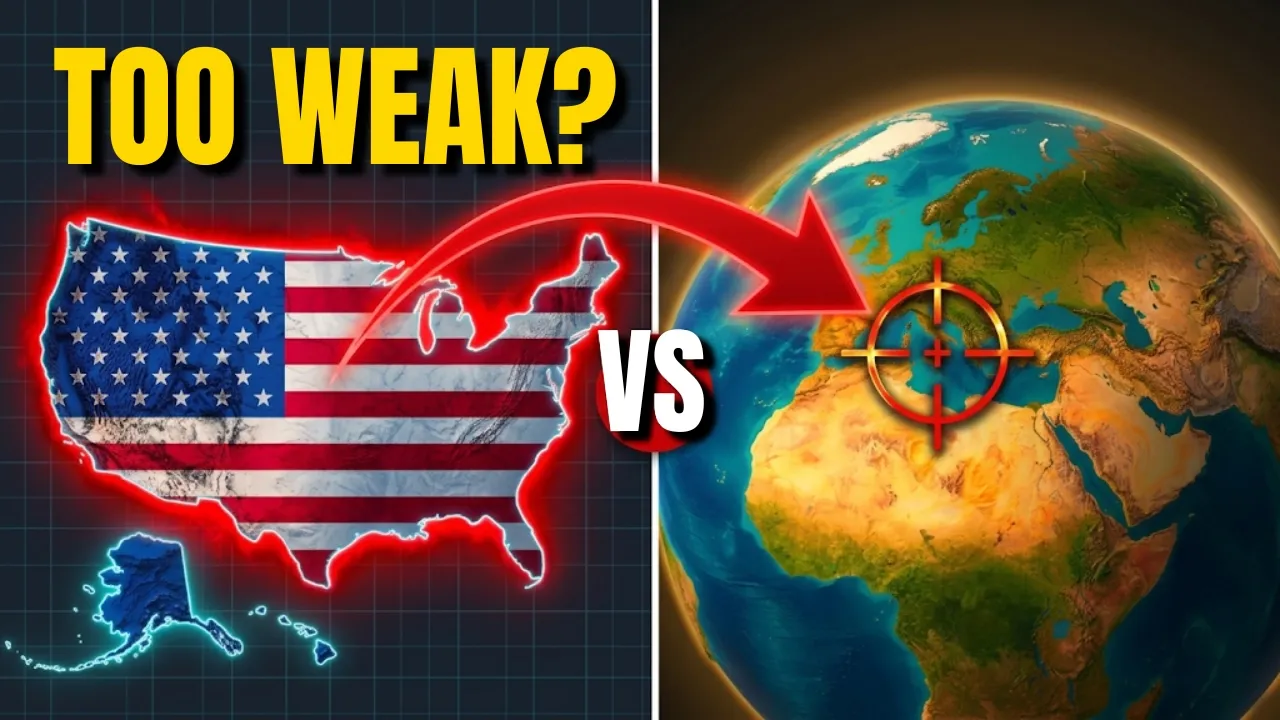
The US spends more on defense than the next nine countries combined. We have bases just about everywhere and no shortage of geopolitical disagreements. So why not, you know, why doesn't America just take over the world? Well, to be direct, physical invasion is bad for business. Winning a battle doesn't mean what it used to and most importantly, we now have something even better than conquest. Here's what happened. Before the 20th century, empires and nation states operated on the brutal logic of more land equals more stuff for your
91 words, the words spoken in the first 30 seconds at 181 words per minute.
Free, no signup. See how the first 30 seconds hold attention, with rewrites.
Sentence shape
| Measure | This transcript |
|---|---|
| Sentences | 141 |
| Average words per sentence | 15.2 |
| Longest sentence | 53 words |
| Questions asked | 19 |
| Sentences containing a number | 14 |
Most used terms
Filler phrases
33 in total: like 10 · you know 7 · right? 6 · kind of 3 · sort of 2 · uh 2 · actually 1 · basically 1 · literally 1.
A literal whole-word count of the same phrase list the Prepublish browser extension uses, so a phrase inside another word is not counted and a phrase used in its ordinary sense still is. It is a count and not a judgement.
What this transcript is
Every word below is the caption track YouTube publishes for this video, pulled from the video itself and reproduced unchanged. It is not Prepublish's writing, not a summary, and not a re-transcription: it is the video's own published captions. English captions, generated automatically by YouTube, in the video’s original language. Source: the video on YouTube. A channel that would rather this page did not exist can ask for its removal through the contact page, and it is removed.
No Script X-ray for this video: YouTube shows a Most replayed graph only once a video has enough views.
The US spends more on defense than the next nine countries combined. We have bases just about everywhere and no shortage of geopolitical disagreements. So why not, you know, why doesn't America just take over the world? Well, to be direct, physical invasion is bad for business. Winning a battle doesn't mean what it used to and most importantly, we now have something even better than conquest. Here's what happened. Before the 20th century, empires and nation states operated on the brutal logic of more land equals more stuff for your people.
Back when you could have fun. If history Helms wanted to increase his kingdom's resources and revenue, he and his elite Helm and warriors would invade the next door neighbor, presumably whatever makeshift pseudo nation Eric has established, seize their gold mines, take their food, they take their women, enslave the folks, you know, you really run it up. But over the last century or so, we got soft and boring. Okay, that that that's a little dramatic, but there was a very real structural shift in global economics.
Before, wealth was tied to things stolen, you know, farmland, precious stones, right? But when the most valuable things on Earth are intangible concepts, the game changes, doesn't it? No military in the world, even America, can just roll up and steal intellectual property, steal capital markets and global supply chains, and then just march back home with them. Here's a vital distinction. Physical conquest is effective if you're plundering gold, but it doesn't work quite as well when you're plundering code.
There's also the unavoidable paradox of modern conquest. Invading a modern nation completely destroys the very mechanisms that made it valuable in the first place. The world today is just so different from what we remember reading about in history class. I say reading about in history class like half of you didn't just skim through the section to find the bold words and answer the questions. Yeah, I know you. I know who you are.
If a foreign power invades a tech-driven economy now, key engineers flee, [music] international banks freeze local accounts, supply lines snap, physical factories get destroyed in bombing runs. If you win, all you really get is a non-functional territory with a destroyed economy and a big repair bill if you want to do anything with the new land. Traditional conquest for America would just destroy the resources it showed up for.
Now, if physical land is no longer the target, how does a superpower like America actually project economic dominance? Well, it's simple. You don't conquer the territory. That's old head unk geopolitical strategy. Instead, you build the market rules everyone else has to play by, backed by the threat of Call of Duty kill streaks if anyone doesn't like it. Let me explain. World War II is the big landmark, perhaps turning point for us.
Once the fun was over, the US didn't keep Europe or any part of Asia as conquered colonies. No, no. Instead, it completely shifted the meta with a new globalized rules-based economic order, forcing the entire world to use the US dollar. You'll like this. Through the 1944 Bretton Woods agreement, the US dollar was backed by actual gold in actual vaults. But we started running out of gold, so Nixon put an end to it in 1971, meaning the US dollar was just paper backed by nothing.
In history niche, [music] this is what you call a problem. So, to save the dollar, America struck a deal to defend Saudi Arabia's royal family as long as it sold all of its oil exclusively in US dollars. [music] If you ever heard the term petrodollar, this is why it's called that. Now, we can play the ethics game some other time, but from a geopolitical strategy standpoint, this is a power play. What's that, everyone else in the world?
You need oil for your cars, factories, and militaries? You can have it, so long as you use our money, generating worldwide demand for our money. So, now if you're the US, all you really need to do is puppy guard supply lines and do your best Sodom and Gomorrah impression whenever someone tries to disrupt that oil supply or threatens to stop using the US dollar for its oil dealings. This is interesting, too. In simple language, much of the American Middle East meddling is very much a make sure your own citizens live comfortably at the expense of the comforts of foreigners kind of thing.
Keep your oil dollar valuable and you can keep inflation and gas prices down among other things. Let me know in the comments if most Americans knew that the fighting overseas was directly attached to their everyday comfort, would public opinion about constant foreign wars change at all? Doesn't this add some new context to events you've already heard about? Saddam Hussein stopped accepting Iraq's oil exports in US dollars and switched over to the euro in 2000.
Three years later, Iraq suddenly had weapons of mass destruction and well, in 2009, Libyan dictator Muammar Gaddafi suggested oil-rich African and Arab nations stop dealing with the US dollar and instead demand gold. Now, Gaddafi had already surrendered Libya and WMDs. So, plan A couldn't work as far as justification. So, the US called in a killer strike to tag him and let the local rebels finish him off. Do you understand the game, my friend? >> [music] >> In March of 2026, Iran started selling its oil to China in yuan, not American dollars with a discount.
Uh-oh. >> [laughter] >> Uh-oh. But, we should really pay attention to this current conflict between the US and Iran because it teaches us a lot about the shift from invasion and plunder to control by way of changing the rule book. If Hussein and Gaddafi were trying to cheat the rules of the petrodollar or just not play the game at all, Iran represents a strong attempt to just change the rules itself. Unlike Iraq and Libya, Iran controls the Strait of Hormuz, a choke point that handles a fifth of the world's oil.
Ever heard of that Strait of Hormuz? It also has a population of 85 million spread across a huge mountainous nation. Most threatening of all though is Iran dealing within the BRICS framework, which does not rely on Western banking. So, now you have the biggest oil sellers and the biggest oil buyers in the same room, proving you can indeed do business without American currency. Bad news for the petrodollar. Now, we do hear the screen people telling us about the Strait of Hormuz issue, but I do really believe that's just because we can literally see gas prices spiking hard.
But, make no mistake, if they can make you believe this conflict is really just some thinly veiled, you know, they have nukes or we have to defend our freedom sort of thing, they would certainly just take that route instead. Why spend trillions and lose countless American lives trying to play the game when you can just instead rewrite the rules and win the game every time? By the way, drop me a like if you learned anything at all so far and hype the video.
It really does help. Thank you. Now, let's assume a nation ignores the economics and decides to invade anyway. This brings us to the ugly reality of modern military asymmetry, especially for a major power like the US. >> [music] >> Basically, defeating a country's fighting force is shockingly easy compared to occupying its people. Modern military technology, including stealth jets that can level towns in seconds and satellite intelligence that can spy on history homes from space, is engineered for decisive force-on-force state warfare.
It's no secret a modern superpower can neutralize a weaker nation's conventional defense network in in days, a couple hours if that, right? And you'd [music] think that that would be the end of it. Just kind of take over from that point, right? Like the history books make things seem. But, phase two is occupation. And along with occupation comes insurgency. [music] In an occupation, the mathematical advantage flips [music] to the defender.
A multi-million dollar armored vehicle can be disabled by a $40 IED someone built in the tent. A uniformed army has to secure every street corner, every power grid, and patrol every spot 24/7. An insurgent only needs to strike once and blend back into his population. And really think about this. Put yourself in these people's shoes. The American bombing runs have turned your town into glass with never-before-seen technology because your leader didn't want to play the America oil game.
And everyone you know is either fled just in time or been wiped out. Then, from behind the rubble or whatever intact piece of shelter is nearby, you see the guys indirectly responsible, and they happen to have everything to lose while you simply don't. And we've seen this all before. Vietnam, Iraq, Afghanistan, or perhaps America takes the sneaky route, right? Instead of unleashing biblical hellfire from the sky and marching in, it instead puts in a puppet leader.
What's that? It doesn't work? Of course it doesn't work. The US tried in Cuba in the '50s with Batista, and that gave us Castro. It tried in the '60s and '70s in Vietnam with its revolving door of pseudo leaders until the Viet Cong smoked them. It tried in Iran in the '50s with the Shah Pahlavi, and it gave us the Iranian Revolution led by Ayatollah Khomeini, not Khamenei. Which maybe kind of sort of explains some of the present-day Iranian feelings toward America.
Occupation, sooner or later, becomes an endless bleeding financial drain. You end up spending trillions attempting nation-building in a territory where the locals, who are very much in wounded animal mode, now view you as an illegitimate occupier. You can strike them all you want and take their tools to strike you back. But that does not always mean the enemy will behave. If anything, it does the opposite. But beyond economics and military tactics, there is a fundamental political reason why territorial expansion stopped.
It's just against the rules now. No, really. Prior to 1945, international law largely accepted the right of conquest. If you won a war, congratulations, buddy. Whatever was on that land now belongs to Post World War II institutions like the United Nations explicitly outlaw the territorial acquisition of land by force. And look, man, I know we're all modern and civilized now, but >> [laughter] >> and never mind, never mind.
If a nation violates this fundamental norm now, the systemic pushback is really bad. Crippling global sanctions, isolation from international trade, and worst of all, the screen people talk bad about you. And that's the real backbreaker here. Or they they start a a hashtag about you on Twitter. They start making you know, they put flags in their bio and stuff, right? Breaking the rule of non-annexation dismantles the very diplomatic alliances that keep global influence in place.
More importantly, domestic politics in a democratic society actively resists long-term imperial expansion. Foreign occupations need money. Endless flows of taxpayer dollars and young lives, both American and non-American. Eventually, even when things are going quote-unquote well for the US and its occupation, domestic [clears throat] voter fatigue sets in. I'm sure you've heard about this on the news or heard about it in conversation.
People start asking why trillions of dollars are being funneled into military bases and weaponry in a desert halfway across the world that the politicians making the whole thing happen couldn't find on a map instead of funding state governments to improve domestic infrastructure. Fix that pothole, right? Provide healthcare or get education out of the gutter. So, when American political leaders attempt foreign occupation or just try to mess around across the Atlantic at all, they face intense backlash as it feels unnecessary in the 21st century.
Though the foreign meddling happens anyway. Americans are tired of the foreign wars. One of the few issues you'll see both sides agree on. And we're the ones that benefit from it. So, imagine how the people who happen to live in the most commonly targeted nations must feel. That's a non-partisan statement. Like, I could only imagine what that's like, you know? In the modern world, American conquest is expensive and unpopular, And military occupation is unwinnable.
So, forcing a global economic dependence game with vicious hellfire for those who don't want to play is the smarter and more profitable strategy. Lots of things in American history and culture look weird at first, [music] but make perfect sense once you look a little closer. Here are two really good examples.
The words are the caption track's own and nothing is reworded or re-transcribed. Paragraph breaks are placed between sentences so the text reads as prose.
Free tools for your own script. No signup, no login.
Paste your draft and see where viewers are likely to drop off, with a rewrite for each weak line.
Paste the first 30 seconds of your own draft for a hook score and rewrites.
Check your draft against YouTube's advertiser-friendly guidelines before you record it.
Read this channel's public videos and transcripts, and download a writing brief for it.