Getting the transcript
Reading the captions from YouTube. A video nobody has opened here before takes 10 to 30 seconds; this page fills in on its own.
Getting the transcript
Reading the captions from YouTube. A video nobody has opened here before takes 10 to 30 seconds; this page fills in on its own.
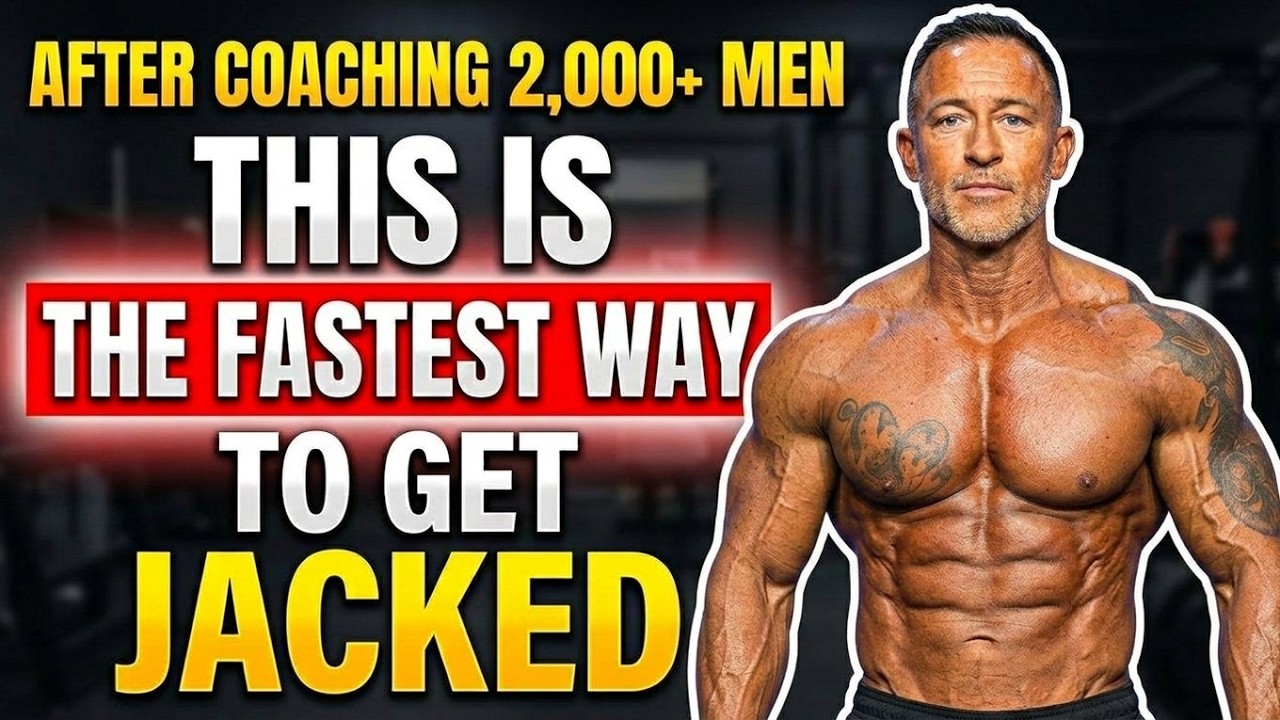
Gary Walker · @WalkerFitMuscle
Where viewers went back to watch this video again, from YouTube's public Most replayed graph, lined up with what was said at that moment.
Most replayed moment #1
16:0910.3x the video's typical replay level
Saturday would be a lower body day focused again on quads, hamstrings, glutes, and calves. Sunday would be another full recovery day. All right, now, here's the important part. Don't make the mistake of thinking more volume is going to equal more growth. The goal
Said at 16:02
Most replayed moment #2
16:418.3x the video's typical replay level
to 18 sets. And for deltoids, 12 to 18 sets. Biceps and triceps, 10 to 14 sets. And calves, 8 to 12 sets per week. Notice I said per week throughout this, not per workout. Those numbers are spread across all training sessions throughout the week. So, the reason this
Said at 16:33
Most replayed moment #3
5:205.4x the video's typical replay level
quickly. Connective tissue and joint structures often recover much more slowly. So, now you've created three separate recovery bottlenecks. Muscle recovery, joint recovery, and neurological recovery. And all three can slow down the very process you're trying
Said at 5:12
The graph counts replays. It does not show where viewers stopped watching.
Words
2,949
Runtime
17:45
Speaking pace
166wpm
Reading time
12min
166 words per minute, between the 160 25th percentile and the 181 median of 349 measured videos. That distribution comes from the 349-video hook study.
Opening (first 30 seconds)
I've coached over 2,000 men, and in this video, I'm going to show you the fastest way to get jacked. Not the most complicated way, not the flashiest way, the way that actually builds real muscle. Because most guys think they're training to get bigger, but their workouts are built around the wrong goal. They're focused on getting stronger, and they wonder why they're not building the muscle they should be building. And by the end of this video, I'm going to show
83 words, the words spoken in the first 30 seconds at 166 words per minute.
Free, no signup. See how the first 30 seconds hold attention, with rewrites.
Sentence shape
| Measure | This transcript |
|---|---|
| Sentences | 220 |
| Average words per sentence | 13.4 |
| Longest sentence | 61 words |
| Questions asked | 4 |
| Sentences containing a number | 27 |
Most used terms
Filler phrases
14 in total: like 8 · actually 5 · right? 1.
A literal whole-word count of the same phrase list the Prepublish browser extension uses, so a phrase inside another word is not counted and a phrase used in its ordinary sense still is. It is a count and not a judgement.
What this transcript is
Every word below is the caption track YouTube publishes for this video, pulled from the video itself and reproduced unchanged. It is not Prepublish's writing, not a summary, and not a re-transcription: it is the video's own published captions. English captions, generated automatically by YouTube, in the video’s original language. Source: the video on YouTube. A channel that would rather this page did not exist can ask for its removal through the contact page, and it is removed.
I've coached over 2,000 men, and in this video, I'm going to show you the fastest way to get jacked. Not the most complicated way, not the flashiest way, the way that actually builds real muscle. Because most guys think they're training to get bigger, but their workouts are built around the wrong goal. They're focused on getting stronger, and they wonder why they're not building the muscle they should be building. And by the end of this video, I'm going to show you exactly what to change.
I'm going to show you how to train for real hypertrophy and the exact training split I'd use if my goal was adding as much muscle as possible over the next 12 weeks. My name is Gary Walker. I've been coaching men for over 30 years, and I've competed in 12 bodybuilding shows across three different decades. The reason I'm telling you that is when you've spent that much time building muscle, coaching muscle growth, and watching thousands of men train, you start noticing the same mistakes over and over again.
And the biggest one most men think you have to train like a powerlifter to build muscle. So, they focus on barbell back squats, barbell deadlifts, barbell bench presses, and constantly trying to lift as heavy as possible. They think or they were told, "If you just get stronger, you're automatically going to get bigger." Well, strength and hypertrophy are not the same thing. Those are two different goals, and this video is about optimizing muscle growth, not turning you into a powerlifter.
Because your goal is hypertrophy, everything changes. Exercise selection changes, your rep ranges change, training volume changes, recovery changes, even the way you look at progression changes. The biggest mistake I see is men choosing exercises based on how much weight they can move instead of how much tension they can place on the target muscle. Those are not the same thing. If your goal is building muscle, your job is not to move weight from point A to point B.
Your job is to place as much tension as possible on the muscle you're trying to grow. And that's the shift that will change everything. Let's start with exercise selection. Most men live on barbells. We talked about the barbell bench press, barbell back squats, barbell deadlifts, barbell bent-over rows, and they perform them as heavy as they possibly can. Now, before anybody gets upset, can those exercises build muscle?
Absolutely. I've used them. I've gotten results from them over the years, but they're not the fastest way to build muscle, and here's why. When the load becomes extremely heavy, your body actually shifts its focus. The goal is no longer maximizing tension on the target muscle. The goal becomes completing the lift. These are two completely different things. When you're trying to squat 400 lb, your body isn't focused on maximum quad development anymore.
It's focused on completing the lift, surviving the exercise. Every muscle involved is contributing. Every joint is under tremendous load, and your nervous system is working overtime just to coordinate the movement. That's great if your goal is displaying strength. It's not ideal if your goal is maximizing hypertrophy, because hypertrophy is driven primarily by mechanical tension placed on the target muscle and not how impressive the weight looks on the bar.
And I've seen this play out for decades. I've known plenty of guys over the years who could squat over 400 lb, some even over 500 lb, and if you looked at their legs, you'd swear they barely ever trained them. Their legs look like they could barely support their body weight, much less support a 400 lb squat. On the other hand, I've known guys with some of the biggest legs I've ever seen who never squatted more than 225 lb, because they weren't focused on how much weight they could put on the bar.
They were focused on how much tension they could apply to their quads, glutes, and hamstrings. They wanted growth. The same thing happens with chest training. I've also known guys who could bench press over 315 lbs. Yet, if you look at them with their shirt off, you'd never guess it. Their chest development simply wasn't that impressive. I've also known guys on the other side of the spectrum who barely benched more than 185 lbs or maybe 225 lbs.
They had thick, dense pec development that made them look incredibly strong. Why? Because they weren't training to display their strength. They were training to actually build muscle. Those are two very different adaptations. And once you understand that, your entire approach to training will start to change. But, the biggest problem isn't even the exercise. It's the recovery cost that comes with it. Heavy barbell training places a tremendous demand on your neuromuscular system.
And most guys think about muscle recovery, but your nervous system also has to recover. The heavier the load, the greater the neurological demand is. And the greater the neurological demand is, the more recovery is required. Then you also have to consider your joint recovery. Your knees, hips, shoulders, elbows, and spine are all absorbing tremendous force from maximal and near maximal loading. Muscle tissue has a blood supply and recovers relatively quickly.
Connective tissue and joint structures often recover much more slowly. So, now you've created three separate recovery bottlenecks. Muscle recovery, joint recovery, and neurological recovery. And all three can slow down the very process you're trying to accelerate. Building muscle is about stimulating growth and recovering from that stimulus as efficiently as possible. That's why I become such a huge fan of dumbbells and unilateral training, cables, and modern plate-loaded equipment.
Those tools allow us to place tremendous tension directly on the target muscle while off often reducing unnecessary joint stress and even neurological fatigue. And when your recovery improves, your growth improves. Dumbbells also allow each side to work independently. Weaknesses get exposed, imbalances get corrected, and correcting those imbalances often lead to better overall muscle development. Now, one of the best examples of this is the Bulgarian split squat, one of my favorite exercises.
Now, most guys avoid it because it's hard, but that's exactly why it works. Each leg has to do the work independently. Again, weaknesses get exposed and imbalances get corrected. And once those imbalances improve, you'll often find your bilateral exercises improve as well. All right, now let's talk about intensity because this is where a lot of guys get confused. When I tell you to use slightly higher rep ranges, I'm not telling you to train easier.
I'm just telling you to train smarter. Some of the best muscle growth you'll ever experience can happen in the 8 to 12 or even 15 to 20 rep ranges. Now, 20 rep leg presses, 20 rep Bulgarian split squats, even with machine rows, machine presses, cable exercises, all performed with enough intensity to challenge the muscle, that's huge. Now, the mistake most guys make is thinking higher reps mean lower effort. Nothing could be further from the truth.
If you're doing a set of 15 Bulgarian split squats correctly, and those last few reps are brutal. If you're doing a set of 20 leg presses correctly, you'll know exactly what I'm talking about. Now, the difference is that we're challenging the actual muscle, not simply challenging the weight we're lifting. That's why I like reps in reserve as a rule. For most hypertrophy work, I want you to finish within one to two reps left in the tank.
Close enough to maximize muscle fiber recruitment, close enough to recruit high threshold motor units responsible for growth, but not so far that recovery becomes compromised. All right, now let's also talk about progression. Most guys think progression means just adding more weight every workout. Well, that's one form of progression, but it's not the only form. If you perform 10 reps last week and 12 reps this week with the same weight while staying within one or two reps to of failure, that's progression.
If you improve your technique and kept more tension on the target muscle, that's also progression. If you control the eccentric better this week than you did last week, that's progression as well. All right, muscle doesn't know how much weight is on the bar. Muscle responds to tension and effort. That's what we're trying to improve. Now, let's also talk about execution because this is another place where a lot of men leave gains on the table.
They rush through the reps, balancing the weight, using momentum to complete the rep. They let gravity do half the work. That's not hypertrophy training. That's just moving weight again from point A to point B. If your goal is building muscle, every repetition should be controlled, especially the eccentric, the lowering phase. I want you controlling the weight throughout the entire rep, owning the weight, and keeping tension on the target muscle throughout the full repetition because mechanical tension remains one of the primary drivers of muscle growth.
The muscle has to do the work, not momentum, not elasticity, not every other muscle jumping in to help, to survive the lift, but the target muscle. That's what we're trying to grow. Now, let's also talk about volume. One of the biggest myths in bodybuilding is that more is always better. It's not. More is not better, all right? Guys spend two hours in the gym doing 20 sets for chest, 20 sets for back, 15 sets for shoulders, man, and And leave feeling like they had a great workout because they were there forever and they're exhausted.
Then I seen another guy come in, perform 10 high-quality working sets with tremendous focus and intensity, and grow twice as fast. Again, the goal isn't to see how much work you can survive. The goal is to create the maximum growth stimulus and then recover from it. Those are two different things. If intensity is where it needs to be, you don't need endless [music] junk sets. You need quality sets. Every set should have a purpose.
Every set should contribute to growth. If you're constantly adding volume without increasing quality, you're simply creating more fatigue. Now, let's talk about nutrition. Because if you're trying to get jacked, you have to eat, brother. No junk food, no pizza every night, but food. Quality protein, quality carbohydrates, healthy fats. One of the biggest mistakes men make is staying in a calorie deficit year-round while expecting to build significant muscle.
Your body needs resources to build tissue. Protein will provide the building blocks, but protein alone isn't even enough. You also have to have the energy, and that's where carbohydrates become incredibly important. Carbs are the primary fuel source for high-intensity training. Remember what we talked about earlier? We're trying to train with enough intensity to finish most sets within one to two reps left in reserve.
We're trying to create enough mechanical tension to force adaptation and stimulate growth. That's difficult to do when you're constantly depleted of carbohydrates. Your workout suffer, your performance suffers, your recovery suffers, and eventually muscle growth suffers. That's why I'm not afraid of carbohydrates. In fact, when your goal is maximizing hypertrophy, carbs are one of your best friends. They're going to fuel that high-intensity performance.
They're going to support your recovery and allow you to consistently train at the level required to actually build muscle. The other piece that often gets overlooked, the healthy fats. A lot of guys become so focused on protein that they struggle to eat enough total calories to grow. Calories are necessary. That's where healthy fats can be incredibly valuable. They're calorie dense, easy to add to meals, and help support overall health, recovery, and your hormone production.
For a lot of hard gainers, adding healthy fats is one of the simplest ways to increase calorie intake without feeling like you're constantly stuffing yourself with food. One of the funniest things I've seen over the years, >> [music] >> guys telling me they can't gain weight no matter what they do. Then I have them track calories for a week. Just track all the food you eat. Every single time they're eating far less than they thought they were.
Almost nobody underestimates their training, but a lot of guys overestimate their eating. Building muscle requires the resources to do it. Your body can't create new tissue out of thin air. At some point, you have to give it enough protein, you have to give it enough carbohydrates to build, you have to give it enough healthy fats, and enough total calories to actually grow. All right, now let's also talk about recovery because this one is the most overlooked piece of the entire puzzle.
Most men [music] think they need to train 6 days or even 7 days a week. You don't. Four or five hard training days will outperform six or seven mediocre training days every single time. I've watched this happen over and over again. A guy comes into my coaching program training six or seven days a week. His joints hurt, his energy is low, his strength is stalled, his progress is stalled. The first thing he expects though is for me to add more work.
Instead, I usually do the opposite. We clean up the programming, reduce the unnecessary junk volume, and we build in recovery. Suddenly, he starts growing again. Now, not because we trained more or trained harder, but because we finally gave his body the opportunity to recover and adapt. Remember, you don't build muscle in the gym. The gym provides the stimulus. Recovery is where the growth is going to happen. The workout is the invitation for new growth.
Recovery is where your body accepts it. That's when your body repairs tissue. That's when your body adapts. That's when it builds the new muscle. If you're constantly training, you're constantly fatigued, and never allowing recovery to occur, you're slowing down the very process you're trying to accelerate. Now, the longer I've coached, the more I've realized that building muscle isn't about finding some secret exercise.
It's about consistently creating the right stimulus and consistently recovering from it. Anybody can build muscle for a few months. Almost anybody can grow when they're new to training, the newbie gains. What I'm teaching you is how to continue building year after year. How to continue adding lean tissue long after the beginner gains are gone. How to train in a way that's sustainable because that's where the best physiques are built.
Not in 12 weeks, not even in 6 months, but through years of consistently applying the right principles. If you take nothing else away from this video, remember this. Stop chasing weight and start chasing tension. Stop trying to survive workouts and start trying to stimulate muscle growth. Stop measuring success by how much weight is on the bar and start measuring success by how effectively you're challenging that actual muscle.
That's the change that will make everything better. And after coaching more than 2,000 men, I've seen that lesson work over and over again. Now, like I promised at the beginning, let me show you the exact training split I'd use if my goal was adding as much muscle as possible over the next 12 weeks. Now, Monday, let's structure it this way. Monday would be a push day, focus on chest, shoulders, and triceps. Tuesday would be a pull day, focus on back, biceps, and rear delts.
Wednesday would be a leg day, focus on your quadriceps, hamstrings, glutes, and calves. Thursday, full recovery day. Friday, an upper body day, where we'd train chest, back, delts, and arms. And Saturday would be a lower body day focused again on quads, hamstrings, glutes, and calves. Sunday would be another full recovery day. All right, now, here's the important part. Don't make the mistake of thinking more volume is going to equal more growth.
The goal is to hit the right amount of volume with the right amount of intensity. So, for chest, I'd target 10 to 16 quality working sets per week. For your back, 14 to 20 sets. For quadriceps, 12 to 18 sets. For your hamstrings and glutes, 12 to 18 sets. And for deltoids, 12 to 18 sets. Biceps and triceps, 10 to 14 sets. And calves, 8 to 12 sets per week. Notice I said per week throughout this, not per workout. Those numbers are spread across all training sessions throughout the week.
So, the reason this works so well is because we're creating enough stimulus to maximize hypertrophy, while still allowing adequate recovery between sessions. That's the balance most people miss. They either don't train hard enough, or they train so much that recovery can't keep up. The sweet spot is enough volume to stimulate growth, enough intensity to challenge the muscle, and enough recovery to allow adaptation to occur.
And if you're tired of trying to figure all this out on your own, brother, and you'd like me to design the exact program I'd use to help you build as much muscle as possible based on your goals, your experience level, and the equipment you have access to, I'll put a link in the to my Alpha Maker project below. Click the link, fill out that application, and if it looks like a good fit, my team and I will reach out and talk through the next steps.
Thanks so much for watching this video. As always, get busy, get after it, and God bless.
The words are the caption track's own and nothing is reworded or re-transcribed. Paragraph breaks are placed between sentences so the text reads as prose.
Free tools for your own script. No signup, no login.
Paste your draft and see where viewers are likely to drop off, with a rewrite for each weak line.
Paste the first 30 seconds of your own draft for a hook score and rewrites.
Check your draft against YouTube's advertiser-friendly guidelines before you record it.
Read this channel's public videos and transcripts, and download a writing brief for it.