Getting the transcript
Reading the captions from YouTube. A video nobody has opened here before takes 10 to 30 seconds; this page fills in on its own.
Getting the transcript
Reading the captions from YouTube. A video nobody has opened here before takes 10 to 30 seconds; this page fills in on its own.
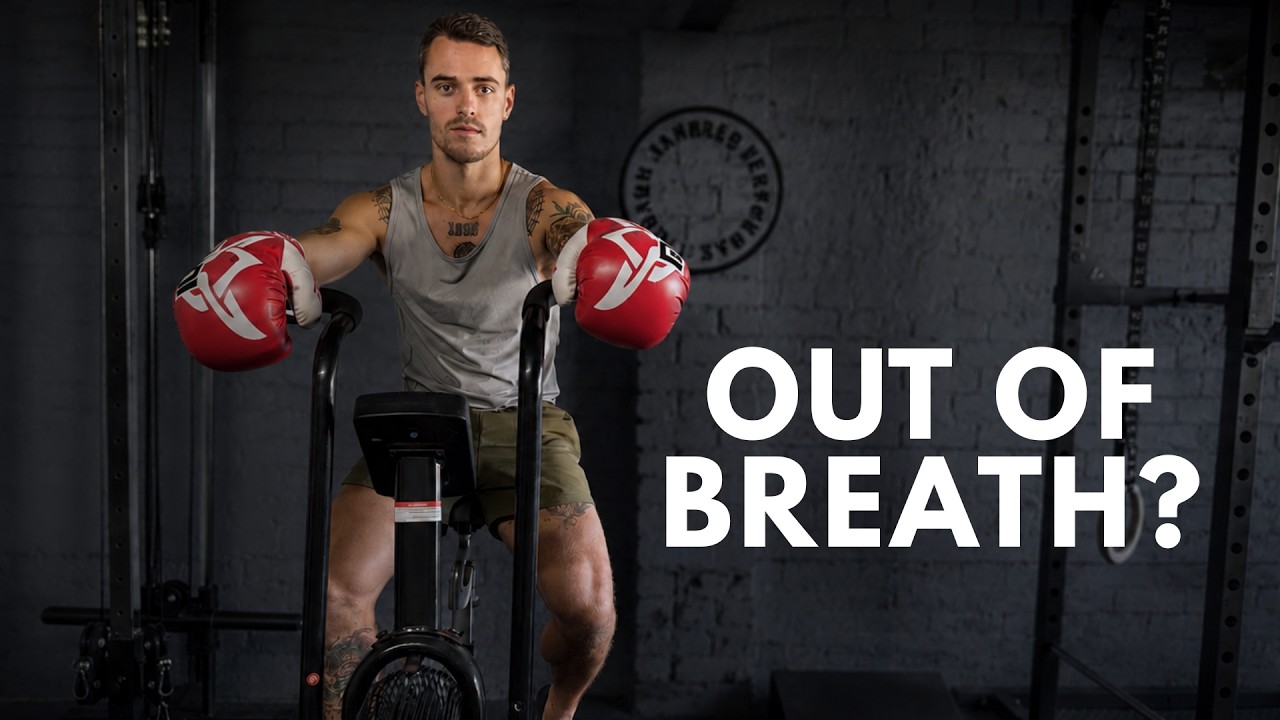
Handley Performance Coach · @handley_performancecoach
Words
2,874
Runtime
12:35
Speaking pace
228wpm
Reading time
12min
228 words per minute, above the 201 75th percentile of 349 measured videos. That distribution comes from the 349-video hook study.
Opening (first 30 seconds)
I get messages like this all the time. And to be honest, I don't spend any time with my boxers developing their aerobic base. Does this mean aerobic qualities aren't important? Absolutely not. But the way that I approach conditioning for boxing is a little different to how most coaches and boxers would do it. In today's video, I'm going to break down my exact conditioning system that I've used with hundreds of boxers to give them an elite gas tank. Now, most boxers would know about the three energy systems and how this relates to structuring your conditioning. You've got your aerobic system, and this is where most people think of the aerobic
114 words, the words spoken in the first 30 seconds at 228 words per minute.
Free, no signup. See how the first 30 seconds hold attention, with rewrites.
Sentence shape
| Measure | This transcript |
|---|---|
| Sentences | 155 |
| Average words per sentence | 18.5 |
| Longest sentence | 56 words |
| Questions asked | 6 |
| Sentences containing a number | 29 |
Most used terms
Filler phrases
47 in total: like 23 · actually 14 · I mean 5 · basically 2 · literally 1 · uh 1 · um 1.
A literal whole-word count of the same phrase list the Prepublish browser extension uses, so a phrase inside another word is not counted and a phrase used in its ordinary sense still is. It is a count and not a judgement.
What this transcript is
Every word below is the caption track YouTube publishes for this video, pulled from the video itself and reproduced unchanged. It is not Prepublish's writing, not a summary, and not a re-transcription: it is the video's own published captions. English captions, generated automatically by YouTube, in the video’s original language. Source: the video on YouTube. A channel that would rather this page did not exist can ask for its removal through the contact page, and it is removed.
No Script X-ray for this video: YouTube shows a Most replayed graph only once a video has enough views.
I get messages like this all the time. And to be honest, I don't spend any time with my boxers developing their aerobic base. Does this mean aerobic qualities aren't important? Absolutely not. But the way that I approach conditioning for boxing is a little different to how most coaches and boxers would do it. In today's video, I'm going to break down my exact conditioning system that I've used with hundreds of boxers to give them an elite gas tank.
Now, most boxers would know about the three energy systems and how this relates to structuring your conditioning. You've got your aerobic system, and this is where most people think of the aerobic base. It sets you up for that higher intensity work, helps with your recovery, all those things that everyone loves to say that aerobic base helps with. And then typically, this is just done with a whole lot of steady state or zone two work.
Then you've got your glycolytic system, and this is your body's process of breaking down carbs or glucose, and it gives energy a lot quicker than your aerobic system. And because it provides energy very quickly, it also means that waste products accumulate very quickly, and this causes fatigue. This is basically your middle ground where a lot of your training and competition will lie. Then finally, you have your phosphagen system or your ATP-PCr system.
And this is what most people would consider their anaerobic system. It's basically the system that will create those short high intensity bursts that uses readily available creatine phosphate to create energy, but fatigues very, very quickly. So, something to note with this three energy system model is these energy systems do not work in isolation. And what I mean by that is that they're going to be up-regulated or down-regulated depending on the intensity you're working at.
So, there's no master switch that tells the body to go from aerobic system to glycolytic system or says that let's switch the glycolytic system off and go to the phosphagen system. That just isn't how those energy systems work. And this has pretty much led to how we see boxing conditioning traditionally done, and I'll talk about why this is an issue soon. As an example, early camp you might start with some long steady state runs to build up your aerobic system, then you slowly transition to some 400 to 800 meter intervals to work on your glycolytic system, and then finally, towards the end of camp, you're really working on your sprints to work that phosphagen system.
Now, this is great, but it's very generic, and it doesn't actually account for what the individual needs to work on when it comes to their gas tank. It's like telling you that you have to box in a very specific way without considering things like your training history, your individual style, your physical capacities, or what really contributes to what makes you you. So, this is why I've moved away from that traditional three energy system model and more towards what I see as a more simplistic model of conditioning and that is from a central and peripheral lens.
Now, these probably sound like fancy new terms, but they're actually quite easy to grasp and we can apply the exact same conditioning principles just with the specificity of you. When we're talking about central adaptations, we're talking about how well can your heart actually deliver oxygenated blood around the body. And these central adaptations are a result of increased cardiac output, anatomical changes to the heart, and vascular adaptations which increase your oxygen carrying capacity.
And now, our peripheral adaptations is how well your muscles can actually uptake and utilize that delivered oxygen. And this is primarily driven by more mitochondria. And why is this all important? I'll lay it out as simple as I can. So, more oxygen delivered by central adaptations equals more mitochondria to extract this oxygen equals more energy from aerobic pathways equals less reliance on the highly fatigable systems we mentioned before and this equals less chance of gassing out from fatigue.
But, how's this any different to doing the three energy system way of conditioning? And that's because no one can ever really tell you what you specifically need to work on without being super vague. What I mean by that, usually they'll just say, "Just work on your recoverability and do more aerobic base work." Or, "You're not winning those long exchanges, do some glycolytic work." Or, "Your power is all off, you need some phosphagen or ATP-PCr system work." But, here's my system and how to exactly decide on whether you need centrally or peripherally biased conditioning.
You're just going to use your resting heart rate. It really is as simple as that. This is because your resting heart rate is going to tell us how well developed your central adaptations are. And what I mean by that is that the lower your resting heart rate, the more efficient it is at pumping out oxygenated blood every single beat. And the magic number I like to use for resting heart rate is 60. Now, this will be slightly individualized, but as a general rule, this is what I like to go with.
So, if your resting heart rate is above 60, your sole focus should be on central adaptations, or improving how well you can deliver that oxygen. If your resting heart rate is between 55 and 60, then you can use a combination of both centrally and peripherally biased conditioning. And then if your resting heart rate is below 55, central adaptations are pretty well developed, and you should really shift your focus towards those peripheral adaptations.
And so now we'll talk about the specific methods that you can actually use for centrally or peripherally biased conditioning. So, first up we have our centrally biased conditioning, and this is what most boxers would call aerobic base work, because we're essentially targeting the same physiological adaptations. And so like I mentioned earlier, we have three primary things that will contribute to increased oxygen deliverability, and they were increased cardiac output, anatomical changes to the heart, and vascular adaptations like arterial compliance.
And we know from research, one of the most effective ways to do this is going to be zone two or steady state. So, you can just simply do two to four sessions per week, 45 to 90 minutes at a zone two pace. And if you don't have a heart rate monitor, you can easily just do this by using the talk test. So, can you comfortably hold a conversation whilst you're doing that intensity? If you can't, you're going too hard. Zone two work is way easier than you actually think.
So, essentially with zone two, you just want to accrue lots of volume in this zone, but there's two big caveats to that. And this is probably the reason why I rarely prescribe zone two work. Number one, most boxers can rarely find this much extra time in the week on top of their boxing, work, and family commitments. And then number two, the only way to continuously get those adaptations from zone two is to increase the volume.
We can't increase the intensity, because that takes us out of that zone. So, this just takes us back to issue number one, which comes down to time. How do we find the time in the week to actually get that zone two work in, especially when we need to keep increasing the volume to keep getting the adaptations. So, if you can find the time for that, great. But what I usually gravitate towards for my boxes is long high intensity intervals.
Exactly the same adaptations you'd get with zone two work. It's just done interval style for time efficiency. What I should mention is when I say high intensity, most people usually think all out efforts, but this just isn't the case. The high intensity literally just means to higher intensities than zone two. It's not max effort that we're going with these. These are saved for the peripheral adaptations that we'll talk about.
So, what I like to do is use anywhere between 60 to 90% of perceived effort for these intervals. But, the goal with these is to accrue time near VO2 max. This is very similar to if you've heard of the Norwegian protocol, but I just like to change the work to rest ratios depending on what we're trying to get out of the specific session that we're doing. As some guidelines for you to take away for long hit, so for the mode, you can really use anything.
It doesn't matter too much. You can use running, assault bike, rower, but anything that allows you to stick to these parameters. For the intensity, like I mentioned, usually 60 to 90% of your perceived effort. I don't like to use heart rate zones too much for this because it can be quite individualized and you can fluctuate between those depending on the intensity. But, like I said, we're trying to accrue volume near VO2 max to get those central adaptations.
For the work intervals, I like to use two to four minutes. Rest periods is usually one to 0.5 times the work period. For example, if you're doing a four minute interval at that perceived intensity of 60 to 90%. Again, this can change depending on what you want actually out of the session. If you're using that four minute interval and a rest period of one times that, you might do four minutes on, four minutes off. the same four minute interval, but you're reducing the recovery periods, then you might do half that amount.
So, it might be four minutes on, two minutes off. So, depending if you want something a little bit higher intensity, you might either increase your perceived intensity or reduce the recovery period. If you want something a little bit less intensity, you might reduce the perceived effort, but also keep the recovery periods a little bit higher. So, you can just fluctuate those things depending on, again, how much you can recover from, uh how much effort you're willing to put into the conditioning, and a few other things to consider.
For the volume, I usually go for 12 to 20 minutes of total work duration. So, again, if we're using 4-minute intervals, that could be if we're using that 12-to-20-minute window, that could be three to five reps of those 4-minute intervals. And then the frequency, typically looking at two to three times per week. Now, we have our peripherally biased conditioning, and this is the part of conditioning I think most boxers get wrong, but I think it can have the biggest benefit because most don't really know how to implement it properly, and this is sprint interval training.
Now, before we get into the guidelines of what I usually recommend, there's a couple things worth noting. Sprint interval training is still aerobic training. Oxygen is always being used at the muscle level, and the more sprints you do, the higher the contribution from the aerobic energy system you get. So, what does this mean? You can still get aerobic adaptations from sprint work like you get with the central adaptations.
They're just not as pronounced as you would get if you're doing zone two or long hit. The next point is these are max intensity intervals. With anything training related, there is a trade-off between volume and intensity. And what I mean by that is the higher the intensity, the lower the volume. The higher the volume, the lower the intensity. So, because these are all-out max intensity efforts, it means the volume is very low.
And then the final point, which I could argue for days about, is some coaches and even some research suggests that the results from sprint interval training plateau in 6 to 10 weeks. That is just not true. If you understand how to effectively program sprint intervals, which I'm going to show you how, then the results can go on for months at a time. To prove this, here's some results from one of my boxers I've been working with, and I've got results like this from many of the boxers I've worked with that shows that he's been improving his overall gas tank measured through a time to exhaustion for 8 months now just using sprint interval training.
You'll see this on the screen. Since 8 months ago, been able to improve his time to exhaustion only using those sprint intervals. So, the guidelines for sprint interval training. The mode is I preferably like to go with the assault bike, but if you don't have access to an assault bike, then hill sprints work. I'm not a fan of flat ground sprints for these because of the higher risk of injury and fatigue. Intensity, like I said, max all out intensity.
The work intervals, I like to go anywhere from 10 to 30 seconds. And then the rest needs to be a little longer than those long hit intervals. So, I like to go with one to five times the work duration. So, as an example, if we're doing a 10 second sprint and I want to go three times the work duration, that would be a 30 second rest. So, you're just timesing that by one to five with depending on the work duration and also depending on what you actually want out of these sprint intervals, which I'll touch on in a sec.
The volume, no more than 120 seconds of total sprint volume. So, for example, if you're doing 30 second sprints, that's only four reps. Four times 30 seconds, 120 seconds. So, no more than a total of 120 seconds sprint volume. And then the frequency is one to three times per week. If you're just looking to maintain some conditioning, I've actually seen some people still get some results with just one times per week, then I would go with one times per week for some maintenance.
Two times per week is usually the sweet spot. Three times per week if you really need a quick conditioning stimulus. But, you also have to consider the fatigue associated with these as well. So, like I said before, the rest period will dictate whether we're focusing on endurance or power based qualities. So, if you want endurance based qualities, you would have shorter rest periods. And what I mean by that is you might only do one to three times the work period.
If you want power based qualities, we obviously want the wattages to be very high, so you have slightly longer rest periods. And this might mean three to five times the work period. So, where do we actually start with sprint intervals? I've spoken about this in other videos and we can use a two by 30 second sprint protocol to actually assess where you need to start with SID, but this will require some specialized knowledge um to actually access the data.
So, a good spot is bang in the middle and just adjust from there with 10 by 30 second sprints for six to eight reps. This is a really good spot because you can get a lot out of that 10 second sprint. 30 seconds rest is usually a good amount of time to get some energy back before you get that next sprint. Like I said, you can just adjust based off how you're feeling off this. Now, remember, we can adjust both the volume and the intensity to continue with those adaptations so our results don't stagnate.
If we're looking to progress our volume, we can simply add some reps, but remember not to go above that 120 seconds total sprint volume. So, intensity can be progressed in two ways. We can increase the work period or we can reduce the recovery period. So, back to that 10 on 30 off example, if they feel too intense, just increase the recovery period a little bit. If they're starting to get too easy, you can just reduce the recovery period a little bit.
There's multiple ways that we can progress these can still get results from them. So, like I said, there's infinite ways to keep the results coming in. It's just a matter of finding a good starting point and progressing sensibly without overdoing it. And that's the theme of this video and essentially what I'm trying to get out with conditioning is that it should be about what you need to work on and what works for you, not just blindly copying what's always been done because it's not going to focus on your specific weaknesses.
So, remember, use your resting heart rate to actually assess whether you need to work on your centrally or peripherally biased conditioning. This will do so much more for your gas tank. And if you enjoyed this video, make sure you check out the next one. I'm sure YouTube will suggest the perfect video to watch right here.
The words are the caption track's own and nothing is reworded or re-transcribed. Paragraph breaks are placed between sentences so the text reads as prose.
Free tools for your own script. No signup, no login.
Paste your draft and see where viewers are likely to drop off, with a rewrite for each weak line.
Paste the first 30 seconds of your own draft for a hook score and rewrites.
Check your draft against YouTube's advertiser-friendly guidelines before you record it.
Read this channel's public videos and transcripts, and download a writing brief for it.