Getting the transcript
Reading the captions from YouTube. A video nobody has opened here before takes 10 to 30 seconds; this page fills in on its own.
Getting the transcript
Reading the captions from YouTube. A video nobody has opened here before takes 10 to 30 seconds; this page fills in on its own.
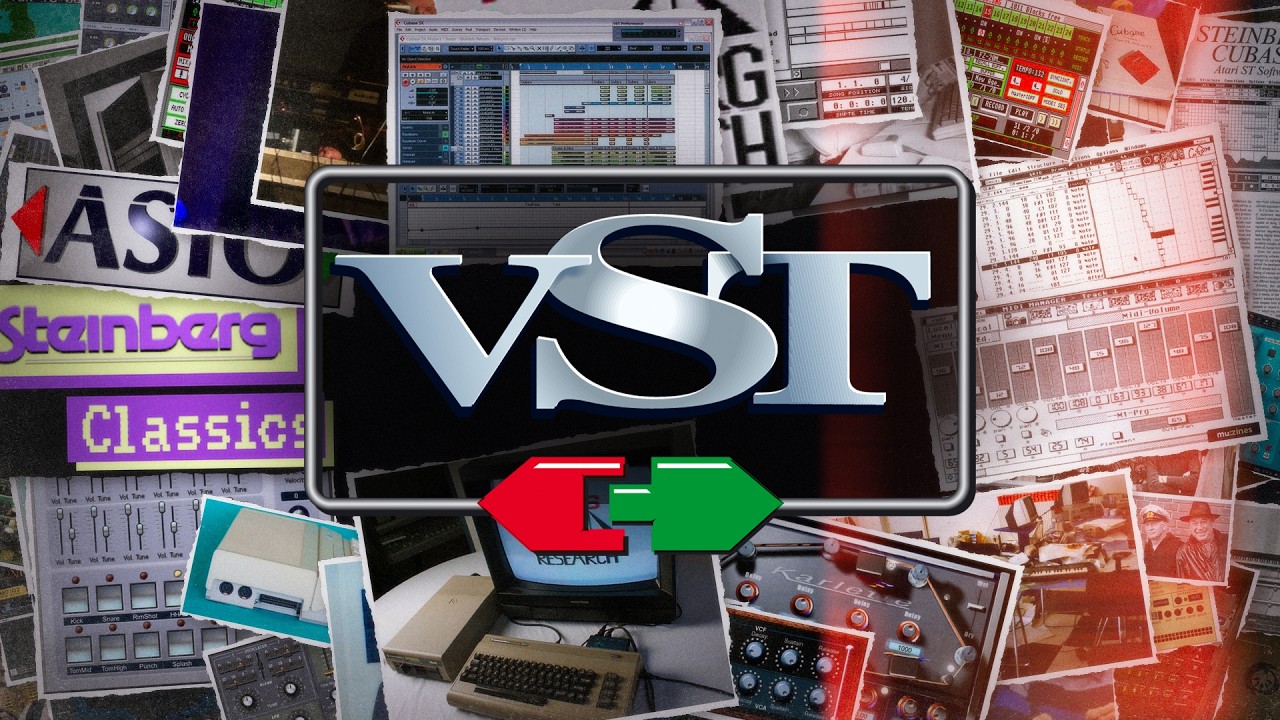
Red Means Recording · @RedMeansRecording
Where viewers went back to watch this video again, from YouTube's public Most replayed graph, lined up with what was said at that moment.
Most replayed moment #1
5:253.4x the video's typical replay level
which is why every European studio in the '80s ran on Atari. And in 1989, Steinberg releases Cubase, and Cubase introduces the arrange window, >> [music] >> horizontal tracks, little blocks of music on a timeline that you drag around. Look at that and tell me that's
Said at 5:19
Most replayed moment #2
13:322.5x the video's typical replay level
synth built because his dream synth didn't exist yet. So, he made it. Sounds amazing, [music] lots of modulation, great effects, and crucially, there's this like visual drag-and-drop fun to mess with interface. And Serum just takes over. Skrillex,
Said at 13:26
Most replayed moment #3
11:312.3x the video's typical replay level
1996, the same year that VST launches, not VSTI, just VST, he shows off Generator at a trade show. This is the world's first modular polyphonic real-time software synth. That becomes Reactor. And basically every famous Native Instruments instrument after
Said at 11:23
The graph counts replays. It does not show where viewers stopped watching.
Words
4,049
Runtime
22:33
Speaking pace
180wpm
Reading time
17min
180 words per minute, just under the 181 median of 349 measured videos. That distribution comes from the 349-video hook study.
Opening (first 30 seconds)
VST virtual studio technology the invisible hand of the music industry, [music] an absolutely indispensable platform that has helped shape decades of both underground and global hits in almost every music genre. That technology turns 30 years old this year, and the company behind it, Steinberg, has asked me to share with you its history. [music] From a scrappy little two-person project to a global powerhouse to an open-source platform, we're going to learn about it all. This is the history [music] of Steinberg's VST. Hi, everybody. My name is
90 words, the words spoken in the first 30 seconds at 180 words per minute.
Free, no signup. See how the first 30 seconds hold attention, with rewrites.
What this transcript is
Every word below is the caption track YouTube publishes for this video, pulled from the video itself and reproduced unchanged. It is not Prepublish's writing, not a summary, and not a re-transcription: it is the video's own published captions. English captions, generated automatically by YouTube, in the video’s original language. Source: the video on YouTube. A channel that would rather this page did not exist can ask for its removal through the contact page, and it is removed.
VST virtual studio technology the invisible hand of the music industry, [music] an absolutely indispensable platform that has helped shape decades of both underground and global hits in almost every music genre. That technology turns 30 years old this year, and the company behind it, Steinberg, has asked me to share with you its history. [music] From a scrappy little two-person project to a global powerhouse to an open-source platform, we're going to learn about it all.
This is the history [music] of Steinberg's VST. Hi, everybody. My name is Jeremy. This is Red Means Recording, and this year VST turns 30 years old, which is wild because VST is one of those things that [music] is so baked into how we make music now that it's almost invisible. It's kind of like asking a fish to explain water. You don't think about VST, you just double-click a synth and it's there, or double-click an OTT and it's there, or double-click 200 OTTs and it's oh my god.
Today, we're going to talk about where this all came from, why it exists, who made it, the absolute gold rush chaos it kicked off, uh the one time it made a bunch of developers furious, and how a little two-oscillator synth from 1999 is the great-grandfather of the synth that made every drop you loved in 2015. You guys are so cute. You should kiss. Let's get to it. >> [music] >> So, to understand why VST mattered, you have to understand what making music on a computer was like before it. >> [music] >> And the short version is there was a big wall, and that big wall was made of money.
Let's say it's 1995. If you wanted to record and process audio on a computer, real audio, vocals, guitars, with actual reverbs and EQs that didn't [music] sound like garbage, you needed dedicated hardware to do the heavy lifting. The big name was Digidesign and their high-end system, Pro Tools TDM, ran all of its effects on special digital signal processing or DSP cards. They were powerful, they were rock solid, and they were expensive as hell.
The processing, the actual math of making a reverb tail or squishing your sound with a compressor, that didn't happen on your computer's brain, the CPU. It happened on this separate, pricey, proprietary hardware. So, at that time, professional digital audio was gatekept and not by talent. It came down to whether or not you could drop thousands of dollars on these DSP cards. Now, over in Germany, there's this little company called Steinberg.
They make a program called Cubase and at this point, it's mostly a MIDI sequencer. It's a really good one, though. It's a thing that a lot of European studios ran on. Steinberg [music] wants Cubase to record audio, too. So, early on, they built their audio stuff on top of, guess who, Digidesign's engine because Digidesign were the only ones with the hardware. The guy behind Steinberg, Karl Charlie Steinberg, [music] said working with that early Digidesign engine was tricky.
Let's hear it in his own words. It started out with a Digidesign audio engine because they were the only ones who have a hardware and they had a kind of API. [music] But, it was a bit tricky cuz you always had to stop whenever you wanted to do anything. You had to stop the transport. [music] That's where later our motto became, "Don't stop the music." It was kind of hitting back against Digidesign. What he meant by that was when you were working on a song, if you wanted to change something, you had to hit stop.
You The music stops, everything stops every single time. And I have to say as somebody who has thrown a tantrum because a plugin made me stop playback, deeply, spiritually, I feel you, Karl. It also shines a light on the rule of the world that some of the best technology we have now only exists because one or two people got irritated enough to fix it. All right, so we've established the wall at this point is money and proprietary hardware.
And there's a guy in Hamburg who is mildly furious about having to press stop. So, let's talk about Charlie Steinberg for a smidge cuz he's not like a Silicon Valley guy. He is a musician. That's his whole thing. In the late '70s, he's playing keyboards in a German rock band. In the early '80s, he's behind the console engineering records. He's a working studio guy who happens to also be getting into computers >> [music] >> right at the exact moment something new is happening.
And that something new is MIDI, the thing that lets synths and drum machines talk to each other. So, the way that Charlie Steinberg tells this, the spark for this was almost dumb luck. His future business partner, a man named Manfred Rürup, who worked at a big music shop in Hamburg where all the newest gear was coming through, brings him an American keyboard magazine, which was apparently like a rare and exotic object in Germany at the time.
And in this magazine is a description of the MIDI protocol, like the actual spec. And Karl looks at this and he goes, [music] "Wait. We could record this. We could do what drum machines do, patterns, quantization, but for like everything." So, in 1984, out of Rürup's apartment in Hamburg, they start a company. Their first product is a MIDI sequencer for the Commodore 64, and they hand-built the MIDI interfaces themselves.
[music] They sold like 50 of them, only 50. This is the This is the pedigree of like the mighty origin of the software empire that's inside your laptop right now. After the Commodore, they moved on to the Atari ST, which, and I love this, shipped with MIDI ports built right in, which is why every European studio in the '80s ran on Atari. And in 1989, Steinberg releases Cubase, and Cubase introduces the arrange window, >> [music] >> horizontal tracks, little blocks of music on a timeline that you drag around.
Look at that and tell me that's not just your DAW. That's Ableton, that's Logic, that's FL Studio, that's every piece of music software you've ever touched. Tracker people, don't come at me. I know that you're special and I am one of you, too. But this is not about you. >> And did you know that Cubase was almost called Cubit? Cube plus bits, Cubit. And they were about to go with it, and then somebody pointed out that Cubit apparently sounds like a very rude word in French.
So, at the last minute, they changed it to Cubase. Now, as of the filming of the script, I actually don't know what the French word is, so I'm going to go look it up, and we'll learn together. >> In French, queue sounds like cul, which means ass. Bit sounds like bite, which means dick. So, Cubit would sound [music] like ass dick. Also, there were trademark issues with the name, but mostly it was the ass dick thing. >> Oh, okay then.
So, now it's the mid-90s, and something quietly enormous is happening in the background. Computers are getting fast. Like fast enough that for the first time, a normal Mac or PC, no special DSP cards, is just barely powerful enough to do audio processing itself in real time on the regular CPU. This is called native processing. Native, meaning it runs on your computer's own brain, its own hardware, instead of dedicated hardware, like those big old dedicated DSP chips.
And once that's possible, the entire expensive wall from part one has a big old crack in it. So, in 1996, right alongside Cubase version 3.02 on Mac, Steinberg releases Virtual Studio Technology. >> [music] >> And the idea behind it is really three things stacked together, and all three matter. One, [music] the effects run natively on your CPU, so you don't need thousand-dollar DSP cards anymore. Two, they run in real time, right inside the sequencer, no stopping the music.
Three, the spec for VST is published, and the SDK, or the software development kit, is made free. No purchase price, no royalty, no cut of whatever you sold. So, basically, anybody could build a VST plugin. You didn't have to be a huge company with a hardware lab, you just grabbed the kit and got to work. The first VST plugins shipped in Cubase in 1996 were admittedly pretty humble. There was a reverb called a spatial, a chorus called choir us, a stereo echo and an auto panner.
Just four little effects. Not exactly earth-shattering on their own. But, here's how fast the bet paid off. By the end of that same year, a company called Waves released a pack of native plugins in VST format. Real reverbs, real EQs, real compression, and the kind of quality that used to only exist on those expensive Pro Tools TDM rigs. Now they're running on a normal computer within months of the SDK even existing. So, 1996, that's when it stops being a feature in Cubase and becomes a thing that's going to change the entire industry.
Steinberg didn't just build a plugin, they built the outlet you plug plugins into and then told the whole world the shape of the plug. Not that kind of plug. All right, quick but important. 1997, Steinberg drops a companion technology called ASIO, A S I O. It stands for audio stream input output. And if you've ever made music on a PC, you have seen this word and maybe not even thought about it. ASIO does one absolutely critical job.
It gets audio in and out of your computer fast. It skips all the slow layered junk in the operating system and talks almost directly to your audio hardware. Which means super low latency. >> [music] >> Meaning that when you press a key, the sound happens basically now instead of like a quarter second later. And that matters a lot because if you are going to play a software instrument, it has to respond instantly or it's basically unplayable.
Which brings us to 1999, VST [music] 2.0. And on paper, the headline features sound like a footnote. It just [music] says, "Plugins can now receive MIDI." But think about what that unlocks. Because up till now, VST plugins just processed audio you fed them. They were effects. [music] But if a plug-in can receive MIDI, receive notes, then a plug-in can generate sound. It can be an instrument. And so, VST 2.0 gives [music] birth to the VSTI, the Virtual Studio Technology Instrument.
Software that isn't just polishing your audio, it is the audio. The synthesizer, the sampler, the drum machine, all of it is now living inside your computer. And the very first one, bundled with Cubase 1999, was a synth called Neon. Two oscillators, 16 voices, virtual analog. And it is, by any reasonable standards, kind of adorable. It's tiny, it's basic, and nobody's making their magnum opus on Neon. But Neon is the hello world of VSTI.
It's Steinberg going, "Look, the computer can be the instrument now." And I want you to hold little baby Neon in your heart, because we're about to watch what grows out of this exact seed. And it gets absolutely out of control. So, here's the situation as we roll into the 2000s. You've got a free, open format that any developer can build for. You've got computers finally fast enough to run instruments natively. And you've got ASIO making them actually playable.
That's like a pile of dry kindling over here, and a match factory over here, and it is free match day. Sure. That's That's fine for an analogy. We're going to go with that. >> Yeah, go with that. >> Great. Some of the big fire starters came in early. Native Instruments. A guy named Stefan Schmitt gets laid off from a digital mixing console company, and he has this thought that in the mid-90s was, >> [music] >> I guess, considered crazy.
He said, "Look, everybody's got a computer now. They use it to record and sequence, so why not use it as an instrument?" And in 1996, the same year that VST launches, not VSTI, just VST, he shows off Generator at a trade show. This is the world's first modular polyphonic real-time software synth. That becomes Reactor. And basically every famous Native Instruments instrument after that, the FM synths like the FM7, the Prophet 5 emulations like the Pro-53, all of it got prototyped inside Reactor.
And there's a There's a fun little story about this that I read. So, apparently there's this guy in Moscow named Vadim Chevelinshin who looks at their synth [music] generator and decides it is built inefficiently. He's like, "No." And he goes and he makes his own better version of it, a thing he called Synth Modular. And instead of suing him into the ground, Stephan flies out to Russia and hires him. That guy ends up building the core engine deep inside Reactor.
And I don't know, it's just cool. It tells you a lot about how that world worked back then. Just nerds liked something so much, but also knew they could make it better. And so, they just went and did it themselves. All right. So, brace yourself. It's about to branch out in every direction all at once. Arturia shows up and starts modeling classic analog synths in software, things like the Minimoog and the Prophet. And their Minimoog V in 2004 was even officially blessed by Bob Moog himself.
So, suddenly a synth that cost thousands of dollars and weighs as much as a small child is now a $100 download. That is the wall from part one coming almost all the way down. You get the sampler people like Kontakt from Native Instruments becomes the platform that basically every sample library on Earth gets built for. And then you get the synths that literally define the sound of eras. Native Instruments Massive. If you listen to any bass music or EDM in like 2008 to 2013, you heard Massive whether you knew it or not.
You got Sylenth1 for trance, Nexus in every pop and EDM record, Omnisphere the giant everything synth for film, pop, EDM, and everything in between. And then in 2014, a beautiful man named Steve Duda releases Serum. This is a wavetable synth built because his dream synth didn't exist yet. So, he made it. Sounds amazing, [music] lots of modulation, great effects, and crucially, there's this like visual drag-and-drop fun to mess with interface.
And Serum just takes over. Skrillex, Deadmau5, Martin Garrix, you name it. For a decade, if there was a nasty drop, there was a good chance it came out of Serum. Little Baby Neon, 1999, two oscillators bundled free. Serum, 2014, the synth behind a decade of the biggest records on the planet. That is a straight line. Same format, [music] the same door that Steinberg propped open back in 1996. Serum is Neon's descendant.
They're basically family. Now, kiss. And because the format was open and cheap to build for, the floor eventually dropped to zero. I'm talking about free synths and free effects. Synth1, for instance, got downloaded by like everybody, including myself. >> [music] >> And you've got Vital, a free synth that goes toe-to-toe with the paid heavyweights. I think that is awesome. Like a broke teenager in their bedroom on a hand-me-down laptop with no money and not having to pirate things can download tools that 15 years earlier would have required a professional studio and tens of thousands of dollars of gear.
And then they can go and make a finished, professional-sounding track or record. They can get a Beatport top 100. They can get a Beatport number one and get signed to Owsla like Porter Robinson did. They can make a beat that ends up getting them to work with someone like Lil Nas X and win a Grammy. They can do that in their bedroom for free. A generation of producers, probably including a big chunk of you watching right now, definitely including me, only exist because in 1996 a company in Hamburg decided to give the format away.
Fun, right? It's genuinely actually nice. I know I usually save this slot for something bleak about capitalism, but not today. Today, there's no issues and we all win. >> Hey, have you heard about VST3? >> What's that? >> VST3. >> Oh. >> [music] >> So, it turns out it's not all sunshine. For everything I just gushed about, VST had a catch in it the whole time and it is about control. Here's the thing about VST being open.
It was open in the sense that [music] anybody could build for it. Free SDK, go for it. No royalties or anything like that. But, it was never open in the sense of being owned by everybody. VST belonged [music] to Steinberg. It was their format, their licenses, their rules. And for a long time, nobody cared that much because the rules were mostly chill. But, then came VST3. [music] VST3 came out in 2008. It's a big rewrite, more capable, more efficient, cleaner under the hood.
Good technology, depending on who you talk to. The problem was a lot of developers just didn't rush to switch because the old version, VST2, worked great and was simple to build for. They had found all kinds of ways to make VST2 do things I think Steinberg never even thought of. These developers were scrappy, brilliant little nuggets who had carved out their own niche making instruments and effects and art and pushing the envelope of this format.
So, for years you had this split. The new format existed, but the whole world was still running on the old one. But, Steinberg, they wanted everyone on the new thing. So, they started, step by step, closing the door on the old one. >> Steinberg wants me to tell you that. From their perspective, VST3 was needed to respond to users complaining that VST2 was crashing their DAWs. They got a lot of user feedback that the hosts were crashing with VST2.
So, they wanted to help users with VST3. >> First, around 2013, they stopped maintaining and then distributing the old VST2 development kit. Okay, fine. Existing [music] stuff still worked. Then, around 2018, they stopped handing out new VST2 licenses entirely. So, if you were a brand new plug-in developer, you legally could not ship VST2 anymore. [music] And then, the big one. In 2022, Steinberg announced that their own apps, Cubase, [music] Nuendo, the rest, would stop loading VST2 plug-ins at all within 2 years.
And that's when a chunk of the community got genuinely upset. The big developers, they're going to be fine. They made VST3 versions. [music] Casualties are the abandonware, the smaller developers, all those plug-ins made by somebody who moved on or a company that went under and never made a VST3 version. [music] When a DAW drops VST2 support, those plug-ins are just gone. And worse, the old songs you made using them can't be opened properly anymore. >> [music] >> Your own past work becomes locked behind a format that somebody else decided to sunset.
This is where I will just put a little bit of unsolicited advice as somebody who has just remastered their entire catalog. Um, I would highly, highly recommend that when you finish a piece of music on a DAW, you either freeze all the tracks or export stems for every single track. Takes up a lot of disk space, but I promise you, future you will love past you so much for doing it. That That's my unsolicited advice. But, that frustration actually pushed the whole ecosystem somewhere better.
Because a bunch of developers looked at that situation, one company controlling the format that everybody depends on, and went, "We should have an option nobody can take away." And in 2022, you get CLAP. >> Hold up. Wait a minute. >> No, like you didn't get the CLAP. Like we we all got CLAP. >> Hold up. >> It's an acronym. It's a brand new plug-in format from the developers u-he and Bitwig, and critically, it's genuinely open source.
MIT license. [music] Nobody owns it in the way that Steinberg owns VST. It can't be sunset by a single company because it belongs to everybody. And guess what? Competition works. That pressure plus years of the community asking actually moved Steinberg. [music] They'd already started opening VST3 up, first under a more open license back in 2017, and then in 2025, I think this is recent, this is basically now, Steinberg released VST3 under a full proper open source license, MIT, the same kind of open that CLAP is, which means the format that runs your entire musical life can, at this point, never really be killed.
The source is out there, it's permanent. [music] It survives Steinberg, it survives Cubase, and it survives all of us. And I think that's kind of beautiful, actually. This thing started in 1996 as one small company's clever solution to an issue they were having with music technology, and 30 years later it's grown into something closer to public infrastructure, like roads, you know? Nobody wakes up grateful for roads, but try living without them. >> [music] >> So, yeah, 30 years.
From two guys in a Hamburg apartment selling 50 MIDI sequencers they handmade, mad about having to press stop on their sequencer, to a free, open standard that's inside basically every song made on a computer today. The synth that made your favorite track is a direct descendant of a little bundled toy called Neon. And the reason a kid with no money and a cheap laptop can make a record that competes with a million-dollar studio traces right back to the company deciding in 1996 to give the format away.
And if you would like, if you actually want to touch this history yourself, for the anniversary Steinberg went back and reissued a bunch of the original instruments as modern VST3 plugins. And they're giving them away under the name Steinberg Classics. Neon is in there, that little first VST [music] instrument ever, running natively on your absurdly powerful modern computer. I don't know how many Neons you could run, but, you know, if anyone wants to test it, let me know.
There's also a handful of its old siblings, the CS-40 synth, the VB-1 bass, the LM-7 drum machine, and the [music] Corlette tape delay. So, you can load up the great grandparents of Serum tonight for nothing and hear exactly where all of this started. All right, well, that's it for me today. If you're new here, this channel is about music, synthesizers, and the tech and history behind the sounds that we love. So, stick around.
There's plenty more. And if you want to support what I do and more deep dives like this one, you can find me on Patreon. Huge thank you to Steinberg for having me tell the story for VST's 30th. If you have a favorite, >> [music] >> you know, let's say weird VST or like one that you can't use anymore because of [music] some kind of like technological issue or just one that you're like really nostalgic about, let me know in the comments and maybe I'll do a video about those because I do think it's just a really, really fun thing that a lot of us have like a lot of deep connection, a deep personal connection to, uh, especially when we first start getting into making music on a computer.
All right, well, until next time. My name is Jeremy. This is Red Means Recording. Thanks for watching and I hope you have a wonderful day. >> Like an angel on >> [music] >> a cloud of time. >> [music] >> Like an angel on a cloud
The words are the caption track's own and nothing is reworded or re-transcribed. Paragraph breaks are placed between sentences so the text reads as prose.
Free tools for your own script. No signup, no login.
Paste your draft and see where viewers are likely to drop off, with a rewrite for each weak line.
Paste the first 30 seconds of your own draft for a hook score and rewrites.
Check your draft against YouTube's advertiser-friendly guidelines before you record it.
Read this channel's public videos and transcripts, and download a writing brief for it.
Sentence shape
| Measure | This transcript |
|---|---|
| Sentences | 293 |
| Average words per sentence | 13.8 |
| Longest sentence | 95 words |
| Questions asked | 7 |
| Sentences containing a number | 63 |
Most used terms
Filler phrases
74 in total: like 41 · kind of 9 · basically 8 · actually 7 · you know 4 · uh 2 · literally 1 · right? 1 · um 1.
A literal whole-word count of the same phrase list the Prepublish browser extension uses, so a phrase inside another word is not counted and a phrase used in its ordinary sense still is. It is a count and not a judgement.