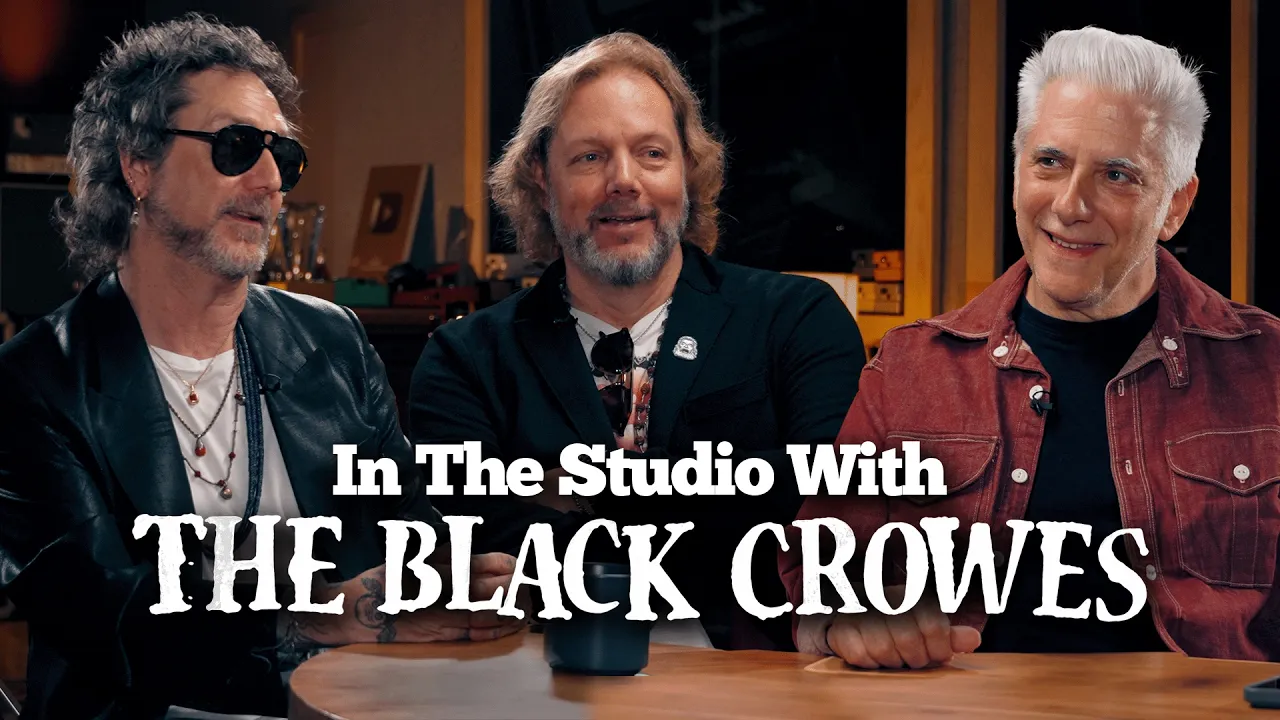
Everything I Thought I Knew About The Black Crowes Was WRONG transcript
Rick Beato · @RickBeato
Words
18,331
Runtime
1:33:17
Speaking pace
197wpm
Reading time
76min
197 words per minute, between the 181 median and the 201 75th percentile of 349 measured videos. That distribution comes from the 349-video hook study.
Opening (first 30 seconds)
Great to see you guys. >> Good to see you. >> You guys grew up here. We're in Atlanta. You guys grew up out in Cobb County. Is that right? >> Uh we were in I mean Buckhead adjacent I guess when we were young and then [clears throat] we moved to Charlotte from what 74 to 76 or something. 73 to 76. And then when we moved back >> mom and dad made the uh what the re what Yeah. Because my dad's a you know Atlanta native. He was our grandfather was born in Atlanta. Um but
99 words, the words spoken in the first 30 seconds at 197 words per minute.
Sentence shape
| Measure | This transcript |
|---|---|
| Sentences | 1,139 |
| Average words per sentence | 16.1 |
| Longest sentence | 370 words |
| Questions asked | 169 |
| Sentences containing a number | 78 |
Most used terms
- gt1,144
- gt gt572
- mean207
- yeah112
- record74
- people69
- uh54
- um52
- gt yeah50
- george46
- laughter38
- lot34
Filler phrases
1,141 in total: like 407 · you know 358 · I mean 204 · uh 54 · um 52 · kind of 36 · right? 16 · sort of 7 · actually 5 · basically 1 · literally 1.
A literal whole-word count of the same phrase list the Prepublish browser extension uses, so a phrase inside another word is not counted and a phrase used in its ordinary sense still is. It is a count and not a judgement.
What this transcript is
Every word below is the caption track YouTube publishes for this video, pulled from the video itself and reproduced unchanged. It is not Prepublish's writing, not a summary, and not a re-transcription: it is the video's own published captions. English captions, generated automatically by YouTube, in the video’s original language. Source: the video on YouTube. A channel that would rather this page did not exist can ask for its removal through the contact page, and it is removed.
Transcript
Great to see you guys. >> Good to see you. >> You guys grew up here. We're in Atlanta. You guys grew up out in Cobb County. Is that right? >> Uh we were in I mean Buckhead adjacent I guess when we were young and then [clears throat] we moved to Charlotte from what 74 to 76 or something. 73 to 76. And then when we moved back >> mom and dad made the uh what the re what Yeah. Because my dad's a you know Atlanta native.
He was our grandfather was born in Atlanta. Um but yeah, they moved out to the suburbs. So, which was um funny because in the suburbs at that time, the late 70s, most everyone that lived there was from New Jersey or Ohio, right? >> So, there were very few, you know, southern people. But it also, you know, it was also a great uh all we really had was, you know, vandalism, [laughter] which goes hand in hand with why we ended up being in a in a band, you know what I mean?
It was like our little gang, you know, but we took some of that angst of suburban angst and, you know, turned it into something else. >> But, uh, it wasn't sprawling like it is now back then. I remember when it hit when Atlanta hit a million people in the metropolitan area. >> I mean it was a million million people, you know. >> I mean I to me the big one was the three million mark >> and like you know there was a at that time I was living in East Atlanta.
I mean our our band house and where Mr. Crow Garden kind of I mean we had already been playing but where we kind of started to you know formulate a a [clears throat] plan or you know make our um commitment sort of come to life was across from the Candler Park martyr station. >> Okay. >> Yeah. And uh vandalism was a part of that as well. But [laughter] um but by that time that there was like a whole you know the whole scene in Atlanta.
And um it's funny cuz we're having dinner tonight with with some people from that time. But there was like this place my friend JT had the mud shack that was at Freelero on pause and every Tuesday of the first Tuesday of every month was like a poetry night and folk song or whatever you know it was kind of a super bohemian uh vibe. But when Atlanta turned three million people it was like that's what everyone would talk about, you know, like oh my god what what is it? you know what does that mean?
Um >> you would drive on Peach Tree and there's that apartment building called the Darlington and there's a Atlanta Population Now sign and it just kept going and going. >> Our grandmother and the lady that worked for her ran into that sign one time. [laughter] >> Literally ran into Yeah. crashed into it when it when they were both far too old to be driving around. And so we were always like the sign kept on ticking though, you know, and so did our grandmother. >> I was driving with my son.
He's 18. uh up Peach Tree last weekend and I and I said, "Yeah, you can't even imagine." I moved here in '94 and you can't even imagine. Even Peach Tree in Midtown was just the cotton club was there and things like that, but there was really not a lot of stuff now. It's like you can't even can't recognize that or >> No, they built that Federal Mint or whatever. Yeah, >> that neighborhood was, you know, another one like our bass player Ted lived across from Andrew Kyler who was in Arms of Kimbo and >> you know, I mean, when they bought that, that was the one another big thing in our life.
They they were going to tear down all those houses and uh so Andrew and Ted, well, Ted, I think they they were like, "We're going to have a party, like the Wreck the House party, >> right?" And like four bands were playing kegs and everyone there cuz they were going to >> demolition anyway. >> But what happened was like all the punk kids in Skin Head like really like really >> violent kids came and actually started to tear the place apart.
I mean it was like the shining axes through the walls. We're like playing and some kid hit the axe in the kitchen and hit the gas and a kid hit it with a lighter and it was like a flamethrower shooting out into the woods and the cops were coming and people were I mean smashing out all the windows. And by the way, Ted and Andrew still live there for like another month or something and I was I just remember going wow this is w this is insane.
I mean, but all the things uh you know, Atlanta, I mean, it can never go understated how important that time was for us, you know, to be in the music scene of that time. and um so many of the attitudes and so many of um I don't know it's still it's still embedded in our philosophic you know way that we we either dealt with or destructively dealt with so many things that would come a few years later >> but we in all fairness weren't the we weren't running around catching houses on fires we we were >> we were playing I would say yeah we were >> witness to a lot of really interesting, amazing things, you know what I mean?
And uh and that shaped us, you know, cuz Chris would be like some of the stuff that would happen. I mean, it was it was nuts. And that's one of the things I remember that. And I mean, I was 15 or 16, maybe 15. I can't even remember. And I was going >> You were 15 probably the first time we played 688. >> Yeah, I was 15. Yeah. >> So, you know, Rich would have to wait in the car. I was underage, too. But I mean, believe it or not, somehow I charm my way into the into the bar.
But yeah, we would play and there was a while where Rich would we would soundcheck and then he would have to sit outside until the show. >> I mean, I'd go to the varsity if I was at the 688. But yeah, I had to sit somewhere else. >> What were some of the other clubs that were around then? White dot, >> the Metroplex, the dugout, which was Yeah. by the by Celebrity Club. >> Celebrity club. >> There were two celebrity clubs. >> That was the one on Pon, right?
Then it changed to like downtown um >> and the point >> the point was at um >> that was maybe even a little later but Margaritavville god that was the that was even that was the one gig that >> Kevin Kenny we were talking about he was like that was the one gig where like really like a Tuesday night at Margaritavville was like [laughter] >> but we all played it you know what I mean it'd be like who's on the bill uh Mr. girls garden in this future, you know, remember that, you know, >> um >> there was a weird club I remember for we played a couple of shows there that was in Little Five Points next to that shop that we used to go to. >> Yeah, it was in the back. >> It was just like a rectangular room that was that with no dressing room if I remember correctly.
Like you had to wait in the parking lot. >> I don't remember what they called that place. >> That was a that was a gig that we played. And then we would go to Athens and play the 40 watt. >> Yeah. >> Rockfish. >> Rockfish. and and um the Uptown Lounge. >> I noticed recently that about 54% of you who watch my channel regularly aren't actually subscribed. We put a lot of work into these interviews, song breakdowns, including the theory and craft behind the music we all love.
If you find value in these conversations and want to help us keep making them at this level, please take a second to hit that subscribe button. It's a small thing that makes a massive difference in keeping this kind of independent deep dive music content alive. Thank you. >> So, how do you go from that to getting signed? And >> we're still trying to figure that out. >> It wasn't It wasn't because we practiced, I tell you that. >> George came.
Well, we had when when like soon like quickly when we started writing and recording a friend of ours, this guy David Msas, who Chris met at the record bar at Linux. >> Mhm. >> He he was >> I mean David, I don't know if you know David, >> he's now a big big deal. He he owns 30 Tigers, >> but he back then he was working and and he was working at the record bar and Chris said, "Yeah, we're in a band." He's like, "I'm a drummer." >> So Chris like really?
He's like, "I'll come try out." We were we had a setup at my mom's house cuz we were living at home and he was horrible and he was like I can't I'll be your manager and so he said you know and he was great at it. He set up our first recording session at some guy's basement in Atlanta. >> Yeah. I have no idea. We recorded about five songs and one of them was Umbrellas and and that kind of first run and Dave sent it to&m records immediately and it got to this guy named Aaron Jacovis who was an ANR guy at&m at the time and he liked it and started flying out and then he paid for us.
He was like I want to send you guys up to do demos. >> I mean I was still 15. This was within that first year. So yeah we were >> Wow. Back then it seemed like >> what did they call it? Like a it was like a deal >> developmental development deal. >> So they would, you know, give, you know, we worked with a guy in North Carolina named Steve Grondback. >> Okay. >> Uh which we were >> excited >> excited about because he had made a Rain Parade record and we love the Rain Parade, but he did make their major label debut, Crashing Dream, which isn't really >> the best one.
No offense, >> Matt Poochie, I love you. Um, >> but it was in Boone, South Carolina. >> North Carolina. >> North Carolina. And we stayed at the Davy Crockett in. You remember that? >> Oh, of course. [laughter] But, but >> it's a big statue of Davy Crockett, >> who has nothing to do with North Carolina, as far as I know. >> We were we I pulled into it and it was like, wow. >> I I think it's, you know, now that we're getting close to 40 years soon, >> when you look back at stuff like that, it's hard.
Everything was ahead of us. So, it's, you know what I mean? And and I it it's hard because we weren't, you know, Driving and Crying's the biggest band in Atlanta, you know, and there's other bands that had a bigger following. Um, but I think, you know, there was we were obviously doing something and and I think and again, it wasn't like realized. It wasn't [clears throat] put together. Um, >> but in doing that and and hooking up with Aaron, uh, Aaron had, you know, paid for us to do a couple of demos.
It got around, we were mentioned in a in at&m >> and when we were playing some shows in New York, uh, Jefferson Holt had booked us some shows cuz he was put making his own label called Dog Dawn Records. And so, and so we were taking, we felt&m was like, >> you know, at 15, we were really impatient. Let's just put it that way. So Jefferson booked us on these gigs and one of them was at a place called Drums in New York under the 59th Street Bridge which turned into >> I thought I don't know if he booked that show.
Was that lady? >> It was um it was uh it was Jefferson because we did we did three we did three shows that time that trip >> and um and so we went up there and George was there. >> Mhm. because George Draculius >> Dulius and so >> and he had been in Atlanta a week or two before and asked if there's any good bands around and see >> well he was he was looking specifically for he wanted a rock band he didn't want a postpunk band he didn't want a punk band he didn't want a metal band >> he he had this idea about what he felt was rock music you know but thea in in the case of that it just fertuitously sort some kid at a random restaurant said to check out >> Mr.
Crow Garden. They're like a rock band. Even though at the time we were still probably losing the jangle sort of southern jangle scene or sound and move, you know, but even during that like we would we we felt probably more close to like the Gun Club or something, >> a band that had like a kind of was a punk band but >> you know we that had a roots element to it. Jeffrey Lee Pierce playing like his like whatever idea of blues in that context appealed to us because of our upbringing with our dad uh being a folk singer and and the records that mom and dad had you know and we had a lot of records for the average family I think I mean 200 300 records probably it's just one of those things I mean we weren't great writers we weren't great performers we weren't But there's that there's a there's also a a certain uh thing about that era is that we didn't learn the hits of the day and we weren't learning Led Zeppelin covers and we weren't learning Van Halen. we didn't care about.
We realized I think pretty quickly that write songwriting is we didn't really need a lot of technical ability to start to let our imaginations take us to you know to where like this kind of where our expression meets the uh the tools in a way and we were the local band who other local bands they would work on their set you know and they'd have their set down and that's what they do and we if he played something I liked at soundcheck I'd be like just play that you know, I'll make up something.
And so we were hardly like career oriented. I mean, but then again, there's the other side of everyone wanted to be rock stars, but no one would ever admit it because it was a sellout thing to do, >> right? >> I'm I don't know. They, [laughter] you know, they did a Miller beer commercial. They suck. You know what I mean? Like the Del Fueos or Long Riders or whatever. Um, again, not really realizing that, you know, $150,000 back then could have changed your >> Oh, yeah.
[laughter] >> what was happening with you and your band, but that thing of um you didn't admit it, but you wanted it. You know what I mean? And I think I mean, inevitably that when you were part of the Atlanta musical scene [snorts] and that was our friends and our people. And then the second really once we make Shake Your Money Maker and start working with George, then we have the stink on us that we're doing something no one else is doing. >> Well, go back to to when you said George was looking for a rock band for for context for people at that time period in the late very late 80s. >> I mean, like Guns and Roses is everything, you know, like that's what's happening.
That's that's changed. I mean, the other side of that is, and it's funny, it's LA stuff. Yeah. The other side of that I guess would be like Janes, you know, like because we all were >> jeans being more alternative sounding. >> Exactly. Yeah. But still a rock. Yeah. Yeah. >> Yeah. >> And and still a look there's still like a rock image street, you know, >> an art. >> Bizarre though. >> Bizarre. >> I mean, but in a in a I mean, Perry Ferrell that I mean, what a unbelievable frontman.
Unlike anything you you had ever seen at that time, you know what I mean? And and and dangerous, too. you know, it felt dangerous, but yeah. So, you know, that's that's what was happening on the West Coast and that was what was burgeoning and I think at that time was looking for something like that, you know. >> Well, he was looking for something different. George wanted something rootsier >> and >> he came to see us and we played an Aerosmith song called No More No More >> and we played the Sto. >> My favorite Aerosmith song. >> It's my favorite.
We played Down in the Street by the Stooges and our songs. And George came back to the dressing room and he was like, "What's going on?" Like, you know, cool covers you guys chose. He goes, "And your songs are cool. Like, we could work on them. I'm, you know," and that's how we kind of met. And you know, it's it's just funny because it's also at the same time like I I had stayed away from singing a certain way just because being from here and you know the overwhelming influence of um black music and the and the black culture that was around every aspect of living in Atlanta.
I you know and then you know shortly before this you know before I find new wave theater and punk and post punk and what we would call college music at the time I was strictly only listened to V103 only listened to that radio station you know only listened to like all the kind of late 70s early 80s funk records and stuff >> besides I mean it also goes to we're rambling on but I mean Mother's Finest is a huge >> part of are uh the way that we could see oh okay you know Mother's Finest would come out and they say [clears throat] from funk rock Georgia you know and I'm like yeah we're from funk rock Georgia you know you have a multi-racial band that's too funky for rock radio and too rock and roll for black radio >> right >> but that appealed greatly to us the rhythms baby Jean singing you know Moses Mo all of those guys so that's kind of in the background around and then but but people are coming to me now at the shows and they're like oh man you do do you know humble pie and I'm like I know 30 days in the like you don't know what that is I'm like I know that one song I don't know what they are >> but I go back you go to waxing facts and like oh okay I'll take home rocking the Fillmore and I'm like wait a minute you're hearing my you you're hearing something like that or Terry Reid would come up a lot or you know Rod Stewart of course the faces well you know George comes to my apartment >> and he brings I I you know to me in that time Rod Stewart is tonight I'm yours [music] do anything don't hurt me don't hurt me and like Young Turks and tonight's the night you know I didn't really they didn't play the faces on 96 rock and so >> George came to your part >> and he put that he he puts on Miss Judy's farm and then the second that guitar riff comes on and they go Woo! >> I'm like, "Oh my god, all these things come together." The lyric is is there's a a nod to to Bob Dylan who is a hero of ours from when we were kids, young kids.
There's funk and blues, but it's comes in this rock and roll thing and like and no one looked cooler except Keith Richards, you know what I mean? We don't know the Rolling Stones either except you know our idea of the Rolling Stones was you know the stuff from some girls on kind of but we're obsessed with Graham Parsons and obsessed with the Flying Burrito brothers and I'm like oh okay so I I get into Exile on Main Street through the back door because of my fascination with GP but then all this stuff kind of starts to come together.
Then I hear Exile on Main Street and we get into that and I'm like, "Wow, you know, Graham's idea of cosmic American music really [clears throat] meant a lot." You know, like, "Oh, here's a guy who sees it. Here's a guy who is brave enough and he's also a southern character who can see that the South isn't one thing obviously." You know, of course later you you're like, "Oh, I didn't know about Charlie Rich or something, but you know, Charlie Rich, a guy who's playing American cosmic music before Graham Parsons ever comes up." It's like there's lots of music like that.
Um, so it was just eyeopening and it was about digging deep, you know, and finding the things that really connected and like, "Wait, what do you mean?" And to us it was kind of punk because I mean dude, you know, we're hanging out at Fellinis in Little Five Points. That's where every all the bands hung out. Everyone worked. And I remember the day I like sewed a AC/DC patch on my jean jacket. I went there. People like, "What the is that, dude?" [laughter] >> I'm like, "I this, you know, I love AC/DC." But there were other signposts.
We were just in T. We were in Austin to start the tour >> and we [clears throat] were with our dear friend Charlie Ston and we were talking about Alejandra Escovido and Javier, you know, and Alejandro's in the nuns and Javier's and the Zeros and all this punk stuff, but then they have this band called the True Believers >> and we played with the True Believers a few times. And I would say again, sorry to everyone at True Believers, their records, they made really one record and it wasn't great, but live they were great.
And they have leather pants and they looked cool. And other people didn't care about how they looked like that. That was a big signpost for us. Like, oh yeah, that's rock and roll. The cult when they make electric. And I saw Ian Ashbury recently out at Papy and Harriets. My wife and I were DJing a Brian Jonestown Massacre gig out there. >> Wow. >> And he was there and I was like, you know, I just we had a moment.
I was like, we loved the cult, but when Electric comes out and we and we hear Love Removal Machine, it's like, oh, that's a big riff and the the rhythm change and the kind of sparse production that was a big signpost for us, too. Like, yeah, man, it. let you know we can play rock and roll the way the some of the things that we felt that we liked like early Aerosmith records >> but also there was too and I and I remember which also was incorporating those things.
I mean also was playing toys >> in their own way. Yeah. Yeah. >> Yeah. And then they would play a big star song and then they would play a Velvet Underground song and I remember I remember I was in the basement in >> they would also play the authority song. >> Yeah. [laughter] I remember being in mom and dad's basement and listening to 96 Rock, oddly enough, and and Radio Free Europe came on and it was just something that it hit me.
It was just something about that sound and a representation of the South that had never been that I'd never seen. It was always like gospel or it was, you know, the Outlaws or Skard or whatever. But RM had this beautiful south kind of view that was artistic and it was it was it was southern gothic. There's a beauty to it that and and something that I just gravitated towards immediately, you know, and then also what was happening on the West Coast with the Paisley Underground with the Rain, like we were talking about the Rain Parade, the Long Riders, Dream Syndicate, you know, the 3:00 and they were kind of touching on these specific ' 60s rock bands that really kind of fueled where we went as well.
You know what I mean? Um, you know, Dream Syndicate had Velvet Underground leanings, Long Riders had Buffalo Springfield kind of, >> right? >> You know, salt on port on top. And then you had the 3:00 which are like a pop, you know, the easy beat. So, a baroque hoowner. >> Well, they had a Baroque almost sunshine pop 60s psych thing. >> And then you had in in Athens you had RM and then you had so many, you know, the B-52s.
We also like you know Mitch Easter and Let's Active and then he's producing like Game Theory with Scott Miller and these are all these kind of things that you know it's funny couple years ago we were up in uh like Raleigh Durm >> and Mitch came to the show and he's the and I you know he's the coolest and >> great guy >> and I love so many of the records he produced especially you know like Okay and stuff like that but >> you know I was he was in the dressing room with me and we were a bunch of people we were talking.
I said, "I know that you I know you might not see it when you see our presentation, but somewhere in there, Lance Active is in there." [laughter] You know what I mean? It's still in there somewhere. And he was like, "What?" You know, so it all it's just the you know what what we're really talking about is we've just always been inspired. >> You know what I mean? That's never at least that's never gone away. Well, just out of curiosity, and I'm I'm trying to think about this because it was either Rick Rubin when I interviewed him or Brendan when I interviewed him.
The reason that you guys came to Southern Tracks to record the first record is why like why Southern Tracks? >> George and and Brendan found it. Rick, I never met Rick. >> Yeah, Rick. >> I never met Rick until after the record was done. That was >> So George came here and and found Brendan. >> Did you know Brendan? No, he just happened to be working at the studio. No, he I guess George he because Brynden had done the George Satellite stuff >> and so George met Brendan and >> did Johnny Cold have something to do with that? >> Uh Johnny knew Brynden I think but I remember but George didn't really know Johnny because Johnny joined right before we made the record.
So >> I think >> I think Brendan was working at Southern Tracks. >> He was like the house engineer. >> He was the house engineer. That's what it was. Yeah. Brendan told me he was the house engineer and George picked the studio. >> Yeah. Yeah, he went >> and Brendon was there. Yeah. >> But we went at Southern Tracks first, were we? >> Yeah, >> that was the name of that studio. >> Soundscape. >> And then Soundscape was the first record.
And Soundsscape was >> um it it had two rooms. There was a knee room and then another room, but they both shared this massive recording tracking room. >> And so, do you remember when we went, George took us like, let's go check these studios out. And it was before computers, but they had all these light shows come in. And it was cuz it was yeah it was automated. They're like check this out. Some guy hit a button and they were trying to and George like let's go use the you know the old board or whatever.
So that >> we went to sound we went to Soundsscape and that was where we made the first record. And I think maybe George had met Brendan at Southern Tracks. I'm not sure. But we didn't make we didn't go there until Southern Harmony. And so we went in and we were like yeah this is cool you know soundsscape. But I guess that's how he met Brendan. And I remember there was a lot of fun going around of like hot Atlanta needs a cold one cuz Brendan >> I just I just told I saw Brendan at Jerry Cantrail's 60th birthday the other day and I was like hot Atlanta cold beer. >> Hotlanta needs a cold one. >> Him and Rick Richards.
I mean, you have to remember too, you know, uh, well, it again, it could never be overstated, all of this, this entire thing that we dreamed up years ago really is facilitated by George, you know, >> that George saw us and saw something in us >> and he also lit a flame in Rich and I about our uh, composition. Mhm. >> Um, you know, and we wrote a lot of songs and we were working and working and George kept pushing and pushing and I mean in the big breakthrough with George is jealous again.
[music] >> We had the song and we sent George a cassette in New York. He's like, "Pretty good, buddy. You know, get back in there." We're like, "What?" You know, and we go back this right, you know? without any like he's just like keep going you know he wasn't like I don't like the chorus or you need to change the the you know the drums and then we would work on it again it's pretty good get back in there and then but then when we had that song especially the the breakdown part was really kind of and he was like that's it and that set us on the course that I I mean I I referred to it as our first you know grown-up song >> and and something that okay we have this and then I think twice as hard comes pretty quick after that.
So now we now we have something that we see okay we've raised the bar ourselves and with George you know that okay now we're now we can go into these studios but again we're in just the eb and flow of whatever George can do. I mean we we never signed a record deal. We never had any money. I mean we laugh you know we didn't have a budget. >> We take the money maker. We weren't signed. Yeah, we weren't signed when we did.
George would like buy some fried chicken and like eat and we would eat like a piece. He we'd all share of a leg or something and then sip out of his big gulp and that would be like our food and stuff. We didn't have money for booze and drugs. It was >> So, did he shop the record then? >> No, he he tried to sign us to&M and&M signed Sound Garden. Okay. And cuz uh and so George left and went to work with Rick and so he went out to Rick and it was I mean it was it was kind of understood that we were on cuz because they paid for the record.
Um but >> there wasn't really it wasn't there's not there wasn't a lot of organization going on. So it was like >> are we going to be can we eat lunch? He's like here take a chicken leg, you know, here [laughter] just share my big gulp. He would go to like 7-Eleven and he would have everyone share his big gulp of like co. >> But by the way, I I I also >> So that's that's basically it. >> I also think that it was, you know, it's perfect.
You know what I mean? The expectations were we were left to our own devices though, you know what I mean? And we were doing something at the time >> that was very unique. You know what I mean? And >> he allowed us to to to find our own way >> because that's the first time you're you know I'm in a real studio singing. I've never did that. I don't know what I'm doing. We don't know what we're doing. We can say, "I like that on this record.
I like this guitar sound." You know, that's a big thing, I think, in people's careers. Whether your career didn't last as long as you thought it was or or, you know, subsequently having a very long career, the first things are really important. The first things are the most vivid. It's funny. My my wife is, you know, she's obsessed with like if you walk past a bunch of teenagers sitting on the ground in front of a vintage store smoking and talking.
That's like look at them, you know, they're in the wild. >> But there's something about when you're young and even though you were still a teenager, but you weren't sitting on the sidewalk smoking, but um everything is so alive. You know what I mean? and that kind of vibrant energy and these things that are new and they're happening when you're, you know, just trying to process all this stuff as you move into whatever uh adulthood looks like.
For us, it it was maybe not the same as like the college graduate. >> I mean, the first record blew up. It was massively big. Now, what's that adjustment like? And then how does that affect going into Southern Harmony? And how do you follow up the first record with >> to me it was it was like climbing Mount Everest in in a weird way the whole group. I mean we you know we played the Cotton Club, >> we gave away free drinks and 12 people showed up >> and and that was when we were talking to managers and stuff and we had someone put on a showcase and they showed up and like there's 12 people here but they saw something in us and then two years later we're in >> Mos.
We had made the record by then. I mean we were looking for managers. We're playing the Shape Your Money Maker album and no one >> no one was there. But two years later, we're playing in Moscow in front of a million people with AC/DC and and and that's a short I mean it's maybe even 18 months. I mean that's a short climb. You know we did a couple of club tours opening for Junkyard and then you know this band called MSG.
Um and then it was Aerosmith and then it was Robert Plant then it was Heart then it was Easy Top. then we're headlining theaters on our own and it was just like this meteoric rise and the the one cool thing about how and so it was unexpected. No one thought in a million years that that would happen. You know, we were we were a roots rock band that was on a subsidiary of Geffen, you know what I mean? that was more of like a metal label and just from all the from Atlanta and all the components of what was going on in the music industry didn't really show like point to this is going to be a success.
But we had great songs and we had that authenticity of those songs. >> We also, you know, again, it's something that goes back to starting out. There's just something also about us that was that, you know, like I've said it a million times. I mean, I think one of the great dilemmas of where we are today with a lot of music is everyone is everyone is uh a good singer, everyone sings all the right notes, everyone took vocal lessons, everyone is nice, everyone is clean, everyone's parents are so supportive.
I I said this recently something I saw some comment was like, well, I mean, you know, and I said, you missed the point. The point, yeah, our parents gave us instruments, too, to keep us from committing petty crimes in the suburbs. [laughter] It wasn't like, you know, and we were like, we're going to be in a band. My parents are like, good gives a You guys you Here's one thing. Me, you know, they're like, what? >> What?
What do you think you're not? And and the other funny thing is during all this time we have outside influences convincing us that we should take these kind of chances but everyone in our lives like you're not going to go to college you're an idiot you know you'll never make it you'll never that how many times did we hear that from people now people go yeah you can do it I'm like I'm happy though you know what I mean I'm happy that that was the feedback because it gave us something else it put a chip on your shoulder like you know we'll Let's see.
But also, let's see. We have the Georgia what we call the Georgia Guff. >> Well, Pete Buck Pete Pete Bucks got the Georgia Guff, too. But >> stubborn stubborn people that aren't going to listen to anyone. >> I mean, you talk about going from Shaker Money Maker. So, we're riding this wave. And by the way, >> it's not the success part of it that was hard. Although, well, I take that back. That was something to process.
The thing that was hard uh is was oh we asked to go. We want we were all we ever said was we want to go on the road. We just want to be in a band. We want to get in the world. We want to have this adventure. We want to have these experiences. We want to play and sweat and go wild and get everything we can out of this because who knows if we'll get to do it again, right? But but the the reality of that, you know, that first tour we're doing with Junkyard, there was a one run where we did like 14 nights in a row, you know, whether it's a radio show and a thing and this and a gig gig gig, living in hotels, giving up every bit of anything that was ever normal, the way normal people live.
I mean the by the way also I mean these were things that we discussed between us you know that we there would anyone who ever deviates from this plan anyone who there would never ever be something to fall back on ever this is it this is our being we're throwing everything into this but then when you're doing it and you're like oh my god like it's a trip you know what I mean like physically mentally to never have a home I I mean, it's affected me to this day.
I'm 60 this year. I I hate I I love and I hate that I'm more comfortable in a hotel sometimes in my own home. Um that's just the what happens. You know what I mean? Like it's not something that I would like that is ultimately traumatic or something, but that you know what I mean? Like so I mean we used to have friends back then be like, "Can we come on tour for a week?" And then they're like, I got I'm [laughter] like I'm I need to go to the hospital.
And it's not just drugs and booze and but just the constant emotion. Go to the gig. Do the gig. You build up this. Especially when you're young, your audience is young. It was like a riot. You know what I mean? Like every night was stimuli and intensity and >> um and that I mean in some ways it's still a thing, you know what I mean? And so, you know, last night we played Nashville and we have, you know, a boatload of friends there.
So, he he's Rich always goes >> Rich, do you do you hang out after or No, >> I mean a little bit. Yeah, >> he mostly is good. He's good, but but you know, there's my dressing room with 40 people, music blaring, everyone's dancing and and I'm like, "Oh, yeah. We just had a great show. We just build up all this energy." Um, and again, I I think, you know, we've seen it. I've seen great musicians I've seen talented people just not be able to deal with what what >> I mean Jimmy Paige every night he would get in his car and go straight to the hotel just right out he walked >> s right off the stage to the car.
I mean it's just there's a there some people need peace and that and I think he was that way. But you know to get back to your point to how that transl I think we did just now like we it was something we absolutely agreed on is we're not going to let we're not going to think about all of that. this is where we are now and let's make a record and we're not going to allow any pressure to come our way and no one's going to get precious and where's the next she talks to angels and where's the next hard to handle and like we just like let's go write the record and we went in we did none of that we wouldn't allow >> the whole thing is representative of freedom you know the whole thing is still representative of why are we interested in the things that I'm we're interested in is because we're outsider characters >> and the difference in our band between playing a couple of shows a month in Atlanta when I'm in high school and playing 350 shows in 18 months in clubs, theaters, arenas, and stadiums. >> Yeah. >> Is like we came back with with our musical superpower.
We know what we're doing and we went into the studio. We don't need, you know what I mean? Like it was night and day difference between making that first record. But that also caused some friction especially with you know our relationship with George because also now we were the you know we're the terrible infants now we've tasted our freedom and we have more powers we have you know I always say like you're a young wizard who doesn't know who you know like and you're doing all these things that you didn't have access to before but again it all hearkens back to this independent thing that we felt look >> but George didn't go on tour for 300 for a year two years and George didn't go on that same trip that we did >> right >> and so we went all over the place and George was at home and working on his look cuz he when we came back he was wearing an ascot >> I bet wherever he is today he's wearing one today >> he's [laughter] it was amazing but when we came home he was like okay let's start writing >> you didn't see John Wayne without cowboy boy boots and you don't see George and CL without an ascot or a pipe right now. >> Yeah, that's just the way. >> But when we came back, we're like we're not going to do things that way.
We're not going to take [clears throat] months and keep sending >> and we're not listening to people anymore the way we would have. because we were we had written three probably two two or three albums worth of material on tour and so ate things like >> at sounde you know the bus whatever and so we would we took that first record and we took everything we learned from George but we honed it and we were confident now and there that was the big difference and we had spent that two years on tour and writing and exploring these new songs and having all these things so by the time we got back it was like >> we know what we want we know what we can do and Chris and I went man.
And and I mean, you know, I wrote Sometime Salvation. It was like 15 minutes. We were in there just it just kind of this thing that came out. It was, you know, all of these songs. It took us a weekend and George like, "You ready to get started?" And Chris and I were like, "We're done." >> And and we were happy with everything we got. >> We had removed ourselves from someone else's process as well and and and replaced it with our process. >> And so I think that's where >> so there's no there was no pre-production with George or anything like that.
We I had a little house on Mount Parin and Jet Road and we decked out my garage, you know, all psychedelic and everything and that's where we put all those songs together and like >> Did you have demos though of all those songs or No, >> you just played them live. >> Did you play any of them on tour? >> We played Thorn of My Pride. We had written the two songs on tour we wrote were morning song which we wrote in Houston and then uh Thorn of My Pride and we started playing those towards the end of that tour cuz I remember >> connect live that way.
Right. Yeah, >> I mean that's the other thing, you know, the you know musically because again with us it's all we just do what feels right to us at the time and truly can give a rat's ass. You know what I mean? We h that's our process. So Southern Harmony the other thing is is like I said we make shake your money maker. We don't even have money for beer now. We've sold six million albums and we have, you know, we we to me Southern Well, Southern Harmony is just we're, you know, it's stoned.
The beats go from like twice as hard, you know, straight fours to more like, you know, there's just more movement in the grooves. There's more, it's a headier thing. And now we've had all these experiences as well. I mean the romanticism of the first songs is something that still connects with people. She talks to angels connects with people because of the dark romantic nature of it. >> Blessings. A lifetime of people [music] sharing with me like their recovery stories and >> what that song means to them and how it really uh they identify with the characters in the song.
At the time when we write that song, I was I probably haven't even done a line of coke at that point. You know what I mean? Like I didn't even I haven't taken acid yet. I haven't you know what I mean? And um >> it was I think it was a more direct interpretation of your world in on Shake Your Money Maker, you know, >> and but also was a more metaphorical and more drug, you know, like you said, heady or stoned view of the world >> and and it can be stoned with drugs or stoned with >> the onslaught of stimuli we were just exposed to because we didn't go home and take two years off or a year off.
We went home and went into the studio and made Southern Harmony. When you finish a song like She Talks to Angels and are you thinking, "Oh, we're gonna be playing that song 40 years from now." >> Yeah. We didn't think we would >> like you can't even >> We didn't even play that song when we came out because we didn't have any gear to play. [laughter] >> That was like a pickup in it. Yeah. Yeah.
I remember it was like Aerosmith is we that summer of 1990 we get the gig with Aerosmith and then Rich >> Did Joe Perry have one of those or something? And then Joe Perry had like a acoustic and then Rich was like a oh maybe you know >> maybe we can get one of those >> now we have money to but again we're that we don't have money everything we're just owing everyone but they I remember we were I totally remember we were in Pittsburgh at the amphitheater and that's the first time we played she talks Angels live because Rich could afford an acoustic guitar with a pickup in it. >> So on Southern Harmony then you go in you record it and how long? eight days. >> That's it.
And how involved were you guys? Like after you finished recording, would you sit there during the mixing and stuff like that or what? >> Yeah. I mean, we were in LA. >> We finished recording and then we went out to LA to add some percussion because we didn't have a percussion in in uh in Atlanta and so and we mixed and Brendan I remember Brendan hot mix. We would he was like, I got to we're going to hot mix this thing.
No automation. So we didn't we were doing some of the movies. >> Yeah. Yeah. Yeah. With him. >> Exactly. Right. At a studio office and you know it was also we now we whether the Brendan O'Brien's and the George Duluses liked it or not like we're now we also understand >> before George was scraping together some money from whatever deaf American was. Now we know that there's money. >> So now we know like and we guess and guess whose money it [laughter] is? >> It's ours.
So guess what? I like that. You know what I mean? Like again, these are things that are funny, >> but was there any pressure to have something as big as the first record, right? >> But I think we did an amazing job of keeping the we ignored it. >> Brilliant. We say that that we came under the radar, no one gave a so no one told us what to do. And we sold so many records that then when we came back that no one could tell us what to do.
And that's that Georgia Guff or whatever you want to call it. like no this isn't how this works. We we're smart enough to know how this works and we work for us for it. It works for us. Chris used to say and and it was amazing in the day cuz to have that gumption and and the balls to say it. You have, you know, to Sony or to Colombia, you have 1500 bands. I have one. I don't give a what you do with those bands. I care what I do with my band.
I'll I would rather make I would rather us fall on our face than listen to you and fall on our face because ultimately again it's a you know there it's it's not even cliche it's there there is an element of freedom you know what I mean I wanted this to work because number one I had great I still have an un unimaginable respect and I am un unimaginably uh humbled in the face of the traditions that we get to work in. >> But also, I mean, >> but that also should be the power to to be able to tell some who comes in the studio from a record company, you know what I think?
We don't give a what you think. This is what we're doing, man. This is our band. >> Think about how many labels signs and then immediately tried to change them and the worst. They still are trying ruin their ruin these bands. You know what I mean? And it was just like I you know I mean people would tell us like you should get a DJ in your band and try to be like go yourself like what you know >> who let them in here and by the [laughter] way we by the way brave on you to come into the Black Recording Studios in the 90s cuz we were hardcore. >> I mean I gave John Cologne bad diarrhea.
He told me one time cuz I he was coming in to >> I mean to be fair John Kogner I think had diarrhea most of the time. >> Yeah. Most of the time but no he came in and it was like this big thing and all the people at Colombia were going to come in and listen to the record and and I sat >> this is by your side. >> This is by your side but I sat >> next to Kevin Shirley and I was sitting here every day.
That was my seat. John Colner comes in. He's like I'm going to sit there and I'm like I'm paying for this so I'm going to sit here and he goes you know what I'm paying for it. I'm like, "In front of everyone, if you want to pay for this and make it non-recoupable, I'll let you take this seat, but if you're not going to do that, then you can go sit in the back." And he was like, "No one's ever talked to me that way." >> You gave me diarrhea.
[laughter] >> And and any later he's like, "You gave me diarrhea. I had an upset stomach all day." And I'm like, "Well, I don't give a what you say." >> Yeah. And you know what? Until we talked to a doctor, it could be bad egg salad. So, we don't know. But just the but that would that kind of wrapped up that ego and that I'm like dude I don't you know what I mean? Like who the are you? I mean I'm signing to Colia and I would see these kids there all the execs had cars driving around Manhattan waiting for them so they could call him at a moment.
It was before Uber and the bands are like standing there with their guitars and their amps on the side of the stage having to get a cab. And I'm like there's I just remember seeing that just thinking there's something so wrong with this with this and and it was what was wrong with the whole industry as a whole which we saw early on. >> Okay. So but characters like John Coladner don't exist in the music business anymore. >> Is that a good or bad thing? >> It's a great thing. >> Okay. >> I think it's both.
I mean I think there's there's there's gatekeeping. >> I'm far more revolutionary. [laughter] There's gatekeeping that in the day became that can become like everything that can become too much. But then there's also a free-for-all which is too much. Yeah. You flood, you know, everyone's like the, you know, the internet's going to be the ultimate, you know, all the chains will be broken. What do you What happens when you flood the internet with seven or 10 million bands? >> Who's How do you sip through000 songs a day? >> Yeah.
How do you sift through that? And and so then you have to go back to marketing and then you have to go back to these things and instead of it being marketing at the hands of certain people that may be in control but maybe in the day they had more of a clue, it's now in the hands of people that are on Instagram like being trying to be >> trying to live this sort of showbiz life without being in showbiz or understanding what showbiz is or maybe what it is.
And so then certain things rise, but what it what unfortunately it does, I think a lot of times is muddy the waters, >> you know, >> but also I I do >> so there's a clarity to the gatekeeping, but then there's a but sometimes brilliance can always rise up. >> I'm I mean I I'm of that mindset, you know, but again, I think we're so close to like where this change has happened in the last 10, 20 years that we haven't the the the dust hasn't settled yet in my mind.
So what I mean by that is is like uh it was the same thing when the internet was a thing. Kids are going to be so much smarter. I'm like no they're not either you no because because you have yeah because you have access to all this information. What does that mean? This kid's still just going to look at like >> bikini pictures and this kid's gonna you know what I mean? It's not like they're like oh I never thought about uh Vimeir Republic.
I never thought about German expressionism, but now I'm going to look it up and get into, you know, you're still motivated by the your interest. You're still motivated by >> you're motivated by the base your base human instincts and the internet is a mainline to that And whichever you're interested in, you're going to go to and go towards. >> But you're also it it for all the freedom you think you have, you have also become a slave to something in a way.
I look at like what's go you know what's this summer is like blue dot fever because all these people are going out on tours and >> blue dot fever. [laughter] >> I'm like do you get a rash with that? I'm like but you know we're very lucky to have been one of the last bands. I mean I think a lot of us from the 90s >> we're the pre- internet bands. >> Yeah. And we're the last ones whose fans >> through thick and thin, through better or worse, through I don't know what they're doing to I like this, >> but I'm going to go on this with them.
That's not happening anymore. >> Right. >> I don't feel that's happening in the same way. I could totally be wrong because I'm older. We're older, but you see it come and go even quicker than you used to. You know what I mean? One minute. And and I think it's to I totally, you know, when we said about success, we're lucky. We were rock and roll famous, not celebrity famous. I'm a pop singer. Here's my chicken sandwich.
Oh my god, I have my own tequila based soda or whatever. You know what I mean? Like that these the young people who are just so like [laughter] we're so famous when two weeks ago you weren't famous and now like it's amazing. I've always been famous. It was weird. It was weird to come back to Atlanta and look at the same people that we were friends with 18 months before who we were all on equal ground and now we're on the cover of Rolling Stone and now we have millions of dollars laying around and now we're in a band and now we're in big tour buses and now we're doing big gigs and we're on a private jet and blah blah blah blah blah.
Now we're hanging out, you know what I mean? >> Yeah, >> it was it you could look cool but it was something to navigate. We took [clears throat] all of that and just got deeper into our music with it. >> The third record Jack Joseph produced. Is that right? Was that Mora was the third record? >> What was the difference between working with George and Jack who I know and >> Jack was our engineer.
He >> you know you guys co-produced with Jack. >> Well, we had also were good friends with the Jellyfish. >> Jellyfish guys. Yes. >> So, we had hit a kind of we had kind of hit a brick wall with some of the making a record before we made a Moro and uh I remember we were with Andy Sturmer and he was like, "You guys, you know, we love those jellyfish records and spilled milk is one of the most beautiful sounding records. >> Amazing sounding record. >> Great songs.
Great." >> Yeah. But the but the sonic >> and we were like, you know, we really felt that we wanted to take our sonic >> presence to the next level >> because Shake Money Maker was a first record and it was what it was and it was great and Southern Harmony we made in eight days and it sounded great. It sounded like a rock and roll record, but we wanted to explore the studio in a different way where we wanted it to be this sonic >> uh you know focal focal point. >> And Jack was the the engineer.
I mean he's the best one at that time. I mean, I say it and I Jack I mean I wish you know personally I just always found Jack to be a professional engineer and an amateur person [laughter] and I was always like man I wish you know that uh I wish that like this you know when you see old movies and there's like scientists that they have goggles on and they put their hands into something to in a box to contain radiation or whatever and they have their gloves and I said I wish the studio was like that with Jack.
We could put him in front of the drums and we wouldn't have to talk to him and pick him up and put him in front of the bass, you know what I mean? We could wear a mask and not have to >> Jack was a was a was an odd dude, but he was a he was a brilliant engineer and a brilliant mixer. >> Yeah. >> And I know that did you talk to Paul Stacy recently? >> I did. Paul was right here. >> So Paul Stacy, now we're jumping ahead, but Paul Stacy comes into our lives.
I meet Paul through null Gallagher. >> Yeah. >> Looking we were looking for someone to work with. We didn't end up working with Paul at that moment, >> but um you know Paul was like Paul was in a band called the Lemon Trees that made a record with Jack Pig. Paul Stacy nicked so much from Jack. >> Sure. And that's, you know, and and I always feel that English, the English engineer, the English producer sonically has something a little better than us, especially acoustic guitar, ming, you know, there's just something different, whether that's like being obsessed with Beatles or or Elton John or the Stones of the Who or Zeppelin Records or whatever, right?
There's just a certain sonic, I think, place that the English engineer inhabits that's different. But it's funny because that's another connection besides Paul and I being like horrible people with around each other. Um, [laughter] >> you know, it's funny. The first time I met Jack, it was at Ocean Weight and he's I said, "Uh, you used to work with Glenn John's?" He said, "Yeah." And I said, "On those Jellyfish Records, how did you mic the drums?" He goes, "I miked them like Glenn John said." And I said, "How did you do it?" He goes, "Come on out here." And there's a drum set in the room.
And he goes and shows me I put the mic here facing this way. put the mic overhead, bass drum mic, and mic on the snare, and that was it. But we pretty much used the three mics. And then I interviewed Glenn John's, and I asked Glenn, he said, "Yes, that's that's right." But that right there, even Jack was learning it from Glenn John's, >> it's the English that English. >> And by the way, these aren't I'm taking a course.
I'm going to an engineer school. This is getting in there. >> Apprenticing on your under. That's right. and being able to take something that you're inspired by in a techn we're talking about technical things, which I'm surprised I'm still awake. >> I like it. [laughter] >> It's good. >> But that you can take something like that and then >> it's the same with playing guitar. >> You know what I mean?
Eric Clap and Jimmy Page, Jeff Beck, and and Eddie Van Halen can all play a G chord, but none of them sound the same. >> Okay, so I want to dispel some things here. A lot of people think that, you know, a lot the musicians don't really know what's going on in the studio or something that when you make record, you guys are professional. It's like you're session players. You know what a mix should sound like, where the bass should sit and things like that.
If the groove feels right, right? And Chris, you know what your voice sounds good through. You know how to sing into a microphone. >> Cheapest is the works for me the best. >> Okay. What do you like to sing through? >> SM57. Okay. Every record is >> Would you hold it or would you uh would you have it on a stand? >> It's on a stand. >> Yeah. >> Yeah. I don't I mean we people have tried to put fancy mics in front of me and I'm like dude, you know, I'm not silly and Deion, you know.
[laughter] >> Okay. And Rich, last time I heard you guys play live, you were playing um my buddy Dave Natal was was uh he was doing front of house >> and you had a couple voxes. I want to say AC30s. >> I had a Yeah. a Blues Breaker, a 168 Blues Breaker and a and a Vox AC30. >> How has your rig setup changed over I'm gonna bore Chris for a second here, but >> yeah, take take a nap here. How has your rig changed over the years? >> It's gotten smaller. >> Yeah. >> I mean >> I mean, what did you play?
What did you play on the first? >> By the way, thank God this isn't a deposition cuz we would lose. >> Really? Do you look at look at the old footage of me playing? I had three stacks on stage and two of the three of them were going all all 16 speakers. It has gotten smaller. >> And so now I have I'm there I'm playing out of four speakers and two amps now. That's what I'm down to. >> Yeah. I was there at soundcheck and I Dave's like, "Check this out." He put it down. >> I mean, the the the con the front of house was 200 feet away and he pulled it down and it was >> listening to what he's saying >> and it was just it was >> Now I'm interested. >> Okay.
So then, so then my thing is like I said to Dave's like, "How does Chris sing with that blaring there?" And he and [laughter] Dave's like, "I don't know. It's probably hitting him in the legs or something like that, you know?" But uh >> I mean, you know, it's also like you come see us and >> we don't have in air monitors, you know what I mean? We don't around with that because it's doesn't feel good. >> It's not rock and roll. >> It doesn't feel good.
It doesn't feel it doesn't sound or feel good. >> I need to feel it, you know. >> But again, the the the plight of the guitar player. >> Yeah. Oh, wow. >> It's always the same. [laughter] Joe Perry's heard it his whole life. I've heard it my whole life and and I get it. >> You should see Joe's face when I was on tour with Joe last year and everyone like walks past his amp and Brad Whitford's in that group, too.
And Brad's loud, too. But Joe's over there and I and everyone's going Jesus. And I go, I'm Rich is louder. And Joe goes like, are you kidding? I'm like, a little bit. [laughter] >> But if you don't turn the amps up, they don't sound good. >> No. And and >> period. Full stop. That's just the way it is. And make sure you understand when I say this, whatever bands have to do to do their The only thing in life that we have any control over is our presentation.
The minute you walk on stage, we can deal with that. The minute you walk off stage, you're just another humanoid monkey person just trying to get through the day without like, you know, poisoning yourself or getting hit with a rock or whatever. So, if you use these new things, I personally I >> You're talking like modeling things. >> Yeah. I can't fathom what I could never do it. I also don't like to see singers are always they're always with the They're always turning.
I'm like, either turn it up from turn it up all the way. [laughter] What are you doing? Great singers. They're I'm like this I don't with it. And I don't listen to the monitors. I do for reference. You can barely hear them. >> What I'm listening to is where my voice is projecting into the audience. You know what I mean? In the studio, it's different. And I've done different projects where I'm not in the Black Crows.
I I have to sing in a certain style, but I don't think a stage should be a I don't want our And I think you feel the same way. It's We're not in a studio, right? >> I didn't get in, you know, you know who should be perfect? Architects and like heart surgeons, not us. >> I love the idea that a black c you know, it's like why I love the Rolling Stones. They're always like, "Whoa, whoa, whoa. Oh, there it is." You know, and I've always said when we're at our best, when it's like an old cartoon where there's like a a rat and a donkey fighting on top of a train and the train goes around the curve and it goes and then it coats back over like that W part is what we're looking for.
You know, it has to be >> it's holding on for dear life and then just and then it works >> when it works. >> When you worked with Kevin, >> what was that like? What is what is his process? How does his process differ from any of the other like from Paul for example? >> I mean Rich could know more because to be honest I that's the least >> you just come do you just come in and just >> that's the least amount of I mean I was of course we wrote the songs but that's the least amount of producing or being a part of the that record.
I I wasn't really record >> he's just like you know but so am I you know what I mean? So it kind of I mean it worked in that sense you know what I mean and I would say you know and and what I like about Kevin is there was a live element to how he wanted to work almost like Brendan in that sense where it's just like put a mic on it and just do it and I like that and with Jack I mean we love Jack but >> the when we started Amora we to spend two days >> I mean on the high hat sound on the kick drum sound on the kick drum sound for a song that didn't even wind up on the record and it was it was amazing.
But like at some point you're like like >> there is a reason why those jellyfish why spilled milk sounds so good though. You know >> it is I mean but but it kills it can kill the vibe of creativity. >> Yes. >> Ultimately jellyfish are a pop band who are you know obsessed with these like delicate things and these things that are really you know ornate and >> they took a string quartet. They recorded it.
They printed it to vinyl, then scratched up the vinyl, and then played it and recorded the playing of the vinyl. >> We are far more [laughter] >> We're far more just that, >> which was far out. I mean, oh yeah, wow, cool. You know, it was pre-pro tools and it was amazing to be able to do that on to tape, but that's not for us. And we don't need to do 50 takes of something. >> I mean, you know what I mean?
We were you were talking about that earlier like I mean it's funny again to jump up but like you know the our last two records we've made with Jay Joyce I mean I think especially Pound of Feathers >> you know that was the thing that we get in the studio we didn't you know I had told Rich and I had discussed it but you know called Jay before we get to Nashville like hey I just want you know where we don't really have any songs yet you know finished they're not we have some riffs we have a lot of ideas have some grooves and But we could go in there and in in eight days make a record like we you know it's not like Southern Harmony.
It's not the band. It's not the same thing. But that you know Rich and I can get in there and just let it fly. You know what I mean? This let's try this. And again quick quickly not around with you know perfection. Not around. I I look around to I I still know musicians today and people that I love and I'm like what is the point even more than ever? You're not going to be, you know, you're not it's not Tom Petty on the radio making, you know, records that, you know, Tom Petty's records would take six months, eight months >> and they would be perfect and they'd be on the radio and they'd be on MTV.
Yeah. That doesn't exist. And we're different kind. Again, Tom Petty, I think, is more of a pop artist than a rock artist. You know, it's safe to say >> um >> he wrote some massive pop songs, >> of course. I mean, has nothing at all. It's not a drug. >> I'm just saying like that's but but when I look at that, that fit perfectly. >> Sure. >> With the way the music business worked. I mean, the one thing I'm happy that we freed oursel from was this cartel [laughter] of you're at Oceanway for six months.
You're paying drum guy a million dollars for the drums. This guy, this guy. It was a racket. >> It was a total racket. >> And they kept you in there in the overtime and the That's right. And that that used because I'm a total I'm an imp like it's either happening or it's not happening. You know what I mean? Like I and that's how you the record that you're talking about is the amount of money that that bands would spend making records.
Really it was the a lot of times it's like the producer managers were pushing this stuff to get the producers to use this rental guy, use this. I was always convinced they were all getting kickbacks. >> They of course they were. >> Yeah. And you know, it's like the insurance companies and and and medical industry, you know. >> And by the way, it's it's funny when you think it's a [snorts] fine line because you want it to be good.
And now, you know, you want to trust people. >> Yeah. >> I mean, I think you know, you our our greatest gift and our greatest weakness is just that he and I in this in you know, it's funny because our dad, you know, had a a run in the music business. I mean, he also didn't want us to do this because he's like, "It's full of scumbags, right?" [laughter] >> And, you know, it's that takes, you know, you don't want to look at everyone that way.
You know what I mean? You You want to find uh kindred spirit. You want to find, you know, find people who love music. You know what I mean? Because really, at the end of the day, that's what this whole thing is. Like, we love music. We see and for us right or wrong naive cynical it doesn't matter we we have part of the guff part of us being the way we are is it's there's it is like not to uh plagiarize the Bengals but there's an eternal flame in a way and it was our duty to that's our part of the fire that flame we're not letting it go out it's not going to be extinguished because of other people's apathy because of other people's lack of imagination or especially because other people have an agenda.
We weren't we were not even we were kids, we weren't dumb enough not to realize this is about making money. >> If if you make someone a lot of money, they want you to keep making them a lot of money. >> And it doesn't matter what the art is, you know? And but it's also funny because I've met lots of young kids and bands and older bands who think they're in the music. I'm like, you're not really in the music business until you're making the music business money, >> right? >> Again, these are it's just a thing.
It's all beautiful. It's all thing, but you be careful sometimes. >> The way the way these those contracts worked in the day, we were making 10% of of everything. You know, >> you need to explain explain this to people about how how little artists made of the money back then. Well, we, you know, for instance, we sold like 17 to 20 million albums with Rick and each each record kind of generated $10 of money. >> Yeah, >> it's $200 million.
Yeah, >> we got 10% of that. And we didn't get paid on 15% of our record sales for quote marketing. And >> by the way, when Rich says we, we're talking about when he says we, we're talking about managers and agents and lawyers, too. >> Yeah. And so, and accountants. So, we didn't get paid on 3 million albums because because of marketing and breakage and videos. And I was like, "Oh, wow." So, we gave away 3 million albums for marketing and breakage.
They didn't pay us on that. >> And so, >> that's all leftover million records, man. >> Exactly. So, we we were we weren't paid on 3 million albums and we got paid onetenth of what they generated. So, I mean, roughly, I mean, these are rough. How long did it take you guys to realize like how far into your career did it take you to >> Pretty early on for me because I just counted. >> Yeah. >> I'm just like do the math.
All right. Why is this guy making this much and we're getting >> that's fine as long as I could buy however many records and books as I wanted. >> But it was the way I mean it was it was what everyone did. It's just what it was. Yeah. It wasn't like particularly cruel to us. Yeah. It wasn't. It's that was the mode. >> That was the music business. >> But we we when we were kids I mean and this is another thing you know we made that record.
We got a record deal offer. It was after we made the record and like we went to >> we tried to find an attorney and we found this guy in Atlanta and he was like, "Well, it's the best you're going to get, so just sign it." >> So, we signed it and we didn't know >> cuz by the way, what back then you didn't have an option to DIY? There was no there was no >> they controlled all the distribution. What do you want to do?
And so we didn't fully understand and we signed it and you know two years later after selling you know about six million albums Rick forgot to pick up the option to pick us up on the second record. And our manager's like he forgot to pick up the option. I'm going to go back to him in good faith and ask if he'll renegotiate and if he doesn't then we'll leave. And so he went back multiple times and that's what happened.
And he renegotiated. Oh no. And Rick wouldn't renegotiate. So, so then we were like, "All right, we're free agents." And Rick was like, "They panicked and they made everything retroactive and we got a a great deal and it worked out, but it was a great deal for the standard of what was happening at >> like reinary artist. It wasn't like we owned our masters and had this and all this stuff. It was it was like a bad >> business.
People love to pat themselves on the back for that really didn't happen." Like there's never been a time where the artist actually is taken care of and the artist >> even even by the way 5050. >> You know what I mean? Like even like hey we're in this together. >> Yeah. >> No, it's like you if you're lucky if you get 10% yourself and split it with all your people and I'll keep this pie over here.
And that's what >> by the way it should be added on if if we had to do it over again we would sign the record deal [laughter] >> cuz it was either that or you know like trust me call Danny Beard at D at Waxifax I couldn't get a gig there you know he was like you're unemployable >> so like you know what I mean what was I going to do you know we had to take our chance and luckily because of the nature of the strangeness of the of you know this is the about show business.
You never know. And it's still tucked out. >> I mean, yeah. And and when you're kids, you you know, you trust people. You trust an attorney. You're like, "All right, I guess." I mean, you know, we didn't have a manager, >> right? >> We didn't, you know, we were, it was just us and George, and George was our guy. And so, >> but also George didn't say, "Sign a shitty deal." But George was also like, "If you don't sign it, the record's not coming out, >> right?" >> And you don't and we don't have 70 grand to pay for it. >> Yeah. you know, back then >> when I interview artists that started around, you know, in the 1990s and then it continued through to when the internet came about.
Now, obviously the internet was around the early beginnings of it, >> but you guys really didn't have any idea what was going to happen. What when was your first uh uh notion of what the internet was going to do to the business? Did you even think about it? It was really when when uh Live at the Greek came out with Jimmy Paige and and the reason it was that way is cuz that's when Napster was invented [snorts] and we had done some deal right >> yeah we had done a deal I don't know if it was invented then but that's when it was a big topic and we had we were going to release that record on the internet only internet only release with some company called like music maker or something >> and we were and then somehow Chris me and Jimmy Paige were on a panel with the kid who invented Napster, which was odd cuz I didn't understand it at all.
And and we're just sitting up there and this kid is like file sharing and blah blah blah and you know and and and we didn't know we just knew that it was really making a lot of people angry. made Metallica angry and all these other bands were like, you know, it sounds like theft is what you know that. And then and then there were some people that were for it and some people that were against it and it was like a really big deal.
But that was one of the first [snorts] major releases that was on an internet only release for I think exclusively for like 6 months and then it the hard record came out but it was like some deal that was made. I mean >> we didn't really know what was to me. about, you know, I think one thing, >> but I knew that that was something that like this is kind of >> I've always thought the same. Like I don't really care.
You know what I mean? Like I I don't I don't care about I mean people bring up AI. you. I don't give a [laughter] >> And are you kidding me? Wow. It's I don't give a But the point is and I think at that time and still today where people it's like this until you can integrate everything. You know what I mean? We do, you know, at at one point, you know, in Queen Elizabeth, she has scientists and magicians. The occult is the same as science.
I feel that way about like what we do. So you, you know, you can't I think there I think the old way of doing things and there's a certain infrastructure that's still in place. I kind of look at it like you crash on a alien planet but and you can you know find some cave to live in but eventually you have to go back to the spaceship and take some wires out and stuff you know so I think there's things from the old model of doing things and and a certain way to do things that still uh is important or still you can utilize it and and and have it uh be legit legitimate, you know what I mean?
You don't have to totally be in bed with the technology in the future. You know what I mean? Like you find I mean for us I think you know we but then again like I said we I mean we are we're we live we're horrible. You know what I mean? We don't other people are really I don't care you know we really I really care about songwriting. You know what I mean? I really care about the craft of what we've done. I I care about again how it feels to us means more than any uh any sort of I don't know situation or you know what I mean like I I mean I I think we're better at just dealing with the business and people we have a better understanding and but we also have control of who we want to be in our world which I don't feel like we we I I don't think we felt that for a long time until we put the band back together in 2019. >> Would you guys say that you need to have a new record out to go tour? >> I would say so.
I mean, not for us. >> Not We don't have to, but I like making a new I like making new records to tour. >> Andy, >> I mean, it was funny in the early 2000s, Andy Sturmer came up and we wrote some songs together just because we loved Andy and his and his work. And that was right around the time ProTools was coming out. And and I would say this is the micro is the macro in this sense that some even something back then you can apply to the macro is that it's either a tool or it's a crutch >> and you can choose how to use it >> and and I was like okay well that's kind of that makes a lot of that made a lot of sense to me.
The good thing is for us it was a tool we could go in and make a record and using ProTools as a tape machine that's in that's infinite and we never have to change tape. That's kind of cool. But then when you get if you're a band that can't play >> and you can't grid and you do anything on the grid and everything is quantized and everything is this and nothing is real, you can also make records that but you can make records that way and you can fool some people >> if you need attitude.
You don't belong in the studio. >> That's the way I feel about it. There's some things like that like if you can't sing >> and by the way you don't have to sing on key all the time. Otis reading is not on you know what I mean? We're not designed to hear a perfect pitch. >> You can't do it. You shouldn't. I I personally feel that way. >> And so it sounds odd when something is constantly in this perfect, you know, metallic sort of pitch because >> people sing flat, people sing sharp.
You know, people speed up, people slow down. >> And that's the human element that goes into making >> people I make I know a lot of people, you know, that you still are going in studios. I mean, I know it's a dilemma with young bands, you know. I mean, I know a lot of people in LA. I have, you know, we have Silver Air Records, our label. I produce a lot of bands. I meet a lot of talented young people, but some of them they can't even set up in a tracking room and play together.
They're well go and I'm like, and you know the other thing I don't like that kids do, they don't listen. They look at that screen and all the little thing. I still don't know what that is. You're not listening. This is about communication. This is about you could create something magical out of something that wasn't there because of you know yeah not everyone's Prince and Todd Runren and makes records but you know by themselves and that could make records that really feel alive and have a certain thing >> but it's also ESP you remember that study came out a couple of years ago and they were talking about people have extra sensory perception and and it's actually musicians and they proved it because you can be in a room and know what's coming next because you're communicating on an on a subconscious level instead of communicating with words.
And and there's there's this thing that musicians who know what they do and they're tuned into um can do in the studio. And if you're looking at a screen and following that computer shed and following it and it may sound um >> you know like a lite like we're lites or whatever, but it's it's not that. It's it's understanding uh the it's understanding the the how the how and why before you kind of get involved. And it's also when you listen to records, you know, I'm I'm obsessive record collector and music is but you know, it's funny like before the show I like to, you know, like I like to like listen to like you dropped a bomb that gap band or something, you know, and you're like, "Okay, that's every one of those hand claps is a guy hand clapping.
It's not that's not >> clap three times and I'll put it on the track." Yeah, >> that sounds dumb, but there's something about it. You know what I mean? >> Well, for instance, on Shake Your Money Maker, we wanted the sound of a car crash, >> and we're like, and you didn't have sample. You couldn't go online and download it. So, Steve had this Dodge Dart. >> It was like a I don't know 72 Dodge.
He bought it for 50 bucks or something. >> And we had a dumpster out in front of Soundsscape and and we were like, "Well, let's go out there." We told well we told Brendan it was also a joke. We wanted to do some like we wanted to do acoustic guitars outside to get the ambience. So he strings together you know 15 ft of mic and we're there and someone's holding someone's holding the mic over the dumpster. Was it George? >> George goes, "Are you getting this?" >> And he goes, "Yeah." And then the next thing you know Steve backs up across the street, cranks the car, puts it in neutral, slams the thing down, puts in driver, goes >> [laughter] >> And Brendan's like, "What the fuck?" >> But we did it.
And no one was The only second was the dumpster was fine. >> Uhhuh. >> Even the dodged dart was fine. >> The dodged dart was fine. >> Brendan was the only one. Yeah. >> But yeah, I think we used the second take, but we did it. And it's it's that's what it was. You know what I mean? That's what we wanted. We got that sound. Jellyfish wanted the scratchy sound of the quartet. They did it. >> Convenience isn't doesn't necessarily make it better, you know? >> Just makes it convenient. >> Yeah. >> It's like being comfortable.
It's like being a grown person, a grown man at the airport in shorts and Crocs. [laughter] >> I'm like, what is that? What are you doing? Why are you doing this? You're doing this. You're shaming all your ancestors. So, if I were to ask you guys individually, name me three or four records that you think, you know, anyone's records that are amazing sounding records. >> Well, anything. >> Yeah. I mean, I love like up for the downstroke, like punk. like [clears throat] um there's certain songs on that like I mean I love all of George's music but that record there's just something about like where it all sits in there to me.
I mean, I know a record that some that some people wouldn't look at as a sonic achievement because it's so weird, but Exile on Main Street to me, >> amazing record. >> I like things that and I that it you can inhabit the world that they created, you know what I mean? Um, but in the same respect, I mean, I mean, the first, you know, the neat, neat, neat, like the first damn record, like there's something about the guitars and like what Ratcabies is doing on records like that, too, that to me are >> or I mean, you could even say to in my mind, you know, Velvet Underground, as dirty and dissident and distorted as it is, >> that's a world I want to I want and I want you know what I mean?
So my thing you know I mean a lot of people would probably say you know royal scam or something you know which is >> great sounding record >> amazing I'm looking for other you know what I mean my parameters are in other things so you will have a different >> take on I mean I would say like fire and water >> I mean the drums [clears throat] the guitar's tone >> amazing Andy Frasers so much space and so much warmth.
Yeah. >> Um, and I would say something like I mean >> Axis Bald as love maybe. >> And I was talking and I would say Murmur >> because >> great record. >> I talked to I was talking to Mitch about it when I did this thing a couple years ago to pay pay tribute to uh Chronic Town. >> Oh yeah. Yeah. >> And I was like what were you Mitch like what were you going for? Everything else was massive reverb and all this He goes we were just trying to make a 70s rock record.
And like you think about, you know, you think about a song like Laughing and there's that acoustic guitar and that beautiful picking. It was such an organic and beautiful sounding record and so rich. It was a rich sounding album. And so I mean I wouldn't put it up with the Steely Dan record from like some sort of technical sonic beautiful thing, but that record from the feeling and the way it sounded uh was that way to me.
Um, and and I would say um, you know, in a in a weird way again like a Nick Drake record, you know, like Pink Moon, >> the way those guitars sound and it sounds we were playing it in the control room yesterday or the day before and >> his voice is sounds like it's in front of the speakers. It's it's not just coming out of the speakers. It's like he's right there in the room. Say, how did they get >> and the balance of his acoustic guitar Amazing. >> It's unbelievable.
And have you ever heard his mom sing? >> No. >> His mom they sound just alike. And his mom played piano like he plays guitar. >> Wow. >> It's because they were like some someone had his sister had released some some audio of his mom sitting around singing like these songs and she sounds just like him and the way that she plays has that same movement in the way that he plays guitar. I have to throw Zuma in there.
And I think I could, you know, the other record that is to me is the so beautiful world captured on a microphone is Mad Cap Laugh, Sid Barrett. I mean, it's not a lot going on, but everything's everything on it is perfect. Everything is something. The first time I put the needle down on that record, I was still at mom and dad's house. Dave Msas gave me that record. I was forever invested in the world that that that recording encompasses forever. >> Okay.
So, you guys work with Jimmy Paige. You guys been friends with him forever. What's the best Led Zeppelin record? >> I like Physical Graffiti. >> I would have to say the same. >> I mean, you know. >> What do you think's Jimmy's favorite? >> All of them. [laughter] >> From start to finish. Yeah, I mean I do have a real sweet spot for presence, too. Um, it's a cold record. >> There's a coldness about it, you know. >> Um, that I like.
But I mean, Physical Graffiti is just a masterpiece. >> Do you go back and listen to those records ever? >> Yeah. All the time. Yeah. >> Yeah. And what's the latest thing that you've listened to? the >> like what's the latest what like what have you listened to in the last couple group I mean doesn't have to be new but >> I love this group from Bogota Colia called the Meridian Brothers and I like all of their records.
I mean I love these records and I love Tim Priestley and White Fence. The new White Fence record came out. I really really have always thought in that garage psych, speaking of Sid Barrett, that garage psych sort of world, I think he really he has the songs as well as like the the vibes. So that would be two things that I really like. >> I mean, I'm in new stuff. I really like Tai Seagull. I think he's really talented. >> Yeah. >> Um but I've been having a thing.
There's a song on the new record called Doomsday Dog Roll. And at first I was uncomfortable with it because it's not like something I would write, but I was totally channeling [music] Ricky Wilson from the B-52s cuz he's such a interesting guitar player. >> He's s I mean his guitar playing, his tone, the way he approaches writing, those parts, they're unbelievable. >> Did you guys know the B-52s back then or not? >> No.
No. I mean, they had after they I mean they got successful and then moved to New York. Yeah, >> but we had met them now 26 years ago. >> Yeah. When we did uh the Kennedy Center and they were on and we >> we rode on the train with them down >> Yeah. down from New York and then spent the weekend. And Fred is just >> I say it all the time, if you don't love the B-52s, you just don't have a heart or a soul.
You're, you know what I mean? And I get it. Their band has had a long career, too. But I mean they I mean they they they give me so much joy and being from Georgia, you know what I mean? You know, they were they were on the national stage where it's like pylon, you know, if you have to really, you know, pylon's another one, you know, of like I when we DJ, my wife and I DJ all the time or when I DJ and you play a Pylon song and people haven't heard it, they all run over to like the DJ desk, they're like, "What is that?" and my my 26-year-old um who's in a band called the Sunday Mourners and they're actually in the UK right now and they're doing their first UK tour.
They had sold out shows. They're going to probably sign with Rough Trade. I mean, they're doing really well. He sends me stuff all the time. The other day he sent me a Violent Fim song and I was like from the first record and it just I hadn't listened to it in I don't know how many years >> and I' and I was like man that was amazing. You know what I mean? Like wow, you know, like just listening to that stuff. Yeah, >> I remember listening to the bass how interesting that was with the bass playing and I was killing it and I was like, "Wow, what an amazing thing to to remember, you know what I mean?" And he's like getting into it now and send it to me.
But he sends me a ton of stuff that I love. >> Okay. So, what's your favorite song to play live? What's your favorite song to sing? Black Crow's song. What is it? >> I mean, for me, for just the singing, it would be seeing things for the first time probably because it's just um I don't know. You know, I can I I I can always I I can always find the the emotional relationship with what I want to do vocally with that.
And it's funny because when we were started, that was maybe one of the hardest songs for me to sing. Um and now it's just the one that I like. Yeah. It's um I don't know. I just I love getting into that. Um, I like the story and you know when we talk about Shaker Money Maker, you know, the one thing that really made us different is, you know, if Guns and Roses is the biggest thing in the world and then you have like the indie rock world, we have two songs on that record.
I mean, we are trying to write a stacks soul ballad, you know what I mean? We're putting it in that kind of context and we do Hard to Handle. So this idea of like R&B and soul music, funk and all the rock and roll we like it's that's that's a lot of stuff that a lot of rock bands they weren't touching on. You know what I mean? They bl it's not about blues. I'm not talking about the basis of blues rock or whatever because that's the basis of jazz.
It's the basis of a lot of language, musical language. But that I I've always I always like when you know we can kind of break it down and I can find that part of my singing, you know. Um >> I mean to me I I've never I've always loved Thorn of My Pride. I mean not for just from a song that I've never gotten [music] sick of playing, you know what I mean? That song always works for me. >> When you guys are touring now and you have a day off, what do you guys typically do? >> I mean for me it's record stores and bookstores.
Okay. >> Um, >> in Atlanta, you you know a lot of people. Will you hang out with people today or >> Yeah. Yeah. Tonight we have dinner with friends and >> but [clears throat] if it if it's >> discuss the old times. >> Okay. >> We'll discuss what really happened in the bathroom at 688 at the end. [laughter] >> But if you're but if you're in a city and you don't you have a day off, you'll go out and do stuff. >> Yeah.
I mean, depends really. You know what I mean? I mean, if if I'm traveling with Camille, my wife, we'll do museums. We love museums, but it usually also revolves a lot around like what are we going to have for dinner? But record stores and bookstores for me always. >> And you guys sleep late after uh after you play at night or what? >> I mean, I didn't get to bed till 4 last night. >> Yeah. I mean, >> our my bus is a little more rowdy than his bus.
I have a feeling. >> I mean, I didn't go to bed till 3:00, so I don't care. We got we showed up at 6:00 a.m. So then we have to get off the bus and go in the hotel, >> you know. So no, no one's getting much sleep, you know. >> Does it burn you out after a while or what? >> I mean, I'm so used to it. It doesn't really burn me out too bad. >> Awesome, guys. It's uh been really amazing. It's so so great.
I appreciate it. >> Absolutely. >> Good to see you guys. >> Cheers. >> Yeah. >> Cheers. Thank you.
The words are the caption track's own and nothing is reworded or re-transcribed. Paragraph breaks are placed between sentences so the text reads as prose.
Use this transcript
Three free tools that work on the material around a video like this one. No signup, no login.
Hook Analyzer
Paste the first 30 seconds of your own draft for a hook score and rewrites.
Policy Pre-Flight
Check your draft against YouTube's advertiser-friendly guidelines before you record it.
Channel Skill Generator
Read this channel's public videos and transcripts, and download a writing brief for it.