Getting the transcript
Reading the captions from YouTube. A video nobody has opened here before takes 10 to 30 seconds; this page fills in on its own.
Getting the transcript
Reading the captions from YouTube. A video nobody has opened here before takes 10 to 30 seconds; this page fills in on its own.
One Fashion Question · @FashionQuestion
Words
4,190
Runtime
35:38
Speaking pace
118wpm
Reading time
17min
118 words per minute, below the 160 25th percentile of 349 measured videos. That distribution comes from the 349-video hook study.
Opening (first 30 seconds)
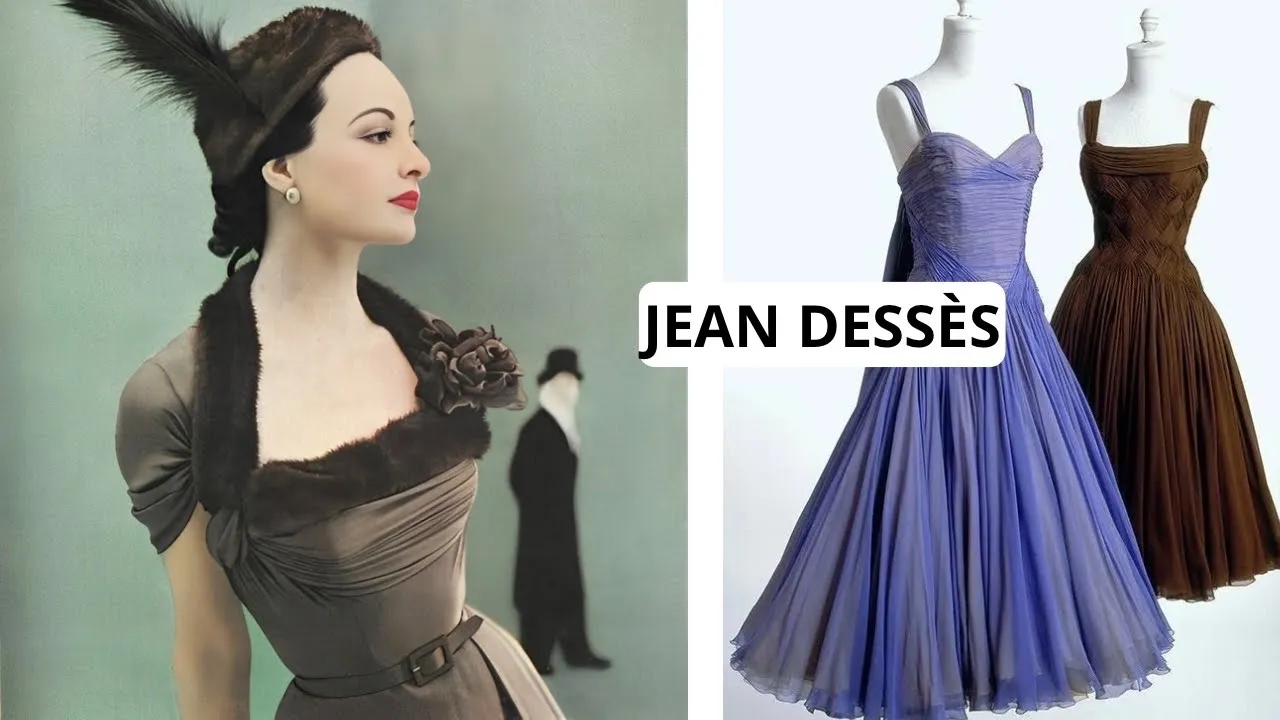
Jean Dessès trained Valentino. Guy Laroche worked for him. Jacqueline de Ribes was his client. Royalty, aristocrats, and some of the most visible women of the post-war world wore his clothes. At the height of his career, hundreds of people worked for his house, and his name belonged naturally beside the great Paris couturiers of his generation. Yet, there
59 words, the words spoken in the first 30 seconds at 118 words per minute.
Free, no signup. See how the first 30 seconds hold attention, with rewrites.
Sentence shape
| Measure | This transcript |
|---|---|
| Sentences | 386 |
| Average words per sentence | 10.9 |
| Longest sentence | 37 words |
| Questions asked | 4 |
| Sentences containing a number | 21 |
Most used terms
Filler phrases
13 in total: like 8 · you know 2 · actually 1 · kind of 1 · sort of 1.
A literal whole-word count of the same phrase list the Prepublish browser extension uses, so a phrase inside another word is not counted and a phrase used in its ordinary sense still is. It is a count and not a judgement.
What this transcript is
Every word below is the caption track YouTube publishes for this video, pulled from the video itself and reproduced unchanged. It is not Prepublish's writing, not a summary, and not a re-transcription: it is the video's own published captions. English captions, generated automatically by YouTube, in the video’s original language. Source: the video on YouTube. A channel that would rather this page did not exist can ask for its removal through the contact page, and it is removed.
No Script X-ray for this video: YouTube shows a Most replayed graph only once a video has enough views.
Jean Dessès trained Valentino. Guy Laroche worked for him. Jacqueline de Ribes was his client. Royalty, aristocrats, and some of the most visible women of the post-war world wore his clothes. At the height of his career, hundreds of people worked for his house, and his name belonged naturally beside the great Paris couturiers of his generation. Yet, there is a good chance that even if you love fashion history, you know the people who passed through Jean Dessès' world better than you know Jean Dessès himself.
That is the mystery I want to begin with because Dessès did not disappear because he failed. His clothes survived. His techniques survived. The designers who passed through his atelier became famous. Many of the women around him remained visible in fashion history. Somehow, the man at the center of all these connections became less visible than the world he helped create. So, this is not really a story about a forgotten designer.
It is a story about something stranger. How culture decides whom to remember and whether what we call fashion history is partly a history of what the human mind finds easiest [music] to retain. Before Valentino was Valentino, before the red dresses, Elizabeth Taylor, Jacqueline Kennedy, and Marella Agnelli, before the villas, the flowers, and the extraordinary mythology that eventually surrounded his name, he was a young Italian working in Paris.
One of the houses in which he learned his craft belonged to Jean Dessès. Years later, Vogue recorded a remarkable little moment. A woman appeared before Valentino wearing a Decesse dress from 1951. Valentino recognized it with emotion. "I worked on that dress." he told her. For a second, the mythology collapses. The famous Valentino disappears and we see the apprentice again. A young man whose eyes and hands were once occupied by somebody else's clothes.
He knew how those folds had been constructed because he had watched them being made. He knew how much labor could disappear beneath apparently weightless chiffon. He knew that effortlessness in couture is very often the final appearance of enormous effort. The dress survived. Valentino remembered. Most of the world forgot the man whose name was on the label. Once we begin looking backward from Valentino, however, Jean Desses starts appearing everywhere.
Guy Laroche worked for him. Jacqueline de Ribes dressed at his house. Desses himself would accidentally introduce Jacqueline to the young Valentino, beginning a friendship that lasted for decades. Another road from his world will eventually take us toward Irene Galitzine, another toward Athina Livanos and the great Greek shipping dynasties. Desses begins to look less like a minor figure forgotten at the edge of fashion history and more like a junction hidden somewhere near its center.
Which raises an uncomfortable question. If influence can travel forward through other people, does history actually remember the people who shaped it, or simply the people whose names were easiest to attach to a story. To find Jean Dessès before all these connections existed, we have to leave Paris and travel south across the Mediterranean to Alexandria. He was born there in 1904 into a Greek family. Alexandria at the beginning of the 20th century was one of those cities that complicates every neat idea about cultural identity.
Egyptian, Greek, Italian, French, Jewish, Armenian, and Levantine communities inhabited the same Mediterranean environment. Dessès would eventually become a Paris couturier, but Paris was not where his visual imagination began. His mature work repeatedly returned to draping, wrapping, pleating, and the physical behavior of cloth around the body. The association with ancient Greek dress would become obvious, although calling his gowns simply Grecian can make them sound much easier than they were.
Ancient drapery gives us the illusion that fabric has simply fallen into beautiful folds. Dessès recreated that illusion through extraordinary technical control. Chiffon does not wake up in the morning and decide to behave like classical sculpture. Someone has to persuade it. That contradiction, a freedom created through discipline, would become one of the signatures of his work. Yet, fashion was not originally the future planned for him.
Dessès came to Paris to study law and diplomacy. In 1925, he abandoned that respectable direction and entered Maison Jane, reportedly after his drawings attracted attention. He stayed there for more than a decade before opening his own house in 1937. This date matters [music] because it places Desses before the version of post-war haute couture that dominates our memory. When Christian Dior opened his house in 1946, Desses was not a young rival trying to enter the scene.
He was already established. When Dior's new look transformed the visual language of fashion in 1947, Desses already understood couture from the inside. He belonged to an older Paris that was now being forced to survive inside a new one. And he did survive. In the post-war years, his reputation became international. His house employed around 200 people at its height. European royalty and society women wore him. His evening gowns became particularly celebrated for chiffon and mousseline manipulated into complicated pleats, twists, and gathers that could make a woman appear almost wrapped in moving sculpture.
Yet, if I had to explain a Desses dress to someone who had never seen one, I would not begin with its silhouette. I would tell them to watch what happens inside it. Follow one fold. It crosses the bust and disappears. Another begins at the shoulder, tightens around the torso, and suddenly releases. Tiny pleats compress fabric until it looks almost solid, then open into a skirt that seems to have almost no weight all.
Color can deepen inside a fold and lighten when the fabric moves outward. Desses particularly liked graduated and ombre effects, which meant that even color [music] could participate in the movement of the dress. Nothing looks accidental. Yet the final effect is often the opposite of effort. That is the trick. A Desses gown can make engineering look like gravity. Put him beside Christian Dior and the difference becomes immediately useful.
Dior understood the enormous historical power of silhouette. The new look can be compressed into a few lines. Narrow waist, rounded shoulders, enormous skirt. A photograph can carry the idea. An illustration can carry it. Even a cheap imitation can carry it. Dior created not only clothes, but an extraordinarily efficient system of recognition. Desses information is harder to compress. Much of it lives inside the outline of the woman, in the changing tension between textile and body, in transparency, in folds whose logic becomes clearer only when the wearer changes position.
Dior can give us a shape. Desses often gives us behavior. That difference matters because visual memory is selective. The mind does not preserve everything it sees with equal efficiency. It looks for compression, a contour, a contrast, a repeated form, something complicated enough to be distinctive but simple enough to recognize again. Dior's new look gives memory exactly that kind of shorthand. One silhouette can summon an entire period.
Dessès is more difficult. Much of the information in his clothes unfolds over time. A fold changes as the body turns. Transparency appears and disappears. A skirt expands during a step and collapses again when the woman stops. The dress asked perception to follow an event rather than identify a symbol. What makes it extraordinary in life may therefore make it strangely vulnerable in memory. Madame Grès makes the distinction even more interesting.
Both designers were extraordinary masters of drapery. But when I look at their clothes beside one another, I experience them differently. Grès can make cloth feel almost architectural. Her pleats acquire permanence, as though fabric has been persuaded to remember stone. Dessès often allows me to remain aware that fabric wants to move. His folds twist, cross, loosen, and change direction. This is an interpretation rather than a rule.
Both designers produced work that complicates the comparison. Yet it reveals something important about Dessès. Movement does not merely decorate many of his dresses. Movement completes them. Fashion history has not always been kind to qualities that require time. Most of us know 20th century couture through still photographs. We have never watched an original Dessès gown cross a salon. We cannot see what happens when its wearer sits, turns, or walks toward us.
Photography preserves some qualities brilliantly. Silhouette, contrast, geometry, proportion. Other qualities become weaker. Weight, texture, transparency. The instant chiffon separates from a leg before falling back against it. A photograph can preserve a Dessès dress. It cannot always preserve what the dress was doing. There is a psychological difference between recognizing an object and experiencing it. Recognition wants stability.
We identify things partly by finding features that remain constant. A contour, a proportion, a repeated visual code. Experience is less obedient. It includes sequence, anticipation, and change. Dessès worked unusually close to that second territory. His dresses were not only objects occupying space. They produced small perceptual events in time. The eye followed fabric tightening, releasing, crossing, and falling. [music] Remove time and part of the information disappears with it.
This may sound like a minor problem of fashion photography, but it leads directly to a larger problem of cultural memory. What survives most easily is not always what was richest to experience. Sometimes it is simply what could be reduced most successfully to an image. If that were the whole explanation for Dessès disappearance, however, this would be a much simpler story. It is not. Because the house of Jean Dessès was not merely producing difficult to photograph dresses.
It was producing people. One of them was Guy Laroche. Before his own name appeared a couture house, Laroche spent years working with Dessès. Another was the young Italian we have already met, Valentino Garavani. I find apprenticeships fascinating because they destroy the illusion that famous designers simply emerge fully formed. We usually encounter Valentino after the transformation is complete, immaculate, surrounded by extraordinary houses, art, flowers, dogs, beautiful women, and clothes so recognizably his that the identity seems natural.
Once there was simply a young man working inside somebody else's atelier. That later encounter with the 1951 Dessès dress matters for precisely this reason. I worked on that dress. Imagine what those words mean physically. Before the runway applause, before the red carpets, before his own ateliers, his hands and eyes had been occupied by someone else's dress. He knew where the folds came from because he had seen them being made.
He knew apparent effortlessness was built from labor. He knew how much structure could hide beneath fragile fabric. We should not turn Dessès into the man who taught Valentino because that would erase him in a different way. Valentino became an original designer with an identity completely his own. Influence is rarely as simple as one designer handing another a recognizable visual signature. Sometimes what survives is not an image but a standard.
How far can chiffon be pushed? How much construction can disappear beneath softness? What does an evening dress need to do when a woman walks rather than when she stands for a fitting? How much technical complexity can be hidden before the viewer stops seeing technique and begins seeing grace? Those are forms of knowledge, too, and knowledge does not always preserve the name of the person from whom it came. Valentinus was not alone.
Guy Laroche had already been part of Dessès' world and later opened his own house. Valentino subsequently worked for Laroche before returning to Italy in 1958. Suddenly, the neat biographies begin to overlap. Dessès leads to Laroche. Laroche leads to Valentino. Valentino leads to Rome. One afternoon inside this network produced a connection that would last for decades. We have already met Jacqueline de Ribes. She was exactly the sort of couture client who makes the word client feel inadequate.
She altered clothes, imagined clothes, and understood her own proportions with the concentration of a designer long before she formally became one. In 1952, during her first trip to America, Jacqueline met Oleg Cassini. Cassini liked the way she dressed and suggested that she might work for him in Paris. Jacqueline returned home and converted part of her attic into a makeshift atelier. She could create clothes in muslin, but she had a problem.
She could not make the elegant professional drawings necessary to communicate what she was imagining. At the time, she dressed partly at Jean Dessès, so she told him what had happened. Dessès found the situation amusing. He told her he had an Italian illustrator who might be happy to earn a little extra money after working hours. That illustrator was Valentino. It is one of my favorite kinds of historical moment because nobody involved could possibly have known what it would become.
There is no grand declaration. Dessès does not announce that he is introducing one future fashion legend to another. A client needs drawings. An employee needs extra money. A practical problem is solved, yet Jacqueline de Ribes and Valentino would remain friends for decades. This is what disappears when fashion history is reduced to separate biographies. Real history is full of people accidentally walking into one another's stories.
An atelier is not simply a building where a designer produces collections. It is a junction. Assistants arrive and leave. Clients bring problems. Illustrators translate ideas. Première hands no things the designer may never physically execute himself. Someone recommends someone else for a job. Someone sees a technique and remembers it 20 years later. Fashion moves through these encounters long before museums organize it into separate names.
Dessès' house was one of those junctions. His own international background made that particularly appropriate. He had been born in Alexandria, built his career in Paris, and traveled extensively after the war. The people around him were equally mobile. Valentino would carry his Paris training back to Italy. Laroche would build his own house. Jacqueline moved between Parisian Couture and American designers. Fashion history is usually divided into countries because books need chapters.
France, Italy, America. People are much less cooperative. Techniques cross borders because people cross borders. Paris traveled to Rome inside the designers who had worked there. Even Valentino's path back into Italian fashion was not immediate. Before establishing the identity we know today, he also passed through the Roman world of Princess Irene Galitzine. Another name we will eventually return to because she belongs to a different but connected story about Italian fashion, aristocracy, and the creation of the Palazzo Pajama.
This is what begins to happen when we stop looking at Jean Dessès as a forgotten name and start looking at the people around him. He becomes less isolated with every step. Yet there is still a person at the center of this web. And his later career tells us something important that the dresses alone cannot. By the beginning of the 1960s, the couture system Dessès had mastered was changing. The transformation was larger than taste.
Haute Couture depended on enormous amounts of skilled labor and an extremely small number of women capable of paying for it. Ready-to-wear was expanding. >> [music] >> Fashion was becoming faster, younger, and increasingly accessible through boutiques and industrial production. The old couture model had survived predictions of its death before, but Dessès began looking toward a different future. He had already developed ready-to-wear and licensing ventures and had established a presence in Athens.
Then, in 1963, after nearly four decades in fashion, he announced that he was giving up haute couture. The phrase attributed to him is remarkable. "I capitulate with optimism." I keep returning to those words because they change the emotional shape of his story. Dessès was not simply standing helplessly while history removed him. He could see that the system was changing. He believed ready-to-wear was the future and attempted to move toward it.
There was also a more private limit. His health was deteriorating. Around 60 years old, he withdrew increasingly from Paris and returned to Greece, where he continued his connection to the smaller business he had established there. This is the point where his story becomes almost painfully paradoxical. The designer whose clothes depended upon movement recognized that fashion itself was moving. He tried to move with it.
Yet, the move that may have seemed practical in 1963 also weakened the mechanism that might have kept his name alive after him. Dessès died in Athens in 1970. His clothes survived. His techniques survived. People he had employed survived. But, there was no Jean Dessès empire waiting to turn the founder into mythology. That difference matters enormously. Christian Dior died suddenly in 1957, only 10 years after presenting the new look.
Yet Dior did not disappear because Christian Dior died. The institution continued producing Dior. Chanel continued after Gabrielle Chanel. Balenciaga, after a period of dormancy, returned as a global house. These names are not remembered only because historians judged them important. They are continuously returned to us by enormous cultural machines. Every new Dior collection gives the present another reason to mention 1947.
Every Chanel jacket reactivates the memory of Chanel. Every Balenciaga exhibition, campaign, or reinterpretation brings Cristóbal back into contemporary conversation. A surviving fashion house performs one of the most powerful acts in cultural memory, repetition. And repetition matters because familiarity itself changes perception. The more often a name and a visual code appear together, the easier the association becomes to retrieve.
Eventually, the connection can feel self-evident. Dior means the new look. Chanel means the jacket, the little black dress, the chain, the camellia. Balenciaga means a particular history of sculptural form. These associations are not false, but their apparent inevitability is partly the product of rehearsal. Culture has repeated them for ease. Dessès had no comparable machine. There was no contemporary global Jean Dessès house spending decades telling each new generation what Jean Dessès meant.
His dresses therefore had to remember him by themselves. Objects are unreliable custodians of names. A label can disappear. A photograph can be reproduced without a caption. A gown can become 1950s couture instead of Jean Dessès. A student becomes more famous than his teacher. Another generation passes. Nothing dramatic needs to happen. Forgetting can be almost silent. We tend to imagine cultural memory as an archive.
The important things are deposited there and wait to be retrieved. Human memory does not really behave like an archive. It reconstructs. It simplifies. It organizes enormous quantities of information around manageable landmarks. This is not a defect. Without simplification, cultural history would be almost impossible to hold in the mind. A few names begin to stand for decades, movements, and visual ideas. Dior can stand for the new look.
Gray can stand for a particular ideal of classical draping. Chanel can stand for an entire argument about modern feminine dress. Once these associations become strong enough, neighboring figures become harder to retrieve. The map becomes easier to read precisely because some of its detail has disappeared. Dessès may therefore have been vulnerable for an almost paradoxical reason. His contribution was not necessarily too small to remember.
It may have been too distributed. Part of it existed in technique. Part existed in movement. Part traveled through employees. Part lived in relationships with clients. Part belonged to a cosmopolitan couture culture that would itself begin to disappear. There was no single Dessès object capable of carrying the entire story as efficiently as Dior's New Look silhouette could carry Dior. Cultural memory prefers handles.
Dessès gave it threads. This may be the real reason cultural memory can be so misleading. We imagine it as a competition in which the greatest eventually win. It is closer to an ecosystem. Talent matters, but so do institutions, archives, money, photographs, exhibitions, repetition, commerce, biography, and luck. The people we remember most clearly are not necessarily the only people who shaped what came next. They are often the people whose names remained attached to what survived.
Jean Dessès increasingly lost that attachment. Yet his work did not suddenly become irrelevant because the name above the door disappeared. Museums, collectors, and fashion historians continued to preserve his garments. And when we encounter them now, the curious thing is how little historical sympathy they require. We do not have to excuse them as interesting only for their time. The fabric still understands the body.
The drapery still directs the eye. The relationship between compression and release still works. The dresses expose an important distinction. Obsolescence and forgetting are not the same thing. Something can be forgotten without becoming obsolete. A design can lose its famous name while retaining the visual intelligence that once made the name famous. This distinction takes us back to influence. We often assume influence and recognition travel together.
They do not. Recognition needs a name. Influence only needs transmission. Valentino did not need to spend the rest of his career announcing Jean Dessès every time he touched chiffon for the knowledge of his apprenticeship to matter. Guy Laroche did not need to reproduce a Dessès gown for years spent in his atelier to become part of his education. Jacqueline de Ribes did not need to wear Dessès forever for his salon to have changed the social map of her life by introducing her to Valentino.
Influence can become anonymous. In fact, much of culture probably is anonymous influence. Ideas that have traveled so far from their source that eventually we experience them simply as the way things are done. There is something psychologically fascinating about this because influence and memory operate by almost opposite rules. Memory prefers identifiable sources. Influence does not require us to remember its source at all.
We can inherit a technique without remembering its inventor. We can absorb an aesthetic convention without knowing where it began. Yeah, we can even inherit a way of seeing without knowing who taught us to see that way. By the time influence becomes completely natural, its origin may become almost invisible. This is why the myth of the solitary genius can distort fashion so badly. A house carries one name, but couture has always required many minds and many hands.
Designers learn from designers. Designers learn from clients. Assistants learn from premieres. Clients force ateliers to solve new problems. Textile manufacturers make certain ideas possible. Illustrators transform vague thoughts into visible propositions. Seamstresses possess physical knowledge that may never appear in a designer's sketch. The finished dress carries a label because history needs somewhere to file it.
The knowledge inside the dress may have dozens of origins. Jean Desses happened to occupy a particularly interesting position in that chain. Famous enough to attract remarkable women. Technically sophisticated enough to train remarkable young designers. International enough to connect different fashion worlds, yet insufficiently institutionalized to control what happened to his own memory. Follow one of those threads and he appears.
Follow another and he disappears again. It resembles his drapery. One fold crosses the body, vanishes beneath another, and emerges somewhere you were not expecting. Maybe Jean Desses was not entirely forgotten. Maybe we simply forgot where some of the things we remember began. There is one thread, however, that I have deliberately not followed in this film. I mentioned that Dessès dressed women from the Greek royal and social worlds, but there is one name I have saved for the end.
Athina Livanos. Tina Livanos was born into one of the great Greek shipping dynasties. She was beautiful, extraordinarily wealthy, and still very young when her life became entangled with another name that would eventually become almost mythological, Aristotle Onassis. If we follow her, Jean Dessès suddenly opens a door into a completely different landscape. Shipping fortunes, private islands, yachts, Monaco, marriages and rivalries.
Maria Callas, Jacqueline Kennedy, Christina Onassis, Stavros Niarchos, and a family history in which almost unimaginable privilege existed beside devastating loss. For the moment, I want to leave her exactly there, at the edge of this story. Because by now I think you have probably understood what these films are becoming. They are not separate biographies. None of these stories really ends. Elizabeth Taylor brought us toward Valentino.
Valentino brought us to Marella Agnelli. Marella returned us to Valentino from another direction. Valentino has now taken us backward into the atelier of Jean Dessès, where Jacqueline de Ribes appeared again, where we found Guy Laroche before his own fame, and where another road quietly waits for Irene Galitzine. Fashion history begins to look very different when we stop arranging these people like separate entries in an encyclopedia and start following the relationships between them.
A dress leads to a woman. A woman leads to a designer. An atelier leads to an apprentice. A friendship opens another room. A marriage opens another social world. One apparently insignificant introduction survives for half a century. Memory simplifies these connections because it has to. History becomes interesting again when we begin putting them back. And suddenly, what looked like a collection of beautiful objects becomes something much more human.
A map of people teaching, borrowing, remembering, forgetting, and carrying fragments of one another forward.
The words are the caption track's own and nothing is reworded or re-transcribed. Paragraph breaks are placed between sentences so the text reads as prose.
Free tools for your own script. No signup, no login.
Paste your draft and see where viewers are likely to drop off, with a rewrite for each weak line.
Paste the first 30 seconds of your own draft for a hook score and rewrites.
Check your draft against YouTube's advertiser-friendly guidelines before you record it.
Read this channel's public videos and transcripts, and download a writing brief for it.