Getting the transcript
Reading the captions from YouTube. A video nobody has opened here before takes 10 to 30 seconds; this page fills in on its own.
Getting the transcript
Reading the captions from YouTube. A video nobody has opened here before takes 10 to 30 seconds; this page fills in on its own.
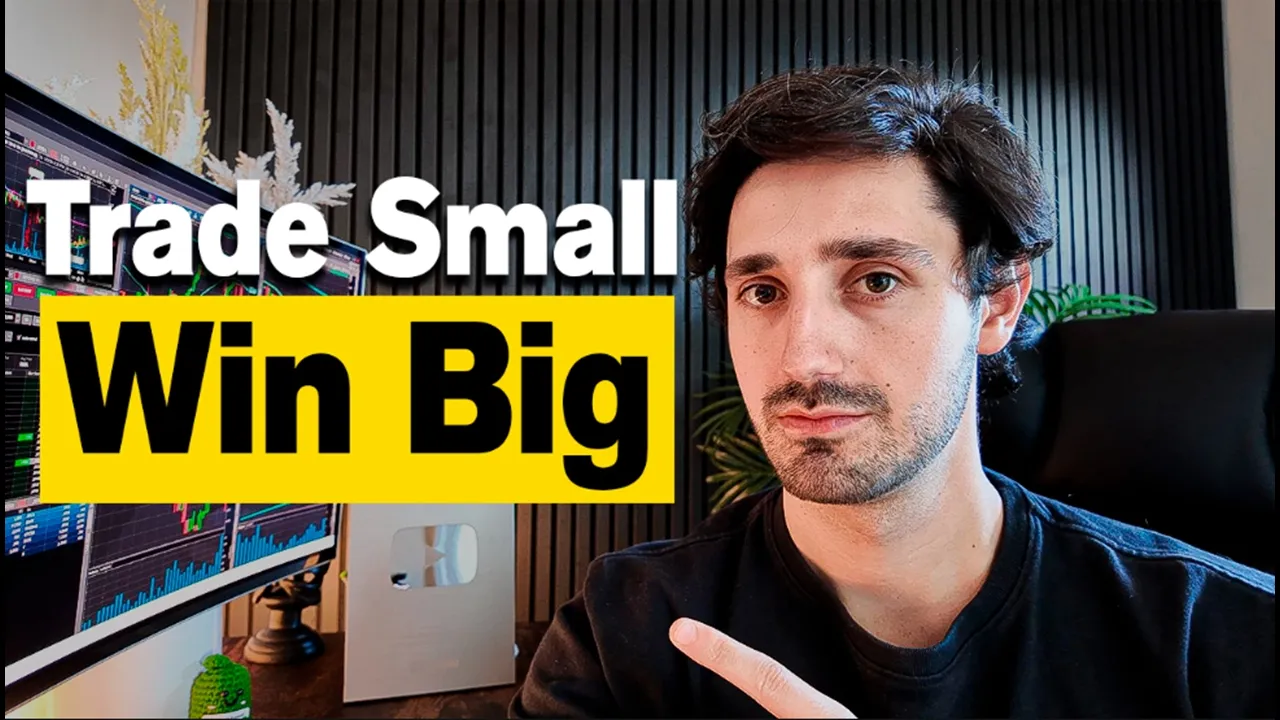
Emmanuel Malyarovich · @Emmanueltrades
Where viewers went back to watch this video again, from YouTube's public Most replayed graph, lined up with what was said at that moment.
Most replayed moment #1
9:163.3x the video's typical replay level
trader, your first priority is to learn how to consistently not lose money. You want to become a break even trader first. So, you want to go from beginner to consistently break even. And once you're a consistently break even trader,
Said at 9:08
Most replayed moment #2
4:472.9x the video's typical replay level
you're invincible and on top of the world, but your lows are crushing and they absolutely destroy your confidence. If your trading is exciting and exhilarating, that means you're doing it wrong. Real professional trading is boring. And I want you to think about a
Said at 4:40
Most replayed moment #3
10:511.8x the video's typical replay level
you figure out your own threshold of risk, well, it's pretty easy. Try risking $100. If that feels super uncomfortable and you feel really emotional, great. Lower your risk. Now, try $50 risk. If $50 risk feels super emotional, it feels very uncomfortable,
Said at 10:45
The graph counts replays. It does not show where viewers stopped watching.
Words
2,787
Runtime
15:57
Speaking pace
175wpm
Reading time
12min
175 words per minute, between the 160 25th percentile and the 181 median of 349 measured videos. That distribution comes from the 349-video hook study.
Opening (first 30 seconds)
The most powerful quote that I've ever heard in my trading career is that there are old traders and there are bold traders, but there are very few old and bold traders. And as soon as I understood what that truly meant, it changed my trading forever. The biggest myth that is silently destroying most traders careers is that most traders think that in order to make more money, they need to go in harder on their trades. They need to size up heavier. They need to increase
88 words, the words spoken in the first 30 seconds at 175 words per minute.
Free, no signup. See how the first 30 seconds hold attention, with rewrites.
Sentence shape
| Measure | This transcript |
|---|---|
| Sentences | 189 |
| Average words per sentence | 14.7 |
| Longest sentence | 58 words |
| Questions asked | 1 |
| Sentences containing a number | 15 |
Most used terms
Filler phrases
30 in total: like 12 · you know 12 · actually 3 · kind of 2 · literally 1.
A literal whole-word count of the same phrase list the Prepublish browser extension uses, so a phrase inside another word is not counted and a phrase used in its ordinary sense still is. It is a count and not a judgement.
What this transcript is
Every word below is the caption track YouTube publishes for this video, pulled from the video itself and reproduced unchanged. It is not Prepublish's writing, not a summary, and not a re-transcription: it is the video's own published captions. English captions, generated automatically by YouTube, in the video’s original language. Source: the video on YouTube. A channel that would rather this page did not exist can ask for its removal through the contact page, and it is removed.
The most powerful quote that I've ever heard in my trading career is that there are old traders and there are bold traders, but there are very few old and bold traders. And as soon as I understood what that truly meant, it changed my trading forever. The biggest myth that is silently destroying most traders careers is that most traders think that in order to make more money, they need to go in harder on their trades.
They need to size up heavier. They need to increase their risk. they have to go for that one home run trade that's going to double their account balance. And of course, on the other hand, the small trades feel completely irrelevant. They feel pointless. They feel like they're not moving the needle at all. And after 5 and 1/2 years of full-time trading experience, I can tell you that could not be farther from the truth.
And I'm going to tell you something that most traders don't want you to hear. Position sizing matters more than you think. It matters more than your entries. It matters more than your strategies. It matters more than your journaling process. In fact, it's very likely that your position sizing is what's stopping you from becoming profitable because ultimately your position sizing affects the two most important components in your trading.
Your trading psychology and your emotional control. Every trader has a psychological threshold when it comes to risk. And of course, that threshold is going to vary from trader to trader. It's also going to vary based off your experience level. However, once your position sizing exceeds your psychological threshold for risk, your brain's ability to think and make objective decisions ceases to exist. It becomes impossible because when you are oversized on your positions, you don't trade the charts in front of you.
You're not trading based off your edge or based off your trading plan. You're trading based off your emotions. You're trading based off your account balance and the profit and loss that is fluctuating on your screen. When you're oversized, every loss feels personal. It feels like an attack on your ego. And on the other hand, every win feels euphoric. So, you're constantly in this emotional roller coaster of ups and downs in your trading that is affecting your objectivity.
It is affecting your execution. And it's the reason why you can't follow your trading plan. Because when you're oversized, it amplifies the emotions that you feel. It amplifies the fear in your trading. It amplifies the hope in your trading. And it's the reason why you're constantly moving stops on your trades for no reason. It's why you're hesitating on your entries. It's why you're holding on to losers way too long.
And it's also why you're not holding on to winners long enough. I'm sure you can relate to this, but have you ever thought to yourself, I need this trade to work? where you're in a trade, you're sized up, and you're thinking to yourself, "Oh my god, if this hits target, I'm going to make this much money. I need this to hit target." I'm sure you've thought that before. And that mindset, even before you took the trade, you just thinking to yourself, I need this to work.
You've already lost the trade. Because at that point, you're no longer trading probabilities. You're trading based off of hope. Now I want you to understand what neurologically happens in your brain when you cross your personal threshold of risk and when you oversize your positions. And what happens is your amygdala which is the fear center of your brain activates the fightor-flight response and it pumps your bloodstream with adrenaline and with cortisol.
And this fightor-flight response occurs before the logical part of your brain, your prefrontal cortex, can even assess the severity of the situation. And what happens is your brain naturally diverts all of its energy from rational thinking to immediate survival action. So when you're oversized, your brain literally goes into survival mode and it becomes impossible for you to make rational decisions. And more importantly, it becomes impossible for you to remain disciplined.
A lot of traders blame their own discipline when it comes to them following their trading plan or when it comes to them making an impulsive decision. But it's not your discipline. It's because you're constantly oversizing your positions and you're putting your brain into this survival state. Your central nervous system wasn't designed to handle constant financial threat. This is why trading feels like a roller coaster.
This is why you're always emotionally exhausted where your highs feel amazing and they feel euphoric and you feel like you're invincible and on top of the world, but your lows are crushing and they absolutely destroy your confidence. If your trading is exciting and exhilarating, that means you're doing it wrong. Real professional trading is boring. And I want you to think about a moment in your trading career right now where you were undersized on a position.
Or maybe you took a trade for fun on really small risk. And I want you to recall your decisionmaking on that trade. And I want you to try to recall how much more clarity you felt on that trade where you didn't panic out as soon as the trade dipped. You didn't, you know, mismanage the trade and, you know, take profits way too early. You didn't hesitate on your entry. you just followed your edge. You followed your trading plan.
And even though that trade didn't make a lot of money since you had very small risk, but you perfectly executed that trade. And I'm sure right now you're probably thinking of at least a couple examples of this in your trading career where you had small size and you executed it extremely well based off your trading plan. When you trade with smaller size, you have much more clarity in your trading and you remain emotionally neutral, where you're not too high and euphoric, but you're also not too low, where every loss feels like a crushing defeat.
You're at a point where your losses feel fine and your wins feel fine. And that's what allows you to make objective decisions. This is what allows you to focus on your edge and focus on your trading plan. It's what allows you to focus on proper risk management. And all of those things help build consistency. And ultimately, consistency is the foundation behind you increasing your risk over time. And in order to develop consistency, you need to have consistent input.
Consistent action equals consistent results. There are a lot of traders out there that want to become consistently profitable, except their input is completely random. They're sizing up on some trades while sizing down on others and their risk is completely random. You're never going to establish consistency that way. And that's exactly why you need consistent sizing for every single trade that you take. And that of course requires discipline.
You need to be disciplined enough to do that in the first place. The market isn't going to reward you for being aggressive. It's not going to reward you for having that home run mentality where one trade is going to double or triple your account. No, the market rewards patience and it rewards discipline and it rewards you having that probability mindset where you're not trying to grow your account off of one or two home run trades.
No, you're trying to grow your account through thousands of trades. And you know that if you consistently follow your edge and your plan throughout those thousand trades, you know, you're going to slowly make money and you're going to be limiting your losses extremely well. By the way, real quick, I have hundreds of hours of free education on the internet. Not only on this YouTube channel that you're watching right now, but I also have a free 10 plus hour trading course that is genuinely better than most paid courses on the internet.
It's going to teach you my system. and it's going to teach you my strategies and it's going to solidify the foundation for your trading success. I would highly recommend taking advantage of it and you can get free access to it directly below this video in the description. And if you are looking for something a little bit more serious, you want one-on-one help, I do personally help scale and coach traders from zero to consistently profitable where I take my students under my wing and they learn how to trade by doing it with me on a daily basis and they honestly see lifechanging results.
So, if you're looking for something a little bit more serious, you want hands-on help, you can also apply for my mentorship in the description of this video. And here's what that process is going to look like, especially if you're a beginner or intermediate trader. Your first goal as a trader isn't to make money. And I know that sounds very counterintuitive because ultimately we are all traders because we want to make money, because we want to have freedom.
But your first goal as a trader is to protect the money that's already in your account. Ultimately, as a trader, you are a risk manager. So, if you're a beginner, instead of trying to go from beginner trader to profitable trader, your first priority is to learn how to consistently not lose money. You want to become a break even trader first. So, you want to go from beginner to consistently break even. And once you're a consistently break even trader, that's when you can be thinking about becoming profitable.
And by the way, once you are consistently break even, you are like 70% of the way there towards becoming a consistently profitable trader. And that's going to be the backbone and foundation behind your trading every single day. I want you to walk into the markets every single day with the confidence that you are not going to lose that day. And that should be your first priority. If you have confidence that you're not going to lose and that you're really good at risk management, you're really good at limiting losses, it's going to become that much easier to make money.
And of course, you're going to have losing days. You're going to have losing trades. Losing is inevitable in trading because ultimately it's a probability game. And there's going to be days where you're taking really high quality setups, but those setups just don't follow through and continue in your favor and they end up stopping out and you have a losing day. It's a part of the process. It's a part of the profession.
However, I want you to walk in every day with the confidence that you know that as long as you follow your plan, more likely than not, you're not going to lose and more likely than not, you're going to make money. And the only way to do that is to have consistent sizing and to make sure that your size is within your threshold of risk. And that's very important. And the way that you figure out your own threshold of risk, well, it's pretty easy.
Try risking $100. If that feels super uncomfortable and you feel really emotional, great. Lower your risk. Now, try $50 risk. If $50 risk feels super emotional, it feels very uncomfortable, lower it to 25. And if 25 feels really good, you can make objective decisions, you're trading with clarity, well boom, just start trading with $25 risk. And that's going to be your threshold of risk that's within your trading plan.
And once you have developed that consistency and you're, you know, making money on most days, your losing days are really small and you have a few months of consistent results. Well, from there, you can begin gradually raising your risk. And that's the key term here, gradually. Do not raise your risk from 25 all the way to $100 or from 25 to $300. You don't want to do that. You want to raise it gradually. Go from $25 to $40, $40 to $60, $60 to $80, you know, etc.
And when you raise your risk gradually, you kind of condition yourself to new and higher risk versus if you jump from 25 all the way to 100. Well, when you're taking a trade with a $100 risk, it's going to trigger that survival mode in your brain, and you're going to end up trading emotionally. And believe me, if you can't make money consistently with $25 risk, you're not going to be able to make money with a $100 risk or $200 risk.
So, stop trying to size up your positions and go for these home run trades. Just focus on patience, focus on consistency, and focus on compounding your results over time. And I'll be completely honest, guys. I got very lucky. My dad mentored me on how to trade. He's the one who taught me this concept very early on in my trading career. And now sizing smaller, and focusing on patience, on discipline, and on consistency.
That's now the backbone of my trading. And now I'm an extremely good risk manager. And I'm very good at limiting my losses. And that's why I'm consistently profitable. That's why I rarely have losing days. It's not because I'm some crazy trader who catches 500% trades every single day or I catch home run winners every hour. No, it's because I'm really good at sizing down, trading with clarity, focusing on my trading plan and executing every single trade based off my edge.
And I know it can be difficult to actually focus on this because whenever you go on social media, you see some new hot shot trader that's making $10,000 a day or they caught a $50,000 trade and that feels intimidating. It feels like you're doing something wrong. It feels like you're missing out on these crazy opportunities, but I promise you, you are not. Those guys are gambling. And I can guarantee you, they're not showing their statements.
They're not logging into their brokerage account. They're not showing any proof. They're just selling you a dream of what trading is supposed to be. But that is not the reality of what it's actually like to trade professionally. The raw reality of being a professional trader is that it's kind of boring. You're not sizing up. You have consistent risk and you're consistently following your plan. Yeah, we catch really nice move and moves and really nice winners and they do feel exciting.
They feel rewarding and fulfilling, but we're not, you know, on a roller coaster of highs and lows. No, our trading is relatively boring. I honestly never get stressed out when I trade. My palms are never sweaty. I'm never pacing back and forth because I'm up 5,000 and next thing you know, I'm down 3,000. No, like everything in my trading is honestly cool, calm, and collected. If there's one thing that you need to walk away with from this video is that the way that you're going to become the professional trader that's making money, that's living that life of freedom where you're able to buy yourself whatever you want, you're able to go wherever you want, you're able to quit your job.
It's not by catching home run trades. It's not by living this exhilarating trading lifestyle where you're constantly up or down in your account balance. No, it's by trading the boring way. It's by being a true professional. It's by being a risk manager where you're trading within your threshold of risk. You're consistently sizing every trade and you're trading with clarity. You're following your plan. You're executing your edge.
And you know that, you know, if you do that every single day, you know, month after month, you're eventually going to become profitable. are eventually going to gradually increase your risk to the point where your profits are actually buying you that amazing lifestyle that you're looking for. So, make sure you size down and make sure you're not triggering that survival mode within your brain. And hopefully you found tremendous value in this video.
And if you did, make sure you leave a comment with feedback. Let me know if this video helped you. Make sure you subscribe to the channel for more trading education. And make sure you leave a like. And thank you so much for watching.
The words are the caption track's own and nothing is reworded or re-transcribed. Paragraph breaks are placed between sentences so the text reads as prose.
Free tools for your own script. No signup, no login.
Paste your draft and see where viewers are likely to drop off, with a rewrite for each weak line.
Paste the first 30 seconds of your own draft for a hook score and rewrites.
Check your draft against YouTube's advertiser-friendly guidelines before you record it.
Read this channel's public videos and transcripts, and download a writing brief for it.