Getting the transcript
Reading the captions from YouTube. A video nobody has opened here before takes 10 to 30 seconds; this page fills in on its own.
Getting the transcript
Reading the captions from YouTube. A video nobody has opened here before takes 10 to 30 seconds; this page fills in on its own.
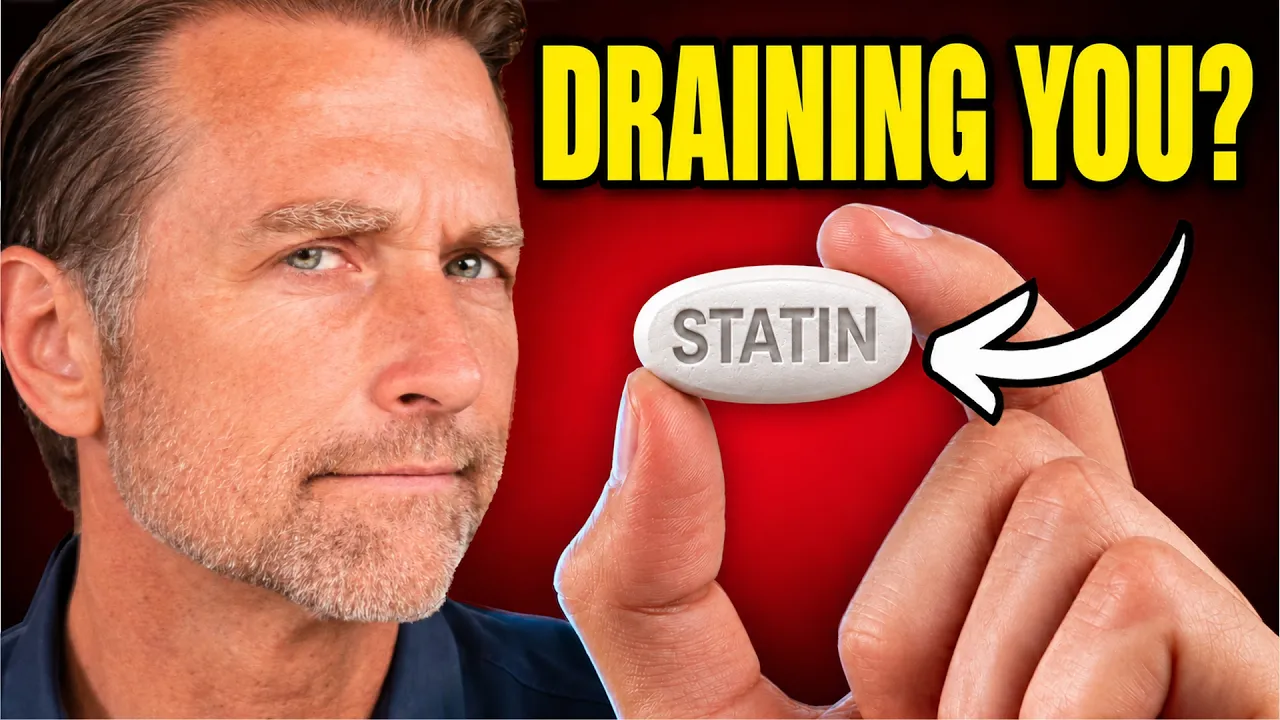
Dr. Eric Berg DC · @Drberg
Words
1,579
Runtime
9:31
Speaking pace
166wpm
Reading time
7min
166 words per minute, between the 160 25th percentile and the 181 median of 349 measured videos. That distribution comes from the 349-video hook study.
Opening (first 30 seconds)
What happens to your body years after taking a statin? So, if you're taking a statin right now, this video is going to be one of the most important videos you've ever watched on the topic. The number one most prescribed drug class in the United [music] States, yet almost none of these 93 million people have ever been told what I'm about to share with you. You go to the doctor and your cholesterol is a little bit high, they might just
83 words, the words spoken in the first 30 seconds at 166 words per minute.
Free, no signup. See how the first 30 seconds hold attention, with rewrites.
Sentence shape
| Measure | This transcript |
|---|---|
| Sentences | 95 |
| Average words per sentence | 16.6 |
| Longest sentence | 49 words |
| Questions asked | 11 |
| Sentences containing a number | 26 |
What this transcript is
Every word below is the caption track YouTube publishes for this video, pulled from the video itself and reproduced unchanged. It is not Prepublish's writing, not a summary, and not a re-transcription: it is the video's own published captions. English captions, generated automatically by YouTube, in the video’s original language. Source: the video on YouTube. A channel that would rather this page did not exist can ask for its removal through the contact page, and it is removed.
No Script X-ray for this video: YouTube shows a Most replayed graph only once a video has enough views.
What happens to your body years after taking a statin? So, if you're taking a statin right now, this video is going to be one of the most important videos you've ever watched on the topic. The number one most prescribed drug class in the United [music] States, yet almost none of these 93 million people have ever been told what I'm about to share with you. You go to the doctor and your cholesterol is a little bit high, they might just hand you a prescription for something called statin.
Okay, this is a prescription to lower your cholesterol. When you take a statin, you are blocking the production of cholesterol, but you're also at the same time blocking the production of something your heart and your muscles depend on. And that is called coenzyme Q10. Coenzyme Q10 is a compound that the mitochondria needs to produce energy, especially in your heart and your muscles. And what's really wild is Merck filed a patent on the statin, and they actually had it coexist with coenzyme Q10, but they never added this back into that formula.
Interesting. The entire assumption that the statin industry has, and most people have, is this: if you lower your cholesterol, you're going to reduce heart problems. And if that actually was true and it was significant, maybe I would start taking a statin. If cholesterol is so bad, if it's so poisonous, why does your body make 75% of it? Well, it just so happens that the body makes cholesterol for cell membranes. Also, cholesterol is needed to make hormones, testosterone, estrogen, cortisol, which is a stress hormone.
Bile, that's in your gallbladder, is made from cholesterol. And vitamin D is made from cholesterol. Now, just as a side note, I'm not telling you to stop your statins. Check with your doctor before you implement any of the things I'm going to share with you. What I really mainly want to do is help you to minimize the side effects and have various protocols for damage control if you do have them. Especially since a lot of doctors that are prescribing statins are not telling you to take coenzyme Q10 at the exact same time.
There were 12 human randomized controlled trials meta-analysis that showed significant benefits of taking coenzyme Q10 and preventing the side effects. So, I'm going to share those with you. Increased risk of tendons rupturing, especially if you're exercising. You get exercise intolerance, and you're so tired you just don't feel like exercising. Also, statins now have a black box warning. Doctors don't even recommend this.
In fact, the American Heart Association doesn't even recommend it. The American College of Cardiology doesn't even mention it. I mean, what's really bizarre to me is here we have this entire profession that is recommending something to help your heart with a side effect of breaking down the heart. It just doesn't make sense to me. Anyone who has a prescription for a statin needs to at the same time be taking coenzyme Q10.
I would recommend taking a very specific form of coenzyme Q10. The one that actually can get in your body and work instantly, and that's called ubiquinol. But, I would recommend taking maybe 200 to 400 mg. Why does the American Heart Association and the American College of Cardiology not recommend coenzyme Q10 when someone takes a statin? Now, you may hear from your doctor that the research is mixed. Well, it's mainly because, even though the research is there, it takes a long time before that gets into the general consensus.
If they say that, I'm going to give you a download to give to them because there's a lot of credible research that shows that taking this will greatly reduce these symptoms right here. But, if you're just taking a little bit of it, you probably won't see a lot of change. For some people, they can get away with 200 to 400 mg. Other people need 500 or more mg. The top amount that you can go up to without many side effects is 1,200 mg a day.
So, the reason why you see mixed results in the research is when you read the research, they're using small amounts of coenzyme Q10 or they're using a different form of coenzyme Q10 that's not the active form, which then creates a problem in absorption. But, I think the big red flag for me is the amount of money that the American Heart Association and the American College of Cardiology get from the exact companies that sell statin drugs.
And even the guidelines that altered your normal cholesterol that then made a lot of people eligible for statins, that panel of doctors that created those guidelines, seven out of 13 of those members on that guideline committee have direct financial relationships with the manufacturing companies that make statins. A lot of these symptoms go away when a person starts taking coenzyme Q10 or they stop taking statins. Now, if you've checked out, just check back in right now because this next thing is the most important part of this entire video.
The question is, why is your cholesterol high in the first place? Well, if you look this up on probably the most credible place on the planet, which is Wikipedia, and I'm being very, very sarcastic, it'll say it's high because of poor diet, junk food, you have diabetes, you're drinking alcohol, or you have hypothyroidism. But, what are they missing? What's the most important thing that they missed? Carbs, refined carbohydrates, and sugars directly turn into cholesterol.
And there's one little caveat to that. Your liver makes bile that's stored in your gallbladder. One of the purposes of bile is to help get rid of excess cholesterol. So, if a person has a problem with their gallbladder, or they had the gallbladder removed, or they don't produce enough bile, that could be a reason why they're not eliminating the excess cholesterol. So, because medical doctors don't get a lot of training in food therapy or nutrition, they're not really focused on the early drivers of cholesterol.
They're trying to manage your cholesterol, and they don't have time in the office visit to do that. But, in reality, it's not necessarily the eating more cholesterol that increases your cholesterol. It's the drinking the juice. It's the bread, the pasta, the cereal, the crackers, the candy that then increases the cholesterol production. A very good test to get by your doctor would be called the fasting insulin test. You want that thing below five.
Many people that have high cholesterol have their fasting insulin very high. So, a lot of people ask me, "What supplements do I recommend?" Now, of course, I'm not biased of my own high-quality supplement line, but if you go to Amazon and type Dr. Berg supplements, you'll find more information. I have to touch on a very important topic called informed consent. When you're given a drug or given a procedure, they're supposed to have you read a consent form and sign off that you understand the benefits, the harms, and alternatives.
It's usually in very fine print, and it's very confusing. But, let me just give you a summary of the benefits of statins in the informed consent, because they use a lot of different numbers to give you this illusion that the benefits are really, really high. It's a math trick. And this is why you even see in the news that statins can reduce heart attacks by 25% to 35%. It's not really a 25% to 35% reduction in heart attacks.
It's reduction in heart attacks. Because with relative risk, they're comparing this with a placebo. So, basically, what does that mean? It means 99 out of 100 people taking statins over a period of 5 years get no benefit for their heart. And to be totally transparent, there is some benefit of taking statins if you already had a heart attack. But, for the majority people who take a statin, okay, if we look at the benefits and the risks, they're very tiny benefits, extremely tiny benefits with huge side effects and risks.
So, if your symptoms are muscle weakness, muscle pain, fatigue, or like exercise intolerance, start taking coenzyme Q10. I would take anywhere between 200 to 400, maybe 500 mg of ubiquinol, okay? And you can just take it once a day with your meal. Now, if you develop type 2 diabetes, I highly recommend you start going on a low-carb diet immediately, doing intermittent fasting. I would also recommend taking something called berberine, which is very beneficial for type 2 diabetes.
And here's an extra tip that I would recommend to really make sure that coenzyme Q10 works optimally in the body so you can make a lot of energy in the muscles. That mitochondria also needs magnesium. I would highly recommend taking magnesium, 400 mg of magnesium glycinate. But, like I said before, getting to the root cause of why your cholesterol is high in the first place, why is your LDL so high? It's usually because you are consuming the wrong types of foods.
To be able to understand the best diet to lower cholesterol, especially the pathogenic LDL, okay? You should watch this video right here on the low-carb diet combined with intermittent fasting. I'll put it right here. Check it out.
The words are the caption track's own and nothing is reworded or re-transcribed. Paragraph breaks are placed between sentences so the text reads as prose.
Free tools for your own script. No signup, no login.
Paste your draft and see where viewers are likely to drop off, with a rewrite for each weak line.
Paste the first 30 seconds of your own draft for a hook score and rewrites.
Check your draft against YouTube's advertiser-friendly guidelines before you record it.
Read this channel's public videos and transcripts, and download a writing brief for it.
Most used terms
Filler phrases
8 in total: actually 3 · like 3 · I mean 1 · basically 1.
A literal whole-word count of the same phrase list the Prepublish browser extension uses, so a phrase inside another word is not counted and a phrase used in its ordinary sense still is. It is a count and not a judgement.