Getting the transcript
Reading the captions from YouTube. A video nobody has opened here before takes 10 to 30 seconds; this page fills in on its own.
Getting the transcript
Reading the captions from YouTube. A video nobody has opened here before takes 10 to 30 seconds; this page fills in on its own.
Ben's AI Trading Lab · @obside_ai
Words
1,402
Runtime
8:53
Speaking pace
158wpm
Reading time
6min
158 words per minute, below the 160 25th percentile of 349 measured videos. That distribution comes from the 349-video hook study.
Opening (first 30 seconds)
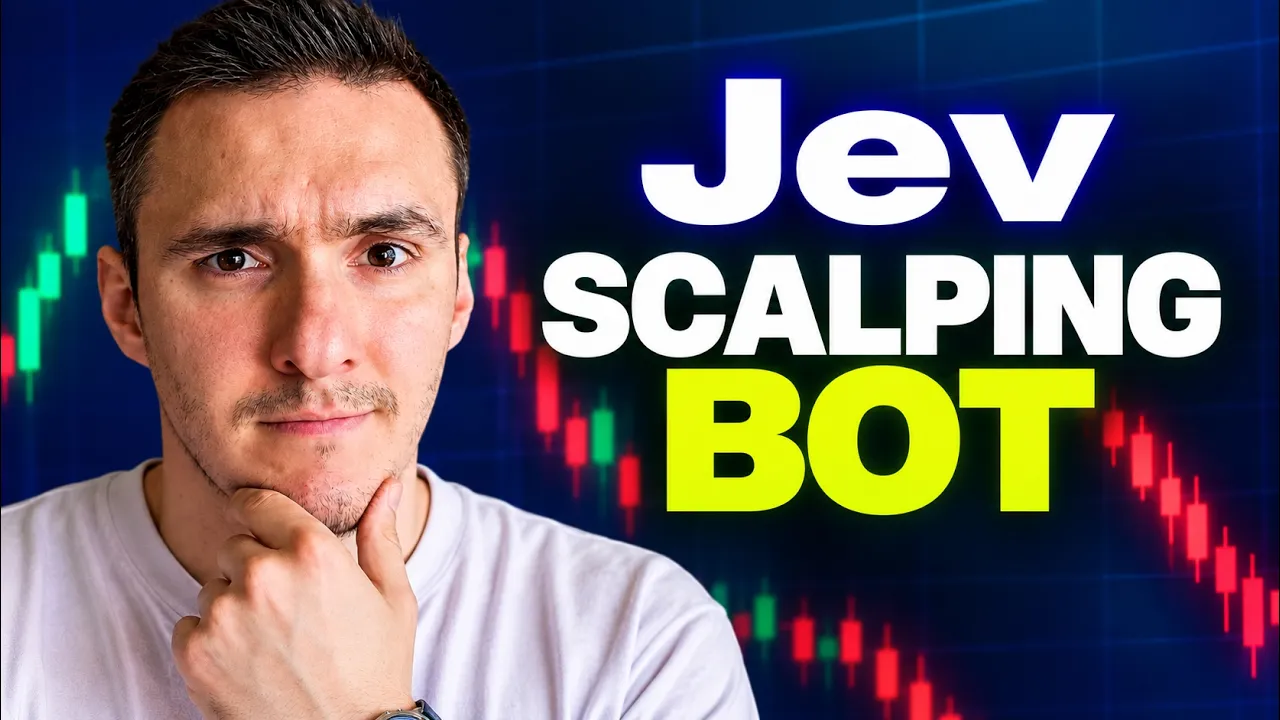
you guys see on the screen here is an AI scalping bot using the newest AI model called Jev. You might have heard about this new type of model. It was released yesterday or the day before yesterday and it's very different from LLMs. Jev is what is called a system one model. It's a type of model that's entirely made for decision-making. The difference with an LLM is that when you give an LLM a task, it will
79 words, the words spoken in the first 30 seconds at 158 words per minute.
Free, no signup. See how the first 30 seconds hold attention, with rewrites.
Sentence shape
| Measure | This transcript |
|---|---|
| Sentences | 71 |
| Average words per sentence | 19.7 |
| Longest sentence | 57 words |
| Questions asked | 0 |
| Sentences containing a number | 17 |
Most used terms
Filler phrases
40 in total: like 14 · uh 10 · basically 8 · I mean 3 · actually 3 · um 2.
A literal whole-word count of the same phrase list the Prepublish browser extension uses, so a phrase inside another word is not counted and a phrase used in its ordinary sense still is. It is a count and not a judgement.
What this transcript is
Every word below is the caption track YouTube publishes for this video, pulled from the video itself and reproduced unchanged. It is not Prepublish's writing, not a summary, and not a re-transcription: it is the video's own published captions. English captions, generated automatically by YouTube, in the video’s original language. Source: the video on YouTube. A channel that would rather this page did not exist can ask for its removal through the contact page, and it is removed.
No Script X-ray for this video: YouTube shows a Most replayed graph only once a video has enough views.
you guys see on the screen here is an AI scalping bot using the newest AI model called Jev. You might have heard about this new type of model. It was released yesterday or the day before yesterday and it's very different from LLMs. Jev is what is called a system one model. It's a type of model that's entirely made for decision-making. The difference with an LLM is that when you give an LLM a task, it will process it sequentially and answer word by word.
Whereas with a system one model like Jev, it will process the task in parallel and give you an answer 100 times faster than traditional LLMs, which could prove very useful for trading. So, basically, when you give uh Jev a task, you have to give it some potential actions that it has that it has to take and each action will then have odds. So, for example, in trading, if we if we build a scalping bot like this one, we can either long, we can either short, we can uh wait and do nothing, or if we're currently in a position, we can decide to move our stop to break even.
And those are the types of actions that I implemented here in that AI scalping bot. So, let me explain to you uh how it works as well as the current results so far. So, it's been live for almost uh 24 hours. Um basically, every 30 seconds, that's why it's called a scalping bot, we send Jev the intraday candles so far. So, it has all the candles uh of uh the Nasdaq, the Bitcoin, and gold micro futures and it processes all these candles as well as the the current candle that's not closed yet and it decides like what are it assesses what are the odds of what the what the price is going to do next.
So, based on that, it can either go long, go short, or do nothing. And if it's currently in a position, it can decide to move its stop to break even. So, we launched it yesterday with $100,000 of simulated capital. This is not a real account. And as you can see, it's already down in losses and I'll explain why in a minute. But here, basically, Jev is assessing every 30 seconds what it what are what is the most likely uh action what action is most likely going to lead to profits.
So, this Let me show you basically how decisions are made 30 seconds. So, you see for every asset, there are odds of certain scenarios. Like for this one, for example, I'm on Bitcoin micro future, uh the long odds were 29%, short odds were 35%, and wait was the one with the biggest odds, 36%. So, the action that has the biggest odds is the one that the scalping bot is going to follow. So, if Jev assesses that wait is the action that should matter the most with the biggest odds, then the the scalping bot is then going to wait.
But earlier, for example, it took a short on MNQ because as you saw as you see, the odds of the short were the highest given by Jev. So, that's what the AI scalping bot did and it opened a position with one contract. So, every time a decision is made by Jev, it's then replicated by the scalping bot and we always go long or short one contract. So, as I said, so far, it's down in it's down 2.3% in 24 hours. And the main reason is that because Jev is making decisions every 30 seconds, it's paying actually so many fees.
You can see that out of those $2,300 of losses, $1,300 just came from uh fees, like clearing fees as well as like all the the trading commissions that are paid when you when you buy a contract. So, I implemented the real fees as well as typical fees from a futures trading platform like NinjaTrader, for example. Uh so, so far, yeah, it's not it's not pretty. I mean, this is an exciting experiment. Um but the scalping bot so far is not producing any meaningful results.
We can see their positions live, so we can see that now, yeah, currently it's in a pretty good trade, a pretty good short on gold. And every 30 seconds it will reassess if it should hold or if it wants to bring its stop to to break even. But those are yeah, currently profitable trades, but overall it's losing more money than it's making. And we can see that on the equity curves. Like as you can see, we started at 100k of paper equity, and so far it's like basically a slide downwards to to hell, basically.
So, and this is mostly because of the fees. So far, I cannot say that even if there would be no fees, the scalping bot would be profitable. It's it's hard so far to measure the relevance of the decisions based on the odds that Jeff is is giving us. So, for every asset you see it's just oh, it's going it's going down straight to in the minus, in the losses. So, an interesting thing would be to probably see if by increasing the decision frequency we can get better results.
And we're going to do that. I mean, as I said, we just started 24 hours ago. So far, the scalping is obviously not going great. Making decisions every 30 seconds lead to over trading basically, which costs so much in fees as you can see like in 24 hours, it took almost 600 trades of which net of fees only 18% were profitable. The average hold time is 1 minute only, which is realistic for scalping, but look, this is where you see that Jev, a system one AI model, is way faster than LLM is that the moment it gets the data, it gives us back an answer less than a second later.
You can see the decision time 779 milliseconds. And that's that's also why this type of model could be very useful for trading. It gets the data and instantly produces a result. Now, the the what matters is whether the result that it produces is actually relevant because it's one thing to be able to process data very quickly and go back with odds of certain actions being more being more relevant at the moment than others.
For example, going long rather than going short or wait and so on. But if if actually following these decisions lead to mediocre results, then it's not going to help much purely in terms of like trading entries and trade management. But we need to dig much much deeper than that to come up with a more like with results and more conclusions that could hold better. All right, so as we can see here on gold, it's been holding its short, the one I've been talking about since earlier, and it now decided as you see to move its stop into a territory.
And so eventually it will decide to close that position or the position will get stopped at break even. And this shows another crucial aspect of testing AI bots like this is that if you don't take into account the fees, especially when building scalping bots, basically the results that you will see will be a complete illusion compared to what what trading on real markets is going to give you. All right, that's that's all I can share for now.
I mean the results, how it works, and my early conclusions being that scalping with Jev every 30 seconds, I don't see for now how it can be profitable at least without adding any more context. I just gave it the raw intraday candles and made it decide whether to go long, short, or do nothing. But we would need more probably more input than that. More like user-based rules to potentially make a scalping bot profitable.
But I'll keep you posted. And by the way, if you want to keep following, if you want to see these results live, I'll put a link down in the description below. All right, thanks for watching guys. I'll keep you posted about this experiment. See you. Ciao.
The words are the caption track's own and nothing is reworded or re-transcribed. Paragraph breaks are placed between sentences so the text reads as prose.
Free tools for your own script. No signup, no login.
Paste your draft and see where viewers are likely to drop off, with a rewrite for each weak line.
Paste the first 30 seconds of your own draft for a hook score and rewrites.
Check your draft against YouTube's advertiser-friendly guidelines before you record it.
Read this channel's public videos and transcripts, and download a writing brief for it.