Getting the transcript
Reading the captions from YouTube. A video nobody has opened here before takes 10 to 30 seconds; this page fills in on its own.
Getting the transcript
Reading the captions from YouTube. A video nobody has opened here before takes 10 to 30 seconds; this page fills in on its own.
Consumer Exposed · @ConsumerExposed-ghz
Where viewers went back to watch this video again, from YouTube's public Most replayed graph, lined up with what was said at that moment.
Words
4,540
Runtime
29:37
Speaking pace
153wpm
Reading time
19min
153 words per minute, below the 160 25th percentile of 349 measured videos. That distribution comes from the 349-video hook study.
Opening (first 30 seconds)
You've been buying butter your whole life, but I'm willing to bet you've never once read what's actually in it. I investigated 10 of the most popular butters in America. What I found is not what those labels want you to know. One brand won a federal lawsuit over its grass-fed claim, not because the cows actually eat grass year-round, but because of a single missing word on the wrapper. Another charges five times the price of
77 words, the words spoken in the first 30 seconds at 153 words per minute.
Free, no signup. See how the first 30 seconds hold attention, with rewrites.
What this transcript is
Every word below is the caption track YouTube publishes for this video, pulled from the video itself and reproduced unchanged. It is not Prepublish's writing, not a summary, and not a re-transcription: it is the video's own published captions. English captions, generated automatically by YouTube, in the video’s original language. Source: the video on YouTube. A channel that would rather this page did not exist can ask for its removal through the contact page, and it is removed.
You've been buying butter your whole life, but I'm willing to bet you've never once read what's actually in it. I investigated 10 of the most popular butters in America. What I found is not what those labels want you to know. One brand won a federal lawsuit over its grass-fed claim, not because the cows actually eat grass year-round, but because of a single missing word on the wrapper. Another charges five times the price of basic butter and uses the exact same base ingredient as the cheapest option on the shelf.
Seven brands I'm pulling off the list. Three that genuinely held up. We're starting with the worst and counting down to the one brand with the most to answer for. Because the butter most people trust most completely is the one with the biggest gap between what the label says and what's actually inside. Let's flip the packages over. Number seven, Tillamook. This is the one that looks like the honest choice before you even open it.
Founded in 1909. Farmer-owned cooperative. Oregon coast. Sold at Safeway, Target, >> [music] >> HEB, and Aldi. Everything on that packaging says this butter was made with more care by people who actually own the land. Then you read the ingredient list on the unsalted butter. Cream, natural flavoring. [music] Do this tonight. Pull out whatever butter you're using and flip it over. Real butter has one ingredient, cream, maybe salt.
If yours says natural flavoring, that's [music] something called starter distillate, and that term is doing a lot of work the packaging never explains. Here's what it actually is. Skim milk is cultured with bacteria. The flavor compounds are distilled off, concentrated into a liquid, and injected [music] into cream before churning. It mimics cultured butter without any actual culturing happening. The key compound is diacetyl, the same synthetic buttery chemical in microwave popcorn.
The same one linked to lung disease lawsuits from factory workers who inhaled it during production. In butter, it's added [music] to fake a flavor that real fermentation would produce naturally. Tillamook confirms this on their own FAQ page. They're not hiding it, but charging $5 a pound while using the same industrial shortcut as the cheapest butter on the [music] shelf. That's a gap the cooperative story on the front can't close.
The next [music] brand skips additives entirely. The problem is what it charges you for instead. Number six, Horizon Organic. This is the one family's reach for automatically. Blue box, illustrated cow on a sunlit pasture. [music] USDA certified organic, available at Walmart, Target, and Kroger. For parents already paying a premium to make a better choice, Horizon is the obvious reach. It looks exactly like what responsible dairy is supposed to look like.
Here's the first thing most people have never looked up. >> [music] >> Horizon is owned by Danone, a $30 billion French multinational that also owns Evian, Activia, and industrial [music] food brands across six continents. They acquired Horizon through their $12.5 billion purchase Whitewave Foods in 2017. The pastoral cow on the blue box is a corporate marketing asset, not a photo from a Colorado farm. Now look at the specific word Horizon leads with on their packaging.
Not grass-fed, pasture-raised. Their own label discloses that cows graze on organic pastures 120 days or more per year. That's 4 months. For the remaining 245 days, those cows can be kept indoors eating organic grain-based feed. The USDA organic standard requires outdoor access, but sets no minimum for how much of a cow's diet actually has to come from grass. Consumer surveys have consistently found that a majority of shoppers believe organic dairy automatically means grass-fed.
Horizon has never made that claim. They don't need to. The organic seal, the pastoral imagery, and [music] the word pasture-raised create that impression without a single explicit statement. That's the gap you're paying for. At $5.50 per pound [music] at Target, you're paying about $2 more than conventional butter for a product from cows that are indoors eating grain 8 months of the year. That's not what most shoppers think they're getting.
Now, here's the detail that shows how deliberate the calculation is. >> [music] >> Horizon's ingredient list is actually clean. Pasteurized organic cream and salt. No starter distillate. >> [music] >> But, Danone also manufactures Land O'Lakes, and that product does use starter distillate. Same parent company. Conventional line gets the additive. Premium line gets the clean label. That's not a values difference. It's a price tier decision.
[music] And the word pasture-raised is where the premium lives. You're paying for what that word implies, not for what it actually means. Number five, Land O'Lakes. This is the one America grew up on. Founded in 1921. Minnesota farmer cooperative. >> [music] >> The most recognized butter wrapper in the country. Available at every major grocery chain. Kroger, Publix, H-E-B, Safeway. It doesn't claim grass-fed. It's on this list for two specific reasons.
What's inside the butter, and what the butter comes wrapped in. Unsalted butter ingredients. Sweet cream, >> [music] >> natural flavoring. That natural flavoring is starter distillate. The same diacetyl-based concentrate from the Tillamook section. [music] But, here's the detail that reframes it. According to America's Test Kitchen, the primary function of starter distillate in unsalted butter isn't flavor enhancement for you.
It's shelf life. It extends the butter's window from roughly 90 days to about 120 days. It's a warehouse and logistics solution disguised on the label as a flavor. That matters when you're deciding what you're actually paying for. That's the inside of the package. Now, here's the outside. Land O Lakes markets a proprietary packaging system called the flavor protect wrapper, positioned as a premium feature that preserves butter quality.
In 2023, Mamavation sent butter packaging samples to an EPA certified laboratory. The flavor protect wrapper tested at 23 parts per million for organic fluorine. That is the established laboratory marker for PFAS contamination. PFAS, per- and polyfluoroalkyl substances, are synthetic chemicals referred to as forever chemicals because they don't break [music] down. Not in the environment, not in a landfill, not in the human body.
The CDC has confirmed their present in the blood of virtually every American who has been tested. Peer-reviewed research links them to thyroid disease, >> [music] >> kidney cancer, immune suppression, and reproductive harm. And they migrate from packaging into food, fastest when the food is high in fat. Butter is essentially pure fat. That combination is exactly what makes this finding worth paying attention to. The wrapper marketed as protecting your butter is the wrapper an EPA certified lab flagged for PFAS.
[music] Those two things shouldn't coexist, but on this product, they do. One more thing. Land O Lakes extra creamy line hits 82% [music] butter fat, matching the EU minimum. Their standard product sits at 80%. The US legal bare minimum. They know how to make better butter. They choose not to for the product the vast majority of their customers are actually buying. In the EU, their standard [music] butter wouldn't qualify to be labeled as butter at all.
Shelf life additive, PFAS flagged packaging, >> [music] >> and minimum legal butterfat, all inside the most familiar wrapper in the American dairy aisle. The next brand skips additives entirely. The problem is what it skips instead. Number four, >> [music] >> Great Value Grass-Fed Butter. This is the one budget-conscious shoppers reach for when they want to give their family something better without pushing the grocery bill too far.
Walmart's own grass-fed butter, available at more than 4,700 US locations. Priced at around $4 for 8 oz, right next to Kerrygold and Vital Farms, both charging roughly twice as much for the exact same two-word claim on the label. That price [music] gap is the question. How does the world's largest retailer sell grass-fed butter cheaper than conventional butters that don't even carry the grass-fed claim? The issue isn't a hidden ingredient.
It's a hidden absence. Here's how dairy labeling actually works in the US. The FDA does not review dairy labels before they reach shelves. For meat and poultry, >> [music] >> the USDA requires pre-market approval before a grass-fed claim can appear. Dairy runs on a pure honor system. A butter brand can [music] print grass-fed with nothing more than a self-generated internal document. No farm inspections, no third-party audits, no lab testing, no government review.
The National Agricultural Law Center has confirmed that animal raising claims on dairy face no pre-market scrutiny whatsoever. Great Value Grass-Fed carries no American Grass-Fed Association certification, no PCO 100% Grass-Fed seal, no independent verification of any kind. [music] Walmart doesn't publicly disclose which farms, cooperatives, regions, or countries supply the cream in this product. The entity making the promise is the same entity profiting [music] from it.
No third party is checking the claim. That's the equivalent of a used car dealer writing their own vehicle history report and handing it to you as proof. Walmart generates $648 [music] billion in annual revenue. This isn't a small cooperative making an ambiguous labeling call. >> [music] >> This is the world's largest retailer printing grass-fed at thousands of locations with nothing independently verifiable behind it. >> [music] >> And the people most likely to buy this specific product are stretching a budget reaching for the grass-fed option because that label represents giving their family something better at a price they can [music] actually afford.
If there's nothing behind it, that misplaced trust isn't [music] accidental. It's structural and it lands hardest on the shoppers with the least flexibility and the most reason to believe what the package says. If anything you've heard so far has made you think twice about labels in this aisle, hit the like button. It helps other people find this before their next grocery run. Number three, Anchor. This is the premium import, [music] the one that makes you feel like you've sourced your butter from somewhere cleaner and more natural than the domestic dairy aisle.
Green packaging, New Zealand origin, >> [music] >> sold at Publix, Safeway, and specialty retailers across the country. >> [music] >> New Zealand's agricultural reputation does half the selling before you read a single word. Open pastures, rolling hills, [music] year-round grazing. The national dairy identity functions like a certification seal in consumer perception, even when it isn't one. In April 2026, that reputation was challenged in a New Zealand courtroom.
Anchor [clears throat] is produced by Fonterra, a New Zealand dairy cooperative controlling about 30% of all global dairy exports. Greenpeace Aotearoa brought a two-year lawsuit alleging that Anchor's packaging, combining the phrases 100% New Zealand and grass-fed in close visual proximity, was designed in a way likely to mislead consumers into believing the cows ate exclusively grass. >> [music] >> Fonterra settled.
Their own public statement acknowledged the packaging was likely to mislead some New Zealand consumers and confirmed a breach of New Zealand's Fair Trading Act. >> [music] >> The disputed packaging was phased out beginning in late 2024. No financial penalty, no consumer refund, no retroactive correction. Now, here's what the investigation found beneath the label dispute. What were the cows actually eating? Palm kernel expeller. >> [music] >> A coarse, dry byproduct of palm oil extraction, imported from industrial monoculture plantations in Indonesia and Malaysia.
It looks nothing like grass. It's a brown, crumbly material processed at high temperatures to remove residual oil. It has none of the beta-carotene that gives genuine grass-fed butter its deep yellow color. New Zealand's [music] dairy industry imported more than 2 million metric tons of this material in the decade leading up to the lawsuit. Greenpeace spokesperson Shinade Gatineau Flynn stated publicly that Fonterra had been trying to convince customers that Anchor butter is 100% New Zealand grass-fed when this [music] is far from the reality.
Trace the actual supply chain. Forests in Southeast Asia are cleared for [music] palm oil cultivation. The kernels left after oil extraction are processed into animal feed. [music] That feed is shipped across the Pacific to New Zealand. Cows eat it in place of grass. The milk becomes butter. The butter is sealed in green packaging with grass-fed on the label. A consumer at Publix choosing Anchor for [music] its New Zealand origin had no way of knowing their purchase was connected to a deforestation linked supply chain on the other side of the world.
That Greenpeace settlement applies under New Zealand law. The US market, where the FDA doesn't pre-approve dairy labels, has no equivalent enforcement [music] action on record. Fonterra's global revenue exceeded $17 billion in fiscal 2024. The [music] green packaging tells one story. The supply chain tells a completely different one. Number two, >> [music] >> Vital Farms. This is the one people reach for when they want to be completely certain.
Available at Whole Foods, Sprouts, Kroger, and Target. Publicly traded on Nasdaq under the ticker VITL with a market cap exceeding $1 billion. Hand-illustrated happy cows on open pasture. Priced at $6 to $8 per pound. >> [music] >> The entire brand identity is built on transparency, ethical sourcing, and being genuinely [music] different from industrial dairy. Their marketing doesn't just suggest quality. It claims moral authority over everything else on the shelf.
In April 2024, Vital Farms issued a press release announcing their butter had reached 90% grass-fed. Their CEO described it, in their own words, >> [music] >> as raising the golden standard. The release confirmed cows graze on open pastures an average of 200 days per year. It also confirmed, again in the company's own language, that the remaining 10% [music] of each cow's diet includes barley, oats, cornmeal, and supplemental vitamins and minerals. >> [music] >> So, a company selling grass-fed butter at the highest price on the shelf publicly announced their product is not fully grass-fed.
And framed that announcement as an achievement. That's not a criticism. That's a direct quote from their own press release. Here's why that 10% matters more than it sounds. Research published in the British Journal of Nutrition found that 100% grass-fed dairy produces measurably higher concentrations of omega-3 fatty acids and conjugated linoleic acid compared [music] to grain-supplemented dairy. Those fatty acid profiles are the primary reason people pay a grass-fed premium.
The cornmeal in that 10% [music] comes from the same feed supply chain used across conventional industrial dairy. It narrows the nutritional advantage at the exact point the consumer believes they're paying for it. Here's a test you can do right now if you have Vital Farms butter in your refrigerator. Set it on the counter and look at the color. Real 100% grass-fed butter is a deep, noticeably orange-yellow. That color comes from beta-carotene >> [music] >> that cows absorb from fresh grass and deposit directly into their milk fat.
It's biological evidence of what the cow [music] consumed, not cosmetic. Pale yellow butter from a brand charging a grass-fed premium [music] is telling you something the label isn't. At $7.49 per pound, you're paying 87% more than conventional butter for a product the company confirmed is 10% grain-fed. The 85% butter fat is a genuine quality marker, but butter fat and grass-fed diet are two separate claims. You're paying for both.
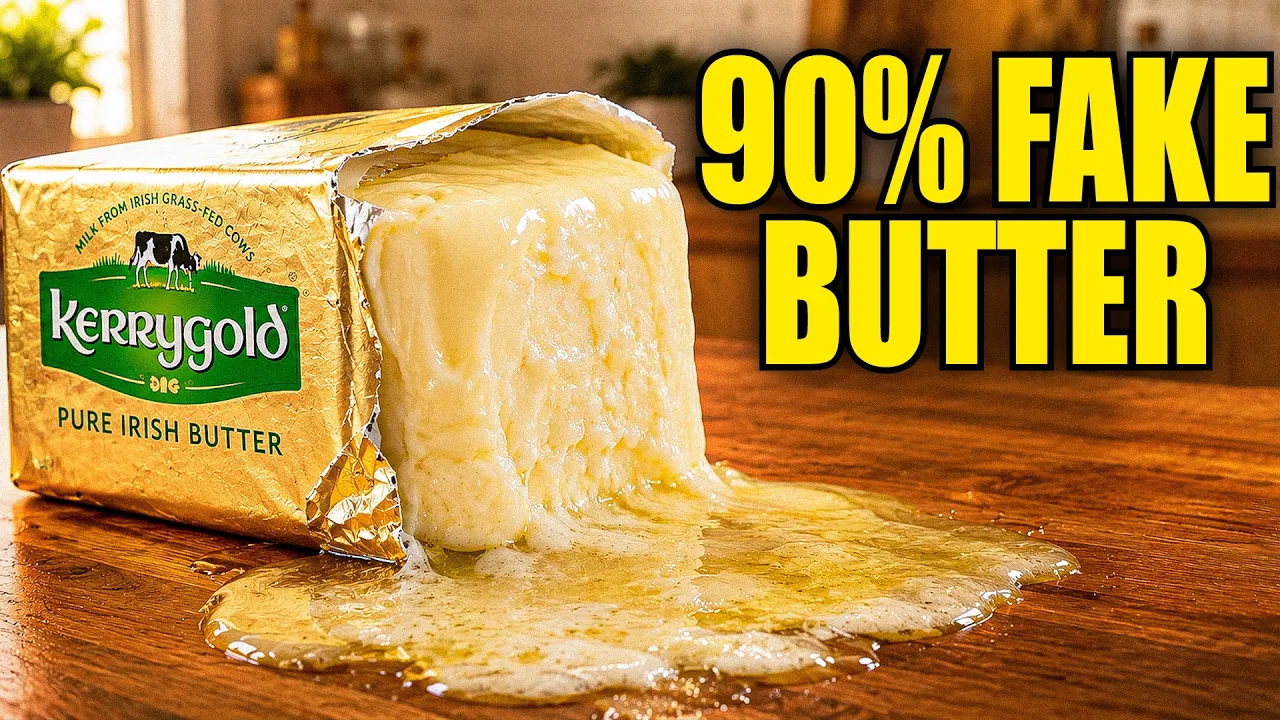
One is substantiated. The other is 90% of a story sold at 100% of the price. They published the disclosure themselves. The shelf price didn't change. The brand at number one applied similar logic at a much larger scale with two federal lawsuits, record sales, and zero label changes to show for it. Number one, Kerrygold. [music] This is the one people trust most completely. Gold foil wrapper, Irish origin, the second best-selling butter brand in the entire United States, available at every Walmart, Target, Costco, and Whole Foods in the country.
[music] Parent company Ornua reported record-breaking American sales in 2025. Celebrity endorsed, embedded in the keto and wellness communities [music] to the point of near canonical status. For millions of households, Kerrygold isn't just a butter preference. It's what good butter means. It's been sued more than once for the claim that meaning is built on. In 2018, a San Diego consumer named Dayame Myers-Taylor filed a class action lawsuit in the Southern District of California.
The 37-page complaint [music] documented that Irish dairy cows are routinely fed grains, soy, corn, and genetically modified feed during Ireland's winter months. Myers-Taylor stated he had paid premium prices from 2014 through 2018 [music] specifically because he believed the cows ate exclusively grass. The federal judge dismissed the case. Not because the claim was proven accurate, because Kerrygold's label says grass-fed, not 100% grass-fed.
The court ruled that a reasonable consumer wouldn't interpret the word grass-fed to mean cows ate nothing but grass. That ruling is still active today. It's the legal precedent governing every grass-fed dairy claim in the American market. A butter brand can print grass-fed on its packaging even when the cows eat corn, soy, and GMO grain as long as grass was part of the diet at some unspecified point. The label hasn't changed.
Sales haven't slowed. The word grass-fed is still on the front of every package. And now you know exactly what it's worth legally. That lawsuit is the reason Kerrygold is high on this list. What puts them at number one is separate. In 2023, a different class action lawsuit alleged that Kerrygold's pure Irish butter contained PFAS, per- and polyfluoroalkyl substances, the class of synthetic chemicals classified as forever chemicals because they don't degrade in tissue, soil, or water.
Mamavation's EPA-certified laboratory found indicators of organic fluorine, >> [music] >> the established PFAS marker, in Kerrygold wrappers. We covered PFAS with Land O'Lakes. Same concern here, with one additional detail. PFAS migration from packaging into food accelerates in direct proportion to the fat content of what's inside. Butter is among the highest fat foods in a standard refrigerator. >> [music] >> That combination, a PFAS-flagged wrapper wrapped around a pure fat product, is exactly the scenario peer-reviewed research identifies as the highest-risk migration environment.
That lawsuit was dismissed [music] in August 2024. No settlement, no labeling changes, >> [music] >> no public admission. Or new reported record US sales the following year. Now, here's the piece of Kerrygold's positioning worth understanding carefully. In the EU, where the butter [music] is produced, the minimum butter fat standard is 82% and growth hormones are banned outright. Both are genuine quality advantages, and Kerrygold uses both in American marketing, because US standards are looser on both counts.
Those advantages are real. What EU regulations don't address is feed transparency. Ireland's climate means cows are typically housed indoors from November through March, five consecutive months, eating grain, soy, and silage. No US regulation and no EU regulation requires Kerrygold to disclose how much of the year their cows actually spend on grass, or what they eat during the months they aren't. >> [music] >> The global grass-fed dairy market now exceeds $8 billion.
Kerrygold sits at its commercial center, using EU quality standards as marketing material while benefiting from the complete absence of any American standard that would require them to independently verify the grass-fed claim. Two lawsuits, two dismissals, zero label changes, record revenue. That's what number one looks like. Now that you know what to put back, here are the three that actually held [music] up. And before the list, here is the single fastest check you can do at the shelf.
Flip the package. Read the ingredient list. >> [music] >> Real butter is cream and possibly salt. If you see natural flavoring, that's starter distillate. If there's a grass-fed claim with no certification seal, no American Grassfed Association logo, no PCO 100% grass-fed mark, that claim was written by the brand itself with no third-party checking it. 15 seconds. That check changes every purchase in this aisle. Here's what to reach for instead.
Best option number three. Maple Hill 100% grass-fed organic butter. This is the verified version of everything the premium brands on the avoid list were charging you to believe. Maple Hill is a New York-based dairy brand with independently certified 100% grass-fed organic status. Their cows eat grass, hay, dried grasses, and silage year-round. No grain, [music] no corn, no soy, no seasonal exceptions buried in the fine print, no press release announcing they've improved to 90%.
[music] Ingredient list on the unsalted butter. Pasteurized organic cream. Two words. Available at Whole Foods, Sprouts, select Kroger and Wegmans locations, and online. Priced at $6 to $7 per pound. The same range as Kerrygold and Vital Farms. The difference is that Maple Hill can prove what those brands merely print. Independent certification means third-party auditors verified [music] the feeding practices, not the brand's own marketing team.
An auditor with no financial stake in the outcome. Remember why this matters nutritionally. Research published in the British Journal of Nutrition found that fully grass-fed dairy produces measurably higher omega-3 fatty acids >> [music] >> and conjugated linoleic acid compared to grain-supplemented dairy. When Vital Farms confirmed [music] 10% grain supplementation, including cornmeal, that advantage narrowed at the cellular level.
Maple Hill's full certification means the complete fatty acid profile is intact, which is what you're actually paying the premium for. And remember the color test. Set Maple Hill next to Kerrygold. The difference is visible without any equipment. Maple Hill is a noticeably deeper yellow-orange. That's beta-carotene from actual fresh grass metabolized through the cow and deposited into the milk fat. [music] It doesn't lie.
Same price as the worst brand on this countdown. Same dairy case. The [music] difference is everything that happens on the farm before the cream ever reaches the churn. Best option number two, Nellie's free-range grass-fed butter. This one is available in the same aisle as every brand you just heard about. Not a specialty store, not online only. Walmart, Target, and regional grocery chains nationwide. You can pick this up on the same shopping trip where you would have reached for anything on the avoid list.
Ingredient list, pasteurized cream, lactic [music] acid. Two ingredients, no starter distillate, no natural flavoring, no lab-manufactured diacetyl injected to simulate fermentation. The lactic acid is a natural preservative, the same compound produced organically during traditional butter culturing. It's a byproduct of the real process, not a shortcut around it. Butter fat at 84%, four points above the US legal minimum of 80%.
Two points above the EU baseline of 82%. Higher than the standard product of every brand on the avoid list. We noted with Land O Lakes that their extra creamy line reaches 82% while their standard product stays at the legal floor, [music] meaning manufacturers choose where to set butter fat based on what each product tier needs to sell. Nellie's made 84% their baseline, not [music] their premium upsell. That's a meaningful difference.
The B Corporation certification adds independently assessed environmental and social accountability from a [music] third party with no financial relationship to the brand. Most competitors have nothing equivalent. Now the number that makes this comparison hard to ignore. Nellie's retails at approximately $4 for 8 oz at Walmart and Target, competitive with and sometimes cheaper than [music] Kerrygold. Same store, same shelf, higher verified butter fat, cleaner ingredients, third-party accountability at the same price as a butter that went to federal court twice over [music] its grass-fed claims and walked out without changing a single word on the wrapper.
And now the one that catches people off guard. Best option number one, make it yourself. This is the one that sounds inconvenient. >> [music] >> It isn't. Real butter requires one ingredient, heavy cream. Pour a pint into a stand mixer, food processor, or a mason jar you're willing to shake for 10 minutes. Run it past the whipped cream stage until the fat solids separate from the liquid. You'll see it clearly, pale yellow solids pulling away from thin white buttermilk.
Strain through cheesecloth, rinse under cold water until the water runs completely clear. Press out the remaining liquid. Fold in salt if you want it. Shape [music] it. Wrap in parchment. Refrigerate. 15 minutes of active time. That's the whole process. A pint of organic heavy cream costs approximately $3.50. It yields around 8 oz of butter plus a cup of fresh buttermilk, useful for pancakes, biscuits, or bread. Per ounce, that's cheaper than every premium brand on the avoid list, including the ones that went to court over their sourcing claims and still couldn't verify them.
If you source the cream from a local farm that grazes their herd, you have a supply chain you can physically visit. No unverified claims, no starter distillate, no packaging flagged for PFAS by an EPA certified lab. You know the farm, you know what the cows eat, and you know exactly what went into your butter. That's a level of transparency no brand on the avoid list can offer [music] you at any price. If you want the cultured style, the kind European producers [music] ferment for 18 hours and that American brands fake with starter distillate, add 2 Tbsp of plain yogurt to the cream [music] and leave it at room temperature overnight before churning.
That's the complete fermentation process. You get real diacetyl, real acetic acid, real acetoin produced by actual live bacteria. The flavor depth is genuinely [music] different from anything in the dairy case. The buttermilk that comes out of every batch, which industrial producers sell separately for $4 to $5 per quart, comes free. Two products from one ingredient, cheaper per ounce than the gold foil and the celebrity endorsements.
Here's the pattern that showed up consistently across every brand on this list. The one spending the most on packaging design, origin mythology, wellness certifications, and celebrity deals consistently put the least into what's physically inside the product. The smaller producers, >> [music] >> the ones without influencer campaigns and national advertising budgets, put their money into the butter itself. And they keep landing at the same shelf price or lower every single time.
The words grass-fed on an American butter label are not a regulated standard. They are a pricing mechanism. A federal court confirmed they don't legally mean what most buyers assume. A New Zealand settlement confirmed that pairing grass-fed with a national origin claim can constitute misleading marketing under fair trading law. And an EPA certified laboratory found PFAS markers in the wrappers of two of the most premium priced butters >> [music] >> in the American dairy case.
None of that appears on any label, which is precisely what you've been buying butter your whole life. >> [music] >> But I'm willing to bet you've never once read what's actually in it. I investigated 10 of the most popular butters in America. What I found is not what those labels want you to know. One brand won a federal lawsuit over its grass-fed claim, not because the cows actually eat grass year-round, but because of a single missing word on the wrapper.
The words are the caption track's own and nothing is reworded or re-transcribed. Paragraph breaks are placed between sentences so the text reads as prose.
Free tools for your own script. No signup, no login.
Paste your draft and see where viewers are likely to drop off, with a rewrite for each weak line.
Paste the first 30 seconds of your own draft for a hook score and rewrites.
Check your draft against YouTube's advertiser-friendly guidelines before you record it.
Read this channel's public videos and transcripts, and download a writing brief for it.
Most replayed moment #1
26:058.1x the video's typical replay level
guard. Best option number one, make it yourself. This is the one that sounds inconvenient. >> [music] >> It isn't. Real butter requires one ingredient, heavy cream. Pour a pint into a stand mixer, food processor, or a mason jar you're willing to shake for 10
Said at 25:57
Most replayed moment #2
24:007.6x the video's typical replay level
case. The [music] difference is everything that happens on the farm before the cream ever reaches the churn. Best option number two, Nellie's free-range grass-fed butter. This one is available in the same aisle as every brand you just heard about. Not a
Said at 23:54
Most replayed moment #3
27:167.0x the video's typical replay level
can physically visit. No unverified claims, no starter distillate, no packaging flagged for PFAS by an EPA certified lab. You know the farm, you know what the cows eat, and you know exactly what went into your butter. That's a level of transparency no brand
Said at 27:08
The graph counts replays. It does not show where viewers stopped watching.
Sentence shape
| Measure | This transcript |
|---|---|
| Sentences | 359 |
| Average words per sentence | 12.6 |
| Longest sentence | 42 words |
| Questions asked | 2 |
| Sentences containing a number | 67 |
Most used terms
Filler phrases
31 in total: actually 18 · like 8 · you know 5.
A literal whole-word count of the same phrase list the Prepublish browser extension uses, so a phrase inside another word is not counted and a phrase used in its ordinary sense still is. It is a count and not a judgement.