Getting the transcript
Reading the captions from YouTube. A video nobody has opened here before takes 10 to 30 seconds; this page fills in on its own.
Getting the transcript
Reading the captions from YouTube. A video nobody has opened here before takes 10 to 30 seconds; this page fills in on its own.
Journey Films · @JourneyFilms
Words
8,114
Runtime
55:33
Speaking pace
146wpm
Reading time
34min
146 words per minute, below the 160 25th percentile of 349 measured videos. That distribution comes from the 349-video hook study.
Opening (first 30 seconds)
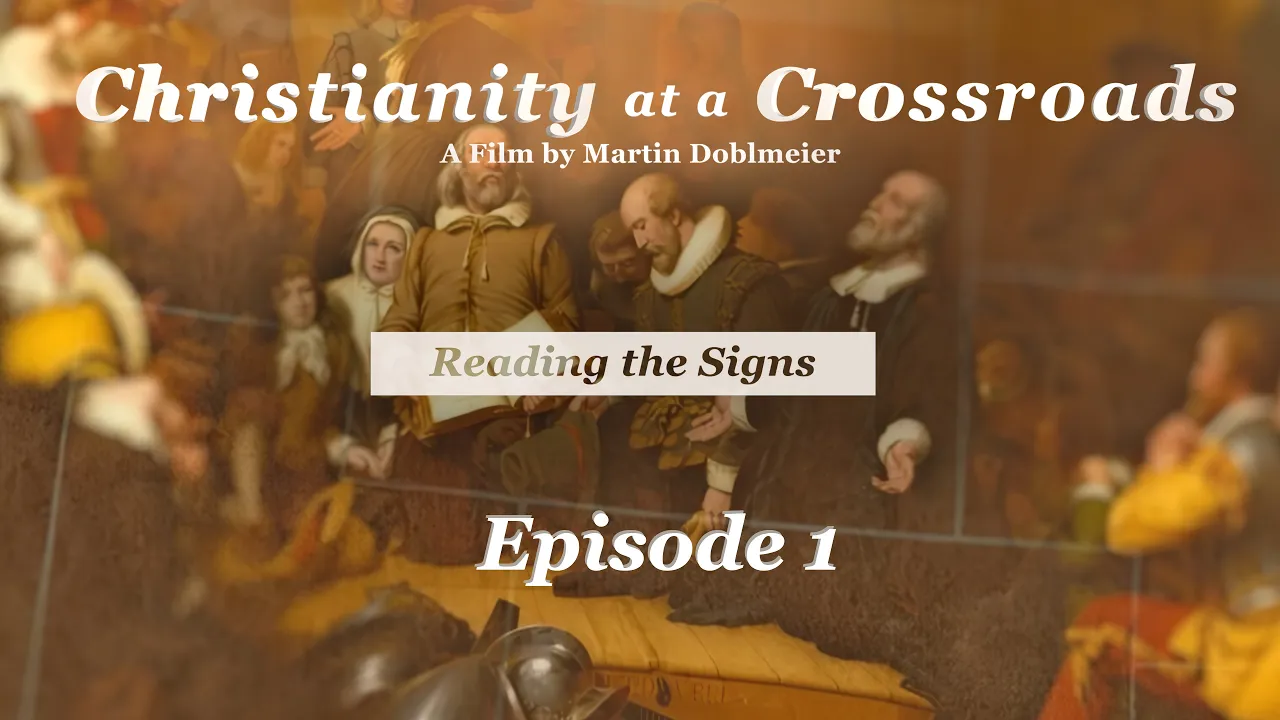
Major funding for this program was made possible by Lily Endowment. Additional funding provided by the Catholic Communication Campaign through the MPT Foundation and the E-Roads and Leona B. Carpenter Foundation. It's unfathomable for me to describe how much religion has [music] changed in America in the last 30 or 40 years. I do think we [music] are at a crossroads for Christianity in America. And I say that from a data point
73 words, the words spoken in the first 30 seconds at 146 words per minute.
Free, no signup. See how the first 30 seconds hold attention, with rewrites.
Sentence shape
| Measure | This transcript |
|---|---|
| Sentences | 574 |
| Average words per sentence | 14.1 |
| Longest sentence | 91 words |
| Questions asked | 24 |
| Sentences containing a number | 51 |
Most used terms
Filler phrases
45 in total: like 14 · kind of 7 · uh 7 · actually 4 · you know 4 · literally 3 · I mean 2 · um 2 · basically 1 · right? 1.
A literal whole-word count of the same phrase list the Prepublish browser extension uses, so a phrase inside another word is not counted and a phrase used in its ordinary sense still is. It is a count and not a judgement.
What this transcript is
Every word below is the caption track YouTube publishes for this video, pulled from the video itself and reproduced unchanged. It is not Prepublish's writing, not a summary, and not a re-transcription: it is the video's own published captions. English captions, generated automatically by YouTube, in the video’s original language. Source: the video on YouTube. A channel that would rather this page did not exist can ask for its removal through the contact page, and it is removed.
No Script X-ray for this video: YouTube shows a Most replayed graph only once a video has enough views.
Major funding for this program was made possible by Lily Endowment. Additional funding provided by the Catholic Communication Campaign through the MPT Foundation and the E-Roads and Leona B. Carpenter Foundation. It's unfathomable for me to describe how much religion has [music] changed in America in the last 30 or 40 years. I do think we [music] are at a crossroads for Christianity in America. And I say that from a data point of view. >> The estimates suggest about 4,000 [music] churches are closing per year.
There are many more that are kind of on the edge. >> We have [music] to keep our heads out of the sand and look straightforwardly at what the data [music] are telling us about Christianity. >> There is a forced rethinking happening in the church in America. We will not go without fight. We will not. >> The fundamental question is not does the church live up to [music] its ideals and principles. It's does the church have ideals and principles. >> If [music] you look at where the growth is right now in US Christianity, you see flat lines except [music] for among immigrant populations and especially Hispanic populations.
There is [music] a uniquely beautiful distinctive Korean spirituality and there is also kind of a Korean-American spirituality >> as a gay man standing in a pulpit that 5 years ago the book of discipline said I could not stand. >> Marriage is meant for a man and a woman and it's meant for one man and one woman. >> The treatment of LGBT Americans [music] has led many people to disaffiliate from church. >> I'm an atheist and [music] a humanist that don't believe in God. the 1972 only 1 in 20 Americans said they were non-religious and now it's 3 in 10 Americans 30% are non-religious it's changing every [music] aspect of American society when you look at the changes that are taking place in the American religious landscape I think the most [music] traumatic aspect of this for most Christians is not just that they're happening but that they're happening so quickly and people have had this feeling that [music] the Christian faith is losing ground America was founded as a Christian [music] nation. >> Who's Christianity?
What version of Christianity? There's not one version of Christianity. We want you to take your city for Christ. >> You're going to be accused of spreading that Christian nationalism. But it's not Christian nationalism. It's Christian citizenship. >> I think there's a lot of people who look at [music] Jesus and say, "I really like Jesus. I just am not sure about his followers." We want the church to be the church I experienced [music] as a child.
And that is a fundamental problem. >> There are so many signs of hope and of renewal and of [music] rebirth. >> We find about 30% of Americans report attending church weekly or more. That translates roughly to about 100 million Americans on a regular basis [music] are finding a reason to get out of bed on Sunday morning and attend their worship services. Everybody needs to belong to something and in the United [music] States of America throughout our history the church is the indispensable institution of community.
We are facing [music] a tsunami of change. I mean huge numbers at a scale [music] that we haven't seen before. Throughout its history, Christianity has been the faith of choice for the vast majority of the American people. Today, it's estimated there are between 350 and 400,000 churches nationwide. Churches of every imaginable size and form. But it's also estimated that as many as [music] 100,000 churches will close or be repurposed in the coming decade.
It's all part [music] of the seismic changes underway on the American religious landscape. >> This is really an important moment. I do think we are at a crossroads [music] for Christianity in America. >> Trying to understand the world of religion helps religious people and non-religious people understand America as a whole because religion is still a huge part of American society. Even though it's declining, it still matters to lots and lots of people. >> The falling [music] away that we see, the decline in church attendance is really a good thing in some senses.
People are [music] no longer feeling the necessity to be a cultural Christian. It used to be [music] in the 1950s and60s that to be a good person, you had to go to church. The midentth century was a time when American Christianity, like the nation [music] itself, enjoyed what could only be described as an unprecedented era of growth and vitality. More than 3/4 of the country claimed Christianity as their faith. Churches were being built [music] in record numbers.
It seemed every corner of America had their church steeple. Few Americans questioned prayer in the public conversation [music] or in school. Prominent clergy were welcomed on the airwaves. >> Love of God, love of neighbor, love of country. When one goes out, ALL GO OUT. >> THE BIBLE says man dies the first TIME PHYSICALLY. HE DIES THE SECOND TIME spiritually separated from God. >> But the 1990s ushered in a generation long decline in those who identified as Christian.
A decline the likes of which the country had never seen. It led some to wonder if we were approaching an historic [music] tipping point. >> Christian history seems to go in these 500year cycles. Uh Jesus is on the scene. [music] 500 years later, the Roman Empire falls and the arrangement the church had made with the Roman Empire now [music] is disrupted and the church has to find its footing in a new setting. 500 years after that, there's a great schism between the east [music] and the west and each side has to in a sense chart its own path forward. 500 years after that, the the [music] Protestant Reformation occurs.
And a lot of us feel that we are deep in the birth pangs [music] of another major shift 500 years after the reformation. >> If the changes are significant, even historic, what brought them about? >> Trust in institutions is down across the board. We've seen that in the last 10, 15 years. And that is what most nonprofits, including churches, are trying to combat. The decline in church attendance, the decline among Americans identifying as part of a religious institution is part of a broader trend in American society of people being mistrustful of a variety of institutions.
Not only are many Americans mistrustful of organized religion, but they're [music] increasingly mistrustful of the media, of the government, of the police, and that's not good for democracy. The decline in religion, some people argue, can be related to the actual increase in use of smartphones, where the Americans no longer need the communal aspect of going to church, as an example, because they're actually on their phones communing with people in that fashion. >> Some say they're leaving church because too often the Bible is being weaponized from the pulpit as a tool [music] in the culture wars. >> Who's Christianity?
What version of [music] Christianity? There's not one version of Christianity. After Jesus Christ, all bets are off. Like as a Christian, [music] we all acknowledge this is the son of God who died and rose again. But from there, Christianity goes in a million different directions on any given issue. You name the issue, I'll show you Christians on either side of it. When someone [music] will say to me, "How many churches would you say are tense and divided in this time?" My answer is [music] 100%.
We find that the treatment of LGBTQ Americans has led many people to disaffiliate from church. [music] And this has happened because we now have a society where there's greater acceptance of LGBTQ Americans in the general public. >> And a generation of scandals and cover-ups around sexual abuse and financial misbehavior have taken a toll. A pastor was exposed [music] as having what would be described as an improper relationship with a woman, not his wife.
And let's just face it, the fall of that house is very great. Beware, your sins will find you out. Well, your sins will be broadcast through the entire world in a matter of seconds on social media platforms. >> Many Americans say [music] that they just weren't that religious growing up. And so, they're more inclined to say, "I'm just not religious at all." But the overwhelming reason, twothirds of Americans say it's [music] because they just simply stop believing in religion. >> As some Americans withdraw from traditional religious practice, [music] most still believe in a higher power and often seek some form of spiritual connection.
They find [music] it in nature or in ancient spiritual practices. Many engage in those practices as individuals while others still seek some form of community. Over the last generation, one of the headlines has been the rapid growth of those no longer affiliated with a faith tradition. They are often referred to as the nuns because when asked what religion they belong to, they checked the box for none. What we're seeing with the nuns is there rose 25% in just about a 30-year period of time.
It's changing every aspect of American society. It's almost like we're living in the eye of the hurricane right now. It's swirling around us and it's changing, you know, everything from education to philanthropy to community service. >> This is a gathering for those non-affiliated at a community called Oasis in Kansas City, Missouri. Oasis is more than 10 years old. Many here say they have experienced some form of religious trauma.
Kansas City Oasis is a secular humanist community and I do come from a a very high control fundamentalist religious background. I'm an atheist and a humanist. An atheist what I don't believe. I don't believe in God. Humanist is what I do believe. I believe that life is best lived with people, with community, with relationships. >> I think the nuns were always there. They just didn't have a place to gather. Now they have some place that they can go.
It's hard to pin down one specific reason for the rise of the nuns, but there's definitely some culprits. Uh, one is secularization theory, which is this social science theory that as a country becomes more educated and economically prosperous, it will become less religious. Yet, America is one of the most prosperous [music] nations in human history and remains one of the most religious. Today, America has more than 200 different denominations and forms of Christian expression.
[music] And despite generations of decline, it is still the faith of choice [music] for more than 200 million Americans. >> However, one thing that's really interesting in the newest [music] data, the share of Americans who identify as Christians appears to have stabilized after a long-term period of decline. >> Is Christianity's decline leveling off or just taking a breather? At the same time, the rapid growth of the nuns also appears to [music] be slowing, creating a unique moment.
The nuns may be starting to plant roots, but the long roots of Christianity are undeniable, deeply woven into the fabric of the [music] American story. The fact is, as individual churches struggle, countless others are keeping [music] pace, while still others can only be described as thriving. Congregations where first and second generation immigrants worship continue to grow. And the black church, where faith in a god of deliverance, uplifting music, and bold preaching [music] still resonates as it has for centuries.
He's Emmanuel. >> He's God with us. He's Emmanuel. >> He's the prince of peace. Emmanuel [music] >> everlasting father. He's Emmanuel. [music] >> This is what the Bible says. And the government shall >> The government [music] shall >> give us a word that that will uplift during these difficult times, Lord. and let people that come in leave their burdens at the altar and when they leave they are free. In your son Jesus name we pray.
[music] Amen. >> Amen. >> We proudly say that Alfred Street is a historic African-American church. And that means that we've been around as a community of faith since 1803. We were [music] founded by ex-slaves who scraped together nickels literally to try to find the money to establish a community of faith. [music] And then in this part were not unique. There were slaves who worked on Mount Vernon who were part of this community of worship.
People who had just come out of slavery as a community [music] of faith. We've gone through Jim Crow, segregation that has shaped our [music] identity. >> Bless Pastor Wesley, oh God. Strengthen him. Allow him to preach with power, authority, clarity, [music] and conviction. >> That history is really important to us. It's part of the reason why no matter [music] how much we grow, we'll never abandon this site. we will never move from this [music] piece of property because it was purchased by slaves. >> What [music] slaves did was find liberation in that same text, in that same Bible, so that [music] they tuned in to this God of the Exodus and identified with the God [music] who released the captives and said, "That's the God for me." There's going to come a moment when you realize if God doesn't fix this, if God doesn't fight this battle, >> if God doesn't answer this prayer, >> if God DONE PUT HIS HAND ON this situation, IF GOD DOESN'T BREATHE OVER THIS MOVEMENT, IF GOD DOESN'T GET WITH ME IN THIS, I DON'T KNOW HOW I'M GOING TO MAKE IT.
THERE'S A MOMENT WHEN YOU GOT TO GIVE IT ALL TO God >> cuz there's nothing else you can do. While the challenges facing many [music] Christian communities today are undeniable, not every congregation struggles, Alfred Street Baptist Church is adding new members, both adult and newborn. >> I bless the Elelliana Parks FA Ingram. In the name of God the Father, God the Son, and God the Holy Spirit spirit. Amen. Miss Elelliana family. >> [applause] >> And with that support, Alfred Street is finding ways to give back to the wider community. >> We are thankful to God that this past week, Alexandria Planning Commission in unanimous vote supported our vision to create 145 affordable housing units right here in Alexandria for our neighbors to keep their homes.
Can you help me thank God? >> If American Christianity is at a crossroads, then Alfred Street represents a path that by social standards is considered progressive on many divisive issues. For them, any approach is grounded in their understanding of the Bible. Alfred Street sees its long history as both an opportunity and a responsibility to offer a prophetic voice, no matter the cost. When I came to Alfred Street 15 years ago, there were folks in that [music] community who were gay and quietly gay and said, "I'm waiting." And there were young people who said, "I'm gay and I am not waiting.
I am impatient." [music] And there were people who were opening up their Bibles and saying, [music] "The Bible says this is a sin." So, we had the whole range. This is probably the most sensitive and [music] divisive issue of our generation in church right now. I was raised in a very [music] very conservative traditional Baptist background. Women didn't speak from the pullpit. They were called missionaries and they talked from the [music] floor.
And if you were dare to be queer, you better not let that be known to anybody. I felt that [music] way my whole life that queer was wrong. If you're gay, you're going to hell. cuz that's where I was raised. [music] What happened to me? I got close to gay Christians. I met some [music] Christians who were gay. And I tell you what, their love of Jesus was a hell of a lot [music] stronger than some folk I know in church.
So much more. And it made [music] me wonder, am I wrong on this? Nothing [cheering] is impossible. I'm about to take a lap. Nothing is impossible with God. >> When [music] something happens in the world, this is what I hear in Alfred Street. I can't wait to hear what pastor [music] is going to say about this on Sunday. There's the expectation that I will address Trayvon's death. There's the expectation that we're going to speak about what Trump's re-election means [music] for us.
There's an expectation that pastor will bring a word around this government shutdown and the evil of the times in which we live. God focused our nation's [music] attention on our capital this past Wednesday to reveal to us in a season of transition of leadership that God is not pleased with what God has seen. God shows up to ISRAEL WITH THE SAME MESSAGE God gives to us. YOUR PROBLEM IS NOT JUST who's on your throne. Your problem is what's in your heart.
So for [music] me to come in with just the personal piety and oh praise the Lord and we're going to pray our way through this would be an injustice to the tradition in which I stand [music] which is to be a black prophetic voice. For me to say what they're thinking and can't really say without penalty and have the courage [music] to say it boldly in this congregation in this pullpit and it comes at a price. bomb threat, [music] which we've dealt with, of hatred and v vitriolic emails saying the damage they're going to do to me. >> Can I push it?
[screaming] >> I want to preach today to those who don't believe that God calls women in the ministry. I want to preach to those who don't believe that God ordains women. I want to preach to those who don't believe that a woman should be able to pastor a church. Is it? And the reason we come to hear this story is [music] because we need a retrofit. Death is real, [music] but so is the resurrection. >> When I grew up, [music] I didn't even know women could be ordained.
I remember the first moment I saw a woman in the pulpit. [music] And it was when I was in college. It was Prithia Hall. In the in the course of hearing her preach, the question of women's ordination was raised and [music] answered. This whole world is dying for a witness. >> We must be we must become that congregation that not only tells God's mighty works but is itself God's mighty work. >> Beloved, can I tell you what one of the most beautiful moments in life is?
When you realize God has shown up. That moment when you sense and see that God has started to TAKE CONTROL OF WHAT YOU THOUGHT WAS SPIRALING OUT OF CONTROL. WHEN YOU DISCERN THAT GOD HAS PUT HIS HAND ON YOUR LIFE. THERE'S A MOMENT WHEN YOU REALIZE [screaming] GOD >> HAS PUT HIS HAND >> on my life. >> Hallelujah. >> Everybody say hallelujah. [music] >> Hallelujah. Hallelujah. >> Hallelujah. >> Hallelujah. Let me hear the sopranos. >> Our biggest challenge is always success in generations.
Knowing that history and buying into the journey and realizing that you have an obligation to run the next leg of the journey of the dream of your four mothers and forefathers. >> In the African-American tradition, in those early days of reconstruction, church was everything. It's where you came to worship. It's where you got news about what was going on in the world. It's where people pulled resources, right? Needs were met in these places.
[music] Being out in this world and confronting all the things we're confronting and listening to the news every day means that on Sunday morning, I get to go to a place where I can sing and hear music that reminds me about another space where God's in control and that God cares about me. And that's enough to give me what I need to go back to work on Monday. [music] >> Hallelujah. >> Everybody say hallelujah. >> For the Lord is good.
For the Lord is good and he is greatly to be brave. Hallelujah. About 30 miles east of Grand Rapids [music] is the town of Belding, Michigan. For decades, much of the life in building revolved around the booming silk industry. And in 1904, building United Methodist Church with the construction of its new sanctuary became an important part of worship life in Belding. But with a steep decline in attendance [music] and skyrocketing costs for maintenance and upkeep of this classic building, the spiritual home for so [music] many for so long had no choice but to announce it was closing. >> We will continue to praise and worship him through this storm.
He does not intend to leave or forsake you. You are still the church. And while you worship will change, the one you worship is God. >> When I was appointed as pastor [music] here two years ago, I came in here with hope. I came in here and I have never been [music] in a building so beautiful. My jaw hit the floor. I said, I get to work here. Look at this place. I came [music] in that first Sunday and everybody's sitting in the back three rows, all 12 of them.
I expected more than 12. >> These 12 people are amazing. >> A church built for a thousand people [music] was now down to a dozen faithful few. And all of them seniors, yet everyone wanted to stay. >> I was born and raised here. My parents were married here. My brother was married here. One of my sisters was married here. and I have attended here my whole life. This is home. [laughter] >> Basically, both our grandparents, grandmothers helped start this church as far as clubs and everything. >> My mother was in the first choir.
She couldn't sing, but she was in it anyway. [laughter] >> So many memories here. And so it it hurts. It hurts. I will go Lord if [music and singing] you lead me. I [singing] will hold [music] your people in [singing] my heart. >> While we always [music] hope there might be something that helps keep a congregation moving forward, we're sometimes there's not. Melissa stepped into a church that had been on a fairly long trajectory of decline. >> We hosted gatherings.
We hosted open houses. But it seemed as if no matter what we did, nobody reached back. I [music] have been at this church for 22 years. We tried so many different ministries over the years and no matter what we did, nothing was working. And that's how [music] it's been all these years. Just people not showing up. >> It didn't grow. We've had the same few people [music] for quite a few years. >> Quite a few years now.
And you just can't [music] work miracles. >> If your church is not growing, it's not really an indication of your ability, your skill, or your calling by God. God calls you to be faithful in that situation. And many, many pastors, [music] thousands and thousands of churches are declining right now. And those pastors are beating their heads against the wall, praying to God every night for revival to come. And they're getting [music] depressed.
Why can't my church grow? For most of us, it's going to be hard to grow a church right now. It's not your [music] fault. Just do the best with what you have. You're facing way more obstacles than you can ever overcome, but continue to do your job as a pastor. The best estimates we have are about 4,000 [music] churches closing in the United States per year. And there are many more than that that are on [music] the cusp or are wondering about closing or are thinking about repurposing or really looking at a very different future um than the past that they've had.
Immediate members of churches will of course feel the closures very much in their life. >> I'm going to miss this church. [music] And I feel the presence of [music] the Lord. [music] >> So in the last 22 years, there was probably about 60 to 80 [music] people that were attending church at that time. Everybody was older. I was [music] the youngest person next to my daughter in church. We haven't had children here in a [music] long time and we missed that. >> A church without children is already dead and at some point there just weren't any more children here.
[music] Without them there is no church. >> Communities change, families move, [music] but sometimes other factors impact the life of a church. >> It was gradual. The steepest part I think came when all the families divorced because it was over [music] a couple year period. >> We had some pastors that rubbed the congregation the wrong way [music] and when that started to happen, people started [music] to leave and go to other churches.
Some people don't like a female pastor, [music] but we've had two others in the past, and we like Pastor [music] Melissa, but there's some people that think it should be a man. It's been a good run, but we just [music] can't sustain it with the people that attend church on Sundays. I mean, it was a very hard decision to make. We've [music] built some grand buildings and like any building over time they [music] deteriorate and if you're not able to keep them up you have to make some tough decisions.
I've often said that I don't think there's a church that Paul wrote to in the New Testament [music] that's still existing as a church. >> In the next weeks this church will close. Outreach to the area's poor will stop and their neighborhood thrift store will shut its doors. >> I love being [music] a part of this community. To be able to give them something. We don't have much, but what we have is yours. But my place [music] in all this is to comfort them and help them make [music] peace with what's happening. almost like a very long funeral. >> Knowing that this place which [music] was built with such hope and such vibrancy is now ending its useful life as a ministry is heartbreaking.
I think a lot of people hope that we can get rid of Christianity. we can get rid of organized religion in [music] the United States and then replace it with something else. And a lot of Americans unfortunately [music] think that a secularization, a de churchifying of America is [music] a good trend. But I think that they're really missing out the role that church plays in a normal person's life, in a family's life. The main thing you're getting is a challenge to [music] be better, to better love your neighbor.
As thousands of [music] churches across America struggle or face closure, the loss to the wider community beyond those church [music] walls can often be significant. I think people don't realize the impact that churches have upon society, the work that they do. Churches play a huge role in their communities and the reach extends well beyond their congregations. People tend to think of churches as insular. They tend to think of them as only tending to their congregation.
But in reality, these churches are almost engines of social good. >> In so many neighborhoods, the [music] church is the food pantry. The church is the immigration station. This is the [music] place where the people are doing the thing for the outsider, for the stranger. >> It is a shame for anyone in this nation to be hungry. [music] You you ought to be offended when you see a veteran who served this nation eating out of a garbage can.
We can make a difference for that. >> We [music] are here at George Washington Middle School where we have over 500 volunteers, [music] more than 1,600 families that are registered as we feed the 5,000. >> Jesus fed 5,000 with a little bread and [music] little fish. We're putting a full week of groceries in at least 5,000 homes every [music] year just to replicate that miracle of Jesus. >> The American government's not going to get that much bigger.
The social safety net is not [music] going to increase dramatically. So, if churches recede and lose power in their ability to help people, [music] and the government doesn't step up to fill that void, there's going to be bigger and bigger holes in the social safety net. According to [music] Census Bureau data, the share of of Americans who are volunteering for any organization has been going down for about [music] the last 15 years.
This is volunteering for any kind of organization, not just religious organizations. >> But churches have traditionally offered more than a social safety net. From the outset of the nation, they played a key role in civic engagement. Historically, [music] churches have always been a central component of American civic life. If you go back to [music] Alexis Dtoqueville in Democracy in America, he marveled at the fact that America, unlike his French counterparts, were far more likely to be engaged in [music] civic life.
And one of the reasons he said is that America had lots of churches where people were civically engaged and part of communities. Dtoqueville wrote, "Americans combine the notion of Christianity and liberty so intimately in their minds, it is impossible to make them conceive the one without the other." And that connection [music] seems on some level to continue. People who are religiously active have tended to be also civically active in American [music] life.
And so that raises an important question. If religion declines and engagement in religious organizations declines and people with no religion continue to [music] grow, what will that mean for our civic institutions? >> And studies point not just to the social benefits but individual benefits as well. >> The data are irrefutable. On the individual level, people who report they're religious have higher well-being, have higher happiness, higher satisfaction with life.
And some indicators even say better health. But there's no controversy with the fact across literally hundreds of studies that the more religious the individual is based on self-reports, the more likely they are to say they're happy or have higher well-being. Being part of any kind of association, any club, any group that you meet with, especially [music] in person on a regular basis is associated with positive health outcomes.
[music] People who are active in religious congregations uh live longer and are healthier. >> Yet for all the benefits, the one area where church seems to struggle is the willingness [music] to change and adapt. And why should it? In a culture that often seems in constant flux, millions look to the church as that one stable, unchanging dimension in their lives. A sanctuary where the calendar and rhythms of the season, the hymns and readings are both familiar and comforting.
We want the church to be the church I experienced as a child. And that is a fundamental problem because it does not create space for the reimagining for a new generation. How do you create the space that people feel safe cuz it's stable and secure and [music] doesn't change, but also you need to grow and be different and invite new people in to do different things. This is the pastoral dilemma. Sometimes the longer the shadow of tradition, the more challenging it is to change.
The story for Catholics [music] in the United States is really interesting. The Catholic share of the population in the United States has been pretty stable for many years now, the better part of a [music] decade. About one in five Americans consistently tell us that they are Catholic. [music] So that's stable. That's more stable than what we see for the Protestant share of the population. The data also show that the Catholic Church in the United States loses more people through religious [music] switching than any other group were able to examine. >> Our most recent data show that about 13% of Americans [music] are exatholic.
And part of that is linked, I think, to the clergy sexual abuse scandal. [music] We find, for example, that about 44% of Catholics say one reason that they're no longer affiliated with [music] any religion is because of the persistence of uh this clergy abuse scandal. Well, >> frustration among many Catholics in Baltimore as the arch dasis prepares to shutter [music] dozens of churches across the city. >> That's right.
And while parishioners say they don't want to lose their churches, of course, leaders say [music] it has to happen. We will not go with our fight. >> We will not. >> We are advocating again to close our prayers. >> The Catholic Arch Dasis of [music] Baltimore, Maryland has roots dating back to 1789, making it the oldest in the nation. [music] So when it announced seek the city to come, a plan to close or merge dozens of its churches, [music] hundreds came to speak out at a series of public forums. >> Current situation in the city of Baltimore is [music] not sustainable.
We understand that many of these drastic pay cuts are necessary. >> The seek the city process was necessary because of [music] the decline in Catholic population, because of the overwhelming number of of buildings and their maintenance needs. We know that the population of [music] Catholics has shifted out of Baltimore over the decades and actually the city of Baltimore continues to [music] get smaller. You know, we're pouring millions of dollars into buildings that are falling apart [music] and they have demands and needs that sometimes our finances can't meet.
So, we had 61 parishes where we can do this better with fewer. >> We are deeply disturbed that St. Thomas Moore is one of the parishes in Baltimore City being considered a closed. >> We needed something radical to happen and many would say that this is radical. >> Church is not just brick and mortar and these are our homes and these are the places that we encounter our family and so taking away these really treasured buildings is taking away a piece of us.
It is breaking a family. >> Nobody likes [music] to do it. None of us want to do it because it's hard. It's hard to close a church that's been serving for 150 [music] or more years. But to say, "What does our future look like? Are we going to focus more on a building or we going to focus on the people?" >> And that's our banner there. Save our shrine. The shrine of the Sacred Heart is the only parish that has a Filipino ministry in Baltimore.
One of the longestablished churches scheduled for closure is the Shrine of the Sacred Heart in the Mount Washington area of Baltimore. The shrine has served this community since the 1860s. Weekly mass attendance, while not great, has been steady, and members argue their church is self- sustaining. Over the years, the shrine has become home for the area's Filipino Catholics, where they come to honor their saints. Those feast days and the announcement of the church's imminent closing have drawn a full house. >> We're always at those points faced with the question, is love worth a broken heart?
I think the martyrs give witness to us that only those who believe love is worth a broken heart can heal the world. And today we are faced with that witness. This parish will be merged into the Cathedral of Mary, our queen. we'd have to find someplace else to to go to worship. Um, and that's not an easy task when you've been at the same place for 30ome years. [music] >> This is the haven for Filipino immigrants. This is the hub, the point of contact. >> It's devastating to this community.
Most of [music] our people come from outside the immediate area to this parish and uh [music] now they're going to have to hunt for some other place to call home spiritually. I recognize that there has to be some consolidation. We've been running with a [music] surplus. So, it's not like we have not been making it financially >> and the people will just well they will move away and find their own places. the church is supposed to bring together [music] and that's why maybe some of them will just leave the church go to another religious denomination right >> the arch dasis of Baltimore has also had a lot of problems over the years with the number of the abuse claims >> Baltimore is one of dozens of Catholic dascese across the country that has declared bankruptcy to survive lawsuits stemming from abuse claims [music] >> the seek the city initiative with the merging of parishes The eventual sale of properties is separate.
That does not finance the bankruptcy [music] or go to claims by the victim survivors. We're not retreating from the city. [music] Some people have have said to us, "Oh, you're just leaving us behind." No, actually, we're not. We're we're regrouping and concentrating our resources so that we can do better for the city of Baltimore. You could say we're going back to the early church [music] and maybe the the parish of this next generation will be more [music] like the disciples when they went to places like Ephesus and Colasse and Corinth.
We're going back to an experience [music] of church that is pre Catholic imperialism. Many Catholic parishes across the arch dasis have maintained their traditional Catholic character and continue to do well. But one congregation felt in order to survive changes [music] had to be made. Not many emotions. Well, this is from a deepot. [music] I sing as [music and singing] long as I am free. If there's ever been a time, the time is now.
[music] Right now. If there's ever been a name to sing out loud, [singing] out loud. Jesus, [music] you deserve it. You are worth it. [music] >> Hello and welcome to Nativity. We are so glad that you are joining us here today. And if you are ready to serve, >> this [music] is Church of the Nativity in Timmonium, Maryland, north of Baltimore. Timmonium is an older community with little growth in population. Yet over the last two decades, [music] Nativity has nearly doubled its church attendance.
For Nativity, it's all about the weekend. >> We've come to say [music] it's the weekend stupid. Uh especially Sunday. >> Good morning. It's where we have [music] the biggest reach. It's the most likely place where our [music] newcomers, visitors, first timers are going to come back to church. The number one place a culture is [music] created for a parish is on the weekend. 80% of the people that experience [music] the church experience it for one hour on Sunday.
Whatever you do on that hour is really creating the the culture for the parish. is the parish. >> Nativity has between 2 and 3,000 attend mass [music] every weekend. It's growing, but that was not always the case. Years ago, Pastor Michael White and his lay leader Tom Corkran inherited a church in decline. They wanted to [music] change that, but didn't know how. So, they set out to learn from other churches, Catholic and evangelical.
It was Saddleback Church in Southern [music] California, pastored by best-selling author Rick Warren, that started a seismic shift in their thinking. I learned a lot from Saddleback. [music] Some things I think a lot of people in Catholic churches don't often get. I learned a personal relationship with Jesus and how that was important. Really reading the Bible and how much scripture [music] really could speak to my life.
And the music there to me was was huge. The music I had experienced again was Catholic music is not always great. >> But even more impressive was [music] the welcome and the hospitality of the parishioners themselves. I walked in the front door and I was so warmly, lovingly greeted that I actually exited out the side door and [music] circled back around just to see if it was a one-off or that this really was how they were.
And I thought, how different from my parish where really nobody intentionally greets anybody else and nobody's happy to see anybody and it doesn't seem on some Sundays like anybody's happy at all. >> Good morning with the you know >> good morning. Welcome. >> The two [music] returned, made their changes and the people responded. Over time, they had the resources [music] to construct an entirely new space, a modern church facility [music] literally built around the old sanctuary.
They turned the old sanctuary into a theater mostly for kids. [music] And the parents and young families were coming. >> We start with the littlest kids, even 6 [music] weeks old to 18. In all of our programs, we have around 800 to a,000 kids and students on a given weekend. Praise the Lord [music and singing] my soul. >> I have been here at the church of nativity for 24 years [music] and when I came here the music program was a traditional men and boys choir.
I was in that choir [music] as a boy soprano. Music is the water on which the whole experience sails or sinks. An investment in music, which is one of our biggest investments, is one of our best investments. It determines how people feel. Music determines how people feel. >> Hallelu [music and singing] Hallelujah. Hallelu. [music] >> For years now here at Nativity, we've been doing a much different, much more contemporary [music] praise and worship style music.
I think it's important because it's where people are. I think our music meets people where they are and that's part of the draw. >> When people say, "Yeah, it's a great concert or a great show." I don't agree with them on that because I I agree that they miss the point and that our point is to lead people to worship. >> This kind of music is not my first choice. I am very much a traditionalist when it comes to music.
[music] So I had to learn the lesson that it's not about the pastor's preferences. >> While the unusual combination of contemporary [music] praise music and a Catholic liturgy seems to be working, there have been critics. >> What happens here on Sunday is unabashedly Catholic event word for word right out of the Roman missile. There's no compromising on that at all. But it is set within the context of [music] contemporary musical style.
May Almighty God have mercy on us, forgive us our sin, and bring us to everlasting life. >> We know those whisperings out there that we're not Catholic enough. Yeah. I'm like, I got eight kids. What else? What else? You know, how else can I prove I'm Catholic? I I don't know how else to do that. >> Before each service, the staff and scores of volunteers gather in what they call the huddle. >> Welcome. [music] Thank you all for being here today on this.
So we have approximately 40 people on staff. That's both full-time and contractors. And then we have over 1350 volunteers [music] who we call ministers here. >> They help us to give them the best hospitality we could possibly give them [music] and pass. >> The secret to getting volunteers is to ask them to step up and serve here at Nativity. It's easy to join our parish, but it's more [music] of a challenge to stay because we do ask you to take a step and that step is serving. >> Another change [music] started years ago is that the Sunday sermon called the message is preached as a series over several weeks.
It allows for broader topics and [music] deeper reflection. We're in the third week of our new series looking at how to build unity in our community and our country. We live in a very divisive age. We experience this division in politics, on social media, and sadly in the church. Over the course of this series, we're taking a look at overcoming the culture of contempt and embracing and building a culture of collaboration.
That message, which is outlined months in advance, guides everything from the preaching to the music choices to the children's programs and the small group sessions that are held every week. >> The goal of this series is to find a better way forward. >> While Father Michael White is the principal writer of the message, there is input from across the staff. >> So, third week, art of collaboration. Father White will presside and deliver the message.
So, >> our message series team meets periodically throughout the year. They have done research ahead of time. They develop that message series for the entire year. We don't change things up on people in the middle of a message series. It creates a feeling of consistency and unity across all of the teams if they know what to expect. >> That was a good example. So just a reminder in the message we talked about a way to build a culture of collaboration is by serving others and we gave that >> and this month we are talking about unity.
So unity is working together and helping each other. So >> well we want kids and their parents to have conversations when they leave mass. So having something common that they can [music] talk about. So in the message in big church they are also talking about putting others first. And so even though we're doing a more simplified manner, they can still have [music] those conversations about putting others first together. >> This [music] is the [singing] great love and narrow. >> We take time to meet about the message that's going out in each message [music] series that we do here as a church.
And we really try to marry the music that we are doing uh thematically to that message. >> Changing [music] culture is one of the hardest things of all. Culture plays a big part of [music] any success for any kind of organization and it's true for churches as well. Although most churches are not intentional about [music] their culture, they just kind of stumble into it over time. >> Church of the Nativity [music] is spectacular.
It is a church community that says, "Let's look at the best of the [music] culture of today and how can the culture help us live our faith well." And they've done it. They they crack [music] the code. They are quintessentially American and Catholic and they do [music] American Catholicism really well. Need a future not my own. >> In part two of Christianity at a crossroads. >> Stepping into [music] the pulpit. I knew there are going to be people who will leave over this.
People who said, "I don't trust you anymore to preach the gospel." >> We're at a moment right now where the fundamental question is, does the church have ideals and principles? You're going to be accused of spreading that Christian nationalism. >> We want you to take your city for Christ. >> I knew that I was both gay and [music] called to ministry. >> We wanted to be as welcoming as we wish churches had been with us. >> And there are so few [music] places in our society today that bring people together across political divides.
For more information about this film, visit journeyfilms.com. Heat. >> [music] >> Are you Major funding for this program was made possible by Lily Endowment. Additional funding provided by the Catholic Communication Campaign through the MPT Foundation and the E-Roads and Leona B. Carpenter Foundation. >> [music] [music]
The words are the caption track's own and nothing is reworded or re-transcribed. Paragraph breaks are placed between sentences so the text reads as prose.
Free tools for your own script. No signup, no login.
Paste your draft and see where viewers are likely to drop off, with a rewrite for each weak line.
Paste the first 30 seconds of your own draft for a hook score and rewrites.
Check your draft against YouTube's advertiser-friendly guidelines before you record it.
Read this channel's public videos and transcripts, and download a writing brief for it.