Getting the transcript
Reading the captions from YouTube. A video nobody has opened here before takes 10 to 30 seconds; this page fills in on its own.
Getting the transcript
Reading the captions from YouTube. A video nobody has opened here before takes 10 to 30 seconds; this page fills in on its own.
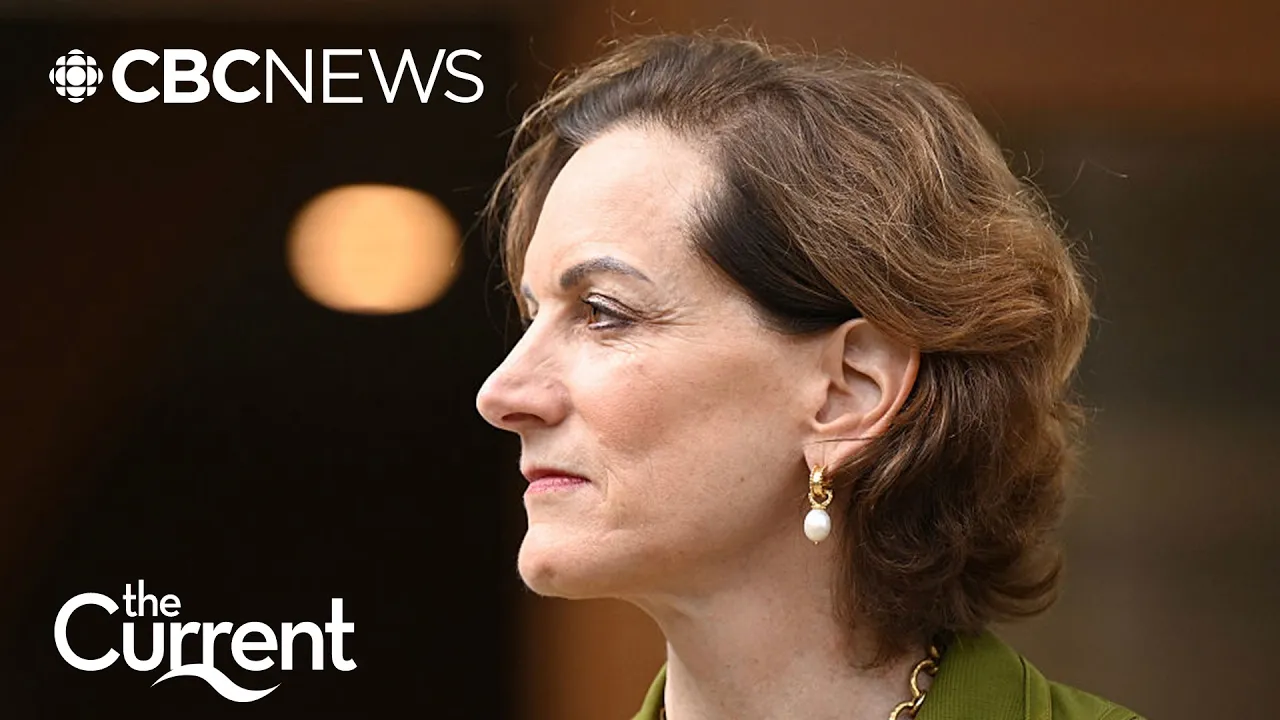
CBC News · @CBCNews
Words
3,479
Runtime
19:42
Speaking pace
177wpm
Reading time
15min
177 words per minute, between the 160 25th percentile and the 181 median of 349 measured videos. That distribution comes from the 349-video hook study.
Opening (first 30 seconds)
Hello, I'm Matt Galloway, and this is the current podcast. Donald Trump wants the world to know that he is making it a better place. Here is what he told the United Nations General Assembly. >> While others have spoken of peace, I have made peace. While others have ignored threats, I have confronted them. While others have talked of courage, America has shown it. While others have promised strength, I have used it to make America the most powerful country in the world. >> The US president used
89 words, the words spoken in the first 30 seconds at 177 words per minute.
Free, no signup. See how the first 30 seconds hold attention, with rewrites.
Sentence shape
| Measure | This transcript |
|---|---|
| Sentences | 166 |
| Average words per sentence | 21.0 |
| Longest sentence | 111 words |
| Questions asked | 17 |
| Sentences containing a number | 5 |
Most used terms
Filler phrases
143 in total: you know 47 · um 43 · uh 35 · I mean 6 · like 5 · actually 4 · kind of 2 · right? 1.
A literal whole-word count of the same phrase list the Prepublish browser extension uses, so a phrase inside another word is not counted and a phrase used in its ordinary sense still is. It is a count and not a judgement.
What this transcript is
Every word below is the caption track YouTube publishes for this video, pulled from the video itself and reproduced unchanged. It is not Prepublish's writing, not a summary, and not a re-transcription: it is the video's own published captions. English captions, generated automatically by YouTube, in the video’s original language. Source: the video on YouTube. A channel that would rather this page did not exist can ask for its removal through the contact page, and it is removed.
No Script X-ray for this video: YouTube shows a Most replayed graph only once a video has enough views.
Hello, I'm Matt Galloway, and this is the current podcast. Donald Trump wants the world to know that he is making it a better place. Here is what he told the United Nations General Assembly. >> While others have spoken of peace, I have made peace. While others have ignored threats, I have confronted them. While others have talked of courage, America has shown it. While others have promised strength, I have used it to make America the most powerful country in the world. >> The US president used his speech yesterday to argue that America's strength knows no bounds and that he will use it to neutralize Iran, bring down the Cuban government, end the war in Ukraine, and allow artificial intelligence to grow unbound.
All of that remains to be seen, but there is no doubt that Donald Trump is engaging with the rest of the world differently since he resumed office. That is something that Canadians don't need to be told. Many people have been trying to wrap their heads around this rapid and radical shift, including Anne Applebaum. She is a Pulitzer Prize-winning historian and the author of several books on autocracy and authoritarianism.
She's also a staff writer at The Atlantic, and her cover story for that magazine's October issue is called Empire of Grift. Anne Applebaum, good morning. >> Good morning. >> How would you characterize how America has changed as an actor on the world stage since since Donald Trump went back to the Oval Office? >> There two important shifts. One of them is towards promoting uh uh the a far-right vision of the world, and this is particularly affects America's allies and closest friends.
Uh and the second is towards a policy of using the power of the American government to enrich companies who are close to or friends with the presidential administration. Um and sometimes those things actually work in tandem. Uh I think the big shift is away from the idea that the main goal of American foreign policy is to promote democracy and to build alliances. That has been really pretty categorically rejected in both in the documents that that the State Department has put out, but also in the actions of of the president and and American diplomats.
There's a shift away from alliances, from promoting democracy, the rule of law and human rights and towards the interests of a group of ideologues inside the foreign policy establishment and US particular US companies, especially tech, oil and gas, cryptocurrency and minerals. >> Want to talk about the the money play and what might be at stake there, but take a look at what what the president said yesterday at the UN.
He talked about ending the war in Ukraine, but also, and this is a headline that's gone around the world, again vowed to annihilate Iran if it did not strike a deal with the United States. What do you make of the use of of that word in his language in particular? >> You know, this is how Donald Trump talks. You know, to a certain level he he says things that nobody's ever sure whether to believe or not. Um but no, I mean so I mean annihilate is a word that he is using to imply maybe implies nuclear weapons, maybe it implies stronger action.
Um but we also know that he's capable of threatening things and not following through. So um you know, it's it's it's the it's the language of threat, it's the language of we'll dominate you um but without necessarily any clear strategy or follow-up. So I would also distinguish between how Donald Trump talks and behaves and how people in his administration talk. So he himself I don't think has a real strategy or a vision.
Um he doesn't have a um you know, a plan to end the war in Iran. He doesn't have actually a plan to end the war in Ukraine or not one that will work. Um you know, but there are people around him who are acting out various, you know, there are who are doing things in their own interest and you can see that pretty clearly. >> He spoke of Venezuela as well and used the phrase, you know, essentially to the victors go the spoils.
Are you surprised that he said the quiet part out loud when he talked about Venezuela? >> He's been saying that about Venezuela since January. He's been talking about Venezuela using the language of colonialism, imperialism, we're dominating Venezuela, we're taking their oil. Sometimes he says the Venezuelans will benefit and sometimes he doesn't. Um, I've actually just been to Venezuela and to the Venezuelans it's pretty clear that what we see in in in Venezuela is a kind of union of corrupt oligarchies, you know, that the the the the former regime and some of its worst actors are now acting together with the Trump administration in a mutual effort to make money out of out of oil and other resources and make sure that friends of both, um, you know, friends of the various leaders, uh, benefit.
That's what it looks like to people there and that's actually a perfect illustration of what I'm talking about. So, the the idea that Venezuela should be a democracy is not it's not it's not primary, um, even though there is a democratically elected leaders of Venezuela um, and instead we've substituted, um, the interest of people close to the administration um, and the ideal some idealogues in the administration who believe in US dominance of the Western Hemisphere. >> This is this transactional foreign policy that you write about in this piece, Empire of Grift is is the title which speaks in many ways to to what you're describing.
How is that playing out? I think of someone like Steve Witkoff who is the US special envoy, a real estate dealer who has been deeply integrated in in the United States foreign policy. How do you see that Empire of Grift as you call it, playing out? >> So, Steve Woodcock is somebody who in no previous administration in in recent history, certainly since the Second World War, would have been considered an appropriate negotiator to end a foreign war.
Um he's somebody who uh sees the world through the lens of real estate deals. Um he's somebody who uh has connections to again to to to the business you know, business world around Trump to Trump's family business uh to his own family business uh whenever he goes anywhere, whenever he walks into a room in Moscow or in or in or or Cutter or anywhere else, uh he brings with him an enormous amount of baggage and conflicts of interest.
He's not somebody he's not a trained civil service, he doesn't have expertise in the region, um but above all, he doesn't have that neutrality of a public official who is bound by ethics, laws, and rules, and and tradition and custom, you know, that diplomats don't, you know, do deals on the side. Um and so he and his negotiating partner Jared Kushner, who's even more implicated because he's the even has many more conflicts because he's the president's son-in-law, as I said, when they walk into the room, they have multiple interests.
When they're negotiating with Ukraine and Russia, they're also simultaneously, and they've they've made this clear, they're also negotiating business deals with Russia. They're preparing deals for Arctic minerals or for oil and gas deals, um and that's and they're doing that simultaneously. And these this is a this this for this administration is typical. This is the point is not just to end the war for the sake of the Western alliance, for European security, uh for, you know, for the human rights of ordinary Ukrainians, for the end of violence.
The point is to earn money for people in the president's entourage or or people who are useful to him. And that's a pretty dramatic break, as I said, at least with, you know, in in the contemporary world, at least with the America that we've known since World War II. >> The word that runs through your essay is revolution, and you compare those around Trump to revolutionaries. Why do you use that word? >> Because the people who have taken power, and this is true in the in domestic politics as well as foreign policy, don't think of themselves as normal Republicans, you know, who will, you know, give up power in 2 years to somebody else.
They don't think of themselves as normal part of the of the democratic system as it's as it's as it's existed in the last several decades. They think of themselves as making a radical break. You know, they are breaking with the past. They are they they use different language. They talk about destroying the administrative state, by which they mean the American government. They talk about upending America's alliances. They talk about completely different attitude towards foreign policy and domestic policy.
So, they are they don't think of themselves as the bearer of a 250-year-old democratic tradition. They don't respect the actions of people who came before them. They're looking to break and destroy existing institutions and to replace them with something completely new. And that's a very revolutionary Bolshevik way of thinking. >> That break in the past and break with the past is something that I think many of us here in Canada are very familiar with.
Have a listen to the Prime Minister, Mark Carney, speaking about what has happened to the relationship with the United States and Canada. This is him speaking in August after trade talks between Ottawa and Washington collapsed. >> Last spring, I warned that America is trying to break us so they can own us. And I promise that that will never ever happen. >> In your piece, you say and you quote uh the Prime Minister uh from his his speech at Davos saying, "If we're not at the table, we are on the menu." And you say he was right.
Why was he right? >> He was right because US policy towards Canada is to undermine the Canadian economy, to weaken the country, and possibly if they can, to divide it. Um and so we have I mean you know the the tariff policy is is public. Uh it it's it's not a it's not a normal trade policy in the way that we've understood trade policy in the past, which was uh you know, create trade arrangements of mutual benefit so that both sides could become prosperous.
Uh you know, this looks much more predatory. This is an attempt to undermine Canada. Um it's happening at the same time as US public officials, that the American ambassador in um you know, in Canada, the some officials in in in the White House have also been receiving um uh Alberta separatists, uh entertaining uh Canadians who have been radical about their their own system and their own state, and who also have these use revolutionary language in a way that suggests they're also interested and you know, I have to be I'll I will I want to be nuanced because it's not a it's not a um it's not a fully open policy, but they're certainly interested in the possibility of breaking up Canada. >> Can you just explain in the piece In the piece you talk about Peter Hoekstra, who is the US ambassador to Canada.
He has a 4th of July party, and at that 4th of July party, one of his guests, his invited guests, was Tamara Lich, who was uh a leader of of the trucker protests, but also now, uh to your point, has, in your words, shifted her allegiances to Alberta separatism. Why would he invite her, do you think, to his 4th of July party? >> He's inviting her because he's promoting her ideas. He's entertaining the idea that her her vision is the future of Canada.
Um and that this is something the United States could align with. So, he they could they you know, they're they're encouraging the possibility, the idea that uh you could break up Canada because if you could if you could create a separatist movement that had legs, um that was able of you know, able to divide the country, uh that would be a step towards towards [clears throat] America absorbing either Alberta or other states or other provinces, rather.
Um and and and you know, eventually Canadian resources becoming American resources and eventually Canadian territory becoming American territory. Uh you know, and I think there are people who in the White House who are actively entertaining and promoting those ideas. Again, some of what they do is testing. You know, they they try these games to see how they work. Um but I do think there is malign intent behind them. >> Many other countries are watching to see how this turns out and watching to see how particularly our prime ministers response to this.
Um he was one of the very few leaders who did not sign a deal that was offered by the United States. And there are a bunch of reasons as to why that may have happened, but but there are countries that are watching to see how this plays out. What do you think the ripple effects of of this might be? >> Uh the ripple effects are large. Um you know, people in the particularly the world of countries who are former close allies with the United States, who have all kinds of dependencies, you know, who use American technology, who are accustomed to working closely with the American military.
Um you know, Europe, some some some Latin American countries, uh Canada, some Asian countries uh are watching very carefully to see whether it's possible for a for a country that closely integrated with America to chart its own course um and to move away from um the malign influences of the Trump administration. And the success of Canada or or failure of Canada one way or the other will be followed and watched by all close American allies. >> You know, there's a narrative that this is an aberration, that the United States will steer itself back towards respect for its allies, respect for democracy, for the rule of law, that that could start to correct itself perhaps after the midterms, but certainly after the next presidential election.
Things may, as they say, return to normal. What do you make of that? >> So, the difficulty is that the ideas of this Trump administration are wider than just this this this moment. So, these are ideas that have taken root in Congress. They have support in other parts of the country. They have You know, there's now a kind of right-wing political and philosophical establishment that supports them. And so, these ideas are not going away, and they're going to be inside the American political system, I think, for the foreseeable future.
Uh and so, counting on them never returning or you know, being somehow defeated by one election, I think would be a mistake. >> So, in the >> So, so that So, so I mean, so even in the best possible circumstances where you have you know, the next president is somebody who's who wants to revive America's alliances, you have to remember that the the people who oppose them are still there. They're they're they're still in the political system. >> In the piece that you wrote for for The Atlantic, what the There's a long paragraph.
I just want to read this. You say, "For decades we have told ourselves that our country represents democracy, freedom, and free trade. We believed we had allies, like-minded nations that shared these values. We thought we opposed dictators and kleptocrats, the leaders who steal from their own people. What happens when we realize that we no longer do?" So, what happens when you realize that you don't have those? >> So, uh America's allies are popular among American voters.
If you ask Americans they approve of NATO. If you ask Americans they want to help Ukraine defeat Russia. Um, and but the the you know and and I'm not sure that the significance of the foreign policy changes have yet been full absorbed by Americans. Um, but my my argument is that the loss of um, democracy as a central organizing principle, the idea that we are a democracy we stand for democracy at home and abroad will begin to affect Americans at home.
Either creating disillusion, creating doubt about democracy, um, further undermining the political system. I mean this is a very central part of what keeps America together. You know, America like Canada is a multicultural [clears throat] nation with people from all over the world. Um, you know, different parts of the geography have different histories and people have different different memories and so on. And the one unifying concept has always been you know, that we stand for democracy.
And I'm afraid once that's gone or if it is undermined, um, it will be very hard to keep America focused and um, unified again. >> Where does that is the phrase I used earlier is where does that leave the rest of us? In many ways the world bobs in the wake of the United States. Whether you like it or not, the United States is an extraordinarily powerful nation and and creates that wake. So where does that leave the rest of us then? >> I think the other you know, remaining countries who still want democracy at the center of their own foreign policies and of their own national identities will have to work together to create alternative poles of influence.
Including to you know, including to influence the United States in the future. So you know, Europe, Canada, uh, the democracies of Asia and Latin America do have the power to draw America back and they should begin thinking about how that would work in the future. >> What are you most worried about? Just for We just have a couple of minutes left, and this is I ask you this in part because this has been your life's work in studying and writing about authoritarianism around autocracy.
When you take a look at the shape of the world right now, what are you most concerned about? >> I I worry that this is a form of superpower suicide, that the United States is undermining uh the alliances and the links and the connections and the respect that made it powerful in the past and that made it possible to influence the world um for the better in the past. And there are plenty of examples of American foreign policy disasters and mistakes and hypocrisy and so on.
Um but the United States did play a positive role in ending the Cold War. It did play a positive role in building a democratic Europe after 1989. And all of those things are now at danger or in in danger of being lost uh because the United States is is undermining its own power and influence. >> You see any light in those clouds? >> Look, I mean, there there is a the the ideas and the language of democracy and of the rule of law and of human rights are capable of moving people even in civilizations that have never known them.
You know, in China, in Iran, uh in Russia. Um these are ideas that people keep returning to and coming back to because they're powerful and because they you know, because they make sense to people who live in in unjust societies. So, the the we you know, we will we will get back to those ideas. We will return to them because at the end of the day, uh people don't want to live in places where courts are captured by you know, by the powerful.
They don't want to live in places that are where the laws are unfair and ordinary people can be beaten up in the street by police. Uh so, you know, the the ideas remain powerful and you know, there will always be people who want to renew them and revive them. >> There just may be some turbulence between here and there. >> Exactly. >> It's good to talk to you as always and thank you very much. >> Thank you. >> Anne Applebaum is a Pulitzer Prize-winning author.
Her October cover story in The Atlantic is called Empire of Grift. We reached her in New York City.
The words are the caption track's own and nothing is reworded or re-transcribed. Paragraph breaks are placed between sentences so the text reads as prose.
Free tools for your own script. No signup, no login.
Paste your draft and see where viewers are likely to drop off, with a rewrite for each weak line.
Paste the first 30 seconds of your own draft for a hook score and rewrites.
Check your draft against YouTube's advertiser-friendly guidelines before you record it.
Read this channel's public videos and transcripts, and download a writing brief for it.