Getting the transcript
Reading the captions from YouTube. A video nobody has opened here before takes 10 to 30 seconds; this page fills in on its own.
Reading the captions from YouTube. A video nobody has opened here before takes 10 to 30 seconds; this page fills in on its own.
Motor Torque · @motortorqueUS
Words
2,245
Runtime
13:23
Speaking pace
168wpm
Reading time
9min
168 words per minute, between the 160 25th percentile and the 181 median of 349 measured videos. That distribution comes from the 349-video hook study.
Opening (first 30 seconds)
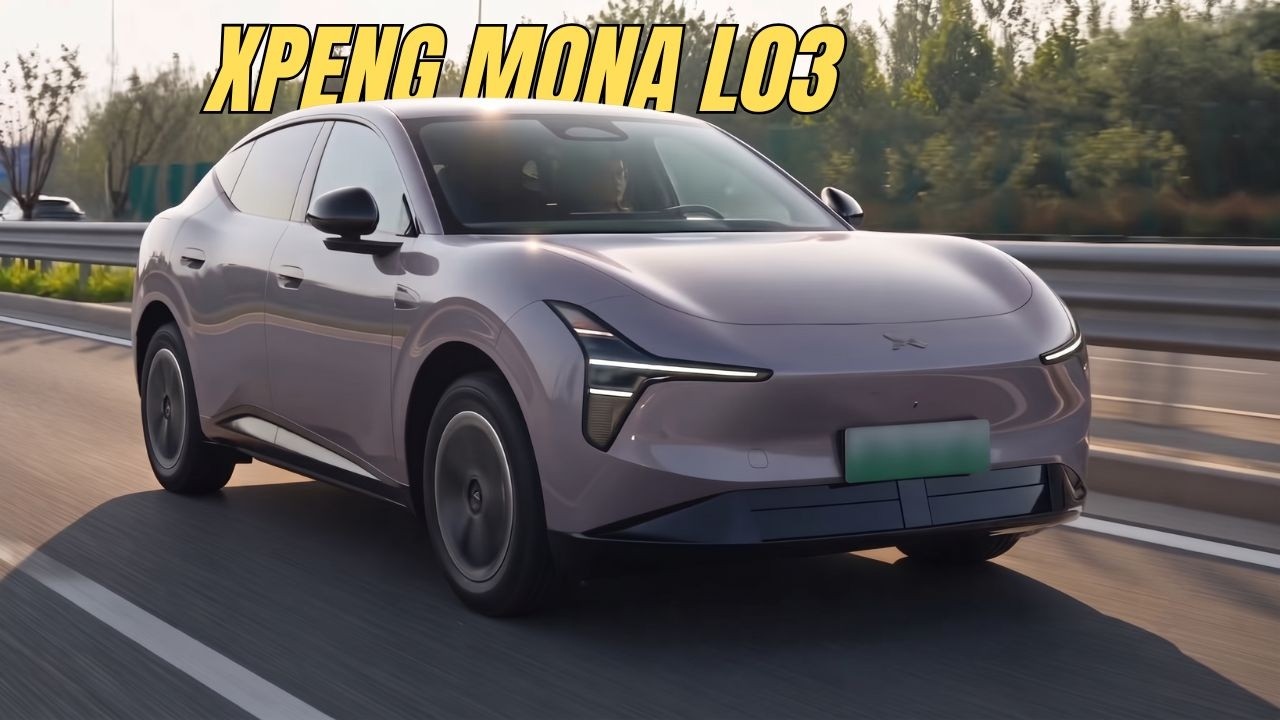
Hey everyone. Today we're taking the newly released Xpang Mona L3 out for a test drive. I've spent about two or three days driving it and overall I have to say the experience has been pretty good. For a car in the roughly 150,000 to $160,000 yuon price range or around $24,000 in the US, I'd say its performance has gone beyond what I expected. A quick shout out to our automotive partner in China for sharing this video and helping make it possible.
84 words, the words spoken in the first 30 seconds at 168 words per minute.
Free, no signup. See how the first 30 seconds hold attention, with rewrites.
Sentence shape
| Measure | This transcript |
|---|---|
| Sentences | 149 |
| Average words per sentence | 15.1 |
| Longest sentence | 49 words |
| Questions asked | 3 |
| Sentences containing a number | 22 |
What this transcript is
Every word below is the caption track YouTube publishes for this video, pulled from the video itself and reproduced unchanged. It is not Prepublish's writing, not a summary, and not a re-transcription: it is the video's own published captions. English captions, generated automatically by YouTube, in the video’s original language. Source: the video on YouTube. A channel that would rather this page did not exist can ask for its removal through the contact page, and it is removed.
No Script X-ray for this video: YouTube shows a Most replayed graph only once a video has enough views.
Hey everyone. Today we're taking the newly released Xpang Mona L3 out for a test drive. I've spent about two or three days driving it and overall I have to say the experience has been pretty good. For a car in the roughly 150,000 to $160,000 yuon price range or around $24,000 in the US, I'd say its performance has gone beyond what I expected. A quick shout out to our automotive partner in China for sharing this video and helping make it possible.
Thank you for your support. Hey everyone, it's Michael from Motor Torque. If you enjoy staying uptodate with the latest automotive news, reviews, and industry updates, be sure to subscribe and hit the notification bell so you never miss any of our exciting content. Thanks for watching and let's get started. My first impression is that this car has been tuned primarily with family use in mind. The chassis feels a little on the softer side.
The suspension isn't overly bouncy, and when you drive over rough or uneven surfaces, there's a noticeable amount of cushioning. Overall, that makes the driving experience pretty comfortable. The steering wheel, on the other hand, doesn't give you that extremely precise pointand-shoot feeling, but I think most people who already drive an X-pang or are considering choosing one are probably going to place more importance on the car's features and how useful they are in everyday driving.
Now, let's move inside and talk about the interior. Compared with the Mona L3, I think this cabin is a small step forward. It still follows that minimalist design philosophy, which is somewhat similar to what you see in Tesla. The ambient lighting uses these slow reflection effects, and there's also some hidden ambient lighting with a few sharp edges built into the design. Personally, I'm not a huge fan of those sharp edges because they don't look particularly attractive during the daytime.
At night, though, the reflections from those edges make it appear as if there are multiple light strips, so the effect actually looks better in the dark. Personally, I'd still say the design is pretty average, although it's definitely a clever little detail. I'm also not particularly fond of where the horn is positioned. It almost feels separated from everything else, like a little island sitting by itself. The material quality is decent, though.
It feels smooth when you touch it. There aren't any sharp edges, and I'd say it's better than what you get in some other cars. Still, I think the design could have been integrated into the rest of the interior more naturally. There probably could have been another approach. I think this same design language also carries over to the front quarter end area. As far as I know, the quarter end probably doesn't provide a power supply function.
You can really only connect things such as an action camera like the Luna Ultra that I'm using right now. Now, let's move on to the steering wheel. I actually like this steering wheel a lot. It reminds me a little of the steering wheel I used when I drove the Avita 11. It isn't ovalshaped and the upper section is relatively straight. As for the buttons, especially the bracket style buttons and the mode controls, they look very Xiaomi.
I can only describe them as being very Xiaomi, and at the same time, there's also a bit of a Porsche feel to them. I don't really have any complaints about the steering wheel itself. I like its shape because it's easy to operate. More importantly, I can very clearly tell how much I need to turn the wheel and how I should make that turn, which is a really nice thing. Next, let's talk about the HUD. For my experience using it everyday, the biggest issue with the HUD is that I don't think it's bright enough.
For example, at night when the headlights are turned on and they're shining toward the rear of the vehicle in front of you, the HUD display can sometimes become difficult to see clearly. That creates a bit of interference. And I think the main reason is simply that the brightness isn't sufficient. Even during the daytime when you turn the brightness all the way up to its highest setting, it still doesn't feel particularly bright.
So, I think that's one area where there's definitely room for improvement. That said, I think the amount of information shown on the HUD is quite sufficient. For example, when you activate the turn signal, it can display the camera feeds from both sides of the vehicle. You can also have this information shown on the central control screen, and you're free to adjust how you want it displayed. As for the mount, I've been using it since Thursday, and today is Sunday, so it's been almost 3 days.
During that time, I've used it in all kinds of situations. And so far, I'm very satisfied with its overall capabilities and performance. Whether I'm driving around the city or somewhere else, whether the road is complicated, narrow, or wide, it's been incredibly easy to use. Its overall response speed is very fast, and its decision-making ability is also quite good. So far, I'd describe the experience as genuinely worry-f free.
I've used various other car mounts before, including Avita's ADAS system and products from other brands, and compared with those, I find Xpang system quite reassuring. There are still a few rare situations where it doesn't perform as well. One example is when you're in a right turn lane and need to give way to pedestrians crosswalk. There can be a bit of a back and forth decision-making process in that situation. and I don't think its performance during that moment is particularly good.
In cases like that, you may need to accelerate a little bit or take over manually, which I think would make the situation smoother. The only issue I've really run into with VLA over the past couple of days is that it occasionally misses exits while navigating. For example, imagine you're several hundred me away from an exit. There are five lanes on the road and you're currently in the far left lane. Sometimes it doesn't seem interested in changing lanes at all.
Then when it finally decides to move over, there may only be around a 100 meters remaining. With heavy traffic at that point, you can easily miss the chance to get into the correct lane. I wouldn't say that's a particularly good experience. And it actually happened to me more than once, around two or three times. Whenever I realized I was going to miss the intersection, I immediately switched back to manual control. But overall, I don't think this is a major issue.
For everyday driving, this system is still very convenient, and I think it can handle the majority of the driving situations and needs you're likely to encounter. Right now, I'm driving on the Guang Yuan Expressway, and ever since I started recording, I've been using NGP mode. On major roads like this, especially when you're covering longer distances, the system performs really well. It also supports voice controlled lane changes.
You can simply say something like, "Hey little guy, move over to the left." And the car will make the lane change for you. I think that's a really nice feature. In this case, I didn't even have to use the turn signal and it still changed lanes. The overall experience is excellent. I also want to mention that this time I tested the super heavy version. I actually spent some time driving it in pure electric mode. I charged it on Sunday night using 400 volts and according to the display, I was able to get around 300 km of electric range.
Once the battery is fully charged and you also have a full tank of gasoline, it looks like you can get roughly 800 to 900 km from the fuel alone. That gives you a combined range of around 1,200 km, which makes the car feel very worry-free when it comes to range. Another thing I noticed is that even when the range extender starts working, the vehicle remains fairly quiet. Unless you're sitting there parked with no navigation or music playing, you might notice a very slight vibration or a faint sound from the engine, but it's completely acceptable.
Once you're actually driving, you can barely feel it. And that's really the advantage here. You get a longd distanceance driving experience without having to constantly worry about range. Compared with the pure electric version which offers a claimed range of 625 km, I think getting around 300 km even from the range extender setup is pretty good. Now let's take a look at the energy consumption. Today we drove the car in pure electric mode and the consumption was 10.2 kwatt hours.
For a small SUV, I think that's perfectly reasonable. The energy consumption is completely acceptable. I was also driving pretty aggressively today with quite a few hard accelerations and the fuel consumption was basically below 0.9 L per 100 km. You can see the figures here. The average fuel consumption is around 0.9 L per 100 km while another figure shows 11.5 L per 100 km. The energy consumption is 10.5 L per 100 km.
After recharging, it shows 11.9 L per 100 km, mainly because I've been driving in pure electric mode. So, overall, I'd say the Mona L03 Super Range Extender is a very worry-free car to drive. Whether you're using electric power or relying on gasoline for your everyday driving, you can use it without having to stress too much about range. I probably don't need to spend too much time talking about the interior space because the rear seats already offer more than enough room.
There's plenty of leg room and headroom. The rear seating area may not feel especially wide, but the overall front and rear space is still more than sufficient for a family car. I think it works quite well. Just think about it. At around 150,000 yuon, you're getting a driving experience that may not be spectacular, but it's definitely comfortable. And if you switch the car into sport mode, you can also get a surprisingly good acceleration experience.
There's also another interesting feature I discovered in the driving modes, an anti-motion sickness mode. So, when you activate this setting, the acceleration and braking become much smoother. I think this could be particularly useful for people who haven't driven an electric vehicle before or simply aren't accustomed to the way electric vehicles accelerate and decelerate. There's also another interesting feature related to the air conditioning that I want to mention.
Forest breeze mode. So what exactly is forest breeze mode? Basically it tries to recreate the feeling of natural wind blowing through a forest. The airflow can become stronger or weaker. The direction can change and different vents can activate at different times. The idea is to create something that feels more natural and closer to the air flow you experience in everyday life. You can think of it a little like the natural wind setting on a Xiaomi tower fan at home.
Instead of producing a constant stream of air, it creates a changing air flow. Sometimes stronger, sometimes weaker, sometimes there, and sometimes almost completely absent. I think that's a pretty interesting feature. At least you're not sitting there with an air conditioner constantly blowing directly at you, which can become uncomfortable after a while. This approach is actually quite pleasant. So, if you're looking for a familyoriented SUV around the 150,000 RMBB price point, I think its interior space, driving performance, and overall value for money are all above average for this segment.
It's genuinely quite impressive. When it comes to the exterior design, of course, everyone is going to have a different opinion. Personally, I think the side profile is the strongest part of the design. The front end is comparatively less impressive to me. The rear though also looks pretty good. It reminds me a little of the Lincoln Co. Z20. And overall, I think it works quite well. All right, that's going to wrap up our short review of the Mona L03 for today.
What do you guys think about this car? Would you be interested in it? Oh, and before we finish, there's one small complaint I have about the Mona L3. It's about the window opening buttons on the door panel. The buttons used for opening the windows and the buttons used for opening the doors look extremely similar, so it can be surprisingly difficult to tell which one controls the window and which one opens the door. On top of that, the L03 doesn't use electronic door opening buttons.
It uses physical buttons instead, which means the door can actually be opened while the vehicle is moving, which I think is a potentially dangerous design and something drivers should be aware of. I'm not really sure why Xpang decided to design it this way. Maybe it's part of a consistent design philosophy across the brand, but I do think the similarity between these controls is a problem. It's genuinely difficult to distinguish them at a glance.
And with that, that's everything for today's video. Thanks for watching and I'll see you in the next one. Bye.
The words are the caption track's own and nothing is reworded or re-transcribed. Paragraph breaks are placed between sentences so the text reads as prose.
Free tools for your own script. No signup, no login.
Paste your draft and see where viewers are likely to drop off, with a rewrite for each weak line.
Paste the first 30 seconds of your own draft for a hook score and rewrites.
Check your draft against YouTube's advertiser-friendly guidelines before you record it.
Read this channel's public videos and transcripts, and download a writing brief for it.
Most used terms
Filler phrases
18 in total: like 9 · actually 7 · basically 2.
A literal whole-word count of the same phrase list the Prepublish browser extension uses, so a phrase inside another word is not counted and a phrase used in its ordinary sense still is. It is a count and not a judgement.