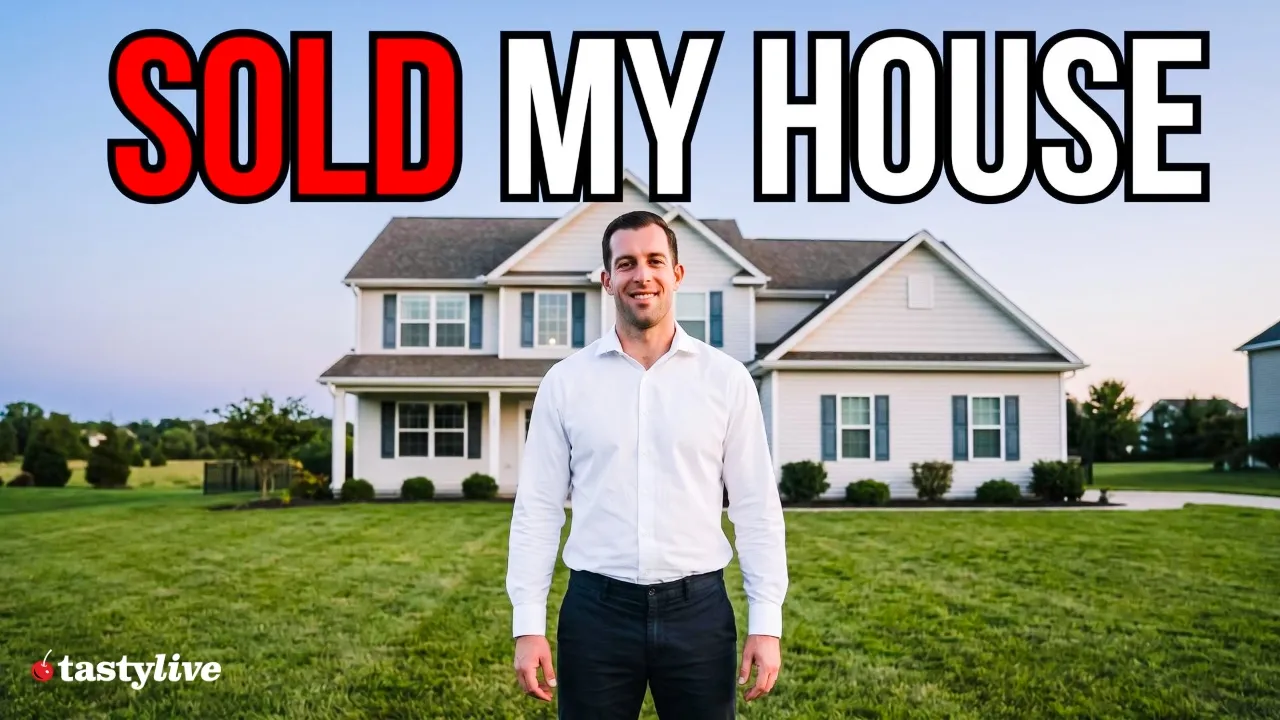
Uber Driver to Millionaire Fund Manager: How He Trades 0-DTE Now transcript
tastylive · @tastyliveshow
Words
3,089
Runtime
15:32
Speaking pace
199wpm
Reading time
13min
199 words per minute, between the 181 median and the 201 75th percentile of 349 measured videos. That distribution comes from the 349-video hook study.
Opening (first 30 seconds)
I made my first trade in 2017 2018. It was basically I'd read some Warren Buffett stuff. My dad had been trading options for a long period of time and he introduced me to the concept of a covered call. So I started playing him on Facebook a little bit and was interested in the financial markets kind of through my dad and learning about that as well. When I started track >> watching our network as long as we have, you have seen that video plenty of times. We play it on outros. We play it on breaks. It
100 words, the words spoken in the first 30 seconds at 199 words per minute.
Sentence shape
| Measure | This transcript |
|---|---|
| Sentences | 141 |
| Average words per sentence | 21.9 |
| Longest sentence | 118 words |
| Questions asked | 7 |
| Sentences containing a number | 28 |
Most used terms
- uh41
- um29
- trading22
- basically15
- yeah14
- day13
- lot13
- options13
- portfolio12
- risk12
- trade12
- zero10
Filler phrases
215 in total: like 69 · uh 41 · um 29 · you know 29 · kind of 18 · basically 15 · actually 8 · I mean 5 · literally 1.
A literal whole-word count of the same phrase list the Prepublish browser extension uses, so a phrase inside another word is not counted and a phrase used in its ordinary sense still is. It is a count and not a judgement.
What this transcript is
Every word below is the caption track YouTube publishes for this video, pulled from the video itself and reproduced unchanged. It is not Prepublish's writing, not a summary, and not a re-transcription: it is the video's own published captions. English captions, generated automatically by YouTube, in the video’s original language. Source: the video on YouTube. A channel that would rather this page did not exist can ask for its removal through the contact page, and it is removed.
Transcript
I made my first trade in 2017 2018. It was basically I'd read some Warren Buffett stuff. My dad had been trading options for a long period of time and he introduced me to the concept of a covered call. So I started playing him on Facebook a little bit and was interested in the financial markets kind of through my dad and learning about that as well. When I started track >> watching our network as long as we have, you have seen that video plenty of times.
We play it on outros. We play it on breaks. It is the success story of success stories. And now joining the show is Mark Anderson, CEO of MBH Capital Management. Mark, how you doing? >> Uh, pretty good. Uh, glad to visit with you guys again. Hope the weather's quite nice in Chicago in September as well. >> It's not pouring rain, [laughter] >> but thank you. Well wishes >> and uh good to see you again. >> Yeah, always a pleasure to be on and uh talk options.
You know, >> it was funny. We were talking off air uh about when you did that video. You said it was the day of the elections. >> Yeah. I mean uh I think it was like the Wednesday before the election, but I distinctly remember being in Midway Airport and like being gapped in a position and having to monitor it like in line and like I was walking up to the passport thing and I was like, "Hold on." And then the TSA guy was like, "No, no, you you hold on for me." And I was like, "Okay, here's here's it." But yeah, >> that's amazing. >> That is amazing, man.
Um yeah. Yeah. I mean, so you started out I think you you clearly laid out in that video. I think you said it was your dad that kind of uh introduced you or or kind of talked to you about trading options. I mean, run that back for us. >> Yeah. So, my dad had been trading options like when they were listed in the newspaper and you would call your broker. So, like if anyone remembers Options Express or whatever, that was kind of like my first exposure to it before I got bought by Schwab.
Um, and then, you know, he had basically just been long TQQ and selling calls, which is a strategy that, you know, has worked for about 15 years or so, uh, doing that. And then I like did some fundamental stuff with like Warren Buffett and I was like, Facebook's a phenomenal company and I understand it. So, you know, I bought some leap calls on that. And then I just really disliked my kind of day job in construction and uh I watched a lot of your guys' stuff and I was like, "Oh, I could do this." And actually didn't have much success for the first two years or so I was doing it.
Um was getting rolled over on calls a lot and then started to see some zero day stuff and then basically without really having a very profitable uh track record or um much from that I was like ah zero DTS going 5 days a week. I'm gonna sell my house and uh quit my job and uh get going full-time on trading zero DT and start a fund. So, not necessarily the route I depend uh I would recommend for everything, but you know, with trading small trading often and or zero DT, there's so much repetition that you can get good at it like exceptionally quick.
Like, you know, I have multiple lifetimes of portfolio construction and risk management experience because we trade so often. >> Well, it sounds like you watched a lot of Mike in his whiteboard. for sure. I don't see how you haven't. There's no way you haven't. But um it's it's crazy, you know, that that uh I think a lot of people think about it's wild that you know, you go from from never even knowing what options is to trading a little bit to all of a sudden you start your own company.
Uh how how'd that all play out? >> Uh yeah, I mean I was very naive and didn't really know what I was getting into. So like I will say when I first started, like I didn't even know what a sharp ratio was. Um I just known the back of the napkin type uh rules from you guys which is grounded on principle and then I started reading volatility uh options volatility and pricing by Natenberg. I've literally read it like 15 times.
And then that base really helped me to apply things. And then I got just really into back testing and portfolio theory. And it's like as we progress further in like AI and intelligence getting cheaper, um, you know, you can start to really progress quick like something that I don't think a lot of people realize, but sizing is pretty well actually solved by quantitative finance literature. So if you can, you know, master that from accessing that information online, um, then it just comes down to risk management, psychological, you know, honesty and humility to be able to understand what you do and don't know and put on positions and then you just let that compounding work basically. >> Yeah, I think that is spot on and that's really the genesis of a lot of our core positions.
Um, we have these year-long positions in MES and MNQ and we're just selling premium around them, leaning neutral to bullish, manipulating the strikes to make sure that always happens, but we're sized correctly and we have these downside hedges with like NDX and S&P butterflies to where if we get big market selloffs with the timing right, we can hedge a lot of the risk in those. But that's really the key is just being able to withstand what you cannot foresee. uh it's going to have like even though the markets are up today like I can tell you for a fact there will be some point in time in the future where E- Minis and NASDAQ are down 20 30 40%.
I just can't tell you why they are down 20 30 or 40%. But I know that it will happen eventually. So I need to prepare for that and size correctly for that so that you know you you're you're able to withstand more than a 5% move or 10% move uh if you're holding the the risk in the position. And again, you can have hedges to the downside, but that's really the key is is withstanding that variance and putting yourself in a position where you're you're accounting for these different stress tests in your portfolio.
F down 5%, down 10%, like what does that portfolio look like? And if if you can manipulate that portfolio and and put it in a good spot in those different stress tests, then you'll be good. >> Yeah. And another way to kind of think of that that I think people miss a lot is trading stocks or underlyings is like trading a straight line. So you basically know what's going to happen if the market goes up or up or down. Whereas trading options is trading a curve.
So, you know, for example, if you were to back test it, if you just sold an NQ put every day with like a 25% uh profit take, you're basically going to match um the returns of the NASDAQ dollar for dollar in terms of risk and return. It's not going to be much different than the index. Um but if you were to trade it when the market's down like 1% in a day or the VIX is up, you know, 5 or 10%. Now you're trading a different part of this basically risk curve and you can be in a situation where when the market goes down because you have decay or you know what part of the curve you're managing your risk on.
You can actually have a more attractive position with exposure to the underlying than you would by selling that same put every day and or just owning the underlying and understanding where you are on that curve and what your exposure is with that is kind of where the risk comes into play. >> So now you've been in this thing for about a decade now. um how how do you find yourself trading? Do you you trade a bunch of names um a little bit here and there or do you trade, you know, a few names but trade those more heavy than not?
H how does that work for you? >> Uh yeah, I mean we're pretty big now, so SPX is kind of like one of the few places that can absorb our size. Uh we are trading spies and Q's because the liquidity is good and the volume is really big. Um, we're paying a lot of attention to the GLDS, IWMs, and like Teslas or whatever as they grow and such, but again, um, like the liquidity is so good in S&P and SPY and index fall is empirically studied to be good.
So, we almost exclusively play in that. But again, with the curve things, um, you know, you could have such a low amount of correlation from a trade you put on at 10:00 a.m. to draw on at 3 p.m. uh, in the zero day tenor. So, we really focus on how can we basically bring that correlation down between trades for a portfolio because even if you have a trade that's maybe like a, you know, 5% expected value, which isn't super high, if you know that's basically negative correlated to your core condor or whatever, having that type of expected value on a hedge is like extremely valuable to your portfolio because you're getting more delta neutral and it's giving a huge boost to your portfolio because if it goes against you, you're basically cutting your loss from let's say 500 bucks to 250 bucks which doing that 252 times a year in zero day uh really starts to add up quickly. >> Yeah, 100%.
And I think that's that is one of the interesting dynamics of options trading and and really building a portfolio up. Like I've said this before and Jamal, I think you'd agree is like if like right now if you're trading a couple hundred,000 or $50,000 or whatever it is, you're probably dabbling in a number of different names that are smaller priced and you're looking for different price extremes and whatnot. But as you get into the 2 million, 5 million, 10 million, like I I see no reason to do anything other than trading S&P and NDX and then waiting for those pricey streams that come to me.
Like I'll wait I'll trade those all day and then wait for those, you know, Microsoft's at 5 years lows, Meta's at five years. then you throw on those other positions where it's like okay this is clearly a opportunity uh or even the opposite way if you want to be bearish on something but uh waiting for those opportunities and and being patient but the creating your core around S&P and to your point like when you're back testing and looking at historical data S&P 500 and S&P options are a great place to uh park that knowledge and really execute from those back tests.
Yeah. And zero day is pretty interesting too. So like obviously volatility being uh overstated is a strong driver of performance. But what we kind of realized through trading especially this year is this year is a pretty historically overstated volatility uh within the index which also makes sense because there's a lot of dispersion meaning individual stocks are moving a lot more compared to the index. And we weren't doing so good in the first couple months of the year.
And I was like this is odd. Volatility is um you know overstated and we're we're not making that much money. So what we kind of saw on it is that uh there's multiple factors that can drive performance outside of just implied volatility in the zero day tenor. There's like distribution of returns. So even though volatility is priced very correctly looking at straddles every 15 minutes throughout the the day and going to expiration the distribution of those is actually quite mispriced which would is what's called leptoccuric or many more zero to half standard deviation moves that are priced in and many more half to one standard deviation moves that are priced in.
So when you start to understand those different ways of maybe how you can extract premium or when you want to manage your trade because of how those age over time, we found that's been a a push for profitability to us as well. And then also long options in the S&P, which may sound kind of counterintuitive are also kind of mispriced on how much they pay off into the future, which somewhat makes sense because most of the market participants that will hedge in S&P, i.e. big institutions, structured products, ETFs, they're just trying to hold that to get rid of that binary day.
They don't really care if their, you know, 10 delta option expires $5 in the money or expires worthless cuz they're trying to buy that convexity. Where you as a seller in zero DT, you're on the other side of that and you could make a lot of money if you sell an option for $5 and it expires worthless rather than expiring, you know, $2 in the money. So, being kind of able to identify those things um is quite interesting.
And like this is even more pronounced of what's called the weekend effect. And the weekend effect is dealers basically like buy back their theta and their exposure before the close on Friday, usually after the London stock market closes around 11:30 or 12:30 Eastern. And you'll see more large two standard deviation moves and much more half and one standard deviation moves kind of in that uh Friday PM session as well.
So selling puts then is a nice trade. >> I got a multi-part question for you and hopefully it's not too invasive. Um so when you started this cap this company uh MBH Capital Management uh you know did you did you start with your own or did you eventually convince somebody to give you money and if you could talk about briefly what you can about that process and then the other thing where you are now I think a lot of people always wonder about this how do you how do you eventually decide to pay yourself at some point in time from the profits or the the fruits of your labor?
Um, yeah. So, when I started it was just based like I just sold I had some real estate properties, so I sold like uh that rental and I just put it all in there. Um, I didn't really have much of a plan. I just kind of made a deal for myself that I thought I could do. I was like, "Okay, I'll do this for two years and if it doesn't work out, I'll go back to, you know, work and if it does work out, we'll see how it goes." Um, and then, you know, I would definitely say that like trading and learning how to pay yourself as a business are two completely different things.
So, I just invested everything back in the business. I'd say like over 100, like 99% of my net worth is in there. Um, just now that I've kind of gotten a critical mass, I've basically decided to start taking draws out of the business. Um, I made an active choice to put the risk on. It just worked with my lifestyle with what I was doing. But I would say that in general it's like you should always pay um your taxes on what you're trading is into you know uh from that trading account.
So if you made 50% you owe the government, you know, 12%. You should definitely not be using like your 6 months of savings or or whatever that is. Um and then also like depending on what you're trading and your risk appetite, you need to answer that for yourself. But um I like to just put it in two buckets. So I would say like our ultimate uh you know professional expertise is basically like using leverage. So we'll have a large portion of our portfolio that may be spy as an underlying and we'll use portfolio man uh margin to basically use that spy as collateral instead of treasuries to trade options against.
Uh but about 30% of my money now which is just kind of the goal I'm going keep concentrating on options because that's what I'm good at. And then that other 30% is super conservative. So like 25% in VT, 25% in gold, 25% in a mixture of like 7 to 10 year treasuries and then this thing called catastrophic bonds um which are basically like hurricane reinsurance or kind of like an insurance ETF like KBWB and then 25% uh in some type of trend following or alternative uh I think managed futures or or something like that.
So that's super conservative. If you want to look it up, you can look at like the permanent portfolio. Um, but yeah, I I like to look at it as a percentage. And the other thing that I think people really underpin is by you having a conservative pool of investment, it actually allows you to take the most important risk and not be as emotionally invested in it. So, I actually think by having that money safer on the side and delaying a little bit until that opportunity comes will actually return far more capital in return than you ever could because you'll have that capital and you'll be emotionally into perspective where you can take that huge risk because if it doesn't work out, it actually doesn't affect what your current living or lifestyle.
The words are the caption track's own and nothing is reworded or re-transcribed. Paragraph breaks are placed between sentences so the text reads as prose.
Use this transcript
Three free tools that work on the material around a video like this one. No signup, no login.
Hook Analyzer
Paste the first 30 seconds of your own draft for a hook score and rewrites.
Policy Pre-Flight
Check your draft against YouTube's advertiser-friendly guidelines before you record it.
Channel Skill Generator
Read this channel's public videos and transcripts, and download a writing brief for it.