Getting the transcript
Reading the captions from YouTube. A video nobody has opened here before takes 10 to 30 seconds; this page fills in on its own.
Getting the transcript
Reading the captions from YouTube. A video nobody has opened here before takes 10 to 30 seconds; this page fills in on its own.
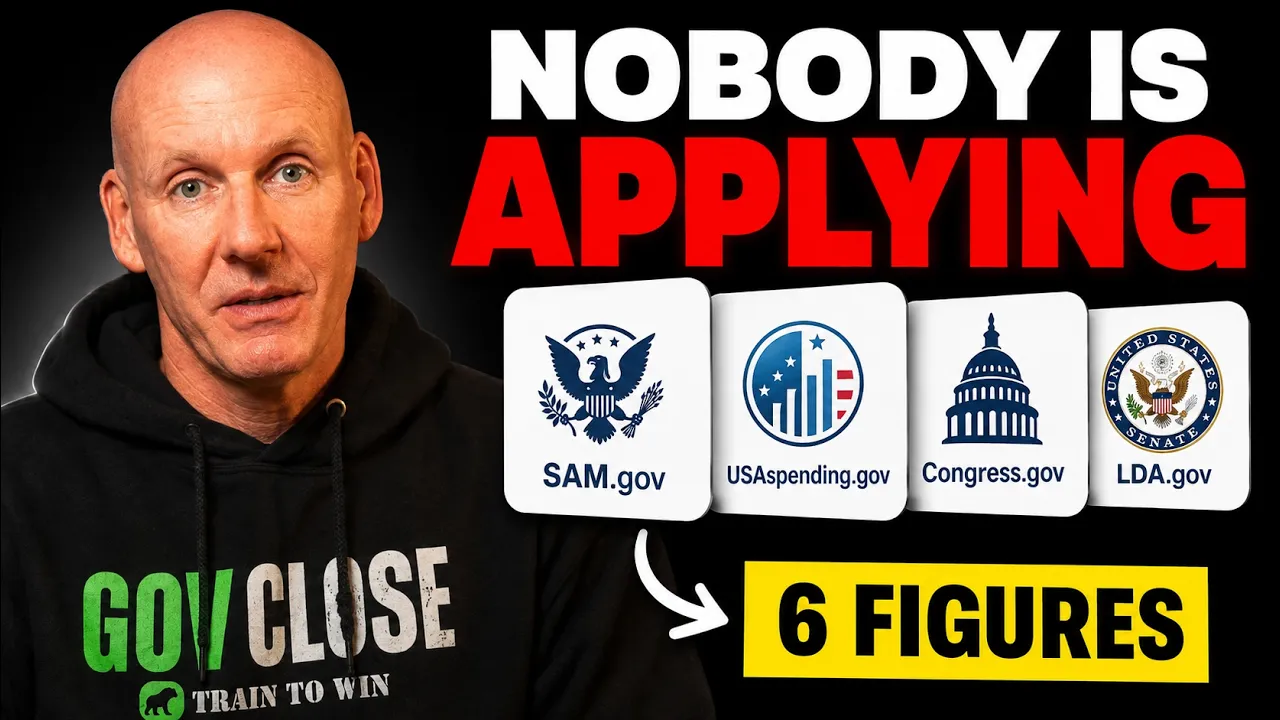
GovClose | DoD Contract Academy · @govclose
This video has no Most replayed graph yet: YouTube shows one only once a video has enough views. These are the moments viewers replayed most in GovClose | DoD Contract Academy's most watched videos.
Most replayed moment at 8:53
7.3x that video's typical replay level
going to tell us? Again, number of offers received, it's not telling us, right? I'm going to I think as a treat I'm going to if you hold on till the end, I'm going to show you exactly how competitive this is. So, this was full uh and open after exclusion of sources. We've seen this before, right? Who actually did the
Said at 8:45
The graph counts replays. It does not show where viewers stopped watching.
Words
3,461
Runtime
19:12
Speaking pace
180wpm
Reading time
14min
180 words per minute, just under the 181 median of 349 measured videos. That distribution comes from the 349-video hook study.
Opening (first 30 seconds)
Today, we're talking about a professional skill that demands unusually high pay and some of the highest consulting fees that I've ever seen. By the end of this video, you'll learn how to obtain this skill, the three ways it can generate income, and which one's right for you. Now, some of this work's done remotely, some will require travel, but salaries often start in the six figures and with top earners going well into seven figures. And the freelance consulting fees? I'm going to show you, it's one of
90 words, the words spoken in the first 30 seconds at 180 words per minute.
Free, no signup. See how the first 30 seconds hold attention, with rewrites.
What this transcript is
Every word below is the caption track YouTube publishes for this video, pulled from the video itself and reproduced unchanged. It is not Prepublish's writing, not a summary, and not a re-transcription: it is the video's own published captions. English captions, generated automatically by YouTube, in the video’s original language. Source: the video on YouTube. A channel that would rather this page did not exist can ask for its removal through the contact page, and it is removed.
Today, we're talking about a professional skill that demands unusually high pay and some of the highest consulting fees that I've ever seen. By the end of this video, you'll learn how to obtain this skill, the three ways it can generate income, and which one's right for you. Now, some of this work's done remotely, some will require travel, but salaries often start in the six figures and with top earners going well into seven figures.
And the freelance consulting fees? I'm going to show you, it's one of the rare ones that you can actually see what people are making starting at a month per client going all the way up to And if you're a business owner, this skill could be the difference between a small business winning small government contracts and a small business winning huge multi-million dollar government contracts. It's one of the oldest professions in the United States and it's protected by the US Constitution.
What's great about this is there's no standard background required for this profession. There's no required degree, certification, there's no bar admission, but this learnable niche or niche, this skill is kind of shrouded in mystery. It's misunderstood and often cast in a very negative light. But, if you understand how to do this, you can move the needle in multiple industries. Uh but, it's particularly meaningful in government contracting.
And this is coming from someone who has spent years in the government contracting space as an acquisitions officer for the US Air Force, putting companies on contract for the Department of Defense, now the Department of War, and since helping hundreds of professionals learn the art of government contracting to win government contracts, land high-paying jobs, and start remote consulting businesses. Now, the professional skill we're deep diving on today is that of lobbying.
That's right. A person doing this may be referred to as a lobbyist. But before we deep dive into the specifics, we need to define what lobbying is. So, stay with me. You may have a different respect for what a lobbyist does by the end of this video. Now, lobbying is basically advocating to members of the house, senators, Congress, congressional staff to influence federal laws, policies, programs, funding, regulations, or other government actions.
You can advocate for yourself, your business, the company you work for, an industry, a policy, or a cause. And you might be saying to yourself, "Rick, I don't have a degree in political science or background in government. This couldn't possibly be for me." But, if you're an American citizen, you've actually got the first block already checked. The Founding Fathers made sure that the First Amendment protects your rights to petition the government, and the Supreme Court has recognized lobbying as a form of that protected activity.
But hey, here's a big disclaimer, guys. Lobbying is legal. But, it is regulated. And depending on who you contact, how much lobbying you do, and how much money is involved, federal law may require you or your company to register and file disclosures. It's very straightforward, easy to do. It's handled through lda.gov, which we're going to check out later. Look, there's a lot of nonsense out there in social media land regarding government contracting.
But, I want you to know that everything that I'm talking about in this video comes not only from my own personal experience, but also from research that I and my team have conducted. It is sourced, and you can check out the sources in the show notes for all of the links where the information comes from. By the way, if you appreciate us bringing you this type of information, do me a favor. Just hit the like button and subscribe.
Leave a comment telling us what you like. All right, now look, I just did a quick search on LinkedIn for lobbyist jobs, and we can see here health care lobbyist 200 to 250k a year plus benefits. Public affairs strategist 102 to 166k a year. Head of US public affairs and patient advocacy 232 to 335k a year. Having the skill of being a lobbyist or being able to communicate with your representatives and advocate, you know, this is not just limited to government contracting or one particular industry.
It covers aerospace, defense, tech, trade associations, nonprofits, consulting firms. Check out the actual jobs. My preference is going to LinkedIn, but you can also search Indeed, company career pages. By the way, just having this skill set, even if you're not that interested in it, can be the difference in you getting hired or not hired for something like an engineering position. Cuz companies at the end of the day have to make money and this is one of the key skill sets that very few people actually have.
And remember, don't just focus on salary. Successful lobbyists also become consultants, partners, firm owners. So, I wouldn't tell you that everybody's making seven figures cuz they're not. There are boutique freelancers that are. In fact, my favorite option for both lobbying and government contracting is in general that of the freelance consultant, meaning I own a business that helps companies and I can work remotely in my own basement and my own a lot of videos on this, right?
If you start a lobbying firm, your own business, and you register and we'll show you where you have to do that, uh you may have to report your lobbying income by client. In fact, it's required on the LD-2 form. But, what this means for us is we could see what people are actually making because they have to report it. So, check this out. Right now, we're at lda.gov. This is where you're going to not only report, but this is where we could see what other people are reporting because of public disclosure.
Now, I just want you to take a look at these quarterly amounts that people have posted. This company $30,000, $40,000, $10, $20, $20,000, $30,000, $30,000, $40,000, $50,000. Look at this, $300,000. Federal contracting isn't something you learn from a textbook. It's something you do. At GovClose, you build real capture plans, you work real pipelines. You learn the tools and systems companies winning federal contracts at the highest level actually use.
And most importantly, you do it alongside a community unlike anything in this industry. Sitting contracting officers, BD leaders at defense primes, cybersecurity, contract law specialists, proposal experts, business owners that are winning right now. Where 400 students have gone through the GovClose program or are in it. [music] Whatever deal you're working, someone in this room has done it before. Some become six-figure account executives at top defense primes.
Some launch consulting practices building tens of thousands a month with multiple clients working from anywhere. Some win their first federal contract for their business that they already own. Three tracks, one community, the only one of its kind. And if you want to see whether government contracting is really for you, go to govclose.com, watch the training video, and talk to our advisory team about the application process.
All right. Now, let's get back into it. First quarter, $300,000. Second quarter, $50,000. These are all different companies. Now, remember they're averaging to uh the nearest $10,000, but we could see here there's an average of $30,000, $50,000, $60,000, $880,000. Now, some of this also, if you're a company that's involved with lobbying, you're going to be reporting your expenses, so you have to report in some cases there as well.
Now, there's a lot that goes into this. Make sure you really dive in, talk to an attorney if you're going to get into lobbying, go to the sites that we recommend in this to learn more about it. Now, maybe you read a job description and you're like, "Hey, I don't know that I currently have the skills that are required." Or maybe you're not even sure what those skills are. Well, you can develop those skills. But in order to do so, we really need to understand what you're actually doing on the day-to-day as a lobbyist.
A lobbyist today is often much more research, writing, scheduling, briefing, and following up than people imagine. This isn't all you have to live in DC and you're living at the Pentagon or going into Congress every day. In fact, federal law defines lobbying activities broadly enough to include preparation, planning, research, coordination done in support of lobbying contracts. So, let's talk about the first thing that you're going to do as a lobbyist.
You're going to research the people who have influence. First, you you got to figure out who actually has influence over the issues, you know, you're working on. So, you can go to house.gov or senate.gov or congress.gov and find the representatives, senators, committees, and staff connected to that issue. Right now, we're congress.gov if you want to follow along. Say you have a client that sells drones. Could be anything, cybersecurity, healthcare.
I just typed drone in here and now all of a sudden I'm getting these bills and committee reports that are popping up, right? So, this is part of the research process, right? So, now I can go through and I can start looking at, "Okay, drones for first responders." You can see there's a representative in New York, Recreational Drone Empowerment Act. So, you can see Defense Against Drones Act. So, depending on what your angle is, you could probably research this and find people that may support whatever technology the company that you're you want to work with is behind.
There's actually a lot of information on here, right? The Drone Espionage Act. It's telling you who the sponsors are. Block the Use of Transatlantic Technology in Iranian-Made Drones Act. I mean, I'd have to That's a mouthful, right? But, we could go in there and we could start looking. What is that all about? Does that have anything to do with what we're doing? But, this is part of the research that we just talked about.
Let's say your client sells drones, cybersecurity, AI, or medical equipment. You can search congress.gov to see who's sponsoring legislation, sitting on the relevant committees, holding hearings, or already talking about that issue. Now, you're not cold calling random politicians. You're finding the people who already have a reason to care. Next thing we do is research where the government is actually spending money.
Now, I have covered this ad nauseam. USAspending.gov to find out which agencies are spending money, right? And we can actually trace it back to the exact acquisitions offices. That's all available in the downloads from USA Spending. We can see what programs exist, what companies are already uh getting those contracts. This gives you the actual data, and there's a lot of it. Next thing you can do as a lobbyist or having a lobbying niche is tracking legislation and funding.
Now, here you're going to monitor bills, uh the NDAA, appropriations committee reports, hearings, and amendments. Uh so, you know when something's affecting uh your clients or you positively or negatively. Congress.gov again lets you track legislation and committee websites. Now, here's the other thing. Finding the right congressional staffer may actually be what you want to do when we start talking about setting up meetings.
You know, most of the time, you're not starting by trying to get a senator on the phone. You find the staff member who actually handles the issue. Remember, they get a lot on their plate, right? And these congressional staffers actually have a lot of power. So, don't underestimate them. You can go to the members' website. All right, guys, I'm back on congress.gov. You identify congressmen, senators that you potentially want to speak with, we can go here.
Now, I'm just going to pull up This is congress.gov. If I click on the sponsor, this is Representative William Keating. And okay, so now what comes up here is some information I can use to start, again, collecting my research. I can see that Here's his website, contact information. This is going to be, you know, I'm sure it's not his personal contact, right? It's probably going to get to his office, right? And he's going to have a team, I would imagine, working with him.
We see he's Massachusetts District 9. By the way, look at this, Cape Cod. Come on, for the summer, no better place to be. I would rather be in Cape Cod, Massachusetts, than any place on Earth in the summer. Possibly the exact opposite of that in February, but hey, right now it's August, and even though I've got a sweatshirt on, hey, I'm loving Cape Cod. Just got back a couple weeks ago. All right. So, what do I want to do?
What am I going to do here if I want to do a little bit more research? I'm going to go to his website, right? It's got contact right there. I bet there's a way for me to By the way, look, policy work, you know, this cuz this may or may not be the person you want to talk to, right? So, I want to know what is he What is he behind, right? Is he supporting things that are going to potentially serve uh the company I work for or myself.
And if not, you know, maybe he maybe him and his team don't have all of the information. Maybe there's something I want them to consider, right? There's a lot [snorts] of information we can see here. Then we got the contact. So, right here he's probably looking to see, "Hey, are you in my district, right?" I'm a little bit north of his district. I'm not in Cape Cod right now. Uh but that's interesting to know, right?
That may be something that comes into play. Here's something else here, we can email, right? We can just shoot an email. We've got the phone number, So, there's a lot of ways that we could contact. I just wanted to give you an example of what you might be doing as a lobbyist or somebody working in this niche. Now, I may collect, you know, 20, 25 different people that I want to set up a meetings with for a client, right?
Or for the company I work with. So, then you got to set up the meeting. And just like we showed you, uh very simple to find the email, phone number of the office that you want to set that meeting up with. You going to explain who you represent, why the issue matters, and ask for 15 to 20 minutes with the appropriate staffer. You know, they could be in Washington, but they don't have to be, right? You know, cuz we just saw their offices in Massachusetts with the last representative we just saw.
So, if they agree to the call, you work with them. If they want to use Teams, use Teams. If they want to use Calendly, set up a meeting, or if they want you to do an in-person meeting, which is always the best, then that's what I recommend you do. All right, moving on. What happens when you get meetings? Well, this is just like if you're working on the government contracting side, going to an acquisitions office, you need to prepare your briefing before you go in there.
You know, you're doing the research, you're creating a short brief that is to the point. You can have backups of additional information. Here's the problem, here's the data, here's why the government should care. And here's exactly what you're asking for. And this fundamentally is laptop work, right? So, you can be doing this part of it from your home office. Again, congress.gov, USASpending, agency documents. There's a lot of different places, and we cover those in other videos as well.
Some of the people that you may be meeting with, you may be meeting with a legislative assistant, a military legislative assistant, you might be meeting with the legislative director or or committee staffer who handles the issue. You're educating them on the problem and asking for something specific. Funding, an agency briefing, a policy change, a demonstration, or simply getting the issue on their radar. By the way, most of this is happening pre like formal acquisitions phase, right?
When the RFP comes out, RFQ comes out, a solicitation drops. Again, you know how important it is from our other videos to get ahead of the solicitation, market research phase, and this is actually happening even before that. You know, sometimes your question might be just, "K, can your office help us like meet the right people?" And a congressional office can make an inquiry, maybe facilitate a meeting for you. So, this is just an avenue for you to use, but a lot of people don't understand it, right?
So, it's worth the research, it's worth potentially walking down this path, because it's really not that hard. Um something else you can do is have them work on an appropriations request. Now, if the problem's money, you may help prepare a programmatic funding request or something of that. You can go directly to the House Senate Appropriations websites and see the process, deadlines, and instructions to congressional offices that are working under that year.
Now, I just went to appropriations.house.gov, and I can see I mean there's tons of information here, guys, depending on what you're doing. And I'm not I'm not teaching you to be a lobbyist, I'm just giving you some ideas about the type of work that they're actually doing. And I mean, very quickly, in about 30 seconds, I found here about the FY2026 project funding as proposed by the House. By the way, it's August of 2026.
The fiscal year ends at the end of September. So, we're almost at the end of fiscal year 26. We're going into fiscal year 27. Okay, but you can see here, um they're giving you a way to ask questions from specific subcommittees, right? And depending on what you're looking at, we get agriculture, defense, energy and water. There's tons of information that you guys can find here. The problem isn't always money. It might be law or policy that you'd like to see changed.
You could research existing legislation. And finally, just one thing also to think of, some things lobbyists are doing. And by the way, there's lots of niches here, just like within government contracting. But some are building a coalition. You know, sometimes one company complaining about an issue doesn't carry much weight, but 10 companies on the other hand, that can move the needle. You can bring together contractors, trade associations, suppliers, employers, other stakeholders, and coordinate a common position before taking it to Congress or an agency, and that could have a lot more weight.
The thing I want to foot stomp here is whether we're talking about selling to the government or we're talking about lobbying or talking representatives, lead generation, follow-up is one of the big problem areas people have. You don't have one meeting and disappear. Use a CRM, something like you know, we use the GovClose CRM, but you want to track who you're meeting, what they asked for, what you asked for. Do they promise to send you something?
Do you owe them something? And you want to track this cuz you're going to have to talk to a lot of people, and it's very easy to lose track of everything that you owe everyone over time. So, have a mechanism for tracking that. I recommend a CRM. If you're in the GovClose program, absolutely, you can use um you can use our CRM for that. Finally, you need to make sure that you are in compliance. You need to track what you're doing.
If you're making money, you have to track how much you're making, and you have to report it in the correct places. We've already covered some of those websites and some of those tracking requirements. Keep records of who you contacted, what you discussed, how much time you're spending on lobbying activities, what you're being paid for. And go to lda.gov, take a look at the registration system, guidance, and actual lobbying disclosures.
Now, as promised, we're going to talk about owning your own freelance consulting business and how much you can make. First, I want to let you know that this video is sponsored by me. Check out our GovClose program here. >> [music]
The words are the caption track's own and nothing is reworded or re-transcribed. Paragraph breaks are placed between sentences so the text reads as prose.
Free tools for your own script. No signup, no login.
Paste your draft and see where viewers are likely to drop off, with a rewrite for each weak line.
Paste the first 30 seconds of your own draft for a hook score and rewrites.
Check your draft against YouTube's advertiser-friendly guidelines before you record it.
Read this channel's public videos and transcripts, and download a writing brief for it.
Sentence shape
| Measure | This transcript |
|---|---|
| Sentences | 240 |
| Average words per sentence | 14.4 |
| Longest sentence | 62 words |
| Questions asked | 31 |
| Sentences containing a number | 18 |
Most used terms
Filler phrases
82 in total: right? 22 · you know 16 · actually 15 · like 11 · uh 10 · I mean 3 · um 3 · basically 1 · kind of 1.
A literal whole-word count of the same phrase list the Prepublish browser extension uses, so a phrase inside another word is not counted and a phrase used in its ordinary sense still is. It is a count and not a judgement.