Getting the transcript
Reading the captions from YouTube. A video nobody has opened here before takes 10 to 30 seconds; this page fills in on its own.
Getting the transcript
Reading the captions from YouTube. A video nobody has opened here before takes 10 to 30 seconds; this page fills in on its own.
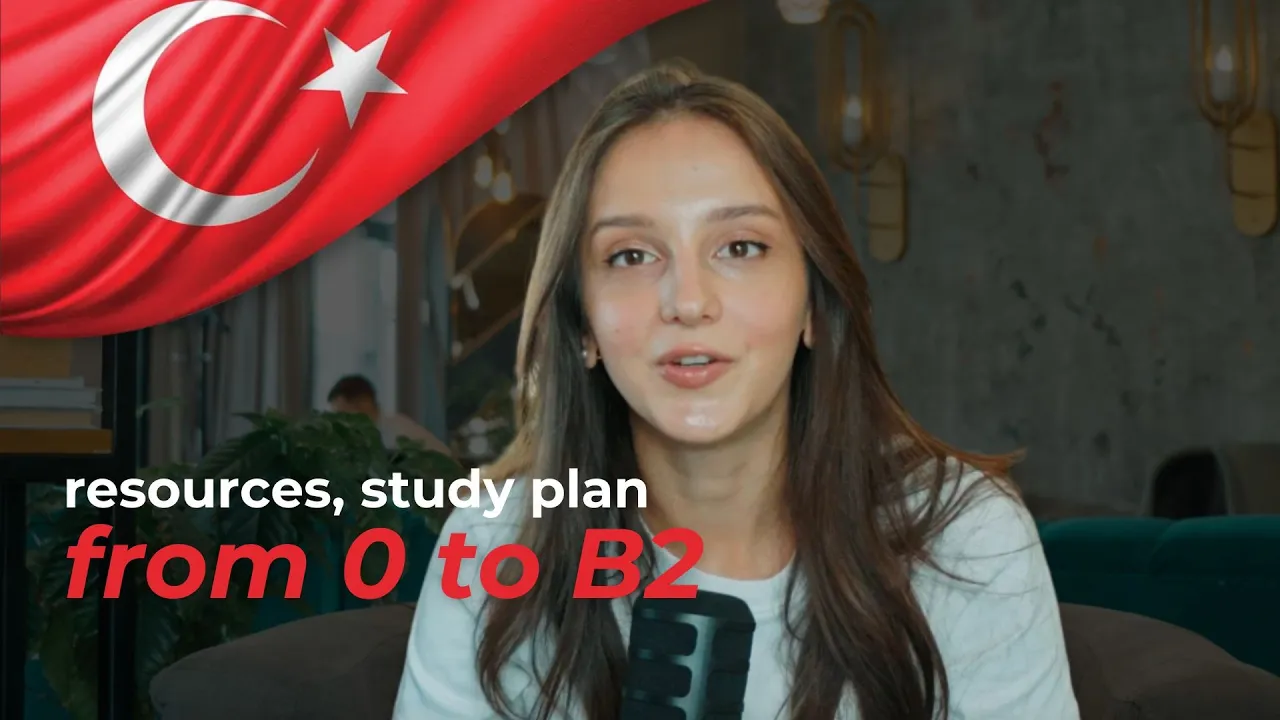
Saniiat · @saniiat.shamkhalova
Where viewers went back to watch this video again, from YouTube's public Most replayed graph, lined up with what was said at that moment.
Most replayed moment #1
11:314.4x the video's typical replay level
starting. If you're already an intermediate or advanced uh, learner, I suggest watching YouTube channels about daily life in Turkish. It's one of the best ways to hear how people actually speak. So, here are some of my favorites. So, this one, it's a very
Said at 11:23
Most replayed moment #2
9:514.3x the video's typical replay level
used. So this and this way you learn grammar structures, different collocations without needing to translate every time. So instead of just writing faretme, you can write something like sonet. During that journey from B1 to
Said at 9:45
Most replayed moment #3
2:004.3x the video's typical replay level
films and I would pause the video and repeat the lines out loud, copying the pronunciation and intonation as closely as I could. Oh, one more interesting thing I noticed is that many non-native speakers
Said at 1:53
The graph counts replays. It does not show where viewers stopped watching.
Words
2,551
Runtime
16:40
Speaking pace
153wpm
Reading time
11min
153 words per minute, below the 160 25th percentile of 349 measured videos. That distribution comes from the 349-video hook study.
Opening (first 30 seconds)
Hi everyone. Normally I record my videos in Russian, but now I've decided to make them in English as well. Today I want to share with you how I learned Turkish from scratch from zero to B2 level. Now let me tell you about myself. I'm a linguist and a language teacher. At university I specialized in French and English. And now I am learning Turkish, Spanish, and Arabic. I'm a bilingual speaker and I've always been
77 words, the words spoken in the first 30 seconds at 153 words per minute.
Free, no signup. See how the first 30 seconds hold attention, with rewrites.
Sentence shape
What this transcript is
Every word below is the caption track YouTube publishes for this video, pulled from the video itself and reproduced unchanged. It is not Prepublish's writing, not a summary, and not a re-transcription: it is the video's own published captions. English captions, generated automatically by YouTube, in the video’s original language. Source: the video on YouTube. A channel that would rather this page did not exist can ask for its removal through the contact page, and it is removed.
Hi everyone. Normally I record my videos in Russian, but now I've decided to make them in English as well. Today I want to share with you how I learned Turkish from scratch from zero to B2 level. Now let me tell you about myself. I'm a linguist and a language teacher. At university I specialized in French and English. And now I am learning Turkish, Spanish, and Arabic. I'm a bilingual speaker and I've always been passionate about how languages work.
And my native languages are not related to Turkish at all. So they don't belong to the same family, language family. So I was starting from absolutely zero in terms of structure, grammar, even the sounds. If you are just starting to learn Turkish, the very first step is to learn Turkish alphabet. And here's something interesting. Turkish actually used to be written in the Arabic script until Mustafa Kimal Ataturk, the founder of modern Turkey, made a bold reform in 1928.
He introduced a completely new latinbased alphabet designed to make reading and writing more accessible for the public. The modern Turkish alphabet has 29 letters and it looks similar to English, but there are some unique letters. For example, this letter is pronounced as ch. This letter is pronounced as sh. This letter is not pronounced but it stretches the vowel before it. These are familiar to speakers of German and French.
U also Turkish alphabet doesn't have Q, W and X. One of the best things in Turkish is that it's phonetic. You pronounce words exactly as they are reading. No weird English spelling rules like though, night, thought, etc. Once you know the alphabet, reading becomes super easy. For my pronunciation, I used a technique called shadowing. I would watch Turkish films and I would pause the video and repeat the lines out loud, copying the pronunciation and intonation as closely as I could.
Oh, one more interesting thing I noticed is that many non-native speakers struggle with the letter U. But for me it was actually easy because in Russian one of my native languages have a very similar sound. So I didn't struggle with it. For example K sak. So my journey from A1 to A2 in Turkish. I used a very popular textbook called Istanbul. It gives a really solid foundation with everyday topics, dialects, grammar and listening exercises.
At the same time, I decided to try individual lessons for about a month. And during this time, I focused on building a basic foundation. I learned some essential vocabulary and I finally started to understand how, for example, present tense works in in Turkish. But then my teacher went on a maternity leave and I decided, okay, maybe that's enough for now. It was for about a year. I didn't really study but I was still living in Istanbul surrounded by the language and I could say basic words some basic phrases like uh greet people thanks them I could count so I could say some survival phrases I don't understand Turkish bun how much is that and salsa left right so I could survive but it was really hard now my journey from A2 to B1.
After reaching A2 by myself with the help of shadowing technique, some exposure, I realized I wanted to take my Turkish more seriously. And one of the things that really pushed me to reach a good level of Turkish was dramas. Because when you live in Istanbul, especially if you take public transport, you'll notice that people argue, that people something goes wrong and someone gets offended. And I would just sit there thinking, "Wait, what's happening?
What did they say? Why are they yelling? What are they yelling?" I couldn't understand a single word that drove me crazy. Not in a bad way, but in a curious way. That curiosity was honestly one of my biggest motivations that time because living in a city like Istanbul and not understanding the people around you makes you feel disconnected and it feels like you're missing out. So I decided to go all in and enrolled to an intensive course to a school known for its academic approach connection to Ankara University.
At first I studied at Kadikuri and I had lessons every day almost every day 5 days a week uh 3 4 hours a day. I would wake up early, travel across the city to Kadiko, which is was quite far from my home and spend my mornings fully immersed in Turkish. [Music] Around 100 p.m. I would finally head back home and still reviewing what I had learned in Quizlet. Later, I transferred to Bashiktach and there I felt the group was even stronger.
What I really appreciated about Tamare is that the entire program was in Turkish only only in Turkish. No English, no Russian, no other languages. And for me that was a huge advantage because I know that some people might find it difficult or even frustrating. But I personally love full immersion when everything is explained in the target language from from day one. It pushes you to stop translating in your head and start thinking in that language in the target language that you are learning.
Of course, I still refer to Russian explanations sometimes, especially when something was really unclear at the beginning, but overall I tried hard not to rely on translations and I think that made my progress much faster. At Turmeric, we used the heated books which I found much more deep than the Eastern Bull series I had started with and the structure of this course was very intense. We covered complex grammar in depth and trust me Turkish grammar is is really challenging.
Uh but also we practiced speaking every day through questions, through dialects, discussions. So, we learned lots of new vocabulary and we read we read interesting texts and of course there were lots of lots of exercises to do at home. I did homework every day. I wrote down all the new words during class, added them to Quizlet and that daily habit really helped me memorize vocabulary quickly and effectively. In addition to the classes, two websites were super helpful for me. on this side explains Turkish grammar rules in Russian in my native language and it helped me doublech checkck my understanding after class especially since everything in Turmeric was in Turkish.
Another source, another website is great for extra practice grammar, vocabulary, dialects, it's not in Russian, so you can go and use it and I used it a lot and with this kind of intensive schedule it's honestly impossible not to progress. So in just two months I went from A2 to B1 and I successfully passed the final exam to move on to the next level. My journey from B1 to B2 in Turkish. After passing this B1 exam, I continued studying at Tomera.
I was fully committed to reaching a solid B2 level. So I decided to to continue. The B1 B2 course uh lasted about 3 months with the same intensive format. So 5 days a week uh 3 4 hours a day and total immersion in Turkish. Every single class, every explanation, every activity was in the target language and that was amazing for me. What made this period even more interesting was the diversity of the group because there were usually six eight people in the group and we all came from different countries like there were people from China, South Korea, France, Italy and and more.
All this time I did my homework, practiced on the way home and in the end I passed another exam, officially completed the B1 level and I received my certificate confirming that I had finished the full course and moved on to B2. So now I can proudly say that my Turkish level is B2 and it's confirmed. It wasn't always easy, but it was absolutely worth it and I recommend to take a course even in a group. By the way, in one of my previous videos, it's in Russian, by the way, but you can watch it with subtitles, I shared some of my favorite tips on how to learn a language effectively.
And one of the key techniques I talked about, especially for intermediate and advanced levels, is how I write down new words. So, I don't just write the word and its translation. Instead, I always write it down in context, in a full sentence. Sometimes I create my own sentences. Sometimes I take an example from a textbook uh but I always see it in a collocation in a context and I always can guess the meaning just based on this context.
Why is that more effective? Because your brain remembers stories and patterns not isolated words. And when you see a word in action you understand how it's really used. So this and this way you learn grammar structures, different collocations without needing to translate every time. So instead of just writing faretme, you can write something like sonet. During that journey from B1 to B2, I also started recording videos in Turkish for my blog.
I filmed unboxing, sharing thoughts, uh spoke directly to the camera, all in Turkish. And honestly, that helped me a lot. It helped me to open up, express myself and most importantly, it helped me practice speaking without being afraid of my accent. Of course, I knew that sometimes I might say something wrong. But I still posted the videos because of if you're always waiting for the perfect moment for the perfect speech, you'll never speak at all.
So, one of the most important lessons I learned was don't be afraid of making mistakes. Just speak. And, you know, people were really supportive. I got messages from native speakers saying like things like, "Wow, your Turkish is great and it's so inspiring that you're learning our language." So, they were really supportive and it motivated me to move on. So, some channels, some videos that I recommend you to watch. Uh, if you are a beginner, I highly recommend starting with a channel called Turkish League.
Turkish, sorry. They explain grammar, basic vocabulary, and sentence structures in a very clear and simple way. Uh, perfect if you're just starting. If you're already an intermediate or advanced uh, learner, I suggest watching YouTube channels about daily life in Turkish. It's one of the best ways to hear how people actually speak. So, here are some of my favorites. So, this one, it's a very natural and calm style, real life situations, lots of everyday Turkish, and this one is super entertaining, lots of fun social experiments, and one more where the speaker interviews people in the streets as well and gives you a real taste of authentic spoken Turkish.
I also watched a couple of Turkish series and honestly they help helped me a lot with listening and picking up common expressions. One show I really enjoyed was Kazuljik Sherbeti. It had grammar, real life conversations and lots of everyday language that you actually hear in Turkey. Even if you don't understand everything what they're saying, it helps your ears to get used to the rhythm of the language. So it's good.
Anyway, another one I started was yellow chop, but to be honest, I didn't finish it because the plot became a bit too unrealistic and strange. I would say I just lost interest, but still in the beginning it was really useful. So, in general, Turkish dramas are a great way to learn and they're usually not too difficult, not too hard to follow, especially for for A2 B1 levels. And the language is clear mostly. I mean in some common dramas.
One of my favorite apps for learning not only Turkish but different languages. It's language reactor. I absolutely love it for you know it's it's not an app. It's a browser extension but it's a website as well. So that works with YouTube and Netflix. It helps you to watch anything with dual dual subtitles. You can see both Turkish and your native language. It's perfect for improving listening skills and understanding real life speech.
And um while watching you can click on any word for instant translation or pronunciation practice and you will get a definition part like which part of of the speech it is and how it's used. So you don't need to pause and Google anything. You can just do it straight away. And you can save this words and then practice them later. So, it has like a built-in word list and you can export it and then add it to Quizlet or Ani wherever you you you learn, you drill your vocabulary.
Another website that will help you at a high level of Turkish is TRT. I really recommend watching content on this website because it's it's a Turkish national public broadcaster. So, the pronunciation is standard. It's professional. So it makes you which makes it easier to understand than casual YouTube uh native speakers channels which is which are full of slang and fast speech. But here in TRT the speech is slower and it's more like professional more advanced I would say and there will be a lot of news related terms a lot of complex sentence structures.
It's perfect for learners who want to go beyond everyday phrases. Lately, I've started reading books in Turkish. And I'll be honest, it's not easy at all. Even though I am at a B2 level now, I still find it difficult sometimes to understand the words in such books because the language is often more literary and formal than everyday speech. So there are lots of idiomatic expressions, unusual verb forms, and sometimes sentence structures that I don't hear in real life or on TV in in films, but I still try even if I don't understand every single word because reading helps me get used to reading Turkish.
Um, it helps me expand my vocabulary and feel more comfortable with the style and rhythm of the language. So it helps me not to forget what I have studied before. And I usually underline new words and try to guess um the meaning from the context and look up the most important ones. So I don't translate every single word. And yeah, it's challenging but still helpful. So learning Turkish opened up a whole new world for me, not just in terms of vocabulary, but also culture, humor, how people express their emotions.
And now I'm at a B2 level and I still continue practicing and learning every day because Turkish has truly become a part of my daily life. So if you're thinking about learning Turkish or any language that feels totally different, just know it's 100% possible and actually it can be really, really fun. By the way, I've created a step-by-step plan for learning Turkish from scratch on your own. You can download it using the link in the comments below.
And if you found this video useful, don't forget to like, share it with others, and of course, subscribe for more language content. Thanks for watching and see
The words are the caption track's own and nothing is reworded or re-transcribed. Paragraph breaks are placed between sentences so the text reads as prose.
Free tools for your own script. No signup, no login.
Paste your draft and see where viewers are likely to drop off, with a rewrite for each weak line.
Paste the first 30 seconds of your own draft for a hook score and rewrites.
Check your draft against YouTube's advertiser-friendly guidelines before you record it.
Read this channel's public videos and transcripts, and download a writing brief for it.
| Measure | This transcript |
|---|---|
| Sentences | 160 |
| Average words per sentence | 15.9 |
| Longest sentence | 69 words |
| Questions asked | 5 |
| Sentences containing a number | 21 |
Most used terms
Filler phrases
36 in total: like 12 · uh 11 · actually 5 · um 3 · you know 3 · I mean 1 · kind of 1.
A literal whole-word count of the same phrase list the Prepublish browser extension uses, so a phrase inside another word is not counted and a phrase used in its ordinary sense still is. It is a count and not a judgement.