Getting the transcript
Reading the captions from YouTube. A video nobody has opened here before takes 10 to 30 seconds; this page fills in on its own.
Getting the transcript
Reading the captions from YouTube. A video nobody has opened here before takes 10 to 30 seconds; this page fills in on its own.
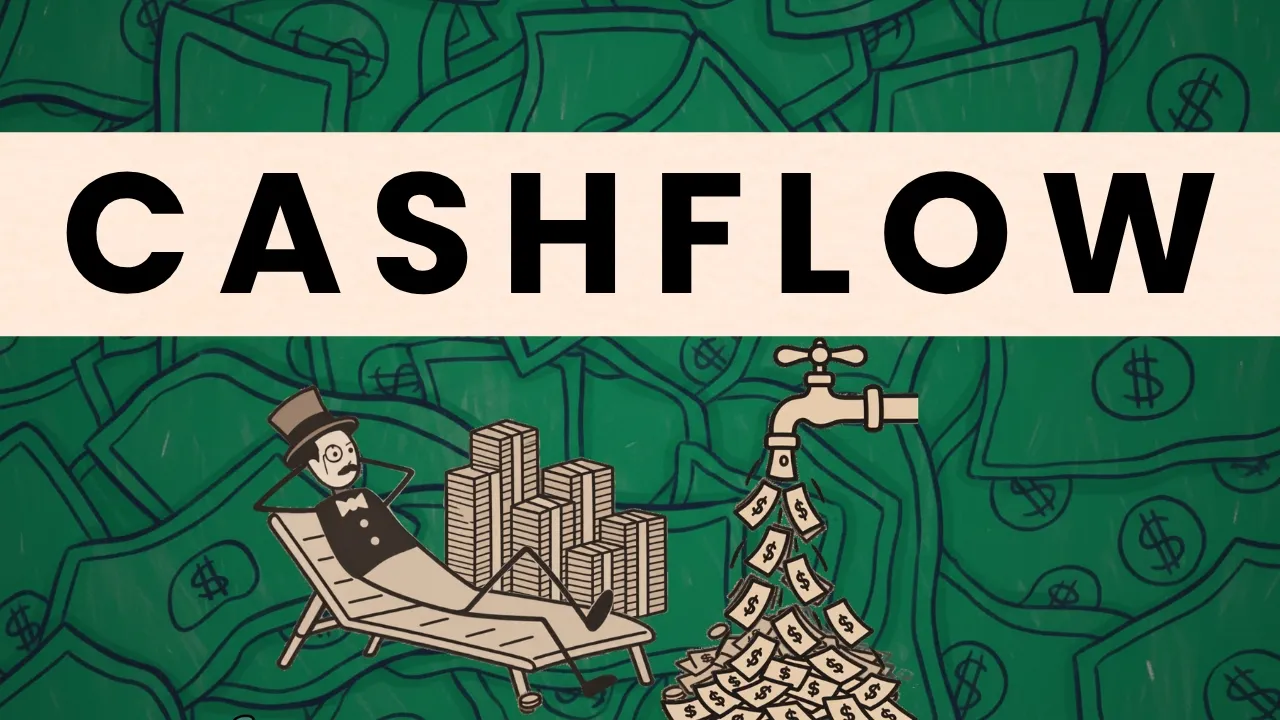
LITTLE BIT BETTER · @littlebitbetter7
Where viewers went back to watch this video again, from YouTube's public Most replayed graph, lined up with what was said at that moment.
Most replayed moment #1
21:297.6x the video's typical replay level
money in real estate, stocks, commodities, businesses. An unskilled investor loses money in all of them. The investment doesn't determine the outcome, the investor does. There are five levels of investors. See if you can recognize yourself.
Said at 21:23
Most replayed moment #2
15:565.3x the video's typical replay level
inexperienced always make. You would never say, "I'll just figure it out on the way up." But when it comes to money, business, starting a YouTube channel, that is exactly what most of us do. I know it
Said at 15:49
Most replayed moment #3
11:074.1x the video's typical replay level
Borrowed money is not income. So, it's not taxable. The interest he pays on that loan is tax deductible, so it actually reduces his taxable income. The company he just bought produces profits, but those profits get
Said at 11:00
The graph counts replays. It does not show where viewers stopped watching.
Words
3,707
Runtime
25:17
Speaking pace
147wpm
Reading time
15min
147 words per minute, below the 160 25th percentile of 349 measured videos. That distribution comes from the 349-video hook study.
Opening (first 30 seconds)
There are only four ways to make money in this world. Employee, self-employed, business owner, investor. And the one you're in decides whether you build wealth or spend your life chasing it. Today I'm going to show you which one you're in, why you're stuck there, and how to cross over to the side that builds wealth. I learned this framework back in August 2017 from a book called Cashflow Quadrant. But before we
74 words, the words spoken in the first 30 seconds at 147 words per minute.
Free, no signup. See how the first 30 seconds hold attention, with rewrites.
Sentence shape
| Measure | This transcript |
|---|---|
| Sentences | 387 |
| Average words per sentence | 9.6 |
| Longest sentence | 31 words |
| Questions asked | 25 |
| Sentences containing a number | 24 |
Most used terms
Filler phrases
15 in total: like 9 · actually 2 · you know 2 · I mean 1 · kind of 1.
A literal whole-word count of the same phrase list the Prepublish browser extension uses, so a phrase inside another word is not counted and a phrase used in its ordinary sense still is. It is a count and not a judgement.
What this transcript is
Every word below is the caption track YouTube publishes for this video, pulled from the video itself and reproduced unchanged. It is not Prepublish's writing, not a summary, and not a re-transcription: it is the video's own published captions. English captions, generated automatically by YouTube, in the video’s original language. Source: the video on YouTube. A channel that would rather this page did not exist can ask for its removal through the contact page, and it is removed.
There are only four ways to make money in this world. Employee, self-employed, business owner, investor. And the one you're in decides whether you build wealth or spend your life chasing it. Today I'm going to show you which one you're in, why you're stuck there, and how to cross over to the side that builds wealth. I learned this framework back in August 2017 from a book called Cashflow Quadrant. But before we break down the four quadrants, one story first.
Because once you get this story, the quadrants explain themselves. Two guys, Ed and Bill, live in a small village that has no water. The elders decide to hire them to solve this problem. The first guy, Ed, immediately runs out, buys two buckets, and starts carrying water from the lake every single day. Morning to sunset. Hard work, good money, the village is happy. Ed is happy. The second guy, Bill, disappears for months.
Nobody sees him. Ed is thrilled. No competition. But then, Bill comes back with a construction crew. And they build a pipeline directly from the lake to the village. Bill's water is cleaner, it runs 24 hours a day, 7 days a week, and it costs 85% less than Ed's water. The village immediately switches. Ed panics, buys more buckets, hires his sons, works nights and weekends. But you cannot compete with a pipeline using buckets.
Meanwhile, Bill takes his pipeline to other villages, then cities, then countries. He earns a penny from every bucket delivered, but billions of buckets are delivered every day. He earns money while he sleeps, while he's on vacation, while he's at dinner with his family. Ed works hard his entire life and dies with financial problems. Bill builds once and earns forever. Here is the question to ask yourself now. Am I building a pipeline or am I carrying buckets?
Your job is a bucket. Your salary is a bucket and there's nothing wrong with buckets. We all need them to survive. And let me be open with you. I used to hate my buckets. When I started reading books like this, I would come home from my 9-5 job and feel angry. Angry at my job, angry at my boss. I thought my job was the thing standing between me and success. I thought if I could just quit tomorrow, everything would change magically.
I was wrong. My job was not the problem. It was feeding me while I built my pipeline. My salary paid for the rent so I had a roof over my head while I figured things out. So, if you are carrying a bucket right now, listen carefully. Don't hate it. Your bucket is not your enemy. It's buying you the time to build your pipeline. But remember this, a bucket will never make you free. No matter how heavy the bucket is, no matter how fast or how many you carry.
Because the moment you stop carrying, the water stops. So, carry your bucket with gratitude. Then go home and build your pipeline. That's lesson one for you. Now, here comes the most important question. Where do you build it? And to answer that, we need to understand the cash flow quadrant. It is a simple drawing. Two lines, four boxes. One for each type. On the left side you have the employee and the self-employed. And on the right, the business owner and the investor.
Each quadrant is like a different country. They have their own language, culture, and values. People in each one are motivated by completely different things. Let me show you what I mean. Employee. Picture a software engineer at Google or a marketing manager. High-skill, respected career. The employee trades time for a paycheck. And what they value most is security. A steady salary, benefits, a predictable life. Listen to an employee for 5 minutes and you'll hear it.
They say things like, "I'm looking for a safe job with good pay and great benefits." Or, "I just want something stable." If you've ever said those words out loud or in your head, you're in this quadrant. And look, being an employee is not a bad thing. It's honest work. Many E's are brilliant, hard-working people. I was an employee for years. So, I'm not looking down on this quadrant. I know what it feels like. But, the problem is your entire income depends on one source.
One job, one employer, one decision made by someone else. If that disappears, your income disappears with it. Now, let's talk about the hard part. Taxes. An employee in most Western countries pays somewhere between 35% and 50% of their income in taxes once you add income tax, social security, and health care. And the cruel part is the government has already taken its cut before the employee gets to spend a dollar. The employee earns, gets taxed, spends what's left.
Let's move to the second quadrant. Self-employed. A lot of people realize the employee problem, so they make a move. They leave the job, go self-employed, become their own boss. And on paper, it sounds like freedom. No more boss, no more being told what to do. They don't realize they just walked from one trap into a bigger one. Because as an employee, they had one job. Now they have 10 different jobs they have no idea how to do.
Invoicing, marketing, selling, accounting, and operations. Picture the average freelancer. The doctor with their own practice, the shop owner, the consultant. Working harder than ever. Earning well, maybe, but exhausted because everything still depends on them. This is Ed, the bucket man of our first story. Listen to a self-employed person and you'll hear the common line, "If you want it done right, do it yourself." Or, "Nobody else does it better than me." Or, "I can't find good people." The moment you truly believe nobody does it better than you, you can never step away.
You can never scale. You become the business, and the business can never grow bigger than you. The dentist who goes on vacation also sends his income on vacation. Self-employed people often work way more hours than employees, and pay roughly the same in taxes. Depending on your country, 30 to 50% when you add it all up. Similar to employees, when a self-employed person stops showing up, the money stops, too. Business owner.
Picture Elon Musk, Jeff Bezos, the guy who owns 12 car washes in your city. They are the business owners. The business owner doesn't own a job, they own a system. And that system has people running it for them. A true business owner can leave their business for a year, come back, and find it more profitable than when they left. They don't do the work themselves. They build the machine that does the work. Listen to a real business owner and you'll hear a completely different kind of language.
Yeah, I'm looking for a president to run my company. Or we need to build a better supply chain for that. Or who can I hire to handle this? Notice how none of those sentences have the word I doing the work. That's the shift. That's the whole game. So, ask yourself one question. If I stopped working tomorrow, will my income stop, too? If yes, you're still in the S quadrant, no matter what your business card says. A real business runs without you.
In our first story, this is Bill, who built the pipeline. The business owner also has a secret weapon, something called OPT, other people's time. You and I have 24 hours in a day. A business owner with 20 employees has 20 times of that. That's how the right side scales past what anyone person can do alone. And the taxes are even more interesting. A business owner can legally pay 15% to 25%, sometimes less. Not because they're cheating, because the tax code is written for them.
The secret is that businesses don't pay tax on what they earn. They pay tax on what's left after expenses. Earn, spend, pay tax. Compare that to the employee. Earn, pay tax, spend. Same country, same laws, completely different order. Investor. Now, picture Warren Buffett or a real estate investor who owns 50 rental properties. The investor makes money with money. Everyone else earns through effort or systems. Investors earn through ownership.
Listen to a real investor and you'll hear something that sounds almost like another language. What's my cash flow on that? Or what's the ROI? Or is that income or capital gains? The investors have their own secret weapon. OPM. Other people's money. They use the bank's money, other people's savings, to buy assets that generate returns. They profit from money they never earned. Now, let me show you how absurd this gets with taxes.
Because a real investor can pay 0% in taxes. Let me walk you through how. Say Warren Buffett decides to buy a big company. Does he write a check from his own bank account? No. He goes to a bank, borrows the money, buys the company with the bank's cash. Now, pay close attention to what just happened. Borrowed money is not income. So, it's not taxable. The interest he pays on that loan is tax deductible, so it actually reduces his taxable income.
The company he just bought produces profits, but those profits get reinvested, spent on growth, used to buy more assets. By the time anyone calculates taxable income, there's almost nothing left to tax. Meanwhile, the company grows. His ownership stake grows. He's getting richer every single year without ever triggering a single tax bill. And when he needs cash to live on, he doesn't sell his stock. Selling would mean paying capital gains tax.
Instead, he borrows against his assets. More debt, which is not income and because of that it's not taxable. They earn, then spend on acquiring income generating assets. Then borrow to live their lifestyle. Pay almost no taxes. Let that sink in. An employee working 60 hours a week as a surgeon pays 45% in taxes. An investor who never goes to an office can legally pay close to zero. Same country, same laws, completely different game.
The tax code isn't broken. It's doing exactly what it was designed to do. Because governments need people to take risks, start businesses, hire workers, invest capital. An employee doesn't take those risks. So, the government rewards the people who take the risks with lower taxes and incentives. Remember our first bucket versus pipeline story? If Bill was the businessman, someone who gave him money to hire construction workers and buy pipes is the investor in his business.
So, now you know the map. You know which side you want to be on. But, knowing where to go isn't the same as getting there. Because moving from the left side to the right is not a small change. It's a full rewiring of your habits, your beliefs, your language, and your identity. It's one of the hardest things you will ever do in your life. So, to make it easier, let me share seven strategies that I wish someone had given to me 10 years ago.
Number one, stop buying liabilities. Your house is your bank's investment, not yours. Open two balance sheets side by side, yours and your bank's. Your mortgage sits in your liability column. The exact same mortgage sits in your bank's asset column. You're the employee, they're the owner. And this isn't just about your mortgage, this is the game of capitalism. Who is indebted to whom? The more people indebted to you, the wealthier you are.
The more people you are indebted to, the poorer you are. Every mortgage, every car loan, every credit card balance, every one of them makes you someone's employee. So, how do you flip it? How do you stop being the employee and start being the owner? You stop buying things that take money from you and start buying things that pay you. The first kind is a liability. The second is an asset. That's the entire game. So simple that most people refuse to believe it.
I know that some of you are thinking, "I don't have money for a rental property." Good, you don't need one. A YouTube video that earns you $50 a month, that's an asset. A book, an online course, a dividend stock, a small share in someone else's business. Real estate is one asset. It's not the only one. And it's definitely not the one you should start with. So, look at every monthly payment leaving your account right now.
Every single one is a piece of you being rented out to make someone else rich. Your job now is to flip the equation. Spend your money on something that pays you over time, not on something that takes more money from your pocket. That's how you move from the left side to the right side of the quadrant. Number two, find a mentor. A mentor is someone sitting at the top of the mountain eating oranges while you're still at the bottom scratching your head trying to figure out how to get up there.
If you decided tomorrow you wanted to climb Mount Everest, what would you do first? You'd find someone who has already climbed it. Someone who knows which routes are dangerous, which weather patterns kill people, which mistakes the inexperienced always make. You would never say, "I'll just figure it out on the way up." But when it comes to money, business, starting a YouTube channel, that is exactly what most of us do.
I know it because I did it. I wasted almost 3 years trying to be successful on YouTube. I made every dumb mistake you can imagine. Mistakes I could have easily avoided if I had just put my ego aside and asked for help. Olympic athletes are the best in the world at what they do. And still, every single one of them has a coach. Think about that. The people who are already the best have coaches. The people who've never started a business think they can figure it out alone.
That's the whole problem. This is why these days I have no problem paying $1,000 for 1 hour of consultation. I'm buying back years of my life. I'm buying every mistake they already paid for. I'm buying the shortcut. So, stop trying to climb the mountain alone. Find someone who's already at the top. Pay them. Learn from them. And if your mountain is building a YouTube channel, you can reach out to me for consultation.
I've already paid for those mistakes. Link is in the description. Okay, now that my shameless self-promotion is over, let's get to the next one. Number three, escape the lifestyle trap. Before you can build anything, you need to stop digging the hole deeper. There's a trap most people never see because they're living inside it. It goes like this. You go to school, get a job, start earning. Suddenly, you can afford things you couldn't before.
An apartment, a car. Then you meet someone, fall in love, get married. You take a mortgage and buy a house. Then the child arrives. And now you absolutely cannot afford to lose your job. So, you work harder, get promoted, get a raise. And one day, it hits you. The more successful you become, the more trapped you are. Every raise brings higher taxes. Every promotion brings less time. Every upgrade to your lifestyle brings more bills.
The trap gets tighter the more successful you become. And the scariest part is, this feels completely normal. Because everyone around you is doing the exact same thing. So, the next time you get a raise, before you upgrade anything, ask yourself one question. Am I making my life better? Or, am I making my cage bigger? Because every dollar you spend to a bigger lifestyle is a dollar that can't go toward your freedom. Number four, win the emotional battle.
Money is a drug. When you receive money in a certain way, as a salary, as a freelance payment, you get wired to that way. Your nervous system gets addicted to it. And when you try to change, the part of you addicted to the old way fights back hard. It feels like cutting off oxygen. This is why changing quadrants is so emotionally difficult, even for people who completely understand it intellectually. The rational brain knows exactly what to do.
The emotional brain won't let you do it. In moments of high emotion, the emotional brain is 24 times more powerful than the rational brain. That's why they say financial IQ is 90% emotional IQ. So, here's what to do. Next time you feel that resistance, don't fight it. Just notice it and keep moving anyway. The discomfort isn't a bad sign. It means you're changing. So, when it shows up, don't run from it. Name it. This is just the old me fighting back.
Then keep going. Number five, build systems, not products. Let me ask you something. Can you make a better hamburger than McDonald's? Fresh ingredients, quality beef, good bread. Almost everyone says yes. Now, can you build a better business system than McDonald's? That's where most people go silent. This is the trap that kills most entrepreneurs before they even start. They fall in love with their product, spend years perfecting it, and then wonder why they're not growing.
Wealth is not built in products. Wealth is built in systems. Next time you go to McDonald's, don't look at the burger. Look at the trucks delivering the ingredients, the training manual that teaches every new employee to say the same words in every country. That is the business. The burger is just the excuse to build it. So, whatever you're building, ask yourself, am I building a product or am I building a system? Fall in love with the machine that makes the burger, not just the burger itself.
If it can't run without you, you don't have a business. You have a job. Number six, become a level four investor. People always ask, is real estate a good investment? Are stocks good? Is gold good?" And the answer is always the same. "I don't know. Are you a good investor?" Because the asset class is almost irrelevant. A skilled investor makes money in real estate, stocks, commodities, businesses. An unskilled investor loses money in all of them.
The investment doesn't determine the outcome, the investor does. There are five levels of investors. See if you can recognize yourself. The first three levels are where most people live. Level one spends more than they earn. Level two only saves and loses to inflation every year without realizing. Level three hands their money to an expert, hopes for the best, and blames the expert when it goes wrong. The real investor starts at level four, the professional.
The professional takes control, educates themselves, manages their own money, makes mistakes, learns from them, gets smarter. Level five, the capitalist, uses other people's money to build assets, has teams, thinks bigger, creates value rather than just captures it. Most so-called investors are on level three, and then they want to become capitalist. Anyone who jumps from level three to level five is gambling, not investing.
Because if you haven't learned to manage your own money yet, what do you think happens when you start playing with someone else's? You don't just lose your money, you lose theirs, too. So, get to level four. Start making your mistakes right now with your own money. Small mistakes, painful enough to learn from, small enough that they don't destroy you. Because the investor you become at level four is the only reason you'll ever survive at level five.
Number seven, when you actually build wealth. The only difference between a rich person and a poor person is what they do in their spare time. Not their salary or education. Their spare time. I know what some of you are thinking right now. I have a 9-5. When exactly am I supposed to do anything extra? Most people think the only way to build wealth is to quit their job, take a massive risk, and bet their family's future on an idea.
That's not true. Think about it. Two people work the same 9-5, same office, same paycheck, same 40 hours a week. But, what happens in the 14 hours a day they're not at work? That's where the lives split. One of them comes home, opens a beer, scrolls on their phone, and goes to bed. The other comes home, watches a YouTube video on real estate, sends three emails about a side business they're building, and reads for 20 minutes before bed.
Fast forward five years, same job, same paycheck, completely different lives. Your boss's job is not to make you rich. Your boss's job is to make sure you get your paycheck. Your job is to make yourself rich. When you're at work, work hard. Give them everything. That's the deal you signed. But, your future doesn't get built at work. It gets built in the hours around work. Before the work, after the work, on the weekends when everyone else is wasting time.
If you work hard on the left side, you work hard forever. If you work hard on the right side, in those small pockets of time around your job, you have a chance of never needing that job again. So, stop thinking of your day as work and rest. Start thinking of it as three parts. The hours that pay the bills, the hours that build the future, and the hours that recover you for both. If you don't have the second category, you're not building anything.
That's it for this video. If you want to see more book summaries like this one, I will put two videos on the screen for you. Increasing your financial IQ and Rich Dad, Poor Dad. Thanks for watching.
The words are the caption track's own and nothing is reworded or re-transcribed. Paragraph breaks are placed between sentences so the text reads as prose.
Free tools for your own script. No signup, no login.
Paste your draft and see where viewers are likely to drop off, with a rewrite for each weak line.
Paste the first 30 seconds of your own draft for a hook score and rewrites.
Check your draft against YouTube's advertiser-friendly guidelines before you record it.
Read this channel's public videos and transcripts, and download a writing brief for it.