Getting the transcript
Reading the captions from YouTube. A video nobody has opened here before takes 10 to 30 seconds; this page fills in on its own.
Getting the transcript
Reading the captions from YouTube. A video nobody has opened here before takes 10 to 30 seconds; this page fills in on its own.
Epic History · @EpichistoryTv
Where viewers went back to watch this video again, from YouTube's public Most replayed graph, lined up with what was said at that moment.
Most replayed moment #1
27:3814.8x the video's typical replay level
Join us for the next part of Napoleon’s Marshals as we reveal our top 6 … coming soon. Thank you to Napoleon-Souvenirs.com for sponsoring this video, and of course, thanks to our Patreon supporters for making Epic History TV possible.
Said at 27:32
Most replayed moment #2
18:374.5x the video's typical replay level
too rare among Napoleon’s Marshals. 7. Marshal Masséna André Masséna was born in Nice, at that time not technically part of France, but of
Said at 18:33
Most replayed moment #3
2:324.4x the video's typical replay level
Vive l’Empereur! And thank you to Napoleon-Souvenirs.com for sponsoring this video. 9. Marshal Bessières
Said at 2:26
The graph counts replays. It does not show where viewers stopped watching.
Words
3,549
Runtime
28:12
Speaking pace
126wpm
Reading time
15min
126 words per minute, below the 160 25th percentile of 349 measured videos. That distribution comes from the 349-video hook study.
Opening (first 30 seconds)
“Terror belli… decus pacis.” Terror in war… ornament in peace… The words inscribed on every French Marshal’s baton. In France, the title of Marshal, or Maréchal, goes back at least to the 13th century. It represents the highest possible position of military authority – authority symbolised by a marshal’s baton. The title was abolished during the French Revolution, as incompatible with the egalitarian
63 words, the words spoken in the first 30 seconds at 126 words per minute.
Free, no signup. See how the first 30 seconds hold attention, with rewrites.
Sentence shape
| Measure | This transcript |
|---|---|
| Sentences | 204 |
| Average words per sentence | 17.4 |
| Longest sentence | 47 words |
| Questions asked | 1 |
| Sentences containing a number | 41 |
Most used terms
Filler phrases
1 in total: like 1.
A literal whole-word count of the same phrase list the Prepublish browser extension uses, so a phrase inside another word is not counted and a phrase used in its ordinary sense still is. It is a count and not a judgement.
What this transcript is
Every word below is the caption track YouTube publishes for this video, pulled from the video itself and reproduced unchanged. It is not Prepublish's writing, not a summary, and not a re-transcription: it is the video's own published captions. English captions, published by the channel, in the video’s original language. Source: the video on YouTube. A channel that would rather this page did not exist can ask for its removal through the contact page, and it is removed.
“Terror belli… decus pacis.” Terror in war… ornament in peace… The words inscribed on every French Marshal’s baton. In France, the title of Marshal, or Maréchal, goes back at least to the 13th century. It represents the highest possible position of military authority – authority symbolised by a marshal’s baton. The title was abolished during the French Revolution, as incompatible with the egalitarian spirit of the age.
But in 1804, Napoleon founded a new empire, and restored the ancient rank. This is Epic History TV’s guide to Napoleon’s Marshals. All 26 have been ranked according to our own evaluation of their achievements as Marshals, with expert guidance from Lieutenant Colonel Rémy Porte, former chief historian of the French Army. So far we’ve met Marshals Pérignon… Brune. Sérurier. Kellermann. Grouchy. Moncey. Poniatowksi. Jourdan.
Bernadotte. Augereau. Lefebvre. Mortier. Marmont. Saint-Cyr. Oudinot. Victor. And Murat. Who could be a more fitting video sponsor than Napoleon-Souvenirs.com, the online shop for fans of the Napoleonic era. Since 2010, the team at Napoleon-Souvenirs.com has offered the finest quality gifts and souvenirs for those who adore this dramatic period of history. No aspect of the Napoleonic era has been forgotten, with busts and statuettes of the Emperor himself… Napoleon-themed champagne… and stunning replicas of Napoleonic swords and pistols… as well as uniforms and flags of the Grande Armée and Imperial Guard… and even the baton of a Maréchal.
You can visit their online store at Napoleon-Souvenirs.com or if you’re lucky enough to be in Paris, visit the Boutique Napoleon in person. Vive l’Empereur! And thank you to Napoleon-Souvenirs.com for sponsoring this video. 9. Marshal Bessières Jean-Baptiste Bessières was the son of a surgeon, with a relatively prosperous upbringing in southwestern France. When the French Revolution began, he volunteered for the National Guard, and was sent to Paris to join the King’s Constitutional Guard, along with his old schoolfriend Joachim Murat.
This unit was soon disbanded, but Bessières remained in Paris, and was among the soldiers defending the Tuileries Palace, when it was stormed by the mob on 10th August 1792. In the aftermath, he needed to get out of Paris in a hurry. So he volunteered to fight on the Pyrenees front. His bravery and good sense won him a commission in the 22nd Chasseurs, and he distinguished himself at the Battle of Boulou. Transferred to Italy, his friendship with Murat got him noticed by the army commander General Bonaparte, who was impressed enough to make him commander of his new bodyguard, known as ‘Les Guides de Bonaparte’.
Bessières distinguished himself as a cavalry commander in Italy, and later Egypt, winning promotion to Brigadier and loyally supporting Napoleon at every turn. He became one of the few men that Napoleon regarded as a true friend. When Napoleon became First Consul of France in 1799, he rewarded Bessières with command of the elite Consular Guard cavalry – which he led with devastating effect at Marengo the next year. In 1804 Bessières became a Marshal – less for any great military achievement, than for being a loyal member of Napoleon’s inner circle.
Bessières himself was well-liked: kind, well-mannered and generous, a pious Catholic and social conservative, who liked to powder his hair in the old style. His young wife, Marie-Jeanne, was also a favourite at court, doted on by Napoleon and Empress Josephine. In 1805, Bessières commanded the Imperial Guard. In December that year, at the Battle of Austerlitz, he played a crucial role, repelling the Russian Guard at the battle’s climax.
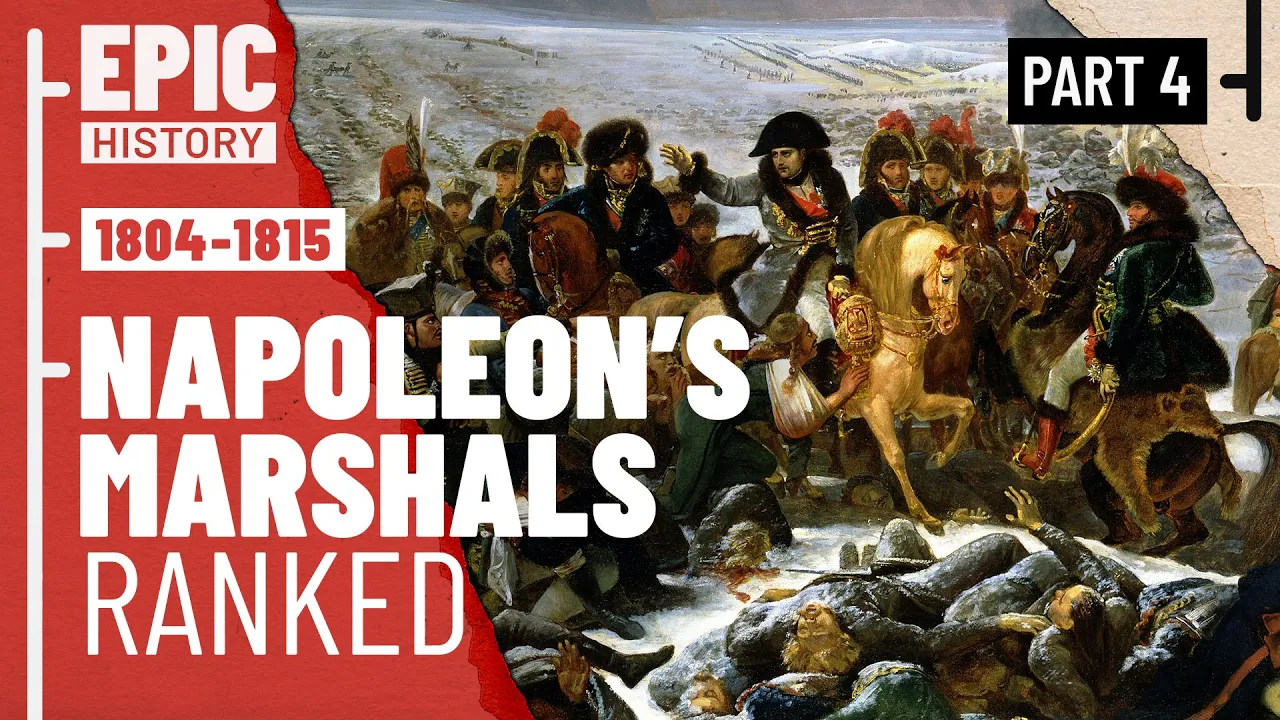
At Eylau in 1807, his squadrons supported Murat’s mass cavalry charge, and made their own disciplined attacks to cover his withdrawal. However, Bessières’ opportunities for glory were limited, as Napoleon always held the Guard back as his last reserve, as at Friedland. In 1808, Bessières received his first major independent command in northern Spain. That May, the country erupted in revolt against the French. Bessières reacted quickly and decisively, securing key towns and roads.
He then attacked Spanish forces at Medina de Rioseco, winning a crushing victory against an enemy that outnumbered him two-to-one. But once the immediate crisis had passed, he hesitated, and failed to exploit his victory. When Napoleon arrived in Spain, Bessières was given command of the Reserve Cavalry… a role he retained for the war against Austria in 1809. In May, Bessières and his cavalry were among the first across the Danube, with Masséna occupying the village of Aspern on his left, and Lannes, holding Essling on the right.
When the Austrian commander, Archduke Charles, launched a massive and unexpected counterattack, Bessières, outnumbered four-to-one, made a series of desperate charges, helping to save the army from disaster. It came at a high cost. Bessières and his cavalry performed bravely. But that night, a long-running feud with Marshal Lannes nearly came to blows, when Lannes accused Bessières of hanging back. The matter went no further, as Lannes was fatally wounded the next day.
Bessières commanded the cavalry again at Wagram, leading a major attack to cover Masséna’s redeployment to the left wing. As the charge began a cannonball killed Bessières’ horse and injured his leg. A rumour reached the Imperial Guard that Bessières was dead. Some old veterans began to weep for their old commander, until they were assured he was only wounded. “That was quite a cannonball,” Napoleon told Bessières, “It reduced my Guard to tears!” As a devout Catholic, Bessières was critical of Napoleon’s divorce from Empress Josephine, leading to a short spell out of favour.
In 1811 he was sent back to Spain to command the Army of the North. He found an impossible situation – a widespread insurgency, and insufficient troops and supplies. He wrote bluntly to Napoleon, stating that the French must give up territory… something the Emperor would never allow. For all his piety and refined manners, Bessières ordered his share of executions and reprisals in his attempt to pacify northern Spain – brutal methods used by many French commanders in this conflict.
Later that year, he joined forces with Marshal Masséna’s Army of Portugal, to take on Wellington’s army at the Battle of Fuentes de Oñoro… but was widely blamed for refusing to send in his cavalry to support Masséna’s attacks. Unfortunately for Napoleon, this was typical of how many Marshals behaved in his absence – they’d rather watch another Marshal fail, than help them to win all the glory. In 1812, Bessières accompanied Napoleon into Russia, commanding his Guard cavalry.
Since the Guard was kept in reserve, he saw little action until the retreat, when he led the advance guard, clearing a path for the survivors. The disaster in Russia left Bessières severely demoralised. But he was resolved to do his duty, now serving once more as Napoleon’s cavalry commander, in Marshal Murat’s absence. On 1st May 1813, Bessières was scouting enemy positions before the Battle of Lützen, when a cannonball hit him in the chest, killing him instantly.
His death robbed Napoleon of a dependable commander, and one of his last remaining friends. “It is surely a great loss for you and your children,“ Napoleon wrote to his widow, “but an even greater one for me." 8. Marshal Macdonald Jacques Macdonald’s father was a Scotsman who’d supported Bonnie Prince Charlie’s bid to seize the British throne in 1745. After this ended in defeat at Culloden, the family fled to France.
Inspired by tales of the Trojan War, Macdonald chose a military life, and became a lieutenant in Dillon’s Irish Regiment – a French unit made up mostly of Irish émigres. In the Revolutionary Wars, he won a reputation as a hard-working, intelligent and brave officer, and served as aide-de-camp to General Dumouriez, commanding the Army of the North. He distinguished himself in that general’s famous victory at Jemappes, paving the way for rapid promotion, from lieutenant to general in just two years.
He led his division well during campaigns in Holland and Germany, and formed a close bond with one of France’s most successful commanders of this period, General Moreau. In 1798 he was sent to Rome as governor, and later commanded the Army of Naples. Summoned north the following year to reinforce Moreau’s Army of Italy, he was nearly killed in a skirmish with Austrian cavalry; and while still suffering from his wounds, his army was defeated at the Trebbia by a larger Coalition force, commanded by the great Russian general, Suvorov.
But Macdonald’s own conduct won approval from General Bonaparte, among others. Later that year, he assisted Napoleon’s seizure of power in the Coup of 18 Brumaire, ensuring the loyalty of the troops at Versailles. He was rewarded with an army command in Switzerland, and that winter, led his men through the Alps to attack the Austrians in Italy. His march was far more challenging and dangerous than Napoleon’s, but was never immortalised in quite the same way.
In 1804, Macdonald’s former commander General Moreau was arrested and charged with involvement in a plot to assassinate Napoleon. Macdonald stood up for his friend’s reputation – an act of loyalty typical of the man… but disastrous for his career. Moreau was exiled; Macdonald was placed under police surveillance, and retired to his country estate in disgrace. Five years passed before Napoleon, desperate for experienced senior commanders, asked him to serve as military advisor to his 27-year old stepson Prince Eugène, now commanding the Army of Italy.
Macdonald and Eugène worked well together, driving back the Austrians, and by an awesome feat of marching, joined Napoleon near Vienna in time for the Battle of Wagram. The second day of the battle was Macdonald’s moment. Entrusted by the Emperor with the main attack on the enemy centre, he formed his troops into a giant open-backed square, and advanced into a hail of fire. Napoleon, watching through his telescope, exclaimed several times, “What a brave man!
What a brave man.” Macdonald’s costly attack helped to secure a great victory. The next day Napoleon went to find him on the battlefield, and greeted him with the words, “Let us be friends from now… You have acted valiantly and given me the greatest services... On the battlefield of your glory, where I owe you so large a part of yesterday’s success, I make you a Marshal of France... You have long deserved it.” In addition, Macdonald received the title Duke of Taranto and a large pension.
But as time would prove, his loyalty remained to France, not to Napoleon. Macdonald spent an unhappy year in Catalonia, commanding troops in what he regarded as an immoral war – in his memoirs he even praised the ‘noble and courageous resistance’ of the Spanish. In 1812, he was given command of Tenth Corps for the invasion of Russia. This corps, composed of German troops and reluctant Prussian allies, guarded the left flank of the invasion, and had a relatively quiet campaign.
In December, the Prussians suddenly agreed an armistice with the Russians, leaving the loyal remnants of Macdonald’s corps to fight their way back to Poland. By 1813, Napoleon relied on Macdonald as one of his senior Marshals. In August, he gave him command of the forces keeping watch on General Blücher’s Army of Silesia. But when Macdonald advanced across the Katzbach river, torrential rain and flooding caused chaos among his troops, just as they encountered Blücher’s army.
Blücher launched an immediate attack, and Macdonald’s army was routed. Thousands of his new conscripts surrendered or deserted; hundreds were driven into the river itself. Macdonald took full responsibility for the disaster, though his lack of cavalry and some bad luck were also to blame. Napoleon certainly continued to respect Macdonald’s military judgement. He continued to command Eleventh Corps, and was in the thick of the fighting at Leipzig two months later.
Macdonald was with the rearguard when the French retreat began, and was shocked to see the chaos that engulfed the army. When the Elster Bridge was blown too early, he himself was trapped on the wrong side of the river, and just managed to swim to safety under enemy fire. Macdonald continued to serve Napoleon as a loyal and reliable commander throughout the 1814 campaign, effectively serving as his deputy at several key moments.
Unlike most Marshals, Macdonald was never under Napoleon’s spell, and always spoke his mind to the Emperor. This in itself was a valuable service, though it sometimes led to heated arguments. Perhaps inevitably, in April, it was Macdonald and Ney who took the lead in confronting Napoleon with the facts of his situation: the war was lost, and he must abdicate. Napoleon named Macdonald as one of the three men who’d negotiate with the allies, telling his foreign minister, the Marquis de Caulaincourt, “Macdonald does not like me, but he is a man of his word, of high principles, and he can be relied on.” In their last meeting a few days later, Napoleon told Macdonald, “I did not know you well; I was prejudiced against you.
I have done so much for so many others who’ve abandoned me. And you, who owe me nothing, have remained faithful. I appreciate your loyalty too late.” Macdonald was kept on as a military advisor by France’s restored Bourbon monarchy. He continued to speak his mind, so much so that Louis the Eighteenth nicknamed him ‘His Outspokenness’. During the Hundred Days, Macdonald remained loyal to the King, and attempted to rally troops to fight against Napoleon.
When he saw this was futile, he escorted the King to safety in Belgium, then returned to Paris, where he refused to meet with Napoleon. After the defeat at Waterloo, he was put in charge of demobilising the last elements of Napoleon’s Grande Armée, and helped many officers to escape arrest by the Bourbons. Macdonald was a methodical, reliable if unspectacular commander. But he distinguished himself above all by his lack of vanity or personal ambition, his complete loyalty to France, and his willingness to speak his mind – virtues that were all too rare among Napoleon’s Marshals. 7.
Marshal Masséna André Masséna was born in Nice, at that time not technically part of France, but of the Kingdom of Piedmont-Sardinia. His father, a shopkeeper, died when he was young, so he ran away to sea, then at 17, enlisted in the French army. He was quickly made a sergeant, but a commoner could rise no higher in the royal army, so after 14 years’ service, he quit. When the French Revolution began, he re-enlisted in a local volunteer battalion.
Masséna, supremely self-confident and unfazed by any challenge, was elected to command the battalion, and led it with success against the Austrians on the Piedmontese front. Despite his lack of education, he proved an instinctive combat leader: he was soon promoted to brigadier… and after leading a successful attack at the Siege of Toulon, was made General of Division. He won an impressive victory over the Austrians at Loano in 1795, and when the Army of Italy’s commander, General Schérer resigned, over lack of support from the government in Paris, many expected Masséna to replace him.
Instead, the job went to the 26 year-old General Bonaparte – 11 years younger and much less experienced than Masséna, but with far better political connections. Nevertheless, Napoleon and Masséna worked together brilliantly: Masséna commanded his advance guard, and played a major role in several of his early victories. In reports, Napoleon described Masséna as “active, tireless, audacious…”. He won so many battles that Napoleon acclaimed him ‘L’enfant gâté de la victoire’ – the spoiled child of victory.
Masséna was, however, notorious for extorting vast sums from the local Italians, often while his own troops went hungry and without pay. In 1798 Masséna received his first independent command, the Army of Switzerland. The next spring, after French defeats on the Rhine, and in Italy, responsibility for the defence of France lay in his hands. Rather than wait to be encircled, he attacked… and won a brilliant victory over Austrian and Russian forces at the Battle of Zürich.
Rewarded with command of the Army of Italy, Masséna led a heroic defence of Genoa in 1800. He was eventually starved into surrender, but his stubborn defence bought Napoleon enough time to cross the Alps, and defeat the Austrians at Marengo. Physically exhausted by this last ordeal, and surrounded by accusations of corruption, Masséna was recalled to Paris and went into semi-retirement. When he was made a Marshal by Napoleon in 1804, he seemed distinctly underwhelmed, and on being congratulated, remarked, “There are fourteen of us!” But Masséna was one of the few Marshals who’d proved themselves in independent command, making him a priceless asset to Napoleon.
In 1805 he was recalled to active service, and given command of the Army of Italy in the war against the Third Coalition. Masséna kept Archduke Charles’s army busy in Italy, while the Emperor won his great victories at Ulm and Austerlitz. In 1806, Masséna oversaw the occupation of the Kingdom of Naples – ordering brutal reprisals against local resistance. In 1807 he commanded Fifth Corps in Poland, but his role covering Warsaw meant he missed the major battles of Eylau and Friedland.
Later that year, while out hunting with the Emperor and his entourage at Fontainebleau, he was accidentally shot in the face, and lost the use of an eye. Napoleon, a notoriously bad shot, was to blame, but the loyal Marshal Berthier claimed responsibility. The war against Austria in 1809 saw Masséna back near his best: his corps formed the vanguard for the crossing of the Danube, and fought ferociously to hold the village of Aspern against an overwhelming Austrian onslaught.
Masséna was everywhere, displaying his usual coolness under fire, and when ordered to retreat, ensured his troops pulled back across the river in good order. The battle was a defeat, but Masséna had been superb. Together, he and the Emperor oversaw preparations for the next attempt to cross the Danube six weeks later. The Austrians were waiting for them, at the Battle of Wagram. Because of a riding accident a few days earlier, Masséna had to command his corps from a carriage.
He made a fine target for Austrian gunners, but was still able to organise a complex redeployment of his corps at the height of the battle, covered by Marshal Bessiéres cavalry charge. Masséna’s bold manoeuvre secured the French left flank, and won further praise from Napoleon. Masséna, already ennobled as the Duke of Rivoli, received a new title, Prince of Essling; and another, less welcome reward – command of French forces for the invasion of Portugal.
Masséna was deeply reluctant to go, and complained bitterly about his appointment. He was showing clear signs of exhaustion, and was plagued by rheumatism and bad lungs. When he arrived in Spain, General Foy observed, “He’s only 52 but he looks more than 60. He’s lost weight and has begun to stoop. His glance, since the accident in which he lost an eye, has lost its keenness.” His subordinates, already underwhelmed by his appearance, were outraged that the Marshal also decided to bring along his mistress, poorly disguised as an officer of dragoons.
The French invasion of Portugal proved a disaster - undone by Wellington’s scorched earth tactics, a hostile population and terrain, and Masséna’s own lethargic leadership. His corps commanders, especially Marshal Ney, were scathing of his conduct. At Buçaco, Masséna squandered lives with an unnecessary frontal attack on a strong British position. When he reached Lisbon, he found the city protected by new fortifications – the impregnable Lines of Torres Vedras.
Masséna waited outside Lisbon for reinforcements that never came, while sickness and guerrilla raids took their toll on his army. Five months later, he re-crossed the mountains back into Spain, leaving a string of devastated villages behind him. The next summer, at Fuentes de Oñoro, Masséna attacked Wellington’s army once more – and despite much hard fighting, again failed to win a clear victory. He blamed Marshal Bessières for his lack of support.
But the Emperor’s patience was at an end. He sent Marshal Marmont to replace Masséna, and when they next met, greeted him with the cutting words, “So, Prince of Essling, you are no longer Masséna?” Masséna’s health was now in steep decline. He never held a major command again, though he was recalled in 1813 to supervise a military district in southern France. He died after a long illness in 1817. In his prime, Masséna was a superb commander – incisive, and dangerous.
But he was past his best by the time he became a Marshal. Nevertheless, there were enough sparks of his old brilliance to worry his adversaries. The Duke of Wellington once remarked, “When Masséna was opposed to me in the field, I never slept comfortably.” Bessières. Macdonald. Masséna. Twenty down, six to go. Join us for the next part of Napoleon’s Marshals as we reveal our top 6 … coming soon. Thank you to Napoleon-Souvenirs.com for sponsoring this video, and of course, thanks to our Patreon supporters for making Epic History TV possible.
Visit our Patreon page to find out how you can support the channel, get ad-free early access and help to choose future topics. You can also follow us on Facebook, Instagram or Twitter for extra epic history content, and regular updates.
The words are the caption track's own and nothing is reworded or re-transcribed. Paragraph breaks are placed between sentences so the text reads as prose.
Free tools for your own script. No signup, no login.
Paste your draft and see where viewers are likely to drop off, with a rewrite for each weak line.
Paste the first 30 seconds of your own draft for a hook score and rewrites.
Check your draft against YouTube's advertiser-friendly guidelines before you record it.
Read this channel's public videos and transcripts, and download a writing brief for it.