Getting the transcript
Reading the captions from YouTube. A video nobody has opened here before takes 10 to 30 seconds; this page fills in on its own.
Getting the transcript
Reading the captions from YouTube. A video nobody has opened here before takes 10 to 30 seconds; this page fills in on its own.
Jared Polin · @froknowsphoto
Words
3,699
Runtime
19:44
Speaking pace
187wpm
Reading time
15min
187 words per minute, between the 181 median and the 201 75th percentile of 349 measured videos. That distribution comes from the 349-video hook study.
Opening (first 30 seconds)
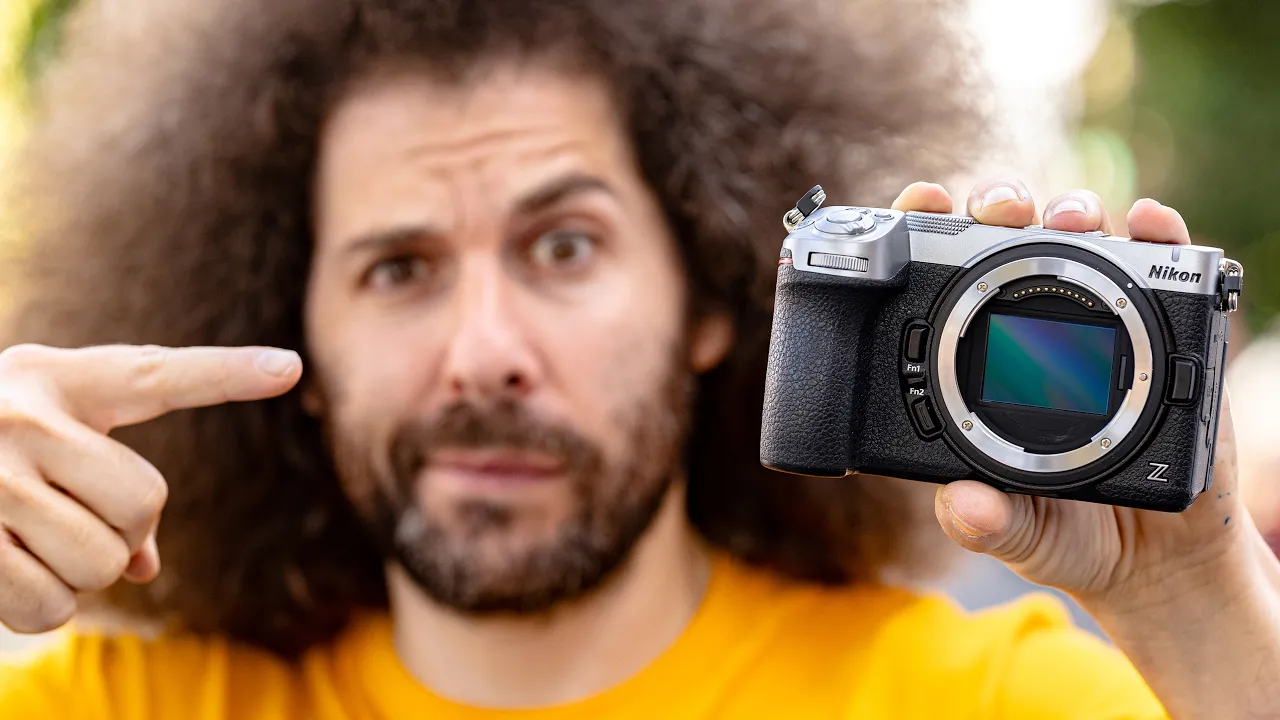
I've got a lot to say about this camera. Let's get into it. Jared Polandfronosphoto.com and this is a real world preview of the Nikon Z52 C. Now, what does the C stand for? It stands for casual. Now, that's coming from Nikon. That's not coming from me. So, when you hear that something is meant for the casual user, you can kind of think of how the specs should be when they say the word casual. But you can think of this basically as a Z52 but without an EVF, like they chopped
94 words, the words spoken in the first 30 seconds at 187 words per minute.
Free, no signup. See how the first 30 seconds hold attention, with rewrites.
Sentence shape
| Measure | This transcript |
|---|---|
| Sentences | 247 |
| Average words per sentence | 15.0 |
| Longest sentence | 63 words |
| Questions asked | 13 |
| Sentences containing a number |
What this transcript is
Every word below is the caption track YouTube publishes for this video, pulled from the video itself and reproduced unchanged. It is not Prepublish's writing, not a summary, and not a re-transcription: it is the video's own published captions. English captions, generated automatically by YouTube, in the video’s original language. Source: the video on YouTube. A channel that would rather this page did not exist can ask for its removal through the contact page, and it is removed.
No Script X-ray for this video: YouTube shows a Most replayed graph only once a video has enough views.
I've got a lot to say about this camera. Let's get into it. Jared Polandfronosphoto.com and this is a real world preview of the Nikon Z52 C. Now, what does the C stand for? It stands for casual. Now, that's coming from Nikon. That's not coming from me. So, when you hear that something is meant for the casual user, you can kind of think of how the specs should be when they say the word casual. But you can think of this basically as a Z52 but without an EVF, like they chopped it off.
And that's the end of the video. But it's not. Now, I had a few short hours to work with this camera cuz Nikon has to bring the cameras down. I photographed a kid with his mother out in the park. I also walked around the town just a little bit to get some other shots, but we are also filming with the camera right now. Now, if you're out there and you're like, "Jared, you always record your electronic viewfinder. Can you record your electronic viewfinder in a camera that doesn't have an electronic viewfinder?" And the answer is is yes.
I can still plug into the HDMI and record what would be the EVF so you guys can see exactly what I am seeing when I'm shooting. So, you're still going to see inside of the camera and see all the focusing points and all of the settings changing as I'm making those changes. Let's start with the outside of the camera. And you'll notice on the top of the camera that is a new flat top design. It's not exactly flat, but what they are considering flat is the fact that it does not have an EVF.
They chopped it off. They called him Moy and they're like, "Moy, Moy, hey, could you chop off the EVF?" And he was like, "That'll be $500." They chopped it off. no EVF. So, is this camera compact or pocketable? And the answer to that is no. It's basically the same exact camera just without the EVF up top. Now, that doesn't mean that it doesn't feel good in the hands. It's a chunky, beefy camera, which is fine generally, except for the fact when you try to dumb it down, you would think that people want something smaller, lighter, and easier to take with them.
So, I think the C should stand for for chunky, not casual. On the flip side, something like Canon's R8 that is a tiny full-frame camera. It feels great in the hands. I'm talking about the original R8, not so much the R82 that's a lot chunkier than the original. You also have the A7CR and the A7C2 from Sony, which are both compact full-frame cameras. This not compact at all. When I hear casual, I think of something easy to take around, like your cell phone.
It's always with you. It's attached to you because it's there and it's easy. And when the cameras get bigger like this camera is, it might not be something that you want to take around as much because the body's chunky. Then you have to add a lens to it unless you use something like the 26 mm pancake that I use for a few shots. That's super small. That really doesn't add any extra weight or size. But it's still big and it might be something that you're like, you know what?
I don't want to take that with me today. I'm just going to use my phone. There are two color options with this camera. One is black and the other is black with gray silver at the top. It's kind of like an A7CR from from Sony. They have a a gray silver option as well. And when I see silver, I think more retro because the difference between uh a retro camera and not to me is the old ones were silver and the new ones aren't.
Now, no one's saying anything about this looking or being retro. It's just that you have those two options. Now, let's get to the rest of the camera. You basically have the same exact buttons as you have in the Z52, but you do not have a joystick. You have to use the D-pad to move around your focusing points. It's not the biggest deal in the world, but the joystick is always nice to have. My biggest issue with shooting this camera is the fact that it doesn't have an electronic viewfinder.
There is no EVF. And I do not agree with this idea that, well, it's what people want. No, it it it people just don't know what they need. That's because they're growing up in a world where they're just using their cell phones that don't have electronic viewfinders. It's our jobs as creators or educators to inform and educate people on why they should hold the camera the proper way and look through the electronic viewfinder 99 out of 100 times.
It's just more stable. It's easier to hold on to. When you hold the camera out like this, you might have some shaking issues. your arms will get tired and when you start putting longer glass onto it, it's much harder to keep your subject in the frame than it is if you make subtle small movements versus having to move your arms. You got to trust me on that one. I know people are going to fight and say, "Well, this is for those amateurs." Well, I am here to stand on this hill and say that you should be using the EVF.
I know some people say don't use it or you don't need to. Of course, in some situations, it's fine to go high and to go low, but nine out of ten times, I want you looking through the viewfinder, and you will thank me later. Let me jump in here real quick and let you know that this video is brought to you by B&H and their Pay Boo credit card, where you pay the tax and B&H pays you back instantly. Now, there's two ways you can save.
One, where you pay the tax and B&H pays you back instantly. To check your eligibility for Save the Tax benefits, visit bhfoto.com/payoo. Or two, you can get 6 to 12 month special financing on minimum purchases of $199 for 6 months or $5.99 for 12 months. Now, I personally choose to save the tax, but both options are great options to have. To learn more, visit bhphoto.com/payoo. Now, I save tax on everything I order when I use my PayU credit card from B&H.
From cameras to lenses and computers to hard drives, TVs, and even film for my 4x5 camera. Whether you spend $10 or $10,000, those savings add up. >> Low on cash, but still need to get your Boo? Don't worry. For more information and to apply for your PayU card, head on over to the link on the screen or down below in the description. And remember to always charge responsibly. Since you don't have an EVF, let's talk about the screen because that's the only way you can use this camera to take photos.
You have a 3.2 in screen that is half the resolution of the Z52. [music] And that is stupid. Why would we only have one way to use this camera to take photos? And you dumb down the screen. I get it, the cost, and you want to try and keep cost down, but when it's the only way you can see the pictures that you're taking, you would think that you would give it at least the same screen that it had before and not dumb it down because it is a terrible experience in my experience of using it outside.
It's much harder to see. You have less resolution. It's harder to see if your photos are in focus after you take them. And when you're in bright light, I don't care how bright you make the screen, it is still difficult to shoot with just the LCD screen and not have an EVF. With that being said, it is a very angle screen. And this is where I personally would have liked to have seen a tilting screen that Nikon does on their higherend cameras.
I say that because when you flip the screen out to the side, it's still not flush with the body, meaning the lines are going to be much harder to get straighter. But then again, they say that this is for the casual shooter who seems to not care about the quality of their stuff in some situations, but they care about it more in others, but not when it comes to getting your lines straight. So, I'm not a fan of the vary angle screen over the tilting.
I would have preferred a tilting screen on this one. For some people, the screen might be perfectly fine. But for others who have trouble seeing up close, well, that might be an issue because it's not like you have a diopter that you could just switch on and use in place of glasses or something. Or if you wear progressives, you're going to be tilting your head up like this a lot trying to see the screen. That's an issue.
And like I already said, in a bright, sunny situation, it is much harder to see your screen. Now, that doesn't matter if you're just going to shoot in full auto and hope for the best. But when you want to get the best results out of a camera, which you can get great results out of this camera, cuz this camera is capable of it, you can get stuff. I got great shots out of it, but also I also wear sunglasses outside. Bright sunny day, I want to wear sunglasses.
As soon as you flip the camera vertical with polarized glasses on, you can no longer see the LCD screen. Now, this isn't just a Nikon thing. This happens with other companies as well, but you just have to know if you go vertical with polarized glasses on, you are going to lose the use of the screen. Another minor issue that I discovered is when I closed the screen, I was thinking it wouldn't let me take photos. You know how when you don't have a card in the camera and you say, "Don't let me take photos." You would think when the screen is closed, you can't take photos cuz you're not seeing anything.
But yeah, I closed the screen and it was snapping away images as if there was a screen. This is the first full-frame Nikon to have dedicated scene modes on the dial like landscape or portrait or sports and all of those things. Just think of this as, you know, the consumer type camera that they're going for. That kind of makes sense to have. When you press the dedicated picture control button, you can think of this as your recipes button.
This one runs super deep. In fact, you can wirelessly connect to the cloud, the the Nikon cloud, and put in different recipes. You can make your own recipes. And what's going to happen is when you take photos in JPEG, it's going to put that mode and bake it into the file. So, if it's something super unique, you want like the off blue color, you can do it. And you can just cycle through and see there's a million of them.
Personally, this is something that I would do after the fact when I'm editing the file because if you do this in the camera and you shoot JPEG, you are locked to whatever that mode looked like, whatever that recipe look like. I know they're trying to be Fuji with Fuji film simulations, but I don't like those either because you have more control after the fact. Even if you just shoot JPEG standard, you still have more control after the fact.
For example, you can pick up Frooropack 5 at fronosphoto.com/fropack 5 and you should see better results than if you just baked it in [music] because you can make better decisions after the fact depending on the image that you [music] captured. Another thing that Nikon like to hammer home is that people want full-frame. They're like they hear fullframe and they know they're they're skipping over the crop sensor cameras because everybody's like, "You need to have a full-frame." Well, don't tell me that you need full-frame, but then push and promote everything full auto and say that that's the way because honestly, you're better off going with a less expensive crop sensor camera.
You're going to get very similar results. That's the point I'm trying to make here. It seems that today people love nostalgia and they want to add grain, film grain to their digital images. Honestly, if you're going to do that and you use presets or something that do that, that's something you can do after the fact. There's a mode where you turn on film grain and you turn it off. This is going to bake in film grain for your JPEGs.
Now, what is really cool about this mode, I will tell you that it's cool. If you take a bunch of pictures in a row, the film grain changes. It's not like just one blanket film grain. So, that's kind of a cool feature. If you want to add grain, it's going to be different every time you take a picture. Another thing that Nikon removed from this camera that was in the Z52 is a second card slot. They dumbed this down to one card slot, which is perfectly fine.
I get it. They're trying to save some money. So, just be aware it's one card slot. Now, in terms of the ports on the side of the camera, the same usual ports are there. And we're actually plugged into those right now. Let me jump in here real quick and say, do you struggle getting sharp, crisp, and clear images like these in low light situations? Well, if you said yes, just look for this orange box over onto.com. Put your name, email address in it, hit send it, and I'm going to send you a free guide to capturing motion in low light situations.
Moving to the inside of the camera, it's basically a Z52. Inside, you have your same 24.5 megapixel BSI sensor. You have your X speed 7 processor, which is the same that you find in the ZF as well as the Z52. You have the same AF and frame rates and you have a new subject detection mode called fish mode. It's basically for aquariums. Now, what I'll say is people know that I've been harsh on Nikon autofocus in the past, but ever since the Z63 came out, you are seeing really good autofocus trickle down to cameras like this.
This is basically the same autofocus or similar autofocus that you would find in the Z63. And it's very good, competent autofocus. It finds the eye much better than it used to. And when the subject is move, even if they're not moving, I love that it can find a really small box. It let us know that it's actually working and doing its thing. Does it miss from time to time? Yes. All autofocuses are going to miss from time to time.
I will say that I think that Nikon misses more than the other systems, but I was happy with the results that I got from this camera. You do have the ability to shoot at faster frame rates using the electronic shutter, but keep in mind that this is not a stacked sensor. You are going to see some warping and bending of your images. Just look at this one that we did with the Nikon ZF. It is a wand and you can see that it is bending.
So, it's not the fastest readout speed. So, generally speaking, you're not going to want to shoot in the electronic shutter mode unless you need to be completely silent. And in that case, just make sure you're not shooting something that is moving super fast. Now, since this doesn't have an EVF, you know what's important? IBIS. You have five axis IBIS with 7 and 1/2 stops of VR. That is something that you absolutely need here.
Uh because, as I was saying, three points of contact just like this is generally the best way to shoot. But when you don't have an EVF, you're going to be out here like this and it should be a little more awkward or it's going to be more awkward and less stable. So thankfully you have the image stabilization. Quickly moving on to video specs. You have the same video specs as the Z52 with full width 10 bit 4K which is over sampled from 6K up to 30 frames per second.
We're currently filming with the camera right now in 4K 24p in 10bit nlog. You can also shoot 4K 60p with a DX [music] crop. And for super slow-mo you can do 1080p at 120 frames per second. And for something that I didn't expect a casual camera to have is the ability to have internal 12bit N RAW. Now, keep in mind this is a bend raw format. It's not the true RAW video format, but it has it. And to me, that's overkill in a casual shooting camera, especially when you kind of are pushing all of the auto modes and telling us that it's for casual shooters while putting in the ability to shoot some raw video.
But something they did put in that I really do like is that there's a tally light on the front. So if you're shooting video, I can see that it's it's actually recording. That is helpful. Finally, we're moving on to price because, you know, casual cameras should come with a casual price, right? It's $13.99 body only. Why wouldn't you go with a Z52? It's not like the Z52C is a smaller camera. It's not more compact. It's the same thing without the EVF.
You also have one card slot versus two card slots and you have a shittier screen. I don't want to hear that people are super price sensitive. You're already spending $1,400. So, if you're considering this camera, I would just say, look, consider spending just a little more for the Z52 so that you [music] can at least get those things that I just mentioned because you will thank me later when you realize that an EVF is a better way of shooting.
If you're looking to become a better photographer, if it was in the low,000 range, I think it would make a lot more sense. This is the same issue that Canon ran into with their R82 versus their R62. The R six2 is basically the same camera as the R82, just better and for only $100 more. There are positives to this camera, the image quality. We'll go with the image quality because Nikon image quality is great across the board.
I like their raw files a ton. I think they have the best raw files when I compare them to Canon or Sony or Fuji or anybody else. The Nikon Raws just have a beautiful look. So, that has it going for it right here. The autofocus system, as I said earlier, is very good. And you have a lot of lens choices currently for the Zmount to choose from if you're going to pick up this camera. But this camera that Nikon just came out with, the Z52C, makes the Z52 look like a really solid option.
Let me cut in here real quick because I want to show you our custom Lightroom presets from Frac 5 in action on this photo right here. Starting with Golden Hour, followed by Old Faithful, Shipwreck. We've got Wildwood, Daydream, Velvet Hammer, Nostalgia to give it that old look. We've got Wes Anderson, Easy Breezy, Indiana Jones, Vintage Press, Morning Bliss, Punchy Mc Punchface, The Green Mile, Jolly Rancher, Ron Burgundy, and Bluegrass.
But check this out. You can actually combine presets from Froz. That's why this one gets hit with Velvet Hammer and X1 from Froz 4. So, look, if you want to speed up your RAW workflow, give yourself a great starting point, or you're just tired of other people's presets sucking, as you can see, our presets do not suck. That's why we just released Froak 5 with 17 all new custom Lightroom presets that you can check out right now at fronosphoto.com/frac 5.
While you're over there, you can play with the sliders to see the befores and the afters. And if you decide to pick them up right now, they are currently on sale. Or if you want to get the all-star bundle that includes Fro Pack 1 2 3 4 and now five, you can save even more. So to wrap this up, I do not buy the argument that kids today just want to see the screen. The fact is they just don't know any better and [music] it's our job to inform and educate them on why looking through an electronic viewfinder is better.
I get it. Some people just want to be casual shooters. That's awesome. That's great, but you don't need to spend this amount of money to be a casual shooter. I think you're better off even looking at something from Nikon like the Z502. It's smaller, it's lighter, it's less expensive, and you you don't need the full frame at that point. If you just want to be a casual shooter, that's the direction I personally would go.
So, as always, what are your thoughts? Please leave them down below. Thank you very much for watching. Jared penfronosphoto.com. See you.
The words are the caption track's own and nothing is reworded or re-transcribed. Paragraph breaks are placed between sentences so the text reads as prose.
Free tools for your own script. No signup, no login.
Paste your draft and see where viewers are likely to drop off, with a rewrite for each weak line.
Paste the first 30 seconds of your own draft for a hook score and rewrites.
Check your draft against YouTube's advertiser-friendly guidelines before you record it.
Read this channel's public videos and transcripts, and download a writing brief for it.
| 41 |
Most used terms
Filler phrases
57 in total: like 32 · basically 7 · you know 6 · kind of 5 · actually 4 · uh 2 · right? 1.
A literal whole-word count of the same phrase list the Prepublish browser extension uses, so a phrase inside another word is not counted and a phrase used in its ordinary sense still is. It is a count and not a judgement.