Getting the transcript
Reading the captions from YouTube. A video nobody has opened here before takes 10 to 30 seconds; this page fills in on its own.
Getting the transcript
Reading the captions from YouTube. A video nobody has opened here before takes 10 to 30 seconds; this page fills in on its own.
Conquer Chemistry · @ConquerChemistry
Words
2,478
Runtime
13:35
Speaking pace
182wpm
Reading time
10min
182 words per minute, just over the 181 median of 349 measured videos. That distribution comes from the 349-video hook study.
Opening (first 30 seconds)
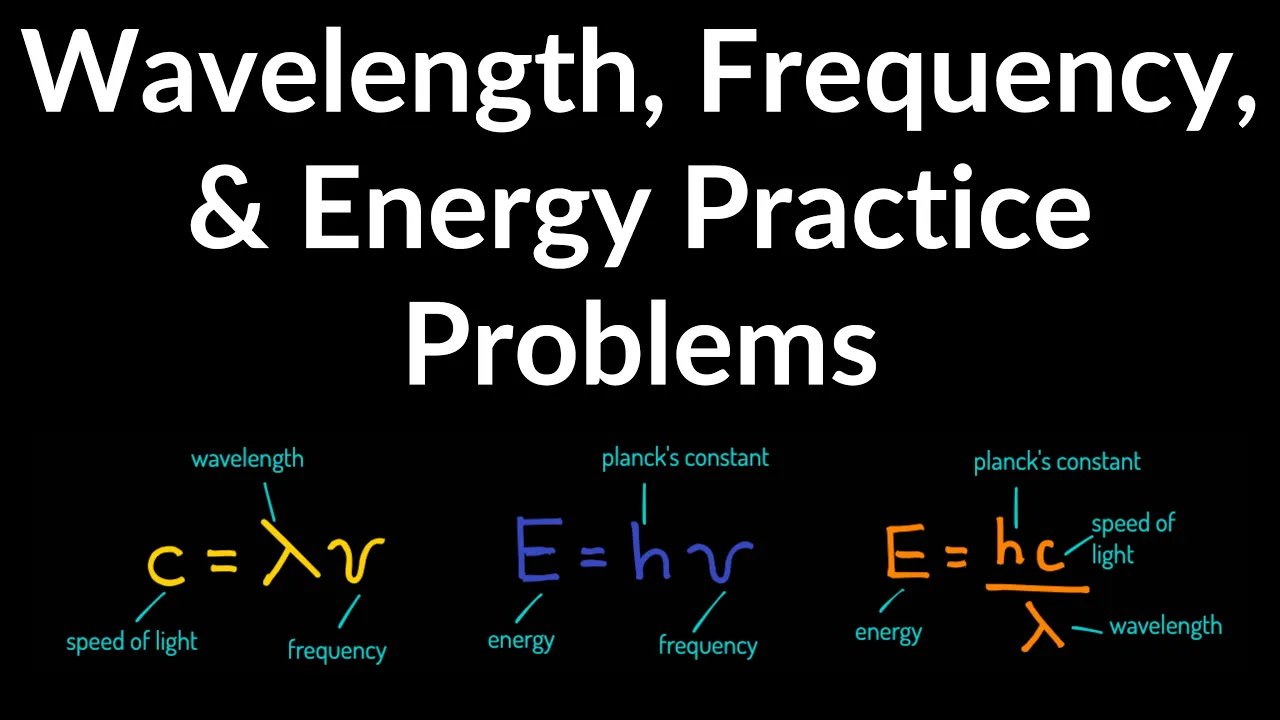
hey guys michael from chemistry in today's video we'll be going over some wavelength frequency and energy practice problems we'll start with the two equations and then we'll go through a couple problems that uses the equations and we'll do them step by step so let's start with the two equations most of the time you'll have access to these three equations on these two equations on tests but you won't have access to this last one so that's one that you have to memorize we'll start the first one c
91 words, the words spoken in the first 30 seconds at 182 words per minute.
Free, no signup. See how the first 30 seconds hold attention, with rewrites.
Sentence shape
| Measure | This transcript |
|---|---|
| Sentences | 5 |
| Average words per sentence | 495.6 |
| Longest sentence | 1,167 words |
| Questions asked | 0 |
| Sentences containing a number | 5 |
Most used terms
Filler phrases
17 in total: uh 8 · um 4 · like 2 · actually 1 · kind of 1 · you know 1.
A literal whole-word count of the same phrase list the Prepublish browser extension uses, so a phrase inside another word is not counted and a phrase used in its ordinary sense still is. It is a count and not a judgement.
What this transcript is
Every word below is the caption track YouTube publishes for this video, pulled from the video itself and reproduced unchanged. It is not Prepublish's writing, not a summary, and not a re-transcription: it is the video's own published captions. English captions, generated automatically by YouTube, in the video’s original language. Source: the video on YouTube. A channel that would rather this page did not exist can ask for its removal through the contact page, and it is removed.
No Script X-ray for this video: YouTube shows a Most replayed graph only once a video has enough views.
hey guys michael from chemistry in today's video we'll be going over some wavelength frequency and energy practice problems we'll start with the two equations and then we'll go through a couple problems that uses the equations and we'll do them step by step so let's start with the two equations most of the time you'll have access to these three equations on these two equations on tests but you won't have access to this last one so that's one that you have to memorize we'll start the first one c equals lambda times frequency c is the speed of light it's three times ten to the eighth meter per second this symbol right here this lambda lambda stands for wavelength and it's important to remember that wavelength must always be in meters before you can plug the numbers into the equation and then lastly v this cursive looking v or new this is frequency and that's hertz or it can either be in seconds to negative one and these are interchangeable that's the equation that connects the wavelength and the frequency together next equation we have energy equals planck's constant h times v so energy must be in joules planck's constant that's just this um constant that you'll probably be provided and then v again or negative that's energy so this is the equation that you use if you have energy if you want to connect energy and frequency together and then lastly we have equals hc over lambda e against energy and this is in joules and then planck's constant speed of light and wavelength again that has to be meters so this is the equation that you would use if you have energy and wavelength in in the question so let's start with the first question first question says that a certain electromagnetic wave pretty much doesn't mean light has a wavelength of 625 nanometers and we have to figure out the frequency so we have the wavelength and we want to figure out the frequency that's when you use the first equation because you can see we have wavelength and frequency so we'll set that up c equals lambda times frequency and we're signed for frequency so that means we have to isolate the new or by using algebra we can divide both sides by lambda and then that'll just give us v equals c divided by wavelength and we we have c already that's the speed of light so that's just going to be 3 times 10 to the 8th meter per second and wavelength it gives us the wavelength right here but this wavelength is in nanometers remember wavelength has to be in meters so we got to do conversion and then so this is where we can use the shortcut if you have nanometers and you want to get to meters you can just divide by 10 to the power 9 and then if you have meters and you want to get to nanometers you can just multiply by 10 to the power of 9. so we'll just do 625 divided by 10 to the power 9 and that'll give you 6.25 times 10 to the negative seven meters or if you have to show your work with dimensional analysis you can do 625 nanometers multiplied by one meter to and every one meter there's ten to the nine nanometers and that way you can see the nanometers cancel out and then you will get the same number um and that's just the same thing saying 625 divided by 10 to the nine so then now we have the the meters we can plug that in here 6.25 times 10 to the negative 7 meters notice that the meters cancel out then we enter this into our calculator so 3 times 10 to the power of 8 divided by 6.25 to the power of negative seven and we'll get four point uh four point eight zero times ten to the fourteenth and we can report frequency is either hertz or seconds to negative one i'm just going to leave this as seconds to d negative one or we can also leave it as this per second and that's the same thing so that's the first question that's just a question where we have wavelength and we have to solve for frequency now we have frequency and we want to solve for wavelength it's the same process but then we would just be isolating the wavelength instead of frequency all right let's take a look at the the next one so in the next question it says that the blue color of light results from the scattering of sunlight uh says that we have blue light and it has this certain frequency of 7.5 times 10 to the negative 4 hertz and then we have to calculate the wavelength in nanometers that's associated with this radiation so this is the opposite we have the frequency and then we have to solve for the wavelength so again since we're dealing with wavelength frequency we're going to be using the first equation c equals the wavelength times the frequency then to isolate the frequency we just divide both sides by the wavelength and then that that will give us that the wavelength is equal to the speed of light divided by the frequency um the speed of light is just a constant again 3 times 10 to the eighth meter per second and then the frequency it gives it to us right here that's in the correct units we want it in hertz or negative one or more hertz or seconds to negative one and it's currently in hertz so then we just plug that in 7.5 times 10 to the 14th i'm just going to switch that to per second or a second to negative 1. so you can see that the seconds can cancel out and then we could just enter this in the calculator 3 times 10 to the 8th divided by 7.5 to the power of 14. and then that will give us 4 times let's see in terms of sig figs we have 2 sig figs right here so this would be 4.0 times 10 to the negative seven and we'll be left with meters because you can see the set the per seconds canceled out but this question wants uh wants to us to solve for this in nanometers so again we have meters we want to get to nanometers meters to nanometers we would multiply by ten to nine um so we just multiply this by ten to nine and we'll get 400 nanometers as our answer what is let's take a look at the the next one so the next one is this telling us to calculate the energy associated associated with that blue light uh in joules now let's get rid of let's get rid of that we just need the wavelength so here we have we have to solve for for joules and we're dealing with energy so we can use either this equation uh if we want to connect to a frequency or we can use this equation if we want to connect it with wavelength and i'll just show you show you both how we do this then we'll solve for the first one e equals planck's constants time frequency plane's constant this is 6.626 times 10 to the negative 4 joules per second we can multiply by the frequency that was given to us earlier seven point five times ten to the fourteenth seconds to negative one or hertz or per second you can see that the seconds will cancel out and then we'll be left with our answer in joules which is exactly what we wanted so we just do 6.626 times 10 to the negative 34 multiplied by 7.5 to the power of 14 and that'll give us 4 point let's see how many sig figs we want again just two sig figs so this is 4.96 times 10 to the negative 19 joules but since we only want two sig figs we will round that up to 5.0 times 10 to the negative 19 joules just because the number after the second sig fig is bigger than five so we gotta round that up and it becomes five point zero so that's how we would solve for the energy in joules but using the uh frequency but if let's we can also software using wavelength because we know what the wavelength of the blue light is in part a we saw for the wavelength and we found that it was 4.0 times 10 to negative 7 meters since we have the wavelength we can use the second equation to connect the wavelength and the energy so we have e equals hc over lambda h is this planck's constant 6.626 times 10 to the negative 34 joules times seconds and then the speed of light c 3 times 10 to the 8th meter per second and then divided by the wavelength wavelength has to be meters we found the meters originally 4.0 times 10 to the negative 7 meters and you can see that the kind of hard a little hard to see right here but this was meters per second so notice the meters will cancel out the seconds will cancel out and you're left with joules and we'll get the same answer 5.0 times 10 to negative 19 joules so if the question asks you to solve for energy and get your frequency you're going to use this you're going to use the second equation but if the question asks you to solve for energy and you're given the wavelength then you're going to use this dirty equation all right let's take a look actually one other thing notice in part b it asks us to calculate the energy of a single photon just know that these equations with energy applies to single photon but a lot of times in class you might the you might get a question to ask how about the energy for a molar photon so what if it asks you how much energy is there in in in mole and they want in kilojoules so if you want to do that we have the energy of a single photon so let's just say 5.0 times 10 to the negative 19 joules for a single photon we got to get down to kilojoules so we multiply by the conversion factor for every one kilojoules there are a thousand joules so that way you can get rid of the joules and then now to get per mole i would put photon on the top so i can get rid of the photon and then put mo on the bottoms so that way the photons can cancel out and we know that for every one mole of anything there's avogadro's number of that thing so that'll be 6.022 times 10 to the 23rd and so that's how we would solve for the kilojoules per mole so whenever you want to get the mole of something of a photon just multiply by avogadro's number and then if you want if you have a mole and you want to get back to a single photon just divide by avogadro's number all right let's take a look at the last example so this last example is asking us what is the wavelength of a wave that has 7.65 times 10 to the negative 17 joules it's it gives us joules so that means we're given the energy and they want us to solve for the wavelength which is uh lambda so we just look at which equation has energy and lambda in it and this is the last equation so we'll start by writing out the equation energy equals hc over lambda and then we can use algebra to isolate uh isolate lambda so just cross multiply first and we'll get e times lambda equals h times c and then divide both sides by e so then you get lambda equals hc divided by e h is planck's constant 6.626 times 10 to the negative 4 joules per second c is the speed of light 3 times 10 to the 8th meter per second and then we're going to divide that by the energy we want to make sure that the energy is in joules and it is already in joules so we can just plug that in seven six seven point six five times ten to the negative seven joules and we can cross out the like units the joules are going to cancel out the per second and second here it's going to cancel out so we're going to be left with the the wavelength in meters so we'll we can plug it in into our calculator 6.626 2 to the power negative 34 multiply by 3 to the power 8 divided by 7.65 to the power of negative 17. and then that will give us two point and how many sig figs do we want we have three sig figs here so final answer chef three sig figs two point six zero times ten to the negative nine and what unit should it be should be in meters but you know what if this question asks about nanometers so once again if we have meters and we want to get to nanometers we just multiply by 10 to the nine and we do that we'll get 2.60 nanometers and that's it that's a couple problems dealing with wavelength frequency and energy so really just read the problem and look at what you're given and what you're asking for so if you're given wavelength and you have to solve for frequency then use this one or if you're stopped given frequency and have to solve for wavelength so if you're just giving frequency and wavelength use the first equation if you have to if you're dealing with energy and frequency then use the second one and then use the last one if you're dealing with energy and wavelength if you want to learn how to ace chemistry if you want to learn what's the best way to study for this class and you want to learn some neat tricks and tips to take into your exam and do better on them then you should head over to my website and get this free guide 12 secrets to asian chemistry you can head over to www.conquerchemistry.comchemsecrets i'm going to include a link in the description below check it out i think it's really going to help you and you're going to you're going to like it until next time keep working hard and continue the good work
The words are the caption track's own and nothing is reworded or re-transcribed. Paragraph breaks are placed between sentences so the text reads as prose.
Free tools for your own script. No signup, no login.
Paste your draft and see where viewers are likely to drop off, with a rewrite for each weak line.
Paste the first 30 seconds of your own draft for a hook score and rewrites.
Check your draft against YouTube's advertiser-friendly guidelines before you record it.
Read this channel's public videos and transcripts, and download a writing brief for it.