Getting the transcript
Reading the captions from YouTube. A video nobody has opened here before takes 10 to 30 seconds; this page fills in on its own.
Getting the transcript
Reading the captions from YouTube. A video nobody has opened here before takes 10 to 30 seconds; this page fills in on its own.
Deep Explained · @DeepExplained-j3p
Where viewers went back to watch this video again, from YouTube's public Most replayed graph, lined up with what was said at that moment.
Most replayed moment #1
25:352.1x the video's typical replay level
small number of growers have begun cultivating it. It has not crossed into mainstream availability. Whether it will is unclear, but if you find it, the fried preparation is the one to try. Olie fruit. Last one. Number 15.
Said at 25:30
Most replayed moment #2
13:051.9x the video's typical replay level
of it fall from ornamental trees every spring and get bagged as yard debris. If you have a tree in your neighborhood or backyard, the window to pick it is only a few weeks. The fruit bruises easily and does not travel well, which is why you will almost never find it in a
Said at 12:58
Most replayed moment #3
11:391.9x the video's typical replay level
rarer in American supermarkets because it has a shorter shelf life and the skin does not protect it as well during shipping. When you find it, the price is usually higher than the pink version. It is worth paying. Loquat. There is a reasonable chance that a loquat tree is growing within a mile of wherever you
Said at 11:32
The graph counts replays. It does not show where viewers stopped watching.
Words
4,599
Runtime
28:25
Speaking pace
162wpm
Reading time
19min
162 words per minute, between the 160 25th percentile and the 181 median of 349 measured videos. That distribution comes from the 349-video hook study.
Opening (first 30 seconds)
Yellow is the color of ripe, of sweet, of eat me now. But not everything yellow is what it seems. One of these fruits started a war in ancient Greece. One of them was rented, not bought, just to carry to a dinner party. One of them can put a kidney patient in the hospital after just a single bite. And the last one on this list has the ugliest name in the history of fruit, and that name is exactly
81 words, the words spoken in the first 30 seconds at 162 words per minute.
Free, no signup. See how the first 30 seconds hold attention, with rewrites.
Sentence shape
What this transcript is
Every word below is the caption track YouTube publishes for this video, pulled from the video itself and reproduced unchanged. It is not Prepublish's writing, not a summary, and not a re-transcription: it is the video's own published captions. English captions, generated automatically by YouTube, in the video’s original language. Source: the video on YouTube. A channel that would rather this page did not exist can ask for its removal through the contact page, and it is removed.
Yellow is the color of ripe, of sweet, of eat me now. But not everything yellow is what it seems. One of these fruits started a war in ancient Greece. One of them was rented, not bought, just to carry to a dinner party. One of them can put a kidney patient in the hospital after just a single bite. And the last one on this list has the ugliest name in the history of fruit, and that name is exactly why it sells. 15 yellow fruits.
Stick around for number 12 and number 15. Those two will genuinely surprise you. And if you are new here, hit subscribe. We do this for every fruit, every cut of meat, every ingredient worth knowing. Let's go. Banana. The banana you ate this morning is not the banana your grandparents grew up eating. And the banana your grandchildren eat might not exist at all. Bananas are native to Southeast Asia, but they did not arrive in the United States in any meaningful way until 1876, when they were displayed at the Philadelphia Centennial Exposition wrapped individually in tin foil, sold for 10 cents each, which is equivalent to a few dollars today.
Most of the 10 million people who attended that fair had never seen one before. The banana that became popular in America was called the Gros Michel, thicker, creamier, and by most accounts significantly more flavorful than anything available today. For decades, it was the banana. Then Panama disease arrived. A soil fungus called Fusarium oxysporum swept through plantation after plantation in the 1950s and wiped the Gros Michel out completely.
Every single commercial plantation had to be abandoned. The industry switched to the Cavendish, the banana you know, because it was resistant to that particular strain of Panama disease. Problem solved. Except it was not solved. A new strain of the same fungus called Tropical Race 4 is currently spreading through Cavendish plantations across Asia, Australia, and Latin America. The Cavendish may face the same fate as the Gros Michel within our lifetimes.
And underneath all of this is a darker history. The United Fruit Company, now called Chiquita, controlled enormous stretches of Central American land throughout the 20th century. They lobbied, bribed, and in 1954 worked with the CIA to overthrow the democratically elected president of Guatemala, Jacobo Arbenz, because he attempted to redistribute land back to Guatemalan farmers. All of that for a banana. The one sitting on your counter right now is the sweetest.
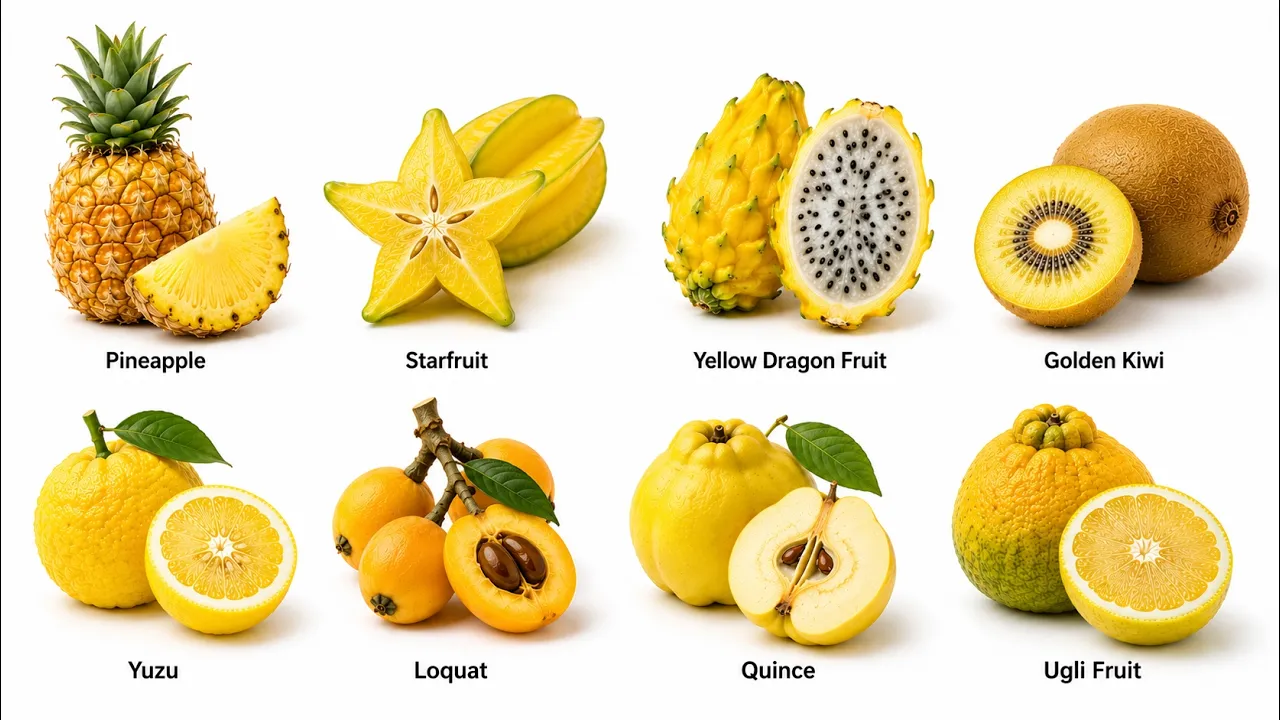
When the peel is more brown than yellow, the cells have broken down, and the starch has finished converting to sugar. That is not a bad banana. That is a perfect one. Pineapple? At some point in the 17th century, wealthy Europeans began renting pineapples. Not buying them, renting them. You would pay a fee, receive a pineapple for the evening, take it to a dinner party to display it on the table as proof of your status, and return it the following morning so someone else could do the same thing.
The same fruit would make the rounds through the social calendar of a city until it finally rotted, at which point someone would actually eat it. This happened because Christopher Columbus brought pineapples back from Guadeloupe in 1493 and introduced them to Europe as something extraordinary, which they were. Europeans had never tasted anything remotely like it. Sweet, acidic, tropical, and completely unlike any fruit they already knew.
Supply was essentially zero because the fruit could not grow in European climates and spoiled quickly during the long ocean crossing. By the 17th century, a single pineapple cost the equivalent of $8,000 in today's money. King Charles II of England commissioned a portrait of his gardener presenting him with a pineapple. The fruit was considered worthy of a royal painting. King Louis XV received one grown at Versailles as a significant occasion.
Catherine the Great had pineapples grown in Russian greenhouses at enormous expense. Then refrigerated shipping arrived in the 1880s. Then James Dole established industrial plantations in Hawaii. Within a few decades, the fruit that kings could not afford was in a tin can at a grocery store for less than $2. The enzyme in pineapple called bromelain breaks down proteins. That is why your mouth feels slightly raw after eating a lot of it.
The pineapple is, in a very mild way, eating you back. Lemon. There is a word in American English limey that most people know is British slang, but fewer people know the origin of. It comes from the fact that from 1795 onward, British sailors were required by naval regulation to drink lime or lemon juice every single day. The reason was scurvy, a disease caused by vitamin C deficiency that killed tens of thousands of sailors across several centuries of ocean travel.
Teeth fell out, joints swelled, wounds stopped healing. Internal bleeding occurred spontaneously. It was one of the most preventable deaths in human history, and nobody understood why citrus prevented it until vitamin C was isolated in 1932. For a long time, all they knew was that it worked. The lemon itself came from Southern Asia, most likely a hybrid of citron and sour orange, and was carried westward by Arab traders into Spain and Sicily, and from there into the rest of Europe during the medieval period.
The Romans were aware of it, but treated it as a rarity rather than a staple. Here is something most people in the produce aisle do not realize. The lemons on that shelf are not naturally yellow. Lemons in warm climates often remain green. Even when fully ripe, the yellow color develops only when the fruit is exposed to cooler temperatures. The lemons at your grocery store are exposed to ethylene gas after harvest to trigger the color change before they reach the shelf.
The yellow you associate with lemon ripeness is in part a product of post-harvest processing. The flesh is highly acidic with very little sweetness. The peel is where most of the aromatic complexity lives. A squeeze of lemon juice at the end of cooking brightens almost any savory dish, not because it adds lemon flavor, but because acid perception sharpens everything else on the palate. Golden kiwi. The kiwi fruit is not from New Zealand.
It was renamed to be from New Zealand. The fruit originated in China, where it grew wild in the Yangtze River Valley and was known as the Chinese gooseberry. New Zealand growers began cultivating it in the early 20th century and had been exporting it modestly when Cold War politics created a problem. American consumers in the 1950s were not enthusiastic about buying something called a Chinese gooseberry during a period of significant political tension with China.
The New Zealand growers renamed it kiwi fruit after the kiwi bird, their national symbol, and exports to the United States took off. The golden kiwi sold today, primarily under the Zespri Gold brand, is a separate cultivar developed by New Zealand's Plant and Food Research Institute, released commercially in 1999. It is not a ripeness stage of green kiwi, it is a different fruit. The differences are immediately noticeable if you eat them side by side.
Green kiwi is tart, slightly acidic, and firm. Golden kiwi is noticeably sweeter with almost no tartness, a tropical quality that some people compare to mango or pineapple and a softer texture. The skin is thinner and smoother, thin enough that many people eat the whole fruit like a peach without peeling it at all, which also means significantly more fiber and nutrients. Most Americans reach for the green one by habit.
The gold one is the better eating experience for most palates and it is sitting right next to it on the same shelf. Before we get into the ones most people have genuinely never tried, drop a comment right now and tell me where you are watching this from and what time it is. I read every single one. Now, let us keep going. Yuzu. You cannot buy a fresh yuzu in the United States. Not legally, not easily, and not without going to significant effort.
The United States prohibits the importation of fresh yuzu fruit from Japan and most of its growing regions as an agricultural protection measure, specifically to prevent the introduction of pests that could threaten domestic citrus. If you've encountered yuzu at an American restaurant, it almost certainly came in as juice, as zest, or as a processed product rather than a whole fresh fruit. Yuzu has been cultivated in Japan for over a thousand years, introduced during the Nara period from China.
For much of that history, it was used medicinally before cooks realized what they had. It is the most cold resistant citrus in the world, capable of surviving temperatures near zero degrees Fahrenheit, which is why it spread through mountainous regions where no other citrus could grow. The flavor is unlike any other citrus. Most citrus fruits are variations on a theme, sweet, sour, bitter in different proportions. Yuzu is something different.
It hits with sharp acidity, then opens into something floral and complex with notes that people describe as simultaneously orange, grapefruit, and lemon, but not quite any of them. Japanese chefs use the peel rather than the juice for most applications because the aromatic compounds in the skin are more concentrated and more interesting than the juice itself. It is also a tradition in Japan on the winter solstice called toji to place whole yuzu fruits in a hot bath.
The essential oils release into the water. It is considered a way to protect against winter illness. A fruit used in cooking, in baths, and in medicine that most Americans have only encountered as a flavoring in cocktails or ramen and cannot legally buy whole. Yellow dragon fruit. The dragon fruit most Americans know is the pink-skinned, white-fleshed variety that looks dramatic in a smoothie bowl photograph and tastes considerably less dramatic when you actually eat it.
Mild, slightly sweet, visually impressive. That is the one that fills the Instagram feeds. The yellow dragon fruit is something else. It is native to Mexico and Central America where the Maya and Aztec civilizations used it for food and medicine and documented it as early as under the Spanish name pitahaya, meaning scaly fruit. When it reached Southeast Asia in the 19th century, Chinese growers gave it the name dragon fruit and built an entire mythology around the idea that dragons breathe fire and fruit fell from their breath.
A marketing story that succeeded beyond anyone's expectations. The yellow variety pitahaya amarillo is smaller than the pink version with no spines on the outside and a white translucent interior that looks almost like it is lit from within. The flavor is genuinely different from its more famous relative. Where the pink version is mild and watery, the yellow is intensely sweet with a crisp texture and a fragrance that suggests kiwi and pear combined.
Most people who try both side by side immediately prefer the yellow. It is rarer in American supermarkets because it has a shorter shelf life and the skin does not protect it as well during shipping. When you find it, the price is usually higher than the pink version. It is worth paying. Loquat. There is a reasonable chance that a loquat tree is growing within a mile of wherever you are right now if you live in California, Florida, Texas, or the Gulf Coast and an equally reasonable chance that you have walked past it without knowing the fruit was edible.
Loquat is one of the most widely planted ornamental trees in the American South and West. Nurseries sell it for its glossy evergreen leaves and clusters of small yellow-orange fruit that appear in late winter and early spring. The problem is that the nurseries market it as a landscape tree, not a food source. So, homeowners plant it, watch the fruit appear, watch it fall, and rake it up as a mess without ever tasting it.
The fruit is the size of a large cherry, yellow to orange when ripe, with thin, smooth skin and sweet, juicy flesh that tastes like a gentler version of apricot crossed with peach and apple. It is exceptionally good. In Japan, where it is called biwa, it has been cultivated and celebrated since at least the 8th century. In China, it is used in traditional medicine. In Spain and the Mediterranean, loquat jam is a staple.
In the United States, the loquat mostly goes to waste. Millions of pounds of it fall from ornamental trees every spring and get bagged as yard debris. If you have a tree in your neighborhood or backyard, the window to pick it is only a few weeks. The fruit bruises easily and does not travel well, which is why you will almost never find it in a store. You have to know where to look. Quince. The golden apple that Paris gave to Aphrodite, the fruit at the center of the judgment that launched the Trojan War, was almost certainly not an apple.
Scholars and food historians have argued for decades that the fruit described in the Greek myth was more likely a quince, which grew abundantly in ancient Greece and the Mediterranean region and was closely associated with Aphrodite, the goddess of love. Quinces were offered at weddings, planted in sacred groves, and considered a symbol of fertility and desire in Greek culture in ways that apples were not. Quince looks like a pear that forgot to become one lumpy, golden yellow, covered in a slight fuzz, and smelling remarkable when ripe.
The smell is floral and honey-like and complex in a way that makes the eventual eating experience seem almost unfair because quince, raw, is essentially inedible. The flesh is dense, astringent, and so full of tannins that a single bite puckers your entire mouth. You cannot simply pick one up and eat it. What you can do is cook it, and when you cook a quince, something remarkable happens. The white flesh turns pink, then rose, then deep red, a color transformation that occurs because of the tannins reacting to heat and acid.
The flavor that emerges is deeply aromatic, sweet, floral, with notes of rose and guava and baked pear concentrated to an intensity that no apple or pear achieves on its own. Marmalade was originally made from quince, not orange. The word comes from the Portuguese marmelo, which means quince. The orange marmalade that most people know today is a later adaptation. The original was made from the fruit that, according to ancient Greeks, was beautiful enough to start a war.
And here is number 12, the one I mentioned in the opening. Keep going. Lucuma. Most Americans who have bought this fruit have done so without knowing it is a fruit. Lucuma is sold in the United States almost exclusively as a powder in the supplement aisle, in smoothie mixes, in health food stores usually marketed for its low glycemic index and its unusual flavor. The label often says things like naturally sweet or caramel-like or maple flavored.
What it rarely says is that this powder comes from a yellow fruit the size of an avocado that has been growing in the Andes of Peru for over 2,000 years. The Inca called it the gold of the Incas. They cultivated it extensively, depicted it in pre-Columbian ceramics, and considered it a fruit of significant value. When Spanish colonizers arrived and documented the foods of the Andes, they noted lucuma alongside potato, quinoa, and corn as staples that defined the region's food culture.
Fresh lucuma is almost never eaten raw. The flesh is dense, dry, and starchy, not juicy, not soft with a texture that does not translate to snacking the way a mango or peach does. What it does have is an extraordinary flavor concentration. Sweet in a way that suggests maple syrup with undertones of sweet potato and a caramel warmth that makes it one of the most popular ice cream flavors in Peru, consistently out-selling chocolate and vanilla.
When you buy lucuma powder, you are buying a Peruvian fruit with 2,000 years of agricultural history, dried and ground down to a supplement. It deserves to be recognized as more than a smoothie ingredient. Yellow watermelon. When people see a yellow watermelon at a farmer's market, the most common reaction is suspicion. It looks unripe. It looks wrong. The association between red flesh and watermelon is so complete that anything else seems like a mistake.
It is not a mistake. Yellow watermelon is arguably closer to what watermelon originally tasted like. The wild ancestor of the watermelon native to the Kalahari Desert of Africa produced fruit with pale whitish flesh. The intense red color in modern commercial watermelons comes from lycopene, a pigment that accumulates in concentrations determined by breeding. For thousands of years, humans selectively grew watermelons with more lycopene because the red color was visually appealing.
The deep red of a grocery store watermelon today is not how the fruit started. It is the result of centuries of agricultural decisions about what a watermelon should look like. Yellow watermelon contains less lycopene but more beta-carotene, which is what produces the color. The flavor is distinctly different from red. Most people who try both describe yellow watermelon as sweeter with a honey quality and less of the faint bitterness that red watermelon sometimes has near the rind.
The texture is slightly softer and the water content is similar. It is grown in the same conditions, harvested the same way, and eaten the same way. The only thing different is that nobody bred the color out of it. What you are getting when you buy yellow watermelon is a fruit that is genuinely closer to where the species started. Maracuyá yellow passion fruit. Most Americans who have encountered passion fruit have encountered the purple variety, the small, wrinkled, intensely aromatic one that shows up in cocktails and tropical desserts.
The yellow version is larger, more acidic, and in much of South America, considerably more common. Maracuyá, the name used throughout Colombia, Peru, Ecuador, and the broader Andean region, is the fruit that people in those countries squeeze over everything the way Americans use lemon. It goes into fresh juice at breakfast. It goes into ceviches and sauces. It is sold at street carts by vendors who cut it open on the spot and hand it to you to eat directly from the shell.
It is not an exotic ingredient there. It is infrastructure. The flavor hits harder than the purple variety. The acidity is more forward, the aroma more penetrating, and the tropical depth more pronounced. A tablespoon of maracuja pulp dropped into a glass of water changes the flavor profile of that glass of water completely. That is how concentrated the taste is. The seeds inside are edible and provide a satisfying crunch that is part of the traditional eating experience rather than something to work around.
In the United States, maracuja is almost non-existent in mainstream grocery stores. You can occasionally find it at Latin American markets or specialty stores in cities with large South American communities. The purple passion fruit has been growing in American visibility for years. The yellow one, the one that outsells the purple version across most of South America, remains largely invisible on this side of the border.
Starfruit, carambola. Here is number 12. The one worth waiting for. Starfruit is probably the most visually distinctive fruit that makes it into mainstream American grocery stores. Cut it crosswise and you get a perfect five-pointed star, a shape so consistent and clean that it looks engineered rather than grown. This is why it ends up as a garnish on dessert plates and cocktail glasses across the country. It looks like something a decorator would choose.
The fruit is native to Sri Lanka and the Moluccu Islands of Indonesia, cultivated across Southeast Asia, South Asia, and the Caribbean. The flavor is pleasant, mildly sweet with a light tartness, crisp like an apple with a faint citrus undertone. Nothing about the taste is particularly alarming. Here is what is alarming. Starfruit contains a neurotoxin called caramboxin. For the vast majority of people with healthy kidneys, this neurotoxin is filtered out and causes no issues whatsoever.
But for people with chronic kidney disease, even a small amount of star fruit, sometimes as little as a single fruit, cannot be filtered properly and accumulates in the bloodstream. The result can include persistent hiccups, confusion, seizures, and in documented cases, death. This is not theoretical. Medical journals across multiple countries, Malaysia, Brazil, the United States, have published case reports of kidney patients being hospitalized and dying after eating star fruit.
Nephrologists now consider it a required topic in patient education for anyone with kidney disease. A fruit so beautiful, it ends up as a garnish at formal dinners, is also the subject of toxicology case reports in peer-reviewed literature. Eat it if your kidneys are healthy, it is good, just know what you are eating. Tell me in the comments, had you heard about the star fruit warning before? I am genuinely curious how many people already knew that one.
Canary melon. The canary melon is named for the color of the canary bird, a bright, almost electric yellow that is more vivid than honeydew and more uniform than most melons. When it is ripe, the skin looks polished. It is one of the more visually striking things in the produce section, which makes it strange that most American shoppers walk past it without stopping. The fruit originated in Iran and Central Asia, moved westward through Persia and the Arab world, and arrived in Spain via Moorish trade routes.
The name references the Canary Islands, the Spanish archipelago off the coast of Africa that served as a major waypoint in Atlantic trade during the Age of Exploration. From those islands, the melon traveled to the Americas and eventually around the world. The flesh is white to pale ivory, dense and firm, with a very clean sweetness that is noticeably less perfumed than honeydew or cantaloupe. Some people describe eating it as refreshing and in a way that heavier, more aromatic melons are not.
It cools rather than overwhelms. The flavor is gentle, not complex. In Japan and South Korea, canary melon is sold as a premium product packaged individually, priced above other melons, given as gifts in the same way that high-end fruit is valued in those markets. In the United States, it tends to appear at Asian grocery stores and specialty markets, where it is frequently mistaken for an oversized honeydew by customers who are not familiar with it.
It is one of the easier yellow fruits to find if you know what you are looking for. The skin is so distinctively yellow that once you have seen one, you will not confuse it with anything else. Cempedak. If you know jackfruit, the enormous Southeast Asian fruit that has become popular in American restaurants as a meat substitute, then you are about two steps away from understanding cempedak. Cempedak is jackfruit's closer, smaller, sweeter, and arguably more interesting relative.
It is also one of the fruits that almost nobody in the United States has heard of. Both fruits belong to the same genus. Jackfruit is the record holder the largest tree-born fruit in the world, sometimes reaching 80 lb. Cempedak is smaller, typically the size of a large papaya, with a similar spiky exterior but a notably different interior. The flesh is softer, richer, and sweeter than jackfruit, with a stronger and more complex aroma.
People who know both describe cempedak as jackfruit at its most concentrated, the flavor turned up and refined. In Malaysia and Indonesia, where cempedak is most commonly grown, the most popular preparation is not to eat it fresh. The segments of flesh are battered and deep-fried, a street food that appears at night markets across the country, sold alongside other fried items. Crispy on the outside with the sweet tropical flesh inside.
The transformation that frying does to the already fragrant fruit makes it one of those foods that people who grew up eating it describe with the specific intensity of childhood food memories. In the United States, finding cempedak requires either a Southeast Asian specialty grocery store in a city with a large community from that region or a farmers market in South Florida or Southern California where a small number of growers have begun cultivating it.
It has not crossed into mainstream availability. Whether it will is unclear, but if you find it, the fried preparation is the one to try. Olie fruit. Last one. Number 15. The one with the worst name in the history of fruit marketing and the name that saved it. The ugly fruit is a natural hybrid that was discovered growing in Jamaica in the early 20th century. It is a cross between grapefruit, tangerine, and orange that occurred on its own without human engineering a chance crossing that produced something genuinely new.
The outside is deeply unpromising. The skin is thick, loose, and wrinkled. Greenish yellow and mottled in a way that suggests the fruit has seen better days. It looks, by essentially every visual standard, like something you should not buy. For years, nobody did. The fruit sat on Jamaican trees largely ignored because the appearance was so off-putting that even people who lived nearby did not think it was worth picking.
A company eventually decided to try commercializing it and faced an obvious problem. How do you sell something this ugly? The answer they arrived at was to call it exactly what it was. They named it ugly, a deliberate misspelling of ugly that functions as a trademark and built the entire marketing identity around the fruit's appearance. The packaging acknowledged it. The name announced it. The implication was clear. The outside is a mess, but something about that makes it interesting.
Inside, the reality is that ugly fruit is one of the most pleasant citrus fruits you can eat. The flesh is orange-yellow, very juicy, and significantly sweeter than grapefruit with none of the bitterness that makes grapefruit polarizing. It has the sweetness of a mandarin with more body and more juice. People who try it expecting grapefruit are consistently surprised. It is still not widely distributed in the United States.
You find it at specialty grocery stores and occasionally at Whole Foods during its winter season. It is worth picking up specifically because of how wrong the outside looks. The point was always that you had to look past it. 15 yellow fruits. One of them overthrew a government. One of them was too valuable to eat. One of them has been quietly falling from trees across the American South for decades without anyone noticing.
And one of them earned its name by being honest about what it looks like. Yellow is supposed to be the simple color, the ripe color, the obvious one. Nothing on this list was obvious. If you made it all the way here, leave a comment and tell me which one you had never heard of before today. And tell me where you are and what time it is right now. Someone always comments at 3:00 in the morning from somewhere I would never expect.
That is the best part of making these.
The words are the caption track's own and nothing is reworded or re-transcribed. Paragraph breaks are placed between sentences so the text reads as prose.
Free tools for your own script. No signup, no login.
Paste your draft and see where viewers are likely to drop off, with a rewrite for each weak line.
Paste the first 30 seconds of your own draft for a hook score and rewrites.
Check your draft against YouTube's advertiser-friendly guidelines before you record it.
Read this channel's public videos and transcripts, and download a writing brief for it.
| Measure | This transcript |
|---|---|
| Sentences | 300 |
| Average words per sentence | 15.3 |
| Longest sentence | 48 words |
| Questions asked | 3 |
| Sentences containing a number | 29 |
Most used terms
Filler phrases
20 in total: like 15 · you know 3 · actually 2.
A literal whole-word count of the same phrase list the Prepublish browser extension uses, so a phrase inside another word is not counted and a phrase used in its ordinary sense still is. It is a count and not a judgement.