Getting the transcript
Reading the captions from YouTube. A video nobody has opened here before takes 10 to 30 seconds; this page fills in on its own.
Getting the transcript
Reading the captions from YouTube. A video nobody has opened here before takes 10 to 30 seconds; this page fills in on its own.
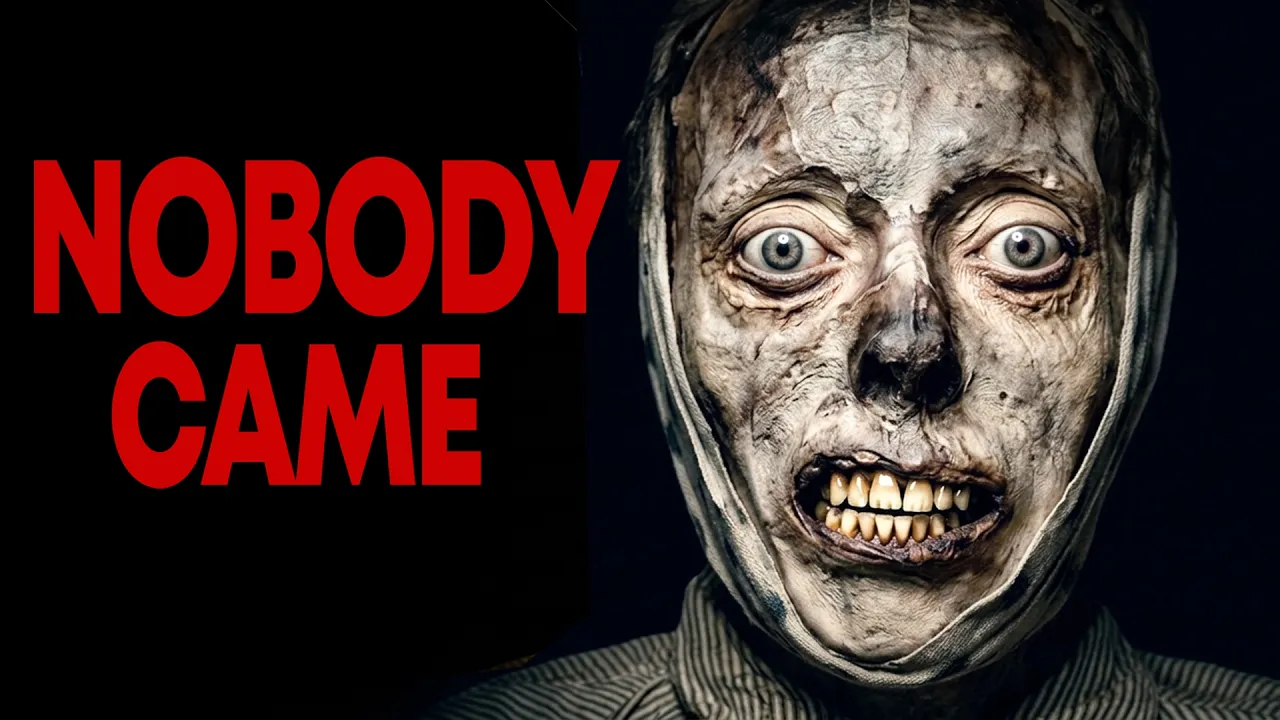
Buried Earth · @BuriedEarth
Where viewers went back to watch this video again, from YouTube's public Most replayed graph, lined up with what was said at that moment.
Most replayed moment #1
8:399.2x the video's typical replay level
been working. He'd been too sick to work for weeks or maybe even months before he died. The cause of death was pneumonia in a body already devastated by chronic illness. Hartnell and Brain, exhumed [music] two years later, told similar
Said at 8:33
Most replayed moment #2
5:316.6x the video's typical replay level
the Arctic and found nothing. No camps, no ships, no bodies, just ice. Then, in August of 1850, they found Beechey Island. August 23rd, 1850, Captain Ommanney's search party
Said at 5:23
Most replayed moment #3
17:505.3x the video's typical replay level
liars by nature. He used openly racist language to dismiss their testimony. The essay wasn't subtle. It wasn't reluctant. The most famous writer of the Victorian age used his platform to tell the British public that the people
Said at 17:44
The graph counts replays. It does not show where viewers stopped watching.
Words
3,648
Runtime
26:13
Speaking pace
139wpm
Reading time
15min
139 words per minute, below the 160 25th percentile of 349 measured videos. That distribution comes from the 349-video hook study.
Opening (first 30 seconds)
I need you to look at something. This is a photograph of a 20-year-old boy. His name was John Torrington, and the reason he looks like he died just a few weeks ago is because he's been frozen in the Arctic ice for 138 years. If you look at his face, his eyes are partially open. His eyelashes are intact. His skin is preserved. And if you look a little
70 words, the words spoken in the first 30 seconds at 139 words per minute.
Free, no signup. See how the first 30 seconds hold attention, with rewrites.
Sentence shape
| Measure | This transcript |
|---|---|
| Sentences | 275 |
| Average words per sentence | 13.3 |
| Longest sentence | 54 words |
| Questions asked | 3 |
| Sentences containing a number | 72 |
Most used terms
Filler phrases
9 in total: like 4 · uh 2 · actually 1 · basically 1 · kind of 1.
A literal whole-word count of the same phrase list the Prepublish browser extension uses, so a phrase inside another word is not counted and a phrase used in its ordinary sense still is. It is a count and not a judgement.
What this transcript is
Every word below is the caption track YouTube publishes for this video, pulled from the video itself and reproduced unchanged. It is not Prepublish's writing, not a summary, and not a re-transcription: it is the video's own published captions. English captions, generated automatically by YouTube, in the video’s original language. Source: the video on YouTube. A channel that would rather this page did not exist can ask for its removal through the contact page, and it is removed.
I need you to look at something. This is a photograph of a 20-year-old boy. His name was John Torrington, and the reason he looks like he died just a few weeks ago is because he's been frozen in the Arctic ice for 138 years. If you look at his face, his eyes are partially open. His eyelashes are intact. His skin is preserved. And if you look a little further down, you can see that someone has wrapped him in a shroud.
Someone bound his arms and feet with strips of linen on a frozen island at the top of the world in January of 1846. He was the first of them to die. 129 men sailed into the Arctic with him. Nobody came back. My name's Joe, and this is one buried earth video that is definitely worth your time. So, in 1845, Britain was at the peak of its empire, and there was one last stretch of unmapped coastline that would let ships sail from the Atlantic to the Pacific.
They called it the Northwest Passage. Whoever finally charted it would prove that British technology could conquer any environment on earth. Sir John Franklin was the man who chose to do it. 59 years old, a national hero, he had a strange nickname left over from an earlier expedition where he and his men had starved so badly they'd been reduced to boiling their boots and eating leather. The British public called him the man who ate his boots, and somehow that survived as a badge of honor rather than a warning.
The Admiralty, basically the people that control the Royal Navy, gave him two of their best ships, HMS Erebus and HMS Terror, bomb vessels designed to fire massive mortars in battle, now reinforced with iron plating and fitted with steam engines adapted from railway locomotives. There was food planned for the next 3 years, and a trained crew of men. They left Greenhithe on May 19th, 1845. In late July, whalers seen them in Baffin Bay waiting for the ice to open so they could sail into Lancaster Sound.
The crew looked confident. That was the last time anyone had ever seen them alive. Now, I want to come back to that boy in the coffin because John Torrington died before anyone in Britain had even suspected anything was wrong. He was 20 years old, a leading stoker on HMS Terror, one of the men who shoveled coal into the steam engines below decks. He died on January 1st, 1846, about 6 months into the expedition. They were wintering on a small Arctic island called Beechey.
His shipmates dug a grave in the permafrost, wrapped him in a shroud, placed a wooden headboard over him that read, "Sacred to the memory of John Torrington." And they moved on. Two more men died within 3 months. John Hartnell, aged 25, and William Brain, aged 32. Three graves on a frozen island before the expedition had really even begun. And somewhere during the first winter, someone wrote something down. A single piece of paper sealed in a can.
That paper wouldn't be found for another 14 years. And when they finally found it, it would change everything. But, before we get to that paper, I want you to understand what kind of ships these were because they weren't survival vessels. They were floating dinner parties. The reconstructed provisioning records list over 8,000 tins of preserved food, 9,000 lb of chocolate, 2,000 lb of tea, 20,000 pints of concentrated soup, enough food for 129 men for 3 years.
But, they also brought silverware, china plates, cut glass decanters, a small printing press, a library that included Bibles, reference works, and novels, cutlery sets engraved with officers' family crests, and slippers, scented soap. The list goes on and on. These weren't explorers packing light. They were Royal Navy officers who believed they were carrying British civilization into the Arctic. And I want you to remember these details, the silverware, the soap, the slippers, because they come back later in the story in a way that maybe will turn your stomach.
For 2 years after the last whaler sighting, nothing. Arctic silence was normal. By 1848, people started to get worried, though. The Admiralty launched the first search parties. Lady Jane Franklin began what would become a 30-year obsession. She would personally fund at least five research expeditions, and declare she would spend her entire fortune to find her husband. She nearly did. For 2 more years, search ships probed the Arctic and found nothing.
No camps, no ships, no bodies, just ice. Then, in August of 1850, they found Beechey Island. August 23rd, 1850, Captain Ommanney's search party finds the first traces at Cape Riley. Four days later, a separate party led by William Penny finds the graves on Beechey Island. What they find isn't just a campsite, though. It's a fully organized winter station, workshops, a forge, a washhouse, stacks of hundreds of empty food tins, evidence that 129 men had lived here through the Arctic winter.
And the three graves, named, dated, and marked with wooden headboards. But, here's what makes this discovery a little bit disturbing. There was no note explaining where the ships went. Every Arctic expedition was supposed to leave a paper in a can saying, "We're heading this direction." So, rescuers could follow. Beechey had none. It was as if the expedition had packed up really quickly and left without a forwarding address. >> [music] >> The searchers couldn't find the ships.
The Arctic summer is short. They went home empty-handed. For the next 134 years, those graves would be a mystery. Why was there three? Why so early? What had killed them? Then, in 1984, an anthropologist named Owen Beattie decided he was going to find out. He and his team traveled to Beechey Island and dug down through the permafrost, coffin ice, and frozen gravel for days to reach bodies that had been buried for 138 years.
And when they opened John Torrington's coffin, what they saw stopped everyone in their tracks. He looked like he had died just a few weeks earlier. His face was preserved. His eyes were partially open. His eyelashes were still there. His skin hadn't decomposed. He was still wearing his burial clothes from January 1846. I want you to understand what this is like. You've spent days digging through frozen ground to reach a coffin.
You've prepared yourself to find a skeleton. Instead, you're looking at a young man, a specific [clears throat] young man with a specific face staring at you from 138 years under the ice. They photographed him. The photograph became one of the most famous images in polar exploration history because for the first time the public could see the face of someone that had sailed with Franklin. When they performed the autopsy, the details were devastating.
Torrington weighed 38 and a half kilograms at the time of his death. That's about 85 lb for a 20-year-old man. His hands had no calluses. He hadn't been working. He'd been too sick to work for weeks or maybe even months before he died. The cause of death was pneumonia in a body already devastated by chronic illness. Hartnell and Brain, exhumed [music] two years later, told similar stories. Respiratory disease, probably tuberculosis. >> [music] >> These men weren't killed by the Arctic.
They'd brought death with them. They were dying before the ships ever got trapped in the ice. But here's a detail I keep thinking about. Someone took the time to wrap Torrington in a shroud. >> [music] >> Someone carved his name and his age into a wooden headboard and drove it into the frozen ground above him. In January, on an island on the top of the world with 126 other men still alive and expecting this mission to succeed.
And it's really easy to just think about that person that did that work. >> [music] >> Because within two years most of them would also be dead. And the dignity they gave Torrington, that careful burial would not be available to anyone anymore. By the end of the expedition, men were being broken apart on the ice for what was left inside of their bones. But, in January 1846, before anyone knew what was coming, someone still believed in ceremony.
Someone still believed that they were part of civilization. The bones from Beechey also told scientists something else. Extremely high levels of lead. For decades, the theory was that the crew's tin food had been poisoning them. Newer research has complicated that. >> [music] >> Lead was in their bodies, but it wasn't the whole answer. These men were dying of pneumonia, tuberculosis, scurvy, starvation, and lead exposure all at the same time.
The Arctic didn't kill them with one weapon, it used all of them. For nine more years after Beechey was found, search expeditions combed the Arctic. Nothing. Then, in 1859, an expedition led by Francis Leopold McClintock finally reached King William Island. His lieutenant, William Hobson, found a can on the northwest coast. [music] Inside was a piece of paper, a standard pre-printed [music] Admiralty form. One sheet, two messages.
The first was dated May 28th, 1847. Written by two officers named Graham Gore and Charles Des Voeux, it reported that the ships had wintered at Beechey, sailed further north, and had been trapped in the ice since September 12th, 1846. And the message ended with two words, all well. >> [music] >> That's how the first message ended. All well, signed in May 1847. Neat, confident, standard Royal Navy form. >> [music] >> Here's where this document becomes one of the most haunting things in the history of the exploration though, because 11 months later someone took that same piece of paper out of the can and in the margins around the original confident message, they wrote a second message dated April 25th, 1848.
And if you look at this document today, you can see that the handwriting is different. It's cramped, crowded, squeezed into every available inch that's left in white space around the edges of the page. It was signed by Captain Francis Crozier and Captain James Fitzjames. And the message said that Franklin had died on June 11th, 1847. Nine officers and 15 men had also died. The survivors, 105 of them, were abandoning the ships tomorrow.
They were heading south on foot towards Black River, 400 km away. James Fitzjames is the name I need you to remember here. He was the captain of HMS Erebus. He had written part of the first message that ended with all well. And now he was signing the second one and said everyone was leaving the ships. He was alive on April 25th, 1848. One of the 105 men about to walk onto the ice. And here's something that's just insane.
We know what happened to him. We only found out in 2024. The note told the world what happened to Franklin, but it also told the world the last known location of 105 men who were about to walk south through the Arctic landscape in winter clothing. With 19 months of starvation and disease behind them, toward a river that might as well have been on the moon, none of them would make it. And what they carried with them on that march is one of the most disturbing details of this entire story. 105 men walking south on foot in April 1848 across sea ice and frozen tundra.
Most of them were already dying. Scurvy was tearing their gums apart. Tuberculosis was eating at their lungs. Lead was in their blood. Starvation had been weakening them for over a year. As the march continued through 1848, they began to fall. Searchers would later find boots scattered across the coast, clothing, metal tools, ammunition, a trail of dropped possessions stretching for miles as men gave up carrying whatever they could no longer hold.
Then, at a place called Erebus Bay, McClintock's 1859 search party found something they couldn't explain. A full-size ship's boat sitting on a heavy wooden sledge, two human skeletons inside. I want you to picture this. Men who were dying of starvation had somehow dragged an entire ship's boat out of the wreck of the expedition and lifted it onto a sledge and then pulled it across the ice behind them. A ship's boat weighs thousands of pounds, and they were hauling it in the worst physical conditions of their lives.
But the boat itself wasn't the strangest part of all of this. It was what was inside. Books, clothing, equipment, ammunition, two pairs of slippers, bars of scented soap, silk handkerchiefs, carpet bags full of personal possessions, and 40 lb of silver plate, forks, spoons engraved with the officers' family crests, 40 pounds of silverware dragged across the Arctic by men who were dying. That silverware detail gets me every time I proofread this script because it isn't madness, not entirely.
It's something worse. It's habit. These were Royal Navy officers who had been raised to believe that British gentlemen dined with silverware. They were trained their entire lives to protect their tea service, and even in total collapse, they couldn't stop being who they were. So, they carried the silverware until they dropped dead on the ice next to it. And I think that tells you more about what killed these men than lead ever did.
By the time McClintock's party traced the coast, they found scattered bones, evidence of hasty camps, equipment thrown down in the final moments of these people's lives. Most of the 105 men vanished in that landscape, but there were a few witnesses. Inuit witnesses. People who had been telling the truth about what happened to these men for decades, and who for decades had been called liars. In 1854, 6 years after the abandonment, a Scottish doctor and Arctic explorer named John Rae was traveling in the region, and Inuit hunters gave him something he had not expected.
Objects. A silver spoon engraved with Franklin's crest, small medals, pieces of silverware from the officers, artifacts that had belonged to specific men, and testimony. They told him about white men dragging sledges south, men who staggered and fell as they walked, camps strewn with bodies, cut marks on human bones, boots that contained cooked human flesh. And this just gets crazier, by the way, guys. Rae carried objects and the testimony back to England.
When he published his findings, Victorian Britain erupted. Charles Dickens, uh yeah, that Charles Dickens, wrote an essay in his magazine Household Words. He attacked Rae's report. He said that there was no acceptable proof, and then he went further. He said the Inuit were liars by nature. He used openly racist language to dismiss their testimony. The essay wasn't subtle. It wasn't reluctant. The most famous writer of the Victorian age used his platform to tell the British public that the people closest to the disaster were not to be trusted.
Lady Jane Franklin supported him. She spent the next two decades protecting her husband's reputation from the cannibalism allegation. She shaped a heroic journey. Franklin as the gentleman who died discovering the Northwest Passage. The cannibalism claim was buried for over a century. But the testimony didn't disappear. It just went unheard. Bear with me on this one, guys, but an Inuit named Inukpuk had told Rae what he saw.
Later, he told an American named Charles Francis Hall, who spent years living with the Inuit in the 1860s and took their accounts seriously. Another named Peturak described a tall ship that had settled in the ice and his people boarding it. A dead man inside. The interior had been recently swept, suggesting someone had still been living aboard. Other witnesses, dozens of them, by the way, described the same patterns.
Nobody in London listened. Then, in 1981, Owen Beattie, the same anthropologist who would later exhume Torrington, found cut marks on a human femur from King William Island. In 1997, a larger study led by forensic anthropologist Anne Keenleyside examined approximately 400 bones from a Franklin site. They found cut marks on about a quarter of them, consistent with butchery. In 2015, a reassessment of 35 bones found evidence of end-stage cannibalism.
Bones that had been broken open and heated in cooking vessels to extract the marrow inside after all of the flesh had already been consumed. Every Inuit testimony for 150 years has been correct. Every detail. The sledges, the cut bones, the knife marks, the boiling. And Britain had spent those 150 years refusing to believe any of it. In 2024, almost 180 years after James Fitzjames sailed out of England, researchers announced something that closed a circle.
DNA analysis of remains recovered from King William Island had identified Captain James Fitzjames, the charismatic commander of HMS Erebus, the man who had written part of the All Well message in 1847, the man who had signed the desperate second message in 1848. His remains were found 80 km from the abandoned ships, not 400 km south at the Black River, only 80. He didn't make it far, and his bones showed cut marks consistent with butchery, consistent with the patterns seen across the other cannibalized remains on the island.
Think about what that means. The man whose handwriting said "All well" in 1847, who led the second message announcing the abandonment, who walked onto the ice expecting to march his men to survival. We know now his remains were processed for food by the men he was leading. That charismatic captain was eaten. [music] That finding is one of the most devastating results in modern archaeology. But the story doesn't end there.
In September 2014 at Parks Canada, an expedition found HMS Erebus on the seafloor of the Queen Maud Gulf. In shallow water, almost exactly where Inuit oral history had always said it would be. Two years later, in September 2016, HMS Terror was found 60 miles away in a place now called Terror Bay. Upright, remarkably intact. Dinner plates still on the shelves in the officer's mess. Wine bottles still in the storage rooms.
The ship had settled gently enough that almost everything inside had been preserved. The search succeeded because a Parks Canada team followed a tip from an Inuit named Sammy Kogvik, who had seen wood sticking out of the ice years earlier. That sighting matched elder testimony passed down through generations. Parks Canada has said directly that Inuit knowledge was central to both discoveries. The people Dickens had dismissed as liars found what the Royal Navy couldn't find in 170 years. >> [music] >> There's also one more person I need to tell you about.
An Inuit historian named Louie Kamookak from a small community called Gjoa Haven on King William Island. He spent his entire life collecting Franklin stories from Inuit elders, mapping their testimony onto old navigation charts, preserving the oral history that his ancestors had always known. Parks Canada has said his lifetime of work contributed directly to finding both ships. He died in 2018 before Fitzjames was identified.
But it was his work and the work of generations before him that finally forced the outside world to admit what the Inuit had always said was true. 129 men sailed from Greenhithe in May 1845. >> [music] >> Three died at Beechey Island in the first winter. 24 more had died by April 1848, Franklin among them. 105 walked into the ice that spring. Of all 129, zero ever came home. And it would take another 170 years for the world to admit that the people who had been watching it happen had been telling the truth the entire time.
The ships themselves are disappearing now. >> [music] >> The same Arctic warming that retreated the ice and let us find these wrecks is also destroying them. HMS Erebus is collapsing under stronger storms every single year. The Arctic is giving Franklin back to us and then taking him away again. And I keep coming back to Torrington in this video. The 20-year-old boy in the coffin, the first one to die, wrapped in a shroud with his hands tied across his [music] chest on a frozen island at the top of the world in January 1846.
Someone did that for him. Someone that believed that they were part of civilization still and that ceremony mattered. Someone who properly thought that they'd get through the winter and sail on and find the passage and come home as heroes. Within 18 months, the person that Barry Torrington was almost certainly dead. And with another 18 months, men were breaking open each other's bones on the ice to get what was left inside of them.
Between the careful burial and the broken bones, there's a whole world collapsing. A whole idea of empire, a whole idea of whose voice counts as a reliable witness. The Inuit were right. They were right about cannibalism. They were right about where the ships were. They were right about everything. British officials didn't want to hear it. The ships were found by finally listening. And that's it for me, guys. Thank you so much for watching.
My name's Joe. This Buried Life video was so much fun to make. I actually had no idea about the story until I found it and started researching. The more and more I learned, the more fascinating it was to learn. I really hope I did this story justice for you guys. Uh yeah, on screen right now, two videos I think you're going to absolutely love. Hit the like button and subscribe to Buried Life so you don't miss the next episode.
The words are the caption track's own and nothing is reworded or re-transcribed. Paragraph breaks are placed between sentences so the text reads as prose.
Free tools for your own script. No signup, no login.
Paste your draft and see where viewers are likely to drop off, with a rewrite for each weak line.
Paste the first 30 seconds of your own draft for a hook score and rewrites.
Check your draft against YouTube's advertiser-friendly guidelines before you record it.
Read this channel's public videos and transcripts, and download a writing brief for it.