Getting the transcript
Reading the captions from YouTube. A video nobody has opened here before takes 10 to 30 seconds; this page fills in on its own.
Getting the transcript
Reading the captions from YouTube. A video nobody has opened here before takes 10 to 30 seconds; this page fills in on its own.
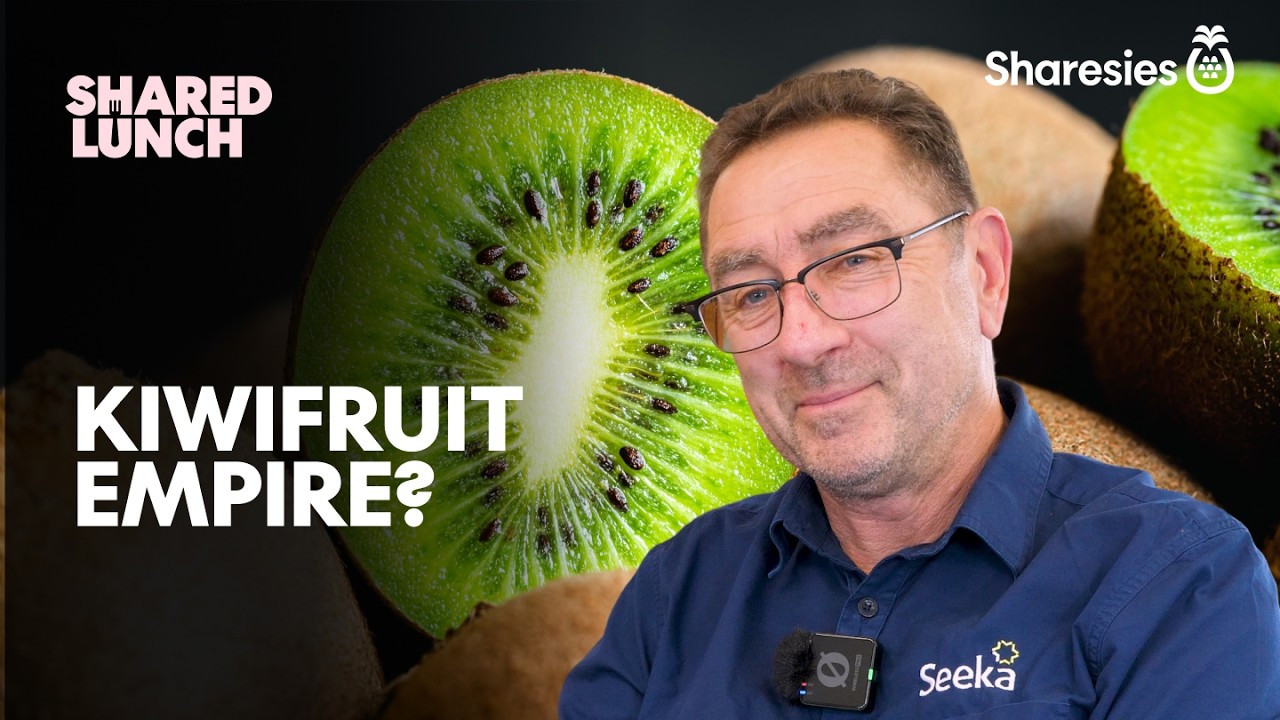
Sharesies · @Sharesies
Words
4,107
Runtime
21:58
Speaking pace
187wpm
Reading time
17min
187 words per minute, between the 181 median and the 201 75th percentile of 349 measured videos. That distribution comes from the 349-video hook study.
Opening (first 30 seconds)
Kia ora and welcome to Shared Lunch. My name is Luke Smith of Sharesies and today we're at Mount Maunganui in the Bay of Plenty talking to Seeka, one of New Zealand's largest horticulture services companies. We're going to be talking to CEO Michael Franks about the exciting role that kiwifruit's playing in the New Zealand economy, how players like Seeka play [music] a really key role in the industry, and also trends that we're seeing such as automation. So we're about to go check out some of that at play here at Huka
94 words, the words spoken in the first 30 seconds at 187 words per minute.
Free, no signup. See how the first 30 seconds hold attention, with rewrites.
Sentence shape
| Measure | This transcript |
|---|---|
| Sentences | 293 |
| Average words per sentence | 14.0 |
| Longest sentence | 61 words |
| Questions asked | 35 |
| Sentences containing a number | 34 |
Most used terms
Filler phrases
164 in total: um 65 · uh 59 · you know 16 · actually 11 · like 10 · sort of 2 · I mean 1.
A literal whole-word count of the same phrase list the Prepublish browser extension uses, so a phrase inside another word is not counted and a phrase used in its ordinary sense still is. It is a count and not a judgement.
What this transcript is
Every word below is the caption track YouTube publishes for this video, pulled from the video itself and reproduced unchanged. It is not Prepublish's writing, not a summary, and not a re-transcription: it is the video's own published captions. English captions, generated automatically by YouTube, in the video’s original language. Source: the video on YouTube. A channel that would rather this page did not exist can ask for its removal through the contact page, and it is removed.
No Script X-ray for this video: YouTube shows a Most replayed graph only once a video has enough views.
Kia ora and welcome to Shared Lunch. My name is Luke Smith of Sharesies and today we're at Mount Maunganui in the Bay of Plenty talking to Seeka, one of New Zealand's largest horticulture services companies. We're going to be talking to CEO Michael Franks about the exciting role that kiwifruit's playing in the New Zealand economy, how players like Seeka play [music] a really key role in the industry, and also trends that we're seeing such as automation.
So we're about to go check out some of that at play here at Huka Pak, one of their packing sites. >> Investing involves risk. You might lose the money you start with. We recommend talking to a licensed financial advisor. We also recommend reading product disclosure documents before deciding to invest. Everything you're about to see and hear is current at the time of recording. >> To see what Seeka actually does behind [music] the scenes, we threw on some hairnets and headed inside the Huka Pak facility near Mount Maunganui with Michael. >> How are you, Luke? >> All right.
Thanks for the hard work. >> Good. Yeah, yeah. >> Seeka operates 11 sites like this around the country. >> This technology's out the gate good. The fruit's coming from the orchard. >> Yeah. >> Uh, we've got so many bins. It sits for a certain amount of time being cured. Each bin is weighed. Tipped. These guys are looking for soft fruit. See? It's soft. Got juice all over it. [music] Can't throw it away. Then it's coming in here being brushed clean and it's coming down here to this, um, Seeka's fruit scan and and the computer AI is deciding whether it's in or out depending on what it's seeing. >> And it's automatically distributing it up the >> And then it's So the fruit that's perfect will go straight to the drop. >> Yeah. >> Um, the fruit that needs to be checked will come down to a grading table and the humans will check it.
So only the fruit that needs to be checked will go past the human. >> Before we put this in, there would have been 40 people standing there and there aren't. There's only six and a supervisor. We can tell you everything about this line by looking at those screens. It's like a dashboard on your car. You can ask me anything. I can tell you exactly what's going on with the chain by looking there. So, this is a conventional gold line.
It's running through. So, 93% of what's going up in is going into a tray. 7.3% been rejected. .7% gone to class three, so it's gone to local market around there. And then the rest of it's undersized a little bit and waste is 4.4. >> 1,300 trays per hour here. >> Yes, see you ask how long does it take? Oh, minutes. >> Yeah, yeah, yeah. >> Like a minute. >> Impressive. >> Okay, Michael. To set the scene, and as a consumer when we're thinking about kiwi fruit, it's usually synonymous with Zespri.
But I understand that there's a lot more players behind the scene. Can you Can you just describe what does Seeka do and how do you fit in the kiwi fruit ecosystem? >> Yes, so Seeka's an integrated produce company that's listed. We are the only one that's listed with kiwi fruit as our foundation variety. We are a large grower of kiwi fruit in New Zealand, mainly through leased and managed orchards. And we've got a network of highly automated packhouses throughout the major growing regions. 11 packhouses in total. >> So, I've heard Seeka described as a post-harvest provider.
What is that For people new to that concept, what does that actually mean? And could you Could you take us to the point of, you know, a tree's planted through to I'm actually enjoying a delicious kiwi fruit. And how does Seeka fit within that process? >> So, in our orcharding business, which produces around 40 to 45% of the fruit that we handle, an orchard is planted, the structures are developed, which means the frames that the kiwi fruit grows on, and any protection and irrigation put in place.
Those plants are trained through to production. It might take 3 to 5 years depending upon the variety. And then um, once the orchard is yielding, um, it moves through to the post-harvest sector. So, the fruit's on the vine, it matures, and the post-harvest effectively arranges, um, for the clearance of that fruit to make sure that it's safe, make sure it's got no residues, make sure it's mature, uh, and ready to go, arranges the harvest of that fruit either by, uh, the growers themselves or through a service that we might provide.
We schedule the reception of that fruit to one of our packhouses. Uh, it is allowed to rest to get the shock of being picked out of its system. Uh, and then we will put it across one of our automated packing facilities, grade it into class one, class two, or class three, so for the relative markets. Uh, and we'll put that fruit to sleep in a cool store to be loaded out, uh, at a time that we are ready. >> How long does that fruit sit in the cool store? >> Well, it depends on the part of the season that we're in.
Early in the season, that, um, fruit might only sit in the cool store for a number of weeks. We start harvesting fruit of all, um, types in New Zealand around mid February with kiwiberry. We will finish harvesting in a normal season in the first week of June. The last of the fruit will load out from our stores sometime in late November. So, we've got to be very good in segregating the product as a perishable, uh, to maximize the amount of fruit that we deliver to the premium markets in top condition, so that the marketeer can make my the most money out of it. >> So, we're here at the Hooker facility.
Can you describe what's happening here and what is the significance of those sites? >> So, um, Hooker Pack is one of our 11 packhouses. It's, uh, um, it's a site with two of our 17 machines that we've got in the fleet. All organic fruit that we handle, uh, is packed here. Um, it's a very, um, a unique site. This, the land under which we are sitting at the moment is not owned by us. It is leased, um, from a Maori entity, Te Awanui Hooker Pack, uh, for 99 years.
Everything above all the ground and all the improvements owned by us. Uh and you know, this site's going to handle somewhere between 4 to 5.5 million trays of fruit this season. >> Mhm. And and scale-wise, can you just talk to us around what in the peak of the season, how many trays are you producing across the country? >> So, um each tray uh is 3.6 kilos. Uh we um will handle at at at the peak somewhere between 980,000 and a million trays a day of um class one product that's been packed and graded into the box.
This season we expect to handle somewhere between 45 and 47 million trays. Uh and we handled 47 million trays last year. >> Where where where your operations based? Um how how how big is the business today? >> Uh um our 11 sites sort of span from Tairāwhiti Gisborne all the way through to Kaitaia and Kerikeri and Te Puke. Uh and across those sites, while we predominantly handle kiwifruit, we are also handling persimmons, citrus, and avocados.
So, there's a lot going on. >> Yeah, right. >> Um in terms of scale, uh today we would have around 3,500 seasonal workers directly employed in addition to our 700 per minutes. >> Yeah. You You mentioned you've got other products outside of kiwifruit. You're also in Australia as well. Can you speak to the reason for starting to diversify? Uh what was the reason of going over to Australia? >> We've got um a number of parts of the business outside um of our core product, which is kiwifruit, including our wholesale marketing operations uh and our Australian business.
Australian business gives us some geographical diversity, takes us into a different um region. It's predominantly kiwifruit, but we're also growing European pears, Asian pears, nashi, uh jujubes, um and we've got some exciting new varieties that we are um trialing over there. >> And latest result to 31 December, revenues of 440 million, I think it was. Seems like things are going well. How would you describe how things are going at Zespri at the moment? >> Well, last year uh was a perfect year for us.
It was a perfect growing season. The volumes were good. Regional volumes were excellent. Uh and um you know, we were pretty happy with how the whole season came together in all parts of the business really. Didn't face too many headwinds. This year is a different growing season. We've had a lot of climatic uh issues particularly early on, if you remember back to Easter. Volumes are off a little bit, a little bit in the regions, uh but not not not too far away.
And so, actually we think the season is okay. Yeah. >> And Michael, just personally, you've been in the game for a long time. I think I actually found somewhere that you referred to as the kiwifruit hotel manager. Um what what what gets you out of bed every morning working in the industry? >> Well, I think um that the that comment around um the kiwifruit hotel manager, when people who don't understand what we do ask what we do, well, effectively we run a hotel for fruit.
We've got infrastructure assets right across the major growing regions. And for a fair proportion of our occupancy, we arrange it cuz we're the grower in some form, you know, with the landowner. And so, um that's quite a nice uh analogy for us. Uh in terms of what gets me out of bed in the morning, well, when I became the CEO, we were a far different company than we are today. Look, we only had revenue of um $30 million.
And our and our listed entity was we've got two. Uh now revenue of $440 million. You know, it's a very very different business. There's a lot going on in it. Um there's not too many people understand the the the depth and breadth of the activities. And so, um what gets me out of bed in the morning is the next thing that needs to be done. >> Mhm. Mhm. I'm a bit slow to catch on to this point, but kiwi fruit actually imported from China, so Chinese gooseberry and then re-renamed kiwi fruit off the fuzzy brown exterior of the kiwi bird.
Um I can't believe it took me so long to figure that out. But why does the world love kiwi fruit so much? >> Um well, the answer is that it is a very nutritious piece of fruit and it's high in vitamin C, it's high in all the vitamins. It's very good for your digestive health. You can eat it with the skin on or off. It's grown here in New Zealand um to very safe standards. You know, it's nearly organic. The few chemical sprays that we apply sort of don't don't have any significant consequence to anyone.
And so the clean, green, nutritious product that we're producing, you know, the people want it the world around and it's a phenomena. It really is. >> Talking about the competitive landscape, there are multiple post-harvest providers. Where do you sit in terms of market share and how do you how hard do you have to work to retain that volume? >> Um so we're the second largest post-harvest company. We're the largest grower.
Uh and while we've got a single desk in Zespri that coordinates all of the marketing, the next layers down are competitive. And that's actually quite an efficient model for growers because if we competitive, we're looking for ways to innovate, to take costs out, to automate, uh to be faster, better, smarter, and deliver a better quality product to the market. So um we are the second largest behind a quite co-op. We've got about 20% market share in the kiwi fruit sector. >> You mentioned there the incentive to drive automation, efficiency, uh margin improvement.
Can you can you point to some of those things that you're doing in the business? >> Yes, I mean our our goal was to have an array of highly automated and efficient machines close to where the fruit's grown and all and across all of the major growing regions. We want to hire New Zealanders, but the volume that we're handling over time is going to go up. Uh and labor's expensive, and so and sometimes doesn't want to turn up.
Uh and so um the alternative to that is for us to automate. And so we are automating, we are innovating, we have brought some new technology to the industry this year um to remove uh labor and to make us faster, better, smarter, and that's that's the game that we play. >> So technology and and AI, where is that showing up? Like are we talking robotics within the orchard, within the packhouse, or is it a bit too early? >> Well, I think the technology has yet to really extend into um orcharding.
Orcharding techniques and growing is really just innovating you on on old traditional methods. But in post-harvest is a high level of um automation and sophistication coming in. You know, um in terms of not just packing machines, but also fully automated cool stores aren't too far away. Uh and we've got AI AI operating um at Seeka really to help us segregate the product that we've got in store. When we get an order to load out of a hundreds of thousands of pallets of product we might have across our network, which one should we load out next because it's the next most deserving one to go, and are leaving behind the ones that might last all the way to the end. >> What are the big pressure points or risks in the business?
What keeps you up at night? >> Well, nothing really keeps me up at night. Um but but you know, we are in a period of significant inflationary pressure. Electricity is just going very high, and this company uses 45 gigawatts of power in a year. And we are one of the big electricity users to keep our cool stores running. Packaging costs are going up. Uh and so you know, those inflationary pressures um are an issue and that we're having to pass those costs on to growers.
Um and that's probably number one. Probably number two is is compliance. Um, we use a lot of uh contractors and contractor compliance um is an issue that the industry faces, that we face. Uh we've got our own compliance team in the company making sure that uh um the companies that work for us providing us with labor services on our orchards are compliant uh and treating their people as they should, you know, beyond the um beyond the regulation. >> Mhm.
With the rising demand and prices of energy, how are you looking to mitigate that at Zeca? >> Well, um we do have solar. Uh we've got 1,000 kW of solar on the roofs of our cool stores now. The unfortunate fact about that is that um they produce electricity in the summer and we use it in the winter. And so um we uh we have got technology in the company where we are looking about the load management, bringing cool stores up more slowly, managing when they cycle, what times of the day we might turn them on or off to to minimize electricity and that should reduce our power demand by 5 to 10%.
But at the end of the day, we are a big user. >> Mhm. And and climate side, with long-term changes in temperatures or rainfall, um how how are you needing to adapt in terms of where you grow over time? >> Look, climate change is real. It's not something that's going to come, it's something that is here now. We're adapting to it by uh introducing rootstock which is more uh tolerant to high levels of of rain of water. Uh we are adapting to it with new varieties that may not need so much winter chill.
Uh and so actually around us um now uh there is, you know, things happening that should make us more resilient. Uh but we are a company and we are a sector and an industry which um grows fruit outside and there will always be risks that come with weather events which are beyond our control. >> 2023 sounded like it was a really challenging year that you've successfully navigated out of. What when you reflect back on it, what would you impart or pass on to leaders who are going through challenging times? >> Well, I think [clears throat] I think in our company there's a couple of things I'd say.
Firstly, we are fortunate that we've got fantastic people right across the business. So, there actually wasn't a problem with the leadership or the management of the company. The simple problem that we had was the occupancy in our hotel was down below break even. And we understood that over a period of time the volumes would come back. And what we needed to do was make the changes in that time so that when we did come back we were far more resilient and far more conservatively set financially and operationally as a company and that's exactly where we are now.
So, we held to the strategy, it's delivered pretty well. We held our nerve all the way through there and that in itself is a skill. But thankfully now things have got better and and and we've rewarded our shareholders with higher returns and higher dividends. >> Mhm. So, speaking of let's talk about those tailwinds. What are the winds in the sail for Seeka? >> The things that are driving us to a better place is that we have got a sector which is growing.
Zespri are releasing new varieties. More orchards are being developed and coming into production in the regions in here centrally. And so there should be good demand for our occupancy in in the future for that part of our business. And so you know the the headwinds notwithstanding there are some tailwinds behind us which which you know strategically should play out quite well. >> One thing we one thing we haven't touched on is SeekaFresh.
Can you talk us through that? >> So, SeekaFresh is quite of an important part of our business because most of what we're handling most of the fruit that we're handling is going through to Zespri. But actually the fruit that we don't supply to Zespri, whatever the variety is, is is um marketed through a company called Seeka Fresh. That company is exporting avocados around the world. It's exporting a kiwiberry around the world, sometimes in conjunction with Freshmax.
Uh it is also importing produce to New Zealand, bananas, seven or eight containers a week, pineapple, papaya, as well as marketing avocados, kiwifruit, and kiwiberries inside New Zealand. So we have our own whole effectively connecting the company through uh to retailers and the consumer. >> Right. And is that a growing part of your strategy? >> Well, the answer is um is a lot of activity and a lot of action there and it's got momentum behind it.
Uh so um it's not a big part of our business, but it's going tremendously well. >> Okay. Zespri have announced that they're opening up uh I think it's 400 hectares of new SunGold license. How is Seeka looking to capture that uh growth? >> So in reality, um Seeka doesn't play in that market. The growers that supply Seeka, or those growers who have their orchards managed or leased by Seeka, will determine whether they want to play in that game or not.
We monitor uh how many of them are buying what so we can lay on the capacity for them and make sure we got occupancy for them when they need it. Uh but outside of that we don't play. But the key thing for us is it means that we're going to have increased demand for our infrastructure services um when those orchards come on stream. >> Mhm. A little bit more niche, but your thoughts on the new red 80 variety that I hear had some pretty good prices at the recent auctions. >> I think the red 80 um variety sounds uh and looks to be excellent.
We understand it's got good size and good yield. Um Zespri certainly have been promoting it heavily in places like the field days. Uh it was very well supported in the most recent auction. So we're looking forward to handling that product when it comes ready to production. >> Mhm. And the India free trade agreement that's just been recently announced, does that help increase demand? >> Well, I think in reality what it does is it gives Zespri the potential for another market to be added to its mix cuz at the moment we're paying high tariffs in that market.
And so, there is an opportunity for Zespri one to to improve the returns it's currently getting from India and two, sell more fruit into that market and give it some resilience in case some of the other markets falter or they have economic issues or geopolitical issues within the market that actually slows them down. So, having another outlet for them is excellent. >> Mhm. What what makes a grower choose Seeka over the other providers? >> Other than me? >> Yeah. >> [laughter] >> Well, effectively we've got excellent performance for growers.
We've got the past capacity to handle the fruit when they need it. We're very disciplined. We keep things and keep product within very tight disciplined timelines. We are cost-effective. We are there or thereabouts, you know, amongst in the lowest quartile cost. We've got excellent orchard performance, excellent offshore quality. That's how we should be measured as to how good is the fruit that we're giving the marketer in whatever markets we're operating.
How good is the fruit quality that we're giving them to sell and get a premium for our fruit back in New Zealand? So, we've got good demand for our service. We've got more growers coming every year. And, you know, our issue really is to maintain capacity. >> Mhm. What does Seeka look like in 5 to 10 years? >> Well, that's the question. Seeka has in its history grown by acquisitions. We're nothing like the company we were 20 years ago.
And I suspect in the next 5 to 10 years we'll be much bigger and a much more diverse company than we are today. >> What are you most optimistic about for the industry looking ahead? >> I I I am optimistic that we are um the producer of the world's best kiwifruit, best quality kiwifruit. We've got a tremendous brand. We've got great fruit quality. Uh and um I believe that that puts us in a good stead for the future. >> Mhm.
Well, thank you very much, Michael, for your time. Um this has been really interesting. And thank you for the hard work that you do and the team at Zespri do to provide a great product out to consumers. And we'll go check out these sites. >> Wonderful. Thanks very much for having me, and I hope I do a good job on behalf of our people in New Zealand. >> Okay, that's a wrap. Thank you very much to Michael and Zespri for hosting us.
[music] Uh you can find this episode on YouTube or your favorite podcast app. Ka kite for now. I'm about to head out and dodge all of this beautiful fruit as we head off.
The words are the caption track's own and nothing is reworded or re-transcribed. Paragraph breaks are placed between sentences so the text reads as prose.
Free tools for your own script. No signup, no login.
Paste your draft and see where viewers are likely to drop off, with a rewrite for each weak line.
Paste the first 30 seconds of your own draft for a hook score and rewrites.
Check your draft against YouTube's advertiser-friendly guidelines before you record it.
Read this channel's public videos and transcripts, and download a writing brief for it.