Getting the transcript
Reading the captions from YouTube. A video nobody has opened here before takes 10 to 30 seconds; this page fills in on its own.
Getting the transcript
Reading the captions from YouTube. A video nobody has opened here before takes 10 to 30 seconds; this page fills in on its own.
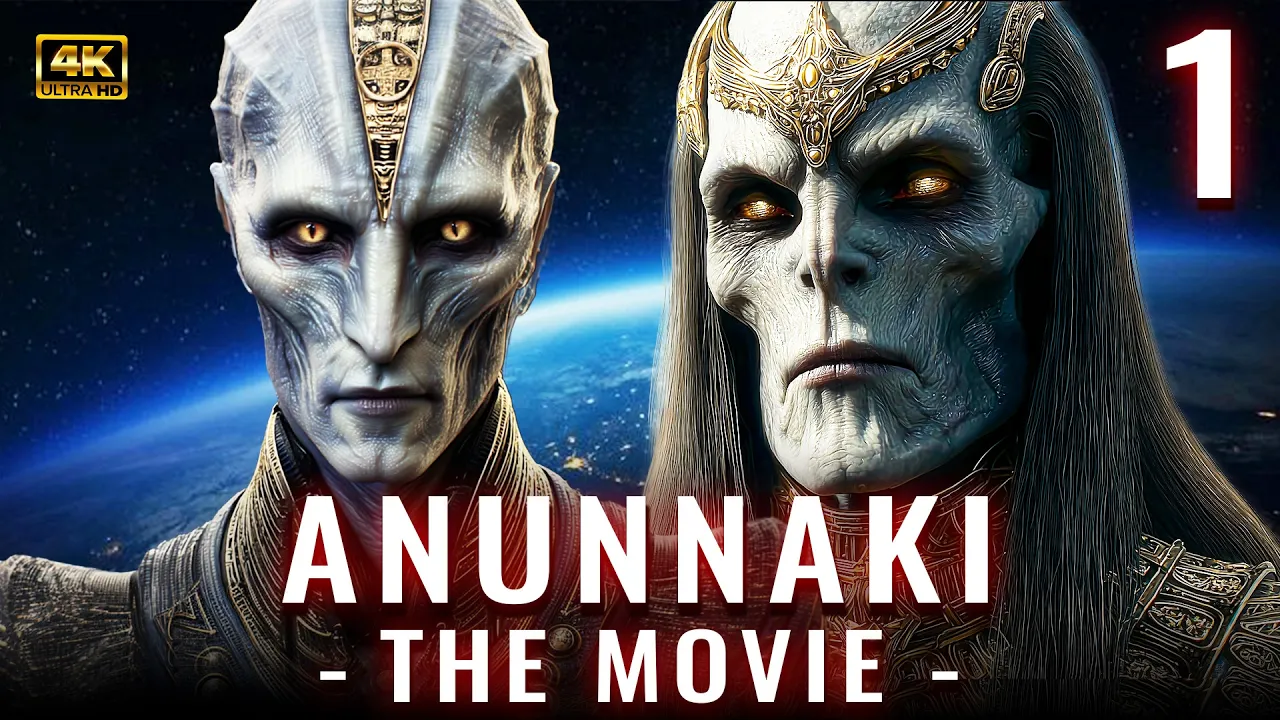
Secret Origins · @secretoriginsofficial
Where viewers went back to watch this video again, from YouTube's public Most replayed graph, lined up with what was said at that moment.
Most replayed moment #1
6:196.1x the video's typical replay level
“This is not a conquest. This is survival.” Then he lowered his voice and warned, “If we do nothing, Nibiru ends. If we go… we may yet live.”
Said at 6:16
Most replayed moment #2
11:345.2x the video's typical replay level
“You carry the future of our world.” The ships launched from Nibiru and crossed the dark path toward Earth. After a long journey,
Said at 11:30
Most replayed moment #3
26:505.0x the video's typical replay level
A murmur of agreement rolled through the ranks. Their leader struggled to remain calm as he added, “We are similar to you. We were not created to live as miners.”
Said at 26:46
The graph counts replays. It does not show where viewers stopped watching.
Words
6,406
Runtime
52:35
Speaking pace
122wpm
Reading time
27min
122 words per minute, below the 160 25th percentile of 349 measured videos. That distribution comes from the 349-video hook study.
Opening (first 30 seconds)
Four hundred and forty-five thousand years ago, long before human memory, another world moved through the dark. Its name was Nibiru. It was a red planet, wrapped in clouds the color of rust and fire. For ages, it had survived by a thin golden shield that floated high in its sky. Fine particles of gold had once protected the atmosphere, holding
61 words, the words spoken in the first 30 seconds at 122 words per minute.
Free, no signup. See how the first 30 seconds hold attention, with rewrites.
Sentence shape
| Measure | This transcript |
|---|---|
| Sentences | 683 |
| Average words per sentence | 9.4 |
| Longest sentence | 28 words |
| Questions asked | 12 |
| Sentences containing a number | 0 |
Most used terms
Filler phrases
8 in total: like 5 · kind of 3.
A literal whole-word count of the same phrase list the Prepublish browser extension uses, so a phrase inside another word is not counted and a phrase used in its ordinary sense still is. It is a count and not a judgement.
What this transcript is
Every word below is the caption track YouTube publishes for this video, pulled from the video itself and reproduced unchanged. It is not Prepublish's writing, not a summary, and not a re-transcription: it is the video's own published captions. English captions, published by the channel, in the video’s original language. Source: the video on YouTube. A channel that would rather this page did not exist can ask for its removal through the contact page, and it is removed.
Four hundred and forty-five thousand years ago, long before human memory, another world moved through the dark. Its name was Nibiru. It was a red planet, wrapped in clouds the color of rust and fire. For ages, it had survived by a thin golden shield that floated high in its sky. Fine particles of gold had once protected the atmosphere, holding warmth inside, keeping the air thick enough to breathe. But now that shield was failing.
The sky above Nibiru was no longer steady. Storms tore through the upper layers of air. The winds were sharp and dry. The light of their distant sun felt harsher each cycle. Life on Nibiru was advanced. The Anunnaki had built cities of stone and shining metal. They had towers that reached into the clouds and ships that could cross the dark between worlds. Annunaki were long-lived and powerful beings of flesh and blood.
At the center of their world stood one ruler, Anu. He was the supreme king of Nibiru. His palace rose above the capital city, built of red stone and golden lines that glowed at night. From his highest chamber, he could see the sky. And every day, the sky looked worse. One morning, Anu stood alone before a wide crystal window in silence. Beyond it, storms moved like slow wounds across the horizon. He watched the upper atmosphere flicker, thin and unstable.
The kind of silence that comes when a world slowly runs out of breath. Behind him, the doors opened, and scholars and scientists entered the chamber. In their hands, they carried glowing tablets filled with measurements and projections. Anu did not turn at once. He kept watching the sky. One of the senior scientists stepped forward, his voice calm but strained with urgency, and reported, “Our readings are confirmed. The atmospheric layer is collapsing faster than predicted.
Within several Shars, we may not survive.” Anu finally faced them with a heavy voice and asked, “Speak clearly. How long do we have?” The scientist swallowed and, after a long silence, finally said. “Not enough.” Then another tablet was activated. A projection appeared between them, a model of Nibiru’s atmosphere. Golden particles floated around it, thin and scattered. A younger scientist pointed to the image, saying, “The golden shield is breaking apart.
The particles are too few. Without reinforcement, solar radiation will strip the air away.” Anu studied the model for a long time before he said, “Then we restore it.” The older scientist stepped closer, his hands trembling slightly as he faced the king, saying, “We cannot restore it from here. Our gold reserves are nearly gone. We need more. A vast amount. Enough to grind into fine dust and release into the upper atmosphere.” The older scientist paused, knowing the weight of what he was about to reveal, and declared, “There is another world.” Anu stepped closer, studying the projection before him, asking, “This world… is rich in gold?” The chief scientist bowed his head respectfully and answered, “Yes, my king.
Our scans confirm it. Large deposits. Untouched.” Anu looked again at the image of his own world, its red storms and weakening sky. Then he fixed his eyes on the blue planet and asked, “And it can be reached?” The chief scientist hesitated for a brief moment before answering in a low voice, “With risk. But yes.” In Anu's mind, the choice was simple. Without gold, Nibiru would die. He turned back to the council and said loudly, “We do not debate survival.
We act.” The scientists bowed their heads once again. A larger assembly was called. Commanders, engineers, and navigators were all gathered in the Hall of Kings. The air was tense because the news had already spread. Anu rose from his throne, and the room fell silent immediately as he declared, “Our world is failing. The golden shield that protects our sky is fading. Without it, our atmosphere will collapse. Our children will have no air.” He let the words settle before continuing, “There is gold on another world.
A distant planet rich in what we need.” Murmurs moved through the hall. Anu raised his hand, and the room went quiet again as he said, “We will send an expedition. We will mine the gold. We will grind it into fine dust and release it into our sky. We will rebuild the shield.” Anu stepped down from the throne, standing closer to his people, and proclaimed, “This is not a conquest. This is survival.” Then he lowered his voice and warned, “If we do nothing, Nibiru ends.
If we go… we may yet live.” But this was not the first time the idea had been spoken of. Before the great assembly, Anu had already gathered a smaller council. Only his closest advisors stood with him: Enlil, his heir and master of command, and Enki, his firstborn, known for his sharp mind and calm thinking. Enlil did not wait long, and his voice carried urgency and force as he said, “We are wasting time. Every delay weakens us.
If there is gold, we take it. We send ships now. Not next cycle. Now.” Enki’s tone was different, more careful, as he replied calmly, “If we go, we must go prepared. This is not a raid. It is a mission. We must study the planet, land safely, build a base, and secure the mines. If we fail, we lose more than time.” Anu listened to both sons. But there was one more truth that few in the hall knew. Alalu had already left.
He was once king of Nibiru, but he had lost the throne to Anu in ritual combat. Defeated and stripped of power, he could no longer remain at the center of rule. On Nibiru, a fallen king did not live in peace. Influence faded quickly. So, rather than wait to be forgotten or removed, Alalu chose exile. He took a ship from the royal fleet and left Nibiru behind as a displaced king searching for opportunity in the stars.
But what began as political survival would soon become something far greater. Alalu traveled alone through the dark between worlds. His ship crossed fields of stone and ice, moving past broken rock and drifting debris. Ahead of him, a blue sphere slowly grew larger. It was Earth. From space, it looked alive. White clouds moved over deep oceans. Light reflected from its surface. Alalu guided his ship toward the planet and entered its atmosphere.
Fire wrapped around the hull as he descended. He landed near vast waters. Steam rose where the ship touched the surface. The air felt heavy and rich. The ground held moisture and minerals. Alalu stepped outside. The sky above him shone bright. He walked across wet soil and picked up stones. His scanners began to read the ground beneath him. And deep inside the planet, rich veins of gold waited in the earth. Alalu stood still for a long moment.
He understood what this meant. The world he had found carried the key to Nibiru’s survival. Inside his ship, he activated the long-range transmitter. A signal shot across space toward his home. On Nibiru, the message arrived in the royal chamber. The image of the blue planet rotated before the council. Anu stepped forward. The chief scientist compared the data with earlier scans before he said, “The coordinates match the blue planet we identified.
The mineral readings show high levels of gold.” Anu studied the transmission. Alalu’s signal lined up exactly with the location the scientists had predicted. The match brought weight to his claim. Alalu’s voice echoed through the chamber as he declared, “I have reached the world. The gold exists. The planet holds enough to restore the shield.” The hall remained silent as the message ended. Anu looked at the projection once more and said firmly, “We send an expedition.
Enki will lead it.” The decision moved quickly into action. Fifty Anunnaki were selected. Pilots, engineers, metal workers, and ground specialists prepared for departure. Advanced ships were fueled and armed with tools and equipment. Enki stood before his father in the launch chamber and said with quiet determination, “I will confirm the deposits. I will build a base.” Anu placed his hand on his son’s shoulder, looking into his eyes with solemn weight, and said, “You carry the future of our world.” The ships launched from Nibiru and crossed the dark path toward Earth.
After a long journey, they entered the planet’s atmosphere and descended near the waters where Alalu waited. The two leaders met on the shore. Enki studied the land with sharp eyes. His readings confirmed what Alalu had reported. Deep below the surface, gold veins stretched across large areas. He returned to the command ship and activated the transmitter. A beam of light shot into the sky, carrying his message across space to Nibiru as Enki reported, “The deposits are real, the gold runs deep and wide.
The planet holds what we need. Give the word, and we will begin digging.” In the royal chamber, Anu received the signal and immediately cut Enki off, saying, “Gods were made to rule and to think. They were not made to bend in the dust of another world. You will not dig.” Enki held his father’s gaze and asked, “Then who will?” Anu’s voice carried the weight of command as he answered, “I will send the Igigi. They will mine the gold.” The Igigi were Anunnaki, born of the same world and the same blood.
But they were not rulers, and they did not sit in the high chambers of Nibiru. Instead, they worked, and they carried out the orders of the throne. When Anu decided that Earth would become the source of salvation, the command passed from the royal hall to them. In the great court beneath the fading sky, the Igigi stood in formation. The red light of Nibiru fell across their armor and bare faces. They knew the air was thinning.
They felt it in their lungs with each passing cycle. Anu’s voice echoed through the chamber as he told them, “On the distant blue planet, gold lies beneath the soil. You will travel there, and you will bring it home.” A senior captain of the Igigi stepped forward, bowed his head, and only said, “We will go.” Soon, ships were prepared again. This time, they carried heavy equipment and transport vessels. The Igigi left Nibiru in long lines of light, crossing the dark between worlds.
On Earth, Enki had already begun his work. The shoreline stretched wide beneath a bright sky. The sea moved in slow rhythm against the land. Enki walked across the sand and stone, studying the horizon and the water. He chose the place carefully. There, near the meeting of river and sea, the first structures began to rise. Metal frames locked together. Panels formed smooth walls that reflected the sun. Towers were raised to transmit signals across the planet and back to Nibiru.
They named the settlement Eridu. It stood as the first city of the Anunnaki on Earth. From its central chamber, Enki directed operations and studied the planet’s surface. When the Igigi arrived, their vessels filled the sky above Eridu before descending in controlled lines. They stepped onto Earth and stood beneath a sky unlike their own. It felt vast and open. Enki addressed them without ceremony and said, “The richest deposits lie far to the south.
You will establish the mining zone there. Eridu will remain the command center.” Transport crafts carried them across oceans and land until the terrain changed. The soil darkened. The air grew heavier with heat. Mountains rose in the distance, and beneath them lay the mineral-rich earth. This region became known to them as the Abzu. The first shafts were marked. Machines were assembled piece by piece. Drilling towers were anchored into the ground, and their long metal spines sank into the earth.
Cutting beams sliced through stone with focused light. Conveyor systems carried broken rock to the surface, where gold could be separated and refined. And just like that, the work began. Inside the shafts, the air grew thick. Fine dust filled the tunnels as rock was crushed and moved. The dust clung to skin and armor. It settled into the lungs. The heat pressed against the workers from every side. Protective suits filtered the air, but the strain remained.
Refined bars were transported back to Eridu and prepared for the long journey to Nibiru. On Nibiru, the first shipments were ground into powder and released into the upper atmosphere. Slowly, the golden shield began to strengthen again. Yet on Earth, the burden did not lighten. The Igigi rotated shifts through darkness and heat, their bodies carrying the weight of endless labor. Anu watched reports from his chamber on Nibiru.
The numbers pleased him. Survival seemed within reach now. Then he sent Enlil to Earth. Enlil arrived at Eridu with authority and purpose. He studied the projections of the Abzu mines and the flow of gold shipments before saying, “This operation must remain stable. The shield depends on it.” He traveled south to the Abzu to see the work himself. He walked through the tunnels, past drilling towers and moving belts of stone.
He felt the heat rising from the depths. He saw the dust in the air and the strain on the workers’ faces. Then, Enlil returned to Eridu and took direct oversight of the mining operations. Under his command, schedules tightened, and output increased. From the central chamber of the city, he studied the numbers that flowed in from the Abzu. Each shipment of gold brought Nibiru closer to stability. Each report showed the shield growing stronger in the upper sky of their home world.
For many, that would have been enough. But for Enlil, it was only the beginning. He stood alone one evening, looking at the projection of Nibiru suspended in the air before him. The golden layer shimmered faintly around it, still fragile, still thin. He knew how quickly a world could weaken. He had seen the storms tear through their atmosphere. He had watched fear spread across their cities. Restoration was not the same as security.
Once the shield was fully restored, the mining would continue. Not out of desperation, but out of preparation. Gold would be stored. Nibiru would never again stand on the edge of collapse without protection. When Enlil spoke of it later to his officers, his voice carried calm certainty as he said, “We will not stop when the crisis ends. We will secure the future beyond it.” And so the work pressed forward, deeper into the earth, with a purpose that now reached far beyond survival.
Years turned into centuries. Centuries turned into thousands of years. The mines of the Abzu grew vast beneath the surface of the Earth. Shafts reached deeper than any structure on Nibiru. Tunnels spread like veins under the land. Machinery became larger. Drills grew stronger. Extraction increased. But the conditions below never softened. The underground heat pressed against skin and metal alike. The air grew thick and heavy as the tunnels expanded.
Poisonous gases seeped from cracks in the rock. Ventilation systems fought to keep the air breathable, but the deeper they drilled, the harder it became. The Igigi worked in long shifts beneath artificial light. Their armor filtered dust and toxins, yet the strain showed in their movements. The golden ore rose steadily to the surface, but the workers moved more slowly with each passing cycle. On Nibiru, the shield strengthened.
On Earth, the burden deepened. At first, the Igigi believed the hardship would pass. They believed once the shield was restored, relief would come. They believed the mining would slow. But production never slowed. The command remained the same. Output increased. Schedules tightened. The work continued without pause. In the depths of the Abzu, a small group gathered near a ventilation shaft during a brief rest period.
The hum of machinery echoed around them. One of the older workers leaned against the rock wall, his voice low but steady, and said, “The shield is strong again. We have seen the reports. Why does the digging continue?” Another worker wiped dust from his visor and replied, “Because they want reserves.” A third worker looked up toward the distant surface and added, “We were sent for survival. Now we dig for security.” There was no rotation back to Nibiru.
No long rest. No return to the sky of their home world. The Igigi remained below ground year after year, generation after generation, though they were long-lived beings. They felt forgotten. Above them, Enlil continued to review production reports. He believed he was protecting Nibiru from future collapse. He believed discipline ensured safety. He did not see the resentment forming in the dark. The machinery roared day and night.
Conveyor belts carried stone upward. Refining chambers separated gold from rock. Toxic dust floated in beams of artificial light. And still the work continued. One evening, deep in the lower tunnels, a drill stalled. The ground shook from pressure. Workers paused. Silence settled for a rare moment. In that quiet, a thought became clear. This would never end. Later that night, the Igigi gathered in a wide chamber carved from rock.
Hundreds stood in the dim light. Their movements were slower than they once had been. One of the Igigi stepped forward, and his voice carried through the chamber without shouting as he said, “We came to save our world. We did that. The shield holds. Yet we remain here.” A murmur passed through the crowd as another worker called out, “We breathe poison. We burn in heat. We dig without rest. For what?” Another voice rose from the back of the chamber as a third Igigi answered, “For their fear of losing control.” The chamber grew louder.
Then a final Igigi stepped forward, his voice calm but firm, and said, “We miss our home. We are not tools.” The silence that followed felt heavier than the tunnels above them. That night, a decision was made, and it began quietly. In one shaft, a worker set down his drill and did not lift it again. In another, conveyor belts were powered down. Refining systems shut off one by one. Then torches were lit. The Igigi carried their tools to the surface.
Drills, cutting beams, metal frames. They piled them together outside the mining entrance. Flames rose high against the night sky. The fire reflected in their visors. Sparks climbed into the dark air. The sound of burning metal echoed across the land. Then, ships lifted from the Abzu and moved north toward Eridu. When they reached the settlement, they surrounded Enlil’s base. The walls of Eridu stood firm under the moonlight.
Energy towers hummed. Guards took positions along the perimeter. Inside the central chamber, Enlil felt the shift in the air before he saw it on the monitors. The projection showed ships landing in wide circles around the city. And outside the gates, the Igigi stood in silent formation. Their leader stepped forward into the open space between them and the walls. Enlil’s voice echoed from the towers above as he ordered them, “Return to your stations.
Production must continue.” The leader lifted his head and said firmly, “We will not return.” The words spread through the gathered crowd like a pulse. Enlil’s jaw tightened as he said in anger, “You serve Nibiru. You serve survival.” But again, the leader did not step back; he just calmly replied, “We served survival. Now we serve your reserves. We dig without rest. We breathe poison. We live below ground while you stand in clean air.” A murmur of agreement rolled through the ranks.
Their leader struggled to remain calm as he added, “We are similar to you. We were not created to live as miners.” Inside the chamber, silence filled the space. Enlil understood what this meant. This was not a complaint. This was rebellion. The Igigi remained in position through the night. For the first time since the mission began, the gold no longer flowed from the Abzu. And the gods who came to save their world now faced a new threat rising from beneath their own command.
Inside the command chamber, the air felt heavier than the tunnels below. Enlil stood before the central projection table. The image showed the halted mines and the gathered workers. Standing rigid, Enlil said sharply, “This ends now.” Across from him, Enki watched the same projection and answered calmly, “They will not return simply because we order it.” Enlil turned toward his brother and insisted, “They are soldiers.
They follow the command.” But again, Enki replied calmly, “They followed the command for thousands of years. They endured heat, dust, and poison. They believed it was for survival. Now they see it is endless.” Enlil’s jaw tightened as he answered, “Then we remind them of duty.” The silence between them stretched. Enlil stepped closer to the display and continued, “If we allow this, authority weakens, and the mission collapses.
Nibiru will suffer.” Enki kept his voice steady and continued, “If we force them back underground, the anger grows. They will sabotage the mines. They will destroy the equipment even more. They may even turn against us openly. That would break the system entirely.” The word lingered in the air. Enlil exhaled slowly and replied, “Then we call Anu.” A transmission signal was prepared at once. The beam rose from Eridu into the sky and crossed the dark space between worlds.
On Nibiru, Anu received the call in his high chamber. The golden shield shimmered faintly beyond the crystal window. It held strong now, but the king knew how fragile it had once been. Enlil’s image appeared before him as he reported, “The Igigi have ceased mining. They have surrounded Eridu. They demand relief.” Anu’s face remained calm as he asked, “Have they damaged the operation?” Enlil shook his head slightly and answered, “Not yet, but they refuse to continue.” Enki stepped into view beside his brother, speaking with measured concern as he said, “Their exhaustion is real.
The conditions in the Abzu grow harsher as the shafts deepen. They have labored without rotation for thousands of years.” Anu listened without interruption. Enlil spoke first with an anger in his voice, “We must act with strength. If we allow rebellion, authority dissolves. Send reinforcements. We force them back to work.” Enki responded carefully, “If we use force, we risk long-term collapse. They are not simple workers.
They are Anunnaki. They share our blood. Crushing them will fracture loyalty across the mission.” Anu moved away from the window and toward the center of the chamber, his steps slow and deliberate, and thought to himself, “The shield holds, for now.” Then he turned to both of his sons and asked, “The gold flow has stopped?” “Yes,” Enlil confirmed, and Enki just silently nodded. Anu remained silent for several moments.
He understood both arguments. Authority must stand. Yet the system could not survive constant revolt. Finally, he said, “This mission was meant to save our world. It cannot depend on endless conflict.” Enlil crossed his arms and asked, “Then what do you propose?” Anu’s gaze shifted, as if looking beyond both of them, and he said, “We require a permanent solution.” The words changed the tone of the chamber. Enki tilted his head slightly and asked, “What kind of solution?” Anu already had a prepared answer and replied, “A labor force that accepts the burden as its purpose, limited in lifespan.
Without claim to rule.” Enlil’s eyes narrowed as he said, “You speak of creating workers.” Anu met his gaze and replied evenly, “I speak of replacing them.” The implication settled in the room. Enki stepped forward, thoughtful rather than shocked, and observed, “So, you would remove the burden from the Igigi. And place it on a new species.” Anu remained composed as he continued, “The mission must continue without rebellion.
We need hands that belong to the soil, not to the throne.” Enlil weighed the proposal for a moment and noted, “If such beings serve only labor, they will not rise against us.” Anu expanded on the idea, explaining, “They will lack the authority and longevity of the Anunnaki. They will live short lives. They will multiply. The work will renew itself through generations.” Enki’s mind was already moving ahead, so he explained, “There are primitive beings on this planet, creatures that walk upright.
They carry potential. With guidance… with alteration…” He did not finish the thought. Anu completed it for him when he said, “We combine our essence with theirs.” Silence followed. The rebellion outside Eridu remained unresolved. The fires still burned. The mines remained closed. Yet inside the chamber across space, a new direction had formed. This creation would secure the Nibiru for generations. Anu made the decision and said, “This mission began with survival.
It will continue with design. Enki, you will lead this.” Enlil watched without speaking as Anu continued, “You understand life. You understand structure. You see patterns where others see chaos.” Enki bowed his head slightly and said, “I will begin at once.” And so the work moved from the mines to a different kind of chamber. The House of Shimti stood within Eridu, separated from the main settlement. Its walls were smooth and sealed.
Inside, light panels lined the ceiling. Tables of metal and crystal filled the center of the room. This was a laboratory. Enki entered the chamber in silence. He studied the data already gathered from the planet’s surface. There was life on Earth. Primitive, but present. So, he summoned Ninmah. She arrived soon after, her steps calm but her eyes sharp. She was known across Nibiru for her knowledge of biology and gestation.
Where Enki analyzed structure, she understood growth and development. Anu’s earlier command returned to Enki’s thoughts as he had instructed him, “You will not work alone. Ninmah will stand beside you.” Now they stood together before the main projection. Between them, a model of a terrestrial creature rotated slowly in the air. It was a creature that had already taken its first steps away from the ground. It stood on two legs, though not with full balance.
Its spine curved forward as if the weight of the world still pulled it down. Coarse hair covered its body, and its movements were cautious, uncertain. The skull projection expanded beside it, revealing the shape within. There was space there, room for something more. Enki and Ninmah decided to name this species Homo Erectus. Enki activated a second projection beside it. A strand of Anunnaki genetic code unfolded in luminous detail as he explained, “The native species walks upright.
Its hands are capable of gripping tools. Its brain shows potential for expansion.” Ninmah observed the model carefully before replying, “It survives, but it does not learn beyond instinct.” Enki nodded and added, “They use stones. They respond to fear. But they do not build. They do not plan.” On a lower platform, a living specimen of the primitive hominid stood inside a containment field. It moved slowly, observing the room with cautious eyes.
Its breathing was uneven. Ninmah watched the specimen with a thoughtful expression and said, “So, it feels, but it does not understand.” Enki adjusted the projection, overlaying the Anunnaki genetic structure onto the hominid’s form, and began to explain, “We do not create from nothing. Life already exists on this world. We can just refine it. We take what is there and give it direction, shaping it into something capable of serving a purpose.” Ninmah crossed her arms slightly and asked, “And what purpose?” Enki met her gaze without hesitation and answered, “Labor.
Endurance. Obedience.” The words carried weight in the sterile air of the chamber. Outside the laboratory, the rebellion still stood unresolved. The Igigi waited for an answer. The mines remained silent. Inside the House of Shimti, another answer was forming. Enki activated a series of instruments along the central table. Microscopic images of genetic strands expanded before them. The Anunnaki sequence glowed in bright blue, while the Earth sequence shimmered in pale green.
The differences were clear as Enki studied the data and said, “The structure is compatible. There are gaps, but we can bridge them.” Ninmah stepped closer to the display, examining the patterns with quiet concern, and replied, “Bridging life forms carries risk.” Enki moved toward the containment field where the hominid stood. The creature pressed its hand against the transparent barrier, unaware of the decision forming around it.
Watching it closely, Enki said, “Survival carries risk. It cannot rise beyond instinct alone. But with guidance, it can serve.” Ninmah’s expression shifted slightly as she responded, “Once we alter it, it cannot return to what it was.” Enki turned back toward the central table and answered quietly, “That is the point.” Anu’s command had been clear: create a solution that would last. That was the only thought on Enki’s mind as he looked at the projection and said, “We begin with structural mapping.
First, we identify the sequences linked to thought and movement. From there, growth patterns can be adjusted. Lifespan will be limited to ensure control and renewal.” Ninmah listened, her voice softer now as she observed, “So, they will be mortal. They will work until age, and then just die.” Enki did not look away from the projection as he replied, “But they will replace the Igigi.” And with that, the first stage of the project was set.
The plan was simple. All they had to do was inject advanced Anunnaki DNA into the DNA of Homo Erectus and create a new species they had agreed to call Homo Sapiens. But things did not go as planned. Inside the House of Shimti, the instruments were prepared. Genetic strands floated in the air as thin lines of light. Data moved across the screens. The first sequence was selected. And soon after, the first fusion was attempted.
Enki reviewed the data one last time before saying, “The structure is stable. Proceed with the merge.” Ninmah worked beside him, adjusting the biological chamber where the cells were held. The first hybrid cell was formed. It was divided once and then twice. For a moment, it looked promising. But soon, the pattern began to fail. The structure twisted. The cells stopped growing and collapsed into lifeless tissue. Ninmah lowered her hands and noted quietly, “The alignment was incomplete.” Enki adjusted the code and began again.
Another attempt followed. This time, the growth lasted longer. Inside the artificial womb chamber, a small body began to take shape. What had started as a cluster of cells slowly formed into something recognizable. Limbs extended from the sides. The curve of a spine appeared. A skull closed around a growing brain. For a brief moment, the room felt lighter. Ninmah leaned closer to the chamber, watching the readings stabilize.
Enki remained still, his eyes fixed on the neural patterns rising across the screen. Then something changed. The spine began to twist under its own weight, bending in a way it should not. The skull shifted unevenly as it expanded, pressing against itself. The limbs continued to grow, but not in balance. One lengthened faster than the other. Another attempt had failed. Ninmah stepped closer to the chamber and said, “It cannot survive outside containment.” Days passed inside the laboratory.
More sequences were tested. Adjustments were made to brain capacity, muscle strength, and organ structure. Some hybrids developed bodies but no stable mind. They stared without awareness and moved without purpose. Others showed stronger cognition, but their organs failed after a short time. Their systems could not sustain the fusion. Enki recorded each result with calm precision, reassuring himself, “We are close. I know that.” Ninmah watched another chamber as a prototype attempted to stand for the first time.
It rose unsteadily, took one step, and collapsed as its legs failed to support its weight. Ninmah observed the failing prototype and added softly, “This one can walk, but it cannot endure.” And so, they continued. One generation of hybrids survived longer than the previous ones. They could breathe on their own. They responded to the sound. At first, they looked perfect. But when maturity was reached, another flaw appeared.
The prototypes were sterile. Simply, they could not reproduce. Ninmah stood before the monitoring screen with a heavy expression and said, “If they cannot multiply, the burden returns to us. We will have to create each one by hand.” Enki nodded slowly and replied, “That defeats the purpose.” The chamber lights reflected in the glass walls as more attempts failed. Some forms were born weak. Some grew too aggressive. Some showed unstable behavior that could not be controlled.
Each failure carried weight. One evening, after another unsuccessful trial, Ninmah stepped away from the table and said, “We are altering life itself. This is not a simple design. We are crossing boundaries.” Enki did not look up from the projection as he answered, “Survival demands risk.” But Ninmah was not satisfied with that response and asked, “But what if the balance cannot hold?” Enki finally turned toward her and replied, “It will hold.
The structure is nearly stable. We need a stronger bridge between the sequences.” Ninmah studied the latest results. The hybrid brain showed promise. The muscular structure responded well. The problem remained at the level of reproduction and stability as she finally said, “We need something that binds the two codes together. It cannot be a simple mix. The two must merge as one system, working in harmony, not fighting each other.” Enki considered her words for a moment before replying, “Then we refine the donor sequence.
We adjust the Anunnaki strand to match the Earth structure more closely.” Soon after, another experiment was prepared. They adjusted the process carefully this time. Each cell was placed with more control, as if building something piece by piece instead of forcing it together. The merging of the two codes was slowed down, giving the new life time to accept both sides without shock. Inside the chamber, under steady light and constant monitoring, growth began once more.
This time, the growth unfolded in a calmer, steadier rhythm. The spine strengthened as it formed, holding its shape without bending under pressure. The skull expanded gradually, each side developing in balance with the other. On the monitors, the brain signals flowed in smooth patterns instead of sharp bursts, showing a mind that could hold together without collapsing into chaos. Enki and Ninmah watched in silence, and in that quiet moment they both thought, “For now, it lives.” Time passed slowly in the House of Shimti.
The new beings grew stronger with each cycle. They no longer collapsed inside the chamber. They no longer broke under their own weight. This new form could stand. It could even look around and understand what it saw. The first one opened his eyes fully. They were not empty like before. They followed the movement. They reacted when Enki stepped closer. Ninmah stood beside him, holding her breath, and whispered, “It is time.
We have kept them inside these walls long enough. Let them step into the open world.” The chamber opened. The being stepped forward. Its legs trembled at first, but it did not fall. It stood upright on its own. Enki looked at the being and said calmly, “Lift your hand.” The being looked at him. For a moment, there was silence. Then the hand slowly rose. Ninmah covered her mouth and whispered, “It understands.” Enki, still stunned, stepped closer and said, “Now walk.” The being took one step.
Then another. Enki felt a strange weight in his chest. He had seen many forms grow and fail, yet this one was different. It held a fragile balance between both worlds as he observed, “They cannot speak. But when we give a sound, they connect it to action. They understand what the command means.” Ninmah nodded, speaking almost under her breath, “And it will serve.” More were created after that. The process became stable.
Each new being carried the same design. They called them humans. While the project succeeded, the Igigi had already returned home. After the rebellion, Anu allowed many of them to leave Earth. Ships carried them back to Nibiru, where the air had grown stronger again. Some Igigi remained to oversee transport. But most were relieved from labor. The mines of the Abzu grew quiet for a short time. Then Enlil arrived. He stood at the edge of the mining zone, looking at the tunnels carved deep into the earth.
The machines still waited. The drills stood silent. Behind him, transport ships opened, and the new beings stepped out. They were smaller than the Igigi. Their skin was softer. They looked at the land, at the sky, at the tools laid before them. Enlil addressed them with firm authority and said, “You were made for work. You will enter the mines. You will gather the gold.” The humans listened in silence. They did not speak back.
And when a command was given, they moved. Enlil placed the tools into their hands one by one, showing them the motion with calm authority. The humans watched closely, then copied what they saw. It took little time before they understood what each tool was meant for and how to use it. With time, they began to do the same work the Igigi had once done. They moved through the tunnels with steady steps, lifting stone and carrying it forward.
They were slower than the Igigi, their movements less precise, but it did not matter. There were many of them. Where one tired, another stepped in. Enlil stood at the edge of the shaft, watching them in silence, and said quietly, “As long as they multiply, the mines will never fall silent again.” Production numbers began to rise once more. Allowing himself a small breath of satisfaction, Enlil added, “The system holds.
The crisis is over.” Smoke rose from the Abzu as mining resumed at full scale. Ships prepared to carry refined gold back to Nibiru. Enlil stood inside the command chamber, reviewing numbers with calm pride. Everyone was satisfied with the new species, not knowing that they had created someone who could one day grow far beyond what they intended.
The words are the caption track's own and nothing is reworded or re-transcribed. Paragraph breaks are placed between sentences so the text reads as prose.
Free tools for your own script. No signup, no login.
Paste your draft and see where viewers are likely to drop off, with a rewrite for each weak line.
Paste the first 30 seconds of your own draft for a hook score and rewrites.
Check your draft against YouTube's advertiser-friendly guidelines before you record it.
Read this channel's public videos and transcripts, and download a writing brief for it.