Getting the transcript
Reading the captions from YouTube. A video nobody has opened here before takes 10 to 30 seconds; this page fills in on its own.
Getting the transcript
Reading the captions from YouTube. A video nobody has opened here before takes 10 to 30 seconds; this page fills in on its own.
Dara Denney · @DaraDenney
This video has no Most replayed graph yet: YouTube shows one only once a video has enough views. These are the moments viewers replayed most in Dara Denney's most watched videos.
Most replayed moment at 1:55
4.1x that video's typical replay level
different parts of your computer and different apps, you're going to have to give it access through connectors. And for everything that we're going to go through today, make sure that you at least have Chrome connected as well as Slack. Now, let's dive into this first one, analyzing ad libraries. Now,
Said at 1:49
Most replayed moment at 14:54
4.4x that video's typical replay level
like to use it in addition to this is right here. First, what you're going to do is go to Claude, and you're going to export your brand brain, and any other context documents that you have. If you don't have that yet, here's a really great prompt that I use for all of my
Said at 14:46
The graph counts replays. It does not show where viewers stopped watching.
Words
2,252
Runtime
11:48
Speaking pace
191wpm
Reading time
9min
191 words per minute, between the 181 median and the 201 75th percentile of 349 measured videos. That distribution comes from the 349-video hook study.
Opening (first 30 seconds)
and I started spending on ads for the first time ever. My first $100 was petrifying. Was it super intentional on your part to be like front-facing founder? When you build a business, you have three legs of a stool. We only have one leg of stool right now. We have DTOC [music] and we're building the second leg of the stool, which is retail. And the third leg, for my opinion, at least is like Welcome back to episode 4 of Adspend. I am so excited today to talk to Shiu Okusa, founder of the
96 words, the words spoken in the first 30 seconds at 191 words per minute.
Free, no signup. See how the first 30 seconds hold attention, with rewrites.
Sentence shape
| Measure | This transcript |
|---|---|
| Sentences | 157 |
| Average words per sentence | 14.3 |
| Longest sentence | 57 words |
| Questions asked | 11 |
| Sentences containing a number | 11 |
Most used terms
Filler phrases
49 in total: like 23 · um 9 · you know 6 · actually 4 · right? 2 · I mean 1 · basically 1 · kind of 1 · sort of 1 · uh 1.
A literal whole-word count of the same phrase list the Prepublish browser extension uses, so a phrase inside another word is not counted and a phrase used in its ordinary sense still is. It is a count and not a judgement.
What this transcript is
Every word below is the caption track YouTube publishes for this video, pulled from the video itself and reproduced unchanged. It is not Prepublish's writing, not a summary, and not a re-transcription: it is the video's own published captions. English captions, generated automatically by YouTube, in the video’s original language. Source: the video on YouTube. A channel that would rather this page did not exist can ask for its removal through the contact page, and it is removed.
and I started spending on ads for the first time ever. My first $100 was petrifying. Was it super intentional on your part to be like front-facing founder? When you build a business, you have three legs of a stool. We only have one leg of stool right now. We have DTOC [music] and we're building the second leg of the stool, which is retail. And the third leg, for my opinion, at least is like Welcome back to episode 4 of Adspend.
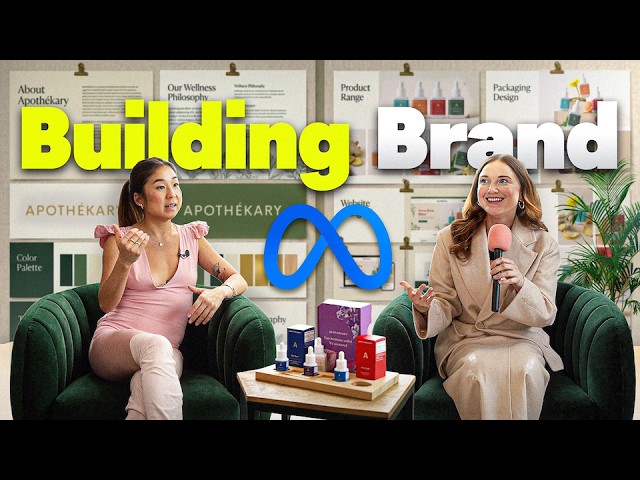
I am so excited today to talk to Shiu Okusa, founder of the wellness brand Apothecary. We're going to talk about their one-of-a-kind marketing funnel and how they're reaching new customers on Meta in a pretty unique way. Shiu is such a special soul and a true visionary founder who is using Meta to build brand and spread culture and not just as a direct response channel. So, we're going to be diving into the really unique marketing funnel today and just see how a brand does it differently.
I formally started my career working in Wall Street as an investor. Moved over to the world of Well Street um when I was 21. Started my first company then. Um so this is my second company in the health and wellness space. Why did do you feel called to bring this to life? When I sold the first company, I just knew I had some unfinished business still to do. So, I wanted to see how far I could go as a human and as an entrepreneur in this next chapter.
Bootstrap it as long as possible. We're all searching for something right now in this time of like geopolitical risk, war, >> this feeling of mortality. And now this word of longevity seems to be very trendy in the wellness space. >> But longevity, in my mind, at least I think of the word eeky. Eeky in Japan basically is this intersection of life purpose and what you're meant to be doing that intersects then how you make money.
Yeah. >> And then what you were called to do on this earth. >> Now I think what's interesting about the way that you guys are marketing and like the story around your performance marketing specifically is that I think you take a more holistic approach to paid than many other founders do especially at this stage. But talk a little bit how you incorporate like meta ads and paid advertising into your overall journey. >> We always ask consumers like how did you find Apothecary?
Where did you hear about us? Yeah, >> hands down like 80 over 80% Instagram and Meta. We absolutely need to double down on top ofunnel content, organic social and paid social. And so we do a lot of like awareness ads on top of funnel. Um we've also done, you know, a lot more organic social and it was something that like does really well organically. We boost it or we then create a paid content against that. >> Apothecary puts a lot of budget into their organic content and top of funnel.
There are three things they do very differently from other brands. Number one, they create an entire documentary every single year so they can immerse their audience in the feeling of Japan. And number two, they also have annual experiential trips to Japan with their customers, which tends to drive excellent topofunnel for them in the form of press and social content. And three, they have a dual substack strategy. One that is run by Apothecary, the brand, and a personal one run by Shiu.
As a rule of their brand, they prioritize what does well organically and then they adapt that into their paid social content. Is there something that you saw work on organic recently that you then found also worked really well on paid? It's such an interesting question. We actually find our controversial takes on the organic side. Love a little heat. Yeah. I see it with my own content, too. >> It's f I mean, I'm not surprised cuz people are afraid, not afraid, but it it stands out.
So, for example, we did a cultural appropriation versus cultural appreciation post on matcha. >> Yeah, >> everyone loves matcha, but I think we have a unique take cuz I am Japanese and I know the heritage of matcha. >> And there is no such thing as ceremonial grade or culinary grade in Japan. That is all absolutely marketing here in the US. It's really just expired and normal matcha. It's all marketing. Absolutely. Marketing.
It's on the organic side that does quite well to boost our authority voice and all things Japan and wellness. Getting our authority voice up. >> They're able to leverage and scale this content into paid media pretty seamlessly. Actually, >> we have various types of campaigns running right now. We do a lot of top offunnel brand awareness >> here. They're running video views and awareness campaigns to their yearly documentary and more of that educational content.
We touched on like forest bathing and zazen meditation and plant medicine and the differences between western pharmaceuticals and eastern natural medicine and bridging the two together and that those have done incredibly well. So those then create sort of like the funnel for which we can retarget middle ofunnel type of ads that are a little more conversion based. We do a lot of testing. So we have a lot we have a campaign specifically for just testing ads that you know can or cannot hit scale.
We have a blend of in-house creative. We have a blend of carousel versus like lowfi type of hi-fi content. >> Yeah, the ugly ads. >> The ugly ones. We have some campaigns that like are excluding existing customers. Some are retargeting. So, we're we're trying to hit it all. Now, when we take a step back from these campaigns and look a little more broadly over their overall marketing funnel, we should recognize that this typically is not the playbook for a lot of direct to consumer brands.
But it makes a lot of sense for apothecary because supplements are such a competitive market. In order to stand out, you have to do something different. There is not going to be a clear ROI on a brand of customers. There's just not or even a founder doing their own substack. But the brands that do those things end up having the opportunity to more clearly communicate their why with their customers in a way that feels a lot more genuine because they're not expecting that direct ROI on that piece of content or even that channel.
Was it super intentional on your part to be a front-facing founder? No. No, not at all. I think I was Oh, I'm still a little bit nervous every time I go on a mic or screen. Shisu has a massive role in developing content for the brand, especially during product launches and retail expansion. And while she doesn't develop as much evergreen content, in the early days of Apothecary, she was generating a lot of the top performers in the ad account. >> There's only certain jobs that the founders can do, right?
And a lot of that involves ad creative now. >> Absolutely. And we're all like told to be founders, but also the face of the brand, but we're also fundraising behind the scenes and leading. >> My suggestion for founders who want to do their own ads is to do personal history angles so that they can clearly share the why behind the brand. And the other type of content that has done surprisingly well for them is more of their simple statics.
But theirs has a twist. >> Our ownable brand terms have done incredibly well. Um, so for example, in 2021 after people were drinking their faces off and so they needed these wine alternatives and we said, "Let's be soberish. It doesn't mean you have to be totally sober curious, >> which I feel like is now a mainstream term." >> Oh, I think so. That term resonates really well. Cortisol. Um that's one of our best campaigns or ads that we've done is the word cortisol across different types of campaigns and ads because again how apothecary serves people is through how stress shows in your body.
So we try to give a solutionoriented type of ad or copy against a product that we offer. Sometimes these terms come directly from their customer reviews and other times they're the brainchild of the copywriter on staff. Now another big consideration for their performance is the actual product or mechanism itself. Now, Apothecary has a really unique mechanism because they chose to administer their benefits in a dropper form instead of like a pill, for instance. >> It's very pretty. >> It is.
And it's pretty, but the the color also does really well to capture people's attention. You don't see a lot of wellness brands that focus on color. And so, when you have something that stands out, we double down on that. And so, you have a lot of videos that you'll see with like the dropper with like drops and it just like it captivates people. So, what is next for Apothecary in 2026? >> So, there's a few things. Uh, we're launching in Whole Foods in about two weeks.
I know that's this year, but we've been waiting to say this out loud for a few times. So, there's that. Nationwide, um, we're opening another retailer account in about 700 doors in Q1 of next year. >> Um, opening our own store, but bringing more of our retreats also to life state side. When you build a business, you have three legs of a stool. We only have one leg of stool right now. We have TOC. >> Yeah. Yeah. Yeah. and we're building the second leg of the stool, which is retail.
And the third leg, from my opinion, at least is like our own stores. >> Shiu's plan, after having already expanded into Sprouts, Whole Foods, and Ulta, is next looking to open up their own store, likely in New York City, where customers can try and taste Apothecary in real time. >> What's new for you? So, I haven't announced this officially on the channel yet, but I am going to be launching my own brand [screaming] next year.
Thank you. Oh my goodness. [laughter] I am so excited. And what's funny is this actually is not my first time as a founder. I had a small e-commerce brand back in 2016. Wow. >> And I I was a little traumatized from that as one is. We bootstrapped the first one. We like to joke that we were funded by our MX cards. >> Oh my god. Of course. That's where I, you know, ran my first $100, my first hundredk. And >> I just really fell in love with >> this industry and with >> starting things and creating things and creating new worlds almost with the brand.
I was talking to you a little bit about this off camera. What are some what is some advice that you might have for you know a founder doing it again for the second time kind of in this new era? >> So this is a really interesting question. I asked people around me when I was starting apothecary how I should do this one differently >> and they say the second time founders have all the strengths but there are two things that we have to keep in mind which I've always kept in the back of one is blind spots and one is impatience. >> I know for me it's impatience.
I get so impatient about the same things that I used to be more patient about in the past because I've seen it. >> And so I know when bad behavior or when I don't trust something or my gut says something I I pretty act pretty quickly on like firing or like >> good for you as you should. >> You know, but those are really tough choices for, you know, founders and and for people, right? Um but there's some things that I just won't tolerate anymore.
And then the blind spots are when we move too fast and we can't see the things around us anymore and we need people around us to make sure that they call us in for those blind spots. >> So I think the thing that stuck with me from Shisu and I's conversation a few weeks ago is how she's really building brand and using meta on her terms. I can't tell you how often brands feel locked in going straight for the purchase instead of actually developing and building that funnel.
And I know on this channel I always talk about that and I always tell you guys, hey, don't bother with awareness campaigns. Don't bother with these video views campaigns. And this one made me take a step back. I know even when I talked with Cody Ploffer a few weeks ago, he also had a similar setup and was spending anywhere from 5 to 10% on reach and awareness campaigns. So, especially as I am building my own brand in 2026, um I might be taking a slightly different approach.
The words are the caption track's own and nothing is reworded or re-transcribed. Paragraph breaks are placed between sentences so the text reads as prose.
Free tools for your own script. No signup, no login.
Paste your draft and see where viewers are likely to drop off, with a rewrite for each weak line.
Paste the first 30 seconds of your own draft for a hook score and rewrites.
Check your draft against YouTube's advertiser-friendly guidelines before you record it.
Read this channel's public videos and transcripts, and download a writing brief for it.