Getting the transcript
Reading the captions from YouTube. A video nobody has opened here before takes 10 to 30 seconds; this page fills in on its own.
Getting the transcript
Reading the captions from YouTube. A video nobody has opened here before takes 10 to 30 seconds; this page fills in on its own.
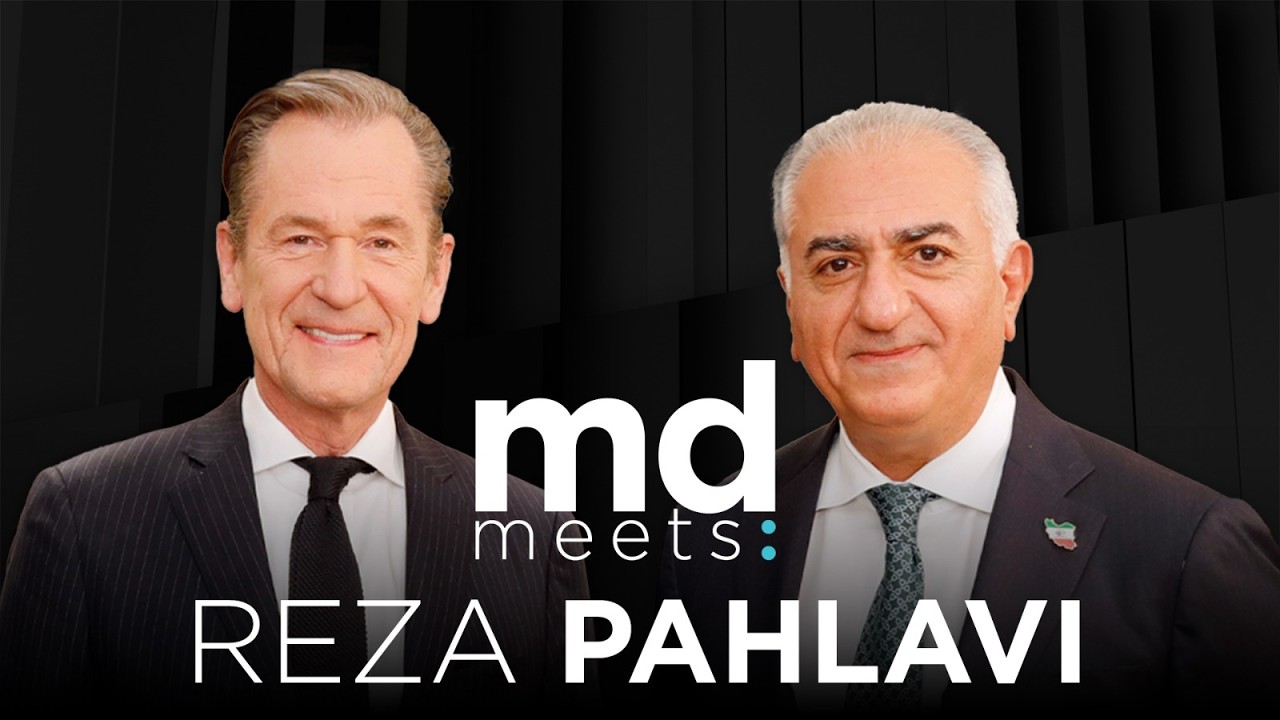
MDMEETS - Essential Talks with Mathias Döpfner · @mdmeets
Where viewers went back to watch this video again, from YouTube's public Most replayed graph, lined up with what was said at that moment.
Most replayed moment #1
12:0518.0x the video's typical replay level
not to mention their terrorist networks. There's no way that the Western free world in its in its values of democracy and freedom and human rights could ever find a cohabitation possible with this kind of a regime. That's why we say regime change is necessary. Not just
Said at 11:58
Most replayed moment #2
25:0817.5x the video's typical replay level
hitting this or that uh you know for the sake of domestic consumption. I don't think anybody takes that threat seriously. But that doesn't mean that we should take it lightly either. We have to be prepared which is why this deployment is not just for target practice. is just in anticipating that if it's escalated,
Said at 25:01
Most replayed moment #3
32:2315.0x the video's typical replay level
that context. Nevertheless, probably Iran today is one of the most efficient and one of the most brutal forces uh in the support of global anti-semitism. How deeply rooted is anti-semitism in the Iranian population?
Said at 32:16
The graph counts replays. It does not show where viewers stopped watching.
Words
8,636
Runtime
48:19
Speaking pace
179wpm
Reading time
36min
179 words per minute, just under the 181 median of 349 measured videos. That distribution comes from the 349-video hook study.
Opening (first 30 seconds)
You are the son of the last sha of Persia of Iran. How should I actually officially address you, his royal highness? You know, I don't care about titles. The important thing is to hear me what I have to say on behalf of my compatriots. I let people call me whatever they want. [music] You have left Iran at the age of 17. >> Yes. >> What is your last memory of your home country? >> I was um uh it was right the day after my high school
90 words, the words spoken in the first 30 seconds at 179 words per minute.
Free, no signup. See how the first 30 seconds hold attention, with rewrites.
Sentence shape
| Measure | This transcript |
|---|---|
| Sentences | 470 |
| Average words per sentence | 18.4 |
| Longest sentence | 236 words |
| Questions asked | 74 |
| Sentences containing a number | 22 |
Most used terms
Filler phrases
212 in total: uh 134 · like 18 · you know 16 · kind of 12 · um 12 · actually 10 · I mean 6 · basically 2 · right? 1 · sort of 1.
A literal whole-word count of the same phrase list the Prepublish browser extension uses, so a phrase inside another word is not counted and a phrase used in its ordinary sense still is. It is a count and not a judgement.
What this transcript is
Every word below is the caption track YouTube publishes for this video, pulled from the video itself and reproduced unchanged. It is not Prepublish's writing, not a summary, and not a re-transcription: it is the video's own published captions. English captions, generated automatically by YouTube, in the video’s original language. Source: the video on YouTube. A channel that would rather this page did not exist can ask for its removal through the contact page, and it is removed.
You are the son of the last sha of Persia of Iran. How should I actually officially address you, his royal highness? You know, I don't care about titles. The important thing is to hear me what I have to say on behalf of my compatriots. I let people call me whatever they want. [music] You have left Iran at the age of 17. >> Yes. >> What is your last memory of your home country? >> I was um uh it was right the day after my high school graduation and uh the plan was for me to travel to the United States to undergo pilot training program in uh an air force base in Texas.
Sloek, Texas re Air Force Base that was and to return back home a year later. Um halfway through my training by the end of 1978 uh the revolution happened and my parents had to leave Iran. So I basically was unable to return since uh to Iran. And my memories of the time were of course uh uh you know hoping that I could uh uh come back to the country that at the time unlike my siblings who began seeing the all those chance against uh uh my family and all that.
I I I had not witnessed that at the time which was the summer of 1978. So the memories that I have was still memories that I still retain from my country all the years that I lived there in my teenage years and my young years and all these images are still with me to this day. >> Iran is a beautiful country country. Can you describe the beauty? What makes it so beautiful for you? Well, I mean, obviously, uh I I I one of one of the uh uh visions that I have for Iran's future, and I think millions of Iranians are quite aware of it, is uh how our country lends itself as a tourist destination because it has practically every kind of climate on the planet you can imagine, save the uh Siberian tundra or the Amazon rainforest, but other than that, we really have all sorts of climates in Iran. um you could uh in the very same day uh ski in the mountains uh like at this time of the year and the same day do scuba diving in the Persian Gulf.
So you can have so many different options and and the history and the culture and of course uh uh from historical sites uh in every sense it's it's a beautiful country in the nature-wise and it culture as well and I think that's what people in the world have also picked up and >> what is for you personally the most beautiful place in Iran? Uh that's a that's an unfair question. [laughter] >> You have to decide. >> Well, you know, I think that my one of my most favorable regions is of course the northern uh parts of Iran, the Caspian area.
And uh >> is there one concrete place of your heart? >> Yeah, there are several there are several. Uh I think u my childhood memories takes me to the summer time when we were on vacation from school and we spent a lot of time uh in the Caspian area and that's really probably what is most vivid uh memories in my mind. >> If you think about these memories and then you go back through the day when the United States bombarded Thran and your country, which feelings did you have?
I assume they are very ambivalent. Could you describe that? >> Look, I think uh myself along with millions of Iranians know the difference between when you target the regime and its uh facilities as opposed to attacking a country. My reaction at the time Saddam Hussein attacked Iran was to volunteer as an air force pilot to join our military to fight back against an aggressive enemy even though Humeni was there in control and the revolution had already occurred.
I was in Cairo at the time after the revolution. In this case, you're talking about a regime that has actually created so much problem, not to mention murdering its own citizenry. It's a nation that has been uh had a regime that has been formenting terrorism and radicalism threatening the world. Uh but it's a nuclear issue or other things. And at at this point everything is about uh the continued threat that the regime posed to the point that it led to a an attack that was quite surgical against the regime.
And I think the Iranian people know the difference between when it is that the regime is targeted as opposed to when the country is targeted. >> Would you go that far that every good patriot of Iran has to advocate actions like that? >> That's what they're asking now. The people of Iran went to the streets. they were encountering uh warfare against them. Uh the regime massacred people on the street with military weaponry, with military rifles um not just to murder people on the streets.
They're continuing this this this butchery in in in prisons and they're raping women. They are finishing people off on hospital beds that are injured. We had over 300,000 people that are injured, more than 40,000 incarcerated. The last figures I had was at least 36,000 people dead, it's a genocide. And so when people are defenseless in front of the regime that is so repressively acting against them, they do expect some kind of an intervention, a military intervention that will target the regime's instrument of repression because that's the only way that the playing field will be equalized for them.
This is their ask because it's a humanitarian intervention. It's almost like a rescue mission. Our country is now occupied for for decades by the regime and you see what they did with their own citizenry. So the people that are defenses have are appealing the world you know to to protect more lives to to save more lives from being killed by this regime. There's no other choice but to intervene to at least give our people a chance to free themselves.
They can't do it when there's so much uh repression and and killings going on. Do you have any explanation why there was global solidarity with victims in Gaza and almost no solidarity with the 30,000 36,000? Nobody really knows the exact figures of murdered uh civilians in Iran. Why that difference? Why is there not more [gasps] compassion? Well, of course they should be and that's a very natural reaction that you hear Iranians say, are we less human?
Are we less worthy of of world attention? How come certain medias choose to cover something so explicitly but is complete radio silence when it comes to Iranians? >> Do you have an explanation for that? >> Well, I don't know if I have an explanation. All I can tell you is that people notice the difference and wonder why is this double standard happening? And at the end of the day, everybody has a conscience and they have to be answerable for their uh silence or non or or talk.
We welcome all those who have sided with the Iranian people would appreciate the solidarity that we have seen all over the world with the Iranian people, different countries, different nationalities because they understand what's at stake. to understand it's the same thing with the Ukrainian people and what's happening there and the commonality of of concerns that we had or people in Venezuela the same situation that we had to face in Iran.
There's so many causes that require world attention and and actual care. And I'm not talking only for for for reasons of human rights violation or what have you. But it is also that ultimately a world that we have will be a better place if you don't have the kind of regimes that have been promoting radicalism and terrorism as opposed to a nation that has always been peaceloving and has always proven to be uh people that actually care.
And I think uh here in Germany, I'm sure a lot of Germans know the Iranian diaspora that lives here and in other countries how different the Iranian people are from this regime that does not represent them. Last year you were invited to the Munich Security Conference. Then you were disinvited. Uh it seemed that some people in the government thought maybe the risk to offend the moolas, the Iranian regime is too high. What's your take on that?
Well, I appreciate very much uh Chancellor Murk's strong stance in support of the Iranian people and have the courage to actually say what the regime is in this illegitimate regime and it is time that we adjust our foreign policy and move away from appeasement that has been the sinon collective uh policy of many countries here in Europe all these years. throwing a lifeline to the regime every time thinking that negotiation will lead to their change of behavior and thought that appeasement is the best approach that is not working any longer and at the face of this level of legitimacy there's only one recourse side with Iranian people stand in solid solidarity with them because they are asking the world we are fighting for our liberation if you help our enemies repress us then you're standing on the wrong side of history 11th was the anniversary of the Islamic Revolution.
Uh until 2019, the German government and many other governments around the world were officially congratulating the Iranian uh regime uh to that day. Is it in general that we have seen and still see too much appeasement towards this regime? >> What what is it going to lead us to? I mean, let's go with that trend. The status quo has prevailed for 47 years now. What has been the net result in the interest of the free world?
Has it given you more access to economic opportunities in Iran? No. Has it created less of a problem in terms of immigration in Europe coming from that region? No. Has it solved your energy dependency without having an Iran that could be an alternative to the only thing right now you're pre preoccupied with, which is Russia providing that energy resource? And we know what that game is in terms of Europe's strategic interest.
No. Has it enabled uh Iranians to uh prosper and have a a role to play to stabilize the region and create an element of peace as opposed to constant conflict? No. So I don't see the rationale behind what it is that made people think that the continuation of this regime is actually good for the world and we're okay with the status quo. >> Okay. Let's look ahead. Regime change is uh in your view the only option. there cannot be a deal with the regime or do you see a potential deal that the US could achieve? >> Well, [snorts] we often hear that part of the tenants of uh of foreign policy of many countries including the US is that we don't negotiate with terrorists.
If that's the qualification of this regime, then it behooves us a question what exactly you hope to achieve through negotiation. I understand that President Trump wants to exhaust the avenue of diplomacy to prove that there's actually uh no outcome possible in this negotiation because the regime will never settle for the kind of expectation and demands that we have. But rather than jumping straight into a military intervention, he's trying to exhaust that avenue not to give the excuse to those who say, "Well, how come diplomacy hasn't been given a chance?" But what we say as Iranians is that for 40 years America and its western allies have given this regime a chance through diplomatic uh negotiations JCPOA other things.
It hasn't led to anything and the simple reason is because you cannot trust this regime at the end of the day nor can you change its DNA. It is in its nature to be what it is. Its only purpose is to export an ideology. Extremism, radicalism, which today is ravaging Europe. Here in Germany, you see it. You see it in London. You see it all the way in the Western Hemisphere, not to mention their terrorist networks. There's no way that the Western free world in its in its values of democracy and freedom and human rights could ever find a cohabitation possible with this kind of a regime.
That's why we say regime change is necessary. Not just because we're trying to liberate ourselves, but because it will never provide an answer to the problems that can be resolved. They can't do that. If they wanted to do it, they could have done it 30 years ago. >> But in that spirit that exhausting all tools of diplomacy, you are supportive for the conversations that Steve Bitco is having. Look, if if there was any opportunity for the world not to have to resort to military intervention, it would have been ideal.
For years, I've been saying, I never want my country to be subject to any kind of military intervention because Iranians are the people who are going to be bring about change. The problem was that the world was never been willing to invest on the Iranian people as partners. Rather they sought to find some kind of a means to come to terms with the current regime which has pretty much delayed the problem to a point of where we're facing the situation right now.
So the alternative are the people of Iran not this regime. The answer is to find a nation that unlike this regime is not seeking radicalism, is not seeking to wipe out one country off the face of the of the earth, namely Israel, doesn't have any quarrels with our Arab neighbors and simply want to be uh rejoined with with the free world with the very same value systems. That's our ask. And now that we have come to a point that this regime is massacring its own citizenship, if it's willing to do that to its own people, what do you think they're going to do with the rest of the world?
This is time to therefore say, "Look, they had enough chances. Let's give the Iranian people the opportunity to liberate themselves. That's in our best interest. And this regime is on its weakest point right now, on the verge of collapse, it's a historical opportunity to change the face of our world. And without this intervention, we are not stopping as Iranians, mind you. Whether or not there is a resolution to the problem, whether or not America or whoever else is going to engage uh the Iranian regime militarily, we as Iranians are continuing the fight.
The only thing is that it will be longer. It will cost us more lives, but we will prevail because this regime will collapse. It's just a matter of time. But then we will remember who was with us in these hard times and who was not. >> What you want is very clear. My question is now, what do you think is going to happen? What do you predict? Will we rather see a deal as a next step and then perhaps a deal that is not leading to a stable solution or will we see in the very near future a military intervention or any other form of uh forced regime change? >> Look, I think in the best case scenario, the American side is looking for a deal.
The Iranian side is just trying to buy time as they have always done. They have always tried to buy time by pretending that they're willing to talk about something and just to delay. They've done that systematically. Let's not fall for that yet again. On the other hand, I don't think that whatever is the ask of the American side in the negotiations with the Iranian regime. This regime will even come close to what has been asked uh to for them to concede on.
So I don't think that there's a likelihood of a resolution diplomatically uh to that problem and that that the deal that is expected could be could be made. As I said earlier, this may be an attempt for the president to say, look, we've tried that the Iranian side is rejecting it. Therefore, we can move on and then take it to the other limb. >> What is your concrete message today to President Trump? >> My message to President Trump and not just to President Trump and you the world leadership is look look at what's in front of you.
You have a nation that rose out there. You gave them the hope that you will come and help will be on its way. People accepted that as a promise. They're waiting for the delivery of that message. I think it's a matter of uh ultimate action. That would be people in Iran will judge you by your action after they hope uh and believe in your words. So, we'll have to see. President Obama offered the Iranian president Ahmad Nad his hand and negotiated deals.
Uh President Trump is using a different language and is showing different actions. So you think that is the way going forward, the only way going forward that is changing things? Let's talk about the previous administration. The Iranian regime had access to almost $200 billion dollars that they shouldn't have had in the first place if the sanctions that were called for economically were actually implemented. What was the result?
The result was the regime was able to fund its campaign through its proxies, the Houthis, Hezbollah, Hamas. It led all the way to October 7th. In the meantime, the people of Iran did not benefit from that revenue. Not a penny of it was spent on the Iranian people who are starving. 60% live under the poverty line. Inflation is at 40%. Our currency has been devalued by God's how many thousands what it was worth at the time of the revolution.
This is the status of our economy. And finally when you saw that in inside Iran the the people came to the street the bazar which is a key indicator of you know how you take the the temperature of a nation and that happened in fact at the time of the revolution. They said, "We we've had it. We can't put up with this any longer." They come to the street, they start protesting, the regime starts killing them. What's left to negotiate with this barbaric regime?
Why are you trying to send a message to the world that we still can uh tolerate that? I'm sure Chancellor Merch no longer says that. Thank you, Chancellor Merk, for calling this regime illegitimate. I hope that other leaders will start doing this much more clearly. I hope Macron does that. I hope the prime minister in Britain does that. I hope many other leaders in this world find the courage not to stay on the fence.
They need to decide. They are either with the Iranian people or with the regime. There's no other interpretation left. >> So, President Trump is the best president for the Iranian people in the recent history. >> The reason they put his name on the walls on the streets of Iran because he said, "I'm not going to be another Barack Obama." Do you think a realistic European American transatlantic alliance could be achieved in order to push for regime change?
America can look at the picture from their point of interest. Europe has to look at the region and Iran in particular from its point of uh strategic interest. All I can tell you is that a [snorts] stable Iran, a democratic Iran that is committed to bringing stability and open the doors for better trade, better commerce, and something that is basically win-win because it's prosperity for the Iranian people. It's economic interest for the West.
Plus, it eliminates all the negatives associated with the current state of issues. I mentioned to terrorism, radicalism, migration, energy dependence, all of these factors that Europe will definitely be directly impacted by. And I'm not talking in decades to come. Almost immediately the man of this regime collapses is at stake. So the choice should be quite obvious. Europe has today a chance to say, you know what, whatever the Americans can do or not, we may have common interest or not.
But as far as Europe is concerned, what's in it for us? How can we make sure that we are devoid of all the negativities and threats that this regime has been the root cause of and instead have the kind of relationship with the country and a nation that with open arms we want to rejoin the free world especially the European uh sphere. We have much more common strategic interest I think with Europe than we would do uh even with the United States come to think of it.
So I think Europe has to take a much more serious look at this. So in your view obviously the best case would be uh Venezuela scenario. So a surgical operation that is removing the regime. If that is not realistic, if that is not working and only a broader military option with thousands of uh civilians uh that would die during that operation, would you still think that's worth it? Look, at this point, let's focus on the immediate problem being the regime using its apparatus of repression.
A lot of it are IRGC elements. And I'm glad that finally Europe is beginning to move towards prescribing the IRGC as a terrorist organization, but targeting IRGC and the regime's means of repression is the first ask that we have. I believe strongly that if that part of is taken care of and at the same time there's an asphixiation of the regime in terms of cutting its revenue or freezing its asset and repurpose those frozen assets to help the Iranian people.
That's enough to get the job done. We don't need to have boots on the ground or a foreign army intervening. The Iranian people are the boots on the ground. But they are defenseless because they are unarmed. If you eliminate the element that represses them, that equals the playing field for us. And that's good enough to bring about change. >> What would be the timeline for that? >> It depends. It depends how soon this strike can take take care.
Look, people are already uh ready to re re-engage the streets. The protests continue in Iran. Uh every night in the last few few nights since the blackout, people have still been out there chanting and they're ready to re-engage. But at this point, what stands between them and that re-engagement to be able to finally overcome this regime is again the apparatus of repression that the regime is using. If that is eliminated, that equals the playing field for us. >> If you look at the region and the neighbors, uh what is their interest?
Is Qatar interested in a complete regime change in Iran or [sighs] uh where is the United uh Arab Emirates? Uh where is Israel? I think that's very obvious, but could you describe a little bit the the neighborhood and their views on it? Look, as I said, um, a free Iran, a democratic Iran, its first order of business in terms of a government that actually cares about its own citizenry is to establish immediately friendly cooperative raort with its neighbor, whether it's our Arab neighbors or Israel or Pakistan or Iraq or Turkey or anybody in in our neighborhood.
Why? Because it is our best national interest. We don't have any qualms with our Arab neighbors. We want to be able to work with them. We want to be able to be partners to be able to bring our area into security. This is the regime that has been provoking that has always been antagonistic to all of the countries that we mentioned including Qatar. >> You think Qatar has an interest in regime change? >> Well, look, I I I think you should ask the Qatar is the question.
All I'm saying is that there would not be a worse serve if there's a friendly regime in Iran that doesn't have any ill intentions to create havoc in the region or or target some facilities in in those countries and constantly wants to be an element of intimidation and threat that that is removed in terms of an immediate uh sense of their own uh national security. But it's good for them economically speaking. I'm sure it's a much better situation than having a corrupt mafia that is uh in control of our country, which is again the IRGC.
And that's that's a big problem. When you have a terrorist organization that actually governs a country, it's not the same thing as having a friendly regime that is democratic and is uh meant to work with you in complete transparency and and most importantly with sincerity, which his regime is not. How seriously do you take the threat that is often described that the counter actions of Iran uh towards Israel could be horrific and Israel has to pay the price?
Well, I think Israel and I think it's not just limited to Israel because Israel obviously has a very obvious existential threat by this regime. But it doesn't stop at Israel. This regime could also be problematic with many other countries in the areas. the proxy wars again what the Houthis are doing and how they're targeting countries like UAE and others this is all as a consequence of this regime [snorts] so is there a concern about whether or not the regime is capable of retaliating if attack sure that comes in people's mind but then again how successful was the regime retaliation against Israel when they uh flew so many drones and missiles and how many of them were effectively uh hitting their their targets I think it's a big saber rattling, but at the end I I I doubt that the the regime will have the capacity to do anything, especially with the current Armada in place.
Um I don't think they really believe uh other than some AI generated videos that shows them hitting this or that uh you know for the sake of domestic consumption. I don't think anybody takes that threat seriously. But that doesn't mean that we should take it lightly either. We have to be prepared which is why this deployment is not just for target practice. is just in anticipating that if it's escalated, there's a readiness to also protect other countries in the region from retaliation. >> In the bigger scheme of things and in a geopolitical context, where uh is Russia and China, what's their agenda?
How important is their influence in this whole conflict? Well, I I I think that as of late, we have seen um not any sort of uh aggressive posturing against anything that could happen in Iran either by Russia or China. Russia of course benefits more immediately from its u um axis with Thran as a result of the drones that are providing the Russians in their conflict with the Ukraine. That's one thing. Uh China is a different thing altogether.
But the balance of power if you still could still calling that is that obviously I don't think that we can afford to have that that kind of a uh geopolitical imbalance. A free Iran would be open to fair trade including countries like Russia and China. But it is in our best interest to first guarantee that Iran is a free dem democracy. The question therefore is to see whether or not Beijing or Moscow are comfortable with the democratic Iran as opposed to one that is led by the religious dictatorship.
Be as it may, I think that history has shown that regimes has come and gone. And China is a country in my view that has a very very long-term vision of the world. They're not going to be frazzled by one type of regime to the next wherever it is on the planet. What's important however for the western free world democratic world in particular is that there will be much more consequences positively thinking in terms of a democratic Iran that could not become an object of possession or a vassal state to another block that has not been quite exactly on the same wavelength as the western free world.
Iran is aligned with North Korea. Iran should have been a South Korea had it not been for this regime. that has tell you the whole picture. You have spoken a couple of times now about uh a democratic Iran. Now some people are saying first of all your family does not stand for democracy. uh and uh they're also saying your whole engagement in this context is also driven by self-interest by a very personal agenda to get to power again.
Would that then be a democracy or would it be in the continuation of a monarchy? Well, first I am dedicated to democracy. And the reason you have millions of people on the streets of Iran calling my name and asking for my return is because they know they can trust me and they believe in my agenda and they believe in my mission. And my mission is to make sure that Iran deserve better than this radical dictatorship. Iran deserves to have a true secular democracy.
Now, as to what final form it could take, it's a majority of the Iranian people that have to decide it through the ballot box. My >> if they would decide for a full-fledged democracy, you would be supportive or you would like to be part of that. >> It has to be a full-fledged democracy. I'm not going to settle for anything short of that. I haven't dedicated 47 years of my life to end up with something less than a full-fledged democracy.
Number one. Number two, today many Iranians irrespective of whether they are monarchists or republicans recognize in me the unique capability to be a transitional leader. Now what is the role of a transitional leader? What is my role in this? My my role is to make sure number one that once the regime collapses we're being about a period to transition where transitional government is in charge of a making sure that the country keeps functioning but prepare the stage so we could have [gasps] a a constitutional assembly where the the representatives of the Iranian people will be able to draft a constitution.
Let the people choose what type of regime at the end they would like to have, what form it would take, debate it, put a constitutional project in place, present that constitution for the nation to uh adopt by referendum and at that point the first uh parliament and the first government of this new democracy will be elected. At that point, the transitional government turns over power to the elected uh members of society.
Whether at the end people will have a constitutional monarchy or a republic that depends on what the majority will decide. My role in all this is to stay above this the frey. I'm not advocating for one option to the other as the neutral arbiter. That is what I've been tasked with and that's what people are asking me to intervene as a transitional leader. That's my only objective. Therefore, there's nothing in terms of personal interest to me.
I'm not seeking power. I'm not running for office. But I recognize the importance of my role and the trust that millions of Iranians in Iran and outside of Iran are calling for me to intervene and and play that role for them. That's my mission in life and has been from day one and continues to be to this day. >> But let's assume for a moment regime ch change happens. There will be free elections. People vote for a republic.
Would you like to be the prime minister or the president of that republic? >> As I said, I'm not running for office. I consider my job the end of my mission. And I've said that from the day one that the end of my mission in life is the day people go to the booth in a referendum and elect their future democratic system. That will be for me mission accomplished. But does that mean that you would exclude it? That you would say so I'm my mission is to achieve that regime change the democratization of Iran and once it's achieved I have I'm not part of it. >> As I said I my my focus is just to get to that destination.
I'm a bridge to that destination. I'm not offering myself as a destination itself. People may insist no absolutely I have to stick around. I say listen, let's not put the carage before the horse. The objective right now is to make sure we end up with that democracy. Let's worry about everything after that. Then that will be already much that I would have done for the country and I'll be satisfied with that. There's nothing for me personally to want to have something.
So therefore, I'm not I'm not driven by personal ambition. I'm not driven by the need to be in a position of power but it is on my shoulders to deliver what I always uh uh promise to do and that's the reason people uh have confidence in me knowing that I will deliver on my promise. >> You have been over decades uh very supportive for Israel. uh you have been very um vocal in uh opposing any form of anti-semitism like many other exile Iranians who take very clear stances in that context.
Nevertheless, probably Iran today is one of the most efficient and one of the most brutal forces uh in the support of global anti-semitism. How deeply rooted is anti-semitism in the Iranian population? >> Very little. In fact, if you look at the chance when the regime right after uh October 7th was forcing people to chant uh pro Hamas slogans in Iran including during soccer uh matches. Uh if I cannot repeat the words here because it will be censored by your sensor but go and check it on social media what the reaction in Iran was. >> Well I'm talking about your sensors here >> because I cannot repeat those words.
They're too uh vulgar to for me to to rec quote but you know sometimes I invite you to go and see those those footages. It's available on many platforms and social media. But the point is that for years Iranians have been chanting neither Gaza nor Lebanon. My life is sacrificed for Iran. Meaning Gaza when they say Gaza, they mean Hamas. When they say Lebanon, they mean Hezbollah, namely the Iranian regime that is supporting its proxies, Hezbollah and Hamas.
And Iranians say we care about Iran. So don't don't that's where you should make the split the difference between what the people of Iran say what the regime wants the world to believe is is thinking plus look Iranians have been gathering at Cyrus the grace tomb for the last four or five years from across the nation from the west to the east from different region different ethnicities different religions because they celebrate Cyrus the great as the first head of state 25 centuries ago that brought about the first declaration of human rights.
It started when he freed the Jewish slaves in Babylon and helped them rebuild their temples in Jerusalem. It goes back 25 centuries ago. We have a biblical relationship with the Jews and and and Israel. Iran was the only Muslim country during the Second World War that harbored Jews that were escaping Europe during the Second World War. They were given sanctuary in Iran. They were given Iranian passport and nationality.
This is a track record of Iran when it comes to anti-semitism. We had our version of Schindler in Paris who was uh a diplomat who gave at least over a thousand Jews in France the ability to to to to escape and and come to Iran. That's the history of Iran and we are proud of it as our heritage. So the commitment that Iranians have is because why it's not just about the Jews and and and semitism. By the way, look at the persecution ever since this regime came to power against every other minorities in Iran.
The bahigh that had to escape. Today the Christians are are the most uh targeted by the regime. And by the way, Christianity is one of the fastest growing religions in Iran. All of that to tell you that uh unlike this regime that has been antagonisting to the Jews, to the bahay, to people, to the LGBTQ community, anybody that thought differently of them, the Iranian people say we are quite the contrary. We are open to we want to have freedom of religion in Iran.
We shouldn't have one single religion dominating. Every Iranian should be free to practice his or her faith or political belief for that matter. This is what we are as a nation. And this is where we want to be as a nation. And how different are we in contrast with this regime? And I think everybody in the region understand that. Our Arab neighbors understand that. Certainly the Israelis understand that. And I hope that people in the Western world also by now understand that.
Listening to you, one could almost imagine that despite the fact that over the last decades, the Iranian regime and Iranian proxies had not only expressed but also executed to a certain degree on the goal to extinct Israel and to kill as many Jews as possible. Now listening to you and how you describe the Iranian people and the real mindset, one could almost imagine that out of this ultimate confrontation, one day we could see a strategic alliance between Iran and Israel.
Is that >> absolutely of course and why not? Because I think Israel has a lot to contribute uh to Iran in many senses. Part of the reason I traveled to Israel two years ago was not just to uh have meetings with the the prime minister, president, prime minister Netanyahu and of course uh President Herszog and and and other dignitaries. But the objective was to also look at in what ways do we believe Israel can help us uh addressing many of the challenges we face.
The water crisis in Iran is a major problem. In fact, it's not just Iran, it's the whole region. In fact, a lot of the force migration may be as a result of water shortages in Iran. It may even create some domestic conflicts. And it just happens that the best experts in the field happen to be Israeli scientists and industrialist. And they have many uh areas that they can help us with. That's just one area. We talk about science, technology, medicine, everything else.
So instead of being uh a regime that says this nation has to be wiped out, we believe that Israel can help us tremendously. many areas and that behooves a a very strong uh uh bond and relationship and as I said uh it goes back 25 centuries and we proved it in modern days too. So I think that's that's that's an automatic uh given as to what will be the consequences again of of a democratic Iran and you know this is not a matter of you know the top deciding for the rest.
This is this is naturally what the Iranian people are asking for. And when you look at it, I mean, just look at the demonstrations that are taking place against the regime in the past a year alone or ever since October 7th. There's not a single demonstration whether you are in Melbourne, Australia, or if you are in uh Toronto, Canada, or if you are in Los Angeles or even here in Germany that you wouldn't find Iranians walking along the Iranian national flag and the Israeli flag.
And if it's Germany, the German flag or if it's Australia, the Australian flag, or if it's Canada, the Canadian flag, meaning that we are a nation that respect and value and cherish that relationship and symbolically we want to defy the regime, a regime that is calling for the annulation of our country that we stand there as brothers and sisters. >> Do you see any ideological party political partisanship in this whole situation?
I mean, how is the left behaving compared to the right? It seems that the right is more supportive for regime change in Iran at this moment. Or am I wrong? I think any secular democratic force in Iran, whether they are left, center, or right, whether they're Republicans or monarchists, have a common agenda and a common denominator of what it is that they stand against, and that's the Islamic regime. Let's be clear on that.
And I hope that the day we have a a full-fledged democracy that are various political parties in Iran, some representing right, some representing center, some representing left, as you have here in Europe, will be able to compete and win elections, gain seats in parliament, form a cabinet and a government, whether it's a prime minister or president like any other democracy. What we need to make sure is that the constitution guarantees equality of all citizens under the law and individual rights which is one of the four tenants that I'm uh calling for our campaign of unity and coalition to be formed.
The first one would be territorial integrity. The other one is the obvious need for separation of religion from from from state which is a prerequisite to democracy. And the mechanism is of course free elections that defines that's what we are uh we are at the end of the day asking for. So if you look at it from the prism of one day where socialists will have to compete with conservatives like like any any other democracy, of course that's why we conduct elections to determine the outcome.
But today whether you're a socialist or conservative, we all have the same fight to fight. We are all in the same boat. We all have to defeat the Islamic regime first and after this regime have a true environment for freedom where we can freely compete and conduct free elections which we cannot under this regime. So it goes without saying our number one priority is unity. >> Let's assume that the regime ch change happens.
What would you expect from your compatriots uh exiled Iranians living in the diaspora? Should there come back to Iran and help to rebuild the country, help to rebuild a new democratic Iran with all their experiences? I don't even have to ask them. They already are saying this. There are so many people within various diasporas that are standing ready to intervene immediately as soon as this regime is gone. Many of them are industrialists, entrepreneurs, head and CEOs of multi companies.
They can bring us all the needs that the country requires in terms of its uh revamping. I know a lot of people in Silicon Valley that are ready to commit billions of dollars of investment into Iran the minute the situation changes. There are many people in the diaspora who would love to be able to go back and even for those who may not be able to go back because they're already well entrenched and established they can still help from a distance and you will see I mean in all these uh demonstrations that we have people that come here and demonstrate are not just you know people doing it uh just out of sheer uh uh protest they they really would like to have a positive impact for their country.
The reason they are here in the first place is because they were chased away from Iran. The reason we have had a brain drain because there's no opportunities for Iran. But imagine how many young skilled talented entrepreneurs if given an opportunity can build a country so fast with the help of the people who can be their channel of communications and country to the outside world which is what the diaspora could play as a huge role.
So absolutely I think the asparag will have a very significant role to play. >> Would your family join? Would they go back to Iran? >> Of course. Of course. Why not? It's my country after all. And you know, I couldn't go there because obviously they will eliminate me physically and I'm not good if I'm dead to anyone. So, I had to be uh concerned about doing that. But I've already have said that I'm making plans to be back in Iran even maybe the regime is still in place. >> When do you think you will be back? >> I hope as soon as possible. >> What does that mean?
A question of weeks, of months, of years. Well, again, you know, as I told you, if that this intervention is delayed or doesn't happen at all, it might take longer. It might be more difficult, but it will eventually happen. I cannot honestly give you a timeline of when the regime will collapse. What I can tell you, however, is this regime will collapse. There's no way this regime can survive. And history has been proof of that.
Eventually, it will fall. What will accelerate its downfall is for the world quitting from hedging the fence, deciding once and for all that this regime is bad news for the whole world, that the Iranian people deserve better. They're asking for it. They're pleading with the free world. Where are you? Why aren't you with us? Why don't you help us? Look at what they've done to us. So the the minute that changes, the minute that's get expedited, the window of time becomes shorter in terms of the horizon that we work to reach.
A lot of it depends on what we can do as Iranians. But I'll be very honest with you, a lot of it also depends on how quickly and fast countries and their governments are not ready to move in full support of the Iranian people in their liberation. If you returned to Iran, what would be the place you'd go first? I've always said, in fact, this is something that um my competitors know um the regions that are the most that have been the most afflicted in terms of uh complete imbalance and complete neglect by the regime.
There are two specific areas that are lagging far behind. The first one is the Balichthan region which is in the southeastern part of Iran. Another part is in Kurdistan. So there are many regions where the regime has been completely ignoring them. Maybe part of the reason is because of the Sunni population that live in those region and as a Shiite regime they've always been discriminatory against the Sunni population which you will find a lot of them in Baluchasan and in Kurdistan.
So these are the areas that I will obviously be most more most more focused on and as you may have heard that I have a very uh extensive plan for Iran's uh prosperity we call it the Iran prosperity project which has various phases but all the way to uh ultimate development. What I'd like to be able to do is to have the kind of approach where the kind of investment that we bring to re regenerate our economy has a direct immediate impact in those region.
So we can immediately give people a chance to finally earn a living be able to have a paycheck to put food on the table and not have to wait for several years before they finally get a share of the uh national wealth. These are the most direct way of impacting immediately those regions. So I'm looking at those critical areas first and foremost that the minute we have this opportunity we can bring them an element that beyond just liberty and freedom and human rights which is of course great but how does it actually impact people's lives these are the kind of things that I'll be looking at and I would like to be able to travel the country all the time especially those areas so they will be the first areas that I will visit >> and in tan where would you like to live what is home for you >> I won't stay in one place >> and that is >> I'd like to be able to constantly travel the four corners of Iran by caravan by setting I mean just be all the time on the road I don't want to be stuck in one place I like to be able to by the way you know I've been deprived of living in my country for 47 years whatever is left in my life I'm 65 years old I hope that I have to recoup all these uh moments that has been taken away from me as an opportunity to travel uh the four corners of of Iran so won't do good to me to just sit in Iran all the time so the last decades living abroad um being threatened by the Iranian regime.
Was it a life in fear? >> No, it was never a life in fear. Security has always been a concern. But as I said, look, when when you take this huge responsibility and put your a hu paid a huge target on your forehead that comes with the job. I could have easily said, you know what, I don't need this problem. After all, there was a revolution against my father about my the past. I don't owe anything to anyone. But I couldn't say that.
I couldn't say that only because when I look at the faces of these young kids that are getting massacred on the streets and their hopes and their aspirations, how could I possibly turn my back on them? How could we, me, my family, my wife, my daughters who can live very comfortably in the West, not be concerned and say they deserve better even if it means that we will put our own lives on the line for them and we will and I will. >> Is that thought or that feeling your source of courage? >> You know, it's a it's a commitment, unconditional commitment.
You have to be prepared to risk everything, including your life. Millions of Iranians have done that. Add one extra one to those numbers and that's mine. >> Thank you very much for taking the time. Thank you.
The words are the caption track's own and nothing is reworded or re-transcribed. Paragraph breaks are placed between sentences so the text reads as prose.
Free tools for your own script. No signup, no login.
Paste your draft and see where viewers are likely to drop off, with a rewrite for each weak line.
Paste the first 30 seconds of your own draft for a hook score and rewrites.
Check your draft against YouTube's advertiser-friendly guidelines before you record it.
Read this channel's public videos and transcripts, and download a writing brief for it.