Getting the transcript
Reading the captions from YouTube. A video nobody has opened here before takes 10 to 30 seconds; this page fills in on its own.
Getting the transcript
Reading the captions from YouTube. A video nobody has opened here before takes 10 to 30 seconds; this page fills in on its own.
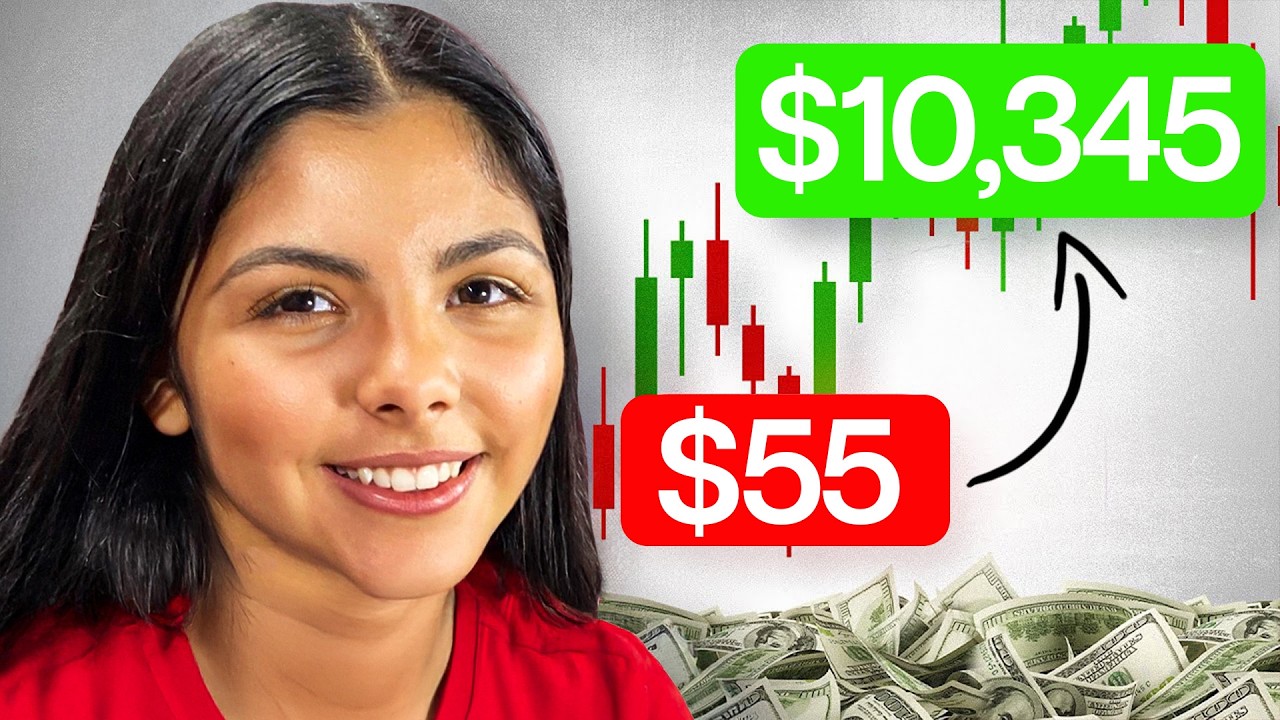
Damaris Trades · @damaristrades
Where viewers went back to watch this video again, from YouTube's public Most replayed graph, lined up with what was said at that moment.
Most replayed moment #1
20:482.6x the video's typical replay level
before you enter, exactly where and why you'll get out when you're wrong, and exactly where you'll take profit if you're right. For me, that means first, I identify supply and demand zones on the high time frame. Second, I have a
Said at 20:41
Most replayed moment #2
16:132.6x the video's typical replay level
option contracts one out of the money. And I choose the option contract, the strike price based on the delta that gives me the best risk versus reward. I need the right balance between cost and price movement. Your real job as a
Said at 16:05
Most replayed moment #3
15:362.6x the video's typical replay level
your delta. Delta tells you how much your option contract value will gain for every $1 movement that the stock makes in your favor. The delta is the number that affects your P&L in real time for day trading. For example, let's say you
Said at 15:28
The graph counts replays. It does not show where viewers stopped watching.
Words
5,285
Runtime
30:35
Speaking pace
173wpm
Reading time
22min
173 words per minute, between the 160 25th percentile and the 181 median of 349 measured videos. That distribution comes from the 349-video hook study.
Opening (first 30 seconds)
I made $10,000 this morning in less than 60 minutes. That's the reality of options trading when you know what you're doing. It's faster, simpler, and more accessible than most people think. I use options trading to generate over $300,000 in profit this year. And I've helped more than 100 students do the same, starting from scratch, like Dy, who went from trading on his lunch breaks to making $1,400 before 10:00 a.m. in a single day. In this video, I'm going to break down options trading
87 words, the words spoken in the first 30 seconds at 173 words per minute.
Free, no signup. See how the first 30 seconds hold attention, with rewrites.
Sentence shape
| Measure | This transcript |
|---|---|
| Sentences | 363 |
| Average words per sentence | 14.6 |
| Longest sentence | 47 words |
| Questions asked | 16 |
| Sentences containing a number | 69 |
Most used terms
Filler phrases
24 in total: like 11 · actually 4 · right? 3 · I mean 2 · you know 2 · basically 1 · kind of 1.
A literal whole-word count of the same phrase list the Prepublish browser extension uses, so a phrase inside another word is not counted and a phrase used in its ordinary sense still is. It is a count and not a judgement.
What this transcript is
Every word below is the caption track YouTube publishes for this video, pulled from the video itself and reproduced unchanged. It is not Prepublish's writing, not a summary, and not a re-transcription: it is the video's own published captions. English captions, generated automatically by YouTube, in the video’s original language. Source: the video on YouTube. A channel that would rather this page did not exist can ask for its removal through the contact page, and it is removed.
I made $10,000 this morning in less than 60 minutes. That's the reality of options trading when you know what you're doing. It's faster, simpler, and more accessible than most people think. I use options trading to generate over $300,000 in profit this year. And I've helped more than 100 students do the same, starting from scratch, like Dy, who went from trading on his lunch breaks to making $1,400 before 10:00 a.m. in a single day.
In this video, I'm going to break down options trading in a way I wish someone did for me. We'll go over the basics, what options trading is, how it works, and how to avoid beginner traps. And I'll walk you through a real trade so you could see how it plays out. So, what exactly is options trading? Options trading is part of the stock market. When most people hear about the stock market, they think about stocks and investing into stocks, which is buying pieces of a company.
Most people buy stocks, hold it, and hope that the price goes up over time. Pretty simple, right? Well, options trading is a little different. When you buy a stock, you invest into that company, and you buy stock shares. With options, we are not investing into the company. We are making bets about where that stock price may go in the future. Options are contracts. They are not shares. An options contract gives you the right to control 100 shares of the company, and you can make a bet that the stock will go to a specific price before a certain date.
So, let's say Apple is trading at $200. Buying 100 shares of Apple would cost you $20,000. But with an option contract, you could pay only $200 to control 100 shares of that stock temporarily. That's what makes options trading so powerful. You're controlling more with less risk upfront. Now, yes, with more leverage comes more responsibility. But if you understand what you're doing, the risk in options trading becomes very manageable and predictable.
There are two types of option contracts, calls and puts. Calls are used when you believe that the stock price will go up. Puts are used when you believe that the stock price will go down. That's the core of what options trading is. Everything else you learn is just deeper layers into that foundation. One of my students, Edwin, didn't understand this at first. He was buying contracts left and right without thinking about leverage or risk.
I slowed him down, focused on one strategy, one ticker, and one setup. 3 weeks later, he made $900 in just $17 off of one single trade. That's the power of understanding the core of options trading before you chase the complex stuff. Let's make this real with a quick example. All right, this is the Walmart stock and based on my analysis, I'm going to take a bet that the stock is going to go up. That bet is called a call.
Now, if I were buying the stock itself, I'd have to put up full price. And for a 100 shares at $100, that would cost me $10,000. That's not exactly accessible for most people to take just one trade. So instead, I buy call options. Call options give me the right but not the obligation to sell the stock at $101, which is the strike price I selected, which is near my target. So since I took a call option below that strike price, if the price moves in my favor towards my strike price, I could make a profit.
My plan for this trade is that I've taken a call on a breakout above this supply zone and my target is this supply zone at 101.95. If the trade fails and doesn't go in my favor, I'll stop out around $99.74. I just want to aim for a 1:3 risk-reward ratio. Meaning, for every $100 that I risk on this trade, I'm aiming for at least $300 back in profit. It may look like I entered early within the trading day, but I didn't just jump the gun immediately to enter this trade.
I waited for my confirmations. And the confirmation checklist I've been using this year has allowed me to get entries within the first hour of market open, so I'm able to be done by noon Eastern Standard Time. I use three forms of confirmation. I look at the trend and price action. I look at indicators and I analyze volume. These three factors help me get an entry within the first hour of market open. I trade breakouts and I also trade reversals from supply and demand zones.
All right, so I just wrapped up the trade and my option contract hit a 70% return in less than 60 minutes. How much your option contract value increases depends on how fast your price hits your target and how much time is left on the contract. All right. So, now that I've exited my trade, I'm going to give you the full breakdown on how the option contract value increased in correlation to the stock chart value. So, from my entry, Walmart went up from around 100 all the way to 102.
So, on the stock, the stock went in my favor by $2. So, at 9:49 a.m., I entered a call option contract. The cost of each option contract was $151. That is the premium. Since each option contract controls 100 shares of the underlying stock, each option contract cost $151. I bought 100 option contracts. So, my cost was $15,100. At $949, I entered a call bet. I exited my trade around 1 hour later and I was able to exit my option contracts at $257.
I entered my trade at $151 and in one hour I was able to exit that position at $257 at 1054 and I was able to exit with a 70% return. For every trade I want to make sure that I'm risking less than what I'm aiming for in profit. So for this trade I aimed for a 70% return but on the risk side I was only risking 20%. So per option contract I was risking 30. If you had one option contract, that would be a $30 risk. And if you had 10 option contracts, that'd be a $300 risk.
Whereas, where I exited the trade, which was just at my target level, you could have risked $300 to see over $1,000 return. If you traded this same trade that I took with just 10 option contracts, even if you entered this trade with just one option contract, you could have made $100 in just one hour. That might not sound like much, but I know for many of you guys watching this, that could be a full day of income from work at your job.
This really does show the power of options trading. So, basically, you'll buy call option contracts if you bet that the stock is going to go up and you'll buy put option contracts if you bet that the stock will go down. Also, I trade options with cash. There's no margin, there's no debt, there's no borrowing. You will never lose more in a trade than the premium of the option contract. and you'll lose less if you set smart stop- losses and target orders.
And the thing is, most beginners never have this level of clarity about their trades. They're used to jumping in and out of positions without ever really knowing why, or copying trading alerts from group chats even though they don't fully understand it, or holding trades way past their plan because they're hoping and praying that it might turn around. It's not exactly that they're bad at trading. They may have a great skill with trading.
It's just that they never learned a strategy, how to manage their risk, and how options trading really works. Nobody ever sat them down and taught them a framework, an organized, repeatable strategy, walking them through a real trade and showing them how it works and how they could apply that same strategy for their next trades in the future. When you could strip away the noise, remove the guesswork, and know your strategy, know your plan, and know your numbers before you even enter your trade.
That's when trading stops feeling like gambling, and it starts feeling like a skill that you could refine. The reality is, most of the bad trades you've taken could be avoided. Start this one simple habit. Slow down enough to ask yourself these three questions before you buy and enter a trade. Before you enter a trade, create a plan. Where will you enter the trade? Where will you exit if you're wrong? And where will you take profit if you're right?
First, where exactly will you enter? Not somewhere around here, not when it feels right. I mean, a specific price, a specific condition on the chart, something you can explain in one sentence. If you can't write down your plan on exactly where you're going to enter and why before you get in, you're already making a mistake. you're trading off of hope, vibes, feelings, emotions, news, whatever the case may be. That's not a plan.
That's not a real trade. Second, you must know where you're going to exit the trade if you're wrong. Every trade should have a point where you admit, "Okay, I was wrong on this one." Every single trading strategy out there has a losing rate. Every single trading strategy out there has a winning rate. My win rate is around 70%. Which means 30% of the time I'm wrong. So, I need to be prepared. Where will I exit the trade if I'm wrong?
The exit point should be based on the chart based on price or price action, not on feelings or emotions. This is how you protect yourself from blowing up your account. A small loss is just tuition. A big loss is a lesson that could have been avoided. Remember, in trading, we enter and exit our trades. Options trading is not investing. You do not buy an option and hope and pray it goes in your favor. With options trading, you need a plan.
So, third, you need to know where you're going to exit if you're right. You'd be surprised by how many beginners don't plan this. If you ever entered a trade, it went in your favor, you made some money, but you left it without exiting the trade, that's a mistake. Some beginners take profit way too early where if they would have followed their original analysis, it would have hit their target. Or they hold the trade that's a winner and then it turns into a loser.
You don't want that to happen. Having a pre-planned take-profit level gives you clarity. So, you're not just reacting to the chart, but you're following your rules. When you can answer all three of these questions and pre-plan it before you enter a trade, then you're good to go and you have a plan and you're trading with control. And here's the bonus benefit. It'll instantly remove 80% of the FOMO that you feel when watching a chart because you have a predefined plan.
If the setup doesn't match, you don't trade it. No chasing. One of my students, Tina, used to take 8 to 10 trades a day just because things looked like they were moving. We implemented this three question rule and within 2 weeks, she was only taking 2 to three trades a week and her win rate jumped from 38% to 72%. Her account stopped bleeding and she finally started seeing consistent green weeks instead of giving back all her profits.
I'm going to walk you through the entire process of taking a real trade. This is the exact step-by-step method I use to make consistent profits day trading options. The first step as a day trader is selecting a stock to analyze. The main form of analysis that I use is technical analysis. The red boxes and green boxes on my chart represent supply zones and demand zones. The first step that I take every day before I take a trade is perform technical analysis by marking up supply and demand zones.
After I mark up my supply and demand zones, that helps me formulate a trading plan for the day. Right now on the 4hour time frame on Walmart, I have identified a supply zone. But the most important part about trading is taking in the overall context of the chart. So before I take any trade, I consider the high time frame trend. So, for example, now I'm showing you the daily time frame. Each candlestick on my chart represents a one-day period.
What we could see over on the chart is that Walmart's price is trending up. And actually, the current price is very close to the previous high. Context is key in trading because it helps you determine which side you should take a trade. When we day trade options, we could profit if the stock goes up or if it goes down. But my preferred strategy is to follow the trend. So, for example, here we're watching Walmart. We're in an uptrend.
Sellers attempted to push price down, but they were weaker than buyers. Around this area, you could see there was very strong support and buyers outweighed sellers. Now, this was a previous lower high and now price is starting to break above it. So my plan today is to take a call if price breaks above around 100 and then I'll take a call above 100 targeting the next supply zone that I identified on the weekly time frame around 101.95.
And the most important part it was not random at all. It was a repeatable system that I used every single day. how I found the stock, how I marked my zones, my criteria in my pre-market plan, my criteria for entry, where I decided to exit the trade. All of this is a very systematic and repeatable trading framework that I do every single day and that I teach my students. And that's how I've helped over 100 students not only go from struggling or complete beginner to profitable with trading.
But just this year in 2025, 6 months into the year, over 20 of my students have decided to go fulltime with trading. Just in this one trade example, you could have made a $100 in 60 minutes. It might not sound like much, but think about how much time you're buying back from your life. All it takes for me is to take one trade a day. With the smallest amount of leverage, you could have made $100. With years of consistency and growing and increasing your leverage and your position sizing, that same trade, that same amount of time could be a $10,000 trade in less than 60 minutes.
That's what happens when you're consistent, when you have a strategy that works, and when you follow your rules every single day. That's the kind of approach I teach. Not just here's a strategy, here's how to mark levels. No, I teach you exactly how I think and exactly how I repeat this system every single day. You also need to understand strike price and delta before you enter any options trade. Your strike price is the price where you have the right to technically buy or sell the stock at that price at the expiration date.
But most new traders have the complete wrong idea about strike price. They get stuck on thinking the strike price is their target, but it's not. The strike price is just the price that's part of your contract. That's it. As day traders, we're not holding to expiration. So, we don't use the strike price in its formal definition. As day traders, we're buying to exit. We're trading the movement of price in the option contract.
We're not holding till expiration, and we're not exercising our options contracts. What matters more than the strike price is your delta. Delta tells you how much your option contract value will gain for every $1 movement that the stock makes in your favor. The delta is the number that affects your P&L in real time for day trading. For example, let's say you buy an option contract for $1 and your delta is 40 and that stock moves in your favor by $1.
You gain 40 cents on your option contract. If that stock went in your favor by $1 and your option contract only costs $1, that $1 movement that the stock made in your favor is a 40% return. That's why I choose my option contracts one out of the money. And I choose the option contract, the strike price based on the delta that gives me the best risk versus reward. I need the right balance between cost and price movement.
Your real job as a trader is understanding your risk versus your reward before you enter a trade. Ask yourself these three questions. How much would I be risking if I was wrong? How much would I be earning if I was right? Does this setup give me a 1:3 riskreward ratio? If it gives you a 1:3 risk-reward ratio, meaning you'll risk around $100, make $300 or more if you're right, then you're good to go for the trade. But if this setup gives you less than a 1:2 risk-reward ratio, avoid the trade.
Meaning, if you had to risk $100 only to make $100, that would not be worth it. If you're a day trader, you don't really need to focus on the strike price as much. Just focus on your delta, your risk, and the quality of the setup that you take. That will be the factors that make or break your trade. When you shift from the mindset that this trade needs to hit your strike price and start asking, does this trade meet my riskreward requirements and do I have multiple reasons to enter this trade?
Then you'll start thinking like a professional. When Dylan first joined my mentorship, he didn't have any trading strategy or process at all. He had no confidence and he had no discipline. He came in with a scattered approach, no real system for managing risk, and a habit of taking trades without a clear plan. Through the mentorship, we drilled in riskreward, journaling, and sticking to his exact criteria before hitting by.
He learned to cut losses fast, let winners run, and judge trades based on quality instead of outcome. Over time, his confidence grew. His decision-making became more intentional and his trading transformed from second-guessing himself to consistently stacking highquality wins with a riskreward ratio over 1 to4. That mindset shift changed everything. With a consistent process and the discipline to only take A+ high probability setups, Dylan realized he didn't have to be right 100% of the time.
In fact, with proper risk management and risk-to-reward ratios, you could be wrong more times than you're right in your trades and still grow your account over time. The key takeaway is plan every single trade. Know the purpose of your strike price, but most importantly, plan your risk management. Day trading is all about probabilities. Define your risk. Aim for a solid RR and focus on setups that have multiple reasons to enter.
When you combine that with consistency in your execution, the math takes care of the rest. If I were learning how to trade, starting completely from scratch, this is exactly what I do. And this is the same process I put my students through when they joined my mentorship. And listen, I know you might be tempted to skip this part. You might be thinking, just tell me the strategy already so I could start making money. But here's the thing, skipping this part is exactly why most beginners fail.
They try to fast forward to the results without building the skill. If you feel bird tap, if you feel like you're winning a little, losing a lot, and if you're questioning if trading is even for you, it's not that trading isn't for you. It's that you've been trying to build a house without a strong foundation. And here's the thing, the market is ruthless. If you don't have your foundation set, it will knock you down every single time.
These are the exact steps to follow to learn how to become a consistently profitable trader. Do not skip any of these steps. Step one, learn technical analysis. Before you risk a single dollar, you need to learn how to read the market. This isn't just memorizing a few candlestick patterns. I mean understanding what price is actually doing, where it's likely to react, and why. That means learning market structure, spotting supply and demand zones, recognizing volume shifts, and seeing the story the chart is telling you before you ever click buy.
Because if you can't read a chart, you're not trading, you're guessing, and guessing costs money. Step two, build a repeatable strategy. Once you could read the market, you need to create a process that works the same time every single time you see your setup. Your strategy should answer these three questions before you enter, exactly where and why you'll get out when you're wrong, and exactly where you'll take profit if you're right.
For me, that means first, I identify supply and demand zones on the high time frame. Second, I have a confirmation checklist. I know exactly what I'm looking for before I enter. It's a set of criteria. I wait for that confirmation and I do not jump in early. Then plan a stop loss and a target and ensure it provides you a 1:3 riskreward ratio. The beauty of a repeatable process is that it strips out all of the emotion in trading.
You're not just reacting to what the market is doing in the moment. You're executing a plan that you trust. Step three, practice before you risk real money. This is where most people mess up. They learn something new, they get excited, and the very next morning they throw real risk, real money at it. and then they wonder why their account is bleeding. Paper trading and back testing is where you will test your strategies effectiveness, the exact criteria you'll use for your entries, and that's where you'll be able to train the discipline to follow your strategy before emotions ever come into play.
In paper trading and back testing, the market is real, the prices are real, the strategy is real, but the money is fake. It's where you could simulate trading as if it's the real thing. It's the safest way to prove to yourself first that your strategy works and second that you're disciplined enough to follow your rules without hesitation. If you can't do it with fake money, then you won't be able to do it with real money.
If you could prove to yourself that your strategy works in back testing and paper trading, that will give you a very smooth transition to go start putting your real risk on the line because then you'll clearly understand what you're looking for. you'll clearly understand your strategy and you at least have a little bit of data to back that up. So when you go into the live markets, you go in with confidence. Step four, journal everything.
Your memory will lie to you. Your journal won't document every single trade. Whether that's a backtested trade, a paper trade, or a live trade, we want a documentation of everything. Your trading journal should include these factors for every single trade. the time you entered and exited, why you decided to enter that trade, why you decided to exit that trade, what was your plan and what was your high time frame analysis, how you felt during the trade, and did you follow your plan, yes or no.
It also would be helpful to include a screenshot of your trade so you could review and look back. A trading journal could help you spot so many patterns. You'd be surprised how helpful a trading journal really is when you track all this data. In just a few minutes, you could go back to your trades from the past week, from the past month, even the past year, and you could easily spot patterns. Patterns in what makes your winning trades succeed and patterns in your mistakes that causes losing trades.
Every weekend, spend 30 to 60 minutes reviewing your traits from the previous week or month. Ask yourself, did you follow your plan? Were your entries and exits aligned with your rules? Did you manage your risk correctly? What setups consistently made you money? Which setups did you consistently lose? When you see the same mistake three weeks in a row, you'll know exactly what mistakes to fix, and you could give yourself an action plan for the next week so you could improve.
I've had students like Karen who used to take random trades based on what was trending in Discord groups. And she had taken a previous course that lacked structure and left her confused. Once she had committed to learning technical analysis, studying candlestick patterns, trend lines, and risk management, she cut her bad setups by over 60% in her first month, working one-on-one with me. She started journaling every single trade that she took.
And by reviewing her journal, she learned many lessons from her trades. That's what built a strong foundation for her in the beginning. In her first month, she was already consistently seeing $500 days. Within 90 days, she was seeing $1,000 days. And within 6 months, Karen decided to go fulltime with trading. Or my student Ed, he had a little bit of prior trading experience, but he did not have a clear system, and he consistently overtraded.
He lacked confidence in his entries and his exits. He did not journal any of his trades and he did not have any riskmanagement strategy. In four months, under my mentorship and guidance, Ed took 100 trades. He had a 80% win rate. His average loss was only $100 and his average win was almost $400. He had over a 1:3 risk-reward ratio and was consistently seeing profit. It's really not about rushing to make money fast. It's about building a foundation you could actually grow from so that a year from now you're not still making the same beginner mistakes.
Now, mindset is also a very important part of trading. And I know a lot of people talk about trading psychology, but do not skip this part. This is very important. Most people hear mindset and they just think it's motivational quotes or telling yourself to be positive. But in trading, mindset isn't about being hype or positive energy. It's about what you're thinking when you're in the middle of the trade and money is on the line.
I've worked with over 100 students and I could tell you this. The students who become consistently profitable in trading who stick around for years and end up becoming full-time traders, they aren't the ones with the most fanciest setups or the most advanced trading technology. They're the ones who could manage what's going on inside of their head. If you come into options trading with a getrich this month type of mindset, you're already setting yourself up for failure.
That get rich quick mindset is dangerous. It'll make you size up before you're ready. It'll make you hold losing trades longer than you know you should just out of hope. On the flip side, if you come in with a skill building mindset, everything changes. You stop measuring your worth by today's P&L and you start measuring it by how well you're following your process. You understand that one trade will not make or break you, but not following your rules and not being disciplined and not being patient will.
Cirin is a great example of this. Cirin joined my mentorship in 2023. Cirin has been a consistently profitable trader ever since then. Now, in 2025, he has an 84% win rate and a 1:3.7 riskreward ratio. Meaning, for every $100 he loses in the market, he gets at least $370 back on average 84% of the time. That type of consistency is what allowed Cirin to sell his business and go fulltime with trading. So, now he has 100% freedom.
If you're fearful, you'll hesitate and miss good setups. If you're greedy, you'll hold winning trades too long and they'll turn into losses. If you're frustrated, you'll enter trades that don't meet your rules or criteria just to do something. So, yes, mindset matters. Not in the believe yourself cliche way, but in a practical, measurable way. Your ability to stay calm, patient, and disciplined is the foundation that your trading success will rely on.
Without it, even the best strategy in the world won't save you. If you've been watching this and thinking, "Yeah, that makes sense. I think I could do this." But if you'd rather have someone walk you through this entire process step by step, that's exactly what my mentorship is built for. I don't sell a course that you just buy once and forget about. I do a 4-monthlong one-on-one mentorship program working directly with you live every week to build your trading skill from the ground up.
We break down your trades together. We work on your entries and exits until it becomes second nature. And I will drill risk management into your head until it's muscle memory. And I will personally hold you accountable to the rules and the strategy that you give yourself. That mentorship and guidance is the difference between knowing what to do and actually doing it and making consistent profits. If you've been watching the testimonials pop up on this screen, just know that's a small fraction of the students that I've helped and the lives that I've helped change.
The thing is, I only do one-on-one mentorship and I can't work with everyone at once. I only take on a small group of students at a time so I could give my full attention to each student I work with. The people who get the best results under my mentorship know that trading is a skill that takes time to refine. They aren't trying to get rich quick. They're trying to work on their planning, their strategy, their analysis, their discipline to follow their rules.
They're the ones willing to slow down, follow a process, and execute it consistently. If that sounds like you, and you're interested in my one-on-one mentorship, there's an application link below in the description. Fill it out. Tell me where you're at and we'll see if we're a good fit to work together. If we are a good fit, we could get to work right away. If not, I'll still point you in the right direction and the next steps for you.
Either way, the longer you wait to take this seriously will be the longer you stay stuck. And you've already seen in this video what's possible when you stop secondguessing and following a real plan. The link's below. Click it when you're ready and I'll see you on the
The words are the caption track's own and nothing is reworded or re-transcribed. Paragraph breaks are placed between sentences so the text reads as prose.
Free tools for your own script. No signup, no login.
Paste your draft and see where viewers are likely to drop off, with a rewrite for each weak line.
Paste the first 30 seconds of your own draft for a hook score and rewrites.
Check your draft against YouTube's advertiser-friendly guidelines before you record it.
Read this channel's public videos and transcripts, and download a writing brief for it.