Getting the transcript
Reading the captions from YouTube. A video nobody has opened here before takes 10 to 30 seconds; this page fills in on its own.
Getting the transcript
Reading the captions from YouTube. A video nobody has opened here before takes 10 to 30 seconds; this page fills in on its own.
This video has no Most replayed graph yet: YouTube shows one only once a video has enough views. These are the moments viewers replayed most in AI Search's most watched videos.
Most replayed moment at 10:28
3.1x that video's typical replay level
and then fix any errors that it sees. And so afterwards, it rendered the video successfully and that's pretty much it. In just one prompt, I didn't even need to prompt it further. Here's our final result. >> Four companies, one quarter, and a half-trillion-dollar bet on artificial
Said at 10:22
Most replayed moment at 15:21
4.1x that video's typical replay level
and deep agent for only $10 a month. This is way cheaper than if you paid for each tool separately. Definitely check out chat.llm that comes with deep agent in the description below. You can think of the residual connections not as a simple pipe carrying the signal forward,
Said at 15:15
The graph counts replays. It does not show where viewers stopped watching.
Words
6,007
Runtime
33:38
Speaking pace
179wpm
Reading time
25min
179 words per minute, just under the 181 median of 349 measured videos. That distribution comes from the 349-video hook study.
Opening (first 30 seconds)
Folks, I can finally say we got GPT-6 before GTA 6. So, GPT-6 Astra is out and it's an absolute freak. In this video, we're going to go over all the ridiculous things that it can do, plus we're going to go over its specs, benchmarks, performance, and more. Let's jump right in. Now, to show you how capable GPT-6 is, I'm going to put it through a series of really diverse and challenging tests. Now, you could use it on the online chat interface, but to really make use
90 words, the words spoken in the first 30 seconds at 179 words per minute.
Free, no signup. See how the first 30 seconds hold attention, with rewrites.
What this transcript is
Every word below is the caption track YouTube publishes for this video, pulled from the video itself and reproduced unchanged. It is not Prepublish's writing, not a summary, and not a re-transcription: it is the video's own published captions. English captions, generated automatically by YouTube, in the video’s original language. Source: the video on YouTube. A channel that would rather this page did not exist can ask for its removal through the contact page, and it is removed.
Folks, I can finally say we got GPT-6 before GTA 6. So, GPT-6 Astra is out and it's an absolute freak. In this video, we're going to go over all the ridiculous things that it can do, plus we're going to go over its specs, benchmarks, performance, and more. Let's jump right in. Now, to show you how capable GPT-6 is, I'm going to put it through a series of really diverse and challenging tests. Now, you could use it on the online chat interface, but to really make use of its full potential, it's much better to use it via the ChatGPT desktop app or what's previously known as Codex.
Here, you can get agents to work on multiple projects at once, and each project can live locally on your computer. So, it can work on multiple persistent files. So, that's mainly what I'm going to show you in this video. First, let's test its physics understanding and ray tracing capabilities. Now, the frontier models can already code something like this up from scratch without any external libraries, so we got to step up the difficulty.
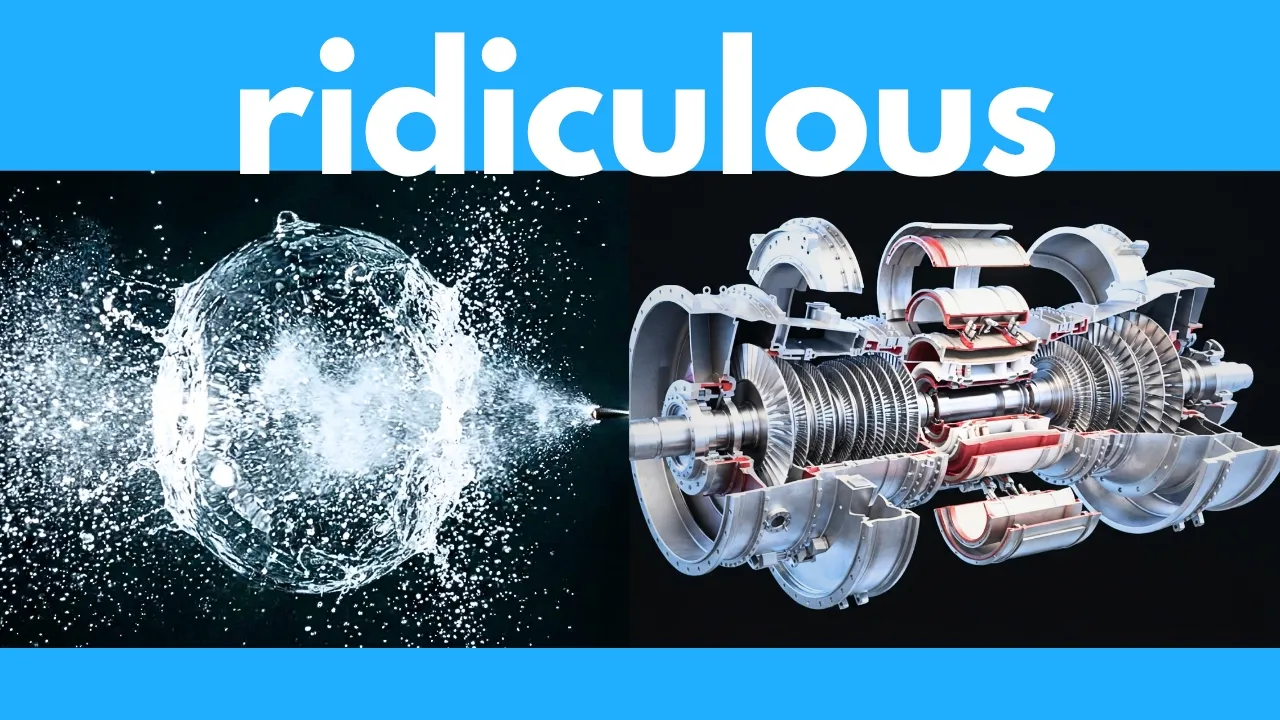
Here's my prompt. Make a ray tracing simulation of a bullet piercing through a water balloon, making the balloon pop and the water bursting, deforming from the original shape, eventually falling to the ground. Make it look as realistic and physically accurate as possible. The animation must meet the following requirements, allow me to freeze the animation at any point in time and view the scene from any angle. Add different sliders for bullet speed, balloon size, lighting, gravity, and other parameters.
The most important part here is do not use 3.js or any external web libraries. I want to test its physics understanding, so it needs to code this up completely from scratch. Now, if you just prompt it up to here, it's going to give you a pretty mediocre result. So, here's a nice prompt hack I like to use to make it look way better. For each iteration, use a separate critic agent to take screenshots of the scene from different angles and evaluate its realism and physics accuracy.
It should provide a score from 0 to 10. Eight or above means it looks very convincing, exactly like a real shot. Loop until the critic gives a score of eight or higher. Below that, the builder gets the issue list and tries again up to three rounds. Let's crank this up to ultra and then press run. All right, here's what I got. It first worked for 32 minutes and here's the cool part about it. So, it finished building the interface and then now it's using the critic agent to take screenshots and rate the overall scene.
So, you can see for round one it gave it a score of 4.7. If we didn't use this critic agent in our prompt, then it's just going to stop there and it's going to give you a pretty bad result. So, next it gave you a list of ranked fixes and then now it's generating the second version and then it's using the critic agent again to assess round two. For round two, it gave it a score of six out of 10. Still not above eight, so here is a list of ranked issues and then it revised the app further and then here is round three.
Still not above eight, it just gave it a score of 6.5, but we did set it to a maximum of three rounds, so this is the final round. And afterwards, it gives us this app. And indeed, we have a bullet piercing through a water balloon. I can set like the bullet speed, the balloon diameter. So, let's make this a bit bigger. I can also adjust the impact height, gravity, surface tension, spray density. Let's make this maximum spray and let's drag the timeline.
So, indeed, we first have a bullet piercing through the water balloon. That is so cool. Let me show you this at a different angle. Let's crank up the light intensity. Let me show you the piercing motion. Wow, that is pretty cool. Next, let's play this and it should fall to the ground. Very cool. We can also view this from a different perspective, so here's the side perspective. Here is a long bullet, which looks like this.
Here is above, which looks like this. If I freeze the frame here, you can see the bullet actually piercing through the blob of water. And then I can also adjust the light intensity, so here is lowest intensity. Here is highest intensity. I can also adjust the light direction. Here's a view from below. Very cool. So, there you go. Here is a pretty decent looking simulation of a bullet piercing through a water balloon.
All coded from scratch without any external libraries. Now, the thing I don't like about the GPT app is that it doesn't actually show me the usage stats for my chat. So, I can't really show you like how many tokens it used, but this did work for like 32 minutes and I'm running several concurrent sessions at once. So, my best guess is that this used around 3 to 4% of my weekly usage limit. All right, next let's get it to code up a video game.
Now, you might have seen some impressive demos of first-person shooter games or racing games created by GPT-6. This ain't actually that impressive because well, there's not much articulation or animation going on. The gun is just a rigid object, so it's actually very easy to make a first-person shooter. Instead, I'm going to show you a much harder demo of video game where we actually get a character to move. So, there has to be articulation and different animations.
Here's my prompt. You are a world-class game developer. Make a procedural 3D game in Unreal Engine. The user controls this character in third-person point of view. So, I just linked it to this model of a character on Sketchfab. Right now, it's just a 3D model. We also need to articulate and add appropriate animations. So, back to my prompt, she's able to sprint and jump really high leaping across rooftops like a ninja.
You need to add appropriate animations for the character. Look for relevant animations in Mixamo and map them onto the character. So, Mixamo is another 3D site where there are a ton of pre-existing animations which you can use to animate your characters. So, things from like walking, running, dancing, and fighting. If you're not able to download the assets because it requires a login, you can use the Playwright Chrome extension to open my current Chrome session where I'm already logged in.
The environment should be a procedural ancient Chinese Imperial setting. See the attached photo for inspiration. I gave it this photo which I just generated with Nano Banana. Generate all assets in Blender via MCP. So, on Blender, I already installed the Blender MCP and I'm going to click on connect to MCP server so that it's available on this local port for any AI agent to connect to. And then afterwards, render them procedurally in Unreal Engine.
Make it look as detailed, realistic, and grandiose as possible like a AAA video game with impressive graphics and effects. The game should be playable within Unreal Engine. And then again, here is my critic agent hack. After each completed attempt, a separate critic agent takes its own screenshots from several viewpoints and zoom levels and scores the game design and aesthetics from zero to 10. Over 0.85 means AAA quality.
A pass is over 8.5 with zero errors. Below that, the builder gets the ranked issue list and tries again up to four rounds. All right, so it worked for an hour and 26 minutes. Afterwards, it has successfully downloaded the characters and then it has added some running and airborne poses and connected the movement to Unreal. And as you can see here, it's already spawning the character and all the buildings and other assets in Unreal Engine.
And then afterwards, it is using the separate critic agent to take screenshots at different angles and give it a score. It looks kind of blank with overly metallic roofs, repetitive layout, crude distant mountains, etc. etc. And then afterwards, it receives a ranked list of things to fix and it proceeds to generate the second revision. After finishing the revision, you can see it does look slightly better. Now, it's going through the critic agent again for round two.
And here it gave it a score of 5.8. Still below 8.5, so it needs to loop again and make it look even better. I'm going to fast forward a bit to the final round where the critic gave it a score of 6.3. Still below our target of 8.5. I could keep looping this further, but I gave it a maximum of four rounds, so it's going to stop there. Now, this still didn't look very nice, especially the character animations, and that's the challenge of making this game.
So, I wrote, "The character animations look horrible. Use better animations from Mixamo for sprinting and jumping as if the character is leaning forward like a ninja and moving very quickly. Again, use a separate critic agent to assess how good this looks for up to four rounds. Also, add more effects and elements for camera motion when I move the character around. It should look visually impressive and not just a rigid 3D animation." And then for the game mechanics, she kind of jumps way too high, so I wrote, "One jump should not be so high, but allow me to chain multiple jumps together in midair.
The running and jumping animations should occur two times faster." And then I also prompted it to add more epic camera effects like shake or motion blur, add more movement to the environment like wind or mist. "It should be an infinite Imperial Palace generated procedurally. Make the lighting a bit more epic and realistic. Add more variations to the buildings." All right, so we went on for like 4 hours, but afterwards, here is what the game looks like.
It even added a cute little goal here where I need to collect these floating icons throughout the city. So, let's collect this one. Everything works, so I can walk and run around. I can chain jumps together to jump across rooftops. Everything looks very beautiful. You can see there still are some errors. For example, some building floors are kind of disconnected. Some of the lanterns are also disconnected, but overall, this is not bad.
And then for your reference, here is the wireframe only, which looks like this. You can see this is quite complicated. Here is the solid view with lighting only. So, not bad. In just 4 hours, it was able to generate quite a decent-looking game where it can animate this character. It can generate the entire scene procedurally in Unreal Engine. Now, again, because I'm using the ChatGPT app, I can't actually see the usage stats for this session, but it worked for around 4 hours, and my guess is it used roughly 10% of my weekly usage limit.
Now, GPT-6 is incredibly good at computer use. That means it can just work directly within your browser or different apps on your computer. It can click and drag stuff. You can get it to automatically fill out tax forms like this, or you can also get it to work directly in Microsoft Office and edit files like this. Now, this is kind of easy, so let me show you an even more challenging example. I'm going to get it to use computer use to control my browser and go to photopea.com, which is like an online Photoshop, and then get it to create a blank canvas and draw out the attached image, which looks like this.
Make it as detailed and faithful as possible to the original image. So, here's a time-lapse of this in action. It's actually going inside photopea.com and then, you know, drawing out this image brush by brush. So, you can see how capable its computer use capabilities are. It's not controlling this with code. It's actually using its cursor and drawing out everything each stroke at a time. Now, I'm fast-forwarding this, but this took only like 20 minutes.
Now, honestly, drawing something out is kind of easy because it's just kind of matching the configuration of pixels, so let's make this even harder. I'm going to get it to use computer use to go to this site, which basically allows me to create sprite animations frame by frame. And then, I'm going to get it to create sprite animations based on this reference character attached. Generate the following actions, each four frames, and save each as a GIF file.
Running, jumping, slashing his sword. It must be consistent and faithful to the attached image. All right, so here's a It's actually going inside photopea.com and then, you know, drawing out this image brush by brush. So, you can see how capable its computer use capabilities are. It's not controlling this with code. It's actually using its cursor and drawing out everything each stroke at a time. And then, after jumping, we have slashing his sword.
And this took around 40 minutes, but as you can see afterwards, it has given me these three animations of the character. Now, again, drawing stuff on a canvas is kind of easy. So, let's increase the difficulty even more. I'm going to get it to use computer use and then go to this site, which is just a virtual online piano, and I can click on these keys here to play the notes. Set visible keys to max. So, sometimes over here in settings, if it's not set to max, then you get fewer keys.
So, I need to set it to the max number of keys and then compose a fast-paced piano solo in the style of Chopin around a minute long and play it by pressing the keys on this online keyboard. So, the challenge here is first it needs to compose this song, but it doesn't just play the song in a DAW. It needs to actually play out the song live by pressing the keys sequentially, and the timing of each key press has to be correct in order for this to sound good.
So, there's also a dimension of time here. Let's see what it does. All right, so first it's spending a few minutes trying to figure out how to actually press the keys on the keyboard, how record its performance. First, it presses record and then I think it's just a short rehearsal. And then after learning how this thing works, here is its final performance. >> [music] [music] >> And I must say I am very impressed by this.
This actually sounds like a legit classical piano solo. And this was really quick. So, it only took like 7 minutes. If you do any kind of content creation, definitely check out Luma, the sponsor of this video. Think of it as an agentic AI workspace that can work alongside you through your entire creative process, instead of just giving you the result of a single prompt. For example, let's say I want to create an entire marketing campaign for a new product.
Instead of jumping between a bunch of different AI tools, I can just get Luma agents to autonomously do everything. It can develop the concept, generate the visuals, and shape the project all within the same workspace. What makes it especially interesting thing is that its Luma agents understands things like motion, physics, and 3D space. Rather than completely taking over the creative process, you can continuously guide the agent, change direction, and refine the results as you work.
And one of the most powerful features is Luma skills. You can basically create reusable skills for workflows you do all the time. Basically, you give Luma a set of instructions once, and then you can run that same workflow on different assets whenever you want. For example, I can create a skill where I input any product photo and it'll output some UGC videos of an influencer talking about the product. Or here's another example of a skill where I can upload the product photo and it'll drop it into water like this.
Luma basically gives you an intelligent creative co-pilot that can consolidate all your creative workflows into one place. Whether you're creating marketing campaigns, branded content, product visuals, or social media content, Luma is one of the best platforms you can use. Try Luma today using the link in the description below or by scanning the QR code here. Now, speaking of music, let's see how good it is at composing a full song.
I'm going to write, "Your job is to compose an amazing Euro pop EDM song. Use any of the VST plugins or samples in my Waveform DAW. You can decide which instruments to use. Make sure to add variations and effects like risers, epic drops, and other elements that make audio files weak to their knees. Include panning effects, automation, make sure everything is mixed and mastered professionally." So, after 15 minutes, it gave me a render, but it sounded quite basic, so I wrote, "It still sounds very basic and amateur.
The drop impact also sounds very fake. You can use free samples from samplefocus.com. Spice it up with more ear candy. Use a catchier melody and make it sound amazing." And afterwards, after running this for like 20 more minutes, here is the final result. >> [music] >> Ah. >> [music] [music] >> Ah. >> [music] [music] >> And I must say this sounds very good, much better than what I got from Claude and GLM. Now, this did require that I prompted it one more time and I also allowed it to search for and add more samples.
But as you can see, it was able to spice this up really well. Now, this still sounds kind of muddy and not mixed and mastered well. Still not as good as a professionally mastered song from a human. All right, here's another fun test. Let's just give it a listing on Airbnb. So, here's the listing. Here's a random luxury room in Japan, which looks like this. It's got some pretty complicated stuff like this slanted wall in front of the pool.
There's this like weird wooden object over here. Here's what the bathroom looks like. Here's the full exterior and here's what the pool looks like. So, the living room is here. There's a main pool here with a smaller circular pool over here. And then with a sofa and table over here. Anyway, I'm just going to feed it this entire listing page and then get it to reconstruct the entire building and interior using Blender MCP.
Again, in Blender, I'm going to click on connect to MCP server so that it's running on this port which the agent can then control. And then also program the camera path to fly through the property like a virtual tour and then render the scene. All right, so this worked for quite a long time, an hour and 12 minutes. It probably used up 5 to 10% of my weekly usage limit. And here's a time lapse of it creating the scene.
So, if I expand this, you can see it has created like thousands of different elements in this 3D scene. So, it's super complicated. Let me just play the animation here. So, here's the bathroom. Let me also adjust the different views. So, here is wireframe only. Here is solid shading. You can see here's the pool area with the sofa, the long pool, and then the circular pool. Here's the living room with that strange wooden thing over here.
Everything looks pretty decent, not like 100% faithful to the scene, but it's not bad. And then finally, here is the full render. I'm going to paste some actual images of the property on the side so you can compare and contrast. >> [music] [music] >> Now, the frontier models like GPT or Claude can't generate images or videos themselves, but you could get it to be the director and control these other generative AI models to create some really good-looking content.
For example, let's get it to make a 30-second commercial about this product. I'm just going to give it the Amazon page of this random matcha brand. You may use the images and product specs on that page for reference. Use Higgs Field MCP to generate the content. Higgs Field is basically a platform where you can use a ton of the leading video and image generators out there. And they have this MCP or CLI, which basically allows AI agents to connect to it to generate content.
So anyways, connect to this and then generate the content using whichever image or video generator you want for the best results. If necessary, you may generate multiple clips and stitch them together for the 30-second commercial. All right, so this was pretty quick. It only took like 20 minutes, and here's the final result. >> Make a little room for your ritual. Tenzo Better Boost, organic matcha grown in Japan. Whisk it.
Pour it. Make it yours. A vibrant little moment in your everyday. >> [music] >> Tenzo, your daily green ritual. >> Much better than what I got from Claude Fable 5.1 using the same prompt. Now, instead of commercials, let's see if it can create a math motion graphics explainer video from scratch. So, here's my prompt. Create a motion graphics explainer video. It should be minimalist, white on black, around a minute long.
The topic is how we first figured out that Earth's circumference. It should be easy to understand, but also go in depth on the mathematical concepts behind it. Use diagrams and other visuals. You can use any tool you prefer to create the video. Now, GPT cannot generate a voiceover itself, so I wrote for the voiceover, use Gemini TTS, and then I just pasted the documentation on how to run this. So, it worked for 14 minutes, and the result was okay.
It could be better, so again, I used my critic agent hack. It needs to score eight or above, otherwise keep looping this for a maximum of three rounds. And afterwards, I didn't really like the transcript, so I wrote the transcript should be more coherent and flow better as if you're explaining this to high school students. And finally, here is the result. >> How can you measure Earth without traveling all the way around it?
Around 240 BC, Eratosthenes used shadows. At summer solstice noon, a stick in Syene cast almost no shadow. In Alexandria, it did. First, turn that shadow into an angle. The stick and shadow form a right triangle. Divide shadow length by stick height. That's the tangent of the top angle. Today, we can use inverse tangent to find that angle. Here, the measured angle was about 7.2°. Now, connect that triangle to Earth. Sunlight arrives almost parallel, while vertical sticks point away from Earth's center.
Extend the sticks inward, and the same angle appears between the two radii. That tells us how much of Earth's curve separates the cities. A full circle is 360°. 7.2 is 1/50 of that. So, the cities are 1/50th of the way around Earth. Using roughly 800 km between them, multiply by 50, about 40,000 km. The measurements were approximate, but a small shadow had revealed the size of a planet. >> Now, instead of using the ChatGPT desktop app or Codex, of course, you can also use GPT-6 online.
So, currently, at least for me, it's only available in this work tab, but not for this chat tab. So, let me click on work tab, and next, let's try out your favorite prompt, finding the frog. I'm going to upload this image, and there's a frog hidden somewhere in this image. And then I'm going to write, is there any animal or animals in this image? If so, identify and circle it. This is the hardest prompt ever, so I'm going to set this to max and then press run.
Now, it worked for 6 minutes and 50 seconds, but unfortunately, it could not find the frog. It said it can't confidently identify an animal in this photo. Here, it suspects there's a timber rattlesnake, which is completely wrong. Now, some users reported that it could actually find the frog, but I could not reproduce it. I tried running this several times. So, here's another example. Here, it says there's a small toad over here, which is also not correct.
In fact, this image isn't the only image in frog bench. I tried with another image, there's also a frog hidden somewhere in this image. I asked the same prompt, and still it could not circle the frog correctly. There's no frog over here. So, unfortunately, even GPT-6 Astra could not pass the frog test. Next, let's see how good it is at identifying cancer. So, I'm going to upload this photo of six different brain scans, each one contains a different type of brain tumor.
I'm going to write, identify the types of tumors in each of the six images, if any. Let's press run. So, it worked for 2 and 1/2 minutes. For top left, it wrote meningioma, which is actually correct. For top middle, it said no definite tumor, which is wrong. For top right, it wrote meningioma, which is wrong. Bottom left, it said no tumor, which is wrong. Bottom middle, it wrote calcified meningioma or craniopharyngioma, both of which are wrong.
And then number six, it said no tumor, which is wrong. So, it got one out of six correct, which is still the top score. So, Kimi and GLM also got one out of six for this prompt. Next, let's test its ability to do deep research. So, here's my prompt. Analyze the mechanisms of amyloid beta and tau propagation in Alzheimer's disease. Contrast therapies targeting each protein. Critically appraise outcomes from recent phase three trials.
Include relevant tables and visualizations. Now, there's no right answer to this. All the frontier models except for Claude can actually answer this quite well. They just each have different vibes, so it depends on which one you prefer. Anyways, here's the answer from GPT-6. You can see it first gives us a nice table summarizing the mechanisms. Everything is cited nicely. It then gives me a flowchart of these mechanisms, etc., etc.
And then here's a table on phase three trials. It even coded up this figure. And then here's another table packed with information. Let me scroll down a bit further. Feel free to pause this if you want to read the whole thing. And that's it. What I like about GPT-6 is that it's very concise, but it's packed with information. Next, let's see how good it is at thinking up new ideas. So, here's my prompt. Propose the three highest impact ideas that don't exist yet that use current tech and AI to meaningfully improve the lives of animals in factory farms.
Hard constraints. It has to be a meaningful improvement in quality of life. It has to scale across huge number of animals. Low effort and operational cost. Adding this should be no-brainer for operators. Let's press run. All right. So, it worked for eight minutes and 35 seconds. Here is its answer. And number one is AI that creates and protects resting zones for chickens. You get less interrupted rest, more choice over surroundings, potential feed savings, and fewer leg problems.
Number two is pig enrichment that automatically adapts to demand and competition. The third is software that preserves compatible pig groups during routine moves. And then let me scroll down a bit so you can read the full thing. Feel free to pause this if you want to read each section. Now again, this is subjective, but let me know in the comments below what you think of its answer. Do you think its ideas are actually good quality?
And if you want to actually do this and you have the expertise, feel free to reach out to me and I might even fund you. All right, so that sums up my series of tests on GPT-6 Astra. As you can see, this is a super capable model. Next, let's go over its specs and benchmarks. First, here are some of their self-reported benchmarks. So, in terms of frontier math, which tests an AI model on some exceptionally difficult math problems, you can see that GPT-6 Astra scores like 98%.
It's almost saturating this benchmark. For terminal bench four, which tests an AI on terminal-based agentic coding, you can see that again, GPT-6 Astra scores the highest, even better than Claude Fable 5. For this automation bench, which tests whether a model can complete multi-step business workflows, again, you can see that GPT-6 Astra far outperforms the other models. They claim that this is the world's best computer use model.
This can easily use your computer. It can operate within interfaces in different apps. It can draw stuff. It can play the piano. It can edit documents and spreadsheets and fill out forms. So, here are some related benchmarks for your reference. Agent Last Exam tests a model on complex real professional tasks. And as you can see, GPT-6 is the best performer. Same with OS World, which tests whether a model can complete tasks by operating computer apps.
Again, GPT-6 Astra is the best. In terms of reconstructing 3D objects from different views, again, you can see that GPT-6 is also the best. It's really good at 3D modeling, as I've shown you from some of my demos. It also has some really good music understanding. So, on this string quartets benchmark, which tests how good a model is at transcribing audio into sheet music, it scores much higher than the previous GPT. Now, in addition to benchmarks, here are some even more impressive qualitative achievements.
So, GPT-6 is the only general agent so far to beat this video game called Portal. If you're not familiar with it, this is like a puzzle platformer game, and solving it requires 3D spatial reasoning, a ton of physics intuition, multi-step planning, and very precise timing pressing the mouse and keys. GPT-6 is the only general AI model able to beat this game. GPT-6 is also speeding through the entire Pokémon series. So, here's its result for Pokémon on Fire Red.
It was able to beat the game in only 18 hours and 12 minutes. Whereas for the other models, it took much longer. And beating Pokémon is again a big deal. This requires long-term planning and memory, vision, and thousands of coherent decisions in a row. It's much more complicated than just answering a single question. But GPT-6 was able to just completely speed through Pokémon Red, and now you can see it playing Pokémon Crystal via this Twitch live stream.
I think it's going to beat the record for Pokémon Crystal as well. And one of the most insane achievements of GPT-6 is its performance on this Arc AGI-3 leaderboard. This basically drops an AI into an environment it has never seen before, and it needs to figure out the rules and how to not die and proceed to the next level. Now, for humans, this is pretty easy, but for AI models, this is quite hard because technically they can't learn new patterns or information after training.
Their model weights are fixed. So, it's really hard for them to actually figure out and get these new rules and apply them. And that's why even for the other Frontier models, they score like less than 10%. But GPT-6 Astra was able to score over 60%, and if you add an additional harness to this, it can reach close to 100%, which is crazy. For Voxel Bench, which tests how good an AI model is at creating 3D voxel animations, you can see that again GPT-6 Astra is ranked number one, and the lead is insane.
Like this beats Opus 5 by almost 400 points, whereas the other models only differ by like a few dozen points. If you look at this frontier math Erdos benchmark, which tests how good an AI is at solving some really complicated math problems that have not been solved yet, you can see that GPT-6 is the only model that scores above 0%. So, it's also world-class in terms of math understanding. Here's another benchmark called iBench, which tests an AI's vision capabilities.
So, things like solving mazes or spotting the difference, analyzing graphs and patterns. Look at the insane lead of GPT-6. It's almost saturating this benchmark with a 95% score, whereas the other models are like less than 50%. Here's a pretty useless but fun benchmark, seeing how good an AI is at solving New York Times word connections puzzles. And as you can see, GPT-6 Astra is also number one. Interestingly, for this artificial analysis intelligence index, then GPT-6 Astra Max is still behind Claude Fable 5.1, putting it in second place.
However, if you look at the cost per task, then GPT-6 Astra is priced very especially if you compare this to the ridiculously overpriced Claude models. If you look at this Omniscience hallucination rate, then the GPT-6 models do hallucinate less than Claude Opus 5, as well as the other Fable models, and much less than the previous GPT-5.6. Here's another leaderboard called Live Bench, and interestingly, here they ranked GPT Astra number three, even below the Claude Fable models.
If you look at this Arena leaderboard, where people can blind test models side by side, for some of these leaderboards, they haven't added GPT-6 yet, but for web dev, they have. And as you can see, GPT-6 Astra is ranked number one, and the gap is pretty huge. Next, let's go over where you can use GPT-6 Astra. At the time of this recording, they should have completely rolled it out to all ChatGPT paid plans, including plus and pro.
I'm on the pro 5x plan, and for the online chat, it doesn't seem like I can select GPT-6, but if I click on this work tab, that's where I can access GPT6. And of course, I can also use this in the GPT desktop app. Now, for me, I'm on the 5X Pro plan, and the weekly limit is reasonable, so a long coding task of around an hour would usually drain around like 5 to 10% of my weekly limit. If you're on the plus plan, then it's going to drain way faster.
So, that's something to keep in mind. Anyway, that sums up my review of GPT6 Astra. This is definitely the most capable and powerful model you can use right now. Let me know in the comments what you think of this. As always, I will be on the lookout for the top AI news and tools to share with you. So, if you enjoyed this video, remember to like, share, subscribe, and stay tuned for more content. Also, there's just so much happening in the world of AI every week, I can't possibly cover everything on my YouTube channel.
So, to really stay up-to-date with all that's going on in AI, be sure to subscribe to my free weekly newsletter. The link to that will be in the description below. Thanks for watching, and I'll see you in the next one.
The words are the caption track's own and nothing is reworded or re-transcribed. Paragraph breaks are placed between sentences so the text reads as prose.
Free tools for your own script. No signup, no login.
Paste your draft and see where viewers are likely to drop off, with a rewrite for each weak line.
Paste the first 30 seconds of your own draft for a hook score and rewrites.
Check your draft against YouTube's advertiser-friendly guidelines before you record it.
Read this channel's public videos and transcripts, and download a writing brief for it.
Sentence shape
| Measure | This transcript |
|---|---|
| Sentences | 443 |
| Average words per sentence | 13.6 |
| Longest sentence | 42 words |
| Questions asked | 3 |
| Sentences containing a number | 88 |
Most used terms
Filler phrases
88 in total: like 51 · actually 19 · kind of 9 · basically 7 · you know 2.
A literal whole-word count of the same phrase list the Prepublish browser extension uses, so a phrase inside another word is not counted and a phrase used in its ordinary sense still is. It is a count and not a judgement.