Getting the transcript
Reading the captions from YouTube. A video nobody has opened here before takes 10 to 30 seconds; this page fills in on its own.
Getting the transcript
Reading the captions from YouTube. A video nobody has opened here before takes 10 to 30 seconds; this page fills in on its own.
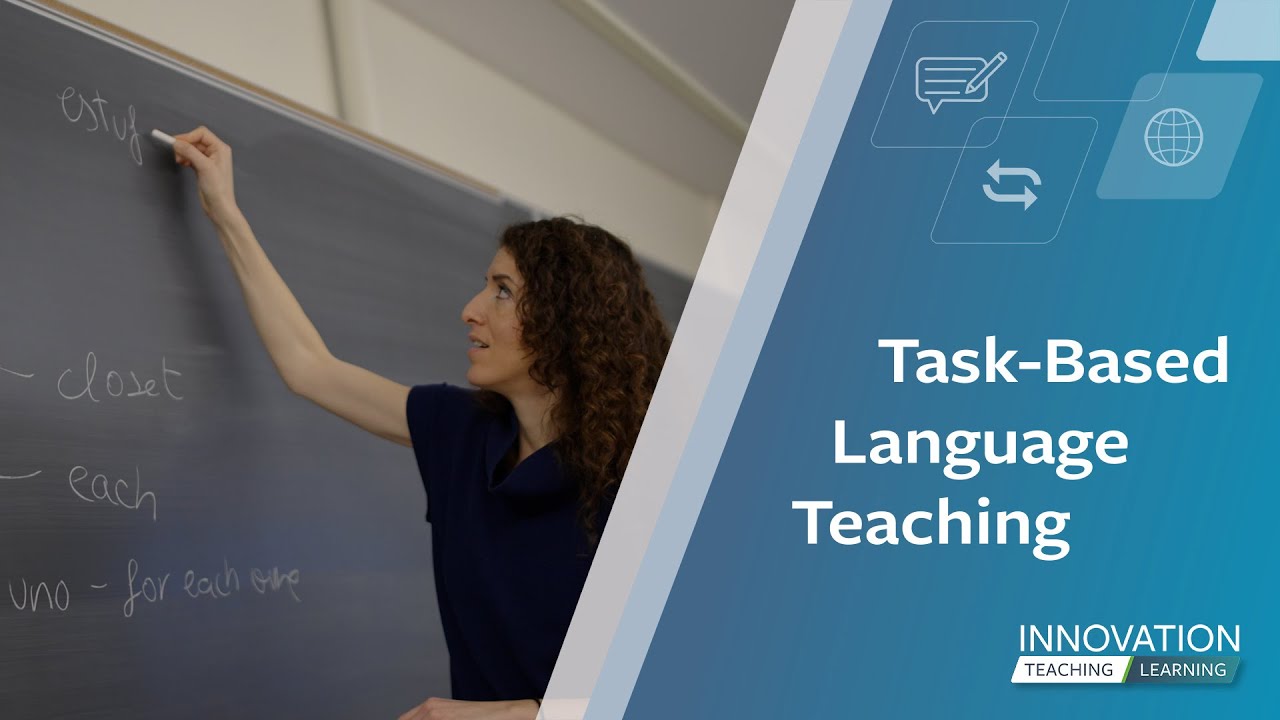
Cornell Center for Teaching Innovation · @cornellcenterforteachingin2018
Where viewers went back to watch this video again, from YouTube's public Most replayed graph, lined up with what was said at that moment.
Most replayed moment #1
0:192.0x the video's typical replay level
Task-based language teaching as an approach for language learning, where students are given a task or an objective, a goal that they have to meet at the end of the class. So at the center of task-based language teaching is meaning. When I was doing my degree, I heard about task-based,
Said at 0:12
Most replayed moment #2
4:211.8x the video's typical replay level
how to structure a lesson. I was always bound by the Present, Practice, Produce method that I was taught when I was learning to become a teacher. And now it's been over a decade and now I'm restructuring
Said at 4:14
Most replayed moment #3
0:571.7x the video's typical replay level
from the three of them because we could see different examples, Different models, right? Typically, a strong base language teaching approach starts with a needs analysis. It's kind of probing What do your students need to do with language? What do they want to do with language?
Said at 0:50
The graph counts replays. It does not show where viewers stopped watching.
Words
797
Runtime
5:17
Speaking pace
151wpm
Reading time
3min
151 words per minute, below the 160 25th percentile of 349 measured videos. That distribution comes from the 349-video hook study.
Opening (first 30 seconds)
Is it a great learning experience and a lot of innovation and there is a lot more that we can do Task-based language teaching as an approach for language learning, where students are given a task or an objective, a goal that they have to meet at the end of the class. So at the center of task-based language teaching is meaning. When I was doing my degree, I heard about task-based, but I never implemented
76 words, the words spoken in the first 30 seconds at 151 words per minute.
Free, no signup. See how the first 30 seconds hold attention, with rewrites.
Sentence shape
What this transcript is
Every word below is the caption track YouTube publishes for this video, pulled from the video itself and reproduced unchanged. It is not Prepublish's writing, not a summary, and not a re-transcription: it is the video's own published captions. English captions, published by the channel, in the video’s original language. Source: the video on YouTube. A channel that would rather this page did not exist can ask for its removal through the contact page, and it is removed.
Is it a great learning experience and a lot of innovation and there is a lot more that we can do Task-based language teaching as an approach for language learning, where students are given a task or an objective, a goal that they have to meet at the end of the class. So at the center of task-based language teaching is meaning. When I was doing my degree, I heard about task-based, but I never implemented it. And I thought, you know, I could totally learn that from him.
So then I was like, Hey, do you like this approach? And he said, “Yeah, yeah, we should do it!” And then we figured, you know, we could implement task-based language teaching in the classroom. But we need a team. We had a total of three mentors, and it was great to have the guidance from the three of them because we could see different examples, Different models, right? Typically, a strong base language teaching approach starts with a needs analysis.
It's kind of probing What do your students need to do with language? What do they want to do with language? We want to kind of provide students with tasks that help them in the real world and that build the proficiency that they need to do everything that they want to do in the real world. We were noticing they were going through all of the levels, they go through all the motions, they do all the fill in the blank activities.
But at the end of the day, they get to the fourth semester of Spanish and they're still having trouble relating to the language, understanding that the language is more than just the words on the page, or just the fill in the blank activities. <i>Speaking Spanish</i> So we need to use language with a purpose. It has to have some meaning in it, whether it's using language to order coffee at a coffee shop, whether it is to buy a plane ticket using a platform in the language that you're learning, whether it's - you're in a job interview and you need to use the language for that, or you need to go grocery shopping.
These are the meaningful parts of language. And so this is where task-based language teaching comes into play. <i>Speaking Spanish</i> We also had a team of materials creation because there's a lot of work that comes into creating the material. We had a chapter and the chapter was of a clothing, and instead of having the students go through a very long list of vocab and learn the pieces of clothing, we decided to do something more interactive.
So the final outcome was that they will get a request from a potential buyer and they had to find a clothing item. That matches the description just seeing them go through all of the pile of clothes and try to decide - match the word that they had learned with the actual item and that that physical connection between the actual language and the item in the real world was was a really nice thing to see. And from the instructor's perspective, it was a task in itself finding the clothes at the thrift shop.
I mean, that was the fun part. We had styles for somebody, a formal person, somebody who wants to stay at home all the time. Yes. Someone who was going to a 4th of July party. Oh, yes! The 4th of July party (laughs). and students did very good. The 4th of July was very straightforward. But there's always some wonderful madness. Let me put it like this- Wonderful craziness going on in the classroom. Some energy, some vibes.
And I think the teachers picked up on that and it might have been just the innovation effect, but I felt like there is something that we really speak towards. Students want to do what they are motivated and engaged to do in a classroom. So through task-based language teaching, I have relearned completely how to structure a lesson. I was always bound by the Present, Practice, Produce method that I was taught when I was learning to become a teacher.
And now it's been over a decade and now I'm restructuring the way that I plan classes. And yes, it takes more time, it takes more planning, it takes a ton of creativity. But then it's so rewarding once you go into the classroom and you carry out that task and then you see the students working on it and you see them succeeding at it and it really gives you a sense of like- Oh, that's why I'm doing this. So this is what teaching is like.
This is what teaching should be.
The words are the caption track's own and nothing is reworded or re-transcribed. Paragraph breaks are placed between sentences so the text reads as prose.
Free tools for your own script. No signup, no login.
Paste your draft and see where viewers are likely to drop off, with a rewrite for each weak line.
Paste the first 30 seconds of your own draft for a hook score and rewrites.
Check your draft against YouTube's advertiser-friendly guidelines before you record it.
Read this channel's public videos and transcripts, and download a writing brief for it.
| Measure | This transcript |
|---|---|
| Sentences | 44 |
| Average words per sentence | 18.1 |
| Longest sentence | 60 words |
| Questions asked | 4 |
| Sentences containing a number | 3 |
Most used terms
Filler phrases
12 in total: like 6 · kind of 2 · you know 2 · I mean 1 · right? 1.
A literal whole-word count of the same phrase list the Prepublish browser extension uses, so a phrase inside another word is not counted and a phrase used in its ordinary sense still is. It is a count and not a judgement.