Varroa Mite Treatment Results transcript
Bob Binnie · @bobbinnie9872
Words
873
Runtime
5:06
Speaking pace
171wpm
Reading time
4min
171 words per minute, between the 160 25th percentile and the 181 median of 349 measured videos. That distribution comes from the 349-video hook study.
Opening (first 30 seconds)
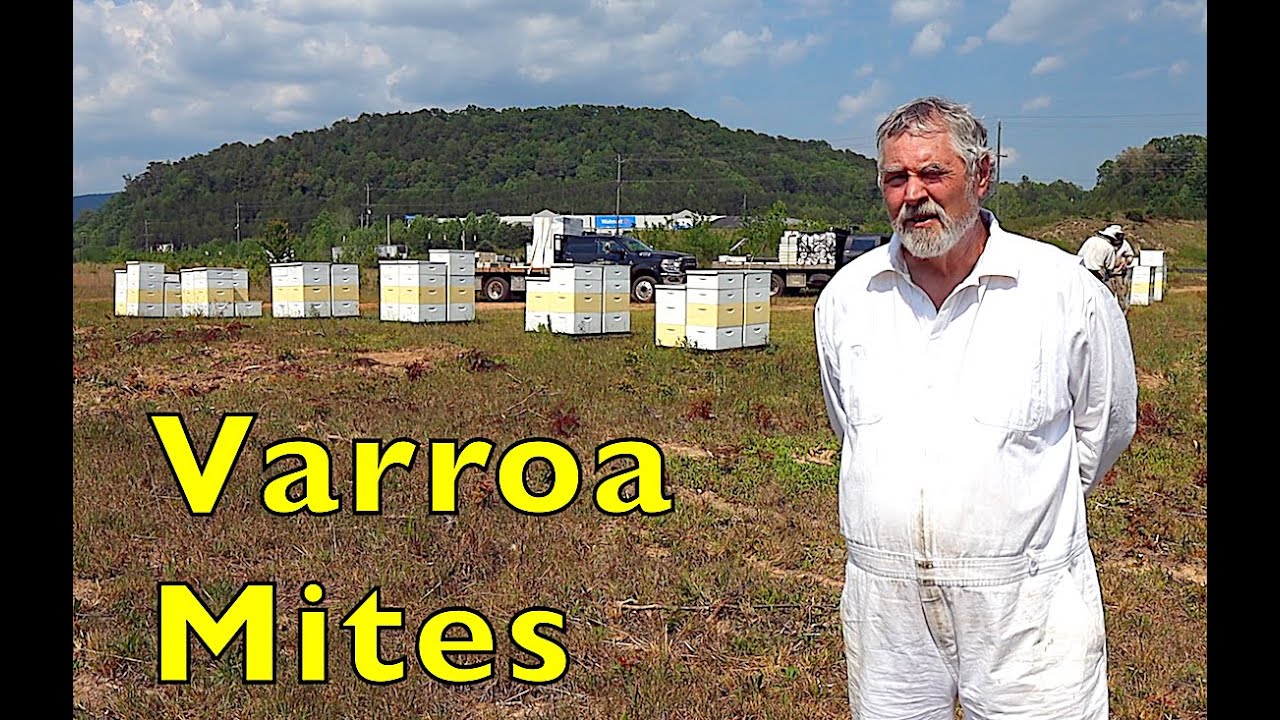
it's a bright day out here today it's hot i think summer's finally arrived it's may 25th we have kind of an oxymoron type of thing going on today what i would call a good problem this yard of bees behind me was scheduled to be involved in a research project with the university of georgia today it's been scheduled for a long time jennifer berry and her crew at the bee research lab are trying out new ways of applying oxalic acid she has some
86 words, the words spoken in the first 30 seconds at 171 words per minute.
Sentence shape
| Measure | This transcript |
|---|---|
| Sentences | 1 |
| Average words per sentence | 873.0 |
| Longest sentence | 873 words |
| Questions asked | 0 |
| Sentences containing a number | 1 |
Most used terms
- mites9
- research8
- acid7
- oxalic7
- oxalic acid7
- people6
- bees5
- double4
- temperature4
- winter4
- extremely3
- information3
Filler phrases
10 in total: like 3 · uh 3 · actually 1 · kind of 1 · um 1 · you know 1.
A literal whole-word count of the same phrase list the Prepublish browser extension uses, so a phrase inside another word is not counted and a phrase used in its ordinary sense still is. It is a count and not a judgement.
What this transcript is
Every word below is the caption track YouTube publishes for this video, pulled from the video itself and reproduced unchanged. It is not Prepublish's writing, not a summary, and not a re-transcription: it is the video's own published captions. English captions, generated automatically by YouTube, in the video’s original language. Source: the video on YouTube. A channel that would rather this page did not exist can ask for its removal through the contact page, and it is removed.
Transcript
it's a bright day out here today it's hot i think summer's finally arrived it's may 25th we have kind of an oxymoron type of thing going on today what i would call a good problem this yard of bees behind me was scheduled to be involved in a research project with the university of georgia today it's been scheduled for a long time jennifer berry and her crew at the bee research lab are trying out new ways of applying oxalic acid she has some very promising ideas and i was going to let her use these colonies and more to do some of her testing and research but we have a problem a good problem uh we're having a very hard time finding any mites we've been around to a bunch of yards done a bunch of alcohol washes in the last few days and throughout it all we found one mite now i don't have any illusions i'm not going to stand here and tell you we don't have any mites because i know better than that but considering that we were not able to find any except for that one these colonies don't have enough mites to do a research project on mite control so we've rescheduled for late july july 25th we're going to move it back two months hopefully by then the mites will have grown a little bit and she'll be able to do her research now the reason i'm doing this video is i thought some people would be interested in how we achieved that around the first of june i always have a few mites i can't remember one single year when i've had this happen where we just absolutely couldn't find any mites and we did something a little different last winter that i think was the reason i've been a big proponent of using oxalic acid sublimation or vaporization in the winter when the bees are broodless and last year we did that in a very big way the first thing i did was i was very careful with the temperature i think a lot of people make the mistake of using that in the in the winter when the bees are brewless when the temperature is too cold i think the ideal temperature for that is probably around 42 to 48 degrees fahrenheit you want the bees to be in the colony not flying but you don't want them to be clustered tightly so we really tried to treat when we had that type of temperature going on and then my other thing was i had this theory that if that type of treatment gets 90 or 95 percent of the mites i wanted to go back again and get 90 or of the 10 percent that was left behind and last winter we just kept on going and we actually gave them three treatments when they were broodless in late november and early december we did it five days apart and we also gave them a double dose of what's considered the normal dosage normal or until this time what's been considered the normal suggested dosage is one gram of oxalic acid per box so double deeps would get two grams well we were doing double which meant for a double deep like these behind me it would be four grams and i just i just think we annihilated the mites i think it was extremely effective now i know that some people may be tempted to comment that you know we got to be careful talking about off-label treatments and stuff like that but i think if you look very closely i think the amount of oxalic acid that's suggested is a really huge gray area right now there's a lot of research going on about larger doses they did some research down at the university of florida and have found that very large doses are extremely effective even when they do have broods so the playing field is beginning to change with this oxalic acid it's really becoming one of my treatments of choice uh especially when they're brewless in midwinter like that i know it's not really the the time that people want to start thinking about treating their bees in the fall for aurora mites but i just thought this was extremely good information that wanted to get it out there so people would uh have it later in summer when they start thinking about treating um jennifer berry and louis bartlett at the university of georgia have agreed to sit down with me in the near future and talk about all the research that's going on with oxalic acid so that video will be coming up before too long i've got a lot of other stuff in the in the works right now i got to finish that florida beekeeper series that's been taking quite a long time but before august 1st i'm going to have a video out on more information on oxalic acid sublimation or vaporization i think it has a huge part in my future and i think people need to pay close attention to it just wanted to share that information
The words are the caption track's own and nothing is reworded or re-transcribed. Paragraph breaks are placed between sentences so the text reads as prose.
Use this transcript
Three free tools that work on the material around a video like this one. No signup, no login.
Hook Analyzer
Paste the first 30 seconds of your own draft for a hook score and rewrites.
Policy Pre-Flight
Check your draft against YouTube's advertiser-friendly guidelines before you record it.
Channel Skill Generator
Read this channel's public videos and transcripts, and download a writing brief for it.