Getting the transcript
Reading the captions from YouTube. A video nobody has opened here before takes 10 to 30 seconds; this page fills in on its own.
Getting the transcript
Reading the captions from YouTube. A video nobody has opened here before takes 10 to 30 seconds; this page fills in on its own.
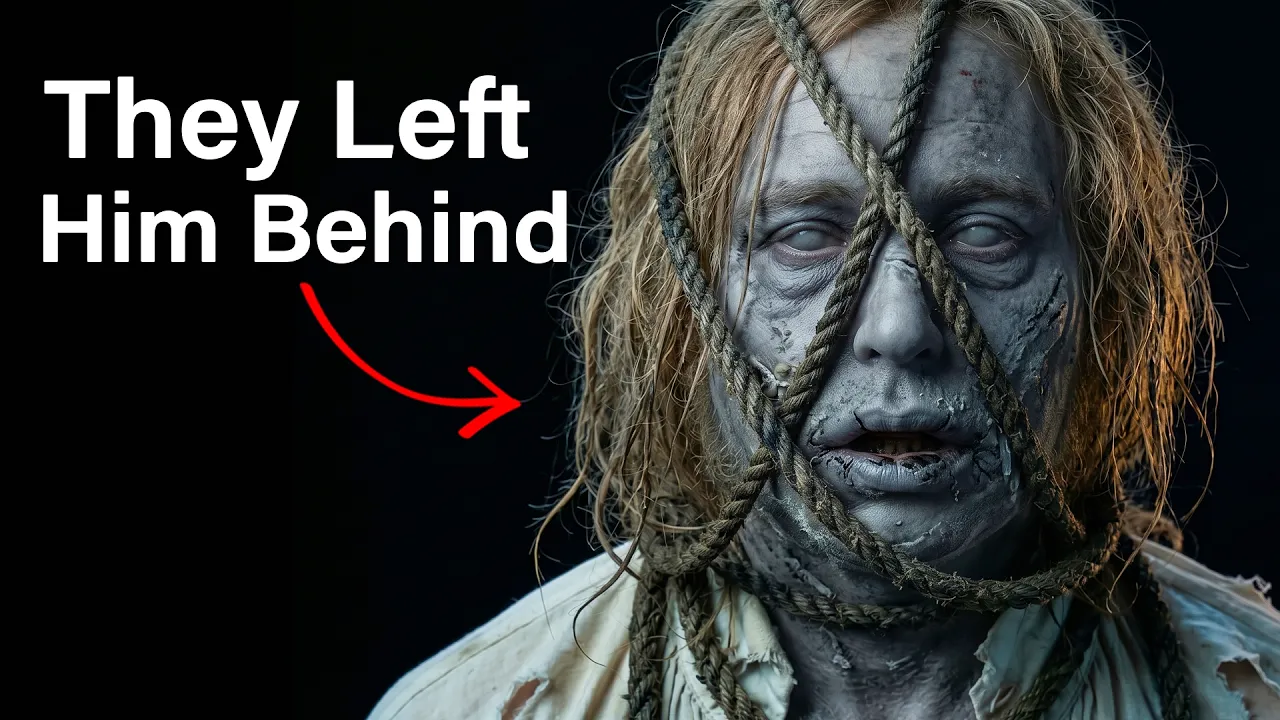
Buried Earth · @BuriedEarth
Words
3,082
Runtime
20:43
Speaking pace
149wpm
Reading time
13min
149 words per minute, below the 160 25th percentile of 349 measured videos. That distribution comes from the 349-video hook study.
Opening (first 30 seconds)
We found two ships wrecked on a reef in the Pacific. But the big question is, what happened to the men who got out? This was a French expedition that vanished more than 200 years ago. The people living on the island said some of the crew had survived. Archaeologists later found traces of their camp, including coins and instruments from the expedition that gave us evidence on land to support the accounts. We can
75 words, the words spoken in the first 30 seconds at 149 words per minute.
Free, no signup. See how the first 30 seconds hold attention, with rewrites.
Sentence shape
| Measure | This transcript |
|---|---|
| Sentences | 235 |
| Average words per sentence | 13.1 |
| Longest sentence | 45 words |
| Questions asked | 10 |
| Sentences containing a number | 16 |
Most used terms
Filler phrases
12 in total: actually 4 · kind of 3 · like 2 · you know 2 · I mean 1.
A literal whole-word count of the same phrase list the Prepublish browser extension uses, so a phrase inside another word is not counted and a phrase used in its ordinary sense still is. It is a count and not a judgement.
What this transcript is
Every word below is the caption track YouTube publishes for this video, pulled from the video itself and reproduced unchanged. It is not Prepublish's writing, not a summary, and not a re-transcription: it is the video's own published captions. English captions, generated automatically by YouTube, in the video’s original language. Source: the video on YouTube. A channel that would rather this page did not exist can ask for its removal through the contact page, and it is removed.
No Script X-ray for this video: YouTube shows a Most replayed graph only once a video has enough views.
We found two ships wrecked on a reef in the Pacific. But the big question is, what happened to the men who got out? This was a French expedition that vanished more than 200 years ago. The people living on the island said some of the crew had survived. Archaeologists later found traces of their camp, including coins and instruments from the expedition that gave us evidence on land to support the accounts. We can follow part of what happened next, although we still don't know where all the survivors ended up.
And there's something worth knowing about this crew. They had already lost boats earlier in the voyage and rebuilt replacements in Australia, so they had experience building boats. The question was what they could manage here with what they had left of their ships. To understand their chances, you have to understand who these men actually were. Because they were not lost amateurs. They were one of the most capable groups of people ever put on the water.
The expedition had sailed out of France in 1785, ordered by the king himself, who read the plans and marked them up in his own hand. It was meant as France's answer to the great British voyages of the age. Two ships, sturdy former cargo vessels, stocked as near twins, so that losing one would not lose the mission. And on board them 220 men. Not just sailors and officers, but astronomers, naturalists, physicists, artists, even a gardener.
It was in effect a floating machine for measuring the entire world. Sent to fill in the last blank spaces on a map. For 3 years, it worked. Charts and reports and specimens flowed home every corner of the Pacific. There were men who could fix their position by the stars, survey a coastline, and rebuild what they broke. And they had already broken a great deal because the voyage had already been bleeding badly long before the reef.
The first blow came in Alaska. A party in small boats went to take soundings near the mouth of a bay and an unexpectedly violent tide caught them and dragged them into the breakers. 21 men drowned in a matter of minutes. The commander searched both shores for days and by his account was brought to tears again and again. His men buried a bottle on the shore with the names of the dead inside. The second blow was worse in a different kind of way.
On a Simone Island, a shore party went to fill their water barrels, and the falling tide, left their boats grounded and trapped in the shallows. A large crowd gathered, stones were thrown. The French opened fire at close range, and people were killed on both sides. Among the French dead were the commander's closest friend and one of the expedition's leading scientists. Now, this has often been told as a simple ambush.
But the truth is murkier than that. A tangle of grounded boats, a misunderstanding, and expeditions that did not match on a shore where neither side fully understood the other. What is certain though is that both sides lost people and the expedition lost men it could not replace. So by the time these ships reached the reef, this was a crew that had already been tested by disaster that had already lost boats and men. The proof that they could rebuild came in Australia.
Late in the voyage, the two ships put into a bay on the Australian coast, arriving by pure chance at the very moment the first British settlers were landing to found what would become Sydney. And there the French did something that matters for everything that follows. They rebuilt their boats. Having lost craft earlier in the voyage, they set up and constructed replacements on a strange shore with the tools and timber they carried.
They could do this. It was a skill that they had and they had just used. They also did something that saved their story. Even as they themselves were about to be lost, they handed their letters, their journals, and their charts to the British ships heading home. That is the only reason we know anything about the first 3 years of this voyage. The men sent their words ahead of them. The commander wrote out his plan, a long loop north and west through the islands and home by the following summer.
Then the two ships sailed out of that bay. And that was the last time anyone in Europe ever saw them. After that, there is only silence. The expected arrival dates came and went. No ships, no letters. A voyage that had reported home from half the world simply stopped reporting. Of the men who sailed on into the Pacific that day, not a single one was ever seen alive ever again. But France did not give up on them. As the silence stretched on, a full rescue expedition was sent out to sail the missing route and find them.
And here is a fact that is kind of hard to sit with when you do your research, that the rescue expedition passed within about 40 mi of that very reef where the two ships lay and never knew. Now, you may have heard a more dramatic version of this story. The story that the rescuers saw the survivors smoke rising from the island and sailed on and left them to their fate. I want to be straight with you because this matters.
That story online is not true. It muddles together two different ships years apart. One passing ship did note smoke on the island, but recorded no sign of any people in distress and the actual rescue mission came 2 years after that and never saw that place. The truth is quieter and in a way cruer. Nobody abandoned them. The rescuers came close in a vast ocean and simply did not know which speck of wreath held the answer.
And so they sailed on. And the question stayed open for decades. Where had they gone? The answer, when it finally came, came from a single object. Nearly 40 years after the ships vanished, an Irish sea trader working his way through the Pacific was shown something on a small island, a silver sword guard worked in the French style. He asked where it had come from. The islanders told him it came from another island some distance away where two great ships had been wrecked long ago.
That one object cracked the whole case open because it was a physical thread and it led somewhere. He followed it to that other island, a place called Vanoro. And there on the reef in the shallows he found them. Anchors, cannon, pieces of French porcelain lying in the water. After 40 years of silence, the mission expedition finally had a location. It had a grave. The question stopped being, "Where did they go?" and became the question we started with.
What happened to the men who got out? In our own time, archaeology went back to that reef and finished what the sword guard started. Divers mapped not one wreck, but two, lying about a mile apart on the same stretch of reef, and the two told very different stories. One ship had struck a deep fault in the coral and had been torn apart with enormous force, smashed and scattered. The other had grounded in a very deceptive piece of water.
It was a shallow gap, a place that looked open but was not. That difference matters for our survival question. And we'll come back to it because a ship that grounds in the shallows gives its men a very different chance than a ship that is ripped apart on the reef's edge. To be sure which ship was which, the archaeologists needed something better than guesswork. And they found a single instrument, a sextant, a tool for navigating by the stars, marked with the name of the marker who had supplied it, a name that matched the flagship's own equipment list.
That was the proof. Now, they knew exactly which ship had died where. But I do have to add a word of caution here, and it is important. On a reef like this, objects move. They wash between wrecks. And for two centuries, the islanders had traded expedition metal from hand to hand, carrying it far across the sea. So an object can tell you who owned it. It cannot on its own tell you which ship it went down with or whose hands held it last.
Keep that in mind. It's about to matter for one man. Because in the violent wreck, the one torn apart at the fault, the divers found something the other sight did not give up. A human being. A near complete skeleton lifted out of the coral. And this raised a very specific question. One that cuts to the heart of the whole investigation. Out of 222 men, could we identify even one of them? Could we take these bones and give this one lost man his name back?
The scientists threw everything they had at it. They built a biological profile, a European man, healthy teeth around 1.7 m tall. They even reconstructed his face from the skull. So after that, more than 200 years, someone could look at him again. The one thing that they could rule out was the most famous name of all. This was not the commander himself. The commander was an older man and had written near the end of the voyage that he was losing his hair and his teeth.
These bones belonged to someone younger with a healthier mouth. Whoever this was, it was not the man whose name the whole world remembered. And beyond that, every attempt to name him had failed. They tried to match him to specific officers and scientists. They tried the science of DNA. Nothing produced a reliable answer. So here is where the investigation lands on where one person we physically recovered. We have his bones.
We have his face. But we cannot tell you who he is. He is a known member of the expedition and an unknown man which tells you something sobering about our chances of everyone else. If we cannot name the one man that we have actually found, what hope do we have of following the ones who walked off of that reef and disappeared? And yet the evidence says that some of them did exactly that. And I will tell you why. It's because the island had never forgotten them.
When the Irish trader and the French captain who came after him gathered testimony from the people of Vanicoro, a story came through. Not of men who had drowned on the reef, but of castaways, survivors who had reached the shore and lived there for a time. For a long while, that was just testimony, powerful but unproven. And then the ground confirmed it. Digging on that island near a river, archaeologists uncovered a tight concentrated scatter of expedition material, not stuff washed up by random, but gear carried deliberately up onto the land. coins from France and beyond, lead musket balls, tools, fragments of French and Chinese ceramics, and most tellingly, a measuring instrument, a compass signed by its maker.
Delicate specialist equipment brought ashore and used. This is the proof. Men had lived through the wrecks. They had salvaged what they could, hauled it up onto the beach, and made a camp. The survival question was no longer did they get out. They did. It became the harder question. What did they do next? Now, I'm going to be honest with this about the limits here because the temptation is to build a whole colony out of this.
The island accounts widely disagree on the details on how many survived. Some said only a couple, others said dozens. on how long they stayed. Some say a few months, others say longer. These numbers were passing through several languages and decades of retelling. What the evidence supports though is solid but limited. Some men survived. They organized themselves on land and among them were people with the skills to do more than just wait.
So put yourself on that beach. You have survived the wreck. You have a camp and salvaged tools. And among your numbers are trained officers and skilled hands. You know roughly where in the world you are. And you know that no rescue is coming, especially anytime soon, because nobody in Europe has any idea you are there. This is the choice in our intro that we put to you. Do you wait or do you leave? Waiting means betting that somehow out of the whole Pacific a ship will stumble upon this exact reef.
And these were men who had every reason to know how bad of a bet that was. They had watched the ocean swallow their friends. They had no way of knowing that a rescue would one day pass 40 m away and miss them entirely. But they could feel the odds. Leaving meant something almost unthinkable at the time. It meant building a ship out here with no shipyard, no proper timber, nothing but the broken bones of the two vessels that had already failed them.
But remember what kind of crew this was as well. They had lost boats before and built new ones in Australia. If any group of castaways in history had a real chance of building their way home, it was this one. And that is exactly what they decided to do. From the salvaged timber of their ruined ships, the survivors built a new one, a smaller vessel pieced together from what the reef had left them. This is the moment the whole survival story has been building towards.
There's no rescue. There's no luck. A group of shipwrecked men at the far edge of the known world using the one skill that might save them and constructing a way out with their own hands. And when it was ready, most of them climbed aboard and sailed it out over the reef and away. You might expect that to be triumphant on its own. the clever castaways who refuse to die and build their escape. But this is the exact point where the trail goes cold because this is where we last know we can follow them from.
No wreck of that little boat has ever been found. No record of where it would have landed. No bodies, no message, no next chapter. Men who had crossed half the planet survived the drowning of their ships and built themselves a vessel from the wreckage, sailed out onto the ocean and beyond the horizon. The evidence simply ends there. We know that they left, but we do not know where they arrived or whether they arrived at all.
And that not knowing is not a gap we failed to fill in yet. After two centuries of searching, it may be the final answer this story has. There is one possible echo of them, though, and I'll give it to you for exactly what it is and no more. Far to the west on the island of Torrist Strait between Australia and New Guinea, there is a report from 1818. It describes European relics in local hands and a story of white men who had arrived by boat roughly 30 years earlier of fighting and of a single surviving boy who later vanished again in a canoe.
The timing fits. The direction fits. It sits along a route the escape boat might plausibly have taken. And it is so tempting, I mean like very tempting to say they are there. That is where they ended. But I won't say that because the evidence doesn't say that at all really. It's all just guesswork. Not one object from the island has ever been tied to the ships. The story could belong to some other wreck entirely. It is a lead that fits the shape of the mystery, not a solution to it.
The last place we can actually put survivors with certainty is on that reef that they sailed away from. There is though one last piece of this story and it belongs to memory rather than fact. There is a famous line that has followed this expedition for two centuries. That on the morning that he was taken to the guillotine, the king of France, the very king who had sent these men out is said to have asked, "Is there any news of La Peruse?" It's a haunting image. the doomed king on his last morning still thinking about the lost explorers.
So let's come back to the evidence that is the strongest to the one man we could actually hold out of men who sailed and everyone who lived through the wrecks and everyone who climbed on board that homemade boat and sailed into the unknown. We recovered exactly one of them. a single skeleton lifted from the coral. We gave back his face as well, and we stood over his bones with every tool of modern science, and we still could not tell you his name.
He was carried home to France in the end, and buried at last in a tomb as a known member of the lost expedition and an unknown man. That is the shape of what we have found here. We found the ships. We named them. We proved that men survived. That they made camp. That they refused to sit and wait. That they built themselves a way out. We followed them right up to the edge of the reef. And there, where the water opens out, they stepped past the end of everything that we know.
And they have not come back into it since. And that's it from me, guys. I really hope you enjoyed this expedition video. We've done so many battles and graveyard videos recently. We've had some success with expeditions in the past and I really enjoyed making those. So, I really hope you enjoyed this one. Let us know in the comments if you have any extra insights onto this story and what videos you'd love for us to look into making next.
Of course, my name's Joe. This is Buried Earth. on screen right now.
The words are the caption track's own and nothing is reworded or re-transcribed. Paragraph breaks are placed between sentences so the text reads as prose.
Free tools for your own script. No signup, no login.
Paste your draft and see where viewers are likely to drop off, with a rewrite for each weak line.
Paste the first 30 seconds of your own draft for a hook score and rewrites.
Check your draft against YouTube's advertiser-friendly guidelines before you record it.
Read this channel's public videos and transcripts, and download a writing brief for it.