Getting the transcript
Reading the captions from YouTube. A video nobody has opened here before takes 10 to 30 seconds; this page fills in on its own.
Getting the transcript
Reading the captions from YouTube. A video nobody has opened here before takes 10 to 30 seconds; this page fills in on its own.
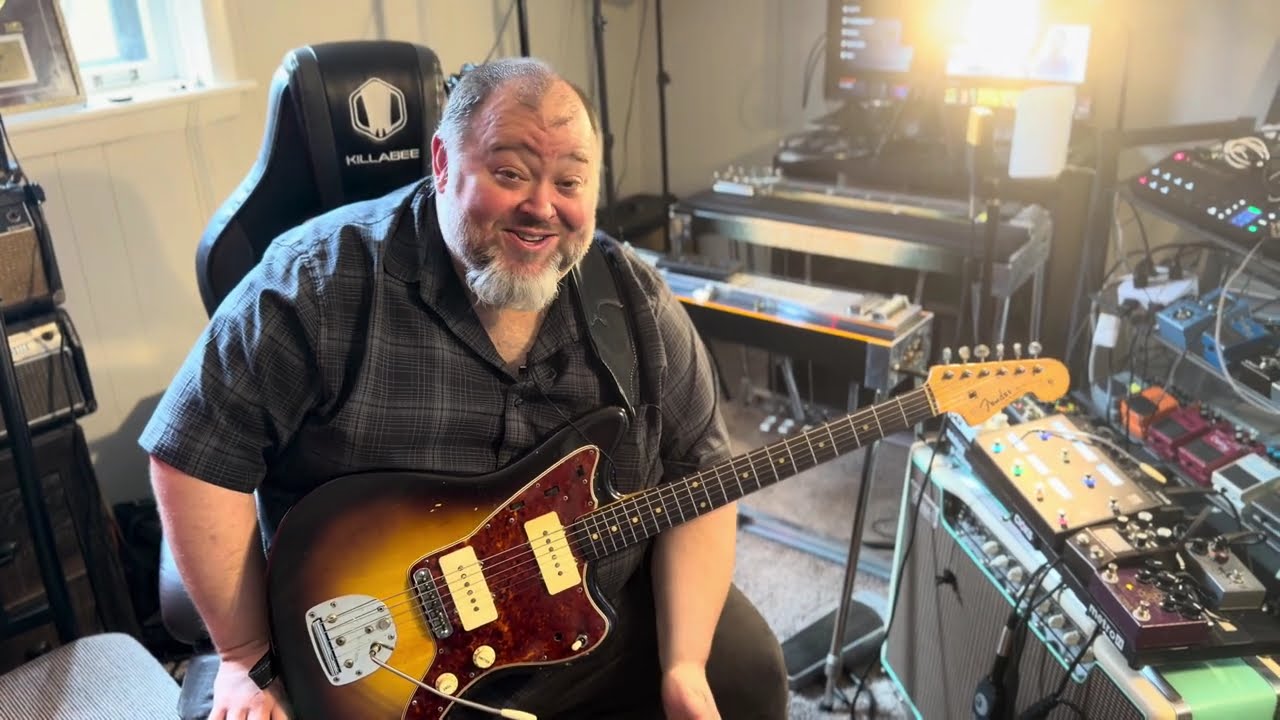
Cameron Roo · @Roocaster
Where viewers went back to watch this video again, from YouTube's public Most replayed graph, lined up with what was said at that moment.
Most replayed moment #1
29:263.4x the video's typical replay level
that's something I do a lot. And I'll tell you where I got that. There's a great guitar player from back home. Scott Delhant is his name. And he uh I heard him play this on a record years ago. He would
Said at 29:19
Most replayed moment #2
42:463.0x the video's typical replay level
know. So like yeah, tone control or whatever, you know, like all that stuff made sense to me the first time I heard it and it's probably because of
Said at 42:39
Most replayed moment #3
7:212.2x the video's typical replay level
on fret nine. You go down two frets.
Said at 7:15
The graph counts replays. It does not show where viewers stopped watching.
Words
8,135
Runtime
45:59
Speaking pace
177wpm
Reading time
34min
177 words per minute, between the 160 25th percentile and the 181 median of 349 measured videos. That distribution comes from the 349-video hook study.
Opening (first 30 seconds)
It wants to be a telly and it's almost a telly. >> How are you, Mike? >> What's going on? Doing good. And you? >> Well, I'm here with you. Can't be any better, right? >> Well, yeah. >> In the uh the cave. >> It's quite the cave, that's for sure. >> There's some guitars. >> It's a disaster because Well, that's the way it is. >> What are you playing? This is a 1960 Jazzm that I just got. Um, the strings are still the ones that
89 words, the words spoken in the first 30 seconds at 177 words per minute.
Free, no signup. See how the first 30 seconds hold attention, with rewrites.
Sentence shape
| Measure | This transcript |
|---|---|
| Sentences | 675 |
| Average words per sentence | 12.1 |
| Longest sentence | 116 words |
| Questions asked | 70 |
| Sentences containing a number | 46 |
Most used terms
Filler phrases
430 in total: you know 189 · like 112 · uh 36 · kind of 34 · um 31 · I mean 10 · actually 9 · right? 6 · basically 3.
A literal whole-word count of the same phrase list the Prepublish browser extension uses, so a phrase inside another word is not counted and a phrase used in its ordinary sense still is. It is a count and not a judgement.
What this transcript is
Every word below is the caption track YouTube publishes for this video, pulled from the video itself and reproduced unchanged. It is not Prepublish's writing, not a summary, and not a re-transcription: it is the video's own published captions. English captions, generated automatically by YouTube, in the video’s original language. Source: the video on YouTube. A channel that would rather this page did not exist can ask for its removal through the contact page, and it is removed.
It wants to be a telly and it's almost a telly. >> How are you, Mike? >> What's going on? Doing good. And you? >> Well, I'm here with you. Can't be any better, right? >> Well, yeah. >> In the uh the cave. >> It's quite the cave, that's for sure. >> There's some guitars. >> It's a disaster because Well, that's the way it is. >> What are you playing? This is a 1960 Jazzm that I just got. Um, the strings are still the ones that have been on there for about 25 years. >> That's fair, Mike.
That's on brand. >> The guy said he hasn't bought anything in almost 30 years and he's never changed the strings. I did pop a B string on a gig, but aside from that, I need to change him. Listen to that. just >> But how are you how are you making that sound and feel like a telly? That's what confuses me. >> I think just it's all I know. So I think that just got it just kind of happens that way. >> Well, I've heard you play on an SG, a telly, a Strat, a 335, a Melody Maker.
Why do you think it >> Why do you think you sound like you? I think that's the big question here, isn't it? You have you have one of the most unique voices in country guitar playing and it's >> I appreciate that. >> Yeah. But if if you ask someone else it's Ray Flack. If you ask another guy it's Red Vulcart. If you ask someone else it's Brent. What's what makes Mike Bourke Mike Bourke? >> Well I mean all those guys I've I've studied a lot.
Um Flack was an incredibly big influence. I discovered flack when I was so my teacher teach which I always reference talked to him. We lost him last year. He was he was like a dad to me. He was awesome. And um he had this style of playing that was basically with the volume pedal. Heavy delay. a lot of compression. Use a Lab series amp. And uh the first time I went to his house, I was like, "What is that amp? I've never heard of that." And he goes, "What's a Lab Series L9?
It's got a built-in compressor." I'm like, "Who uses that?" He goes, "Ray Flag." So then I got into Ray Flag. And he gave me a VHS tape. Back then, you know, it was still VHS before the DVDs and all that. And I'm dating myself, but um it was a copy of Brent's video, the Hotlicks video, and at the end he had the Ray Flack Starlinks video because there was 40 minutes left at the end of the tape. And so those two videos I studied so much.
And then Flack, I couldn't figure out Brent yet because it was, you know, but Flack was just as hard to figure out, but he was on that video. was a Starlink video from the 80s and they were really good at explaining things and between that and then studying Brent's video as well as those lessons from Ton. A lot of that kind of molded my playing into what it is and a lot of it was and I and I I never played steel guitar.
I know people think I'm a steel guitar player first, but I've been playing steel since 2011. So, it's pretty new instrument to me. But there was always these, you know, all those kind of voicings where like that was one thing. And then also like the the Brent thing, what I got from that was a lot of like one of the first things I learned was actually like Mercury Blues, you know, the >> Oh, you told me to learn that when I moved to town.
Yeah. But doing that just kind of anytime I live in the key of D, I'm in that world. Or if I'm, you know, you go to the four chord in G, whatever I'm playing in G, I'm always kind of like I'm constantly living there kind of thing. So, and a lot of it came from that, you know, ba the first couple months of starting to learn how to play league guitar. I played since I was a kid. My dad played, my aunt played, and I learned how to play chords from them.
But he really took me to that next level of learning to play lead. And and I'll be honest, the first song I learned from him >> was actually Browney Girl >> and it was done incorrectly. He taught it to me this way. >> Oh, like the inversion. >> The inversion of it instead of the root note. >> Yes. But think about what that did though, you know. And then the next time I saw him, he did it this way, which is more correct.
Still not correct, but more correct. But I then I then the next lesson, well, I saw you play it that way. Oh, then he didn't really know cuz he just kind of, you know, he you he wung it, which that's where I got that from. But learning that I learned all that stuff. Now when it comes to lick that opened that whole window, how to get from here, you know, how to get from here to here to here. >> Oh, okay. Learning the fretboard. >> And then somebody corrected me.
So, well, it's actually played this way. Same thing. Then I got to learn, you know, instead of being on the G and the E string, being on the B, you know, those strings. So, going back to flack, there was one lick in particular that stood out from that video. It was >> play that. Wait, play that. Let's get close. >> It sounds exciting. It >> Now, Flack gets all the credit for this. I asked him about this. He he says he got it from he thinks he played it on on the ending of a Patty Loveless song and to this day I'm not I've never heard the song just on the video but it's all in the all that's just string two and three open.
So fret 10 open or fret 12, sorry, open, 12, 11, 10, open. Then instead of having both on the same fret, you switch to this with these fingers. So index on fret eight, middle on fret nine. You go down two frets. Then I resolve here or you can resolve there as well. >> So it's a big G run really. >> Okay. And there's one more from that video. I also learned this lick which is like a D7 shape. I've known you for years.
I've never seen you play that. What is that? >> I Well, you got to be careful where you slide that in. But where those two links are important to me, it helped me connect the neck to go from here to here. You know, like they talk about the cage system and all that. I don't know a whole lot of theory. That's not really a secret. Everybody knows that. I don't. But that one you got to be careful because it gets out there a little bit.
But the other one, even though I didn't do the lick, it was kind of in there like, you know, it just kind of it's how you connect the pieces, basically. So, between that, learning that song, then the second song, keep in mind, I was 13 years old at the time, maybe 14, and I had just got my first electric guitar Strat that I still have, 96. Um, >> was that the one your grandma bought you? >> Yes. Y >> and I keep it back home at my parents' place.
So, um, I have had it in Nashville before, but I I leave it back there in case I ever got a gig do or something. Um, the next song I learned was actually Take It Easy. And that's kind of, you know, like the way he did it was, you know, that bend. >> Yeah. Yeah. Yeah. >> That's how I learned that. It's hard to do on this string cuz it's got 11s and puts a Jazz Master in, but, you know, it hasn't been set up yet. >> The ting.
It's got the ting as I say, but learning that the next stuff he taught me was like how you go, you know, and all while I was taking these lessons and studying him, I would go watch him at gigs. I was 14 years old. He was nice enough to pick me up on the way to a gig. If the bar wasn't cool of me hanging, he would let me sit in, you know, like I'd bring a guitar, try to stay out of the way, which I probably didn't know looking back, you know, but you know >> Oh, so he'd get So it's like you were on the gig, so they had to let you in. >> Well, yeah.
You know, you know, it's one of those things. It was like, you know, I was just kind of sitting in with them, had my amp, and it was pretty exciting. Get to play with some good players and, you know, um I got a bunch of videos that I'm fixing to post of that. You know, I don't have a ton, but I got a few >> and I think I've seen one video of you playing with Ton. Yeah, >> you sent me a couple private stuff of you of you and Tan.
Yeah, >> I got a fewing. I got to sort through them and see what's uh >> you know, but this is go I mean, I got a bunch of like the the recent years, but I'm talking about old stuff. I got old VHS that I got to convert, but you know, it's it's it's a whole project, you know. But, um, basically like that that kind of stuff there that he did, you know, then one of the next songs that I it was swinging doors and they did like a fast walking bass kind of >> Oh, with the really heavy steel intro, right? >> Yeah.
But >> can you play it on steel and guitar? >> Well, that was a different thing though. >> I didn't even do the right progression. We're doing one, five. You know what? What he was doing was actually >> Oh, isn't it like twice as long on the record? >> Oh, yeah. the the records, you know, it's like there's a steel intro, then it goes >> Yeah. >> I recently got some recordings of T John back in the 70s and that's how he played it back then too, you know, but you know, the 80s 90s happened where he did bunch of other stuff, TV stuff and all that.
So when he went back to playing it, that's what he did. But anyways, all those pieces were like the foundation of what I was trying to learn and figure out, you know. Um, so of course, Brent at the time I would or, you know, buy all the cassettes or CDs of anything with Brent on it, you know, Allan, all the Allen Jackson stuff, Tracy Bird, the Brooks and Dun stuff, you know, like Burn That Bridge When You Get There, Next Broken Heart.
Um there's so many there, you know, like uh Whiskey Under the Bridge. There's so many of those songs. Diffy. Um >> so Brent was Brent really was you. You're like he was huge for you. >> Oh, big time. >> Cuz I feel like a lot of people study him, but you you really get it. Like you've really dug in. >> Look at that sunburst telly that's right there over there. That has been that configuration since 1997. I made that happen in 97 >> because of Brent. >> What's that? >> Because of Brent. >> And this is Is this a maple >> stack from 97?
And it's a maple cap. It's actually a January 69 maple cap. >> And it's way in the middle that Yeah. And then it's a Seor Duncan mini humbucker. I know that's not correct, but >> let's plug it in. >> Yeah. >> All right. We switched to the So this is this your first telly? Is this your >> Yes. It's your first maple cap or just first telly? >> Well, okay. So, there's a story behind this. This body actually I bought this guitar with that neck on the black guitar that was over there.
That's This actually a 60. Well, I don't know for sure what's what. The serial number, the neck, the body, all says different things. Then I bought a black guitar with this neck on it and I swapped them not really knowing anything about anything. Uh these were both pawn shop finds in at the parlor in Monton, New Brunswick, Canada. And then I uh >> It's a fancy name for a pawn shop. >> Oh yes. >> The parlor. >> The It's still there. >> You still go in. >> You know what that that Orville Les Paul came from there about a year ago.
And there's there's a ton of stuff here that came from there over the years. So yeah, it's um paid $7.99. >> It's not bad. And >> what are the maple caps now? 10 grand. 12 grand, >> I guess. Yeah. So, well, it didn't have a maple cap. I had that Rosewood neck. >> Oh, okay. >> That had been at the time I had 22 frets had been re a new fretboard had been put on, but it's a great neck, you know. And then I bought the other guitar with the maple cap.
And then I swapped the body and neck and then I was doing gig in Halifax like two years later. And this guy saw this guitar as it is. I had done this stuff to it, which I now regret. And he goes, "That's weird." He goes, "That looks like my own guitar." I said, "Oh, it might be." He goes, "No, I I had swapped the neck with a different guitar. I had put that neck on a black body and then that, you know, a rosewood on that one." And I said, "You mean this one?" And I pulled out the other one.
Yeah. He goes, "Uh, yeah. I So what you have is two original guitars." He says, "You know, the black one's been refinished." But he goes, "That neck belongs to that body, but they've been separated for like 20 years." So, just a coincidence, I ended up with the two same guitars that the guy had, you know. So, that's kind of a cool story. Um, but anyways, so there's no telling how old these strings are. >> Oh, that's the mic special, isn't it?
Hey, so before we before we dig in, you are the only person who can get away with using what I would consider an excessive amount of delay. Anyone else sits in on your rig? You've you've said it. Very few people can sit in on your rig and make it not sound like it's a fountain of delay. How do you how do you think about that? How what is country delay? How do you do it? might not show up as much in the video, but live it's always it's it's only you can get away with it somehow. >> I will say this though, when I get into a studio and it's under a microscope, then you can hear that it's too much.
So, I struggle with that from time to time. Um, same as if I get on anybody else's rig, I sound too dry. Like, I have a hard time with that. I don't know. I just kind of got used to playing it. >> Where do you Where do you usually set it? That's a good question. As a general rule, 180 to 200, you know, and then like if you got one of these line six to mix around 25%, you know, and it could go as low as 20 or even 18 or as high as 28, that's as high as I 30 is as high as I'll go.
Um, but generally around there, you know. >> Okay. That's I I learned how to do that >> thing, too. If you put everything at at noon, it kind of works. Then you just kind of tweak a little bit from there, you know. >> Well, I learned how to do the country delay thing from you. I learned a lot from you over the years, actually. >> Well, I mean, I don't know if it's right, but >> it works. You've done all right. >> Yeah. >> So, who who are some of the who are some of the acts you've played with over the years? >> Well, >> in Nashville. in Nashville since I moved to Nashville.
Uh in Canada, I had a couple of decentsized gigs there. I mean, uh we'll just get that out. I was working with Julian Austin for about five years in the early days and I worked for Gore Bamford for a couple years. Did a reunion tour at Farmer's Daughter and then I was with Aaron Pette for three or four years as well, which you let me keep the gig when I moved to Nashville for two years. >> That's nice. >> Which was really cool.
So, thank you Aaron. >> Yeah. I would just fly out of Toronto, you know, go back for the for fly dates or whatnot. And then he was like, "Are you staying? Are you coming back?" You know, so it kind of gave me a chance to try an Astral out. And and then my first, you know, big gig here was Ray Scott. Played with Ray for quite a while. Did the Opry for the first time with Ray in 2015, I think. And then I uh went from there to Daryl Worley. did Daryl Worley for well almost five years also.
Then uh went out with Gene Watson for did a couple years of that. Then Sammy Kershaw and then with Sammy we did the roots and dudes. So got to play with Colin Ray and Aaron Tippen as well as Sammy. One band. Great show you know. Um did that then you know needed to kind of get off the road some then I went back to work for Jean for about a year. did that. Uh, you know, just kind of filling in. He's in Texas. That's a bit of a drive to make back and forth, you know.
And >> Oh, how many hours did we spend on the phone while you'd be Oh, I'm driving to Texas for the gig there, R. >> You probably witnessed me falling asleep on the on the phone on that one. So, but no, it's like, you know, it's they've all been great. They've all been great to work with. And uh >> And you've worked downtown the entire time? Yeah, I've I've worked downtown since I moved here pretty much. And I used to work at Music Valley Drive as well at Music City Bar and Palace and all that. >> When I moved here, you were doing 15 shifts a week downtown.
You couldn't they couldn't stop hiring you at the bars. It was crazy. >> There was a time that I would have been remember for a while I had 10 gigs condensed between Monday, Tuesday, and Wednesday. Then I would go on the weekends, you know. Now I play, you know, uh I play a fair bit at Hank Junior's bar and I, you know, mostly on that side of the street these days. Um play pretty much every night. Uh but I do one a day.
There's a couple days that I do two, you know, but it's, you know, it's good because it's allowing me to transition into doing more sessions. it puts me in town and available for when they call cuz I used to do a lot more sessions as well and then being on the road that kind of slowed down some, you know. So now that I'm trying to get back in that world and you know I'm not saying I won't go back on the road either. Just depends what it is and what kind of a you know how busy they are for one, you know. >> Well, here's a big question.
When I moved to town, you were the first guy to take a chance on me. remember like you I met you my first day. You picked me up the next No, I caught the bus the next morning and you took me to lunch and bought me lunch cuz I had no money and no car. You you were the first person who really gave me a chance, Mike. And I've always wanted to give that back to someone else and I feel like I have with someone like young Alex or someone >> or maybe Richie.
But >> when I moved to town, what was it? What was it that made you see someone like me and go, I'm going to be a mentor and help him out? And what if you had advice, what would you give it to someone who's moving to town? Because you you spent hours with me watching me struggle, but you never quite gave up. And I've always wondered just what about someone moving to town makes you go, I'm going to help this cat out. >> Well, you wanted it and you uh you worked for it.
You wanted to put the work in. A lot of people don't want to put the work in. you come to town, no matter how good you are, no matter how well known or, you know, or even famous you are where you're from, a lot of it doesn't apply here. There's so many songs to learn. Then then you have to learn a total different approach on playing with other musicians and like there's all those things you know and then you know and staying out of the way like you know if you're not the only in lead instrument on stage you know not playing over the vocals not playing over the fiddle player if there's one or whatnot which I'm still guilty of all those things but >> I think we all are.
But it's like it's a learning curve. And when I first come to town, there was great musicians everywhere you went downtown. And you could not find a bad band. There was great music, too. Every bar you went, it was just it was great. It got really bad for a long time. And I feel like it's getting good again. There's a bunch of young players that are coming up, you know, you included with that, you know, like that are fantastic musicians and they're really, it's starting to remind me of what it was like.
It's not quite there, but it's like, you know, like when I moved down, I got to play with guys like Johnny Barber, Willie Canu, you know, >> I've, you know, I did a gig with uh Johnny just before he passed. >> Yeah. >> Rippy Sideroom with Chaz Wesley. >> Yeah, I play with Chaz a bunch, too. You UI and James Mitchell have had the Chaz Gig. What a legacy. >> You used to see James play and Rod Riley, JD Simo, everyone was downtown then. >> The first night I got to town, this is this was my experience.
Um, I walked into the stage, Kevin Key was playing, I believe. Then I walked into Roberts and uh JD Simo was playing. And then I went next door. Make sure I get this right. Leila's next door to Yeah, it was Lo's. Make sure I get them all in a row. Walked into Jimmy Montiac was playing. >> Oh gosh. Jim. Yeah. >> Then I walk this all the same shift. This was like on a a 10 like you know 11:00 on a Tuesday night or something. >> Tuesday. >> And then I uh walk into second fiddle.
Jeff Garris is on stage and Jeff goes, "Oh, Rod Riley's playing next door at Tootsie." I didn't know who Rod Riley was, but I sure found out one of the best players in town. And >> you know what? You know what Rod does? He texts me at 3:00 a.m. with clips of Clint Strong or just him playing in the 80s and it's like the best stuff you've never heard, right? >> Yeah. And then I walk out of there and then I go to Legends Corner and James Mitchell's playing.
That was my first hour in Not my first hour in town. My first hour I discovered Broadway. What happened was I come I come to town. I didn't know anybody. I had I had called Brent up about a I forget what and he was playing at Third and Lindsay back when it was the old setup. So that was the only plan I had. So I went there and I had talked to Randy his brother. They were playing Music City Bar, the Music City Playboys.
And uh this is um you know got to see some great pickers there, you know. And uh Rick Wright was still alive and he was the guitar player in the band back then. >> I never got to see Rick. I've heard recordings. He's fantastic. Unreal. >> It was Rick Wright on guitar. Cookie. No. Who? Billy Johnson was playing bass and I think Cookie Jones was on steel. >> But isn't isn't that the thing about Nashville? is you're you're a prime example of this.
There's everyone says everyone in town can play, but there's some serious monsters you've just named and people will have no clue. But >> there is a lot of that. >> But I I remember finding you and I I was remember how long I begged to uh to see Jimmo and then I finally saw him and I was crying. I was so happy. Yeah. >> And Rod, same thing. It's So do you how did you research all these guys when you got to town? Did you really investigate?
I didn't know who Brent was the only guy I knew and Randy and I had seen back YouTube was a thing but it wasn't at what it is now back then and I had seen Rick Wright on YouTube some but that's all I knew you know and now so of course I run into all these guys you know in the first week so going back to my story I had been to Music City Bar went to see Brent I didn't know what Broadway yet nobody had told me >> oh you didn't know what it was >> no no I I had read >> what year is this >> 2010 10 maybe. >> So this is before the Facebook you could find anyone kind of thing even pre- Instagram at least. >> Yeah.
So which I'm still pre- Instagram but so >> hey I saw you post for the first time in 20 years yes the other day >> I probably got hacked. So, so anyway, so, so what it was, I was at Guitar Center and you know, of course, you're in Nashville, try telly's and, you know, try to show off to hopefully get noticed, which if anybody notices me, they'll just say, "Man, I ain't hearing that guy. He ain't good." But, and then there was another guy ripping a telly.
It was Martin McDaniel. >> Oh, I've done a road gig with Martin in Alabama of all places. >> So, you know, so we I met him and he heard me play and we heard him play. We got to be buddies and took his number. I says so he goes come on out to the gig tonight and playing on Broadway. I said, "Cool. Where where's where's Broadway?" Was that name in a bar? He goes, "No, it's a Legends Corner." I said, "Okay." So, I wrote that down.
Figured I'll Google it and all that. So, I went there and he was playing six to 10. So, that's what got me to Broadway. So, I went there. He got me up, played with them, met Kyle Iverson, which was the first guy, skilled player that I met in town, you know, and then um so that's that night. It was the last night I was here. I had flown in on Friday. This was t it was Monday night because I flew out Tuesday. It was a Monday night.
And then I get to Broadway and I see all these bars. And then the first the string of players that I just mentioned, those are the first after Martin, which was great. Those were the first guys that I saw because the first night when I first got there, I went to Legend and stayed there. Then when the shift changed, I started walking around and seen there was other bands playing on the late shift. And that's when I saw Kevin Key, James Mitchell, Jeff Garris, Jimmy Moniac, JD Simo, they were all Rod Riley, they were all playing on that side of the street, you know, >> monster pickers. >> And so I was like, there's no chance, you know, because if every bar on a Monday night has these players and, you know, later on I learned from other guys, well, there's more great players, but you got to see all the best of the best pretty much in one shot.
So, you know, and they were right, but there were some But that was my first experience here. You know, >> my first night I saw you and Luke McQuiry. >> Yeah. >> And I saw someone else. You told me, "I'm going home. Go watch this guy before you leave." And I went and saw Crossroads. I don't know who it was. It was uh maybe I think it may be Jason Jordan. It was someone. You told me to go watch someone. >> Was it Scott McQuary?
Luke's dead. >> No, it wasn't Scott >> cuz he was playing. >> I haven't seen Scott yet. >> I wonder who who that could have been. >> All right, so you've got what's a quintessential two telly licks? How about let's do two because you've shown me a million over the years. What are two quintessential Mike Bourke telly licks? >> Oh, Mike Bourke telly lick. That's a good question. I'm sure it's not a Mike Bourke lick, but it's a lick I do a lot, you know.
I don't know where to go with that, but that's something I do a lot. And I'll tell you where I got that. There's a great guitar player from back home. Scott Delhant is his name. And he uh I heard him play this on a record years ago. He would in any key, but he would kind of favor a dominant seven. always resolved there. Okay. And I tend to do that a lot, probably more than I should, you know? So, so play it real slow for us one time. >> So, it's like you're in D.
You're going one to the flat 7 and then the four to the flat 7 of that, which is your flat three of D. >> Yeah. >> And then resolving And this is over a D7 because you can use the flat three >> kind of, you know, >> that's that ambiguity of the major chord in country music, you know. >> Yeah. Because remember that Ray Flat lick from earlier. >> Yep. Same thing. Yeah. >> A lot of stuff re revolves around there, you know. >> So, what about the This is the lick I want to know about.
You have this fluttery kind of single note thing you can do where you go up high. You'll go really high up. Something like that. You know what? I'm >> Yeah, you do that kind of stuff. How are you thinking about that thing? It's doing this with no pick, by the way. >> I can't find a pick. I got, you know, >> Here you go. I got one in my pocket. >> Well, that would have been nice. >> It's Yeah, but it's one you don't like, >> of course. >> Little jazz little jazz guy.
So, >> is that what you mean? That >> Yeah, that kind of stuff. >> So, you have this way of playing very long lines that don't get boring and repeat themselves. It's really interesting. So there's that whole, you know, like the waitress, you know, that So >> Oh, you never even call me B. We call that waitress in Nashville for anyone watching. >> Yeah, it's called I don't even know her name. >> Um, leaving that first string droning, you know.
So, so let's say we're playing a song in E, you know, it's one of the many examples that I could use there, you know. Now I'm going to James Mitchell world a little bit. >> These strings are really dead too. So, but you know what I love is that you have these concepts more than you have licks. You can play the same thing 50 times and never repeat yourself. It's amazing. >> Is that what you're talking about? >> Yeah, there it is. with the SP. >> Yeah.
So that's just, you know, that >> So you're thinking out of the shapes, >> I guess. >> Yeah. >> Yeah. Nice one. So for something like that, you would use it like the first three times. So you know, because when you end up there, like it's all connected. you know, and of course I'm scared of my pinky. I never use it. Yeah, that always blows my mind. like if I have to do a chord with it. But as far as if I'm playing fast and I want to keep playing fast and not be interrupted, then I I don't use the pinky unless it's just or something like I don't know.
It'll slow. I broke this pinky a couple times. Well, once years ago, I I fell up the stairs. As weird as that sounds. Yeah. >> Good job. >> Yeah. I was I was this it was back it was back, you know, during the winter. The steps on my my parents' porch back in Canada. >> Oh, they like froze or something. >> It was froze. And I was walking up and I fell and to break my fall, I had a laptop bag in my hand. And when I went like this, my pinky went up.
The rest of my hand didn't. And I fell on it. >> And I looked back and it was like this like, "Oh no." And I just did this. >> Oh god. >> And yeah, there's a couple videos on YouTube where I'm wearing a slate cuz I'm trying to use it, you know. >> Um but and it's never been right since, you know. So >> my pinky can't bend on its own. That's my thing. Yeah. >> On my same So I don't use it. I use it for bends mainly, >> right?
I mean, I definitely don't bend with it, you know. Um so yeah. So, so a lot of that like like just that itself, you know, just knowing how to approach that and you know, connect the dots, so to speak. >> And then if you had here's the last question for you, right, before we go eat up where uh you got one record to study for country guitar, like you you're going to move to town and you want to learn how to play some country guitar.
What's the Cuz you used to give me some great records and it took a while for you to find one that hit with me. You know, >> it's a loaded question because >> it's I know it's loaded, but say you have to pick one. It's tough, isn't it? >> For me, it was when you showed me JT Kornos that was, you know, like you showed me the deeper stuff of his cuz I've always loved him, but you showed me some more of him and I went, "Oh, okay.
There it is." See, no matter what, when you when you look at it that way, you're kind of painting something in a box, you know, because, you know, like if you're just doing JT, you're getting a lot of really cool stuff and but it's different than Brent and then that's different than, you know, >> so what if what if it was three records? Would that make it easier? >> Well, if you want the that Chattahuchi album as far as Brent goes, >> that's it.
Well, it covers a lot. Mercury Blues is on there. You know, he's got, you know, she's got the rhythms on there. There's a couple ballads on there. I forget which one. It's been so long since I heard the album. But that was one of the first albums that I got that I was like, what's up with all this guitar playing, you know? Just recently I I got into this whole stem splitter stuff on Logic and you know so you can't split all the guitars but you can hear the guitars by themselves and it's like oh wow you know like really and you know >> really >> you know like I'm sad that I only have you know 40 50 years left on this earth because I don't have enough time to study all of it.
You know what I mean? But I wish I would have had that when I was 14. So now people are starting out, they have, you know, they have so much opportunity, you know. >> So what's another good like uh I'm moving to Nashville like you should study this record >> cuz for me it's I'm going to tell someone to study like a current book or Derek Wells or really really dig into Soul Phil Cox. He's he's a perfect player in my head, you know, to study. >> But you got to keep in mind though, everything I'm telling you, >> those guys are the same thing. >> Exactly.
No, maybe not Tom as much cuz, you know, I mean, Tom says he's, you know, the telly thing is not his thing, but he can't. I've seen him do it, you know, don't let him fool you. And, uh, you know, he's just such a melodic player, you know what I mean? >> They all are. They're all good. >> Well, of course. Yeah. And then Saul, when Saul moved to town, before he moved to town, he had all Brent figured out, you know? >> And then you got the guys like Austin Crumb that's just >> Oh my god. phenomenally, you know, but he he did that when he was 15, 14, you know. >> I had a lovely call with him the other day.
He's a nice guy. >> Super super helpful. He'll tell you anything. >> Yeah. Very nice guy. >> Probably probably the closest to a pedal steel without playing pedal steel I've ever heard. >> Is uh is Bob Henderson, that guy who played in a church in like Michigan or whatever. Or I'll send you the video. It's amazing. >> Yeah. >> Uh Tyler Hall sent that me. Uh but or Austin. Austin can really emulate the steel. >> Yeah. and he's doing some pretty innovative stuff with that a bender on his guitar and all that, you know. >> I want one of those, >> you know, and then uh yeah, I mean, you know, like everything in my life kind of happened in steps.
So, like that's what I figured out first, but now what we're talking about like you know, Austin and then Saul and you know, and then you got Aaron Curry, another fantastic player that's from my hometown, too. We're from 45 minutes apart. Um he's fantastic player, but we we all had Brent to learn from, you know, and then we kind of had James Mitchell to learn from, but by the time he came around, >> it's not that we weren't learning.
It's that we were already in our 20s working, you know what I mean? >> Yeah. >> We didn't have time to, you know, when you're 14, 15 and you're playing eight eight hours a day practicing, you can really hone in, you know? And then you got William Bagby, another fantastic >> Oh, God. We didn't even That's a whole rabbit hole on his playing. Of course. Yeah, there's someone to study. >> Yeah. But you know, guys like that, they'll they'll go back and they'll study.
Okay. So, where did Brent and those guys get that from? >> Well, he studied Don Richie, you know, >> Roy Nicholls, you know. >> Yeah. >> And of course, you know, we can't forget about the Danny Gatens. And Scotty Anderson's another guy that's one of my all-time favorites. the one that does all that. You know, he does that. Uh >> oh, triple stops faster than I can play a a normal note. >> Oh, yeah. >> I can't do it really well, but um I don't have a pig for one, remember?
So, um yeah, but you know, and then back then when I was learning, and this is this is going to sound very stupid of me, but I've been I've been known to to be that. Exactly. Um, I'd listen when I first started getting into Brent, I would listen to Roy Nicholls and and not get it. Which now I look back, I'm like, that makes no sense at all. >> Yeah. But you remember how many times I said to you, "Yeah, I just don't I don't get it." And you'd be like, "Oh, dude." And now I look at you and I'm like, "Oh, yeah." >> I'm not talking about like, you know, like, you know, like like it was all like I only knew one style.
If I heard old country drumming, to me I heard slop instead of greatness. >> Now I hear the greatness, you know, and uh so now if I go back like of course I had I'll go back and listen to early James Burton, you know, >> speaking of if you want to hear some wicked James Burton, um you know, all the Elvis stuff is on the Paisley telly, right? That's not my favorite sounding guitar. the 1969 live album Elvin stuff he uses his 52 the red guitar you know it's unreal the tone he's pulling on that thing >> have you heard his solo on Emmy Lou Harris Pieces of Sky album Too Far Gone >> I think so yes >> that's my favorite Burton moment and I'm not a big Burton head but I like that moment >> there there's so much more that I need to learn about the guy but there's so much in his playing that influenced me undirectly.
From the age of like seven or eight till about 12, I was the biggest Elvis fan in the world, but I wasn't learning league guitar. Then I got into the Beatles and, you know, Pet Sounds era, Beach Boys and all that. There was a short phase before I got into country. But when I started studying country, when I was learning the chickenpicking stuff like working man blues or whatever, it kind of came naturally. But I didn't really know why. looking back now is like when James was playing with Elvis in the 70s, that chicken picking thing that he did, you know, it was just it was just there, you know.
So like yeah, tone control or whatever, you know, like all that stuff made sense to me the first time I heard it and it's probably because of hearing it on those Elvis live records and stuff. So, and I got to meet James back in November and I I >> Oh, yeah. Yeah. >> Marty Hagar made that happen. Thanks, Marty. Give me that. >> You sent me the photo. You were so happy. Yeah, >> it was a good It was a big moment of my life.
You know, of course, I didn't know what to say because I've been waiting my whole life for this moment, but >> he was super nice and, you know, we talked for a bit and then I told him that. I said, you know, you were a big a big part of, you know, which he's a big part of any telecaster player really. You know, you know, >> he's kind of the original in a way, >> of course. You know, and then, you know, a lot of people think I I learned a lot from Red Vogart.
I got to I'm very close with Red. And what it was is when I moved to Alberta, I knew who he was, but we didn't have the resources back then, you know. See, back then you saw Red on TNN playing with, you know, with Merl or whatnot. And uh and we used to get it confused. I think Red's playing with Allen Jackson now. you know, you know, because uh you know, just because at the time he had a similar look and when you saw these people once every six months on TV, you didn't remember what they looked like, right?
So, but T John's the one that said, "That's not Red. Red plays with Merl." It's different guy, but you know, he's really good, too, of course. But um a lot of the stuff that connected that was well he learned a lot of the same way I did like skill guitar stuff and you know and then when I moved out west he had played on a bunch of records of bands I was playing with you know um and so I really got to hear some cool stuff he did and you know of course became a fan instantly you know >> then you met him that I met him when I'm well out over there.
Yeah, I called him dad when I met him, you know, jokingly. And then I asked him to sign my telly. It's right there. >> This one. >> And look what he wrote. Dad. >> Yeah. >> Well, that's the joke of uh I don't Who was it? Someone thought I was your kid and we'd reconnected and then I was calling you dad. And so I met Red and I went, "Oh, granddad, how are you?" >> Yeah. And and then my grandfather, your great granddad's bur live, so figure that one out. >> Yeah.
So, but yeah, Red's been great. And of course, he's, you know, like >> he's a funny bloke >> and and you know, we joke around. I call him dad, but he really is like a father to me, you know, like, >> you know, not just music, you know, life advice, whatever, you know. >> Well, it's like it's like >> it's all his fault, you know. >> Yeah. It's like when James, the real dad, came over and met you and he he said, "Thanks to you, Mike, for looking after my son." And he's got a tear in his eye.
You're like, "Oh, well." You're like, "Shit, I'm his Nashville guy now." >> Pretty much. Yeah. >> All right, Mike. Let's go eat. >> Well, all right. Well, glad you came on. Like I said, you know, hopefully this kind of gave you some insight of
The words are the caption track's own and nothing is reworded or re-transcribed. Paragraph breaks are placed between sentences so the text reads as prose.
Free tools for your own script. No signup, no login.
Paste your draft and see where viewers are likely to drop off, with a rewrite for each weak line.
Paste the first 30 seconds of your own draft for a hook score and rewrites.
Check your draft against YouTube's advertiser-friendly guidelines before you record it.
Read this channel's public videos and transcripts, and download a writing brief for it.