Getting the transcript
Reading the captions from YouTube. A video nobody has opened here before takes 10 to 30 seconds; this page fills in on its own.
Getting the transcript
Reading the captions from YouTube. A video nobody has opened here before takes 10 to 30 seconds; this page fills in on its own.
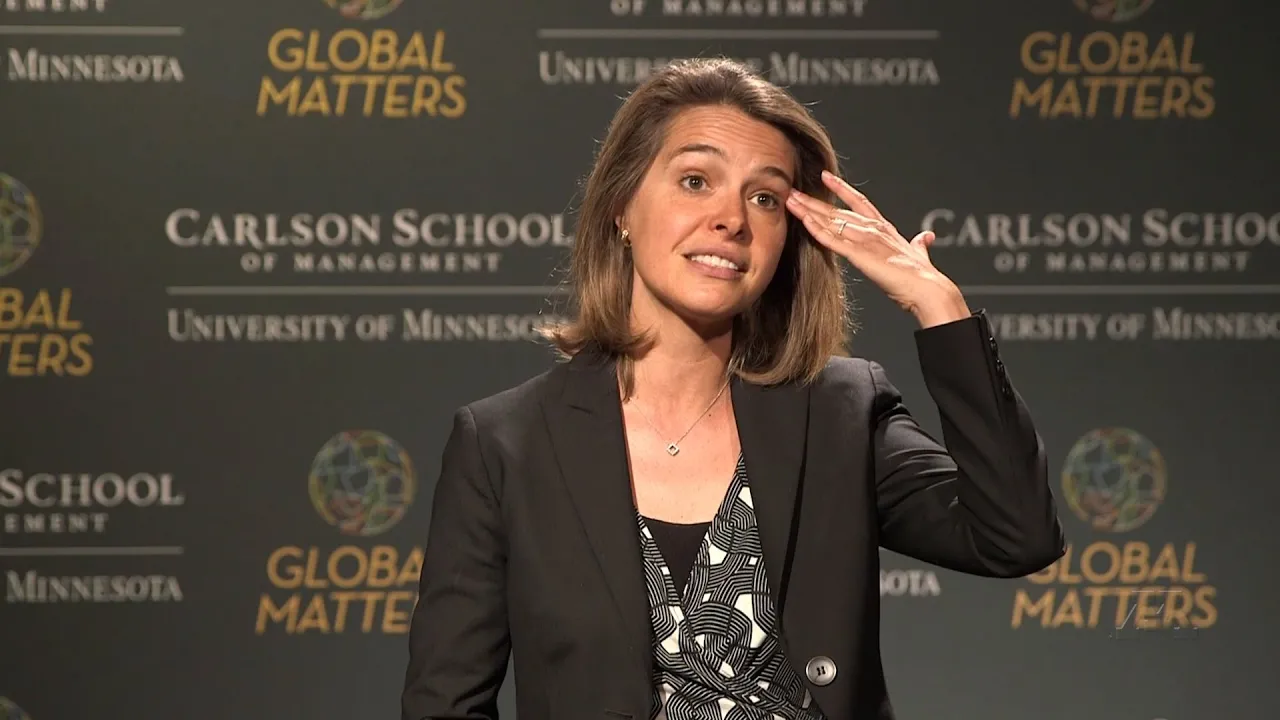
UMN Carlson School of Management · @MinnesotaCarlson
Words
496
Runtime
2:51
Speaking pace
174wpm
Reading time
2min
174 words per minute, between the 160 25th percentile and the 181 median of 349 measured videos. That distribution comes from the 349-video hook study.
Opening (first 30 seconds)
"Do cultural differences impact us more or less when we are working at a distance or virtually? question posted on screen. (Erin Meyer) So a lot of people think that if we're working virtually that cultural differences will impact us less. But what I found is that actually the more and more that we work over virtual media like telephone or Skype, the more and more cultural differences are impacting us, without us realizing it. So let me give you an example of this. I had an
87 words, the words spoken in the first 30 seconds at 174 words per minute.
Free, no signup. See how the first 30 seconds hold attention, with rewrites.
Sentence shape
| Measure | This transcript |
|---|---|
| Sentences | 25 |
| Average words per sentence | 19.8 |
| Longest sentence | 68 words |
| Questions asked | 1 |
| Sentences containing a number | 2 |
Most used terms
Filler phrases
11 in total: like 9 · actually 1 · you know 1.
A literal whole-word count of the same phrase list the Prepublish browser extension uses, so a phrase inside another word is not counted and a phrase used in its ordinary sense still is. It is a count and not a judgement.
What this transcript is
Every word below is the caption track YouTube publishes for this video, pulled from the video itself and reproduced unchanged. It is not Prepublish's writing, not a summary, and not a re-transcription: it is the video's own published captions. English captions, published by the channel, in the video’s original language. Source: the video on YouTube. A channel that would rather this page did not exist can ask for its removal through the contact page, and it is removed.
No Script X-ray for this video: YouTube shows a Most replayed graph only once a video has enough views.
"Do cultural differences impact us more or less when we are working at a distance or virtually? question posted on screen. (Erin Meyer) So a lot of people think that if we're working virtually that cultural differences will impact us less. But what I found is that actually the more and more that we work over virtual media like telephone or Skype, the more and more cultural differences are impacting us, without us realizing it.
So let me give you an example of this. I had an Indonesian in my class a while ago and he said, " you know, Erin, in my culture if we have a discussion on the telephone and we make some decisions verbally that would really be enough for me and then if you get off of the phone and you put into writing, everything that we've decided, like, you, so often do in the United States. And you send that to me- in my Indonesian culture that would be a clear signal to me, that you don't trust me.
We've seen through a lot of research that trust is built differently in different world regions. And if you want to just keep it simple. We could say there's two kinds of trust. 1) There's what we call cognitive trust. That's trust from your brain- that's like I see you are on time- you do good work- you're reliable. So I trust you. 2) And then we have what we call effective trust. Which is like trust from your heart.
That's like I feel a personal bond with you or an emotional connection with you. And what I've seen is that in many countries such as the US, Germany, Scandinavia, the Netherlands. There's a strong emphasis at in work to separate cognitive trust for work, effective trust for home; but if you're looking at many countries, for example every emerging market country in the world, in China, India, Brazil, Russia. All of these cultures there's much more of an emphasis on let's say weaving effective and cognitive trust together in the workplace.
So what that means in a face-to-face situation is that you want to invest a lot more time in really getting to know the people you're working with. And also really opening up to them so that they can feel trust for you. But even in a simple email, in a country like like Italy, it.. which is more of an effective trust culture, people are much more likely to put a lot of personal content around their emails, we also would see if you were looking in any Latin American country that there's a lot more social content in the email, versus in a country like the US or Germany where we really just get to the content.
So we can easily make some little adjustments to things like our emails in order to be more effective building trust; which is of course critical to business success. [Music]
The words are the caption track's own and nothing is reworded or re-transcribed. Paragraph breaks are placed between sentences so the text reads as prose.
Free tools for your own script. No signup, no login.
Paste your draft and see where viewers are likely to drop off, with a rewrite for each weak line.
Paste the first 30 seconds of your own draft for a hook score and rewrites.
Check your draft against YouTube's advertiser-friendly guidelines before you record it.
Read this channel's public videos and transcripts, and download a writing brief for it.