Getting the transcript
Reading the captions from YouTube. A video nobody has opened here before takes 10 to 30 seconds; this page fills in on its own.
Getting the transcript
Reading the captions from YouTube. A video nobody has opened here before takes 10 to 30 seconds; this page fills in on its own.
Theoretical Neurobiology Group · @theoreticalneurobiology
Words
19,489
Runtime
2:17:10
Speaking pace
142wpm
Reading time
81min
142 words per minute, below the 160 25th percentile of 349 measured videos. That distribution comes from the 349-video hook study.
Opening (first 30 seconds)
There you go, Max. >> Thanks very much. Um, hi all. Uh, thanks for inviting me to participate today. Uh, I'm approaching this as an intelligent outsider, I hope. Uh, a brief overview of my background. Uh, I led strategy for the Virgin Group, scaling from 4 billion up to 20 billion of revenue. I've been part of Oxford University's chemistry development board for over a decade. I previously led textiles
71 words, the words spoken in the first 30 seconds at 142 words per minute.
Free, no signup. See how the first 30 seconds hold attention, with rewrites.
Sentence shape
| Measure | This transcript |
|---|---|
| Sentences | 1,207 |
| Average words per sentence | 16.1 |
| Longest sentence | 222 words |
| Questions asked | 72 |
| Sentences containing a number | 26 |
Most used terms
Filler phrases
829 in total: um 434 · uh 114 · you know 98 · like 63 · kind of 43 · sort of 35 · actually 21 · I mean 13 · right? 5 · basically 3.
A literal whole-word count of the same phrase list the Prepublish browser extension uses, so a phrase inside another word is not counted and a phrase used in its ordinary sense still is. It is a count and not a judgement.
What this transcript is
Every word below is the caption track YouTube publishes for this video, pulled from the video itself and reproduced unchanged. It is not Prepublish's writing, not a summary, and not a re-transcription: it is the video's own published captions. English captions, generated automatically by YouTube, in the video’s original language. Source: the video on YouTube. A channel that would rather this page did not exist can ask for its removal through the contact page, and it is removed.
No Script X-ray for this video: YouTube shows a Most replayed graph only once a video has enough views.
There you go, Max. >> Thanks very much. Um, hi all. Uh, thanks for inviting me to participate today. Uh, I'm approaching this as an intelligent outsider, I hope. Uh, a brief overview of my background. Uh, I led strategy for the Virgin Group, scaling from 4 billion up to 20 billion of revenue. I've been part of Oxford University's chemistry development board for over a decade. I previously led textiles London and I'm currently working on a portfolio projects including an early stage company focused on um cancer detection, another with the same professor on cancer immunotherapy plus also um conservation challenges working with the global strategy director at the nature conservancy.
Um throughout my career I've been driven by one question. How does the world actually work? Uh that led me to active inference and working with less nested minds. Um Maxwell Ramstead encouraged me to present to you and he and Alex Kefir have helped me refine what I'm presenting today. Um you will see that I'm presenting aims to make the work that you guys do more accessible. So what I'm seeking today is a view on whether this uh what I'm presenting is scientifically robust.
Um feedback on any of the conclusions uh any recommendations on structure and narrative and any suggestions on next steps. And with that let's dive in. So the same algorithm shapes life the brain human societies and the future of intelligence. It's running. It's been running for billions of years and it's running in you right now. If there is a blueprint for existence, what does it mean for our future? So in the beginning, everything moved towards disorder. 13.8 billion years ago, the universe exploded into existence.
Energy and matter spread, collided and cooled. The natural tendency, a fundamental law of physics, in fact, is chaos. And yet order emerged, which brings us to the improbable fact of you here. Now, how is that possible? We see order everywhere, but chaos is the rule. Order is the rare exception. We're looking at a biased sample. We only see the survivors. Trillions of patterns have emerged and vanished. The reality we perceive is not the norm.
It's the rare exception. Structures that learn to persist. If it doesn't persist, it doesn't exist. So let's look at how persistence emerges. So to persist, you first need to have be a distinct entity. You need a boundary. Something that defines where you end and the rest of the universe begins. But can a boundary appear from nothing? Somewhere within the chaos, local patterns arise. Tiny differences, random fluctuations.
When simple forces favor sticking together over spreading out as separation forms. Now you have something that can potentially hold together against this chaos. This is step one. But having a boundary is just the beginning. Everything is subject to outside forces, impacts, fluctuations, collisions and chance. Without action, every boundary eventually gives way. Thing becomes no thing. To survive, a system cannot just be, it must do.
To persist, a thing must act, requiring resources, working on repair, working to repair itself. Energy and matter are drawn in. Action repairs, replaces, pumps, reorganizes, whatever holds the shape together. Waste and heat are pushed out. The boundary persists not because it's permanent, but because it's constantly rebuilding itself. The engine of constant repair creates a stable present. But does it guarantee a permanent future?
Persistence isn't permanence. It's a story of unfolding over time. Every living system follows the same arc. Formation, growth, and a fragile hard one. Balance called homeostasis. But homeostasis cannot hold forever. The battle of time is lost and failure always waits in the end. So how might this delicate balance be extended, holding on to persistence just a little longer? To extend this fragile balance, a system must know more about its world, sensing beyond its boundary.
Sense detect signals of food, of danger, and of change, creating a vital bridge between external chaos and internal order. But sensing alone is fleeting. Information arise one moment and vanishes the next. How can a system hold on and use what it learns? To hold on to what it senses, a system needs to more than a moment signal. It needs memory. Patterns of what works and what fails become etched into its structure, an internal blueprint of rules.
If this, then that. This turns fleeting sensation into knowledge. But how does the system transform stored rules into the right decision at the right time? Signals from outside the outside world become meaningful only when processed within. Molecular machinery reads incoming cues matching if this to then that in a chemical cascade constantly decoding what response offers the best chance to survive. This living computation connects perception to knowledge, turning information into decision.
But how does decision become action in the world? Well, here a decision becomes action through our little tail, a molecular motor that translates chemical decisions into physical motion. Now the system can influence the world beyond its boundary. Each move a test of persistence. This is the moment where internal intent meets external reality, allowing the system to change its world by seizing opportunity or escaping threat.
But are its actions any good? The environment is the ultimate judge. Every action is an experiment and reality is the unforgiving measure of success. Some move moves extend persistence, others hasten collapse. This is the relentless pressure of selection, a constant filtering of what works from what fails. Successful strategies lead to continual survival. But how do these strategies spread beyond a single mortal survivor?
Well, selection rewards what works, but only within the fragile span of one life. Every individual system, no matter how successful, still eventually fails. The deeper solution is to pass winning strategies forward. To copy before collapse, allowing the patent to outlive the individual. Reproduction. The offspring begins its own journey through formation and growth, carrying the same genetic programs forward that made the parents successful.
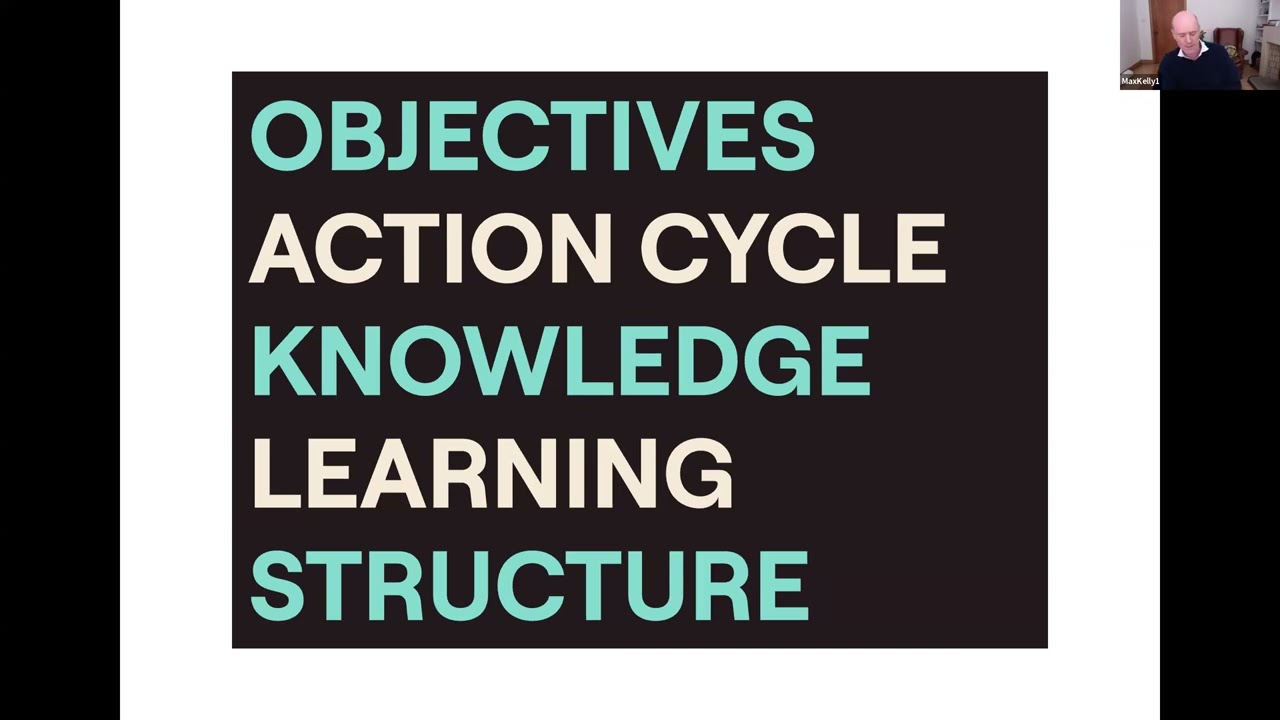
The pattern is now the traveler with the potential to persist across generations. So far, we've looked at how the simp the simplest organisms manage to persist in the universe. If we step back, there are basic challenges that every living system has to solve. It needs objectives, some way of setting direction. It needs an action cycle, a way to sense and respond in the world. It needs knowledge, a way to store what works.
It needs learning, a way to adapt when things change. And it needs structure, the physical foundation that holds it all together. Let's see how we're doing so far. So let's start with the first layer. Objectives for our little system. They couldn't be simpler. Stay alive and if possible make more of itself. There's no grand plan, no conscious decision-m. These are simply the baiting conditions for continued existence.
And we'll keep seeing throughout this journey. If something doesn't persist, it doesn't last. Objectives mean nothing without action. Our system has a simple but powerful loop. It senses chemicals and damages, processes these signals through internal switches, then acts, spinning its tail toward food, pumping out waste, triggering repairs. Each action creates new signals to sense, keeping the cycle running. This is how survival happens moment by moment.
Where do these life sustaining actions come from? They're not random guesses. They're guided by knowledge. Our system carries a molecular library of what works written in DNA. Simple rules. If this chemical appears, then move towards it. If damage occurs, then trigger repair. This is simply following a recipe that evolution has refined over countless generations. This is this inheritance guides every action. Knowledge alone isn't enough.
The environment changes. Mistakes happen. So, how does our system improve? The answer is learning through evolution. Each new copy carries tiny variations. Most don't help, but some turn out to work better. Those are the ones that persist. This is learning, not within a single lifetime, but across generations. Trial and error tested by survival. Over vast stretches of time. This simple process builds the recipe book that guides our organism.
And finally, what holds this all together? The structure is elegantly simple. A smart membrane separates inside from outside while housing sensors and channels. DNA stores the instructions at the core and ribosomes build the proteins needed for repairs. A tidy propeller provides motility. Chemical signals flow between components and when damage occurs, the system repairs itself. When conditions are right, it reproduces.
All of this runs on wet hardware, biological molecules powered by metabolism. So now we can step back. Our little system has all five five layers working together. This is the basic architecture of persistent intelligent systems. And this is the proarotic cell, one of the simplest forms of life on earth. What we've been exploring isn't a the thought experiment. It's how biology actually works. The membrane that senses, the DNA that stores instructions, the ribosomes that build, the tiny propellants that moves, it's all here.
What's remarkable is not that is not just that exists, but within this tiny package, we already see the full architecture at work. Objectives, an action cycle, knowledge, learning, and structure all woven together. This is where persistence became biology. Now let's zoom out. The universe is 13.8 billion years old. The Milky Way began assembling within the first few billion years. But for roughly 2/3 of all of existence, our sun and earth did not exist.
Then about 4.6 6 billion years ago, a nearby supernova triggers the collapse of a giant gas cloud. A new and a new star ignites our sun. Earth condenses soon after. A hot world repeatedly reset by relentless asteroid impacts. Only as the bombardment phase does stable seas and skies emerge and the conditions emerge for our little system to get started. Around 3.8 8 billion years ago, our system gets started. The first simple life finally emerges and it's a slow start.
And then it takes a massive amount of time. An almost unimaginable 1.6 billion years of quiet refinement as the simple cells copy, spread, and slowly improve through countsless generations of trial, error, and refinement. And the process doesn't pause. It compounds over time. Each layer is enhanced. Better sensing, more sophisticated internal processing, improved energy systems, refined repair mechanisms. Compartmentalization unlocks a step change.
An enhanced version develops. The ukarotic cell, a cell with a control center, the nucleus. Dedicated power plants, the mitochondria, unlocking vast new reserves of energy and scaffolding that coordinates this complex work. It's the same architecture, but now turbocharged. Another billion years pass. We're now 2.6 billion years into the story, and we're still looking at a single cell. Life is here, but it's just one cell.
But this isn't stagnation. It's patient, patient mastery. Through countless generations, the same architecture keeps refining self. Persistence is hard. Complexity takes time. For almost all of life's history, intelligence remained a solitary affair. Perfecting this fragile strategy, unseen, unseen, and alone. But patience pays off within the single cell. Sophistication is increasing. Every layer has been upgraded. Objectives expand beyond survival.
Cells now regulate cycles and optimize energies. The simple chemical switches have become integrate regular reg regulatory networks and most revolutionary of all the nucleus emerged a secure vault protecting the cell's genetic library. Persistence is now regulation, coordination, memory and repair. This is evolutionary intelligence, a relentless, patient process that sculpts life one innovation at a time. It's a universal pattern written into the fabric of life itself.
The intelligence of systems that learn to persist, a cascade of requirements, learning what works through trial, error, and selection. It is slow, relentless, patient, nature's blueprint for persistence and adaptability. And then around 1 billion years ago, a breakthrough. Sells finally started to work together. actually cooperating, specializing, coordinating, sharing labor. With multisellularity, complexity explodes.
A step change in complexity. Persistence is no longer just one unit. It's about the survival of the whole. With more cells working together, a new challenge emerges. Coordination. How do you get dozens, then hundreds, then thousands of cells to act as one? Individual chemical signals aren't enough anymore. Chemical signals are too slow and and local to get the whole organism to act in concert. Around 600 million years ago, the first solution appears.
Nerve nets. Simple threads connecting cells carrying electrical signals across the organism. A dedicated high-speed messaging grid. Cells sharing information, synchronizing action, becoming more than the sum of their parts. And around 550 million years ago, a breakthrough, a first brain, a primitive command center. No longer just coordination. Now there's centralized control which allows directive movement. Simple eye spots increase abilities.
The organis isn't isn't just reacting. It's navigating. A first taste of agency. Move towards food. Move away from danger. The nervous system becomes a decision-making engine. Around 500 million years ago, intelligence takes another leap. Until now, animals reacted, sense, process, act. Always in response, always one step behind. But but something new emerges. Prediction. This is the prediction revolution. Intelligence transforms from reactive to to predictive.
Now the brain models the future, anticipates outcomes, and learns from surprises. building internal models of what the world might do. This is predictive intelligence deciding not just in the present but shaping action based on what might happen next. Around 200 million years ago, another breakthrough internal simulation. Not just reacting, not just predicting. Now early mammals can simulate inside their minds. They can run little experiments without risking their lives.
Before crossing their clearing, they simulate multiple futures. What if the presenter is there? What if it's not? What if it if I go this way instead? V vicarious trial and error, episodic memory, planning, all powered by the same capability, simulation. It's imagination in its earliest form. And then a new frontier opens, the social brain, where minds begin to model other minds. Brains evolve not just to model the world, but to model each other.
Early primates developed the astonishing ability to imagine what another is thinking, feeling or planning. This means anticipating not only what might happen, but what others might do. This is theory of mind. It unlocks cooperation, deception, teaching, and complex social strategies. Intelligence is no longer just about understanding the world. It's about understanding each other. And around 300,000 years ago, astonishingly recently, the leap of language.
For the first time, thoughts can be shared directly across minds. Knowledge no longer dies with the knower. What one person discovers or can learn. Knowledge builds across generations through stories and teaching. This is cumulative culture. The knowledge of one generation becomes the foundation for the next. Over hundreds of millions of years, brains grow more capable. Fish, reptiles, birds, mammals, apes, humans. Each step unlocks new layers of capability.
The brain becomes the engine of adapt adaptation. We don't just inherit instincts. We learn from experience. And with language we inherit knowledge of others to from others too. What is possible is expanding. And biological intelligence has the same universal architecture but with upgrades across every layer. We've moved from processing in the action cycle to thinking. The brain doesn't just react to signals. It simulates holds ideas in working memory and runs models of possible futures.
Memory splits into distinct systems, episodic, semantic, and pro procedural. World models now include physics, causality, social dynamics, and models of others minds. This intelligence operates at a different cycle speed, but has the same underlying principles. And at the same time, evolutionary intelligence has continued to advance. While brains were getting smarter, evolution was upgrading the hardware. objectives became uni human universals shared drives inherited from deep time action exploded in range with dextrous hands tool use each each tool being an extension of the body knowledge advanced with sexual recombination nature nature's great shuffler unlocking vast possib possibilities even as brains advanced evolutionary intelligence continued to innovate across every layer And so now we see two great intelligences now running in parallel.
Evolutionary intelligence, slow, relentless, sculpting bodies over millions of years. And biological intelligence, fast, adaptive, learning through within a single lifetime. Both shaped by the same universal principles. Stacked together, they create a powerful engine of persistence. One refining the hardware, the other running the software. And in a universe that tends towards disorder, you exist. Refined over 13.8 billion years of cosmic evolution.
Evolutionary intelligence sculpted your body. Biological intelligence powers your mind. You are the product of the universal pattern of objectives, action cycles, knowledge, learning, and structure expressed through billions of years of patient refinement. From the first boundary to sophisticated brains, from solitary cells to thinking, speaking, dreaming minds, you exist against the astonishing odds. This is the remarkable story you carry.
And you're part of what comes next. And you're not alone. Every person is another branch of the same unfolding pattern. Billions of years of refinement carried out not just in you, but in us. From solitary selves to human societies, persistence has always depended on cooperation. But something new emerges when minds connect. This is collective intelligence. The same universal architecture now operating at the scale of groups.
So let's look at an example. Science runs on the same universal principles. It starts with a hypothesis, our best guess about how the world works. These are tested by trial and error. We learn from failures, refine from results, and upgrade our shared understanding. Over time, the most successful theories become our collective world models. These explain reality and predict what comes next, but they're always tested against evidence, always ready to be replaced when better ones emerge.
Jon Snow's collar map here shows this perfectly. One careful test that forced humanity to update its model of how disease spreads. Individual observations tested and retested, converging into knowledge no single mind could create alone. Science's collective intelligence made form the very essence of the PR principles we've been exploring. Markets are another expression of the same universal architecture. Companies have clear objectives to survive, to grow, to profit.
They sense signals, demand, competition and costs. They act by launching products and services, testing hypotheses about what people want. The market provides constant feedback. Success or failure, profit or loss. The success strategies spread. Companies can't that can't adapt disappear. This has created disruption, trial, error, and selection across countless players. Through this process, the system as a whole learns to innovate and allocate resources at massive scale.
Law is also collective intelligence pursuing justice. Courts review the facts and arguments. They decide through judgment which becomes action. A sentence, a fine, a ruling. But crucially, each decision feeds back into the system. Precedents are recorded updating the shared body of not of law. Future cases are compared against the growing library of knowledge. The law continuously updates its world model of what justice means in practice, evolving as society changes.
The same universal architecture applied to human fairness. Individual cases processed through collective intelligence accumulated over generations. Now we can see the pattern clearly. Science, markets, and law look very different on the surface, but underneath they run on the same universal principles. Objectives, action cycles, knowledge, learning, and structure. Science exists to build reliable models of reality. Markets exist to allocate resources efficiently, and laws exist to deliver justice and maintain order.
Each follows the same cycle. Sensing signals, deciding, acting, and updating knowledge through feedback. Science does it through hypothesis and experiments. Markets do it through prices and competition. And law does it through rulings and precedent. All three are collective intelligences. They remember, they learn, they adapt, they persist because they're effective at sol solving the challenges of survival and cooperation at scale.
This is why these systems endure. The same pattern shapes all human progress. We often celebrate individual genius, the lone inventor, the brilliant scientist, the visionary leader. But that's not how intelligence actually works. Every breakthrough builds on countless others. Every tool, every word, every idea has been refined by millions of minds across thousands of generations. You're not standing on the shoulders of giants.
You're standing on the shoulders of everyone who came before, stretching back through time in an unbroken chain of collective learning. This is humanity's greatest achievement. Intelligence that compounds across generations. You are the newest layer in that vast collaborative mind. So collective intelligence is the newest layer built on biological and evolutionary intelligence. It's more than just groups of people. It's minds connecting and compounding, leveraging memory, learning, and adaptation across lifetimes, cultures, and entire civilizations.
Each layer, evolutionary, biological, and now collective, adds new depth and power to persistence and creativity. Together, they form a stacked architecture, multiplying our capacity to solve problems, build knowledge, and shape the future. So let's take a step back and generalize. Every intelligent system faces the same basic challenge. Moving from where it is now to where it needs to be. From current state to future state from A to B.
It's not magic. There's always a process connecting the current state to the future state. Something has to bridge the gap. Something has to navigate from here to there. finding the right path forward. In every form of intelligence we've explored, this pathway follows the same hidden structure. And here's the hidden structure revealed. The universal action cycle. Sense the situation, think through the options, decide the best path, act to create change.
From bacteria to brains to markets to legal systems, this same cycle drives every intelligent intelligent response in the world. This cycle runs everywhere in humans, in machines, in any system that processes information. What changes is the speed, the scale, the sophistication, but the architecture remains universal. The same steps, whether powered by biology or technology. Intelligence is intelligence regardless of its substrate.
But something's missing from this picture. Without feedback, there's no learning. Measurement captures outcomes and feed them feeds them back into the system. Did the action work? What can be improved? What should the next cycle adapt? Feedback transforms action into learning. So this is how intelligence operates in the world. Sense gathers the information about the internal state and the environment. Think interpret interprets that information through using knowledge and models.
Decide selects the course of action under objectives, costs and risks and act executes um the chosen action to influence the world and feedback captures the outcomes to enable refinement and future learning. This is the universal action cycle um and it's the engine of all intelligent behavior. So from any present moment we can see that there are countless potential possibilities that could unfold. Not just A to B, but a widening cone of potential outcomes.
Every intelligent system faces this reality. Paths stretch ahead. Most of them random, chaotic, or destructive. But intelligence doesn't drift. It chooses direction. Not all futures are equal. Intelligent systems get set goals. Selecting specific targets within the cone of possibilities. Goals provide focus creating purposeful direction. This is choosing which future to pursue. Now you need a plan. Complex goals require multiple steps each building towards the target.
Map planning maps sorry planning maps the pathways from current reality to desired future. Breaking this into achievable actions over multiple time scales. Effective planning let lets the system shape its trajectory not just react to events. But planning becomes complex quickly. Mult multiple components must coordinate. Resources must align. Timing must synchronize. Skills, roles, and actions must work together. Coordination is needed across all elements to enable coherent action.
And all of this operates within constraints. Energy limits, time pressures, safety requirements, physical laws, competing demands. Constraints aren't obstacles. They're the boundaries within which the system operates. Strip away all of that complexity and the intelligent direction comes down to three fundamental questions. Where am I now? Where do I want to be? And how do I get there? This logic holds at every scale.
So this is how the system directs itself. Goals define the system. Goals define what the system is trying to achieve. Managing conflicting priorities. Planning prepares multi-step actions to achieve its goals. Coordination organizes components through roles and incentives. And constraints define the limits of energy, time, safety, laws, and norms. Together, these create the objectives layer. Every action cycle generates data.
Each sense, each thought, each choice produces information about the system and its world. This information first passes through working memory, the short-lived scratch pad where immediate experiences are held, compared, and combined. From there, memory branches into distinct systems. Episodic memory stores specific events, your lived experiences across short, medium, and long-term time scales. Semantic memory encode knowledge encodes knowledge, facts, concepts, and meanings.
And procedural memory captures skills and habits. The how of action from tying shoelaces to playing the piano. Together, these layers turn fleeting experiences into lasting knowledge, allowing the system to build a richer, more durable world model. But memory alone isn't enough. If every detail was stored exactly as experienced, the system would drown in noise. So memories are transformed through three key processes.
Compression, stripping away redundancy, keeping only what matters. Generalization, spotting patterns that extend beyond any single example. And causality, inferring how events link together, what leads to what. The result is not just a collection of memories but something deeper. A world model, a compact structured understanding that explains the past, predicts the future and guides action. This is what the system stores to make sense of itself and its world.
Memory provides the detailed record, experiences, outcomes, observations accumulated across time. It's the raw material of learning, the anchoring of the system and what actually happened. And world models are the refined product, compressed causal structures that enable prediction and planning. They capture not just what occurred, but why it occurred and what might happen next. Memory anchors a system in experience.
World models turn that experience into foresight. Together, they form the knowledge layer, the foundation that trans transforms information into understanding. an understanding into intelligent action. Here's how the system gets smarter over time. The world model makes a prediction. The action happens in reality. The system measures the actual outcome and compares it to prediction. When prediction meets reality, learning begins.
If they match, the model is confirmed. If they differ, the model needs updating. predict, act, measure, compare, and update. Each cycle refineses the world model, making the future predictions more accurate, accurate, and future actions more effective. Error becomes insight, surprise becomes knowledge. This is how intelligence learns to see the world more clearly. And intelligence isn't just about using what you already know.
It's also about discovering what you don't. That balance is the dance between application and exploration. Application means leaning on your best models. Acting with confidence, repeating what works, achieving reli reliable results. Reliable results. Exploration means stepping into the unknown, probing uncertainty, testing possibilities, and asking what if. The ability to predict makes this even more powerful. A system can explore counterfactuals safely in imagination before ty trying them in reality.
At a higher level, this looks like replay or even dreaming. The brain consolidating knowledge and running experiments offline. Too much application and the s sorry too much application and the system stagnates. Too much exploration and it never stabilizes. Progress comes from balancing the two. using what works today while staying curious enough to discover what works tomorrow. So this is how the system gets better at navigating reality.
Measure and compare detects gaps between predictions and outcomes. Update and consolidate refineses the world model across fast and slow time scales. Exploration balances using known strategies with seeking novelty. Together, these create the learning layer, the engine that transforms experience into wisdom. Now, intelligent systems gain power and flexibility by organizing themselves into modular components, distinct units that can be reused and recombined across many functions.
These modules don't stand alone. They're arranged into layered hierarchies, building specialized capabilities at each level. Physical structures like organs, cells, and neural circuits reflect this pattern just as conceptual structures, schemas, and models do in knowledge. Layering and specialization let systems tackle complexity, adapt quickly, and scale across different challenges and environments. Structure unfolds across scales.
In space, in time, and in levels of abstraction. In space, systems are nested. Molecules form organals, which form cells, which form tissues, which form organs, which form organisms. Each level builds on the one below, whilst also constraining and shaping it. In time, processes stretch from the split-second firing of neurons to daily rhythms to lifetimes and even across generations. Intelligence depends on coordination across all of these tempos at once.
And in abstraction, raw data becomes signals, signals becomes features, features become objects, and objects gathered into categories and concepts. Each layer compresses and organizes meaning, making it usable for thought and action. At every scale, feedback loops link the levels together. What happens in a second can ripple into a lifetime. What shifts in the abstract can shape concrete. This is how complex systems say coherent while spanning such radical different scales.
Structure relies on communication. The signals that connect every element of the system. Neurons fire, hormones circulate, networks transmit. These flows let parts of parts coordinate across distance and scale so that intelligent isn't just local um but distributed. It's through signaling that goals reach actions that memory informs decisions. That learning spreads across the whole system. Without communication, modules stay isolated.
With it, they integrate into a coherent hole. High efficient systems risk brittleleness. One shock and they break. Resilience comes from three safeguards. Redundancy, which is spare capacity that overlaps, so failure degrades gracefully, not catastrophically. Repair, which is detecting, isolating, and fixing errors before they spread. And reproduction, so the patent persistence persists over time, passing on what works, and adapting across generations.
Together, redundancy for now, repair for soon, and reproduction for later. Structure stays resilient across time. This architecture doesn't care what it's made of. The same five layer pattern runs everywhere. Biological systems, cells, neurons, DNA, evolution, membranes, digital systems, processes, algorithms, databases, neuronet networks, code, and social systems, institutions, markets, cultures, laws, and organizations.
Different materials, different speeds, different scales, same fundamental architecture. This proves something profound. Intelligence is not about neurons or silicon or social contracts. It's about how information flows, how feedback loops connect, how complexity organize itself to persist. The pattern transcends its platform because it solves universal problems. Intelligence is substrate independent. This structure is how the system organizes and sustains itself to enable intelligence.
As we've seen, the architecture creates modular components in layered hierarchies, building specialized capabilities from re reusable parts. Scales nest across space, time, and abstraction from molecules to organisms, milliseconds to generations, and data to concept. Communications flow through signals and networks, coordinating into a co coherent hole. Resilience ensures survival through redundancy, repair, and reproduction.
An embodiment provides the actual substrate biological, digital or social supplying energy, resources and constraints. Structure creates the platform where intelligence can emerge, adapt and endure. And then there's one e additional force multiplier and that's externalization. We extend sensing with instruments, thinking with models, acting with machines. We externalize memory in books and database, communication in in networks and coordination in institutions.
Each step takes an internal capacity and scales it outwards making intelligence collective, persistent and amplified. So if we take a full step back, this is the architecture. It starts with objectives. Where am I now? Where do I want to be? And how do I get there? The action cycle drives the process. Sense, think, decide, act, measure, and feedback. From there, knowledge is built. Memory storing experience. World models compressing it into causal structure.
Through learning, those models are tested against reality, predicting, comparing, updating, consolidating, and exploring. All of it sits inside structure modular layered multiscale and network resilient and embodied and through externalization these compa these capacities are amplified and extended into the world together the five layers form a single coherent system intelligence as architecture and if we look at the heart this is the the core learning loop it begins with a prediction The system acts in a world based on its best internal model.
It then measures the result comparing what actually happened to what was expected. Every gap between prediction reality sparks an update gradually improving quality of the world model. This tension between map and territory drives ongoing refinement letting each action cycle become smarter over time. Learning compounds. As internal models improve, actions become more skillful and new cycles generate ever more active accurate predictions.
Ultimately, intelligent systems don't just learn, they learn to learn, ratcheting up the power to understand, adapt, and persist. This architecture builds on decades of convergent discovery. Universal Darwinism reveals how selection creates adaptive order. The free energy principle frames intelligence as surprise minimization systems keeping themselves within expected bounds. Cybernetics, complex adaptive systems, autotopesis and constructor theory each add vital in insights from feedback and emergence to self-producing networks to the very limits of transformation itself.
Different fields, same underlying pattern. What we are seeing is convergence. different fields independently discovering the same deep structure and the framework is deeply interdisciplinary bringing together insights from decision theory, neuroscientists, machine learning, systems engineering and many more. Its power is in providing a shared language to connect these fields into a single coherent picture of intelligence.
So we've now mapped out the hidden architecture of intelligence. The natural next step is to ask so what? This section is about turning principles into action. There are three big questions we need to face. The first and the one we'll focus on now is how do we design smarter organizations to solve problems at scale? We use the word organization all the time, but what does it actually mean? At its core, an organization is a way of arranging people, incentives, and resources towards shared objectives.
It can take the form of a company, an institution, an NGO, an open network, even a whole society. What matters is not the label but the structure. How can the parts come together to act as a coordinated whole? With the architect with the architecture in hand, we can go beyond intuition. We can deliberately design organizations for intelligent, adaptive, and scalable action. Smarter organizations begin with coherent strategy.
Where are we now? Where do we want to be and how do we get there? Every journey unfolds within in the ark of history shaped by macro trends and shifting contexts. Strategy works best as a living participate participatory process using proven tools to align people and resources towards shared goals. Organizational memory is more than just records and databases. is a living model of how the organization thinks, learns, and acts.
By connecting people, data, experience, and processes into evolving system, organizations can accelerate impact, adapting more quickly, learning from mistakes, and sharing success. For missiondriven organ groups, externalizing this living knowledge makes learning portable. Most organizations run on autopilot. Repeating what they did yesterday, even when it stops working. Intelligent organizations build learning into their DNA.
Every project becomes an experiment. Outcomes get measured AC against predictions. The answers flow back updating the system. This is the core learning loop at at organizational scale. Predict, act, measure, compare, and update. Organizations that master this don't just survive, they accelerate through it. Failures teach. Successes compound. The system gets progressively better at navigating reality and learning is the engine.
These principles work everywhere no matter the type of organization. Companies, institutions, NOS's, cities, networks, and whole societies can all apply the same universal architecture. Built-in learning and adaptability let any group thrive whatever the mission or scale. The same ar the same principles that guide organizations can help us confront the great challenges of our time. Climate, health, inequality, conflict, technology, governance.
The challenges are vast and interconnected. Hundreds of distinct issues span every domain of human life. What matters is not the length of the list, but what that we can have a common architecture, one that can make sense of complexity and guide intelligent responses at scale. By organizing for intelligence, we unlock progress. Frameworks and toolkits for collaboration let us turn complexity into coordinated action. That means innovating faster, cooperating better, and delivering real results.
When organizations of any kind adopt this architecture, they multiply their capacity to solve problems at scale and tackle the challenges that matter most. We've just seen how organizing for intelligence can help us tackle problems at scale. But that's only one part of the story. The next question is what about machines? What is the future of intelligence in the systems we're building today? That's where we'll turn next.
This is the story of intelligence and machines. It's been it it hasn't happened overnight. For more than 80 years, step by step, we've been building the infrastructure. What we're living through is the intelligence revolution. A long arc of breakthroughs compounding on each other, reshaping how knowledge, computation, and communication work. So where are we now? Well, if we take all the text humanity has ever produced, books, articles, codes, conversations, and then compress it through massive neural networks until patterns emerge, what we have are the today's LLMs, what comes out um is from this is the world's writing collapse into a prediction engine.
It knows the next word because it has seen billions of examples. The cat sat on. It's a trivial task fill in the blank. Yet prediction at this scale unlocks remarkable ability. All of it powered by the next word prediction. Pattern matching matching at planetary scale. The cat sat on the mat. And meet Scooter. Real cat. Real Matt not in here today. Um, LLMs compress human knowledge deeply. Let's see how they're being used.
LLMs now drive agentic systems that sense through queries, think through the LLM model, decide by ranking, and act through tools. They're powerful, compressing knowledge and enabling useful action, but they remain partial. Prediction without deep understanding, action without lasting goals, learning without persistence. The objective layer is where today's systems struggle most. Goals are set externally by prompts. Reasoning is just prediction run again and again.
Powerful but brittle. Coordination is minimal. Constraints must be spelled out. Aentic AI can imitate planning, but it doesn't yet it doesn't yet generate lasting own aims or coherent strategies. So looking across all five layers, LLN's based AI shows real strengths but ma major gaps. Objectives are externally set. There's no autonomous golf formation. The action cycle is welldeveloped yet limited to single unconnected interactions.
Knowledge is impressively compressed but remains static, monolithic, unable to update in real time. Learning only happens during pre-training with no persistent adaptation through experience and the overall structure is monolithic, lacking modularity, resilience, and reusable components. Closing these gaps is essential if AI is to move from useful tools to systems with genuine persistent intelligence. So, LLMs are both amazing and transitional.
They compress the world's text into usable patents, unlocking tools of extraordinary value. But they're also monolithic, static, and brittle. No ongoing learning, no full world model. That's why they are a bridge. Astonishing in what they can do, but not the final form of intelligence. To move beyond transitional AI, we need the full architecture. That means embedding the core learning loop. predict, act, measure, compare, and update.
Systems that learn persistently from feedback don't just recognize patterns. They adapt, improve, and grow more resilient over time. This is how intelligence becomes an engine for genuine understanding. A true world model is a living library of components that evolve through use. Components compose into complex reasoning, capture causality, not just correlations, and actively seek new information to reduce uncertainty.
They evolve, merging, splitting, adapting based on performance. Every interaction strengthens global knowledge. With this, systems can simulate whatif scenarios before acting. And bootstrapping creates the first component. Self supervised approaches like Japa or similar can train directly from audiovisisual stream seeding the model with bu with the building blocks of understanding. With a world model in place, intelligence can improve itself.
It adapts in real time, explores gaps and evolves through billions of agents working together. It learns at every level from knowledge to the rules of learning. while testing what if scenarios and upgrading its own algorithms. The result intelligence that never stops learning, compounding progress without limits. With these capacities, the action cycle itself becomes more sophisticated. Sensing draws on vast real-time data.
Thinking leverages cause causal reasoning and simulations. Decisions balance objectives, constraints, and uncertainties. Actions coordinate across tools and agents. All of it wrapped in feedback, constantly measuring, adapting and improving. This is the architecture for intelligence in machines. Durable objectives and guide safe purposeful action. Adaptive cycles sense, think, decide, and act under uncertainty. And knowledge comes from compositional world models.
Learning is continuous, federated, and self-improving. Structure is modular, resilient, and auditable. Not just powerful tools, trustworthy systems that grow, adapt and align at scale. Earlier we saw the three great layers, evolutionary, biological, and collective intelligence. Machine intelligence is the next step in that arc built using collective intelligence itself, built on biological minds, which in turn emerge from evolution.
Each new layer doesn't replace the earlier one. it rests on them, extends them and opens them to new possibilities. And now I'm into the final little part um where I don't have the script written. Um but this is about how we want to shape the future we actually want. So if we drift in this in this world, there's a danger that we end up in dystopian versus versions that we see in sci-fi. So actually what we should think about is how do we intentionally design for shaping a future that we want so that we build mechanisms um that define shared human values and collective priorities that evolve with our understanding and do this through the the action loop, the shared knowledge and the continuous learning upon um a resilient structure.
And in order to do that there are many things that we need to do. We need to build participation infrastructure, use it to imagine the future we want um and understand the challenges clearly and then build world model commons. So in conclusion, in a universe tending towards disorder, you exist. You're the outcome of 13.8 billion years of patterns learning to persist. The universal architecture brought you into being.
Against astonishing odds, each of us is here with a role in shaping what comes next. What future will you choose to build? And then for today what I would love from this audience is to as you can see this is a about being quite accessible for free energy principle active inference and related fields. I would love your feedback on whether this is robust or robust enough um and true enough to the underlying science. Um it would be great to get your feedback on the narrative generally um and anything specifically on collective intelligence on the future of intelligence and machines particularly around the structuring of world models.
Um and then a kind of natural question is why have I done this and what next and it would be great to get some ideas from you on that. So with that I will stop sharing screen. Thank you, Max. Let's each of us uh unpause and and give Max a round of applause. >> Thank you. >> Thank you, Max. Boy, the the gravitas of your content, voice, presence was so thick, I could cut you with a knife. I especially the the ending was was quite powerful.
So I definitely enjoyed it on the aesthetical side at least obviously also on the on the content and scientific side. So with this being said, we open the floor to to the audience and we've already had Maxwell having the first question. Go ahead, Maxwell. >> Excellent. It's not really a question. Um I mean I I've been giving you feedback, Max, over the last bit on your presentation and I just wanted to say that it was wonderful to see it all come together. uh I hadn't seen all of the collective intelligence uh aspects and I definitely didn't hear like the whole application to organizational architectures.
Um so I found that extremely compelling and it's it's really cool to uh have seen you grow into this paradigm over the last five years. So you know thank you very much for uh presenting and uh yeah I'm looking forward to actually hearing what everyone else has to say. You've heard enough from me. So, >> well, Maxwell, thank you so much for the support and help you given me on all of this. >> Maxwell, are there any other questions from the audience at this point? >> Oh, there you go, Kyle.
Go ahead. >> Oh, hi. Yes. Um, great uh great talk. Very very interesting. A lot of lot of content that you covered and the narrative and the structure of your mo of the of the uh proposed model that you have is very interesting. My thought is um so you have this this conceptual framework here um how have you given thought to how you go from qualitative conceptual um framing how that maps into something that we can quantify and measure.
I'm not sure if any thought has been dri um has been made in into that line of thinking. How do you go from this these ideas that you have about intelligence? How do you move into okay well if I want to measure intelligence in in some sort of meaningful way though how I mean we have you know the IQ test but is that is that is that I mean we know there's problems with the IQ test right so what how would you go from from the conceptual models that you have to thinking about how you extend it so that scientists can go and say okay well this this person here is intelligent in this area or this person can is is how do you how do you measure is my Uh that is an excellent question and not one that I have thought deeply about.
I've I mean I've obviously thought about um you know IQ, EQ and and some of their limitations but in terms of um how that blends in here. I I thought your question might be more towards how do you how do you turn a conceptual framework into something that is executable and >> that that's kind of more along like that's also kind of like along the line of what I'm thinking. Yeah. >> Yeah. which and that that I would look to this audience.
Um because um going from the conceptual which is really quite hard to communicate to then the um the complexity of the maths that associated with with active inference. I I've always felt there's there's there's a bridge to be gap a gap to be bridged there which is how do you communicate the power of um of active inference um and and that's partly why I've done this work but your the other part of your question which is how do you measure intelligence I don't have a good answer for at the moment so thank you for that >> thank you thank Thank you, Kyle.
Any other questions? Andreas, go ahead, but with the gentleman's understanding that posing the question will last up to two minutes. All right. >> Thank you. Um, Max, um, thank you for your talk. Um, and I am very, uh, sympathetic. I would say especially about the structural part. Um, you know, you're thinking in terms of structural frameworks because I would call that a language of wisdom and very few people do something like that.
So I have a tiny community uh and probably within that there's two of us uh me and Jerry Northrup who kind of think in that way without words but in terms of frameworks and I've done that for 40 years. um especially those um uh update you know the the where are we am I now where do I want to be how do I get there um I would talk about that in the three minds and active inference you would have uh inactive thinking where am I now predictive thinking where would I like to be cybernetic how do I get there and so let's say people think in those terms you we've collected 300 examples let's say in the theory translator I have how do we work together um And in particular the way you talked you talked about what you know like where we are about 90%.
You talked about um where do I want to be about 10%. But I think like for intelligence we want to talk about the investigatory culture like so answering mind is the first level of reflection. Questioning mind is the second level but it's the third mind that puts them together. So to stop saying what we know which seemed quite questionable the things you were saying but to talk about what we don't know and then talk about how do we set up those investigations.
So my community is math for wisdom. My name is Andre Kulicowskas. I'm very excited to connect with you u in the future as possible. Um that's brilliant. Thank you for that. Um as I was developing this what what where are we now? Where are we going to be? And how do we get there? It's very easy for people to have a and and you know it's kind of what I've done for my entire career is to work out where we should be. Um uh that's what strategy is and that's what I've done for many organizations.
The what I realized is there's a real danger unless it's collaborative and participatory there's a real problem because you you end up with a partial solution of where you want to be. Um in that kind of cone of possibilities there are many many possibilities. what's the right way to head towards and you don't want to the kind of authoritative dictatorial nor top down can be challenging you also you know it's what's the balance between top down and bottom up and that balance is needs to be a balance um and I you know that's I rushed the part at the end but it's like we need to design systems that are better for working out what good looks like and how we move towards it and and at the moment I haven't I don't have a good answer of how we do that but I know that we need to do that.
So it's it's a really good thing a really good point that you highlight. So thank you for that. >> Thank you very much. >> Thank you Andreas. And I think Andrea's question speaks to uh the ethos of the TMV u organization which is to bring communities of like-minded people together. So it's very good Andrew that that you brought that up and and maybe you can connect with with Max and and and see what comes out of that collective intelligence, right?
So any other questions from from our audience? Well, while people collect their thoughts, maybe I can venture one question max. So I was I was taken aback that by the breath of of your uh content and how many topics you covered. So definitely the sampling I'm I'm doing is is very limited. But something came to mind and and this is connected to the the way you qualified that distinction between biological intelligence or like evolutionary intelligence, biological intelligence and then collective intelligence with the the machine intelligence being the the fourth tier.
So one thing that that made a connection in my mind was the distinction between an intelligent system that's composed of intelligent agents. So a compositional intelligence whereas you can have according to the presentation that you had an intelligence system that's not composed of intelligent parts. So to your mind is there a distinction in type or in kind or or is just a degree between these two types of intelligences like a compositional intelligence and a let's let's call it just a flat intelligence for lack of a better word.
Do you see any any value to this distinction? Um it I know that's an excellent question because Maxwell uh uh asked me a a question about that or actually he he gave me a pointer which was when I was using the term collective intelligence he said well everything is collective intelligence so if that's the case um and and a certain point I was calling it collective human intelligence because you had human actors um I don't know the specific answer to your question.
I haven't thought as deeply as clearly you have whether it's compos um compositional or just flat and whether it's always compositional. I think you will have to have I mean you have to have different elements and even in the ukarotic cell you've now got organels that are forming you've got you've got different um specialization that's occurring in order to execute all of the different elements so that you can you know you can take action in the world you can build earning you can have kind of knowledge the these things do work together so I I I don't know the answer.
I'll have to go and think about it a bit more. But it's it's clearly an important question. Um not least because of as I say Maxwell raised that and and and made the point that everything is compos compositional. >> Yes. Yes. >> Definitely you are uh you're right. It's um it's an important question to the to the extent just just to to finish the thread that anything that persists and has a modicum of complexity. So it's it's not at the fundamental physical unit is compositional but being compositional as a thing does not mean being does not mean being compositional as an intelligent system. >> Right? >> That's right.
Yeah. >> That's the distinction. So maybe that's one way to to think about it. >> Okay. I don't want I don't want to press you to press you further on that. It's just that's that's the way I was thinking. >> All right. >> Thank you, >> Alex. Go ahead. >> Yeah, thanks. Um, thanks, Max. This is great. As you know, we've talked a bit about it and like Maxwell, I was happy to see how you sort of filled out the finale and it was very interesting.
Um, so I think, um, I want to leave a lot of space for like feedback on what you asked for. Um, I guess I just wanted to quickly address like some of the stuff that was new to me about the future and you know how we can use this well how we can plan for or somehow realize the future we want. Um so my I guess my at first this this appears to me like almost like a tension um between so so the you know one core component of this narrative has been that sort of it's pretty thoroughly evolutionary thinking right things are driven sort of um through a process of evolution that doesn't really have a plan doesn't have an overarching plan um uh so I think If we try to forge the future according to our concept of it, if that takes the form of a few human minds getting together and trying to design something, um then that seems like it's sort of turning against the current that brought us to the moment we're at.
Right. So the the the force that shaped this amazing uh current intelligence that we enjoy that's built on all these other forms of intelligence as you pointed out has been this blind process. So, I think the idea that we should take this and then from from here on out we should take the reigns and try to like program a solution I think sounds to me like a like a misstep. But I think I don't think you're saying that we should do that.
I think what you're I think what what I'd be interested in seeing filled out is how how the next stage of the evolution of intelligence could build on that process and sort of like I think it would have to genuinely be collective intelligence and that you'd want to rope in more of the intelligence of humanity, right? So that there are many degrees of freedom that go into this design solution so that the design solution is a natural extension of this open-ended evolutionary process.
I I would just say that we've whenever you see a small committee of people getting together and trying to architect a solution, the larger scale it is, the bigger a disaster it is. Um so I think um yeah, I think I think that's that's an interesting tension in all this stuff and I think it's possible you could fill out the details here or we could in a way that would that would work. >> Yeah. Well, thank you for that, Alex.
And and as I said right at the beginning, thank you for the the support and help you've given me in in kind of the thinking through all of this. Um I I mean there's part of me that thinks about um historically I've thought about what happened in Russia or in the CCP in in the in the 20th century versus democracy. And so you've got one you've got a a control system that's that that's that's too brittle for the job that it's trying to do in in in in in kind of Soviet Russia versus democracy which is messy but more organic and more bulma.
Um so but but then if you think about companies they can have multiple different ways of managing. they tend to be hierarchical top down small group of executives doing the executive function. So um I definitely hear you're about the blind watch maker. I think I think change things changed you know we had it's 300,000 years since we've had language out out of a you know 3.6 billion years of of evolution and you know even 1.8 8 billion you know 7 billion 7 million of evolution of homminids it's just such a tiny amount of time so I do think that things are different now you know I know people you know this time it's different but I do think things are different um how I I I do think we go from you know exploring all the possibility space which is the evolutionary approach um through you know mutation natural selection through to something that's more directed is the journey that we've been on.
Any kind of organization, any civilization, any, you know, nation, state, any of these things, they've got structure around them. Yeah. I I'm just thinking that if we allow ourselves to drift into um another version of social media is wonderful. Oh, oh dear, it really isn't that wonderful. Oh god, it's got terrible implications. Can we do things in order to shape a future that we want rather than stumble into one that we don't? >> Well, thanks.
That's a really thoughtful response about the sort of evolution toward directedness almost. So, I'll leave it there for other people, but yeah, thanks. Happy to talk more. >> Thank you, Alex. Any other questions? >> Yeah, can I say something? Michael Trimble here. It's a little bit off maybe but um what is so interesting is if you go back to the sort of Elizabethan era there were a number of people who were trying to find out why our world was structured in such a perfect way and everything was perfect at that time and people started going into looking at nature and uh the big problem was that parts of nature didn't seem so perfect maybe homo sapiens may be part of that but what they were doing is looking at the principle God's principles of structuring the world around them and the mathematics that began to come into the whole era became very very relevant and I mean your a very very close perspective was very sort of um uh Aristotleian I think and nothing wrong with that but as time has gone on you know the word architecture that takes me onto the streets and if you don't build a building in a mathematically possible way it'll fall down.
And mathematics is so crucial really to all of architecture. And yet I've only heard something from you which is very interesting. But you have to take into account the mathematical principles that under underpin really so much of the structure well of our brains or of our bodies or whatever. the importance of not only harmony but but prediction which comes from you know uh ideas that lead to fid beauty and whatever but there's no hint here of the understanding of the basics to what you refer to as intelligence I'm not quite sure exactly what follows a lot of intelligence but imagination comes into intelligence or does it and I'm I'm just a bit lost as to where you were going with the more fundamental principles that has driven if you like evolution all the time and why we are not quite in an imperfect world.
Well, we may be but but but why homo sapiens is not in an imperfect position. Uh it's uh or it's not a perfect position anyway, but it seemed to me you're looking for an ideal which would be the perfect and um I'm afraid we've never found that and maybe the mathematics has come out of it now. >> Just an just an idea. just an idea. >> Yeah. Yeah. No, no, thank you. I don't I definitely don't think that I'm looking for an ideal or think that things are perfect because this the whole nature of this is exploratory and learning.
That's that's the how the system evolves. how you know and whether it's within the body over gen you know generational spans or within the mind all of it's based on kind of universal dialism evolution by natural selection it's it's experimentation through some form and so yeah that the the idea that there is some sort of perfect that emerges no this is this is an answer to a problem that's posed by whatever niche the the thing is operating in um so that that's on the kind of perfection.
It's about exploring the opportunity space and working out what you know what a local or global optimum is in terms of the mathematics. Um uh correct I've purposefully left out mathematics for two reasons. uh one is because I knew this audience is so much more sophisticated. Uh and therefore anything that I said from a mathematical perspective um uh might leave me looking a bit silly. Uh and second is that the um mine is much more on a kind of observational or or or narrative around how systems work together in order to create, you know, the ability to persist in a world that tends towards, you know, disorder.
And so it's much more I think a narrative approach, but it's that's certainly something to go off and think about. So thank you for that. [Music] Thank you. Thank you, Michael. Ian, go ahead. >> I enjoyed the presentation. Um I want to ask you wrote somewhere in there concerns about concentration of power and given that this simulation action planning framework interfaces into computation. I want to ask what consideration you've given toward the educational requirement to work on these systems to maintain these systems.
If we approach this computational framework, uh we all are familiar with all these data centers that are popping up that have immense computational capacity. Um and given that there is this underlying math and this this selection for maintainers who view the world in a mathematical way. There could be concern here of the elimination of people who have maybe neurobiologies that are optimized for different ways of interacting with the world.
And so maybe there's this this randomness that is lost which mathematics struggles with. I I'm just reflecting it's great question. I'm just reflecting on where to go with it. Um there's one part so there's there's in the kind of conclusion part there were three elements. One is around um uh how do organizations um problem solve at scale. The second is the future of intelligence and machines. And then the third is is how do we build the future we want and in terms of concentration of power and and that for me is really around thinking about how we design um what good looks like for the future and I I don't have a good solution for that.
I don't know how we design um redesign organization organizations in a way that we can avoid that concentration that was mentioned earlier. I think that that there's a bigger question in my mind. Obviously your point about data centers and the trillions your hundreds of billions of dollars that go being sunk into LLMs at the moment. If they are indeed a transitional technology then um that will be kind of challenging for those organizations but there is so much momentum towards this that it does feel like the machine machines will be more capable in different ways than humans and the capabilities will increase.
Where does that leave us as humans? um that is concerning for me and I again I don't have a good answer for that. Um you know if if what how do we structure this kind of a world in which human flourishing or planetary flourishing and thriving is is is the outcome in a world where we have um machines that are highly outperformant of humans in in the kind of knowledge work they currently do. Um I and you know and it if we're right in terms of this compos compositional structure they'll be much more data efficient much more energy efficient therefore much need much less compute it that's a world that I can see us heading towards and that needs to be part of having planned for a better future or for a future that we want.
So again, I'm slightly hedging there in in terms of the, you know, h how do we make sure that things are inclusive, that we're, you know, we create the right environment for in a future. Um, just look at your comment, Ian. I do not know either of those, but thank you for your your question again. Um, it's a really broad question, so I've got some thoughts about it, but but not a definitive answer. So, thank you. >> Thank you, Ian.
Andrew, go ahead. Uh yes, I'm inspired by Alex's and Michael's uh comments uh to think that um Max, the universal principles, the foundational frameworks that you're thinking in terms of um they can appeal to different narratives, you know, and so uh you gave the story that was a very um modern scientific u narrative. Uh but like if if there was an extraterrestrial here, they might find it very parochial. You know, they say that's that's how it looks like to humans, right?
Or like if you're a redwood tree or a dolphin or a uh you know, a fungi, a mushroom, you might say, well, that's a strange way, you know, that's a very anim animalistic way to think about things, etc. So um but I think what where these principles really I think may come from which makes them really um strong is if they're inherent in the void let's say or in God or in whatever that doesn't require that whole narrative.
So you know so for example these questions where am I now where do I want to be how do I get there is that inherent in the void or did that come with organisms did that require all kinds of other because otherwise that whole story is not told you know where did all these organisms come from etc. But if these types of things, all these things you mentioned, if they're inherent in the void and they explain how the void unfolds or differentiates or relates with itself, you see that is a lot of work to do.
But then that is a unifying way to say, look, we we're limited imaginations. Like we have all these different narratives. You can have all different sets of facts, but whether you're a redwood tree or an extraterrestrial, whatever, like when you think back to the void, you're going to have the same starting point. We we all maybe can agree on that and work from there. and people don't want to do that and maybe that's why it's very few people who are going to maybe do it but um I just wanted to bring in that layer because it yeah so I I mean it's interesting you say that a red wid or an alien might think it's parochial my my my thinking so far is that it's universal that that in order to be able to persist against emp entropy you need to be able to act in the world you need to but if the action isn't linked to uh learning over time and that learning is not embedded so i.e a learning loop with action in that loop, you won't be able to persist.
And if you can't persist, then you can't overcome the the hurdle, that entropic hurdle. Um and and obviously that that's you like we're distributing more energy, more entropy overall within this little localized bit of bit of order. So we're we're still within the um second order thermodynamics but I previously I have then thought around okay so what would the implication of this be for life elsewhere in the universe if it exists and I think you you know you would be able to say okay well you know that that in order for the the system to exist it needs to have the various these various different elements ments and those would be the principles.
Now whether then that translates to saying okay well if we go all the way back to I mean I I would be looking at it from the other way rather than going back to the void look it's a forward you know arrow of time which then unfolds in this way but it's a it's a really good question as to how how we think about unfolding and uh >> and and to to respond quickly and then just to say there's a wish in the chat for your email if you put it in the chat at some point we could write you u but to say so when you say like things must persist which is an active inference type of uh high road point of view I always hear that as a religious principle like that's not really applicable in my life I don't proceed in life with the idea that I need to exist first of all but when I imagine like let's say God I think of God as proceeding by a proof of contradiction so God saying look I'm God but am I necessary would I be if I was not so then God removes themselves so you get a proof like so you get a proof by contradiction If there's God, then there's God.
But suppose there's not God. Well, there should still be God because God is God, right? So God is so overwhelming that God can remove himself and all these things can happen. We could live in an atheistic world, but God's going to creep out anyways. That's what it really means to be necessary. You see, like, so whether it's through Jesus or Buddha or you or whoever, um, and and and so you get this very reverse logic.
You see now whatever the point being though that you're taking and so many people do and it's hidden like we're taking religious points of view you see but we're not acknowledging them as such typically. >> Okay. >> And so and so to just kind of be open to say well so I it would be great to discuss further. Thank you. >> Thank you. >> So leaving this for maybe another occasion. I think without further ado, is Carl's turn now. >> I think Carrie wanted to say something.
I don't know if she's still >> Carrie. Uh I Oh, I mean in the chat you mean Carl. >> No, she was raising her hand tentatively like Michael was. Um but I don't know if she still wants to say something. I >> think I have missed that. >> There you are. >> I am here. Um, and I think my question had to do with positioning Max in this map and it was trying to understand the fulcrum that you're trying to place in this very very very expansive both um temporal narrative and then spatial narrative.
So I was just trying to understand more about what Max's sort of and again I'm gesturing with a fulcrum like like if you're where uh yeah where are you trying to touch this intricate >> weaving that that's a lovely question so thank you for that um the the reason I I sort of touched it briefly in the introduction is that I throughout my entire life have always had the question why. I mean throughout every always and so I I've ended up with companies saying you know saying why are we doing what we're doing and when we run out of answers I have then done the strategy for those organizations.
So that's how I ended up doing the strategy for Virgin that's how I ended up doing for textiles and so on. Um, and I have this very restless mind. And so the reason that I have done this is because I needed it outside of my head. Um, and the reason I ended up uh with Maxwell in the first place about 5 years ago was because this is where this was my best view of how the world works at a most fundamental level. um whether it's you know universal darism active inference whatever you know how you know something like this learning loops uh to improve existence whatever whatever it is and so I my answer isn't quite what how do I fit in it it's more why have I done this and the reason is because I needed it out of my head and down and communicated and I have seen the work that the actor inference community and free energy principle what's happened in that universe and it's still quite inaccessible and I thought one of the things that I could help with was around accessibility so making it easier to understand for more general audience because I think the work is is too important to stay um in a very small community it feels so much more farreaching and yet is kind of locked up in in in in what sometimes I think is is just difficult language for a general audience to understand.
So that's the other reason of why I was putting this down in a narrative form. So thank you for that question. Really very nice. >> Thank you K and sorry to to miss your question and uh now I think that but though my confidence is lower a bit after the last intervention I think it's It's my turn now. Is it? >> And even your pause, Carl, lower my confidence even a bit more. >> Even my what? >> Pause. You paused just before asking the question.
You paused slightly longer than usual. >> Right. Good. I'm very sorry to um confound you and induce that kind of surprise. Uh but thank you very much for that masterful chairing of the discussion. Um so yeah, wonderful presentation and and um um as is usual after a wonderful presentation, a very rich uh dialogue and and I I it's probably worth acknowledging that that exchange in the past half hour, 40 minutes. That's it.
That that that's why you're you're doing this. Um um so I'm just going to put the um the cherry on top. Um and um but just return to um the last question in fact um so you I also want to know you know what what how could one apply these ideas practically in the future and I think that question is is to you Max you know how are you going to apply these um notions to the future and you seem to respond by saying well there are some fundamental ideas here I want to socialize them I want to make them accessible by um articulating them in a narrative form um in the fond hope that that's going to be for the common good and I'm sure you're right.
Um are there any are there any other ways that you want to do this? Um or is it just that you you you do want to have it on the outside um in the form of a monograph or a book or a blog or an academic paper. Is is that where you know is that the aspiration here? >> So I mean that was the one of the asks um right at the end there was the next steps um practically from my perspective it could result in a number of different things.
I do strategy for organizations talking about how all of this fits together how you go from here where we are now to the future and so on. that in a way is is just my bread and butter. So it might bring more of that in. Um there is a separate thing which is how all of this manifests in machines and the fact that you know the LLMs are limited and and there is going to be a more deep kind of implementation of intelligence that needs some thinking about and that may end up being something that I become more involved with.
But but the the feeling of more um how do I turn this from just nice ideas into something that's kind of meaningfully doing good in the world other than personally doing stuff like you know working on the cancer stuff that I do working on the conservation work that I do. I I don't have the answer to that. That's one of the things that I need to um need to develop. So it's a good question. Thank you for that. >> Right.
Okay. So um I guess then my feedback is going to be or summary is going to be at two levels. One um to um pick out points of contact that substantiate some parts of your narrative um with the with the impenetrable physics of self-organization and uh looking at evolution from from the point of view of self-organization. um on the one hand um and on the other hand um um just directly addressing some of your questions and um indeed some of the discussion in terms of if you were king, you know, strategically what could you do to make the world a safer and better and more persistent and and I like to use the word sustainable place because you know if you persist in characteristic states that means that you have found a sustainable solution to existing in this lived world.
Um which of course is another way of writing down universal Darwinism. Um so the sustainability issue I think is quite interesting. Um if I just try to sort of pick out um you know sort of the core narrative here um it's certainly an evolutionary narrative. Um but it's with a twist because at some point in evolution we um encounter um denisens or phenotypes that can have intentions in virtue of being able to simulate and plan.
So suddenly um we have this emergent um the emergence of phenotypes that can entertain counterfactual futures and now can entertain the notion of strategies and policies and plans. Um that means you have to think um well that I think presents an interesting question. What's the evolutionary direction of travel when the things that are being selected themselves now have the capacity to via cultural niche construction or you know through um beyond what Maxwell would call merely um reflexive active inference actually think about the the counterfactual futures.
I think that's an interesting question because you know standard um approaches to modeling and understanding evolution in um theoretical biology do not have that aspect to it. Uh it's a difference between um say agent-based modeling and cognitive agent-based modeling where the agents are not just point agents. Uh they actually now have intentions and beliefs and notions of the future and act accordingly. And that introduces a fundamentally semarovian or non-marovian aspect to evolution which uh um means that your adaptive fitness now has um has a slightly questionable um well has a more um nuanced meaning when you're talking about what is good for me as a phenotype in this um population. uh as opposed to the adaptive fitness from the point of view of of of natural selection.
So um I thought that was an important fact that you highlighted in terms of the evolutionary story. The fact that at some point we have we have um we have brains that enable cause effect structures to encode action at a distance and that part of that distance is also the future. um which means that you're talking about different kinds of uh units of selection. The um but pursuing that um that now begs a question because now you do have um the opportunity to create artifacts and parts of um a a niche that includes machine um machine intelligence, for example.
Um and you now have strategies for deploying this. And one of the obvious um um strategy or the implementation of a strategy is a choice of a particular reinforcement or reward function. >> And that I think speaks to your exchange with Alex um in that you that why would you even worry? Well, if you are committed to an evolutionary understanding of sustainable ecosystems uh or niches or planets, communities, um then um there is no room for a reward function.
Um and yet you are now dealing with phenotypes that can strategize towards goals that are operation defined in terms of reward functions. would and that if the reward function is not adaptive fitness, there's a problem here. >> Um, and if that's the case in a very simple-minded way, one message that I I can imagine you um offering the world is that um the way forward is writes itself. That's that is just natural selection or the evolutionary argument. your by definition what is sustainable will s will be sustained and will sustain itself um provided you don't um mess with the ultimate objective function of universal Darwinism and one instance of messing with it is to um create um artifacts that you can shape in term strategically shape through reinforcement learning.
So your mission is to obliterate reinforcement learning from artificial and consciousness strategization, governance and machine learning and uh indeed large language models. And it's interesting that large language models don't actually have I know that you use um people use um you know reinforcement learning uh to make them work but their actual objective function is not prescribed. It's just maximum predictability. >> Yeah, >> it's just the most likely thing that's going to happen next.
So, it's interesting that the only thing that has been selected from machine learning in the sense that everybody uses it and and will buy it is something that does not in inherently re rely upon a a reward function or a loss function. It's just predictability. It's just sustainability. Um I think that that's entertainment. Coming back to my point, I'm being this is slightly tongue-in-cheek, but if you wanted something practical to do, you need to undermine your your your life's work and say that if you try and strategize in that in a way that is that is not consistent with the natural way of things which is evolution or natural selection.
Uh you will you you will uh you will destroy that which is sustainable and and that which we aspire. that goodness is only um you defined in terms of natural selection. So um you know the the story on offer here is that you can go around being a policeman trying to undermine anybody who tries to make money or gets more clicks or likes or more advertising. Every time you see somebody trying to optimize their machinery or their um um artificial intelligence uh in a way that is not adaptively fit conforms with the principles of adaptive fitness and evolution then you highlight it you name and blame and you provide a rationale for that.
So that might be one one argument. Um the the reason I say that is that uh it's coming to this um um I think Michael's notion of um you know where's the maths here the maths is just um to my from the physicist point of view is this a principle of least action um and the particular action in in question here for self for for planning. So for these special kinds of very rare phenotypes or systems that have the ability to entertain counterfactual futures and therefore can strategize and can have intentions.
Um is the um from the physicist perspective the expected free energy which which sort of is um the signature of active inference if you like as opposed to the free energy principle as just you know another way of writing down evolutionary thinking. Um, and what is the expected free energy? Well, it's I think most usefully decomposed into so I'm answering the question what is the good thing to do? What is the right strategy?
What should what what what policy or strategy should I choose? It is that which um minimizes expected free energy if you are sustainable. Um, and perhaps I should just back up a little bit because um just to speak to um the religious uh argument or the the arguments of Andreas. Um the free energy principle does not say um a system survives or is persistent or sustainable because it complies with these rules or laws. I is exactly the opposite way around.
If a system is sustainable uh in the sense of possessing um characteristic states and technically a pullback attractor, then it must show these behaviors. And when you look specifically at these special systems that have the opportunity to plan because they're inferring their own action or they look as if they're inferring their own action, what comes out is expected free energy. What is that? It's just expected information gain um minus uh constraints.
So I was I was compelled by your presentation with your focus on um exploration and constraints because that is exactly what a physicist would say. If you are in a position to choose your future then if you are sustainable it will always be the case that you will choose those policies that maximize information gain under constraints. Those constraints simply specify um the states of being which would preclude you from being the thing that you are i.e. not being not being sustainable.
So the constraints are if you like uh more universal than um reward functions. They're not goals. They're just these are the kind these are the kinds of states in which you cannot exist as the kind of thing that you are. Now within those constraints then the only objective function is um expected information gain and you use the word curious. So this is the you know so all you need to do is to to ensure that anybody who's strategizing is strategizing in a way that uh or building machines that strategize and strategize in a way that um make that that ensures that they maximize their information gain s their curiosity under the constraints that they they make they are the kind of thing that they are and that and that um that to my mind would be if you like a story which would um which would be easily motivated from the point of view of a physicist's approach to organizations specifically self-organization uh because it can't be any other way.
So that that's my feedback um um of a sort of palemic sort. Um what what I will do and I should uh note that it's now um um you must are getting tired. Um uh it's now um 20 past the hour. Um I'll just invite everybody else to leave. But what I wanted to do is just to um go quickly through a number of papers that that I it will it might be useful when you write your book um just to um just as with for footnotes basically.
I know you want to do this in narrative form that is accessible but um it would be a great shame if you didn't say and this you know or hint that this is mathematically provable and can be no other way. Uh so that uh >> so I I while you were talking I was just picking out a few papers that um I thought would would would lend um a formal weight to the narrative arguments that that you could refer to. So, if you'll indulge me and I repeat, if I can now share the screen and just invite um everybody who doesn't want to stay to to go and have a cup of coffee or their tea or their lunch, then that would be that would be good.
Screen share. >> Yeah, Max, I want to stay, but I won't be able to. So, I'll try to catch up with the recording. Uh again, this was a tremendous presentation. >> Thank you, Maxwell. Thanks very much for your support. >> It's my pleasure. Right. Um, let me just start with um the I had to write the blurb um for this book written by a Russian theoretician who's currently in the in the states but sort of inherited his um origin of life um notions and insights of an encyclopedic sort from studying zoology in Moscow under the greats of the Russian theoreticians.
Um it it it it um provides a parallel um because I thought your biological account of the evolutionary account of intelligence was absolutely brilliant and it did remind me of this gentleman's approach. He's got some really fascinating um um details which may or you know will be certainly consistent with your story but you may find some sort of entertaining examples that go right you know right from the origin of life story right through to intelligence from a zoologologist uh perspective.
So I was very impressed with this book. Um so I'm just highlighting it. Um, this is one hand clapping by Cuckookin if that was of any interest to you. >> Yeah, I what I'm Carl what I'll do is I'll just take screenshots of each of these as you go through. So I've got a thing so you'll hear my little screenshot thing going off but >> well well feel free to do that but the point of recording this is that you >> as well.
Yeah. Yeah. >> Yeah. You'll you'll have it so you can just fast forward through the recording. Uh that's why I do it like this so that >> Okay, perfect. Thank to worry about remembering any anything. Um so I I thought you if you haven't read that you would you would like that. Another sort of book you might like reading um comes from um Patrick Chhatanis um who's been trying to championing a move from behavioral economics to cognitive economics um very much in the spirit that you when you're talking about sort of finance and organizations and governance in the markets um he is uh trying to promote along with a number of other people um this much more cognitive intelligence um strategic aspect that you know investors have intentions and they h you know they have uncertainty and they you know they have epistemic drives as well as um intuitions about what to do you know in in the particular ecosystem which they find themselves.
Um so he he I think he's summarized this in this um research article introducing the notion of cognitive economics and specifically his um contribution is something called the market mind hypothesis which would be his version of collective intelligence in um um in the in the market and uh you know in economics. So I just bring that to your attention if you had some sort of time for weekend reading um which might be useful.
Um this I I showed this as out of um I'm sure you've read this but this is one of Maxwell's um uh well it was actually written by Axel Constant but uh just a um a paper um framing social norms and the like u from the point of view of free principles. So I'm sure you know about that but just as a a nod to um oh that's sorry this is the um expanded the title expanded with the uh with the key authors there. So I won't I won't pursue that at the moment.
Um what I did want to do though um is um just emphasize um the um the importance of a um an evolutionary perspective from the point of view of the physics of self-organization of things that are sustainable. Um the basic message of this variational synthesis is that there is I mean you mentioned the word scale a number of times and I think part of the narrative that you um you are pursuing combines evolution with scale invariance.
So um and I think that's quite important to get across as part of the narrative because you can certainly cast for example learning at an evolutionary uh level but as having sort of uh species specific memories encoded in DNA um as contextualizing um at the scale below of the phenotype the you know the the live life of a particular phenotype. being uh inheriting from um what has been installed from an information theoretic point of view um in the um in the DNA and the constraints that that offers for um the structures the the learnable structures that the phenotype has for example its brains.
Um the if you now sort of take that idea and say okay so we've got sort of the same kind of process operating at two scales. We've got sort of evolutionary scale where evolution is learning about the kind of phenotypes that fit into my environment or the environment and of course the environment will be co-constructed by the phenotypes. there's a very slow learning process as you have turnover and uh of DNA for example or the genotype and that this genotype um has supplies a form of memory or context for the fast neurodedevelopmental learning and the kind of learning of that that you and I enjoy during our individual uh lifetimes. both instances of universal Darwinism.
Um so that you you even my learning optimized in the PR of my generative model and even at even faster time scale selecting those best explanations that explain my sensations in the sense of unconscious inference from Helmholds there's selection at every level and there's self-organization at every level. Yeah. >> Um so it's the same maths and the maths I repeat is a principle of least action. Um but it's operating at multiple levels which means that there must be another level above evolution.
Um and that means that there has there has to be a kind of self-organization and learning um even slower than evolution in the same way that there are faster and faster and faster selective processes right down to um synaptic selection. You know at the level of a single cell in your in my brain. If that's the case, then um the the sustainability argument um applies um that what is good is that which is sustainable and there's always a context that can be sustained.
So just to exist in the well just to um introduce this notion of scale invariance sometimes known as scale freess your in in a network context but I think scale invariance or conservation of the same laws of self-organization at different scales is a really useful thing to uh to to to introduce um and you can work through the maths of this um and at each scale of course the what is good is just that which is um that um that which is most likely to occur mathematically that's a marginal likelihood um also known as model evidence for which the free energy provides a variational bound on.
So this is this if you like is a a scale-free application of the energy principle that casts evolution as a particular kind of structure learning that can also be regarded as basian model selection if you read adaptive fitness or marginal likelihood as the um as model evidence. So you're selecting the models of phenotypes that maximize that are most likely to be um sampled in this particular context environmental context.
So the idea here is that there is an underlying principle um and the principle is universal darism but more simply thought of as se as selecting those things that are simply most likely to happen. So there is no design here. There is no strategy here. Um at uh at the different levels and from that perspective you you you can ask the reader the question does evolution plan? Does the weather plan? Does gia plan? Um does it have intentions?
And I think we come back to your exchange with Alex. The answer is no. at at different scales. The the thing that's conserved is the um is just the um the minimization of free energy or the maximization of marginal likelihood or model evidence. Um so this speaks to um one of your questions about comp one of your exchanges about compositionality. So what's if if evolution at a higher scale does not plan it doesn't have strategies it doesn't have intentions where what is collective intelligence then of course you know and of course you know the answer to that but I'm just you know sort of highlighting um the distinction between um selective processes self-organization at higher scales and the kind of collective intelligence of federated intelligence that you're appealing to which is a composition of intelligent phenotypes that have intentions and have the ability to plan. >> Yeah. >> And I you know I'll ask you this question.
I don't expect an answer because uh you probably need to think about it but you know does an organization in and of itself plan or is somebody the CEO planning in dialogue um and the collective um um um therefore acquires a certain uh a certain intentional intelligence a certain agentic intelligence but the organization as such at scale at which you measure an organization in terms of its performance, in terms of its turnover, in terms of its employee number, in terms of its, you know, all all the metrics that you would use at that scale.
Is there any true intelligence or is it just merely reflective at uh is it just evolution? Is it just um um what could also if you're only be be described as controllers inference? So this is a question I'm asking myself. So I don't expect it as a subtle issue >> and and and and it also links to that the challenge that you gave me around um the the the the strategy more generally and the fact that you know an individual is acting with intention whether it's emergent that you are going to have to have strategy because of that because the emergent capability of simulation in the brain allows counterfactual reasoning and understanding of others minds and so on whether as part of sustainability because you would you would I understand your point around sustainability wanting to kind of almost deny the existence of the the the the understanding of intentionality of others but given that that does exist then do you actually have to have strategy Y because it it's there.
It's a fact of reality because it's emerged. And that that's what I since you've mentioned that that's what I've been struggling with mentally. is um do do I have to deny my entire life's work which I know slightly tongue and cheek or um or or a bit and then related to what you're saying is does the organization itself have um is it planning or are there constituent parts that are and and yeah I don't have the answer at the moment but it's this is fascinating I'm loving the kind of mental gymnastics I'm having to play.
So, thank you. >> Good. Right. Well, if you take the hold that reader's hand with the through those gymnastics, then everybody can be u exercised in the right kind of way. Um yeah, and I I don't have answers, but I think it's a really deep question which brings us back to where we started that we're dealing now not with just natural selection of viruses or you know, uh origin of life kind of issues. We're talking about things that have imagined futures and that you know that is quite u it's not easy to put that into a scale-free um mathematically the reormalization group would be the way that you accommodate this kind of thing which is what this was about.
Um but just to sort of cut to that issue um I think there is a story in which um the ability to plan and the increasing complexification are emergent properties as soon as you have conspecifics. Um and so I you know if you wanted to guess why is it that we become increasingly more composable and composed and complicated in our um um in our structures at every level. Um there is an argument that um it can be no other way if there are a number of things like me around in the sense that there's an arms race for theory of mind.
So if I have to model my world in order to um act in a way that maintains um or maximize the evidence for my world model for example or minimize my surprise or make sure everything is as predictable as possible then if I am in in a universe that has things like me in it I have to model them. And of course if they're like me I have to model them modeling me. >> Yeah. So there's a there's a sort of arms race now for um sophisticated modeling simply because there has been the emergence and it could be a convergent evolution um um to lots of phenotypes that are sufficiently similar that they start to have to model themselves.
And from that emerges language because the joint surprise minimizing joint um model evidence, maximizing joint mutual predictability, maximizing um um solution um to having lots of things like me in in in my lived world is that we all come to share the same narrative and the same generative model. So if we come to share the same sing from the same hymn h him sheet I can understand you uh you know I can predict you you can predict me and from that language will emerge and in so doing also increase naturally the complexity um uh of a of a structural sort simply now because you know we we've got this kind of um externalization as you put it in in me through you um so so I There's an in there's part of the story as to why what could it is it inevitable that if evolution creates a species where a species by definition is an ensemble of similar phenotypes.
Is it inevitable that some level some kind of communication collective intelligence must emerge and that there will be a complexity arms race? I I use the complexity arms race um technically in the sense that the marginal likelihood or the adaptive fitness is equal to accuracy minus complexity. Um so as you as you have to model um an increasingly complex world um the complexity is always um chasing the accuracy. So as you know if you want to maintain the difference between the accuracy and the complexity which is the marginal likelihood then as you have more accurate accounts of a more complicated community you necessarily have you know complexity has has to follow follow suit.
So you you you you can mathematically at least um motivate a complexity arms race in order just to maintain the accuracy to maintain the difference that is the marginal likelihood or the uh or the free energy. Um so um there's one paper which sort of slightly which touches on that um right at the end um and it's this paper on federated inference that is a very simple example of the emergence of language and communication when more than one system uh or phenotype um shares the same generative model but sees different parts of the world.
Um and its point is to try and say that language and communication and federated inference that ensues is an emergent property um of natural selection just by rendering everything mutually predictable um and collocally or heristically understandable. But technically when you simulate this you actually get this emergence of complexity of a particular sort. And I I'll let you um if you want to read this paper to see the the kind of complexity that that emerges from that.
So this would be just a numerical study that you could reference in a footnote to say that you know it may be that um from a purely from the pure point of view of natural selection read as the um the selection of the most likely phenotypes that um um that communication language is inevitable at some point in evolution. Um and that the um um and that this um in that this rests upon um a particular kind of planned action that is you know communication for example uh you in talking or writing or um and the like.
Um yeah I won't speak to this one. It's I just put this up to remind myself that um this notion of scale invariance um has also gets into our world models um and that has some interesting implications in terms of you were talking about memory and and like I was trying to think you know how could I cast these episodic and procedural aspects of memory uh in the context of inference um mathematically in the context of of active inference for example and One way of doing that is to realize that our generative models, our world models, because they're good models of the live world and the live world has this scale in variance, this separation of temporal time scales.
Our all models have this as well. So that we have this separation of time scales in our heads. We have slow learning, fast inference, intermed fluctuations in attention. uh you know um so u and again mathematically you can express that in terms of the reormalization group and that's what this paper was about in terms of scale free active inference um you know what one little technical thing you use the word redundancy I think you meant degeneracy um the um the the robustness you get from having many to one structure function relationships both in molecular biology and genomics But also in cognitive neuroscience um there there's just a a a subtle um but I think quite important distinction between having a degenerate architecture which is good that makes you um that makes you robust to damage and a redundant architecture which is inefficient. >> Right. >> Yeah.
So yeah, this is a this is me being being picity, but if you could just do um a spell check or a word to substitute degeneracy for redundancy, then people like me will be well happy. Um this is something that was introduced by Jerry Adelman in the context of neuronal group selection, sort of applying universal Darwinism to neuronal um neuronal circuits. So he borrowed the notion of degeneracy from genomics um and evolutionary theory and applied it to neural networks as as he understood them in terms of um um natural selection or neural group selection theory in the in the in the 80s.
Um yeah nearly finished now. Uh I just mentioned this because um it did strike me that the the the the fundaments of your story about you know what it is to think about evolution when we have things that are being selected that themselves can select their own future. When you have selection within selection um it um you know that that's a sort of um a bright a bright line between uh different kinds of phenotypes. That same bright line arises mathematically when you consider the markoff blanket.
So um um I I show this because I was particularly inspired by your paper when you by your slide when you um showed this move from single-sellled organisms that can only palpate their local. they can only feel their immediate environs to suddenly having nerves that basically allow them to pulate things at a distance. And I think suddenly having that kind of generative model really makes a difference. Um and mathematically that difference means that you you you have to move away from um this markoff blanket structure where you got active states on the inside and the active states now um can influence via nerve cells things a long long way away.
And crucially when you get a sort of sparse coupling and a hierarchal composition the active states can no longer influence the internal states and that induces beliefs about your own action and that's a mathematical basis of being able to have strategies and plan. So a thermostat doesn't think about what it's going to do whereas you and I have belief structures internal machinations about what we are doing and what we are going to do.
And I think that's a really quite a fundamental bright line mathematically. >> And I repeat the the jump from here to here things that can do control as inference to things that can do planning as inference inferring their own actions is simply a consequence of they can no longer um they can no longer see their own active states because they become so complicated and hierarchical in their in their structure. So I thought you might like that as there is a mathematical bright line between before and after um compositions of um assemblids of cells with and without these nerve cells that that do this sort of action at a distance you know in a non-spooky non-spooky sense um that's why I put that up um morphogenesis you know just a nod here to the um um the similarity between some of your narrative and that Michael Lean in terms of basil coy.
Um so this is this was a a paper um just um um linking conceptually and mathematically pattern formation self-organization of a biotic sort to basin inference um um just by minimizing maximizing modal likelihood of model evidence of minimizing free energy um which um basically speaks to um something that is at the heart of the collective intelligence. you were you were talking about which is again a shared world model a shared narrative that converges uh that is necessary for for communication.
So I thought that would another perspective on the importance of um um theory of mind. This is the final paper which has just come out written by the group in AUS. Um and it speaks to that um discussion you're having about um compositionality versus emergence at a higher scale. Uh what they did here was actually quite interesting. They took a a number of little active inference agents with one generative model, each equipped with his own Markoff blanket or boundary, and then looked at the boundary of the collective of Markoff blankets or agents, and then asked, does this super agent, does this collective act as if it had a generative model that was isomorphic with the individuals?
And I think that's the resolution of the the thing that you were wrestling with in conversation and earlier on in in in our in our feedback um that you know there could be the case where if the collective has a shared narrative and a shared set of social norms and you know a language um implicitly every member of the um collective has a sim similar kind of world model and it may be that their collective behavior can be expressed with the the same isomorphic model because each member of the collective shares the same generative model.
So it could be that organizations could actually have intentions and plan. I don't know but it's a possibility. So th this this um well well there perhaps we should both think about that but anyway this paper is a sort of baby step in that direction just asking using numerical simulations is it possible that if I have an ensemble of likeminded uh artifacts that are acting uh according to the free energy principle or active inference is there a level of description of the organization or the collective that succumbs or yields to exactly the same mechanics.
Um what they've shown here is that yes it can be explained in terms of the same genative model. What I don't think they do at this stage is actually say show that the colle the um the organization at the scale um um that that dissolves any individual member um um can be read as actually planning but it can be read as acting in accordance with um the same kind of genative model that its constituents um entertain. So this may be an interesting sort of you know point of reference to at least say that people are exploring this in in in maths and in uh with numerical analyses uh even if there are no hard conclusions at at this um at this stage.
That's it. Good. >> Excellent. Well that was um at Fords. Thank you so much for that amazing insight and um incredibly useful. So yes, thank you very much. Thank you for um all for accommodating me and Carl particularly. Thank you so much for giving me the feedback. It's been incredibly useful >> and we thank you Max for being here. And with that we give you a final round of applause. Thank you very much. I will upload the recording later on YouTube and we'll give you the link.
So, with that being said, you can always check the the recording and and see and react to Carl's extensive feedback. That's >> that's why we have this format in place. >> And yes, thank you everyone and we will see you with the occasion of the next TMB meeting next week. >> Well, thank you very much indeed. >> Cheers. Thank you.
The words are the caption track's own and nothing is reworded or re-transcribed. Paragraph breaks are placed between sentences so the text reads as prose.
Free tools for your own script. No signup, no login.
Paste your draft and see where viewers are likely to drop off, with a rewrite for each weak line.
Paste the first 30 seconds of your own draft for a hook score and rewrites.
Check your draft against YouTube's advertiser-friendly guidelines before you record it.
Read this channel's public videos and transcripts, and download a writing brief for it.