Getting the transcript
Reading the captions from YouTube. A video nobody has opened here before takes 10 to 30 seconds; this page fills in on its own.
Getting the transcript
Reading the captions from YouTube. A video nobody has opened here before takes 10 to 30 seconds; this page fills in on its own.
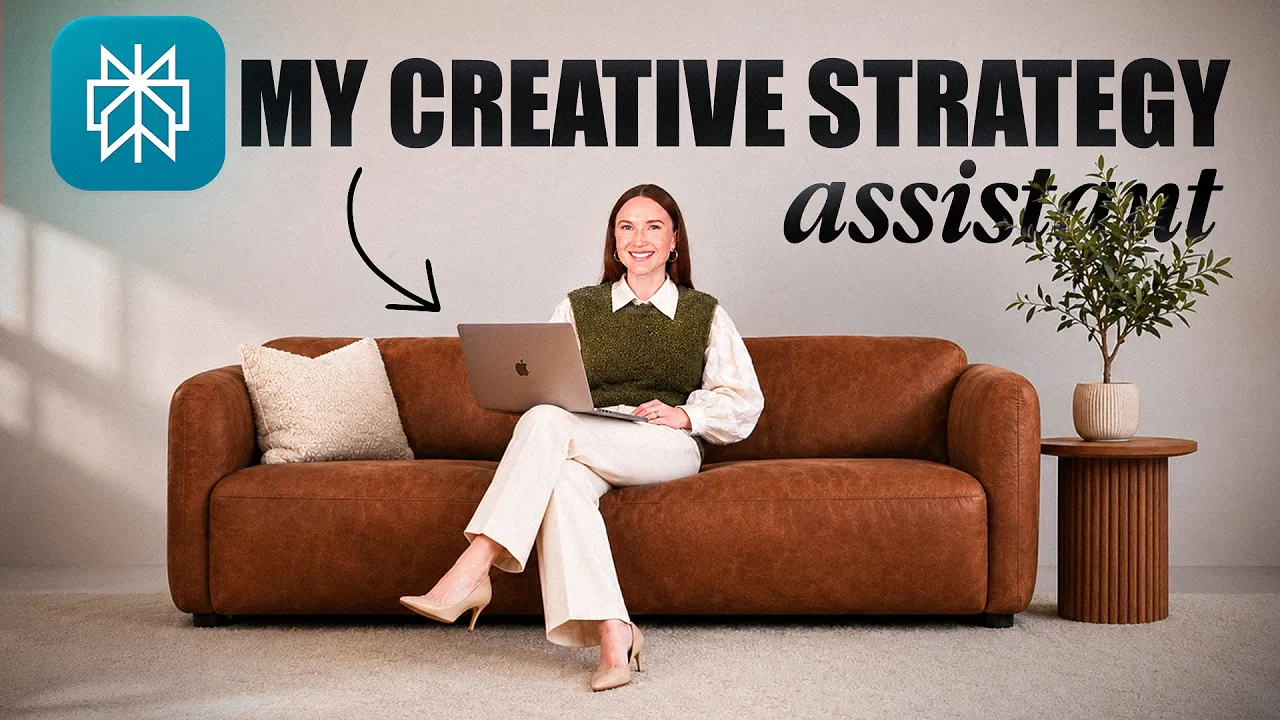
Dara Denney · @DaraDenney
This video has no Most replayed graph yet: YouTube shows one only once a video has enough views. These are the moments viewers replayed most in Dara Denney's most watched videos.
Most replayed moment at 1:55
4.1x that video's typical replay level
different parts of your computer and different apps, you're going to have to give it access through connectors. And for everything that we're going to go through today, make sure that you at least have Chrome connected as well as Slack. Now, let's dive into this first one, analyzing ad libraries. Now,
Said at 1:49
Most replayed moment at 14:54
4.4x that video's typical replay level
like to use it in addition to this is right here. First, what you're going to do is go to Claude, and you're going to export your brand brain, and any other context documents that you have. If you don't have that yet, here's a really great prompt that I use for all of my
Said at 14:46
The graph counts replays. It does not show where viewers stopped watching.
Words
2,305
Runtime
13:41
Speaking pace
168wpm
Reading time
10min
168 words per minute, between the 160 25th percentile and the 181 median of 349 measured videos. That distribution comes from the 349-video hook study.
Opening (first 30 seconds)
So, if building AI agents is a little bit of a mystery to you, today I'm going to take you step-by-step on how to build true creative strategy AI assistants, aka agents. Because honestly, if you're anything like me, then you've understood chat interfaces for a while now. But there's a really big gap between that and a true agent that can actually do completed work for you. So, today we're going to walk through how to build an AI creative strategy assistant using
84 words, the words spoken in the first 30 seconds at 168 words per minute.
Free, no signup. See how the first 30 seconds hold attention, with rewrites.
Sentence shape
| Measure | This transcript |
|---|---|
| Sentences | 120 |
| Average words per sentence | 19.2 |
| Longest sentence | 63 words |
| Questions asked | 12 |
| Sentences containing a number | 3 |
Most used terms
Filler phrases
50 in total: actually 20 · like 15 · right? 7 · um 6 · kind of 1 · you know 1.
A literal whole-word count of the same phrase list the Prepublish browser extension uses, so a phrase inside another word is not counted and a phrase used in its ordinary sense still is. It is a count and not a judgement.
What this transcript is
Every word below is the caption track YouTube publishes for this video, pulled from the video itself and reproduced unchanged. It is not Prepublish's writing, not a summary, and not a re-transcription: it is the video's own published captions. English captions, generated automatically by YouTube, in the video’s original language. Source: the video on YouTube. A channel that would rather this page did not exist can ask for its removal through the contact page, and it is removed.
So, if building AI agents is a little bit of a mystery to you, today I'm going to take you step-by-step on how to build true creative strategy AI assistants, aka agents. Because honestly, if you're anything like me, then you've understood chat interfaces for a while now. But there's a really big gap between that and a true agent that can actually do completed work for you. So, today we're going to walk through how to build an AI creative strategy assistant using Perplexity computer.
They actually reached out to me directly to collaborate on this video, which is such a dream, and I'm really excited to share why this is the best tool for that. I'm also going to give you the prompt that I used to create this, so that you can also make one yourself. And then I'm going to share some other tools that I've been building to really get those creative juices flowing for what is possible with this technology.
I am very excited. Now, let's dive in. But first, I want to talk about why I'm saying creative strategy assistant and not lead creative strategist or head of creative strategy >> [clears throat] >> because I think that we are all as an industry a little fatigued. It was a really big unlock for me when I realized the best way to use this tech was to not completely outsource my thinking to it, but instead to treat it like an assistant or an intern.
And honestly, what's so cool about this is now there is no reason why every single creative strategist out there shouldn't have their own assistant or intern using this tech. So, let's talk about why a Perplexity. Right? At face value, it is pretty similar to chat GPT or Claude. But in there is a big but. The big reason why I have been gravitating to Perplexity more and more over the last few weeks and months is because I have found it to be the much better option when it comes to research specifically.
[music] And since I'm a creative strategist that is routinely building out strategy for brands, that means that I do a lot of research. Need I remind you that Ogilvy himself was the research director of his namesake agency, not the creative director. That's how important research is to our job. Now, the reason why Perplexity is better at this than other LLMs is because, number one, it searches the internet in real time and actually gives you citations so that you can double-check its work.
And it also has a research mode where it can compile hundreds of sources for you and compile a report. But that's not to say it's just for research, right? It can actually compile documents and spreadsheets and really take that data and put it into something actionable for you. And through Perplexity computer, it can act as your creative strategy assistant, where it can run workflows and do research for hours for you.
So, when Perplexity reached out to me recently and they were like, "Hey, we'd love you to try building a creative strategy tool with Perplexity computer." I was like, heck yeah. And the thing that I knew that I wanted to create a creative strategy research assistant, aka an agent that could actually go out and compile all of that research and documentation for me so that this brain could still do the actual strategy.
So, let me show you what I built and why, and then I'm going to show you how I built it. And yes, you guys will get that prompt. Now, I built this tool into a web app. I've been using this tool personally on some of my own brands, but what I decided to do was to actually compile it into a library so that you guys could look at some popular D2C brands and really see this research in action. Now, let's talk about why I built this, right?
So, this entire methodology and workflow is actually based on this document that I compile for every single one of my creative strategy clients. And generally, this takes me about 3 to 4 hours to do manually. There's going to be your brand and your product breakdown. You're going to analyze the first page of Google. And the meat of this is what I like to call the reputation analysis. And essentially what this does is it goes through the exact same type of journey that a customer is going to do when they are researching for potential solutions to their problem or the type of background research that they're going to do on you specifically as a brand once they do discover you before they purchase.
Essentially, this is going to tell you the reputation of a brand from multiple sources. But this document was often incomplete and incredibly biased to what I thought was the most important. But with this tool that I made using Perplexity computer, it actually gave me a way more objective view on all of this data and also kept things a lot more organized. [music] Now, here's the prompt that you can use to get this tool and make it for yourself in Perplexity computer.
Okay, here's the creative strategy recon report where you can read the room before you write the ad. Now, really cool thing that I added in here before I making this video is you can actually add the brand name and the URL to let me know if you want me to run one of these reports for the brand. I tried to make it so that it could be completely interactive. Still working on that, but I did compile a library for you guys of some of the popular brands so that you could actually see what this research report actually looks like.
So, let's go ahead and dive into Rise, right? So, the first thing that you're going to see here is we have an executive POV as well as some creative implications or high-level creative call outs about what they've been doing so far. So, number four, I like this one a lot. The founder story is an underused asset >> [music] >> um or the subscription complaint is now a creative problem, not just an ops problem. >> [music] >> Very interesting.
Now, what I've really loved about going through this process is I was able to get a sentiment scorecard [music] where you could really get an overall sense objectively of what the overall reputation is. So, for um Rise specifically, we have a love but distrusted. So, they have really loyal product fans and the Trustpilot was mostly positive, but [music] there was NAD claim withdrawal, um BBB subscription complaints, and a rising sponsorship fatigue.
So, the way that they're partnering with other creators. It pulls out their top strengths, weaknesses, and biggest PR risk, which I did not tell it to do that, but that's pretty cool. Um and then what I really like is it went into the reputation analysis then specifically into the press. And it says, "Hey, you have a lot of great founder mythology coverage, but you're not really using that in your ad creative. So, this is definitely something that they could improve on." And then it went into their reviews in Reddit's pretty deep and actually called out directly some of their Trustpilot reviews, as well as some of the negative chatter going on about the brand on Reddit.
And then also gave some more pre-purchase social feedback based on some YouTube reviews, as well as some other types of reviews. So, this is really cool to like see it all laid out like that. And then it went through and actually did the reputation analysis by the product level, which is really cool to not only just have for the brand overall, but for the individual products. So, if you have multiple SKUs, multiple products, this is really cool.
And then we also have the persona profiles. So, as a part of this research analysis that actually does go through website reviews, so it was able to pull out its specific [music] personas and give back verbatim voice notes that you could actually use in your ad creative. Um it also looks at the specific jobs to be done and buying triggers and objections for each of those audiences [music] and gave some ad idea teasers for this, which I think is very very cool.
And then we actually have some ad creative ideas as well just to really get those creative juices starting. But, walking out of this report, you already have a really great sense of, "Hey, what their reputation is in the market?" A bit of a SWOT analysis, so to understand their strengths and weaknesses and objections and opportunities that they really have to make the sale and scale, um but also, you know, really starting to jump start like where some opportunities lie specifically as it comes to creative ideas.
Now, let's talk about how I built this tool. So, you're going to go into Perplexity. You can click on computer right here or you can simply switch it to this. And you don't have to feel like you [music] have all of the answers for the tool that you want to build first, right? Actually, when I first went through this process, I talked about four different problems that I had. So, first one I did talk about was the reputation analysis.
Another problem that I had was around determining the creative diversity of a brand and then also how to find new creators and help finding viral TikToks. So, first, I asked Perplexity, "Hey, what do you think you're going to be able to help out with the most?" And it says right here, "Okay, the reputation analysis, most confident by a wide margin, which is why I chose it." And this is really cool. It's going to give you questions, too, right?
So, [music] let's build the reputation analysis tool. And what type of form should it take? A reusable skill workflow, a polished report for brand, other. Let's make this into a polished report for brand. And then for the reputation analysis, what sources matter most to your repu- press, Reddit, review, social channels, of the things. Now, let's go. And I love this. Which brand should I analyze for this report first?
Let's do Merit Beauty. And then what output format do you want? Let's do a web app. So, that you can see exactly what I had made before. In fact, I think what we should do is candidly just go to I'm going to generate it on my old on the old one. And then here is the report generated for Merit, all complete with Perplexity computer. Very, very cool. Now, I've also built a few other AI workflows using Perplexity computer over the last few weeks that I've really grown to love and candidly use daily.
[music] And the one that I'm really excited to get your feedback on is this creative strategy daily digest. Now, a problem that I have as not only a creator, but a creative strategist in this space, is that I spend a lot of time on social media across LinkedIn, Instagram, and beyond. And I was kind of having a hard time keeping up with all of the really cool creative and creative strategy news. And now I have an agent that actually does all of this research for me so that every morning when I log in at 9:00 a.m. it already has this digest populated every single day.
And yes, you guys can use it, too. And the other thing that I'm currently working on with Perplexity Computer is a creative diversity analyzer. Now, something that I am still struggling with as it relates to creative diversity for my clients is really being able to assign a specific KPI to good or bad creative diversity. So, I built this tool using Perplexity Computer that is actually based on another YouTube video that I did a few months ago about the levels of creative diversity.
And essentially what it's able to do is look through a brand's ad library and then give it a ranking based on my own methodology about what level of creative diversity it has. Now, this isn't perfect, right? Because Facebook blocks LLMs from really searching through ad libraries and harvesting that data, but it is going to be able to take a look at your primary text copy, the thumbnail that your ad creative has, and at least begin to give you an idea of where you are falling in terms of different formats, a different initial messaging, and potentially personas.
And I have found that to be valuable data and something that I can actually action when I am developing that strategy. And that's it. I am so excited to hear if you guys end up building something with Perplexity Computer. It is honestly something that I have been returning to every single day, especially as I am refining the digest. But please let me know in the comments what you guys are currently building and if there's anything that I can help out on.
I really did feel like this was more like working with a collaborator instead of something [music] that I had to micromanage, which is definitely >> [laughter] >> what I have felt like working with other LLMs and other platforms. [music] So, please let me know what your experience is. I just so excited to see what you guys build. All right, love you. Bye.
The words are the caption track's own and nothing is reworded or re-transcribed. Paragraph breaks are placed between sentences so the text reads as prose.
Free tools for your own script. No signup, no login.
Paste your draft and see where viewers are likely to drop off, with a rewrite for each weak line.
Paste the first 30 seconds of your own draft for a hook score and rewrites.
Check your draft against YouTube's advertiser-friendly guidelines before you record it.
Read this channel's public videos and transcripts, and download a writing brief for it.