Getting the transcript
Reading the captions from YouTube. A video nobody has opened here before takes 10 to 30 seconds; this page fills in on its own.
Getting the transcript
Reading the captions from YouTube. A video nobody has opened here before takes 10 to 30 seconds; this page fills in on its own.
GovClose | DoD Contract Academy · @govclose
This video has no Most replayed graph yet: YouTube shows one only once a video has enough views. These are the moments viewers replayed most in GovClose | DoD Contract Academy's most watched videos.
Most replayed moment at 8:53
7.3x that video's typical replay level
going to tell us? Again, number of offers received, it's not telling us, right? I'm going to I think as a treat I'm going to if you hold on till the end, I'm going to show you exactly how competitive this is. So, this was full uh and open after exclusion of sources. We've seen this before, right? Who actually did the
Said at 8:45
The graph counts replays. It does not show where viewers stopped watching.
Words
8,416
Runtime
44:31
Speaking pace
189wpm
Reading time
35min
189 words per minute, between the 181 median and the 201 75th percentile of 349 measured videos. That distribution comes from the 349-video hook study.
Opening (first 30 seconds)
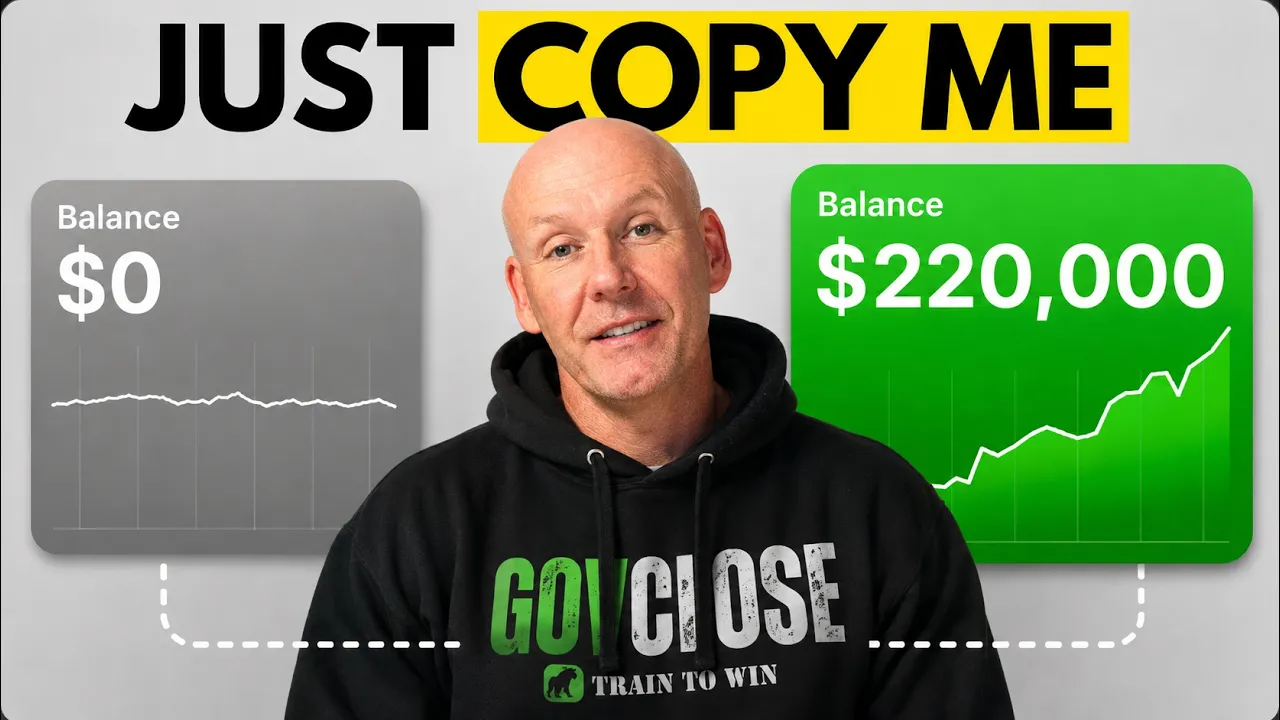
Did you know the US government will pay you $220,000 to do research? $10,000 just for a compelling white paper submitted for the right program. $899,000 to research innovative learning technologies for high school students. That's just the tip of the iceberg. And if you haven't guessed it, today we're talking about federal grants. The US government spends over $1 trillion a year providing federal grants and not just for states and nonprofits, but for businesses, for teachers, engineers, professionals winning massive amounts of funding to work on their passion projects. And in today's episode,
95 words, the words spoken in the first 30 seconds at 189 words per minute.
Free, no signup. See how the first 30 seconds hold attention, with rewrites.
What this transcript is
Every word below is the caption track YouTube publishes for this video, pulled from the video itself and reproduced unchanged. It is not Prepublish's writing, not a summary, and not a re-transcription: it is the video's own published captions. English captions, generated automatically by YouTube, in the video’s original language. Source: the video on YouTube. A channel that would rather this page did not exist can ask for its removal through the contact page, and it is removed.
Did you know the US government will pay you $220,000 to do research? $10,000 just for a compelling white paper submitted for the right program. $899,000 to research innovative learning technologies for high school students. That's just the tip of the iceberg. And if you haven't guessed it, today we're talking about federal grants. The US government spends over $1 trillion a year providing federal grants and not just for states and nonprofits, but for businesses, for teachers, engineers, professionals winning massive amounts of funding to work on their passion projects.
And in today's episode, we're going to talk with one of the top grant writers in the world, Dr. Nippen Chopra. The first stage was a simple $10,000, but the next stage of that was $65,000. We applied to uh what's called the and we won a $220,000 award. Nippon's a professor of neuroscience. And not only has he won hundreds of thousands of dollars to fund the research he's working on in Parkinson's disease, but he's going to talk about how he makes the bulk of his money not from his job as a professor, which he loves, but as a freelance consultant, helping other people write grants and grab funding for their businesses. >> Obviously, I'm not going to give you exact figures, but I can tell you that I could easily quit my day job and do consulting full-time.
I've lived a very comfortable life. >> So, you want to stick around to the end of this episode because today you're going to learn Dr. Chopra's three-step process for winning government grants and the biggest mistakes people make when they are writing a proposal for this type of funding and how to avoid it. All right, so Nippon, Dr. Nippen, Dr. Nippon Chopra, so I've known you for a while now, professor of neuroscience.
You just correct me every time I mess up, right? >> It's funny to me. I I think in in my four years knowing you somehow the part that always laugh is you calling me doctor and professor. It just just makes me laugh every time. >> Well, you are the you are the professor. Professor of neuroscience, winner of the National Institute of Aging startup challenge, biotech biotech founder. >> Yeah, I think so. Yeah. >> Soccer nerd. >> Massive.
That's the real That's the real truth. Everything you've said so far, >> that's what your LinkedIn profile says. And I was just I was impressed that you actually wrote soccer and not football, but we'll get into >> we'll get into that later maybe. >> You've been crushing it, winning some of these grants lately for your research. Could you walk through how much have you won and what were those programs that you won it through? >> Sure.
Yeah. So, let's start with the Parkinson's product and then we can talk about uh another one. But the Parkinson's product and uh Ricky you were a part of this so so you deserve credit too. >> The first thing that we won was called something called the National Institute on Aging. NIA is the abbreviation. National Institute on Aging Startup Challenge the first stage. It's a multi-stage effort kind of similar to the Extal Ext.
The first stage was a simple $10,000. >> Mhm. But the real learning from the we got I got to participate in six months of entrepreneurial training at no cost and this was training conducted uh through the NIA and their collaborators. So it was really valuable to someone like me who was a biotech founder to think about things that will accelerate my biotech product. So $10,000 wasn't the money wasn't the big one there.
It was the six months of training. But the next stage of that was that we won was $65,000. So just for the National Institute on Aging Startup Challenge, the size of the bucket was $75,000 um total. >> Okay. In parallel to that Riking, we applied to uh what's called the A2 consortium, which is a consortium of three massive universities that were funded by the National Institute on Aging to basically uh identify promising AI based products in the aging tech space and we won a $220,000 award for the same product there.
And in the history of these competitions, our company, which you were part of and still, in my opinion, still are, uh, Dextech is the first company to win both things at the same time. That's amazing. That's amazing. And well, I guess so, full disclosure, right? I guess for anyone watching, Dextech was a client of mine, right, as a government contract consulting client. And I essentially set up their um, their initial government contracting pipeline.
And I know uh there's a lot of great people that work there that have been through some of our training and stuff, but uh but no, this is this has happened post this is like a credit credit to you guys and what you're doing. What's the big picture on what that funding is going for? We can dive into the details later, but if there's like a 30 secondond or less like statement of hey, this is what we're doing with the funding. in 30 seconds.
What we're doing is we're building an MVP and we are doing some feasibility testing to see whether it is technically feasible and commercially feasible. >> Mhm. >> That's what we're done with this bucket funding. At the next stage, >> Ricky, is we are going to do interventional testing, meaning we're going to put it in the hands of the user and see if it solves the freezing of gate or not. That's the let's call in terms of the maturity of this product.
That's in my opinion the key inflection point is next. >> So I would imagine there I mean there's clearly a commercial use case for this, right? Yes. >> Um you know and grants can be because it's a grant that you want. Is that correct? It's considered a grant not a contract. So >> that's correct. On the DoD side, they're all contracts and NIH NSS NSF side they're grants. >> For someone that's not familiar with Parkinson's, what what is it?
Parkinson's very simply is a movement disorder. Um it's it's a disorder that causes people usually it affects people who are older but not always. There's an early onset form which for example uh Michael J. Fox has early onset Parkinson's. He got it in his late 40s but generally people who are older get it. So in their 60s uh people are diagnosed and it causes their their ability to move to be impaired. That could be walking, that could be constant tremors that would impair their everyday living.
And as it advances, you get more and more symptoms which reduce your ability to live independently and to move around the world independently. >> Yes, >> that's how I would describe it. >> And what what are some of the symptoms? >> One of the most salient symptoms, one of the first symptoms people notice are is are tremors. >> Tremors meaning you're you're you hold your hand out and it it starts to shake like this. >> Yeah. you're not moving it.
It's just happening because of uh abnormal circuitry in in in your brain and your spinal cord going out to your muscle. So, um that's the first symptom people notice. Other symptoms they might notice is they start to start to walk differently. So, when you and I walk, there's a lot of there's a very you're and my walk is very symmetrical, meaning your right side and your left side moves pretty similarly. If I were to use a time, you know, use a stopwatch.
Mhm. >> Um and we take steps that are pretty regularly interspersed. Someone who has Parkinson's that symmetry changes as well as how far their steps are from each other change. So they in other words, sorry, they start to take shorter steps because they're unsure of of their movement. So that's another symptom. And then there are lots of other symptoms that happen as the disease progresses. But the first symptoms tend to be tremors and changes in gate.
Is there anything that um that we think are best practices for staving this off, preventing it? I mean, can I take creatine or lift weights or you know what, what's the uh you can I use the sauna every day and not get based disease? >> It's a good it's a good question and unfortunately there's there's not a clear-cut answer to this. It's a answer that remains under investigation. We do know that as a general rule, Ricky, eating a good diet, exercising, sleeping well >> are associated with lower rates of all different neurological diseases. >> Right. >> But there are some predictors of Parkinson's.
For example, there's something called REM sleep behavior disorder where uh long story short, folks tend to act out their dreams. That is usually a predictor of Parkinson. So, so in other words, you're sleeping and suddenly you start to move your hands and start to talk out loud, which doesn't happen to us because our brains are programmed to stop us from moving when we in a certain stage of sleep, which is fine. >> So, people who don't have that can be at a higher risk for Parkinson's, but that's that's rare. >> I will say if I'm in a dream and I'm fighting, I'm starting to throw punches.
My wife thinks that's PTSD and not uh you know, but >> sure, >> but uh but who knows? Okay. So, interesting. It's scary, right? I think everybody, you know, and you know, I have more experience with dementia. My probably since we last talked, my wife's father passed away. He lived with us for a while and he had uh he had dementia, but um >> Sorry to hear that. Was it Alzheimer's? >> Well, I'm not See, and that's that's the thing.
I'm still not I don't even want to get into this in the in the in the podcast, but but you know, they said it was dementia. I know there was a certain type of dementia. They said it was the same kind that Bruce Willis has. >> Oh, that's fronttotemporal dementia. >> Okay. >> So, that affects the frontal cortex. So, you would have probably started to see things like changes in personality and behavior and some of that really. >> Yeah.
And he had a hard time talking, right? So he would he would start when it started getting bad >> he would be talking it would sound like gibberish and he'd be going on he'd be having a conversation with somebody you know but it would be have it was a hard it was really hard to understand you know what was going on there which >> um >> I'm sorry >> about that >> dude like the work that you're doing this is awesome um and so again I don't want to take it on a downer this is a good thing right so we're working on some things that can help here you're working on this particularly with gate and I think a lot of people are probably interested with your government contracting expertise, right?
So, um let me ask you this. This is probably something a lot of people are interested in. Once you win a grant, >> yeah, >> how long is it before you actually receive the funding? >> Actually, that's a good really good question that is inconsistent across the federal agencies. So >> for NIH, once you find out you've won, >> you're going to go through a cycle of resubmission, clarification, additional documents that are needed, such as current and pending support, which is just a document that shows I already have this money from this other work.
This is how much time I'm spending on it. I intend to have all of this money. This is how much time I'm going to spend on it. So there's these forms that you're going to send through after your notification. and your notification comes 3 to four months after you submit. So long story short for NIH the time between submission and finding out whether you won or not for NIH NSF is three four about four months and then you can tag on another 2 to 3 months of this back and forth.
So you're looking at a 6 to 8 month delay between submission and starting your work. >> Okay. Interesting. NSF it I would say it's a little bit shorter than that but it's about the same at DoD as you know you're also going to negotiate that contract. Your budget is never going to approve exactly how it is. >> Oh yeah. >> So that'll take what 3 months or so. >> Yeah. Yeah. It could be even could be even more than that.
Right. I mean >> uh it it's funny to me how you get some people talking about how fast government and easy government contracting is, right? I always say hey six to 18 months and then like that's if you're lucky. I mean it can take easily take years. Yes. Um >> to win your first government contract and you know some things are faster but there is some uh there's some complexes there's complexity there right and as you mentioned there's a lot of forms and stuff so here's the thing is is the juice worth the squeeze I mean there's a lot of effort that goes into this and I mean you're funded now so I I imagine the answer is yes but >> for me yeah for me the answer is yes it always has been yes because if you're someone who's who isn't going down the VC route and you're you're very interested in taking a technology forward that you're passionate about.
There is no better way in my opinion. I mean, can you see >> why you say why' you say that? So, what government funding versus the VC route? What what's the benefit? >> The biggest difference is you're going to give up equity in your company when you go the VC route, right? And and you're going to be tied to inflection points that may be may not be of your own making. In other words, your your your uh whether it's an angel investor, it's a VC, they may want you to accelerate to an inflection point. you are not ready for and they may not give you money unless you agree to those terms which will eventually if you're not careful kill your company.
I've seen it happen. So I I know this from experience. On the other hand, the the pathway with government funding is longer, but it's more measured. And something that I feel like sometimes we don't appreciate enough is the work of the people on the other side, such as program officers, >> uh, senior officers, contracting officers, because often times they become one some of your biggest uh, supporters. >> Yeah. that they can help you commercialize in ways that you would not have considered because they are so integrated with the innovation ecosystem having worked with other companies that they will open up doors for you that VCs don't even know exist >> right >> so for me that's a big value ad so it's the non-dilutive nature of this funding it's the integration into existing uh innovation ecosystems and the fact that it allows cause you to be more measured with what you promise. >> Yeah.
No, I I agree. And that's what I think most people would say that, right? You're not giving up part of your company. Is it a little painful to actually win some of the funding? Sure. But it's also painful to go after venture capital, right? And >> uh and it's even more painful when somebody's sticking their fingers into your business and um or making some claims on IP or or anything else. So um yeah, no, you're absolutely right.
So that's interesting. So, just I guess that illustrates to folks, hey, this isn't a quick win, >> right? But if it you know, you you have the right mindset and you're doing the right things and you're consistent and you're persistent, then you can make some of this happen. Can let me ask you this. Is this just are these the first proposals for grants that you ever wrote >> for the Parkinson's product? Yes. But if you're asking, have I won other things previously?
Yes. But just not for my own work. the federal clients that >> be successful in DoD, NSF, ARPA, age, NIH. But in terms of my own work, this is the this Parkinson was the first one. Yeah. >> So for your for your side gig for your um personal consulting business, which we talk about on Gov Close all the time, right? So a lot of people come in and um you know, if you haven't been tracking the evolution, so uh we tr we teach people how to sell to the government and one of three paths, right?
And initially when I first retired from the Air Force as, you know, an acquisitions dude, I was just helping companies. But then I'd get professors, right, coming in, people coming in leaving the military, veterans, government employees, or just professionals looking for something else. Now they're coming in like, oh, government contracting sounds interesting. >> A lot of them didn't have their own business. And so what what I'm teaching them is, hey, we can learn a specific part. government contracting is vast, but you can become an expert in part of this >> and sell your services to a company as a consultant and do really well for yourself.
Um, and so you're doing that, I do that. So, is part of what you focus on helping companies uh win grants like like you won for yourself? >> Yes, 100%. I've been lucky that that was the start of all of this. In fact, before I met Neil, who uh is is Dexe for all intents and purposes, who we both know and and love. Yeah. >> Um before I met Neil, I I had been working in the at the consulting game for a year and year and a half already and was able to help companies win sers in the for Air Force a couple of director phase 2s.
Mhm. >> I just found that I had I had this skill set that I've never appreciated, which was to think through logically and define gaps in uh arguments and to correct for those and put them on paper and build a cogent package that a reviewer would like. I just thought it everyone could do it but honestly it was around COVID that I realized not everyone can do it and there is a >> niche I can serve because I'm actually not trying to help government uh help companies win like OTAAS or these massive cues.
I'm actually focused on the silver status side of things >> because I feel like that's the part I'm most interested in is new ideas, new innovations in a variety of domains from health tech, biotech to cyber security. I'm interested in learning these new things that these brilliant people are are putting together and then it becomes my job to help them convince the government that it's a brilliant idea. >> Yeah. No, I mean that is a real skill set.
I don't like writing proposals. I've made that >> I've made that pretty known. But everyone's got like a different, you know, different abilities. But you know it's funny the um and and I would also say that it's not common for I don't want to say I know you're not an engineer but people that with your technical type of background right whether we're talking about healthcare could be science it could scientist whatever typically sales is a bad word right like when we're talking to them >> um government contracting is for most people is something they're not really thinking of but you know for having a profitable business the you know the direct line between you and the money the more direct that is it just I mean you can sell your services for more you can charge more with government contracting it's I mean biggest purchaser of goods and services in the world and super complex so if you have a skill set that can help a company get from here to here I mean that we we could this is the one place where we don't have to guess about the money right we know how much we know who's putting it on we know how the government uh awards it.
We can see who they're awarding it to. We can see just about everything we need to. Um so I'm not surprised that you have um a consulting business like that. And it's it's in inspiration, I think, for a lot of folks out there that want to learn part of this and like, oh, maybe I can replace my job with um with revenue like this, right? Or maybe they want to do something else. I know some people they just want to like volunteer or do something, but they need revenue.
We all need money. You know what I mean? I obviously I'm not going to give you exact figures but I could tell you that I could easily quit my day job and do consulting full-time and I live a very comfortable life. >> Yeah, >> I love my day job so I won't give it up. But again, without talking numbers, consulting is a massive part of my annual income. >> Federal contracting isn't something you learn from a textbook. It's something you do.
At Gov Close, you build real capture plans. You work real pipelines. You learn the tools and systems companies winning federal contracts at the highest level actually use. And most importantly, you do it alongside a community unlike anything in this industry. Sitting contracting officers, BD leaders at defense primes, cyber security contract law specialists, proposal experts, business owners that are winning right now where 400 students have gone through the Govclo program or are in it.
Whatever deal you're working, someone in this room has done it before. Some become six-figure account executives at top defense primes. Some launch consulting practices, building tens of thousands a month with multiple clients working from anywhere. Some win their first federal contract for their business that they already own. Three tracks, one community, the only one of its kind. And if you want to see whether government contracting is real for you, go to gvclo.com, watch the training video, and talk to our advisory team about the application process.
All right, now let's get back into it. Much bigger. >> That is that is actually really good for people to understand because yeah, a lot of people like I mean teaching is a calling, right? Being a professor like teach and then I I get it. I mean I'm I'm teaching in go clothes but I love you know instructing I loved teaching at the flight school in in the Air Force when I was uh flying. Um and of course there's all kinds of passions right like you know some people you know play the piano like we have people actually we have uh we have uh conductors in symphonies and different states that are in the program.
Um >> government contracting is a revenue source and then they can do you know what they love. They might not make as much but it's yeah exactly their passion project. Um >> let me ask you this. Okay just bringing it back into maybe some of the more specifics that people might be interested in. where where did you identify where do you go to find these opportunities these funding projects that you've won? >> So initially it started with Upwork in uh 2021.
Wait, not your not your consulting but your the actual grants and things like that that you >> thanks I'll clarify then. >> Yeah. >> So in terms of what I focus on which is NIH, NSF, SBI, SDR and ARPA they are on a pretty regular cycle Ricky. So really easy to find. You can find you can literally Google NIH SBI and it'll take you right where you need to go. >> That one's easy. The one that I think major viewers might be more interested in that I follow is the monthly first Wednesday DoD cigarette terror cycle.
So every starting starting about 12 months ago DoD went away from their like haphazard release of of BAAS and cyber RFQ >> RFPs. Now they release about 50 to 75 80 every month on the first Wednesday of every month. So, where do I go on the first Thursday morning of every month? DSIB. >> Okay. >> See what's out there and I want to take them to clients that I know will be interested, including Dex. Um, if I see one that's that's aligned, uh, I will send it to a previous client or a current client.
This how I found the uh the one that we applied for and got awarded very recently from DHA. So that's how I would find if and I think I'm guessing Ricky most of I think I know this most of the folks watching this are probably more aligned on the DoD side of the ecosystem. So if you don't know this, you should be looking every first Wednesday there are 80 60 to 80 new SB SDR opportunities are visa. >> Interesting. Interesting.
Yeah. Because of course uh of course CBRE was unfunded for >> you know actually the longest period in in history since it's it was founded in the early 80s. >> Yeah. >> Uh and it came back with a little bit of a vengeance. Right. So now we have some like I call it the super phase 2. It's not really called that, but there's a $30 million plus phase two that you potentially go for. Um, you know, and each each one of these um opportunities is a little bit different.
You know, I won't get into the phases. I've gone into like the >> exact specifics elsewhere, but >> what would you say for somebody that hasn't applied for something like this? What are a couple best practices that they could use that might make them a little bit more competitive? >> Do and to clarify your question, Rick, do you mean finding them or applying for them? Let's talk about we've you talked about finding them I think right you we've got >> I think you mentioned DIP you mentioned cyber.gov and you also mentioned hey there's a DoD like every Wednesday uh release Wednesday.
Yeah that's D. It's on DIP first Wednesday. >> Yeah. >> Um okay we found it. We found the one we want to go for. Best practices for maybe winning is it and are they all specific to writing up a proposal or are there other things that we should be doing? The first exercise you should do is on a single piece, one page, you should write clearly what the problem is that you're solving, how big the problem is. That should be your one paragraph.
Your second paragraph should be how are you solving it? What's innovative in your product? And then write the objectives you want to solve over the next 3 years. >> Mhm. If you do that exercise, you are ready to begin the cyber journey. I think what happens is a lot of companies have a good understanding of the second one. They can talk about what their product is. >> Yeah. >> Don't have a clear understanding of the the problem.
Meaning they they they've thought about the problem really at a high level. So for example, if I read a sentence that says Alzheimer's disease is a big problem in America and then you jump straight to your innovation, I know you haven't thought about the problem big enough cuz you're not you are not solving all of Alzheimer's disease. I can tell you confidently. >> So you need to be thinking about the narrow problem you're solving. >> Sure. >> They often also don't think about this in terms of phases.
So you're not within your own product. whatever missing piece that there is that you need money for, you're not going to solve all of that in a phase one because you'll only have between 300,000 to 500,000 for NSF NIH or between 75,000 and 250,000 for DoD. That's your entire bucket depending on what you're applying to for phase one. You are not going to have a market ready product at the end of phase one. >> Yeah, it's >> guaranteed.
So think about what you can solve with that finite bucket of money. Why don't you plan this exercise, talk to someone like you, talk to someone like me, talk to a collaborator that you know has been through the process and get feedback on that. That's what I would do. >> And then you engage with a stakeholder. So in the case of NIH, you can you got you should not can you should email the program officer a onepage summary of your idea.
We call it the specific aims page. >> Mhm. NSF it means you're writing a project pitch which is you know a couple of pages and for DoD it means that you reach out to uh often reach out to a TPO with your yeah the technical sorry TPC is technical point of contact >> and that can only happen before the do the simber goes live so you have a finite >> so those that so long story short rig do a self assessment where you know the problem the narrow problem your solution and what you're going to solve with phase one and then engage knowledgeable stakeholders and consultants. >> Okay.
Yeah. No, that's uh that's good advice. I I agree 100%. I mean, I I focus a lot on the TAC reaching out to technical point of compact contact on the uh DoD side or DO side. Um, but actually what you what you said initially is is right being specific and actually taking your time to define the problem, how you're going to solve it, and what comes after that. I don't know how many times I've been involved with a company that's half-hazardly and recklessly like throwing it all together.
Yeah. >> Usually the day before it's due. >> Yes. >> Um just to try to get it out there and they wonder why they lose. Right. Um and in you know SBI it's interesting how much success you've had because cber's cyber in itself you grant writing it's pretty competitive. >> Yes. >> Um >> and getting more competitive especially with the advent of uh AI. >> Yes. And well there's also a lot of I should warn a lot of people out there.
There's a growing number of a companies that have used AI to help write proposals. And then the only thing first of all AI is usually not a good proposal writer. But if the real problem is if you've won a contract using that, especially a regular contract, what we're seeing is that AI doesn't check all the file clauses, doesn't really understand it. And so you've just signed up for something you never really understood with the US federal government and you're a prime contractor, right?
And that's like the the ramifications for signing up for something that you can't deliver. Like just for instance, there could be clauses that are just numbers in the solicitation that if you don't look them up and realize that, hey, I'm signing up uh to I'm required to have a very expensive accounting system or cyber security requirements or um or you know there's there could be things in there where the profit isn't quite what you think it is, right? or a certain percentage of this has to be done by you and you know in a certain type of company.
I mean now you might be now on a contract where you're losing money and that's not a good position to be in. We're also seeing where uh the government specific to CBRE they're saying don't use AI to write the questions that you want to submit. They don't want them. They don't want that garbage. >> So can I add can I add to that Ricky? >> Yeah absolutely. the I I feel like the biggest takeaway I hope you have from this conversation is follows because I I'm I'm I can bet my life on what I'm about to say. >> Mhm. >> I think what's happened is with the advent of AI use, companies have lots of companies have deluded themselves into thinking that they're right, their proposals have gotten better.
What you don't realize is what's happened is all the crappy proposals now read the same because everyone is doing it. Everyone is using it. So in other words, all that's happened is the denominator has gone out. >> And what you need to do is find how you're building on top of that to stand out because if you just use a you know and again I uh there's a compl interest here. I've advised companies that have done proposal building and stuff using AI, but I can tell you that if that's all you're doing, you are not going to be in even the top 80% of applicants cuz all of reads like AI slop.
So, make sure you do that exercise of self-evaluation, engaging with stakeholders first. Sure, use AI to write if you want to, but whether or not you're going to get funded is what you do after that. What do you do with that content? Are you building on top of it? Have you clarified like you said the the care clauses for cyber security and other things? Are you clarifying the what's truly innovative about your product?
Because as soon as you put it into the AI system, >> everyone has that information now. So your product may not actually be innovative as you think. So So long story short, make sure your use of AI is well-intentioned, well planned, and well parameized. So, it should be within guard rails that that that your company controls. Otherwise, you're losing your innovation. >> Yeah. No, that's uh that's a good point. It's funny.
You could it's so easy to spot. You could just go on LinkedIn right now and look at what people are posting. It's like AI AI. I don't even want to read it. And >> I don't like if I'm writing if I'm doing marketing, if I'm writing an email or something and I'm sending it to like the gov closed community, I just I don't use AI to write any of that because it's and by the way, >> this is just a hack. Now, if you want to break through the noise, don't let AI write the that you're putting out there.
Sorry to swear, but don't let AI write the stuff that you're putting out, right? Whether that's, you know, like a YouTube video for instance, right? you know, the YouTube videos are using AI to write the scripts and to even do the voices and stuff like that. If you actually write it yourself and take the time to do it, people are going to know that it's you. They're going to they want to watch that stuff. They don't want to, you know, reading's the same thing.
If you're reading newsletters, like I can tell, we actually had one of our um graduates, he started a Substack newsletter. He's really good writer. Um, and he was like, his newsletter was in the top 100 of uh, Substack newsletters like a month or something after he started. And you could tell like you're reading it, you're like, "Wow, this is really good. What's the difference?" Oh, this other stuff was written by writing it. >> Yeah, he's actually writing it.
It's actually coming from a human being and it's it's actually worth reading it. Yeah, I'm not surprised. Proposals are the same. I mean even when we teach it in gov close like we do like we walk through a very technical compliance matrix for like the bigger proposals and you're building it with a spreadsheet. I think you can use AI to like help you with certain things, right? Like help me, you know, maybe review it once it's done or you can look at certain, you know, you know, the government likes to use certain words in a solicitation like, >> you know, the contractor will or shall um I mean, you can do that with a word search uh feature too, but I find I like AI for research >> 100%. >> Not for writing and and for code and writing software.
I mean, I would never be able to put software together, but you know, I can do it now. >> Thanks a claw. Yeah, >> that all looks the same, too, though. You can tell, >> but you could tell when an application was written thing. It's like, oh, well, I know I know what did this, you know, did you use lovable to write this? Did you do is this a chat GBT? >> Um, >> exactly. All it's done is it's raised the B the baseline for everything, bud.
That's all it's done. >> You have an interesting background which we haven't gotten into. Right. So, let's get into let's get into nipping. Let's >> Yeah, >> let's dig in here. So, we know you're a soccer fan, right? Uh where did that come from? >> So, I I grew up in India. I'm a naturalized US citizen. Uh I grew up in India and loving sports. I was played every sport I could and uh football. Soccer was always what ended up being the thing I loved the most and it's been a throughine life.
I've coached, I've a blogger and a podcaster. We talked about that before. >> And even now, like um you know, I spent all this summer there were 104 World Cup games. I watched 100 out of those 104. >> Did you Were you podcasting while you were not? >> No, I haven't done any podcasting postco. This is actually this is probably the first podcast I've done in six years. >> Oh, I'm honored. >> Yeah, of course. >> Get you on here and uh get your name out there.
What did you think of um I'm not traditionally, as you know, I'm not much of a I'm not much of a Saudi fan. >> I honestly I didn't even really I knew there was such a thing as the World Cup. >> Yeah. >> I lived in Saudi Arabia for a year. In 2017, that's when I first actually 2017 2018 the World Cup like that's when everything stopped. That's the first time I was in a country where like it was like really important. >> Yes. >> Um and everyone was watching it. >> What What did you think about uh having it in the US here?
What were your overall impressions? >> I thought the the stuff on the pitch was fantastic. >> This was in terms of on pitch stuff, this was the best World Cup I've watched. There was a lot of stuff that happened off the pitch related to FIFA >> and other stuff outside of FIFA that left a sour taste in people's mouth. >> But in term, if you just focus on the quality of the soccer, >> the best World Cup I've watched. It was so fun. >> Yeah.
I um I don't know that I actually watched a single one of those games, >> but I I was really what was interesting to me is the social media phenomenon that was kind of happening, >> especially with you know there's a lot of negative attention on some of the things the US is is involved with. But it was actually great to see people from other countries in this in here going, "Oh, >> wow. The US is actually a really cool place, right?
And it's not dangerous. Not at least not like it's presented on the news everywhere." And >> wow, there's like really there's some really interesting features here and and they liked it. So that I thought that was good from a public uh relations point of view for the US. I mean, we couldn't have asked for anything better. >> I agree. And that there were things that happening with the US team that at least initially made them very popular and then something happened that caused everyone to turn against the US soccer team.
That wasn't by the way not the fault of the US soccer players. It was a full >> decision. So I agree. But in general, I think it went really well. It was it was so much fun this summer world cup was. >> No, it was good. It was even good from my uh from my point of view. So, all right, we're going to end here with something we call the gov flows gauntlet. You ready? It's fast. Fast-paced. >> Okay. Best thing about government contracting? >> Innovation. >> Worst thing about government contracting? >> The long lead times. >> Name your enemies. >> Uh, cancer, aging, uh, and, uh, yeah, I would say those two.
Aging and and diseases like cancer. >> Okay. First concert you ever been to? Radio Head, >> get out of here. Really? What's the worst concert? Worst concert. >> Worst concert I've been to was probably uh a band called Snow Patrol that I I love them, but the concert the concert was terrible. >> Was Radio Head also the best concert you've ever been to? >> Radio Head is by far the best concert I've been to. >> No kidding.
That is interesting. >> They're my favorite band. So, my first concert a concert. I've been to many Radio Head concerts. >> Okay. Interesting. That sounds like me going to Metallica concert. So, we're just uh >> We did talk about this. Yeah, I do like Metallica, but I've never seen them live. You've seen them like three, four times, right? >> I've seen them a lot. Yeah, you got a good memory. Um yeah, they were better in '92, but uh but still they're still going, man.
Um Okay. What's your best non-fiction book if you're just reading for pleasure? Um or I should say non-fiction, fiction or non-fiction, but you're not reading for business. Oh, so I would say my favorite ever book is probably uh a book called Shandaram. It's a fiction book. I usually read non-fiction by the way, >> but this is a book that was about this. It's kind of kind of fiction kind of true. But this guy who moved to Bomb the Bombay underworld from Australia uh and wrote a book about living amongst people in the slums of Bombay and how he got into the underworld.
So it's a book that I've read several times and I will say that everything else this author wrote was absolute trash. So >> the equivalent of a one hit wonder. He's an oomp. He's a he's Hansen basically. >> Okay, I got you. I got you. Okay. So, though this isn't part of the gauntlet, but uh it just brings me back to it. Do you think you've got maybe maybe I'll include that you you grew up in or part of your background is from India, right? >> Yeah.
I was there till I was 18. I moved here for college. Yeah. >> Which is amazing because I would never even be able to tell like I feel like you have like an American accent. So you >> that's what my that's what my friends and family say in India and then my friends and family hear me talking to someone from India and they say oh my god your Indian accent is bad so >> that's like when I go to Boston like all of a sudden >> yeah both it's just like Boston just like Boston just it just kid Do you think that you got any unfair advantages from living in both countries >> unfair advantages?
No fair. Yeah. Unfair advantages like what do you or maybe unsuspecting right like hey living I was curious about this and probably should have came earlier but um living in India now being in the United States is there do you do you think that you have any advantages from that? Did you get anything from like growing up in India that maybe people in America don't normally get um or maybe combining things that could have given you a certain perspective?
It's a hard question, but the first thing that comes to mind, I think I I don't know if it's because I was in India and the US, but I can say my lived experience in general has made me more empathetic than the average person is what I would say. I feel like I pick up on on people's like mood and and their and things quicker than the average person does. >> Okay. And you think that's just you think living in different cultures has helped with that? different cultures and also going through life as you know as a when you when you move to a new country by yourself at 18. >> Mhm. >> Learn to navigate social situations through a very perceptive lens because you are dealing with cultural differences, language barriers, um bias, a lot of stuff comes into play.
So you you learn to navigate through space uh through those spaces in a more intuitive manner, I guess. >> Yeah. Interesting. I get a lot of questions from foreign companies especially India. >> Yeah. >> Um about approaching the US market. Do you have any advice for them? >> Stand up a a US entity and collaborate with US-owned businesses. That would be the first thing I would say. Um yes there are there are contracts that you can win just as an Indian-owned Indian operated company but those are getting smaller and they will continue to get smaller I think for a while that might change but I don't see that changing for >> about half a decade from now because of even if the governments change there's a inertia factor that will take this into five six years um so I would say number one thing collaborate with US-owned operated businesses and number two set up an Indian uh US entity. >> Okay.
Interesting. And then >> that's probably your area of expertise. What advice do you give them? I'm curious. >> Well, I mean it really just depends, right? Because it's it's different. My advice for a company that's doing something like yours might be different from a company that's doing something >> software for the military. for anything that is going to touch a network for the military. They're being very they're cracking down.
It's not this isn't specific to India. This is any like US any country any company not owned by by if it's not a US entity even um some countries involvement in creating yes >> uh if it's a software tool or something else like they're really cracking down on that. So, um, you know, typically I'm going to kind of direct them more at the non-military, um, avenues and then depending on what they're selling. I mean, what you're saying is, you know, 100% anyway.
If you if you if you want to be serious about government contracting, having a US entity is is the way to go. Unless you're just there happens to be like foreign military sales involved and you're you're in that country. But, um, yeah, that just depends. But, um, where can So, you know, we talked a lot here today. I think there's probably a lot of companies that would like to use your services as a consultant. Where can they reach you?
Where where do they go to find Nippon? >> They can find me on LinkedIn there in my name Chopra or you can look up my uh com my website. It's I have to admit I haven't put a lot of work into it but it's Choprac.com. Chopra is my last name CO P as in police r a choprasscience like the word science.com. Choprascience.com. I'll put it in the show notes, too, so people uh can get your help with grant writing or anything else that they want, you know, uh some advice on.
Um do you have you written any books? Can anyone buy your books or anything? No, not yet. >> The first book I'll write is Eating Oysters with Ricky. That's my >> Let's do it. I I like it. I like it. Go eat some oysters at the Oyster House. Cool, man. Well, hey, thanks again for coming on, man. Uh I know I kept you a while here today, but a lot to talk about. >> Yeah. I have to go into phase two, you know, when you start uh getting into uh you know, the next stages here of some of your research.
We'd love to get an update on that. >> I'll be back whenever you need me. Great chat. I'll put a link to that as well.
The words are the caption track's own and nothing is reworded or re-transcribed. Paragraph breaks are placed between sentences so the text reads as prose.
Free tools for your own script. No signup, no login.
Paste your draft and see where viewers are likely to drop off, with a rewrite for each weak line.
Paste the first 30 seconds of your own draft for a hook score and rewrites.
Check your draft against YouTube's advertiser-friendly guidelines before you record it.
Read this channel's public videos and transcripts, and download a writing brief for it.
Sentence shape
| Measure | This transcript |
|---|---|
| Sentences | 588 |
| Average words per sentence | 14.3 |
| Longest sentence | 192 words |
| Questions asked | 82 |
| Sentences containing a number | 43 |
Most used terms
Filler phrases
353 in total: like 89 · uh 74 · um 58 · you know 53 · right? 25 · actually 23 · I mean 22 · kind of 6 · basically 2 · literally 1.
A literal whole-word count of the same phrase list the Prepublish browser extension uses, so a phrase inside another word is not counted and a phrase used in its ordinary sense still is. It is a count and not a judgement.