Getting the transcript
Reading the captions from YouTube. A video nobody has opened here before takes 10 to 30 seconds; this page fills in on its own.
Getting the transcript
Reading the captions from YouTube. A video nobody has opened here before takes 10 to 30 seconds; this page fills in on its own.
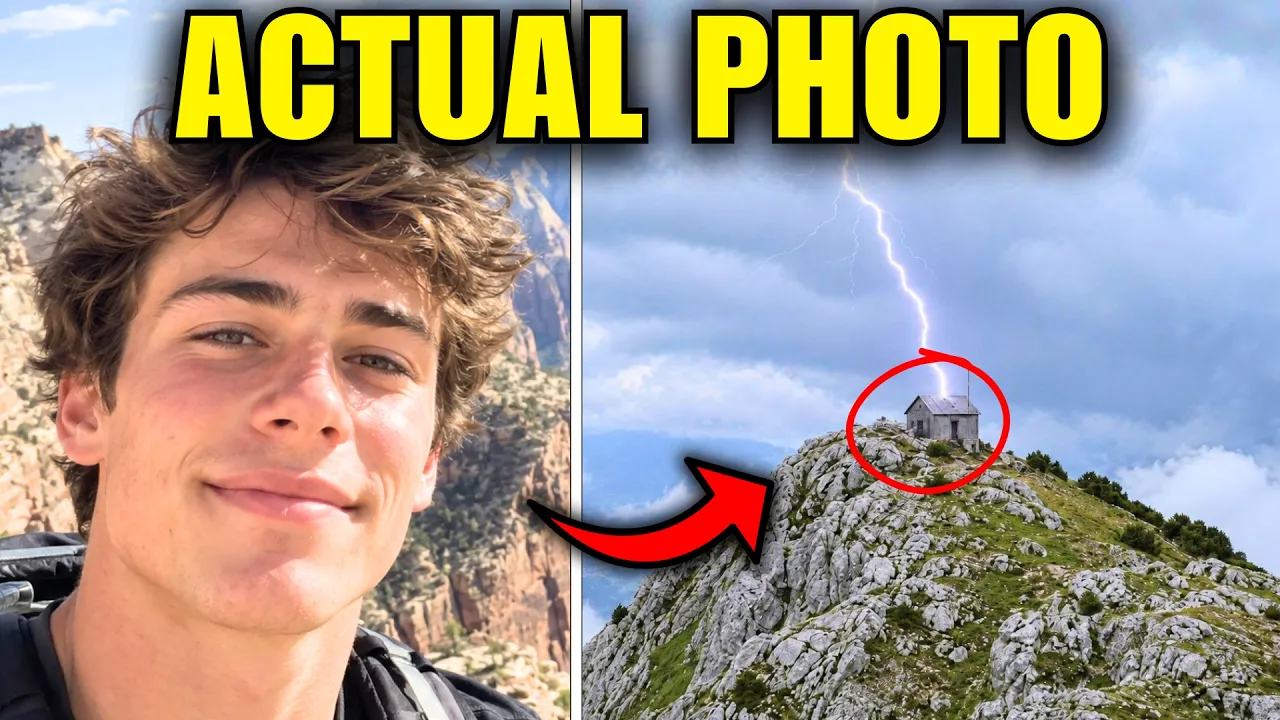
Tourist Tragedies · @TouristTragedies
Words
2,860
Runtime
16:34
Speaking pace
173wpm
Reading time
12min
173 words per minute, between the 160 25th percentile and the 181 median of 349 measured videos. That distribution comes from the 349-video hook study.
Opening (first 30 seconds)
September 18th, 2026, the summit of Mount Timpanogos. A 19-year-old hiker, dead. Nine people crowded inside one tin shack more than an hour before sunrise. This is the most brutal disaster of the 2026 Utah climbing season. What nobody realized in the dark that morning is that the shack was the last link in a chain, not the first. Welcome to Tourist Tragedies. Not one warning sign on the trail, not one rule in the guide books, not one piece of Utah hiking wisdom was written for
87 words, the words spoken in the first 30 seconds at 173 words per minute.
Free, no signup. See how the first 30 seconds hold attention, with rewrites.
Sentence shape
| Measure | This transcript |
|---|---|
| Sentences | 195 |
| Average words per sentence | 14.7 |
| Longest sentence | 41 words |
| Questions asked | 2 |
| Sentences containing a number | 32 |
Most used terms
Filler phrases
17 in total: like 11 · kind of 4 · actually 1 · basically 1.
A literal whole-word count of the same phrase list the Prepublish browser extension uses, so a phrase inside another word is not counted and a phrase used in its ordinary sense still is. It is a count and not a judgement.
What this transcript is
Every word below is the caption track YouTube publishes for this video, pulled from the video itself and reproduced unchanged. It is not Prepublish's writing, not a summary, and not a re-transcription: it is the video's own published captions. English captions, generated automatically by YouTube, in the video’s original language. Source: the video on YouTube. A channel that would rather this page did not exist can ask for its removal through the contact page, and it is removed.
No Script X-ray for this video: YouTube shows a Most replayed graph only once a video has enough views.
September 18th, 2026, the summit of Mount Timpanogos. A 19-year-old hiker, dead. Nine people crowded inside one tin shack more than an hour before sunrise. This is the most brutal disaster of the 2026 Utah climbing season. What nobody realized in the dark that morning is that the shack was the last link in a chain, not the first. Welcome to Tourist Tragedies. Not one warning sign on the trail, not one rule in the guide books, not one piece of Utah hiking wisdom was written for a storm at that hour.
Mount Timpanogos, or >> [music] >> Timp as the locals call it, towers 11,749 ft above sea level, taller than eight Empire State Buildings stacked on top of each other. And the part that I find most haunting about this story is that the storm arrived at an hour the usual rules barely even cover. Every summer, thousands of people make the 14-mi round trip to the top of Timp, climbing close to 5,300 ft through forest, meadows, and bare rock.
It is one of the most visited summits in the entire Rocky Mountains, a climb that families here treat almost like a rite of passage. And nearly every one of those hikers hears the same advice before they go. Start early. Be off the summit by noon. Because in Utah, thunderstorms are supposed to be an afternoon problem. That rule exists for a good reason. On a normal summer day, the sun heats the ground, warm air rises up the slopes, and by early afternoon, the clouds have grown into towering thunderheads.
Hikers learn to read the daily rhythm like a clock. But, 2026 had already shown that the clock could not always be trusted. On July 18th, a 59-year-old man named Craig Nelson rode the Snowbird tram with his brother heading for American Fork Twin Peaks, the highest point in Salt Lake County. They had done the hike many times before. >> [music] >> Around 10:30 in the morning, they stopped for lunch and watched the weather change, and because they never saw any lightning, they decided to keep going.
As Craig reached the top, he collapsed about 20 ft from his brother. According to USA Today, it was only the fifth lightning death recorded in the United States that year. That tragedy happened before noon, still inside the window most hikers consider reasonably safe. Two months later, on Timpanogos, a storm would strike far earlier than that, so early that it was still dark. [music] So, who was on the summit of Timp that Friday morning?
According to the Utah County Sheriff's Office, there were nine hikers traveling [music] in two separate groups. Among them was a young man just 19 years old. His name has not been released, and out of respect for his family, we will not guess at who he was. What we do know is what it takes to stand on that summit before 6:00 in the morning, and that tells you a lot about the kind of people who were up there. The main trails to the top are around 7 miles each way, and most people need somewhere between 6 and 10 hours for the round trip.
To reach the summit before dawn, you do not start at dawn. >> [music] >> You start in the middle of the night with a headlamp, climbing switchbacks in the dark while the cities below you sleep. Hiking through the night to watch the sun come up from the very top is a well-known Timp tradition. For you and me, that might sound like a strange way to spend a Thursday night. For the people who do it, it is one of the most unforgettable experiences in the entire state.
And Timp is not just any mountain to the people of Utah Valley. In July of 1912, a Brigham Young University athletic director named Eugene Roberts led 20 students to the summit, [music] and the trip made the front page of the local paper. It grew into the annual Timp Hike, a one-day event that drew thousands of people up the mountain every summer until 1970. For generations, reaching the top of Timp has meant something. >> [music] >> It is the mountain you see from your kitchen window until one day you finally stand on it.
So, think about what was at stake for a 19-year-old on that summit. Hours of climbing in the dark, burning legs, cold hands, and the promise of watching the first light spill across Utah Lake from nearly 12,000 ft up. It was supposed to be the kind of morning you tell people about for the rest of your life. Instead, it became a morning an entire community is still trying to understand. By the middle of September, the Utah summer was winding down.
The monsoon season, that stretch of summer when moisture flows up from the south and fuels almost daily afternoon storms, usually fades around this time. The aspens on the lower slopes start turning gold, the crowds thin out, >> [music] >> and the air at the top turns crisp and cold. For a lot of hikers, this is the best time of the whole year to go. But far to the northwest, something was moving. A low-pressure system was sliding toward Utah from the Pacific Northwest.
And according to KSL meteorologist Matt Johnson, it was on a collision course with a plume of warm subtropical moisture coming up from the southwest. When air masses like that meet, they create what forecasters call wind shear. Winds blowing at different speeds and in different directions at different heights. Shear is the ingredient that can turn an ordinary rain shower into a violent, long-lived thunderstorm. On Thursday, September the 17th, the atmosphere gave its first warning.
Storms dropped large hail across the Wasatch Back, the mountain valleys just east of the main range. Johnson later explained that this was the signal that if nothing changed, the next day would be seriously unstable. The National Weather Service had flagged a marginal risk of severe storms across the northern half of the state for Friday. Marginal is the lowest level on that scale. It sounds mild. It is the kind of forecast most people scroll straight past.
Meanwhile, nine hikers were getting ready to climb. We do not know exactly which trail they took, but both main routes tell the same basic story. [music] You climb through dark forest, past waterfalls you can hear but cannot see, and up into a wide alpine basin more than 10,000 ft high. >> [music] >> Then comes the saddle, the ridge where all of Utah Valley suddenly opens up beneath you. A carpet of city lights stretching out to Utah Lake.
From there, it is a steep rocky final push along the ridge to the top. And waiting at the very top is the shack. It is a small metal hut known locally as the tin shack, and it has stood on that summit for generations. Back in the days of the great community hikes, it served as an observation post fitted with brass rods etched with notches that pointed toward landmarks across the valley. Today it is the unofficial finish line.
Hikers take their photos in the doorway and duck inside to get out of the wind. On a cold morning, it looks like the most welcoming thing on the mountain. >> [music] >> Remember that shack. Somewhere down in the valley, a photographer named Taylor E. Hatt was also setting an early alarm. He wanted to shoot the storms rolling across Timp, so he drove to one of his favorite spots near Mill Canyon, several miles from the trailhead, and set up his camera in the dark.
By the early hours of Friday, September 18th, everything was aligned. The hikers were closing in on the summit, the photographer was in position, and the storm was already on its way. September 18th, 2026. Just before 6:00 in the morning, the summit of Mount Timpanogos. It is still dark. Sunrise is more than an hour away. The two groups have made it to the top, nine people in total, standing on the highest point for miles in every direction.
And then, [music] the storm moves in. This is not a slow drizzle creeping up the valley. It is a large thunderstorm pushing straight over the summit. Picture it from their point of view, total darkness. Then a flash that turns the whole ridge white, then darkness again. There is no forest up here, no trees, no overhang big enough to hide under. The way down is roughly 7 miles long, and the first stretch follows an exposed rocky ridge.
So, >> [music] >> the hikers do what almost anyone would do. They look for shelter, and there it is, the tin shack, four walls and a roof on the very top of the mountain. >> [music] >> The hikers crowd inside. Think about how that feels in the moment. The wind is finally blocked. For the first time in hours, you are inside [music] something. It feels like the smart choice. It feels like the safe choice. But, this is the detail that matters most in the entire story.
The shack is made of metal. It sits on the highest point of the mountain, and it was never designed to protect anyone from lightning. Down in the valley, Taylor E. Hats' camera is pointed straight at the storm. Up on the summit, nine people are waiting for it to pass. To understand what happened next, you need to understand what lightning actually is. A thunderstorm is basically a giant electrical generator. Inside the cloud, ice crystals and soft hail slam into each other and separate positive and negative charges, a bit like rubbing a balloon on your hair to build up static.
Lightning is that charge finally jumping to the ground. According to the National Weather Service, a single bolt can heat the air around it to about 50,000° F. >> [music] >> That is roughly five times hotter than the surface of the sun. Lightning tends to hit tall, isolated objects. And on a bare mountain, that often means the highest point. Now, put a small metal hut on that exact spot. You might think the metal would act like a shield.
But, the National Weather Service is clear. Small structures like sheds and shelters do not provide adequate protection from lightning. A proper building is safe because it's wiring, plumbing, and grounding give the electricity a path around the people inside. A small hut usually has none of that. So, the current can race through the walls, jump across to anyone touching them, or spread through the ground under their feet.
Here is the comparison that makes it click. A hard-topped car is one of the safest places to be in a lightning storm because the metal body carries the charge around you and down into the ground. A small metal shack on a summit is not a car. It is a target with a roof on it. And it can offer almost no protection at all. And there is one more rule every hiker should know. If you can hear thunder, you are close enough to be struck.
Lightning can hit miles away from the rain. Inside the shack, the hikers wait for the storm to pass. The storm does not pass. It sits right on top of them. And then, the lightning struck the tin shack. Multiple people inside are hurt. A 19-year-old young man is critically injured. The others try to help him right there on the summit. >> [music] >> A call for help goes out. At around 6:00 in the morning, the Utah County Sheriff's Office Search and Rescue Team [music] responds.
But, help is far away. The summit is roughly 7 mi from the nearest trailhead. The storm is [music] still active. Lightning is still hitting the mountain. Anyone climbing up is climbing straight into the same storm. At about 6:20 far below, Taylor Ehat presses his shutter. He captures the biggest lightning strike he sees all morning. A brilliant bolt slamming into Mount Timpanogos. He has no idea what is happening on the summit.
He will spend the rest of the day showing that photo to people. Up on the mountain, despite every effort to save him, the young man does not survive. He is pronounced dead on the mountain. 19 years old at the top of Timp. Quick heads-up, every week I drop a new update you won't find anywhere else. Please subscribe. In the days after the strike, >> [music] >> the rest of the story came down the mountain piece by piece.
Four of the other hikers made it down on their own, according to Sergeant Garrett Dotson of the Utah County Sheriff's Office. They had minor injuries and were taken to a local hospital to be checked. The rescue took longer than usual because the storm stayed active and the Sheriff's Office said its teams faced significant challenges because of the location and the severe weather. The Sheriff's Office sent its deepest condolences to the young man's family and friends, and it specifically recognized the hikers and rescuers who helped the injured.
As of Monday, his name still had not been released and the cause of death remained under investigation. Taylor Ehat learned the news later that day, and the photo he had been sharing suddenly meant something completely different. He told KUTV that his own daughter, who was around the same age, had recently thought about doing that same hike until she canceled [music] because of the weather. And the storm was not finished.
That afternoon, at around 1:50, >> [music] >> the same unstable weather produced a confirmed tornado in the mountains near Francis Peak in Davis County. While a wind gust of 78 mph was recorded in West Bountiful, it was only the second tornado warning the Salt Lake City weather office had issued all year. When you lay the sequence of events in order, a clear picture begins to form. >> [music] >> This was not one bad decision.
It was a chain of factors that lined up almost perfectly, >> [music] >> and each link made the next one more dangerous. The first link was the weather pattern itself. A Pacific low colliding with subtropical moisture is exactly the kind of setup that can build strong storms at any hour, not just in the afternoon. The atmosphere had already shown its hand on Thursday with large hail in the Wasatch back, and the forecast carried a severe weather risk for Friday, even if it was only the lowest level.
The second link was timing. Classic summer storms are fed by the sun heating the ground, which is why the golden rule says, "Be off the summit by noon." But storms driven by a big weather system do not need the sun. They can roll in at night, and in the dark, you cannot watch the clouds towering up on the horizon. You only see the flashes, often when the storm is already close. The third link was exposure. Nine people were standing on the highest point for miles, roughly 7 miles from the nearest trailhead, with no quick way down that did not follow an open ridge.
And the fourth link was the shack itself. I call this the shelter illusion. The one structure on the mountain that looked like safety was a small metal building sitting on the exact spot lightning was most likely to hit. And that is the answer to the detail from the very start of this video. >> [music] >> Nine people crowded inside one tin shack more than an hour before sunrise. Every part of that sentence is a link in the chain. >> [music] >> More than an hour before sunrise meant the storm arrived at a time that almost every hiking rule treats as safe.
One tin shack meant that when it came, [music] the most natural decision in the world, getting inside, may have offered almost no protection at all. It is the same pattern we saw with Craig Nelson in July. He and his brother watched the sky and never saw lightning until it was too late. Neither group was reckless. They were making reasonable choices based on the rules everyone repeats. The mountain simply did not follow those rules.
Investigators have not released their final findings, and there may be details about that morning we still do not know. But, the 2026 Utah climbing season delivered its most brutal disaster, not because of one careless mistake, but because a rare pre-dawn storm, an exposed summit, and a shelter that only looks safe all lined up on the same Friday morning. Do you think the tin shack should stay on the summit of Timpanogos as [music] a historic landmark, or should it be removed, or at least marked with a clear lightning warning? >> [music] >> Let me know in the comments.
The words are the caption track's own and nothing is reworded or re-transcribed. Paragraph breaks are placed between sentences so the text reads as prose.
Free tools for your own script. No signup, no login.
Paste your draft and see where viewers are likely to drop off, with a rewrite for each weak line.
Paste the first 30 seconds of your own draft for a hook score and rewrites.
Check your draft against YouTube's advertiser-friendly guidelines before you record it.
Read this channel's public videos and transcripts, and download a writing brief for it.