Getting the transcript
Reading the captions from YouTube. A video nobody has opened here before takes 10 to 30 seconds; this page fills in on its own.
Getting the transcript
Reading the captions from YouTube. A video nobody has opened here before takes 10 to 30 seconds; this page fills in on its own.
BiteMe Games · @bitemegames
Words
6,293
Runtime
26:39
Speaking pace
236wpm
Reading time
26min
236 words per minute, above the 201 75th percentile of 349 measured videos. That distribution comes from the 349-video hook study.
Opening (first 30 seconds)
You guys don't really seem to need that much help with the actual making a game part of game development. But whenever I talk to people or I get like questions in our discord, question that always comes back is I have this game now, but like how do I market it? Like I I have been working on this for certain amount of time and still I have like 30 wish list. This Steam page only went live a few days ago. What should I do? So I figured that for once and for all I should answer that question of like, hey, what are we supposed to do in terms of marketing? And this is kind
118 words, the words spoken in the first 30 seconds at 236 words per minute.
Free, no signup. See how the first 30 seconds hold attention, with rewrites.
Sentence shape
| Measure | This transcript |
|---|---|
| Sentences | 339 |
| Average words per sentence | 18.6 |
| Longest sentence | 132 words |
| Questions asked | 30 |
| Sentences containing a number | 47 |
Most used terms
Filler phrases
260 in total: like 125 · kind of 40 · actually 30 · you know 17 · basically 16 · uh 16 · um 12 · I mean 2 · right? 1 · sort of 1.
A literal whole-word count of the same phrase list the Prepublish browser extension uses, so a phrase inside another word is not counted and a phrase used in its ordinary sense still is. It is a count and not a judgement.
What this transcript is
Every word below is the caption track YouTube publishes for this video, pulled from the video itself and reproduced unchanged. It is not Prepublish's writing, not a summary, and not a re-transcription: it is the video's own published captions. English captions, generated automatically by YouTube, in the video’s original language. Source: the video on YouTube. A channel that would rather this page did not exist can ask for its removal through the contact page, and it is removed.
No Script X-ray for this video: YouTube shows a Most replayed graph only once a video has enough views.
You guys don't really seem to need that much help with the actual making a game part of game development. But whenever I talk to people or I get like questions in our discord, question that always comes back is I have this game now, but like how do I market it? Like I I have been working on this for certain amount of time and still I have like 30 wish list. This Steam page only went live a few days ago. What should I do?
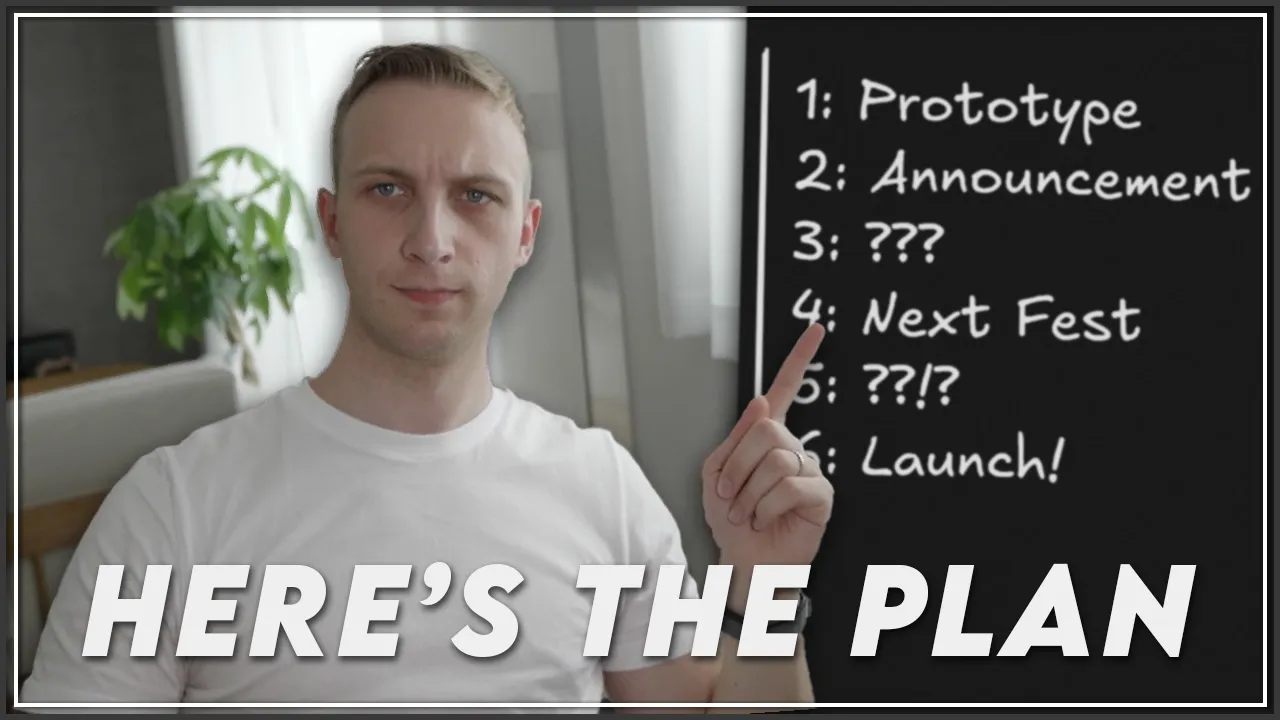
So I figured that for once and for all I should answer that question of like, hey, what are we supposed to do in terms of marketing? And this is kind of my full marketing timeline of like if you come and ask me like, "Hey, what should I do?" These are going to be all of the steps that I'm going to ask you or like tell you to do basically during the entire process. Uh I want to get a few things out of the way. First of all, yeah, you're making a game.
This timeline is going to be based around a six-month development cycle, assuming you're kind of like part-time or if you are full-time, 3 to four months. So, I'm going to be using different weeks as like the markers here of how far in the timeline we are. One thing to keep in mind here is that what we're going to be talking about in a second in game development is kind of like an accordion like you know the the musical instrument and in this example as well like the first four weeks and the last four weeks of the whole timeline they're kind of fixed like you cannot really condense them that much.
Some things just need time like for example Steam page approval and all of those things but everything in between basically that's your development time where you're actually working on the game. You can stretch that out or you can squish it in. If you only have 3 months for example the first four weeks and the last four weeks they kind of remain the same but you just increase or decrease the development time in the middle.
So if you're like hey but what if I have a sevenmon development timeline you just kind of stretch the middle part. All right so anyway with that out the way let's go ahead and talk about the actual timeline. And we start, of course, with our prototype, the milliondoll game idea. That's question number one. Of course, figure out what you want to make. We've made some other videos about this in general. The main thing is, okay, is this an idea that you think has potential?
That's number one. If you think the game doesn't have potential, you know, we're going here for commercial releases as well. If you don't think there's potential, well, then maybe we don't need to pursue this right now. Something I am a very, very strong proponent of is that you should always do visual first prototyping. Visual first prototyping means that hey no gray boxing at all. Always use some sort of assets, asset packs and all of those things.
Most of the time you have like 500 humble bundle assets you have anyway. Use those even if it is not the final art style that you are looking for. Having something that just looks better than just simple cubes is going to give you a much better idea of hey does this game actually have it have whatever it takes to be a good game or not. So keep these visuals in mind. You can update them later on still, but you need to have some level of visuals.
The next thing you need to do is also determine the fantasy. I mean, this doesn't mean, oh, you can only make like fantasy RPG kind of games, but the fantasy here is that in the prototype before you actually even almost write a single line of code. You should already know kind of what's the pitch for this game. What's what's special about it? Instead of thinking about the features, think about, hey, what are you actually going to be doing?
Are you going to be fighting big evil monster and saving the world? Or is it something like more mundane almost like you're doing a regular job? You have a kind of fantasy in your game and you need to know what this fantasy is early on in your development already because this is going to determine kind of how good or bad your marketing is going to be. All of the marketing we're going to be talking about later on is going to be influenced by what we're doing here.
The idea, the visuals or like the visual idea, and then the fantasy. those three things, the fantasy is going to communicate with people. This is what we're going to be doing. This is kind of the vibes and all of those things. And I think a really good way to figure out if your fantasy is strong or not, is try to write your sample 300 character Steam short description. And that one, if you are just like describing the game, you know, probably you need to work on the fantasy whereas, hey, if there is actually something cool here, then okay, the fantasy is strong here.
And we're not just describing features, but we're actually describing how the player will feel and what you're going to be doing during the game. It's a little bit of a a wishy-washy thing because it's like, oh, what what the hell is a fancy? But I hope this already makes sense. Once you have that prototype idea, you start working on it for about one week, I would say. And that's when we get to here, this point, week number one, is there potential?
And I'm already going to say this here, my timelines, I have a bit of a different approach than most game developers and most common knowledge, but that's why you watch bite me, right? because you don't want to know what what Chet CPT is going to tell you. Um, here is what I would do. I would commit on a game by one week. By week number one, I would already know, yes, this game is going to be the game I'm going to be spending the time on or not.
That's part of the benefit of like the small games approach. It's like, oh, assuming you're doing this like full time. It's like, oh, worst case, we're down three months. We we spend three months on a project that maybe isn't a million-dollar game after all, but in the grand scheme of things, a three-month development cycle, you can still be working on a game that maybe you're not even mega excited for or that might not really pick up that much steam after all.
Doesn't really matter because the the total cost of your time and and potential assets and all of that is going to be so much lower. Yeah, if you want to spend three years on the game, you want to be really solid about that prototype and all of those things, but we're not really doing that. we're spending 3 months, four months on it and you know if the game isn't that great, yeah, so be it. Um, so I decided really early on already, does this game have potential?
Yes or no? And you can do this by doing some private play tests, not public, just private ones. And this is a hard part, but you know, for me, this is easier to say now. It's like kind of you will get a level of experience as you release more games and you also need to release some stinkers to get better at identifying the stinkers of like does this game feel good? And feel good doesn't just mean like game feel but like does working on this game feel good?
Does does showing this game to people feel good? Does this game feel like it belongs on Steam? Does it feel like you know oh this is something that that actually makes sense? And this is a bit hard to say. There's no real like KPIs I would say that there are in terms of determining potential because you are still pretty early on in development. But it is something that I would keep in mind. And another question you can also look at is like oh are there any upcoming festivals that match like for example there's a lot of people right now working on like shopkeeper inspired games because Steam is doing a shopkeeper festival at the start of January.
Does this game actually have potential? Should we move on or or should we do something else? Um and then yeah depending on yes or no. If there's not really that good of a feedback from the private play test, you don't really feel like super confident or whatever, you know what, you know, no the we just go to a new prototype. This this no answers kind of the does it feel good. Uh and if it is feeling good and you like, hey, yeah, actually I think this is a good game idea.
Honestly, I would already start working on the Steam page. Get the Steam app credit. Register for Steam NextFest already. You don't need to have your Steam page public or anything like that. Register right now. Okay. the mindset that I've had or like the the the change kind of in the last one year, two years for us is that at the end of the day and and you know this might be entitled but keep in mind this is coming from someone who runs a studio full-time a steam store credit just the credit itself is very cheap in the grand scheme of things.
Your time is going to be so much more expensive even in a three-month development cycle than the 100 bucks you need to put something on Steam. I think we have about a 60% publish rate on our Steam app credits. As long as also your uh store page isn't approved and isn't public, you can reuse your Steam app credit if you're like, "Oh, actually a week later you you run into some more problems and you're like, "Hey, this isn't even a waste." I'm very bullish on just speed and momentum and having that Steam page ball rolling early on is important for me.
So, start working on the Steam page, get the Steam credit. If you go to bmg.y/steamage, yt/steam page. I also have this checklist for you that's completely for free that's kind of like here's everything you need to have for your Steam store page like what should you do um how should you get your Steam capsules and all of those things. Take a look through this check every single box you have basically on here and then basically your Steam page is ready and it's going to be as good as it can get basically.
So then week four we do the announcement and we do the play test. So, one thing that I I want to say here and what I think you should do here is up until this point, like kind of until we're in week four, we only keep this game on the download. So, that's what I mean with also you need to know yourself like does this game feel good. We're not posting on X or anything yet or or on Reddit with like showcases. We're waiting until the Steam page is actually live.
There's there's a lot of like thoughts of like, oh, my games are going to get cloned and all of those things. Then I do think to a certain degree, yes, your games might get cloned. I think you can just speed up basically fast track when you announce your Steam store page and then just announce your game early on with the Steam page alongside of it because like I said, the cost of a Steam page in the grand scheme of things isn't that high.
You need to keep keep in mind that if you make just a,000 bucks, you're going to get a hundred bucks back. And your games, they have such a much higher ceiling than a hundred bucks you spend into it. I think feeling stuck like, "Oh, no. The $100 is a high amount of money is going to limit your growth as a game developer." I know I sound like a crazy guru or something. What's next? I'm going to tell you how you need to buy my course maybe.
Um, but yeah, week number four is when we're going to be looking at putting the Steam page live. I think also because we are doing this visual first prototype, making a Steam page and a trailer actually is pretty easy because you already have an idea of the visuals. If you start the first month of your prototype and then development with only gray boxing, yeah, you cannot make a Steam page because you have no visuals.
Starting with the visuals from the start makes it a lot easier to work then on immediately going from that that simple prototype to, hey, here's the actual first version of the Steam page, announcing it, doing a play test and all of those things. So, I actually have a few things listed here. Okay, Steam page goes live. And once the Steam page is live, you can talk about your game as much as you want also on like socials for example of like X and everything like that.
A big one. I think the most important beat with your announcement is the trailer. The announcement trailer, I think, is extremely important because kind of there is nothing else to play for the most part for your game, especially if you are not able to do a play test, but an announcement trailer can still blow up really high. It's also the first time your game is shown to the world, which generally gathers more hype from like press or trailer outlets or people in general because they haven't seen your game before yet.
Uh, you also can do press outreach because once again, press doesn't really need something playable. they just need something to talk about and you can run your own short forms and and show social content. I would generally say try to do like two weeks of like short form uh around the announcement where you talk about your own game to kind of figure out okay does short form make sense for my game yes or no. Uh same thing with like socials like does this game match on so on on uh social media or is it more of a a game that sells through the demo so to say like the demo is more important is it short form that's important all of those things and then I think another very important thing that if you can do this you 100% should do this uh it's just impossible if you're an Unreal dev basically is to coincide the announcement with a first play test a first public play test where you immediately make people play the game.
This also gives a better like conversion like the the next step isn't than just like announcement trailer go to the Steam page and wish list it and forget about my game but it's hey announcement trailer go to the Steam page wish list it and then play the game and already give me feedback and figure out okay this game is going to be for you. People who play your play test from the start basically are going to be following you throughout all of development because they most likely are way more invested and interested in the game.
So having that play test early on is good as well. Now, you might be wondering, hey, how do I do this press outreach and uh sort forms and all of those things? You're you're kind of stuck on on what to do. I have made a little kit as well if you go to bmg.t/announcement um where we talk about basically all of the the formulas that I have for how do we make wish lists for our games? Basically, the first two weeks of your announcement, how do you get the most out of that?
You get all my templates, you get all my contacts, all of those things. I think it's really worth it. Right now, we're at 12 12 ratings, five stars. I announced this just a few days ago. So, actually there is also just a a large discount going on right now. So, you can pick it up pretty cheap. Anyways, what did I say about gurus and selling courses? You know, you're welcome. Let's head on over. Week number eight, demo.
Um, this demo, I think once again, a lot of games sell through demos. Something that the developers also need to understand is that Steam doesn't really push your game if there's nothing for for users on Steam to do. So, they they say like, "Oh, I announce my game on Steam." And nothing happens. There's no traffic, there's no nothing. And that's completely normal. Steam doesn't really give you any visibility when you just announce your Steam store page.
You have to bring all the traffic. It only starts to change a little bit once you have a demo because once you have a demo, you can actually start getting suggested in more places on the Steam marketplace like Steam storefront. I guess you can start um joining more visibility like festivals and all of those things. you will just get more visibility and traffic once you have a demo, which is why I think the demo is pretty important.
And I would look at having a demo at around week eight, so two months into development at this point. Remember, it's an accordion. So, if you're doing this full-time, you might be able to do this a bit quicker. And this is kind of just an expanded and improved version of the play test. So, if you can make a play test in week number four, you're going to get a bunch of feedback anyway. That's how we do it as well. And you just take that feedback, you improve upon it, and you start working towards making an actual demo.
Now, for the demo, I would say look to aim for around 30 minutes or more of content. This depends a bit on your genre. You know, if you're making a linear narrative- based game, 30 minutes of content is kind of hard. If you're making something more vocalizy or or incrementally with with lots of like replayability, then 30 minutes is going to be fine. The reason why you want to have these 30 minutes of content at least is because of content creators.
Now that there's actually something playable, YouTubers and streamers and all of those people can actually play their game, can actually play your game and then show it to the rest of the world on their own YouTube channel. So that's why I think the demo is a pretty big marketing beat because this is the first time you can really leverage like the wide amount of content creators that there are because for any single game and any single genre, there's like hundreds of content creators who can cover your game, but you need to have something that they can play as well.
Uh, once again, I have a ne a neat little resource. If you go to bmg.yt/demo, I have a second checklist for you. This is also a video if you want to learn more about that of like everything you need to know about making your own demo, everything that you need to have feature- wise and and all of those things. And then coinciding with, okay, I'm going to release a demo over on Steam and I'm going to reach out to content creators.
You also want to make just another release trailer, the demo release trailer to show, hey, once again, here's something people can talk about. The demo is out now. you you use like some more updated footage. You also iterate on okay what did people like and not like about the previous version of the trailers. I think trailers are an extremely important thing because they are kind of top offunnel traffic. I don't know if you're into like marketing.
A trailer is kind of one of the lowest stakes things someone will watch of your game before they decide, oh actually I want to try this yes or no. And a trailer is a video and videos speaking from a YouTuber are very algorithmically challenged. Meaning that sometimes you get lucky and sometimes you don't. And sometimes you release a trailer and it's going to get 200 views. And sometimes you're going to release a trailer like we did and it's going to get 200,000 views.
And maybe the first trailer doesn't get 200,000 views, but the second one does. And the more trailer beats you have as well, because most of these ones, like announcement and then the demo, and we're going to talk about a few more beats can all have a trailer attached to it to just kind of have a little bit of a more updated like shooting some new shots in the like full trailer, maybe showing a few new features. You don't need to like start to finish, make a whole brand new trailer even. and you can just update certain segments and just use only those already.
So then we get to week number 12 to 22. Um this is kind of it it depends on on where you are in your development timeline. But that is next fest. I think next fest is a a non-negotiable for I would say 90% of games even more than 90%. Always try to join the Steam NextFest. Um this might be in week number 12. This might be week number 22. I wouldn't join a Steam NextFest later than week 22 out of the total development cycle basically because you still want to have like a little buffer period between the next fest ends and then give it like a one or two weeks before you actually release your own game as well.
Some games they can also release right after next fest, but it's a lot more high competition. So I would give it a little bit of a time between next fest ending and then also the the full game releasing because also once again there's an extra marketing beat in releasing and we don't want to coincide to marketing beats at the same time. So flexible date depending on the calendar. There's three next fests every year. One in February, one in June, and one in October.
You can basically from the moment you figure out when am I going to start prototyping, you already kind of know, oh, this is going to be the next next fest that I'm going to be joining. So for example, if you start prototyping in let's say January, okay, yeah, the February next is going to be too early because we're not going to be 12 weeks in at that point. But the June next is actually going to be a good fit. We're going to do it more in like week 22 basically and then release shortly afterwards.
Content creator outreach. Another very important one. Even if you don't have a major update to the demo, everybody you reached out to here for the actual demo, reach out to them again 3 weeks before the Steam Nextfest. Steam next is a great reason for them to play more demos, but they get a lot of demos sent to them. So you need to be at least two weeks, ideally three weeks in advance that you send out your demo build.
So this is what I would generally suggest also is to have a a nextfest demo which might be a little bit of an updated bigger version compared to the regular demo and you give them release date override keys for the demo so they can play the demo early already and you give them more of an incentive to actually want to play your game. Uh and then depending on how much time you have, if you release the demo right before NextFest, then this one doesn't make sense.
But if you have about a month minimum between the first version of the demo coming out and then the the next starting, I would suggest, hey, you know, like I said, trailers are cheap to make. Why don't we make an update trailer? Maybe you don't even have many major updates, but still you make a trailer that you make go live the moment that Steam Nexus starts to kind of try and push some more traffic again. Be like, "Hey, we got your feedback from the first version of the demo.
Here's what we changed." Or not like, you know, it's not like a develop, but like take some feedback from what you learned from the demo. make the game better. You're going to have made the game better most likely as well. And show those changes, show those improvements in the new NextFest trailer as well. Send those out to like trailer aggregators and all of those things as well. And it's it's such a lowc cost thing because it's just making a trailer which takes like a few hours less even because you're just updating a few shots and then sending out some emails and that's it basically.
Then 16 weeks out, it's time to make our release date public. So, Steam changed this um a few months ago from when I record this where now there is the personal calendar which starts about 7 weeks in advance. You know, you want to be maybe a little bit earlier, like 8 weeks or something. You want to make your Steam release date public. Something I didn't mention actually, but all of these previous steps like the demo and and these trailers, we don't announce the exact date yet.
You might already know what the exact date is going to be that you want to release. Maybe you already know, hey, I want to release December 12th or whatever, but you don't put that public yet. You only put it public 8 weeks in advance, eight or 7 weeks in advance because then is going to be the point where you will start getting covered by the personal calendar. It used to be before um you could do it like 2 weeks in advance before there was personal calendar.
Now you can only really join the personal calendar if you have the exact release date set. So set this about 7 weeks in advance. And then you make once again, you guessed it, another trailer, the release date trailer. And here you have a call to action CTA at the end that specifically says out December 12th or whatever other date that you've decided. And it's kind of locked in from that point. Before then, you just put like releases December or Q4, like a more vague term.
Do not launch your Steam page with already the release date public. I don't think you should do this. It's kind of just throwing away needlessly a an extra marketing beat. And then you can also do press outreach once again. A little press release of like, hey, this game just announced their release date. Uh it's this period relatively low cost once again. And and kind of just the thing of like, hey, you might be wondering, brother, you have been doing press outreach for so many marketing beats at this point.
And you know, the secret is let me tell you this in a full screen. You cannot do too much marketing. This is kind of the bare minimum that I would say this this video. You can do more than this. You can join more festivals. You can make like short forms every single day throughout this entire timeline. This is just the bare minimum. But if you want to do more marketing, do more marketing as well. So don't feel bad of like, oh, I I've sent press like four emails at this point.
Aren't they going to hate me? And the answer is no. They're just doing their job. It's it's part of how the ecosystem works. So then week number 22, going golden. This is less of a marketing point. I would say it's something I just want to yell at developers for as well. Stop adding features. 22 weeks. So, so kind of two weeks before the game actually comes out cuz we're looking at a 24 month uh 24-we dev cycle. The game the game should be near done.
And this is the point where once again you're sending early full release versions of the game to content creators. So, not the demo anymore, but the actual full game upon release. Send it to them earlier in advance. Send it to them about 2 weeks. I would say this is enough time for them to play the game, to make an an edited video, to put it in their upload schedule and all of those things and and just give them some time to do it so that most likely a few days before the game actually comes out, content will start hitting the YouTube feed and then people will once again go and wishlist the game because they're interested in it.
And of course, you don't want to send them a half buggy, half unfinished build. So ideally, even before week 22, you stop adding features and you just start focusing on bug fixing and quality of life stuff and all of those things. Something else I don't really mention in here, but also like this is kind of the point where you want to finalize your localization because you're not adding more features, which means you're probably not adding more text in like English, like the base language of the game.
So, you can wrap up localization. Make sure your game is localized in as many languages as possible because the more languages you have, the more potential like player base you have as well. This is another point where I would say try and do some more short form content. Again, like the the two weeks where you're not actively developing a full game anymore. This is kind of the final sprint where, hey, let's just throw everything in in the kitchen sink at marketing again.
Make some Tik Toks, make some short form content, all of those things. If you want some formats, again, uh the Steam announcement kit, this one actually has a a whole bunch. It's even more than 15 kind of like templates and examples of like, hey, these are like formats that convert well. Go and replicate them. Here's how you replicate them yourself. And then also bundle outreach. This would be a point where I start looking at games similar to mine or similar to yours basically and be like, "Hey, these games have similar art styles or similar genres or something like that and they're releasing around the same time or they're really big and have already released.
Let's see if we can reach out to the developers and then try to bundle with them." There's a video that I've made about that as well. I'll link it up there. Uh something should be a little dot that shows up that talks a bit more about how you should bundle and things to keep in mind. And then finally, we get to the release week 24. Remember, it's an accordion. Make it bigger, make it smaller. Again, you knew it. The moment your game is out, you have another trailer.
So, you you know, you make the trailer a few days in advance and you just schedule it. The moment that your game comes out, the trailer goes live. As well, the call to action here is very simple. Out now, buy now, something like that. Just show that, hey, the game is out right now. I would say out of the like tier list of importance of trailers, the announcement trailer is number one and the release trailer is number two.
And the other ones, like for example, next update or demo or for example the release date, they matter a little bit less. But I would say especially the release trailer and the announcement trailer, those are going to be the two ones that have the kind of the most hype surrounding it. Uh because one of them is brand new and the other one means like, oh, the game's out right now. So especially these two, you have to do them, okay?
There's no other option. Also, go on social media. Once again, this is posting on Reddit on XD Everything app. All of those things. And then a final thing which is like it may not seem like marketing but I actually think developers need to do this more is the moment your game is out already go into Steamworks and schedule your discounts for the next half year because these actually will make your game sell quite a bit scheduling your discounts because every time your game goes on sale all of your wish listers will get notification all of this schedule with discounts for at least 20% otherwise they will not get the notifications but do that as well the moment your game releases cuz you're kind of still in that mindset of hey I'm working on this game if you need to remember it suddenly like a month later of like, oh yeah, right.
I need to go and schedule my discounts. You're going to forget it. Just schedule it from the start, but you can only schedule discounts once the game is actually out, which is why I put it here with the release. And then finally, yeah, we come to profit where you now have a game that's out and should most likely be marketed pretty well. Now, of course, I'm going to just say it one more time, the the marketing is just a multiplier for the base game or like the base game is the multiplier for the marketing.
If you have a good-looking game with a good hook and a good fantasy, everything else mentioned in this list is going to be kind of easy mode where all of your trailers are going to hit. All of your social media is going to pop off and all of those things. I think a good example of this is the sir, we have an orc problem where their fantasy and their visuals were so strong that they could kind of do whatever and would already pop off on marketing.
So the more marketing, you know, the the more wish list they got as well basically. Whereas, if you have a game that kind of doesn't really look good, it's all AI generated graphics and all those things, you can do everything on this list and you probably won't get that many wish lists because the game isn't good enough yet. So, if you want to get an idea of that one, again, it's the ship it or skip it. I'll link all of the links I mentioned as well down below as well, the checklists and and all of those things.
But, I hope this already gave you a bit more of an idea of how should I actually market my game. Don't wait until the very end of like, oh, 2 weeks before launch, I have 200 wish list. What should I do now? because most of the time it's going to be too late and you can't recover from that. I do think that marketing is more of a spike thing. So if after you do your announcement, for example, your wish list go down to three a day, don't panic.
Wish lists are not something that there's like a baseline of, oh, you need to get 50 wish list every single day. No, because you're going to get way more out of like a spike of, for example, like personal calendar suddenly giving you 5,000 wish list in a single day or someone on on XD Everything app reposting you, then it is going to be like a steady stream. So, don't worry about the steady stream. Focus on getting those peaks, those marketing beats as high as possible.
So, that's all right to say. If you're new here, we upload two videos every week where we talk about how we run our own game studio and how we're on the journey to build a million dollar studio ourselves. So, if that's something you're interested in, then be sure to head down below and subscribe. That's all I had to say. See you guys in the next one.
The words are the caption track's own and nothing is reworded or re-transcribed. Paragraph breaks are placed between sentences so the text reads as prose.
Free tools for your own script. No signup, no login.
Paste your draft and see where viewers are likely to drop off, with a rewrite for each weak line.
Paste the first 30 seconds of your own draft for a hook score and rewrites.
Check your draft against YouTube's advertiser-friendly guidelines before you record it.
Read this channel's public videos and transcripts, and download a writing brief for it.