Getting the transcript
Reading the captions from YouTube. A video nobody has opened here before takes 10 to 30 seconds; this page fills in on its own.
Getting the transcript
Reading the captions from YouTube. A video nobody has opened here before takes 10 to 30 seconds; this page fills in on its own.
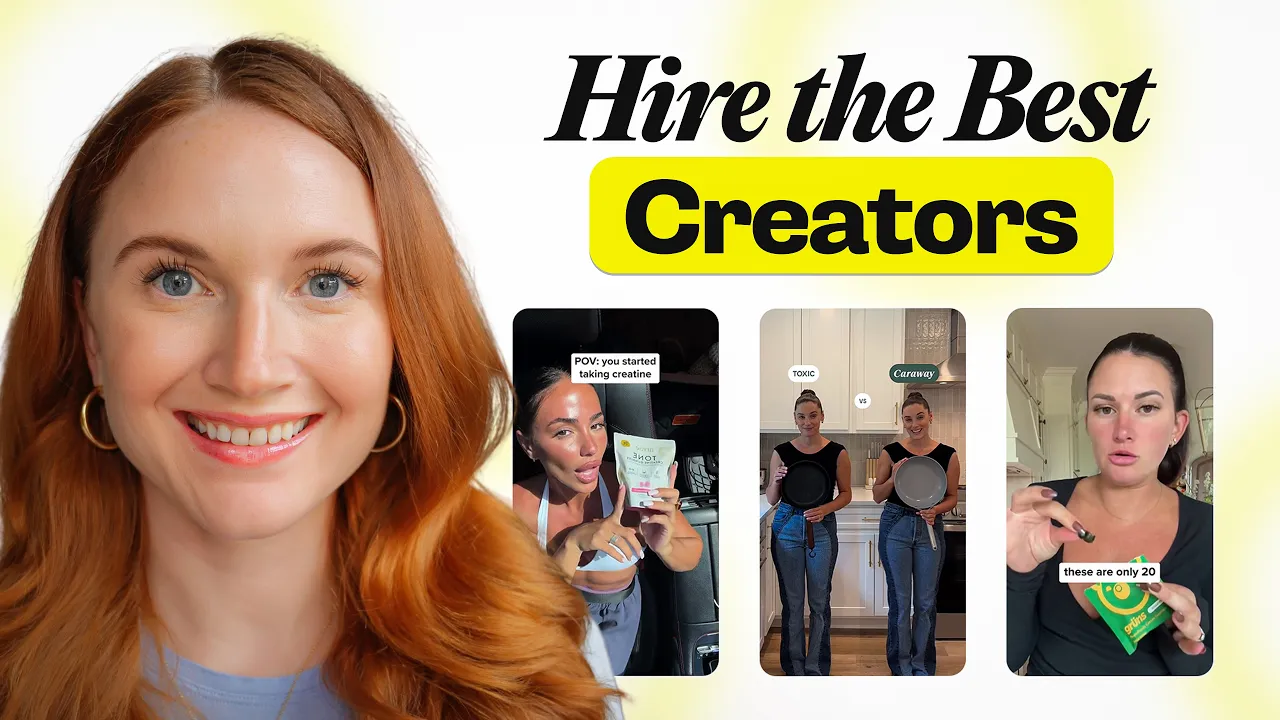
Dara Denney · @DaraDenney
This video has no Most replayed graph yet: YouTube shows one only once a video has enough views. These are the moments viewers replayed most in Dara Denney's most watched videos.
Most replayed moment at 1:55
4.1x that video's typical replay level
different parts of your computer and different apps, you're going to have to give it access through connectors. And for everything that we're going to go through today, make sure that you at least have Chrome connected as well as Slack. Now, let's dive into this first one, analyzing ad libraries. Now,
Said at 1:49
Most replayed moment at 14:54
4.4x that video's typical replay level
like to use it in addition to this is right here. First, what you're going to do is go to Claude, and you're going to export your brand brain, and any other context documents that you have. If you don't have that yet, here's a really great prompt that I use for all of my
Said at 14:46
The graph counts replays. It does not show where viewers stopped watching.
Words
5,336
Runtime
27:17
Speaking pace
196wpm
Reading time
22min
196 words per minute, between the 181 median and the 201 75th percentile of 349 measured videos. That distribution comes from the 349-video hook study.
Opening (first 30 seconds)
So, this is how you should be working with creators in 2026. In the last 10 years as an advertiser/creator, I have literally seen it all when it comes to this [music] business. I have personally reviewed thousands of pieces of UGC influencer and celebrity content. I even created the UGC department at a big performance agency. And I also did celebrity briefing at a 9 figureure brand. And I'm an influencer myself if you haven't noticed. So today it takes me about 2 seconds to know if a brand has actually found the right creator or if
98 words, the words spoken in the first 30 seconds at 196 words per minute.
Free, no signup. See how the first 30 seconds hold attention, with rewrites.
Sentence shape
| Measure | This transcript |
|---|---|
| Sentences | 299 |
| Average words per sentence | 17.8 |
| Longest sentence | 54 words |
| Questions asked | 27 |
| Sentences containing a number | 24 |
Most used terms
Filler phrases
168 in total: like 96 · actually 34 · right? 17 · you know 9 · kind of 7 · um 3 · literally 2.
A literal whole-word count of the same phrase list the Prepublish browser extension uses, so a phrase inside another word is not counted and a phrase used in its ordinary sense still is. It is a count and not a judgement.
What this transcript is
Every word below is the caption track YouTube publishes for this video, pulled from the video itself and reproduced unchanged. It is not Prepublish's writing, not a summary, and not a re-transcription: it is the video's own published captions. English captions, generated automatically by YouTube, in the video’s original language. Source: the video on YouTube. A channel that would rather this page did not exist can ask for its removal through the contact page, and it is removed.
So, this is how you should be working with creators in 2026. In the last 10 years as an advertiser/creator, I have literally seen it all when it comes to this [music] business. I have personally reviewed thousands of pieces of UGC influencer and celebrity content. I even created the UGC department at a big performance agency. And I also did celebrity briefing at a 9 figureure brand. And I'm an influencer myself if you haven't noticed.
So today it takes me about 2 seconds to know if a brand has actually found the right creator or if they were just optimizing for volume, which yes, there is sometimes a case for that and we're going to talk about it. Now, finding the right creators is both a science and [music] an art. But I often find that when content doesn't perform, creative strategists or founders are really quick to blame the format, the brief, the hook.
But nine times out of 10, [music] it actually comes down to the creator. It is so vital moving forward that brands get their creator programs unlocked. And that's exactly what we're going to talk about today. So in this video, I'm going to show you exactly how I source for creators. Break down the difference between UGC creators, influencers, and celebrities. And yes, there is a big difference, how I find [music] them, how I evaluate them, how to brief them, and ultimately how to manage your program.
So why creators now, right? I'm not going to give you the same type of cliches that we've heard adnauseium on LinkedIn and Twitter. things like, "Oh, people need authenticity in the age of AI," or, "People want to buy from people." All these things are true, right? But they've been true for years. But I think the creator conversation is really booming again, particularly in paid social, because this is truly the format that unlocks performance and scale for brands.
And when I was at the performance summit this year, again, they said, "Hey, the future of selling is going to be done primarily by creator content." So brands really need to understand how to develop their creator program now. And the thing that a lot of creative strategists don't know is that there is an algorithmic reason for why partnership ads and creator content outperforms everything else. So number one, partnership ads actually reach net new audiences.
So every time you are activating a piece of creator content via partnership ads, you are actually starting with their seed audience. And I know I can already hear your objections. Oh my god, what if we're working with a small creator? Does this mean that smaller creators don't work? No, it is starting with their diehard cheerleader fans and then is creating essentially lookalike audiences or people that look like them based off that.
But this is really really valuable for brands, especially brands that are at a certain rate of scale who are reaching the same people over and over again with their existing pixel. Because what I often find is, okay, you have a brand spending a few million dollars every single month. you multiply that by a few years, the algorithm is going to be dialed in on a very specific individual and it's kind of hard to break out of that.
Another thing to note is Meta's Andromeda algorithm, right? This is hyperpersonalized personabbased targeting. And again, if you are having a hard time reaching net new audiences or reaching your destined or best performing audience in general, you are likely going to get it more effectively and efficiently via creator. Now, Meta knows all this. They see it on their backends and they're actually developing products that help support this simple fact, which is why you're going to start to see over the next few months a lot of creators starting to put product links directly inside of their reels.
This is Meta's new affiliate program. Kind of like Tik Tok shop, but directly in Instagram. All of these things are connected. And if you want to have a shot in hell in winning meta ads over the next few years, then you need a creator program. Okay, so let's talk about the difference between UGC creator, influencer, and celebrity. I think this is a much better classification than micro, nano, macro influencers because those are all based on follower account.
Again, due to the hyperpersonalized nature of Andromeda, now follower count truly does not matter as much as it used to. It's mostly about developing content that actually has the biggest TAM. And you know, just something to note, Meta has admitted they are prioritizing great content coming out of new creators. Now, the reason why I like to think of this classification, right, is because I think it actually boils down to how these different creators cultivate communities, and just hold on for a second because I do think that this requires a little bit of an explanation, but it's really worth it.
So, the way that these different groups cultivate communities is really different, and you're going to be able to really see which one they are based primarily on the comments. Now, the way that I'm classifying UGC right now, these are going to be your affiliate and performance-based folks, which includes Tik Tok Shop and the rise of platforms like Tribe and Influy, but these people don't really have much of a following their own, unless it's two other UGC creators, right?
But they are mostly making content that they know performs. They are performanceonly creators. And the reason why I say, okay, it's based on like the communities that you cultivate, right? This probably has the weakest community, especially when it comes to the different types of brands that they're working with. Now, a creator is someone who makes organic content for a really specific niche. So yes, you can be a UGC creator and like a skincare creator, but if you are truly a skincare creator, then I would say at least 50 to 75% of all your content is dedicated truly to skin care and not other niches.
These are really people who have targeted the thing that they're really passionate about and are continuing to make content and like slowly working their way up to that influencer level. Now, an influencer is just simply a creator that has great influence. Now, sometimes I will see, hey, there is someone that only has 50K followers, but they have a super engaged audience. All of their videos are hitting like 75 or 100K views and like people are going in their comments and they're super emphatic and they're really passionate about what that creator is making.
That is an influencer. And it doesn't really have a ton to do with their follower count. And I know what you're thinking. What's the difference between an influencer and a celebrity? I really like to define this as someone who's gained their notoriety from outside social media and really cultivated macro communities based on that. Anceri community, right? So, think like Love Island or reality stars, right? Those are really hyper passionate communities that aren't necessarily originating from social.
So, of course, when you take a step back and you look at all of these different creators and you're like, "Hey, which one is right for me? What are the budgets behind these?" It's absolutely a sliding scale, but that doesn't mean that celebrities or influencers are automatically going to have the best performance. So last year when I did my ad spend series when I spoke with both Pacted and Carowway they said hey actually it's more the smaller influencers/UGC creators that actually do a lot better for us when activated on partnership ads.
However, when I spoke to Cody from Jones Road Beauty, he actually said that the investments they made in more of the higher level influencer/ceelebrity deals, those did better for them. When you think about this logically, the reason why is because beauty is quite a bit more competitive. So that's something that I always like to think of too when I'm developing a creator program for a brand. How competitive is their market because that means that we might have to buy some more of that additional trust at scale with a bigger influencer or a celebrity.
Okay. [music] So what makes a good creator? I can generally tell if a creator has it within the first 2 to 3 seconds of watching one of their videos. So, let me actually just show you a few examples. We're going to break down what's going on here and pull out learnings from every single one. Okay, I love this creator. For the girls in my DMs who needed to poop and you might have seen my real and I was eating those gummies that make you poop.
I got you, girl. I take grooms every single day. Scouts honor her every single day if I do not. I've showed this ad like a million times because I think it is so good. This creator has amazing energy and intonation, right? At some parts of her script, she speeds up. Sometimes she slows down. She has great vocal variety, which is something that I don't hear a lot of people talking about, but it makes her really engaging to watch and you know, the vibe is like super girl talk because she's talking about.
Now, another tool that we're testing out right now to help us evaluate creators and influencers is Mod Dash, who is also the sponsor of this video. So, we actually made a pretty big pivot at the agency recently. We've decided that we really want to work with more established creators and influencers for a number of the brands that we work with to activate on partnership ads. Now, I know I sang the praises of the Meta Creator Marketplace recently, but there are a few things that Modash can do that the creator marketplace actually can, especially if you want to invest more in your creator program and ultimately work with bigger creators.
Now, the first thing that I really like is that Mod Dash can actually flag the percentage of fake followers, which is huge. I hate to admit it, but I can't tell you how many times I've seen a creator that I really want to work with or a brand really wants to work with and we'll go to see how many fake followers they potentially have in Mod Dash. And it is significant and [music] it's a reason why we decide to not work with them because a lot of times creators are still going to charge their price based on their follower count.
But if over half of them are fake, then this is a signal that we probably shouldn't work with them. Another thing that Modash can do is it can actually help you project manage your entire creator program with an email inbox, automated tagging, and even help you grow your affiliate and gifting programs. And two other things that I really like as well, both as a creator and an operator, is that number one, it also tracks the performance of your campaigns, which means that you don't have to bug a creator to send over screenshots, which yes, I am still doing for a number of brands.
And you can do global payouts to any creator in any country, in any currency. Really huge for my global brands. At the agency, we've actually had a ton of our clients want to activate localization. So, this has made it so much easier to know, hey, we're going to be able to pay them right through Mod Dash. To give Mod Dash a spin, and hell, I would even just take a look at some creators that you want to potentially work with and see if it's actually going to be the right fit for you.
Look at that fake follower account. Be sure to check out the link in the description bar below. You can get a 14-day free trial. Okay, let's look at the rest of this creator content. I was wearing this the other night to dinner and my friend across the table was like, "What do you have on your face? It looks so good." >> Emily Deilio is actually one of my favorite creators of all time. I love this one cuz it kind of catches you mid conversation, right?
And her eye contact, just like the way that she looks and shows up on camera. She is a model truly drags you in. There is this um phrase that's talked about a lot when talking about creators that have it. It's magnetism. this like janessa where you're like being pulled into whatever they're saying. Emily Donado has it. The >> best gift I can possibly give business owners this year is something that I should charge for and just make it free.
And so that's exactly what I'm going to do. And so my team spent 200 plus hours. >> Okay, Alex Heroszi, heart you. Something that he did really early on with his branding was that freaking nose thing, right? Which is a great branding play. Is there something special about you that you can make sure shows up in all of your content that is like a through line so that people always know that it's you? And something that I just also really like about Alex in general is his tone is always really confident and he's never trying to overcompensate for something, right?
He is a man who is like very assured in himself, in his own body, in his own business, and that really just permeates. And now I want to show some examples that maybe aren't as good. This girl shows up beautifully on camera. Amazing. But >> this is an 100% cotton t-shirt with a built-in bra. Like this is actually genius if you're trying to build a capsule wardrobe. >> She's great. But and maybe this is like the editor's fault, too.
Like going right into product features, like could be. And like maybe for this one important, but I think that the bar has really raised recently to expect a lot more energy from creators. And this one just like she's like reciting something, you know, and she's not like the engagement and like the story isn't quite there. So, this is one that I'd say, hey, this is good. She shows up great. She has a great setting. She can definitely fit the vibe of a lot of apparel brands that I know, but selling supplements, something that's like really competitive and you need to be highly engaging, like someone like this would not work.
Now that summer weather is here, I can't stand having heavy makeup on. So, if you're like me, let me put you on to my glowy no makeup routine using only four tinted skincare products from Typology. >> Again, this creator is great. Shows up beautifully on camera. Amazing for a beauty brand. But there is just a little something about her intonation and the fact that it really feels like that she's reading from a script that to me says, "Hey, this is good but not great." You're probably going to have a number of these type of ads in your ad account and like sometimes they'll perform great, sometimes they won't.
But I really do think over the next few months, we're going to start to see people that are very clearly like reading from a script have this like tenation where it's like boom boom boom boom boom boom boom and there's not much variety. People are going to register that and they're not going to be down. And then let's look at two bad examples. Oh my god, myself. Hot take. But I fear that Meta's new ad updates might actually kill your top performing creative.
But let me explain something first because this is really important. Okay, I feel like I'm a little dead behind the eyes here. I've been talking about meta ads for the last six, seven years. Like sometimes I'm not always going to be on and this is one where it's like where's the emotion? I can try. I can try and turn it on, but like there are people like Emily Donado or the Grin's creator who you're like, they're just showing up as themselves.
Y'all, I can't always show up 100%. You know, but here's an example of where I did it really well cuz I want you to see the difference side by side. If you are one of the 50% of people on my my Instagram stories that think this is a bad ad, then you are part of the problem. Let me explain. I know that performance marketing rorowaz and did this ad even make sales is very 2024 of us marketers. There's vocal variety, right?
There's a lot of like high energy, low energy. I'm bouncing all over the place with this. I did not script this. I just like went on cam and I was like, "Let's go. Let's yap." This was also like a interaction with my community, right? Like this wasn't an ad. This was based on like a good ad bad ad series that we did over on Instagram, but you can kind of see how like the same creator can have like really good performances sometimes and then, you know, not really be quite up to snuff.
And like sometimes, I'm just going to be honest, you're going to get a creator who like doesn't always have their best day on camera for you. And that is okay. That is to be expected, which is why you need to be working with multiple creators and also engage potentially in longer partnerships so that you can really get the full impact of working with a creator. One other note about Monach 2, I was actually speaking with their team recently and they flagged that a lot of times they see that the [music] best creator coming out of their brand's campaigns is actually the creator that wasn't following all of the best practices.
So sometimes what they advise brands is, hey, have you know five to 15% of your budget for every single big influencer campaign to go against your best practices, right? This could be trying a completely new demographic, going older, going younger, maybe try someone out of your niche. I love this idea, having a little bit of a testing budget inside of each campaign. Now, let's talk about all the options you have on how to find creators and influencers platform by platform.
If you are building this from the ground up, I'm going to keep it 100 with you. You're going to try a lot. And the place that you're most likely going to start, and oftent times where my team starts initially anyways is the organic social media feed. So going to Tik Tok, going to reals and really exploring your niche or the type of persona that you really want to target and seeing what type of content and creators really floats to the top.
And because we are trying to find more of that mid-range creator getting into influencer territory, we're trying to find pieces of content that hyperviral, but maybe came from someone that didn't already have millions of followers. But again, sourcing just on Instagram and Tik Tok, that's going to be a tough go. And if you're really interested in sourcing for influencers specifically, definitely be sure to take advantage of that free trial with Mod Dash so that you can take that for a spin and start reaching out to influencers that have a little bit more of those bigger communities via that platform.
Now, another option that you're going to have are the like hundreds of UGC platforms. And like to be honest, I've used them all. They kind of all do the same thing. But one thing I do want to flag is I do think that there's something really interesting going on with platforms like Tribe or Influy where creators can actually develop content for brands for free but then they are paid based on a performance model on the back end.
I think this is really great for brands who are just starting off or for brands who really want to optimize for a lot more volume and don't have as strict of brand guidelines. Another place you can look and I've had a ton of success with in the past is via actor network. So think things like backstage. Actually, when I used to manage a studio in Brooklyn, New York, we would routinely hire actors to come in and act in UGC for us.
Often times I really like working with actors in general because like they really know how to emote. So if you find like hey we keep on trying to work with these UGC creators and we've worked with a handful of like influencers and like there's like something going on here. You might want to try working with some actors. Another thing that I'll say too that my team often does especially if you want more of those like UGC really small creators is putting up a post on Twitter and LinkedIn.
This is something that we often do so that it can be a little bit more of like an opt-in process. There are really big UGC communities on both of those websites and they tend to get circulated pretty well and we've been able to find a few great gems and people that we work with routinely at the agency through making those type of posts. And then the last and final one, and I almost feel a little nervous suggesting this because it's either going to be a banger, it's going to be literally your best top performing ad, or it's going to be such a big flop, is using your own customers.
The reality is is that just like a lot of times your best VIP customers like do not know how to show up on camera and that's just a fact. That's just reality. But I have seen it work and like often times they will take it in exchange for just product. Okay, now I want to show you a real live brief that we actually used to get a top performing creative recently. I feel like I'm exposing myself a little bit, but you can see here as soon as we get into the brief, we have a description of the type of video we wanted.
We wanted a yapping video tutorial. Love it. It was a banger, so I'm really pleased. We actually weren't using a product in this, but we would have that linked and would have already sent it out. We had the reference ad. And then right here, we have the setting. Our client is really particular is what I'll say and they have very strict guidelines. So we really had to make sure that their home, their makeup, their clothing, their style, everything was like now next you're going to see the story board.
So you can see here we have the clips here, the script here and then the visual. And here we have everything really written out to a tea. We don't always do that, right? And I am going to show you an example after this of a brand working with a bigger influencer/ celebrity where the brief is a lot more open-ended. But I find that when you're working with smaller creators and especially UGC creators, often times you really do want to have those scripts on lock unless you're working with someone, you've worked with them a few times and you're like, "Wow, like they really get it.
They really understand." Let them do their thing. But otherwise, like we're pretty prescriptive with a lot of our content. And then at the end, we have the instructions to upload. So, how to upload the content right here. And then the recording guidelines, like some of it is like really specific to cameras and whatnot. General guidelines. I personally get briefs multiple times a week on potential like brand deals that I'm going to be filming.
They all say this, but like Okay. Now, in terms of working with a more established influencer or even a celebrity, I consider myself to be more in the influencer tier. Hate me in the comments if you disagree, but you know, I make most of my money as a creator at the moment. So, there we are. A lot of times when I am working with brands right now, what the brief actually is. It's a lot smaller. It'll give more details about the type of campaign that they have going on currently and that they want me to be a part of.
And what the process is is actually me sending them back my POV and script. So it's not really until you get to the higher level creator, influencer, celebrity where you can have the creator in trust write the script, send it back to you for approval, and then have the brand's input and then send it back. So 100% of the brand deals that I've done recently, they are all like that. It's like the UGC and smaller creators oftent times are going to need more of the actual script and prompting, but the more established creators and influencers and some celebrities, they're going to do all their scripting.
However, with that said, with a lot of the celebrities that I've worked with, I have personally scripted their ads. So when I had said earlier, hey, I used to do celebrity briefing for a big 9-f figureure brand. I was writing out all of those scripts pretty much verbatim and the celebrities would follow them pretty well. Um, there were a handful of celebrities that I worked with that would obviously put their own spin, but for the most part like they were following my scripts to a te.
Now, if you want to see what a celebrity brief looks like, then in the ad spend episode that I did with Cody Ploffer from Jones Road Beauty, they actually shared a recent brief that they did for their creators. And you can see, hey, there's no script here, but they do have content pillars. They have shooting guidelines. They have dos and don'ts. Okay, enough about briefing. The final thing that I want to talk about is how to build your internal creator program and also the long game of creator partnerships.
This is especially important as we are moving to the back half of 2026. So, one big change that's happened over the last year is that the churn and burn of creator relationships [music] is totally gone. And I'm really proud to say that actually the partnership that I have with Motion was one of the first of its kind in terms of a long-term creator partnership. Like me as chief evangelist at Motion that is essentially a long-term brand deal, but it is a lot bigger than me just making content, right?
Like I am constantly in contact with their team. I have a motion email. I am speaking often on their behalf. And yes, while I do have a few deliverables every single month, it is a lot more like I am on the motion team cuz I am I have a title, right? But it is for all intents and purposes a brand deal. Now, the way that this can often look like at DTOC brands, another example from the ad spend series is Caraway. They have a handful of creators on retainer that they work with every single month to supply content.
And what I actually really liked about their program is there were a handful of them that had alternative production value. So they weren't just like yapping out an iPhone. They actually had a bigger production to create more elevated UGC, which for them makes sense because their product has such a high AOV. Then there needs to be that polish so that a consumer can have that type of trust in that brand. And something I'll say too is a lot of agencies do this.
My friend Max over at Hype 10, he's actually been able to have full-time creators that essentially do UGC for their brands. So, the flow currently of our creator program looks something like this. [music] First, the strategy and the brief is going to be written by the creative strategists and then it's going to be handed off to our creator management team where they are going to source multiple creators for this brief specifically.
Now, we are always sourcing for creators for our brand. So sometimes there's just, hey, we see a creator that we want to work with and then we write a brief retroactively for them, but a lot of times we have a really specific strategy or idea that we want to test for our brand. We're looking for creators who fit that profile. And then the creator management team is going to coordinate, negotiate, set prices, set a timeline with the creator.
They're also going to handle shipping. And then once that content actually comes back, it's going to be evaluated by both the creator manager and the creative strategist to make sure that they have everything that they need. And then once that is approved for the raw content, then the creator is going to get paid. And I'll say we tend to pay our creators anywhere from $250 for raw content up to a,000 depending on the caliber of the creator.
And of course, if we're working with a bigger creator or an influencer, like we're going to be paying a lot more. I will say when I've worked with celebrities, too, we were paying anywhere from 5K all the way up to 60, sometimes 100K to work with certain caliber of celebrity and it was worth it. I know that, you know, if you haven't been in that world and you haven't worked with creators and celebrities of that caliber and you hear these numbers, you're like, "Oh my god, how could it ever be worth it?" With the economics of scale, I assure you that it is worth it and you kind of just become desensitized to these numbers.
It's pretty standard to be honest. Like even when I was working for the big nine figure beauty brand, this is pretty much how they did it. It's really just about making sure that you have those clear SOPs outlined and you are really dividing the work from the creative strategist and the creator project manager. Um to make sure that you know you have someone that is sourcing for creators and then you allow the creative strategist to do the strategy.
Sometimes I see brands try to combine those roles and that really doesn't work. Okay, I am really curious to hear what you guys think about this video. If you want me to go deeper into anything that we talked about today, I would be super super happy to do it. I love talking about the creator economy and influencers and celebrities and that kind of stuff. So, if you want to learn more about how marketers can work with creators of those caliber, let me know.
I'd be happy to make more content around that. And I will see you guys soon. Love you. Bye. >> [music] >> Mh. >> [music]
The words are the caption track's own and nothing is reworded or re-transcribed. Paragraph breaks are placed between sentences so the text reads as prose.
Free tools for your own script. No signup, no login.
Paste your draft and see where viewers are likely to drop off, with a rewrite for each weak line.
Paste the first 30 seconds of your own draft for a hook score and rewrites.
Check your draft against YouTube's advertiser-friendly guidelines before you record it.
Read this channel's public videos and transcripts, and download a writing brief for it.