Getting the transcript
Reading the captions from YouTube. A video nobody has opened here before takes 10 to 30 seconds; this page fills in on its own.
Reading the captions from YouTube. A video nobody has opened here before takes 10 to 30 seconds; this page fills in on its own.
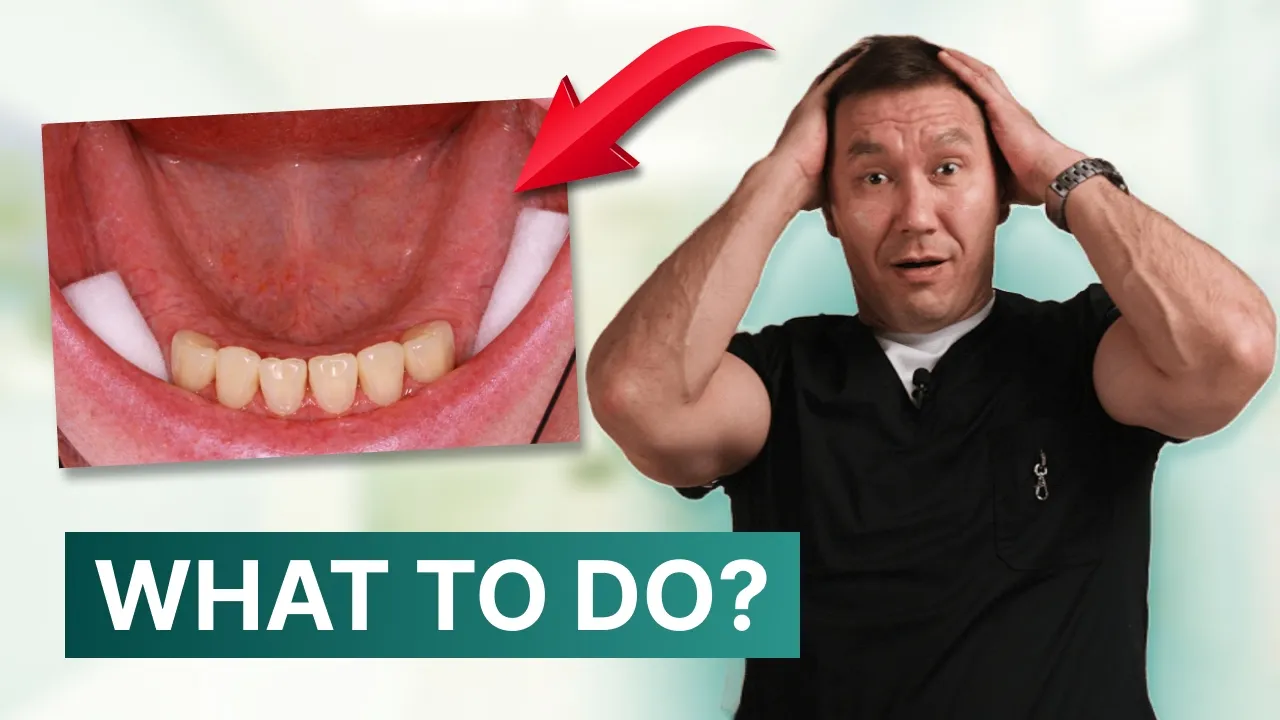
Riat Ismagilov. About teeth and implantation · @riat_eng
Where viewers went back to watch this video again, from YouTube's public Most replayed graph, lined up with what was said at that moment.
Most replayed moment #1
9:276.2x the video's typical replay level
simply snaps onto them. Accordingly, this type of fixation is more reliable. The fourth restoration option is actually very similar to all the others, and it was invented or introduced relatively
Said at 9:21
Most replayed moment #2
14:482.9x the video's typical replay level
restoring chewing teeth with implants ranges from 3 to 6 months. The cost of restoring three teeth on one side with two implants ranges from 150 to 250,000 rubles. Of course, implantation is the
Said at 14:42
Most replayed moment #3
10:142.7x the video's typical replay level
such prosthesis. These prosthesis are also called Quattro prosthesis. What are the advantages of this design? It is much lighter than a clasp prosthesis. It also has very good retention. These clasps are made from a
Said at 10:09
The graph counts replays. It does not show where viewers stopped watching.
Words
2,742
Runtime
15:45
Speaking pace
174wpm
Reading time
11min
174 words per minute, between the 160 25th percentile and the 181 median of 349 measured videos. That distribution comes from the 349-video hook study.
Opening (first 30 seconds)
There are situations when only the front teeth remain and the chewing teeth are already gone. Some people say, "I chew with my gums." Some patients say, [music] "Implants are expensive." And most often patients say that the doctor just wants to push services and make money off me. And it's at this moment that the main question arises, what can actually be done in such a situation? I'll talk about all the popular restoration options. What are their pros and cons? Many people don't even [music]
87 words, the words spoken in the first 30 seconds at 174 words per minute.
Free, no signup. See how the first 30 seconds hold attention, with rewrites.
What this transcript is
Every word below is the caption track YouTube publishes for this video, pulled from the video itself and reproduced unchanged. It is not Prepublish's writing, not a summary, and not a re-transcription: it is the video's own published captions. English captions, generated automatically by YouTube, in the video’s original language. Source: the video on YouTube. A channel that would rather this page did not exist can ask for its removal through the contact page, and it is removed.
There are situations when only the front teeth remain and the chewing teeth are already gone. Some people say, "I chew with my gums." Some patients say, [music] "Implants are expensive." And most often patients say that the doctor just wants to push services and make money off me. And it's at this moment that the main question arises, what can actually be done in such a situation? I'll talk about all the popular restoration options.
What are their pros and cons? Many people don't even [music] distinguish between them. I'll explain why in this situation people often lose their remaining front teeth and end up completely toothless. Restoration [music] options differ greatly in terms of price, convenience, and fixation. Why is it important [music] to pay attention to the remaining front teeth? And most importantly, to restore the lost chewing teeth.
Nature has created us in such a way that everything [music] is thought out and designed. Front teeth are intended by nature for biting off, tearing, and breaking food. While molars are designed for chewing food. Most often, what happens is that the teeth remaining in the mouth are the front teeth and we start chewing with them. And this is a very common statement from patients. "I chew with my gums. I don't chew with my front teeth." In reality, that's not the case.
The patient chews with the teeth that are present in the mouth. It's impossible to chew with your gums. So, the front teeth simply aren't meant for that. And if we delve a little into anatomy and even look in any textbook, the front teeth have only one root, while the chewing teeth have three or even four roots. This clearly shows that the front teeth are, let's say, quite weak for chewing. Sooner or later, if you continue to chew with your front teeth when your back chewing teeth are missing, you will, of course, eventually loosen the remaining healthy teeth you still have.
And as a result, patients end up losing perfectly healthy front teeth simply because they didn't restore their chewing teeth in time. Consequences, like the loss of completely healthy front teeth, of course, develop over the course of years. First, the front teeth begin to wear down. That is, the patient immediately notices how the remaining front teeth really start to wear away. In other words, they decrease in size.
There is a gradual loosening of the teeth. And of course, what we worry about most is the bone. That is, where there are no teeth, where teeth have already been lost, there is always bone atrophy, meaning bone loss. And later, in that area, not only will we be unable to place implants, but we won't even be able to fit any kind of removable prosthesis. That's why it's absolutely necessary to restore lost teeth in a timely manner.
Why is it that if people don't have enough bone, they can't even get a removable denture? This is precisely the main problem with bone loss and the subsequent fabrication or placement of a removable denture. That is, we have an alveolar ridge, which is clearly defined both in the lower jaw and in the upper jaw. This is the area where our teeth are located. And as soon as we remove the teeth, this alveolar ridge, which is made of bone, real bone, once we remove the tooth, this bone, because it is no longer being used and there are no teeth on it, begins to atrophy and recede.
And in fact, this alveolar ridge is initially high, but then it can simply flatten out or become so minimal that when we place our prosthesis there, it will just sit as if on a flat surface. And there will be no fixation. But the essence of prosthesis fixation is precisely this. Let's say, you understand, right? A ridge and this kind of valve. That is, so that it holds in place. That's why bone loss is really very important.
Keep an eye on this, be sure to preserve this bone, and try to restore it in a timely manner. Nature has thought of everything. Where something doesn't function, nature will definitely take it away and use it elsewhere. So, if this area isn't working, the body understands that it doesn't need it, you see? And the bone, the calcium, will leave this area and go somewhere else where it is more needed, where it is more useful.
That's why it's always like this in nature. It does not tolerate emptiness. The first option is the most traditional and the most common. This is the fabrication of a removable acrylic denture. Acrylic is commonly referred to as plastic, meaning a plastic denture that replaces the chewing teeth and is attached to the remaining front teeth with special hooks or clasps. These clasps or hooks are fixed in the specific form of very thin wire, and in this way we effectively restore the essential chewing teeth, allowing the patient to chew comfortably once more.
As for the advantages of this technology, first and foremost is the price, and secondly, the speed of fabrication. The cost of such a denture is about 35,000 rubles. As for the production time, it takes no more than 7 days. You only need to come to the clinic three times and the denture will be ready. But if we talk about the disadvantages, of course, the main drawback is the way this denture is fixed. Because if you look at the picture, you'll see that these clasps, or let's call them brackets, which are attached to the neighboring teeth, are very thin.
Of course, with constant removal and putting them back on, they simply start to loosen over time. In addition to becoming loose, they simply increase in size, and sometimes the patient tries to bend them back into shape by hand or with pliers or with some other tool so that they tightly grip the supporting teeth again. But this constant removal and putting back on causes them to loosen. Of course, this thin wire breaks and this is a constant problem.
So, overall, the fixation, the downside of this design is rather poor fixation. Although there are some patients who wear it without any issues, for the most part, the main drawback of this type of construction is exactly the fixation. The second restoration option is already more modern thanks to the use of combined materials. This is called a clasp of born removable partial denture. The difference from the first option is that in addition to acrylic and plastic, metal is used here, specifically a cobalt-chromium alloy.
And of course, such a denture is more reliable. And most importantly, these clasps, these hooks that attach to the remaining front teeth, retain their shape. They are very rigid and grip the tooth, the abutment teeth, very tightly. That is, they encircle them. And of course, the fixation of such a denture is more reliable than with the first option. I would also include the price among the advantages, of course. The price ranges from 45 to 55,000 rubles.
As for the time frame, it also takes no more than 7 to 10 days. You will need to visit the prosthodontist two to four times and you will easily restore your chewing teeth and be able to use them for chewing. Among the disadvantages, I would certainly mention that due to the rigidity of these clasps, these hooks, unfortunately, we will have to grind down two supporting teeth and place protective crowns on them. And why do we need to grind them down and put crowns on them?
Because with the constant putting on and taking off of the denture, since these are actual metal hooks, you will simply wear away the enamel of a healthy tooth. And each new placement and removal of the denture will cause constant pain, even unbearable pain. That's why, of course, we make crowns, place them on the teeth, and grind them down. And probably the biggest drawback is that with these teeth, we don't just grind them down and put on a crown, we actually kill the nerves in these teeth.
In other words, the tooth is completely depulped, as we say. We remove the nerve from it, the tooth becomes dead, and then we place crowns on it. Therefore, of course, the lifespan of such a tooth is inevitably reduced. That's why this type of construction has its drawbacks. But at the same time, as I said before, it's this reliable fixation that we achieve with this method. The third restoration option is very similar to the second one.
It is also called a removable partial denture, but with a precision attachment fixation. That is, if you pay attention, throughout all three options, we keep talking about fixation, because it is very important. It is precisely stable fixation that forms the basis of comfort when wearing the prosthesis and ensures good chewing ability. So, here everything is the same, and the only difference is that, just like before, we definitely make two crowns for the supporting teeth, also remove the nerve, treat the canal, and place the crown, but now the crown itself will have this kind of receiving part.
The missing chewing tooth is inserted directly into it and is set in place, snapping in securely. This is exactly what provides reliable fixation. So, what are the advantages? One is speed. Within 7 to 10 days, you can easily have this kind of prosthesis made. It doesn't require many visits. It's not such an expensive construction. It will cost somewhere around, well, 85 to 90,000 rubles. Those are the advantages. But among the disadvantages, as I mentioned, is the need to grind down the neighboring teeth and place crowns.
These crowns will have special attachments, and the prosthesis simply snaps onto them. Accordingly, this type of fixation is more reliable. The fourth restoration option is actually very similar to all the others, and it was invented or introduced relatively recently compared to the other options, specifically in terms of the material used. This method, this option, is called a removable dental prosthesis or an acetal removable dental prosthesis.
What is acetal? It's a material, a polymer, that is very light, yet flexible and very strong. So, just imagine we can replace the metal part of the clasp, which used to be made from cobalt chromium alloy with a cetal. So, once again, I want to emphasize that this is essentially a polymer, flexible, strong, and now they also use it to make such prosthesis. These prosthesis are also called Quattro prosthesis. What are the advantages of this design?
It is much lighter than a clasp prosthesis. It also has very good retention. These clasps are made from a cetal. This is a white material, very similar to the color of teeth, and it has a slight flexibility. So, it fits on and hugs the tooth very well and can be easily removed. So, this, let's call it flexibility or resilience, allows it to be put on and at the same time it returns to its original shape. That's a big advantage.
Another major advantage is that with this kind of a cetal prosthesis, we don't have to grind down the neighboring teeth, unlike the first option. In other words, we can leave the teeth exactly as they are, completely natural. Because a cetal, as I mentioned before, is a polymer, essentially a type of plastic, it doesn't damage the supporting teeth as much. That's why I consider this a big advantage for this type of construction.
Another advantage is the cost. The cost will also be in the range of about 55 to 75,000 rubles. The production time here is also no more than 10 days. As for the number of visits, you'll need to see the prosthodontist two to four times. The disadvantages of this design, of course, include the flexibility of this prosthesis and its lightness, which can also be a drawback. Because since the prosthesis is flexible, there is, of course, a slight movement during chewing.
In other words, sometimes the patient says, "The prosthesis moves around." Yes. Or we say, "The prosthesis is unstable." And of course, this is also a disadvantage. But not in all cases. Sometimes, as they say, such a prosthesis fits like a glove. But there are cases when patients complain that this prosthesis, due to the flexibility of its material, causes a kind of play, which, unfortunately, patients can really feel while chewing.
That is, it starts to wobble like this, the patient feels it, and this is still a drawback. And the fifth option, the most reliable, the most modern, and the most advanced, is dental implantation. That is, we place two implants and immediately fix three teeth on them. A crown is placed on one implant, another on the second, and in the middle, we have a bridge like this. So, thanks to two implants, we can replace a defect of three teeth at once.
The advantages of this technology, of course, include the fact that we do not lose bone, as I repeat, happens with removable constructions. With any removable construction, unfortunately, bone atrophy still occurs because the bone is not being used. But with implantation, we put a load on the bone and thus preserve it. Another advantage, of course, is the reliability of the fixation. This is already a reliable construction that will allow you to chew comfortably without worrying that something might fall out or not stay in place, as can happen with removable dentures.
Of course, this is a huge advantage. Essentially, you are getting fully functional teeth that you can use to chew. As for the disadvantages of this construction, of course, the cost can be considered one. That is, for most people, this becomes a stumbling block because patients say, "It's expensive." Another disadvantage is the time frame. Yes, in any case, you need to plan for about 6 months. So, first, we place the implants, the patient doesn't have teeth yet, and for 3 to 6 months, the patient just has the implants.
And only after that does the patient come in to have the healing abutments placed and then the crown. So, this process can take from 6 months, sometimes even a little more than 6 months, but usually it's 6 months. Therefore, the time required to make such a restoration can also be considered a disadvantage. There's also a very important point in restoring chewing teeth with implants. It's restoring teeth on at least one side.
That is, for example, you choose the left side and restore chewing function only on one side. You calmly have the implants placed, get the crowns, and chew on just one side. And only after some time can you move on to the other side. Why is it done this way? Because, as I mentioned, for most patients, this can be quite expensive financially and sometimes difficult in terms of timing. So, you can or even need to divide this process into two parts.
First, you restore chewing on one side, and then, after a year or two, you restore it on the other side. In this way, you properly redistribute your resources and end up with fully functional chewing teeth that will last you a lifetime. The time frame for restoring chewing teeth with implants ranges from 3 to 6 months. The cost of restoring three teeth on one side with two implants ranges from 150 to 250,000 rubles. Of course, implantation is the most modern, advanced, and reliable method.
But if you don't have enough funds, I would definitely get myself an acetal partial denture. Or at the very least, I would start with this type of denture. So, if I didn't have any teeth, I would first get an acetal partial denture, wear it for a while, and see how I feel with it, how comfortable it is for me. And if I realized that it was comfortable for me, I would stick with that denture. But if I felt that there were still some issues, discomfort, or I couldn't chew properly, then, of course, I would definitely go for implants.
I hope I was helpful to you. Take care of yourself and your loved ones.
The words are the caption track's own and nothing is reworded or re-transcribed. Paragraph breaks are placed between sentences so the text reads as prose.
Free tools for your own script. No signup, no login.
Paste your draft and see where viewers are likely to drop off, with a rewrite for each weak line.
Paste the first 30 seconds of your own draft for a hook score and rewrites.
Check your draft against YouTube's advertiser-friendly guidelines before you record it.
Read this channel's public videos and transcripts, and download a writing brief for it.
Sentence shape
| Measure | This transcript |
|---|---|
| Sentences | 183 |
| Average words per sentence | 15.0 |
| Longest sentence | 47 words |
| Questions asked | 11 |
| Sentences containing a number | 13 |
Most used terms
Filler phrases
16 in total: kind of 6 · like 6 · actually 3 · right? 1.
A literal whole-word count of the same phrase list the Prepublish browser extension uses, so a phrase inside another word is not counted and a phrase used in its ordinary sense still is. It is a count and not a judgement.