Getting the transcript
Reading the captions from YouTube. A video nobody has opened here before takes 10 to 30 seconds; this page fills in on its own.
Getting the transcript
Reading the captions from YouTube. A video nobody has opened here before takes 10 to 30 seconds; this page fills in on its own.
Mr. Z (World & US History) · @MrZHistory
Words
1,304
Runtime
7:13
Speaking pace
181wpm
Reading time
5min
181 words per minute, the same as the 181 median of 349 measured videos. That distribution comes from the 349-video hook study.
Opening (first 30 seconds)
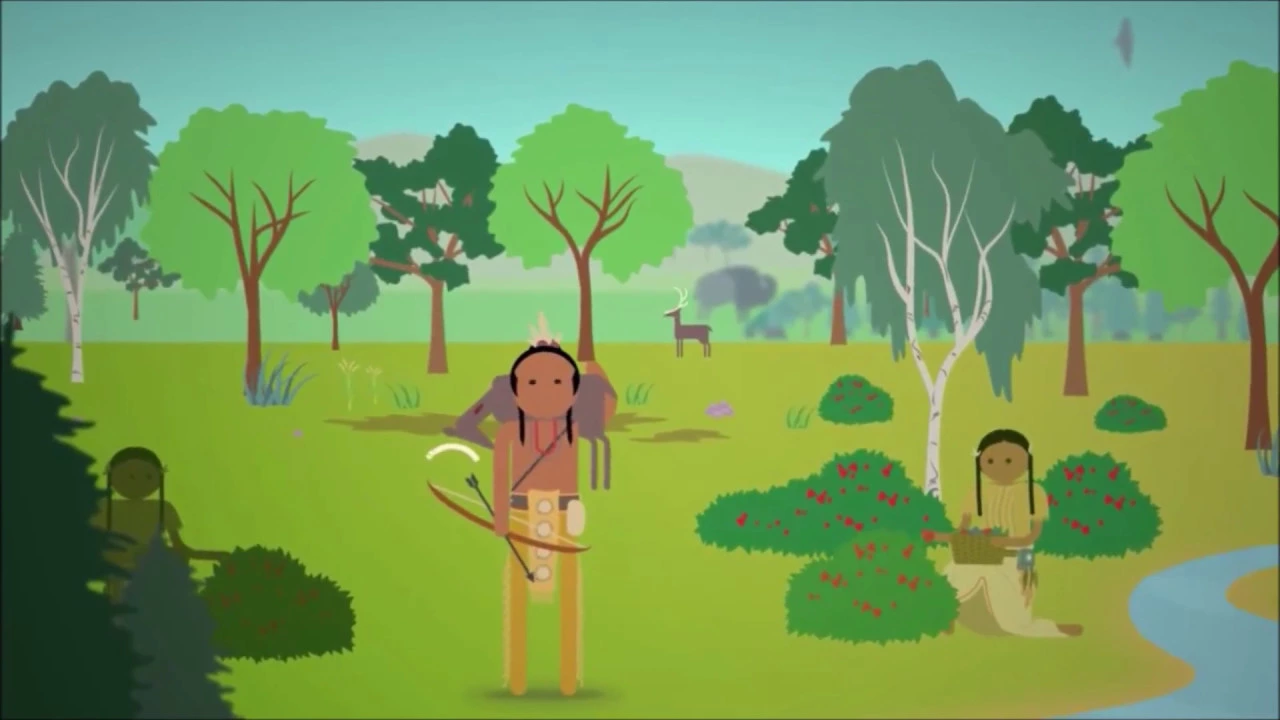
North America was home to a great variety of people so it's difficult to generalize but here's what we can say one when the Europeans arrived there were no classical style civilizations with monumental architecture and empires like the Aztec or the Incas and too native North Americans had no metalwork no gunpowder no wheels no written languages and no domesticated animals however they did have farming complex social and political structures and widespread trade networks so no one knows exactly how many people lived in North America before the Europeans
91 words, the words spoken in the first 30 seconds at 181 words per minute.
Free, no signup. See how the first 30 seconds hold attention, with rewrites.
Sentence shape
| Measure | This transcript |
|---|---|
| Sentences | 3 |
| Average words per sentence | 434.7 |
| Longest sentence | 646 words |
| Questions asked | 0 |
| Sentences containing a number | 2 |
Most used terms
Filler phrases
9 in total: like 6 · I mean 1 · actually 1 · kind of 1.
A literal whole-word count of the same phrase list the Prepublish browser extension uses, so a phrase inside another word is not counted and a phrase used in its ordinary sense still is. It is a count and not a judgement.
What this transcript is
Every word below is the caption track YouTube publishes for this video, pulled from the video itself and reproduced unchanged. It is not Prepublish's writing, not a summary, and not a re-transcription: it is the video's own published captions. English captions, generated automatically by YouTube, in the video’s original language. Source: the video on YouTube. A channel that would rather this page did not exist can ask for its removal through the contact page, and it is removed.
No Script X-ray for this video: YouTube shows a Most replayed graph only once a video has enough views.
North America was home to a great variety of people so it's difficult to generalize but here's what we can say one when the Europeans arrived there were no classical style civilizations with monumental architecture and empires like the Aztec or the Incas and too native North Americans had no metalwork no gunpowder no wheels no written languages and no domesticated animals however they did have farming complex social and political structures and widespread trade networks so no one knows exactly how many people lived in North America before the Europeans got here some estimates are as high as 75 million but in the present US borders the guesses are between two and ten million and like other Native Americans their populations were decimated by diseases such as smallpox and influenza actually it was much worse than decimation though there had been civilizations in North America but they peaked before the Europeans arrived the Zuni and Hopi civilization roundabout here peaked about 1200 CE E they had large multiple family dwellings and canyons which they probably left because of drought crash course world history fans will remember that environmental degradation often causes the decline of civilizations I'm looking at you Indus Valley and also you entire future earth so I want to underscore that there was huge diversity in the pre Columbus American experience and they're talking about someone who lived here in 1000 BCE and talking about someone who lived here 2,000 years later is just inherently problematic that said let's go to the thought-bubble most native groups in most places organized as tribes and their lives were dominated by the natural resources available where they lived so West Coast Indians primarily lived by fishing gathering and hunting sea mammals Great Plains Indians were often buffalo hunters these tribal bands often united into loose Confederacy's or leagues the best-known of which was probably the Iroquois Confederacy also called the great league of peace religion usually involved a vibrant spiritual world with ceremonies geared toward the tribes lifestyle hunting tribes focused on animals agricultural products and most Indian groups believed in a single Creator God who stood above all the other deities but they weren't monotheistic in the way that Christians who came to the new world were American Indians also saw property very differently from your kids to First Peoples land was a common resource that village leaders could assign families to use but not to own and most land was seen as common to everyone as Blackhawk a leader of the Sauk tribe said the Great Spirit gave it to his children to live upon and cultivate as far as necessary for their subsistence and so long as they occupy and cultivate it they have a right to the soil thanks thought-bubble so many of us tend to romanticize American Indians as being immune from greed and class but in fact there were class distinctions in Indian tribes rulers tended to come from the same families for instance that said wealth was much more evenly distributed than it was in Europe and while most tribal leaders were men many tribes were matrilineal meaning that children became members of their mother's family also women were often important religious leaders women also often doned Wellings and tools although not land because again that idea did not exist spanish were the first Europeans to explore this part of the world Juan Ponce de Leon arrived in what is now Florida in 1513 looking for gold and the fabled fountain of youth in 1521 he encountered a collusive braves poison-tipped arrow and died before discovering that the Fountain of Youth is of course delicious died dr. pepper mm-hmm oh I can taste all 23 flavors there were many more Spanish explorers in the first half of the 16th century including one Alvar nuñez Cabeza de Vaca who wandered through the American Southwest looking for gold which I mentioned entirely because I think that guy's last name means cow head of course none of these people found any gold but they did make later European colonization easier by bringing over the microbes that wiped out most native populations so the Spanish wanted to colonize Florida to set up military bases to thwart the Pirates who preyed on silver Laden Spanish galleons coming out of Mexico but Spanish missionaries also came over hoping to convert local native populations this of course worked out magnificently just kidding it went terribly and many of the missions were destroyed by an uprising of guol Indians in 1597 and I will remind you mispronouncing things is my thing in general colonizing Florida sucked because it was hot and mesquita we Spain was much more successful at colonizing the Americans Southwest in 1610 Spain established its first permanent settlement in the southwest at Santa Fe New Mexico and you couldn't really say that it flourished since Santa faz never got much above 3000 but it had a great small-town feel and New Mexico is really important because it's the site of the first large-scale uprising by Native Americans against European I mean the native people who the Spanish called pueblos had seen their fortunes declined significantly since the arrival of Europeans how much decline well between 1600 and 1680 their population went from about 60,000 to about 17,000 also the Franciscan friars who came to convert the indigenous people became increasingly militant about stamping out all native religion the Spanish Inquisition just wasn't very keen on the kind of cultural blending that made early conversion efforts successful so while the Spanish saw all the pueblos as one people they also knew there were tribal differences that made it difficult for the Indians to unite and rise up against the Spanish nothing unites like a common enemy and in 1680 a religious leader named Pope a organized an uprising to drive the Spaniards out hope-a organized about 2,000 warriors who killed 400 Spanish colonists and forced the rest to leave Santa Fe so the Spanish colony in New Mexico was effectively destroyed the pueblos tore down all the Christian churches and replaced them with Kiva's their places of worship by like most awesome uprisings it didn't last after the revolt the Spanish were much more tolerant of indigenous religion and they also abandoned the forced labor practice called in comiendo least one Spaniard de las Casas recognized that his countrymen were terrible this realization is a good thing obviously but it leads us to one of the big problems when it comes to studying this time in place the black legend is detailed of the Spanish unleashed unspeakable cruelty on the Indians now that tale is true but that idea was used by later settlers especially the English to justify their own settlements like part of the reason they needed to expand their empire was to save the Indians from the awful Spanish but were the English so much better yeah probably not as we mentioned at the beginning of today's episode American Indians didn't have writing so we don't have records of their perspective now some Europeans like de las Casas were critical of the Spaniards but most considered the Indians heathens and dimple or even outright said that they deserved whatever horrible things befell them so at the beginning of our series I want to point out something that we need to remember throughout one of the great things about American history is that we have a lot of written sources this is the advantage of the u.s. coming onto the scene so late in the game historically speaking but every story we hear comes from a certain point of view and we always need to remember who is speaking why they are speaking and especially which voices go unheard and why
The words are the caption track's own and nothing is reworded or re-transcribed. Paragraph breaks are placed between sentences so the text reads as prose.
Free tools for your own script. No signup, no login.
Paste your draft and see where viewers are likely to drop off, with a rewrite for each weak line.
Paste the first 30 seconds of your own draft for a hook score and rewrites.
Check your draft against YouTube's advertiser-friendly guidelines before you record it.
Read this channel's public videos and transcripts, and download a writing brief for it.