Getting the transcript
Reading the captions from YouTube. A video nobody has opened here before takes 10 to 30 seconds; this page fills in on its own.
Getting the transcript
Reading the captions from YouTube. A video nobody has opened here before takes 10 to 30 seconds; this page fills in on its own.
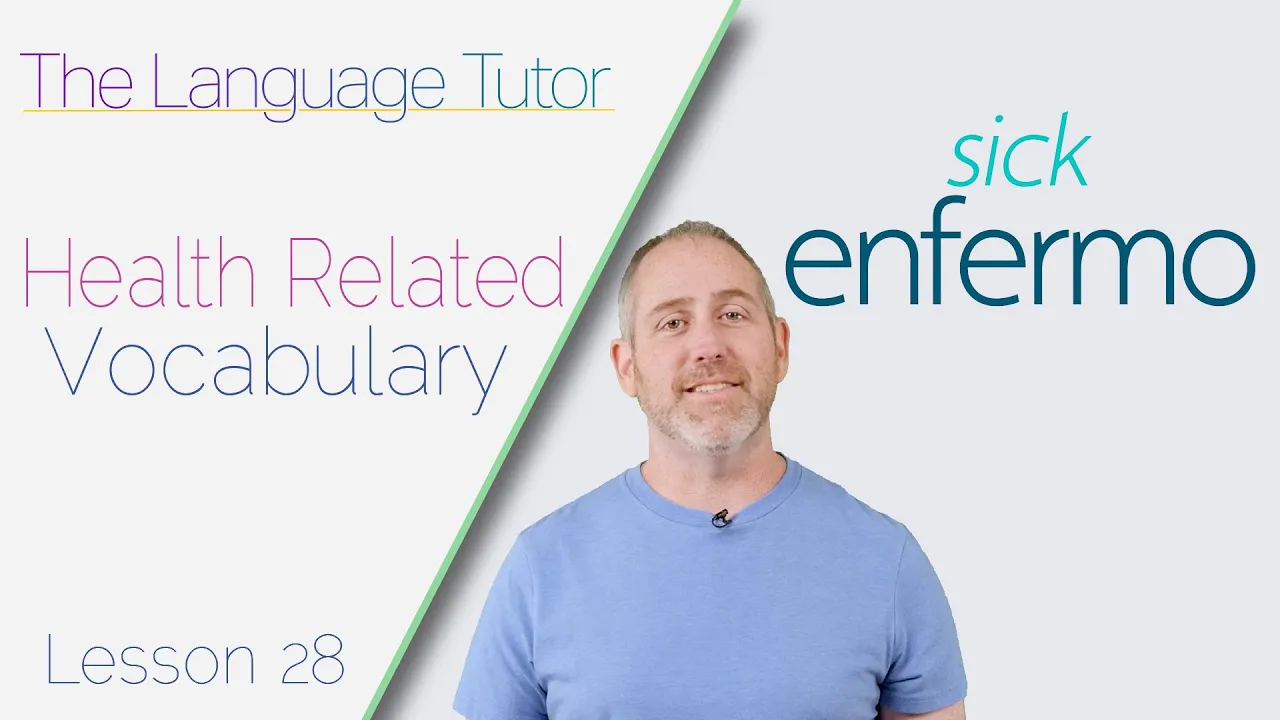
The Language Tutor - Spanish · @TheLanguageTutor
Where viewers went back to watch this video again, from YouTube's public Most replayed graph, lined up with what was said at that moment.
Most replayed moment #1
2:252.0x the video's typical replay level
Our throats sometimes we have pain there. Gargant. Gargant. [clears throat] Our shoulder is ombro. Ombro. The chest is po.
Said at 2:19
Most replayed moment #2
1:421.7x the video's typical replay level
than one word for these but we'll start with one. Our ears are oras oras and our mouth is laba bokea.
Said at 1:36
Most replayed moment #3
3:231.6x the video's typical replay level
And our waist is laura. La. All right, let's move down to our leg. Leg is piera. Piera. Knee is roda. Rodia.
Said at 3:17
The graph counts replays. It does not show where viewers stopped watching.
Words
1,635
Runtime
12:04
Speaking pace
135wpm
Reading time
7min
135 words per minute, below the 160 25th percentile of 349 measured videos. That distribution comes from the 349-video hook study.
Opening (first 30 seconds)
Hi friends, welcome back to the language tutor. Well, today friends, I have a lesson for you that I believe is going to be very beneficial to you. [music] I hope it won't, but it could be very beneficial to you when you're traveling to other countries. So, today I want to talk to you about some health related terms, uh, body parts. We're just going to get
68 words, the words spoken in the first 30 seconds at 135 words per minute.
Free, no signup. See how the first 30 seconds hold attention, with rewrites.
Sentence shape
| Measure | This transcript |
|---|---|
| Sentences | 207 |
| Average words per sentence | 7.9 |
| Longest sentence | 84 words |
| Questions asked | 5 |
| Sentences containing a number | 0 |
Most used terms
Filler phrases
22 in total: like 6 · you know 4 · actually 3 · right? 3 · uh 3 · um 2 · kind of 1.
A literal whole-word count of the same phrase list the Prepublish browser extension uses, so a phrase inside another word is not counted and a phrase used in its ordinary sense still is. It is a count and not a judgement.
What this transcript is
Every word below is the caption track YouTube publishes for this video, pulled from the video itself and reproduced unchanged. It is not Prepublish's writing, not a summary, and not a re-transcription: it is the video's own published captions. English captions, generated automatically by YouTube, in the video’s original language. Source: the video on YouTube. A channel that would rather this page did not exist can ask for its removal through the contact page, and it is removed.
Hi friends, welcome back to the language tutor. Well, today friends, I have a lesson for you that I believe is going to be very beneficial to you. [music] I hope it won't, but it could be very beneficial to you when you're traveling to other countries. So, today I want to talk to you about some health related terms, uh, body parts. We're just going to get those things down because in the next lesson we're going to talk about how to state what hurts.
And so it's important that you know these words because I promise you I've traveled to many many many countries and I have seen people get sick before believe me more than once. Usually when I travel somebody does get sick at some point. So it is good to know how to state symptoms and discuss what's going on. So I would get some, you know, paper and pencil ready. Today is going to be a lot of vocabulary words. You may want to watch this lesson time after time and over and over and get these words down because we're going to have a lot of vocabulary today, which is good.
We need to bring in as many words as we can. So, get ready to write. Here we go. And we're going to start with parts of the body. We're just going to start up here and kind of work down. Okay. So first of all the head is gavea gavea and our eyes are ohos ohos. Okay our ears there are actually more than one word for these but we'll start with one. Our ears are oras oras and our mouth is laba bokea. Your face in general is kara.
And let's jump back up here and talk about hair. There's two words for hair that you'll hear. Po and cababo. Po and cababo. Now don't mess that up and say cababayo because that means horse. So you want to be talking about the right thing there. Now let's go to our neck. Is the quo. Quo. Our throats sometimes we have pain there. Gargant. Gargant. [clears throat] Our shoulder is ombro. Ombro. The chest is po. Po. Now let's move down to arm is braso.
Braso. Now the hand is a little bit different. It's mano. The word is mano, but take a little mental note. Write it down next to this word. Mano ends in an O, but it's actually feminine. It's la mano. It's not l. Okay. Some words just did that when they came from Latin. [clears throat] Okay. Now, when we're talking about our hand also, our fingers is finger is dead. Dedo. Now, we get to our stomach iso accent there. Eto.
And our waist is laura. La. All right, let's move down to our leg. Leg is piera. Piera. Knee is roda. Rodia. Now move down to our foot is pier. P. By the way, p is masculine. And it doesn't end in an O or an A. So you might not know that, but it is a masculine word. So it's LP. Okay. Now our toes. Interesting word. Remember fingers with deado. Okay. So we're going to use that word for the foot. We say delp. Deo delpier.
So it's an interesting way of saying toe just specifying for the foot. Okay. Now we got got several body parts there. Let's move into how we're feeling for a few minutes. We're going to use estar with a lot of these words. Okay. But first of all, happy is contento. Contento. It's also felis. Felis. I know you've probably heard that word before in a song. Sad is nervous. It's a lot like English. Nervioso. Calm. If you're calm is tranquilo.
Now think about that in English. It's tranquil, right? We have a word tranquil that means something's very calm and peaceful. So tranquilo. Now if you say I'm in a good mood, that's to be of good humor is really what you're saying. And you can probably guess what bad mood is. Deal. that that mal comes from the Latin meaning it's bad it's not good news we have words in English like malignant that it's bad right okay I'm tired give you one more feeling word tired is conso okay now that's a fun word because if you leave out the uh one letter of that and say can it means married so you want to make sure you say can okay now let's talk about some health terms that you may need in the future.
I hope not. But you can talk about these words if necessary. First of all, your health in general is la salude. La salude. Now, American people say bless you when someone sneezes. But in Spanish, you say salude, health. We're wishing them health. Chills. Chill. If you have the chills, that's los escaloprios. Escalos. And you'll learn later on in the lesson we talk about weather, you learn that frio means cold. All right.
Is the flu. It's the flu. Bad news. Now, we used to use this in English saying the grip. If [snorts] you have the grip, you you got a bad cold or the flu or something. But a cold in general, the cold is elataro. Elataro. That's a cold in general. Now, a cough as a noun, you have a bad cough, is lto. Sick in general is infero. Infirmo. Think about in English we say you're going to go to the infirmary. They come from the same root in Latin.
The fever. You have the fever is energy is energy. Pain as a noun as a noun. This is not to hurt. This is a pain as a noun is el. We're going to use that word later when we talk about how to state something hurts. So make sure you have that one down. El do. Okay. That's a big word. It means to sneeze. Okay. To be sick with a cold. You can This word implies I am sick with a cold is respri that means to be sick with a cold.
So you can say estori or whoever you want to say that estar form with. [clears throat] Now to cough as a verb now toer. So if you learn to as a noun just remember it's an er verb toer to cough. All right symptom the symptom you have a symptom is elto accent on the Ito. Now notice friends this has an a at the end but it's masculine. Okay one of those fun words like hand that had to be a little different. It's okay. Now to stay in bed, you're not feeling well to stay in bed is guard gama.
Guard gama. Now the doctor referring to the doctor is el medical. Elmed. All right. Now the doctor might do this. He's going to prescribe something. That means to prescribe. And a prescription as a noun. It comes from that verb laeta laeta the prescription. Okay, now this is interesting. When you see the doctor a lot of times you have a cold, whatever they want you to open your mouth, right? So I'm going to put this up here.
Abila abil laba. Now the English speaking doctor says open your mouth. Open your mouth. But in Spanish, he's going to say, "Open yourself the mouth." Now, that's going to come later when we talk about reflexive verbs. But just know he's going to say the mouth, okay? Or she. Now, to believe or think is greer, I think you have the flu. And that's that's a verb like we talked about before, leer. It's to read has two e together.
So when we take off the eer, we're still left with an e. So creo, right? Now the diagnosis. This is just like English, but say it with Spanish pronunciation. Diagnosis. Diagnosis. Hospital. Just use that English word, but remember it's masculine. Elos. Now an injection or shot is la inexion. La inexion. Just a quick reminder, we've talked about this before, but when a word ends in io n in Spanish, we know two things about it.
First of all, we know it has an accent on the O, and we know it's feminine. Okay, so it's just quick little grammar reminder for you. Antibiotic, el antibiotic, el antibiotic. The dose is ladosis. Ladosis aspirin is la aspirina. It's almost like the English laspirina and medicine is la medicine. La medicine. And we're almost done. I want to get to the word pill. You know, you give somebody a pill as a medicine, as some type of medicine.
Um, there are actually three words that people will use in the Spanish speaking world for pills, tablets that you, you know, use. And again, dialects are different every country you go to. So the first word you might see is laastia. Laastia. You might also see laura or laa laa. Okay friends, I've given you a lot of vocabulary in this lesson. So I want to encourage you to get those words down as much as possible. Memorizing is one thing.
Practicing in conversation internalizes and gives you longlasting learning. So, start talking about these in context. Um, just name parts, everything you can, just talk about it as much as you can. Okay? Uh, I know you're going to do great. That's it for this lesson today and I'm going to see you the next time on the language tutor. Friends, thanks for watching the language tutor. If you have a question for me, feel free to leave it in the [music] comment section below the video and please click subscribe and the notification bell so that you'll never miss any of our language lessons.
[music]
The words are the caption track's own and nothing is reworded or re-transcribed. Paragraph breaks are placed between sentences so the text reads as prose.
Free tools for your own script. No signup, no login.
Paste your draft and see where viewers are likely to drop off, with a rewrite for each weak line.
Paste the first 30 seconds of your own draft for a hook score and rewrites.
Check your draft against YouTube's advertiser-friendly guidelines before you record it.
Read this channel's public videos and transcripts, and download a writing brief for it.