Getting the transcript
Reading the captions from YouTube. A video nobody has opened here before takes 10 to 30 seconds; this page fills in on its own.
Getting the transcript
Reading the captions from YouTube. A video nobody has opened here before takes 10 to 30 seconds; this page fills in on its own.
Bridger Pennington | Fund Launch · @bridger_pennington
Where viewers went back to watch this video again, from YouTube's public Most replayed graph, lined up with what was said at that moment.
Most replayed moment #1
6:522.7x the video's typical replay level
$2 million which now puts our 25 million down to 23 million we're now going to split that 8020 so 80% to the investor 20% to us so if you total that up that means our limited partners got 18 .4
Said at 6:46
Most replayed moment #2
1:431.6x the video's typical replay level
money investors put money into that pool people like me and you that are managers of the money we go draw from that pool we can go make investments when those Investments make money they come back to the pool and they get split between the
Said at 1:37
Most replayed moment #3
5:531.5x the video's typical replay level
hedge fund management make money what's the splits look like and how is it all broken up okay so I want to give you multiple examples of how this works let's say for all these examples below we manage $100 million in our hedge funds for the first example the most common example in hedge funds is what
Said at 5:45
The graph counts replays. It does not show where viewers stopped watching.
Words
2,630
Runtime
12:15
Speaking pace
215wpm
Reading time
11min
215 words per minute, above the 201 75th percentile of 349 measured videos. That distribution comes from the 349-video hook study.
Opening (first 30 seconds)
all right people welcome back to the channel today we're going to talk about how much money do hedge fund managers actually make and number two how do they make so much freaking money so welcome back to the channel my name is Bridger Pon I actually run a hedge fund right now we're way smaller than people I'm about to talk about we manage about $10 million in our hedge fund trying to go to 100 million over the next 12 months but let me just show you a quick list of the top earning fund managers last year now to clarify this isn't their net worth
108 words, the words spoken in the first 30 seconds at 215 words per minute.
Free, no signup. See how the first 30 seconds hold attention, with rewrites.
Sentence shape
| Measure | This transcript |
|---|---|
| Sentences | 1 |
| Average words per sentence | 2630.0 |
| Longest sentence | 2,630 words |
| Questions asked | 0 |
| Sentences containing a number | 1 |
Most used terms
Filler phrases
21 in total: like 9 · actually 5 · kind of 5 · uh 1 · you know 1.
A literal whole-word count of the same phrase list the Prepublish browser extension uses, so a phrase inside another word is not counted and a phrase used in its ordinary sense still is. It is a count and not a judgement.
Run the check on the words above: where attention is likely to drop, with a rewrite for each weak line. The free check shows the scores and the one issue costing the most.
What this transcript is
Every word below is the caption track YouTube publishes for this video, pulled from the video itself and reproduced unchanged. It is not Prepublish's writing, not a summary, and not a re-transcription: it is the video's own published captions. English captions, generated automatically by YouTube, in the video’s original language. Source: the video on YouTube. A channel that would rather this page did not exist can ask for its removal through the contact page, and it is removed.
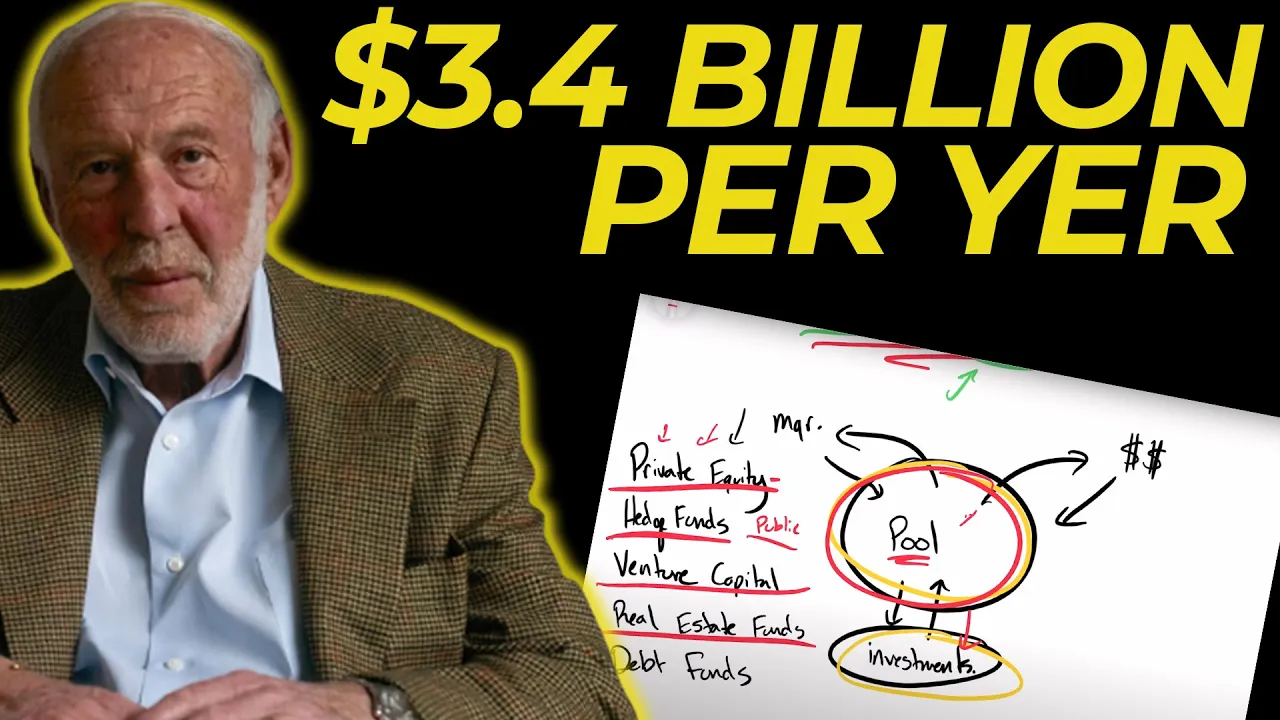
all right people welcome back to the channel today we're going to talk about how much money do hedge fund managers actually make and number two how do they make so much freaking money so welcome back to the channel my name is Bridger Pon I actually run a hedge fund right now we're way smaller than people I'm about to talk about we manage about $10 million in our hedge fund trying to go to 100 million over the next 12 months but let me just show you a quick list of the top earning fund managers last year now to clarify this isn't their net worth going up and down this is income from One Source their hedge fund you have Jim Simons at the top of the list $3.4 billion Jim Simons made from one income Source number two iszy Englander with Millennium management 3.1 billion next up you have Ken Griffin with Citadel $2.5 billion and down the list you have a whole slew of fund managers making billions of dollars a year from running a hedge fund and if you look at the Forbes 100 list it is riddled with people who run and manage investment funds that's why running a fund I keep saying this is one of the most lucrative things on planet Earth you need to understand how this game is played this is the world of hedge funds private Equity Venture Capital real estate funds debt funds okay they all are put in there that's why we started a company called fund launch to help people do this we have over 20,000 people we've helped multiple funds get over 10 million two funds over 100 million and one fund over a billion dollars with fund launch so this what we do I eat sleep and drink this on this channel so I wanted to walk you guys through how fund managers number one how much they make and number two how they make it so with that let's go down to the Whiteboard of Truth and Justice now number one what is a hedge fund or even a better question what is a fund in general so all a fund is is a pool of money investors put money into that pool people like me and you that are managers of the money we go draw from that pool we can go make investments when those Investments make money they come back to the pool and they get split between the investors and the managers that's it okay that's all this whole world of funds is so Bridger what's the difference between all these private equ hedge funds Venture Capital real estate funds debt funds what's what's the difference how do they work so it's funny enough I work with all these different types of funds what's crazy enough is they're all almost the same they're all structured pretty similarly the only difference is what they invest into so for example we mentioned hedge funds earlier a hedge fund is a pool of money they have investments into the public market stocks bonds Commodities Forex crypto that would be a hedge fund a private Equity Fund they are the same thing a pool of capital but instead of buying public Securities they buy in the name private Securities they're buying privately held companies one of the largest private Equity firms in the world is Sycamore Partners on Wall Street they own Kohls Nine West shoes aeropostal Staples the department store Staples they are all owned by the same company we have people in our group doing small private Equity they buy up uh local car washes local restaurants they buy up their neighboring competitors okay that would be private Equity down here Venture Capital you may have seen the TV show Shark Tank again pool of capital they invest into small startups that would be Venture Capital really real estate funds it's in the name okay they have a pool of money and they go buy and sell real estate again they're all structured almost the same way which is kind of cool now to go another layer deeper how they're structured typically this how 99% of funds are structured so instead of calling them a pool or a manager they're actually the pool of capital is called a limited partnership and it is managed by a separate entity called the general partner that's you that's the management team okay so you is the fund manager man man AG the general partner manages the limited partnership so investors or limited partners over here they have money and they invest into I'm going to say LPS for short they invest into your limited partnership or fund they sign two governing documents of the fund the LPA and the PPM these are your two main documents of a fund that stands for limited partnership agreement and private placement memorandum and they fill out their subscription documents they subscribed to the fund and now they're fully in and their money's committed but they have no say over what happens in the fund that's done by the general partner you as the general partner get to decide where those Investments are made as long as you stay within the parameter set of LPA you can't say hey we're going to buy real estate and then all of a sudden say you know what we're going to invest into Apple computer that'd be different you got to follow what you say you're going to do your thesis once you do that your those Investments make money the Investments flow back to the limited partnership whatever you make that year and then it gets split between the limited partners and the general partner you is the fun manager this is how all these different types of funds run now in just a second I want to walk you guys through what does this split look like how much is it what do you take and what kind of numbers can you produce from running a billion or hundred billion dollar fund like some of these managers are doing now more specifically for hedge funds a lot of hedge funds will use this model they also will use what's called a prime broker this Prime broker works with the fund to execute their trade so if they want to go buy a mill ion shares of XYZ company they usually do that through a prime broker that can be Goldman Sachs deutche Bank whoever it is they hold the licenses for you they hold the series 7 and the broker dealer and all that kind of stuff they help you issue your trades and Investments and then when those trades make money they flow back to limited partnership additionally some hedge funds also have what's called a management company this would act as your investment advisor or registered investment adviser and you would need a series 65 to launch one of these companies again this is for hedge funds goes by state by state depends on your legal team we help you guys figure that out when you guys are in fund launch as well but you potentially would own both of these entities right here you can also do a hedge fund incubator anyways we got other videos in this channel that talk through all this what we do but I want to get to the next section of how do you make money how do hedge fund management make money what's the splits look like and how is it all broken up okay so I want to give you multiple examples of how this works let's say for all these examples below we manage $100 million in our hedge funds for the first example the most common example in hedge funds is what they call the 220 model what this means is a 2% management fee and then 20% of the profits so for example if this is our hedge fund here this is zero 10% 20% let's say our fund did well this year and we got a 25% return overall in the fund on $100 million meaning we took a $100 million and we turned it into a25 million so meaning we have $25 million to split up between ourselves and our investors so how this it split up 2% is taken to manage the whole fund so we have a $100 million fund assuming no Leverage is 100% 100 million Capital raised us as the general partner we take $2 million which now puts our 25 million down to 23 million we're now going to split that 8020 so 80% to the investor 20% to us so if you total that up that means our limited partners got 18 .4 million and we received 2 million plus 4.6 million for a total of 6.6 million not too shabby for running a $100 million fund your first year and getting a 25% return now do remember in hedge funds this often times can compound into year two depending on how your hedge fund runs most often times this money gets deployed back in for year two into 100 million so now you have 118 million if you keep doing that enough years it compounds very very well and if you treat your investors right and you're run an open-end fund more Capital can flow in Additionally the other cool thing about hedge funds is you can just add zeros to what you're doing so instead of managing a $100 million hedge fund you could manage a billion doll hedge fund and instead of making 6.6 million you would have made 606 million or if you ran a$1 billion hedge fund you would have made $660 million making the exact same trades with just more Capital $660 million ain't too shabby for one year of work but I digress let's get to the next example okay so let's say same example you're on a100 million hedge fund but this time we're going to do a 2 and20 model but we're going to add what we call a pref or preferential rate of return at 8% we're still going to run the 2 and 20 but what this means is that we as the managers we don't make any money until the investor at least makes 8% First Once the investor makes 8% then and only then we can start profit sharing with the investor what this does is it makes you get over a hurdle rate of making at least 8% to the investor before us as managers can make any money so for example if this year we only made 7% on our fund we would still collect our 2% management fee of $2 million but the rest of the 7% 100% of it would go to the investors we would not take our 8020 split now some funds will also do what they call a catchup right here meaning once we get over 8% the full ninth and 10th percentiles these percentiles right here come to the manager of the fund meaning by the time we hit 10% we are now back to an 8020 split so in this event that we got a 25% return the math would be the same it would be first 8% would be the investor the next 2% would come to the managers and then we'd split from here 10% on to 25 would be split 8020 and in that scenario it actually would result in the same numbers above if you didn't catch that you can go back and rewatch that little section now I want to give you a different example of how you can play with these numbers now you don't have to do a 2 and 20 I've seen some funds do a three and 30 I've seen some funds do like Jim Simons he does a 5 and 45 and he's one of the most successful hedge fund managers of all time they managed I think over a hundred billion dollar again charging 5% management fee and 45% of carried interest now I want to share with you what I do actually in my fund right now so this what we do let's use the same example of $100 million we run a 2 and 20 just like before like I explained so 2% management fee 20% carry until we hit 100% apy in one year so if in the event that we reach 100% if we double your money in a year any money over that doubling goes into 5050 so again to clarify from 0 to 100 is 8020 80% the investor 20% us once we hit 100 if we hit 100 we then start going 5050 with investors it gives us an incentive to go higher and shoot for the moon now would I recommend this for your fund I don't know we did this we liked it at the beginning we've liked it so far I believe leave for our next fun I don't think we'll do it I think we'll come back to just a true 2 and2 split and the reason for that is investors are just used to this they just like that model you're incentivized to just get bigger gains because you always get 20% but again I want to give you the example to show that you can have different hurdles you could say hey if we get at least 30% we then take a little bit more I've seen some funds not in hedge funds but in the debt fund that they said hey investors once you return a 25% return for the year we take the rest I've seen some funds do that they cap it and they said we make a 0% management fee you make all the money every dollar goes to you the first 25% goes to you in a year after that we get the rest and at the end of the year we just reset we go back to zero and we restart I've seen a lot of funds do that as well which is pretty interesting but again you can go back and do the math instead of $100 million fund if you had a hundred billion do fund like some of these fund managers do ray Dalia Warren Buffett all that kind of stuff instead of making 6.6 million a year they're making 6.6 billion a year in their hedge funds and the coolest thing about hedge funds is many of them don't take very many employees a lot of hedge funds are ran by maybe 12 to 30 people that's it you're splitting up $6.6 Billion between 12 to 30 people it's pretty good returns and the overhead isn't very high you're just making clicks on a computer there isn't this crazy crazy overhead now if you want to learn more about funds you guys can click the link below we have a whole free course on investment funds private Equity hedge funds vure Capital how to build them we go way more in depth on how they're put together the metrics how to file with the SEC the legal documents all that kind of structure so click that link below if you want to work with our team as well you can give us a call we have a high top tier coaching group we coach people oneon-one through their entire fun setup you can check out other videos on our Channel as well you guys are amazing my name is Bridger pton and we'll see you the next video Bye by
The words are the caption track's own and nothing is reworded or re-transcribed. Paragraph breaks are placed between sentences so the text reads as prose.
Free tools for your own script: paste a draft and see where it stands before you record it.
Paste your draft and see where viewers are likely to drop off, with a rewrite for each weak line.
Paste the first 30 seconds of your own draft for a hook score and rewrites.
Check your draft against YouTube's advertiser-friendly guidelines before you record it.
Read this channel's public videos and transcripts, and download a writing brief for it.