Getting the transcript
Reading the captions from YouTube. A video nobody has opened here before takes 10 to 30 seconds; this page fills in on its own.
Getting the transcript
Reading the captions from YouTube. A video nobody has opened here before takes 10 to 30 seconds; this page fills in on its own.
Forgotten Fleet · @ForgottenFleet1
Words
3,258
Runtime
19:03
Speaking pace
171wpm
Reading time
14min
171 words per minute, between the 160 25th percentile and the 181 median of 349 measured videos. That distribution comes from the 349-video hook study.
Opening (first 30 seconds)
There are photographs of USS Franklin that are difficult to look at. The carrier is almost completely hidden behind smoke and fire. Aircraft are burning on the flight deck. A column of smoke rises from the ship as she sits badly damaged in the Pacific. And somewhere inside that burning carrier, hundreds of American sailors are [music] still fighting to keep her alive. It is March 19th, 1945. Franklin is less than 50 miles from the coast of Japan. Two Japanese bombs have just torn into
86 words, the words spoken in the first 30 seconds at 171 words per minute.
Free, no signup. See how the first 30 seconds hold attention, with rewrites.
Sentence shape
| Measure | This transcript |
|---|---|
| Sentences | 333 |
| Average words per sentence | 9.8 |
| Longest sentence | 43 words |
| Questions asked | 5 |
| Sentences containing a number | 46 |
Most used terms
Filler phrases
4 in total: like 3 · kind of 1.
A literal whole-word count of the same phrase list the Prepublish browser extension uses, so a phrase inside another word is not counted and a phrase used in its ordinary sense still is. It is a count and not a judgement.
What this transcript is
Every word below is the caption track YouTube publishes for this video, pulled from the video itself and reproduced unchanged. It is not Prepublish's writing, not a summary, and not a re-transcription: it is the video's own published captions. English captions, generated automatically by YouTube, in the video’s original language. Source: the video on YouTube. A channel that would rather this page did not exist can ask for its removal through the contact page, and it is removed.
No Script X-ray for this video: YouTube shows a Most replayed graph only once a video has enough views.
There are photographs of USS Franklin that are difficult to look at. The carrier is almost completely hidden behind smoke and fire. Aircraft are burning on the flight deck. A column of smoke rises from the ship as she sits badly damaged in the Pacific. And somewhere inside that burning carrier, hundreds of American sailors are [music] still fighting to keep her alive. It is March 19th, 1945. Franklin is less than 50 miles from the coast of Japan.
Two Japanese bombs have just torn into the ship. The explosions have ignited aircraft, fuel, bombs, and rockets. [music] Men are trapped below deck. The ship is losing power. She's taking on a dangerous list. And for a while, it looks like USS Franklin is going to become another American carrier resting on the bottom of the Pacific. But she doesn't. Her crew refuses to abandon her. They fight the fires. They rescue their shipmates.
They bring a dead ship back to life. And somehow Franklin survives. The damage is so severe that she will later become known as the ship that wouldn't die. But this is where the story becomes strange. Franklin survives one of the worst attacks ever endured by an American warship. She survives the Pacific. She survives the war. She makes it home. She is repaired. And then just 21 years later, the ship is gone. Not sunk in battle.
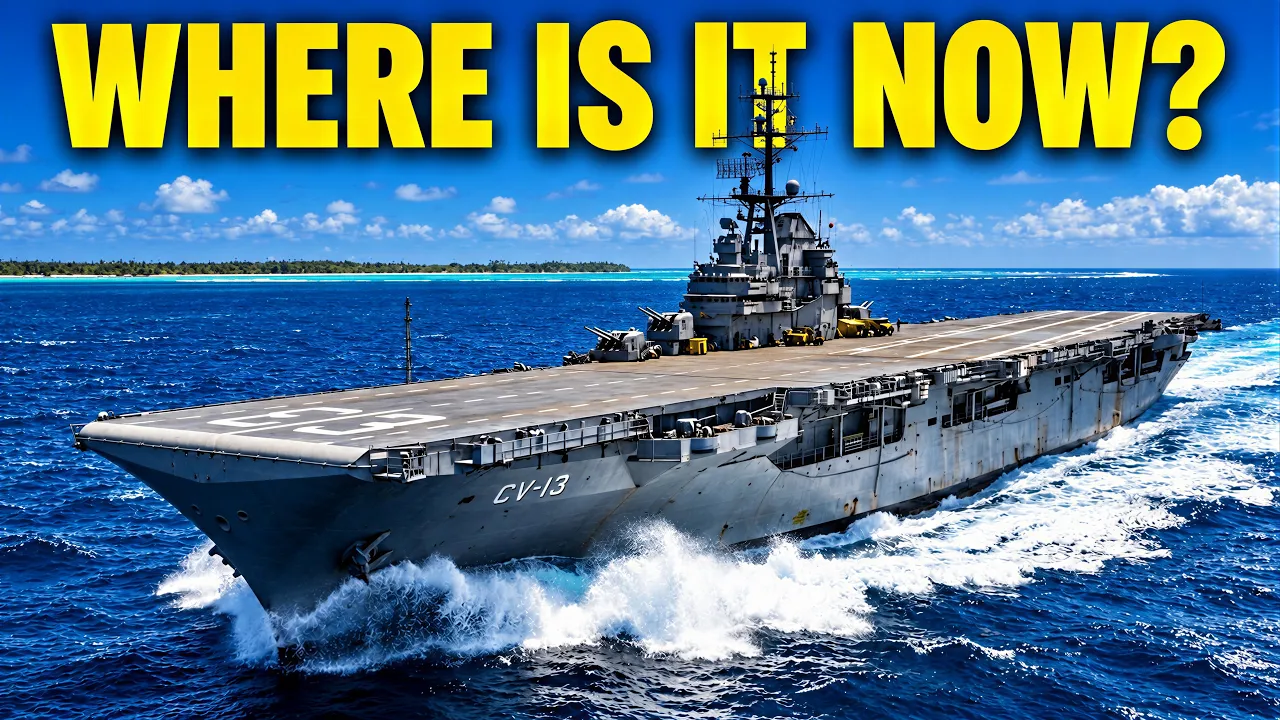
Not lost at sea. not sitting on the bottom of the ocean. USS Franklin is sold for scrap. So, where is USS Franklin now? And why wasn't a ship like this preserved? Before we get into it, I want to hear from you. Where in the world are you watching from? Did your father, grandfather, uncle, or another family member serve in the US Navy during World War II? Maybe someone in your family served aboard a carrier. Maybe you remember seeing one of these great American ships when they were still part of the fleet.
[music] Or maybe you simply grew up hearing stories about the ships that won the war in the Pacific. [music] If you have a connection to Franklin, the Navy, or this generation of Americans, [music] drop it in the comments. Let's start with the ship. Because to understand why Franklin's story is so difficult to forget, [music] you have to understand what she was. USS Franklin was an Essexclass aircraft carrier. She was one of the great carriers built during the Second World War at a time when the United States [music] was turning out warships on a scale the world had never seen.
She was laid down at Newport News, Virginia in December 1942. [music] She was launched in October 1943. And on January the 31st, 1944, she entered service with [music] the United States Navy. The ship was more than 870 ft long. She carried thousands of men and from her flight deck, American aircraft could take off carrying bombs and rockets toward targets hundreds of miles away. Her crew gave her a nickname, [music] Big Ben.
And for the men aboard her, Franklin wasn't just a giant piece of steel. She was home, a floating city, a place where they slept, [music] ate, worked, trained, and waited for the next order. For many of the young men aboard her, this was the first time they had ever been this far from home. They had left American towns and cities behind. They [music] had crossed an ocean. And now their lives were tied to this enormous ship.
Franklin entered the Pacific at a time when the war was moving rapidly toward Japan. [music] Her aircraft attacked Japanese positions in the Bonan Islands. She operated around the Maranas. She supported American operations in the Philippines. [music] And in October 1944, she became part of the enormous American force fighting around Lee. The battle of Lee Gulf was one of the largest naval battles ever fought. American carriers launched wave after wave of aircraft.
Disappeared into the sky. Aircraft returned damaged, sometimes barely able to land. And Franklin kept launching them again and again and again. This was what aircraft carriers did. [music] They didn't have to chase the enemy themselves. They carried the aircraft that went looking for him. But Franklin's war was not going to remain at a distance. On October the 30th, 1944, Japanese aircraft attacked the carrier. One Japanese aircraft crashed into Franklin's flight deck.
Fire spread across the ship. Men were killed, others were wounded. The carrier was damaged and eventually sent away for repairs. But she survived and she returned to the Pacific. By early 1945, American forces were closing in on Japan. The Japanese homeland itself was now within reach of American carrier aircraft. Franklin was about to take part in one of the most dangerous operations of her entire life. In March, [music] she sailed with Tus force 58 toward the Japanese home islands.
On March 18th, her aircraft attacked targets on Kyushu. The next morning, Franklin was operating about 50 mi from the Japanese coast. She was preparing another strike. Her flight deck was busy. Aircraft were being prepared for launch. Bombs were loaded. Fuel was being pumped. Pilots were climbing into their aircraft. It was the kind of routine that had happened countless times aboard American carriers. Then at 7:05 in the morning, a warning came from another carrier.
A twin engine Japanese aircraft was approaching, [music] but the warning never reached Franklin's bridge in time. 3 minutes later, the Japanese bomber appeared out of the [music] clouds. It was less than 2,000 feet away. There was almost no time to react. Franklin's guns opened fire, but the aircraft got through. At 7:08, the bomber dropped its bombs and the carrier became a firestorm. One bomb punched through the flight deck and exploded in the hanger.
The second hit among aircraft that were being prepared for launch. The explosions ignited aircraft. Fuel caught fire. Bombs began exploding. Rockets began cooking off. The hanger deck became an inferno. And because Franklin was carrying so many armed and fueled aircraft, [music] the initial explosions created a chain reaction. The Navy's later investigation recorded more than 120 secondary explosions. The fire was not one single event.
It was explosion after explosion after explosion. The ship was being torn apart from the inside. And below deck, men were trapped. Smoke filled compartments. Passageways were blocked. Power was disappearing. Some sailors were trying to climb out through spaces that had become almost impossible to cross. Others were fighting the fire. Others were carrying wounded men. And some simply did not know whether they were going to survive the next minute.
On the bridge, Franklin's commanding officer, Captain Leslie Gares, believed the ship could still be saved. Even when Rear Admiral Ralph Davidson advised that the ship might have to be abandoned, Garis refused to give up on Franklin. That decision would become one of the most important moments in the ship's history [music] because Franklin's survival would depend on the people still aboard her. One of those men was Lieutenant Donald Garry.
Gary was trapped below deck with hundreds of other sailors. The smoke was so thick that there was almost no way out. He searched for an escape route. He eventually found one. And then he did something extraordinary. He went back. He returned into the smoke to lead other men out. >> [music] >> Then he went back again and again. Eventually he helped lead hundreds of men to safety. [music] Another man was moving through the same nightmare.
Lieutenant Commander Joseph O' Calahan, Franklin's Catholic chaplain. He moved among the wounded and dying. He encouraged the men fighting the fires. He gave last rights to sailors who were not going to survive. And he continued working while the ship around him was still exploding. Both Gary and O'alahan would later receive the Medal of Honor. But they were only two men among hundreds who fought to save Franklin. The [music] ship's engineers were trying to restore steam.
Damage control teams were fighting fires. [music] Sailors were throwing ammunition overboard. Others were trying to stop more explosions. The [music] entire carrier had become a battle of men against fire. And the fire was winning [music] for hours. At one point, Franklin was dead in the water. [music] She was badly damaged. She was listing. and she was only about 50 mi from Japan. The possibility of being abandoned in those waters [music] was terrifying.
If Franklin went down, the men who survived the explosions could find themselves in the ocean, almost within sight of the Japanese mainland. But Franklin did not go down. USS [music] Santa Fe came alongside and began taking wounded and survivors off the carrier. USS Pittsburgh arrived to take Franklin in tow. [music] The great carrier was being dragged away from the Japanese coast. But even then, she wasn't safe. Japanese aircraft approached the damage carrier.
Her guns opened fire. The attack was driven off and Franklin continued west. Then something happened that almost sounds impossible. Franklin regained steering control. Her crew got the ship moving again. On March 20th, less than a day after the attack, Franklin was able to cast off the tow line. She was making about 15 knots under her own power. Think about that. [music] Less than 24 hours earlier, this carrier had been burning out of control.
Her decks were covered in wreckage. Hundreds of men were dead. The ship had lost power. She had been dead in the water, and now she was moving under her own power. Franklin reached Althy on March 24th. From there, she began the long journey home. She eventually reached the United States. And when she arrived in New York in April 1945, photographs were taken of her. Those photographs became some of the most remarkable images of an American warship in the entire war.
The ship looked devastated. Burn marks covered her. Her flight deck was scarred. The damage told the story before anyone said a word. But she had made it. Franklin was home. And the men who had saved her were coming home with her. The crew became one of the most decorated in American naval history. [music] Two men received the Medal of Honor. 19 received the Navy Cross. 22 received the Silver Star. Hundreds more received other decorations, and more than 1,100 Purple Hearts were eventually awarded to members of the Franklin's crew.
The Navy's official history records 796 [music] men killed and another 265 wounded in the March 19th attack. Those numbers are difficult to comprehend. But behind every number was a person, a sailor, an aviator, a husband, a son, a brother, someone who had a home somewhere in America, someone whose family was waiting for a letter, someone who had expected that ship to bring him home. For those who survived, [music] Franklin was never going to be just another aircraft carrier.
She was the ship that had almost died with them aboard and then somehow brought them home. The ship earned the nickname the ship that wouldn't die. But by the time Franklin returned to America, the war itself was almost finished. When Japan surrendered in August 1945, Franklin was still undergoing repairs. She would never return to combat. [music] Her repairs were finally completed in June 1946. She reported to the Atlantic Reserve Fleet.
And on February the 17th, 1947, USS Franklin was placed out of commission. The war was over. The carrier was still there, but the world around her was changing. And this is where the story becomes less dramatic. There was no enemy aircraft, no explosion, no torpedo, no battle, just time. Franklin sat in reserve for years. The Navy did not simply forget about her. She was redesated several times. In 1952, she became an attack aircraft carrier.
In 1953, she became an anti-ubmarine warfare support carrier. In 1959, she was redesated again as an aircraft transport. The Navy was still looking for a future use for the ship, but Franklin never returned to active service. The carrier that had fought Japan was becoming a relic of another Navy. A new Navy was taking shape. Jet aircraft were replacing the piston engine aircraft that had filled Franklin's decks. [music] New carriers were being designed.
The Cold War was changing the priorities of the United States military. [music] And America had an enormous fleet of World War II ships. Many were no longer needed. [music] Many were sitting in reserve. Many would never sail again. Franklin was one of them. And when Franklin was sitting in reserve in the 1950s, World War II was not ancient history. It had ended only a few years earlier. [music] The men who had fought a border were still young.
The families who had waited for them were still living their normal lives. The war was still in their memories. But the Navy had to think about the future. A carrier that had been state-of-the-art in 1944 was not the same thing as a modern carrier in the jet age. Franklin was enormous. Maintaining her cost money. Preserving her would have required a permanent home. [music] An organization willing to take responsibility for her and a commitment to keep an enormous warship alive long after she had stopped being useful as a fighting vessel.
And at that time, America was not yet looking at its World War II [music] ships in quite the same way we do today. The Great Veterans were still alive. [music] The ships were still being scrapped. The war had ended. People were looking forward. Franklin remained in reserve until eventually there was no future left for her. [music] In October 1964, she was struck from the Naval Vessel Register. Her career as a United States Navy ship was effectively over.
But even [music] then, Franklin's story wasn't finished. The Navy sold her for scrap. By July 1966, the final sale had been made. Franklin was sold to the Portsouth Salvage Company in Chesapeake, Virginia. [music] On the evening of August 1st, 1966, the Great Carrier left naval custody under tow. And this time there was no return journey, no Pacific operation, no battle group waiting for her, no aircraft launching from her deck.
She [music] was going to the scrapyard. Think about how different that was from the way her story had begun. In 1945, Franklin had been surrounded by fire. Men were running through smoke. Aircraft were exploding. The ship was fighting for her life. But the sailors aboard her refused to let her die. 21 years later, nobody was fighting to save her. The Navy had moved on. The world had moved on. And Franklin was sold by the ton.
Her steel would become something else. the ship itself would disappear. And perhaps that is where the question becomes uncomfortable. Should USS Franklin have been saved? There is no documented moment where the Navy simply decided that Franklin was worthless. The decision was part of a much larger post-war reality. America had hundreds of ships. The [music] fleet was changing. Franklin was obsolete. She had never returned to active service after World War II.
And preserving an enormous aircraft carrier was not simple. But looking back now with a distance of more than 80 years, it [music] is difficult not to wonder because Franklin was not just another Essexclass carrier. She had been attacked off Japan. She had been almost destroyed. [music] She had lost hundreds of men. She had burned for hours. She had been dead in the water. And somehow her crew brought her home. [music] Today, several of Franklin's sister ships survive as museum ships.
You can walk aboard them. You can stand on their flight decks. [music] You can enter their hangers. You can see the machinery. You can imagine what it must have sounded like when the ship was at war. But Franklin is not there. You cannot walk her decks. You cannot stand in the hanger where her men fought the fires. You cannot look over the side and imagine her returning [music] from the Pacific in 1945. The carrier itself is [music] gone.
And that is why the answer to where is USS Franklin now is so disappointing. There is no wreck waiting at the bottom of the ocean. There is no museum ship waiting in a harbor. There is no preserved flight deck. USS Franklin was dismantled. Her steel was cut apart. Her physical presence disappeared. [music] But the story did not. The photographs survived. The record survived. The medals survived. The memories survived.
And some of the men who served aboard her carried the ship with them for the rest of their lives. Because for them, Franklin was not an obsolete aircraft carrier. She was the place where they had survived, the place where their friends had died, the place where they had watched fire consume the ship and somehow watched that same ship come home. On March 19th, 1945, Franklin's crew had every reason to believe they were watching their ship die.
Instead, they saved her. Franklin survived the Japanese attack. She survived the war. She survived the journey home. She survived years sitting in reserve. But eventually she met something that armor could not stop. Not bombs, not torpedoes, not aircraft, [music] time. And maybe that is the saddest part of USS Franklin's story. The generation that built her is disappearing. The men who stood on her decks are almost all gone now.
The ship they once called home is gone, too. And today, all that remains are the photographs and the stories. A picture of Franklin burning near Japan. A picture of her limping home. a picture of her arriving in New York, a record of the men who refused to abandon her, and the memory of a carrier that somehow survived the day she should have died. In 1945, USS Franklin was a symbol of American determination. In 1966, [music] she was scrap.
And perhaps if Franklin had been preserved, an American today could still walk onto her deck and look across the same steel that carried those young men toward Japan. Perhaps they could stand beneath her flight deck [music] and hear the story from a veteran. Perhaps a child could walk through her hanger and understand in a way [music] no textbook can explain what those young Americans experienced. But that opportunity is gone.
Franklin cannot be brought back. The ship that would not die is gone. What remains is the story. And maybe that is why we still tell it. Because sometimes the ships we remember most are not the ones that survived as museums. Sometimes they are the ones that disappeared [music] before anyone realized just how much history they were carrying. USS Franklin is one of those ships. The ship that would not die until America finally let her go.
Not in battle, not [music] beneath the Pacific. But piece by piece in a scrapyard in Virginia. And that is where USS [music] Franklin is now. Not in the water, not in a museum, but in the memory of the men who served aboard her and in the photographs that allow the rest of us to remember the ship that once refused to die. If you want more stories about the great ships America built, fought with, and sometimes lost before anyone thought to save them, the next video is already on
The words are the caption track's own and nothing is reworded or re-transcribed. Paragraph breaks are placed between sentences so the text reads as prose.
Free tools for your own script. No signup, no login.
Paste your draft and see where viewers are likely to drop off, with a rewrite for each weak line.
Paste the first 30 seconds of your own draft for a hook score and rewrites.
Check your draft against YouTube's advertiser-friendly guidelines before you record it.
Read this channel's public videos and transcripts, and download a writing brief for it.